
Многие кандидаты, которые готовятся сдавать экзамен на продвинутом уровне, больше всего беспокоятся за Speaking, так что в этой статье мы решили подробно рассказать об этой части экзамена. Вы узнаете, как готовиться и сдавать CAE Speaking, какие фразы пригодятся на каждом из этапов экзамена, а также как правильно отвечать на вопросы в заданиях.
 Speaking — заключительная часть экзамена CAE. Часто ее сдают на следующий день после сдачи трех других частей теста. Общая длительность экзамена — около 15 минут. Эту часть экзамена сдают в паре с другим кандидатом, а в редких случаях — втроем.
Формат CAE немного изменили в 2015 году, однако раздел Speaking практически не изменился, и состоит он из следующих частей:
- Interview: длится 2 минуты, примерно по 1 минуте на каждого кандидата.
- Long turn: каждому кандидату дают по 1 минуте + 30 секунд на комментарий к заданию напарника.
- Collaborative task: 2 минуты длится совместное обсуждение задания, и еще за 1 минуту нужно прийти к общему решению.
- Discussion: 5-минутная дискуссия.
А теперь давайте подробно рассмотрим, что нужно учесть при подготовке и ответе на CAE Speaking.
CAE Speaking Part 1. Interview
На интервью экзаменатор знакомится по очереди с каждым кандидатом. Для этого он может задать вопросы о том, где вы живете, работаете вы или учитесь, чем занимаетесь в свободное время, как давно учите английский и т. д.
Что проверяется: умение представить себя, рассказать о себе, развернуто отвечать на вопросы и кратко выражать свое мнение.
Примеры вопросов, которые вам могут задать:
- Tell me about where you come from.
- Do you have any hobbies?
- What countries have you visited?
- How important do you think English is in your country?
- Do you prefer to do individual sports or play in a team?
Как готовиться
Ответ на любой вопрос в этой части должен состоять из 3-4 небольших предложений. То есть отвечать односложно нельзя. Поэтому при подготовке тренируйтесь на любой самый простой вопрос давать развернутый ответ. Например, если вас спросили “Do you have any hobbies?”, ответ “Yes, I do” недопустим. Вы можете ответить примерно по такому плану:
- Назовите свое любимое хобби: In my free time I really enjoy playing tennis.
- Объясните, почему оно вам приглянулось: I like being physically active. Furthermore, it keeps me fit.
- Расскажите еще об одном хобби: But in summer I prefer swimming to tennis because it’s too hot for active games.
В то же время не стоит слишком увлекаться рассказом о своем любимом хобби, из-за растянутого ответа оценка тоже может быть снижена.
Как отвечать
- Не отвечайте односложно
Интервью должно быть похоже на обычную беседу: экзаменатор не должен «вытягивать» из вас информацию. Добавляйте любые детали в свой ответ, главное, чтобы они соответствовали теме вопроса.
- Говорить правду не обязательно
Даже если вы терпеть не можете заниматься спортом, а вам задали вопрос именно по этой теме, это еще не повод отделаться репликой “I don’t like doing sport”. Лучше придумать и сказать, что вы обожаете по выходным играть в футбол с друзьями, чем получить сниженную оценку.
CAE Speaking Part 2. Long turn
В этой части экзаменатор выдает вам лист с тремя картинками и вопросами к ним. Вам нужно сначала поговорить о любых двух изображениях на протяжении минуты. Потом ваш напарник в течение 30 секунд прокомментирует ваши картинки. Затем вы меняетесь: другой кандидат получает свой набор фотографий и говорит о нем в течение минуты, а вы 30 секунд комментируете их.
Что проверяется: умение вести монолог, выражать свое мнение, выдвигать гипотезы, сравнивать и описывать два предмета.
Как готовиться
По сути, вы можете брать любые две картинки, сравнивать их, находить сходства и различия, кратко описывать, делать предположения о том, чем занимаются люди на изображениях, что они чувствуют в данный момент и т. д. Заучите вводные фразы, которые помогут вам начать свою речь красиво:
- In the first/second/third picture there’s…
- The first/second/third picture depicts…
- Both pictures show…
- The third picture also depicts…
- The first picture depicts… whereas/while the second picture depicts…
- The main difference is that…
- In comparison to the first picture, this one…
- Both pictures are quite similar in that they depict…
- It could/might/must be…
Также в статье «Фразы для сравнения и противопоставления» мы привели подробный список выражений, которые вам пригодятся для сравнения и противопоставления. В конце статьи мы приведем ссылки на ресурсы, где вы найдете сотни фраз, которые полезно будет использовать на CAE Speaking.
Как отвечать
- Четко отвечайте на поставленные вопросы
Некоторые кандидаты так волнуются и боятся ошибиться, что совсем забывают, что им надо ответить на вопросы, указанные на листе с заданием. Как бы вы ни блистали богатым словарным запасом и сложной грамматикой, вам не поставят высокий балл, если вы не дали четкий ответ.
- Не тратьте время зря
Не углубляйтесь в детальное описание картинок: не нужно рассказывать, во что одеты люди, какого цвета у них волосы и обувь. Говорите по существу, ведь у вас есть всего одна минута, чтобы выполнить это довольно объемное задание.
- Слушайте, что говорит ваш напарник
Чтобы комментировать чужое задание в течение 30 секунд, вам нужно внимательно слушать, о чем говорит второй кандидат. В противном случае вы можете сказать что-нибудь нелогичное или повторить слова партнера, а это тоже большой минус.
CAE Speaking Part 3. Collaborative task
В третьей части эпопеи под названием “Speaking” вам выдают лист с несколькими картинками и задание к нему. В течение 2 минут вам нужно обсудить картинки согласно заданию со своим напарником, а потом вам дают одну минуту на то, чтобы вы пришли к общему решению по вопросу, связанному с этими изображениями.
Что проверяется: умение вести диалог, высказывать мнение, обмениваться идеями и обсуждать их, выражать согласие или несогласие, а также принимать совместные решения.
Как готовиться
Конечно, тренироваться вести диалог нужно с партнером: учителем или другом, который владеет английским на высоком уровне. Если у вас нет такой возможности, попробуйте самостоятельно выполнять типовые задания для CAE Speaking Part 3, засекая время для своего ответа. Однако такая подготовка не будет полноценной: наедине с собой сложно научиться высказывать согласие или несогласие, обсуждать идеи и т. д. Поэтому, если вы до сих пор не нашли себе напарника для тренировок, предлагаем помощь наших преподавателей английского языка по Скайпу, они помогут вам основательно подготовиться к экзамену.
Одна из основных ваших задач в этой части — показать, что вы умеете вести диалог на английском. Для того чтобы ваша речь при этом звучала красиво и убедительно, выучите несколько вводных фраз, которые помогут вам выражать свое согласие или несогласие:
- I couldn’t agree more.
- That’s exactly my viewpoint.
- That sounds like a good idea.
- I’m afraid I don’t agree with you.
- That may be true but…
- I understand your point of view but…
- I’m in two minds about it.
- I agree up to a point but…
Также вам нужно знать фразы, которые помогут передать слово партнеру или, наоборот, ввести свои реплики:
- Would you agree with this…
- Do you go along with that?
- What do you think about the idea of…
- What’s your opinion…
- What do you reckon of…
- Can I interrupt?
- Can I say something in it?
Как отвечать
- Помните о партнере
Не забывайте, что вы ведете диалог, поэтому после нескольких реплик передайте слово своему партнеру. Вы должны говорить примерно одинаковое количество времени. Не пытайтесь блеснуть знаниями и говорить все время: оценку за это снизят обоим кандидатам. В то же время не стесняйтесь вежливо прервать собеседника, если он разговаривает слишком долго.
- Ведите естественную беседу, а не монолог
В этой части проверяется ваше умение общаться с собеседником, поэтому забудьте об общих фразах: вам нужно внимательно слушать партнера и обсуждать предложенные им идеи. У вас будет больше шансов на высокую оценку, если вы покажете интерес и обсудите сказанное вторым кандидатом, выразите свое согласие или несогласие с его словами. Высказывать только свои мысли — плохая идея.
- Работайте в темпе
В задании будет много картинок, поэтому старайтесь быстро и кратко обсудить их, не зацикливайтесь на одном изображении. В конце этой части вы обязательно должны прийти к общему решению, даже если не успели обсудить 1-2 картинки. Чтобы подвести итог сказанному, можно использовать такие вводные фразы:
- So, to sum up…
- It seems we’ve reached the conclusion that…
- Shall we try to come to an agreement?
- So, let’s decide which one…
- Essentially, do we all agree that… ?
- Perhaps we should put… first. What do you think?
CAE Speaking Part 4. Discussion
Итак, мы добрались до последнего задания — дискуссии. Эта часть тесно связана с предыдущей: тема вашего разговора будет поднята в 3-ем задании. Экзаменатор будет задавать вам разные вопросы, а вы с напарником должны будете обсудить их.
Что проверяется: умение высказать и обосновать свое мнение, а также выразить согласие или несогласие с идеями собеседника.
Как готовиться
Для подготовки к сдаче этой части вам также обязательно нужен партнер, который сможет подискутировать с вами на разные темы на английском языке. Кроме того, следует выучить полезные фразы, которые помогут вам высказывать свое мнение:
- I reckon…
- I think…
- I’m convinced that…
- In my opinion…
- To my way of thinking…
- I suppose the simplest answer to this question is…
- I’m inclined to believe that…
- If I think about it, I suppose…
- The best example that comes to mind is…
Используйте такие фразы, чтобы показать свой интерес к мнению напарника:
- That’s an interesting point.
- I was interested in what you said about…
- So, when you say…, do you mean… ?
- What are your views on…
- I relate to what you said.
- Could you explain what you mean by… ?
Как отвечать
- Никаких односложных ответов
Ответам «Да» и «Нет» на экзамене не место. Как и в первой части, вам нужно сказать хотя бы 3-4 фразы по поднятой теме.
- Подтверждайте свои слова фактами
Ваша задача в этой части — не просто выразить свое личное мнение, а еще и четко обосновать его. Лучше всего вам помогут конкретные факты: можно кратко рассказать случай из собственной жизни, упомянуть мнения ученых, статистические данные и т. д.
- Общайтесь со вторым кандидатом
И снова важно не забывать о партнере: просите его высказать свои мысли, выражайте свой интерес, согласие или несогласие, просите обосновать его мнение. Экзаменатор должен видеть, что вы умеете общаться и обмениваться идеями с другими людьми.
- Говорите то, что вам проще сказать
Например, вам задали вопрос о вашем отношении к спорту, а вы терпеть не можете физическую активность. Если вы чувствуете, что вашего словарного запаса не хватает, чтобы точно и вежливо выразить свое негативное отношение к предмету беседы, говорите в том направлении, какое вам легче дается. Не стесняйтесь рассказывать о себе неправду: ваша задача — дать ответ быстро и правильно, а не выкладывать всю свою подноготную.
Общие советы по подготовке к CAE Speaking
1. Учитесь разговаривать с преподавателем
По большому счету вы можете репетировать сдачу экзамена и с другом, который знает английский на высоком уровне. Однако зачастую найти такого знакомого сложно. Кроме того, вам нужно не просто научиться говорить бегло, а еще и приучить себя отвечать строго в формате экзамена и обогатить свою речь новыми словами, фразами, грамматическими конструкциями — как раз этим и занимается учитель. Причем на вашем уровне знаний имеет смысл подумать о занятиях с носителем языка, чтобы весь ваш урок проходил полностью на английском и вы учились максимально живой и естественной речи. Например, наши преподаватели-носители языка подробно расскажут вам, как правильно отвечать в каждой части CAE Speaking, помогут избавиться от ошибок и расширить словарный запас.
2. Используйте сложные грамматические конструкции
Конечно, в стрессовой ситуации язык отнимается и так и хочется говорить короткими предложениями в Present Simple. Однако вы должны пересилить себя и заставить употреблять разнообразные, в том числе и сложные, грамматические конструкции, ведь это позволит вам получить высокий балл на экзамене.
3. Учите идиомы, фразовые глаголы и сложную лексику
На экзамене CAE от вас ждут знания английского на высоком уровне. Поэтому вам обязательно нужно показать богатый словарный запас, знание идиом и фразовых глаголов. Слишком усложнять речь и делать из нее сборник фразеологизмов не стоит, но если во время сдачи экзамена вы «случайно» упомянете 1-2 идиомы, будет очень здорово.
4. Пользуйтесь словами-связками
Слова-связки — важная составляющая красивой связной речи. Они объединяют ваши фразы в единую логическую цепочку и в целом придают вашему высказыванию более естественное звучание. Подробно ознакомиться со словами-связками и их функциями можно в статье «Слова-связки в английском языке».
5. Тренируйтесь укладываться в срок
На экзамене точно уложиться в отведенное время не менее важно, чем говорить грамотно и бегло. При подготовке к сдаче CAE Speaking тренируйтесь с секундомером, точно отмеряйте время своего ответа. Это поможет вам научиться «чувствовать» время, планировать последовательность ответа и приблизительный темп речи.
6. Постарайтесь найти хорошего напарника
На Speaking вы сильно зависите от партнера: если он будет долго обсуждать каждый вопрос, не давать вам вставить слово или, наоборот, мало говорить, оценки могут снизить. Будет замечательно, если вы заранее найдете себе напарника, который будет сдавать экзамен вместе с вами. Так вы сможете отрепетировать все виды заданий, будете «чувствовать» друг друга и повысите свои шансы на получение хороших отметок. Если у вас такой возможности нет, постарайтесь найти собеседника среди кандидатов прямо перед экзаменом и попробуйте быстро отрепетировать 1-2 диалога.
7. Привыкайте разговаривать с людьми, а не предметами
Совет звучит странно, но на деле все просто: учитесь во время разговора смотреть на собеседника. На экзамене вам нужно будет смотреть на экзаменатора, когда он будет задавать вам вопросы, и на второго кандидата, когда вы будете вести диалог между собой. Если вам сложно это делать, приучите себя как минимум не отворачиваться в сторону и не смотреть в пол.
8. Воспользуйтесь полезными вспомогательными материалами
Мы предлагаем вам воспользоваться парой ресурсов, которые помогут лучше подготовиться к экзамену. Позже мы представим вам статью с более широким списком полезных сайтов для подготовки к CAE. Подписывайтесь на нашу рассылку, чтобы не пропустить хороший материал! А пока мы рекомендуем:
- Бесплатно скачать типовое задание по CAE Speaking можно на официальном сайте Кембриджских экзаменов cambridgeenglish.org. Попробуйте выполнить его со своим преподавателем и проверьте, насколько хорошо вы готовы к сдаче экзамена.
- Полезные фразы для подготовки к экзамену можно найти на сайтах quizlet.com, sciaga.pl и freeenglishlessonplans.com.
А теперь посмотрите пример сдачи CAE Speaking. По этой ссылке можно перейти к комментариям экзаменаторов к ответам каждого из кандидатов и узнать, чего же все-таки хотят от кандидатов. А здесь вы можете посмотреть оценки ребят за каждую часть Speaking и дополнительные комментарии.
Итак, теперь вы знаете, как готовиться и сдавать CAE Speaking, чего ожидать от этой части экзамена. Теперь осталось только применить на практике наши советы и получить заветную «A» на экзамене. Желаем вам ни пуха, ни пера!
© 2023 englex.ru, копирование материалов возможно только при указании прямой активной ссылки на первоисточник.
CAE Speaking consists of 4 parts and lasts for 15 minutes. This part normally involves two candidates, so you will have a speaking partner, a test-taker just like you. There are also going to be two people marking your answer – one asking the questions and showing the cards (the interlocutor) and the other assessing responses (the assessor). This page will guide you through the exam structure, give sample tasks with answers, provide phrases, templates and tips to make your speaking score higher! Use the menu below to help you navigate to the part you’re interested in.
1. Part 1 – Conversation between the assessor and each test-taker (2 minutes)
— 1.1 Part 1 sample questions with answers
2. Part 2 – Describing pictures. Long and short turns (3 minutes)
— 2.1 Part 2 sample pictures with answers
— 2.2 Part 2 tips and useful phrases
3. Part 3 – Discussion between candidates and reaching an agreement (discussing a mind-map) (3 minutes)
— 3.1 Part 3 sample mind-maps with answers
4. Part 4 – Discussing questions related to Part 3 topic (up to 5 minutes)
— 4.1 Part 4 sample questions with answers.
5. CAE Speaking marking criteria
CAE Speaking Part 1 – Examiner and test-taker conversation
The first part consists of general questions such as “Why did you decide to take this exam?”, “How long have you been studying English?”, “What do you think is the best about your country?” and so forth. The questions then take a widened scope, the candidates are asked about their life, hobbies, plans and so on. The examiner asks both test-takers in turns. Test-takers do not get to answer the same questions. This part takes about 2 minutes.
Your responses shouldn’t be too long and will generally be as long as two or three sentences. Don’t get too carried away with the answers, you will have opportunity to give more detailed responses in next parts of the exam. However, do explain and develop your responses. Give the examiners something to assess – they are interested in your command of English. They probably don’t care much for your hobbies or food preferences.
Unlike other parts of the exam, Part 1 doesn’t really have any templates or useful phrases to learn. It’s just general English. A good thing is not to repeat yourself – you wouldn’t believe how many test-takers overuse words like very or other words that could by synonymised.
Part 1 sample questions and answers
More CAE Speaking Part 1 sample questions with answers
Where are you from?
I’m from Germany, however I was born and raised in Warsaw, Poland. My family moved to Stuttgart when I was five and I’ve been living there ever since. It is a lovely place with spectacular architecture, rich cultural heritage and generally a great place to live in.
Do you have any hobbies or interests?
I’m really into road cycling. I used to participate in amateur competitions when I was at school, I would consistently come in top three! Unfortunately, I haven’t got nearly enough time nowadays for any hobby that requires commitment. With my tight current schedule I’m lucky to have thirty minutes a day to read a book.
How long have you been learning English?
I’ve had English classes since I was seven, but I really started to apply myself in this field when I turned sixteen – I really wanted to get a degree in a prestigious university in England. Naturally, one has to have impeccable command of English to have a shot at such an ambitious plan.
What do you find most challenging about learning English?
Grammatically, it has to be articles and prepositions. My native language doesn’t really have the former, so it is a foreign concept to me, it took me a while to figure them out. As for prepositions in English, they take a lot of time to get right as they don’t really work the way they do in my language.
CAE Speaking Part 2 – Individual Long Turn
There are going to be two people – Candidate A and Candidate B – these roles are assigned randomly. Candidate A gets a set of three pictures from the examiner. The examiner then asks Candidate A to look at the pictures and answer two questions he provides. The questions can be something like “What could this people be thinking about?” and “In which situation might the people be feeling more comfortable?” with three pictures of persons in different situations. Candidate A has to choose two of the three pictures and they will have 1 minute to answer the questions.
Then the examiner reads one additional question to Candidate B using the same pictures. This time they have to choose only one picture and spend 30 seconds for the answer.
After that the candidates swap roles, Candidate B goes first with two questions and three new pictures and Candidate A gets one question and half a minute to answer it.
CAE Speaking Part 2 tips and useful phrases
Part 2 is about four things:
1 – comparing (talking about similarities and differences between the pictures)
2 – speculating (making guesses about what is going on in the pictures)
3 – describing
4 – answering the questions
1. Comparing
This aspect of Part 2 is really straightforward – we highlight similarities and differences in both photos. The only difficult part might be finding a good phrase or a template to talk about this. Here are some useful phrases for that:
| Talking about similar things | Talking about differences |
|---|---|
| Both pictures show… In both pictures we can see… Both pictures one and two have… Pictures one and two are similar in the way that there is/are… in each one. Just like the picture on the left, the right picture has/shows… The two pictures have a number things in common, namely… These two pictures convey the same message/idea of… // share the same message/idea |
Unlike the first picture, picture two has/shows In contrast with the right picture, picture on the left has/shows/displays Picture one…, while picture two… Conversely, picture two… Picture on the right shows a different approach to… While the second picture takes place…, picture one… Contrastingly, these pictures show different takes on… *some topic* |
The comparison part can be extremely challenging if you choose two pictures that you can’t see any real differences in – keep that in mind when making your choice.
2. Guessing and speculating
You have to do this when answering the questions and when you describe the pictures. Showing doubt or uncertainty is one of the integral CAE Speaking Part 2 & 3 aspects.
| Modals | Verbs | Adverbs |
|---|---|---|
| This must be… It might be… The people may be… It has to be |
Seem like/to be Appear to be Look like |
Likely Probably Seemingly/supposedly Apparently/evidently |
3. Describing the pictures
When describing pictures in CAE Speaking, alternate between different phrases:
The first picture has/shows/displays
In the first picture, there is/there are/we can see
One thing to remember – don’t get spend more than 15 seconds on describing BOTH pictures. Another important aspect is not to just describe – you would want to include either comparing them or speculating:
“While in the first picture there is a man all on his own looking at a picture, the second one shows a group of kids, probably schoolchildren, enjoying a show together.”
The part in bold introduces comparison and the underlined part speculates (makes a guess) about the picture
4. Answering the question
When you address Part 2 questions, you usually do so for both pictures, either talking about differences or similarities based on the question context. You are advised to speculate as well to make your answer more hypothetical since we can’t really know it for sure. See examples below for reference.
Part 2 sample questions and answers
More CAE Speaking Part 2 sample questions with answers
CAE Speaking Part 2 Set #1
Examiner: Candidate A, here are your pictures. They show people having a nap.
I’d like you to compare two of the pictures, and say why they might have chosen to sleep like that, and how difficult it might be for them to relax.
- Why might these people have chosen to sleep like that?
- How difficult might it be for them to relax?


Sample answer
Candidate A: I’ll be comparing the top picture and the bottom right one. The group of people in the top photo seem to be sleeping at something that looks like a pier. It’s hard to guess what exactly they are doing there – they might have come here to have a quick snooze after classes. The lady in the other picture seem to be exhausted from work – she must be so tired she doesn’t even realise she is sleeping on her desk.
I’m pretty sure that neither of the situations are comfortable for sleeping – the pier’s boards are not the best surface to lie on. The person in the bottom right picture is probably feeling marginally better, seated on her chair with her head resting on her wrist.
Examiner: Candidate B, in which situation do people need to rest the most?
Candidate B: I’d have to choose the picture with the young lady sleeping next to her laptop. Obviously, it wasn’t her first choice of place to doze off – she must be absolutely knackered from all the work, otherwise she wouldn’t sleep there. She’s probably catnapping, only to continue on her project as soon as she wakes up.
CAE Speaking Part 2 Set #2
Examiner: Candidate B, here are your pictures. They show people learning new things.
I’d like you to compare two of the pictures, and say what they might find enjoyable about learning, and how effective their learning is.
- What might they find enjoyable about learning?
- How effective is their learning?


Sample answer
Candidate B: I’m going to talk about the picture with the young guy leaning on a pile of books and the child learning swimming. Both capture people in the middle of learning, however one focuses on the academic knowledge, while the other shows on a more practical skill. The guy, who seems to be a college students, doesn’t seem to be that happy – in fact, he is anything but happy, he looks pretty tired from all the rote learning. The little girl, on the contrary, is visibly elated to try the thing new to her – swimming.
I believe that the girl wearing the float suit is mastering the new skill in a much more effective way for two reasons – she’s happy to do it and she’s very young. Young kids are like sponges, taking in new information and processing it more effectively than teenagers and adults.
Examiner: Candidate A, in which picture the person is going to benefit from the new skill the most?
Candidate A: Without a doubt, it is going to be the guy with the books. One’s academic performance is directly reflected in their quality of life, so the harder he studies, the better off he’ll end up in the future, both financially and in the more general sense. He probably knows it and that is why he works himself into exhaustion to the point of dozing off on the stacked pile of books.
Remember that you should use Present Continuous when describing pictures (i.e. “This picture shows people hurrying to their work in the early morning hours”). More on tenses in English.
Another tricky bit is the preposition. You should use “in” when talking about something shown by the picture (i.e. “In this picture we see a man strolling down the alley”). See this short note on prepositions for more examples.
CAE Speaking Part 3 – Mind map discussion between two candidates
In this part, the candidates are given a mind map – a question with five prompts, or aspects, which candidates discuss together. You are given about 15 seconds to look at the question and prompts, after which your partner have to decide who starts the discussion.
Both candidates have to discuss the aspects, suggesting new ideas and developing your partner’s points. You try to maintain a discussion, asking for other participant’s opinion and giving one of your own. Neither of you should dominate the talk. This part last for about two minutes. If there are three test-takers in the group, then the time is extended to three minutes.
In the second part of this task, you have to choose one of the aspects and either agree or disagree on the discussion topic. You have one minute in this part.
Part 3 tips and useful phrases
I’d like to point out three important aspects of CAE Speaking Part 3:
1 – Starting the dialogue
2 – Connecting and transitioning the ideas
3 – Reaching an agreement
1. Starting the dialogue
At the beginning of Part 3 you have to decide who will begin the conversation. It is important to be respectful and give your partner room choice. You can either initiate this yourself of wait for your partner to go first. Here are some phrases for both:
| Starting the dialogue | Responding |
|---|---|
| Do you mind if I go first? Would you mind going first/starting? Would you care to go first? Should I begin, or would you like to go first? Would it be okay with you if I started this? Is it okay for you if I start? |
Yeah, sure, go ahead. Okay, I will! I’d rather you went first, if that’s okay with you. By all means, go ahead. Sure, not a problem |
The responses do not necessarily have to be linked to the corresponding question, so feel free to mix and match them. A good idea is to let initiator go first, but ultimately it is up to you.
2. Connecting the ideas
A common mistake in Part 3 is to simply wait for your turn to speak, without paying attention to your partner’s response. This is going to bring your mark down! Instead, you want to implement ideas from your partner’s answer into your own. It’s important to transition the ideas smoothly – your exchange should look like a dialogue, not a series of isolated sentences! Here are some ways to make your speech more cohesive:
| Introducing an idea | Supporting or including an idea |
|---|---|
| What about… I believe that (aspect) deserves mentioning/being mentioned If we’re talking about (topic), then (aspect) is definitely… I’m not sure that (aspect) is really important, however… A point worth discussing is… |
Speaking of… You’ve mentioned…, which is interesting because… I’d like to add another point regarding… There is one more thing about… Another aspect of… is that… |
3. Reaching an agreement
In the second half of Part 3 you have to agree upon one or two aspects of the mind-map. If you fail to agree on one, it is okay to respectfully disagree. Here are some useful phrases for suggesting, encouraging a conversation, agreeing and disagreeing:
| Agreeing | Disagreeing (politely) |
|---|---|
| I totally agree with your point… I’m with you on that one… Your arguments are very compelling I had a different idea, but your arguments sounded very convincing Your points are very persuasive, and I side with you on that one |
I see what you mean, however… You make some valid points, but let’s consider… With all due respect, I can’t agree/I have to disagree Your logic here is flawless, but another point to consider is… |
| Suggesting ideas | Inviting to join |
|---|---|
| … is probably one of the things we should take/consider/mention, since… I think/believe that… is worth nominating/considering/mentioning/pointing out Let’s not forget about… Additionally,… should probably be included, as… |
Where do you stand on…? What’s your take on…? Please share your thoughts on this matter? What about your idea on? That’s what I think, but what about you? |
Part 3 sample task and answers
More CAE Speaking Part 3 sample questions with answers
Here are some different types of occupation people might choose to have. First you have some time to look at the task. (15 seconds)
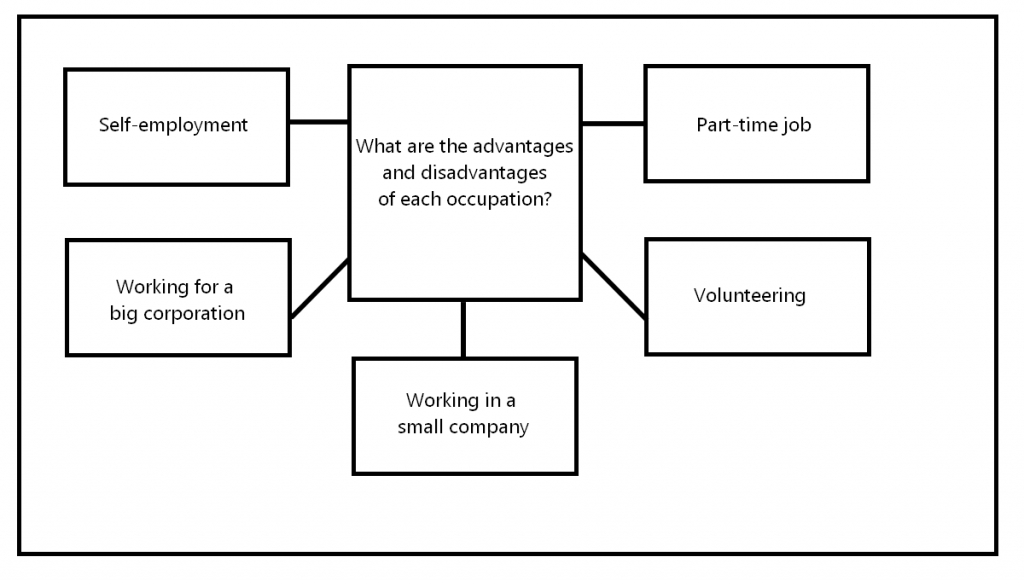
Now, talk to each other about the advantages and disadvantages of each of these occupations.
Sample answer
Candidate A (Boris): Do you mind if I go first?
Candidate B (Ira): Sure, go ahead.
Boris: I believe that part-time job offers a serious advantage of giving you more free time and flexibility to do something else while allowing to make enough money for a living.
Ira: It might be so, but are you sure working part-time will be enough to cover anything but one’s living expenses like bills and groceries? I really doubt it, to be honest.. I think working in a smaller company offers similar advantages to the ones you’ve mentioned, but the money must me better since you’ll be putting in more working hours.
Boris: I guess you are right. And the smaller companies are usually willing to give you more leeway with your schedule and your decisions. However, smaller businesses tend to go under quite often, so there’s very little in terms of job security. But what about self-employment? On paper, it should give you all the freedom you wish for, being your own boss and all!
Ira: Oh, I’m not so sure about that. You’ve brought up financial security, and working for yourself is such a dangerous venture! If stability is something you prioritise, that is probably not your best option. It does sound lucrative though – you earn as much as you make, there is nobody to order you around. It sounds so invigorating!
Examiner: Thank you. Now you have about a minute to decide which occupation is most stressful.
Ira: Being self-employed is likely to be the most taxing one emotionally, I mean you have the weight of decision on your shoulders, everything depends on you, all this has to really take its tall emotionally, wouldn’t you agree?
Boris: To be honest, at first I was thinking about working for a major company, but you do have a point and you’ve managed to convince me. In the light of your arguments mine seem to be irrelevant, I won’t even bother with them.
CAE Speaking Part 4 – Topic discussion
In this final part of CAE speaking you have an individual conversation with the examiner. This task is similar to the first one, but the topic of discussion is the one from Part 3. You should express and justify your opinion on the subject as the examiner guides you, asking you related questions. You might get to answer the same question as your partner. The examiner might also encourage you to engage in a dialogue with the other test-taker. This part of the exam lasts for up to 5 minutes.
Part 4 sample questions with answers
High-paying jobs
Examiner: Boris, is it better to have a high-paying job or the one that is more enjoyable?
Boris: Well, if both can’t be had, then I guess doing something you really like should be the priority. I doubt that the money you get for doing the job you loathe will do you any good. But to reiterate, ideally the two should come hand-in-hand.
Examiner: Thank you. Ira, do you agree?
Ira: Of course, you’d be really blessed to do something you’re passionate about and make good money out of it, but how often is it the case? You must be extremely lucky to find yourself in such position. If we take more realistic cases into account, then I’d go with money over enjoying what you do – in the end of the day that’s what job is all about – earning money! One can always have fun in their free time.
Unemployment
Examiner: Ira, how does unemployment affect the society in general?
Ira: It’s a tough question… Lack of job openings must have serious economic and social consequences – people are unable to afford even the most basic things, they purchasing ability goes down, which in turn affects the economy negatively. People and the society find themselves in a Catch 22 situation.
Examiner: What do you think, Boris?
Boris: I’m not sure if it is as bad as Ira makes it look. A well-qualified professional is always going to be able to find employment. It’s the lack of necessary qualifications that might be preventing certain individuals to find a position to their liking, and they are probably unwilling to resort to menial jobs. It’s all about the attitude.
Government and unemployment
Examiner: Now I would like you to discuss the following question: should government be responsible and provide for the unemployed?
Ira: I’d like to express my own opinion, if you don’t mind?
Boris: Of course, go ahead.
Ira: Thank you. I totally support this notion – the state should provide financial security for those unlucky ones without any reliable source of income. It would allow people to get better qualifications or enroll on a course to make them more employable.
Boris: You do make some valid points – it would be fair to support individuals who are keen to get re-educated to have a more relevant skill-set in the ever-changing job-market. However, I believe that this system could be easily exploited by the less conscientious individuals – people could just live off of welfare, being unemployed officially, while at the same time having a part-time job on the side. It is something that can’t be tracked easily.
Ira: It doesn’t have to be so negative, though! But I totally see what you mean, and indeed, such possibility definitely exists. I guess it’s not easy to find the middle ground in this matter.
Examiner: Thank you. That is the end of your CAE Speaking part.
CAE Speaking marking criteria
It is crucial to understand how your CAE Speaking is marked. It helps give the examiners exactly what they want and improves your chances of getting a higher score.
During the exam two independent assessing procedures take place. The assessor (the person sitting in the back taking the notes) has 5 separate marking criteria that Cambridge uses to decide how good your spoken English is:
1. Grammar
2. Vocabulary
3. Discourse Management
4. Pronunciation
5. Interactive communication
The interlocutor (the person asking the questions) assesses you using a separate criterion, referred to as “Global achievement”. All of the assessment aspects will be explained below.
Each one is scored individually from 0 to 5 in 0.5 increments. They are then combined to get the average of six.
1. Grammar
What is assessed
Naturally, the variety and accuracy of your grammar. Some examples:
– Noun, relative and adverb clauses (some examples of each)
– Active and passive forms
– Verb patterns (infinitives, to-infinitives, gerunds)
– Contrast and command of tenses (e.g. showing a temporary situation with Present Cont.)
– Modal verbs and modality
– Conditional sentences
– Ability to produce longer, multiple-clause sentences
– Flexibility (able to rephrase in order to clarify).
How to improve your score
– Alternate between active and passive voice.
– Try to introduce more advanced tenses into your narrative (e.g. Present Perfect to talk about your experience of learning English or Future Perfect to talk about plans that you are sure of).
– Learn verb patterns! They are extremely important in both written and spoken English.
– Use conditionals – Second Conditional for unlikely things in the present or in the future, Third Conditional for unreal results of things that didn’t happen. You should know all of this as CAE is a C1 level exam.
– Use a variety of modal structures – modal verbs (could, might, must) and phrases that express likelihood (probably, likely, seems to be, appears to be, looks like).
– Be ready to rephrase your phrase or sentence if you feel that they might not have sounded clear enough (usually introducing the rephrased sentence with something like “What I mean to say is…”, “In other words…”, “Allow me to clarify – I mean that…”).
When you attempt to make your speech more complex, introducing two or more clauses to your sentences, mistakes are likely to happen. If you notice that you’ve made a mistake in your speech, it is perfectly normal to try and rephrase the idea. As long as communicative task is achieved, your score won’t suffer!
2. Vocabulary
What is assessed
Just like with grammar, it is all about the range and appropriate usage of your lexical resource. Factors that influence this mark:
– Appropriate collocations
– Register (formal/informal, depending on context)
– Rephrasing (if your speaking partner does not seem to understand you (Part 3, 4)
– Using synonyms, avoiding repetition of words
What to do
– Don’t be lazy and look up collocations you aren’t sure of when you practice. A good place to start freecollocation.com dictionary. This applies to writing as well.
– Keep your register consistent throughout your response. Don’t make it too informal, be respectful to both the examiner and your fellow test-taker.
– If you see that your speaking partner struggles to understand your phrase, make sure to rephrase it.
– Be mindful about your English – listen to yourself and don’t use the same words over and over again. Here are some examples of synonyms for overused words and synonyms for “very”.
3. Discourse Management
What is assessed
In essence, this is about how well you ideas are linked – connection between words, phrases and even whole sentences. Another important thing is how easy it is to follow and understand your speech – how much sense it all makes, that is. It’s not about your pronunciation. These two aspects are usually called coherence and cohesion. Things that are assessed here:
– Cohesive devices (more on that below)
– Topical vocabulary (vocabulary related to the general theme that is being discussed)
– Various grammar that helps the listener understand what you’re referring to (articles and personal adjectives/pronouns)
– Discourse markers (words and expression that can normally only be found in spoken language, like “You know…”, “I mean… “
– Staying on topic (so-called “relevance” – you have to talk about the question, do not stray too far away from it)
– Introducing new ideas (rather than going over the thing you have already said)
How to improve your score
– Know and use cohesive devices. They can be roughly grouped into ‘adding or elaborating’ (in addition, also, moreover, as well as), ‘showing consequence or result’ (as a result, consequently, so, thus, therefore) and ‘sequencing or ordering’ (firstly, first of all, to begin with, secondly, finally). These help structure your speech, making it both connected and easier to follow.
– Expand your vocabulary. It is pretty sad to see CAE candidates struggling to come up with any relevant words on topics as simple as Food, Holidays or Career. There is no way around it, learn new words! Here is a good vocabulary link that groups words and phrases in a nice way.
– Make sure to know the basics of articles in English. Use them to your advantage. Don’t forget about possessive pronouns and adjective to make your speech more cohesive (it, this, that, one).
4. Pronunciation
What is assessed
First of all, elephant in the room – it is not about your accent. As long as your accent is easy to understand, you will do fine. This part checks other things, namely:
– Clearly pronouncing all the sounds that should be pronounced (more on that below)
– Stressing the right syllables in words (sound obvious, but it is a rather common problem)
– Using intonation to highlight and emphasise points in your speech (well-used intonation goes a long way)
How to improve your score
– Know how to pronounce words – and pronounce them with confidence. This is especially important when saying the ending of each word, as test-takers who lack confidence tend to omit the ending syllable. I would also suggest avoiding contractions, i.e. say “I have” instead of “I’ve” just to avoid ambiguity.
– Intonation is an extremely powerful tool that can drastically improve general impression of your answer. Use it to your advantage. Here is an interesting article on this topic by British Council.
5. Interactive communication
What is assessed
Your ability to sustain a conversation as well as to develop your individual response. This is what the examiners look at:
– Expanding on your answer (not giving short, uninformative responses)
– Including and encouraging your speaking partner
– Ability to initiate the exchange and to support it by contributing to the conversation or the topic
– Helping the other candidate to either phrase their ideas or suggest one for discussion
– Understanding the rhythm of a natural conversation, not “hogging” it
How to improve your score
– Short answers do not give enough information to accurately assess your level of English. To give your examiners something to work with you should come up with at least two long or three shorter sentences in Part 1 and about three to four longer sentences in Part 4.
– Be sure to include your partner! There are some phrases that you might find useful for that.
– More phrases to initiate the dialogue and to support it with your ideas
– Do not take up too much time in CAE Speaking Part 3 – remember that you only have two minutes in the first half and one minute in the second.
- There is a number of typical Speaking mistakes. Know them to avoid embarrassment and guarantee a higher score.
- Do not attempt to answer other student’s question even if you see them struggling – you might get penalized for that. However, you might help them by paraphrasing your ideas in the collaborative task.
- Keep practicing. The most effective way to improve your speaking is using the language, you can do so by either having live conversations or by writing.
We use cookies on our website to give you the most relevant experience by remembering your preferences and repeat visits. By clicking “Accept”, you consent to the use of ALL the cookies.
Экзамен на Certificate in Advanced English (CAE) я сдавала в чрезвычайно бурный и занятой период жизни. Времени было не то что мало, а не было вообще. Да и боялась я жутко! Но всё же решила попытаться. Результат меня приятно удивил и помог наконец поверить в свои силы. Сегодня я хочу поделиться своим опытом с теми, кто тоже решил пройти это испытание.
Вы найдете много информации о данном экзамене в Интернете, в том числе и на официальном сайте экзаменов. Там же есть подробное описание структуры экзамена, критерии оценивания и свежие примеры заданий. Существуют также и аутентичные комплексные учебники, они помогут вам овладеть необходимой лексикой и грамматикой, а также изучить формат экзамена.
Я же хотела бы сосредоточиться на Speaking part. Именно эта часть страшила меня до дрожи в коленках, и именно по ней мне удалось получить Exceptional («отлично»). В этой статье я расскажу вам, как лучше всего подготовиться и к каким маленьким хитростям прибегнуть на экзамене.
Из каких частей состоит Speaking на CAE
Напомню, что Speaking длится всего лишь 15 минут и состоит из четырёх частей:
- Interview (интервью).
- Individual long turn (индивидуальный ответ).
- Two-way conversation (диалог с партнером).
- Discussion (обсуждение).
На сайте flo-joe.co.uk есть подробное описание каждой части, примеры вопросов и ответов.
А вот видео с примером устной части экзамена. Посмотрите, как кандидаты сдают CAE:
Как подготовиться к устной части экзамена
Конечно, Speaking test проверяет навыки спонтанной речи, поэтому зазубренные по списку темы здесь не сработают. Это одна из причин, по которым результаты экзамена высоко ценятся работодателями. Однако есть пара хитростей, которые помогли мне и пригодятся вам.
Practice wherever you can – практикуйся всякий раз, когда есть возможность
- Отсутствие практики было главной причиной моего страха. Мне было просто необходимо общение вне классной комнаты, без заданий и учебника. Возможности поехать за рубеж на горизонте не было. И я решила, пусть заграница приедет ко мне! С помощью Интернета мне посчастливилось найти клуб таких же энтузиастов, как и я. Чем клуб занимался? Практически всем! От общения в кафе и на лавочках с фильмами и песнями до пикников на природе. С одним единственным условием – speak English! Так что послушайте моего совета и отправляйтесь искать единомышленников и общаться!
- Кстати, существует такой международный клуб для изучающих языки, как language exchange club. Проверьте в сети, возможно, такой клуб уже существует в вашем городе.
Еще один способ шикарной языковой практики прямо в вашем доме – это couchsurfing. Если вы готовы принять иностранца у себя дома и предоставить ему ночлег, этот сайт поможет вам найти друг друга. Мне повезло принять у себя гостей из Нидерландов и Великобритании. Это был отличный опыт реального и длительного общения, в том числе с носителем языка!
- А в статье «Практика английского языка с Couchsurfing» преподаватель Виктория рассказала о своем опыте изучения английского с помощью этого сервиса.
- Третий доступный каждому вариант – это беседы с самим собой. Я не сторонница репетиций перед зеркалом, но рекомендую попробовать ответить на вопросы хотя бы себе под нос! Это поможет вам убедиться, что вы можете подыскать нужное слово и незамедлительно выразить свою мысль.
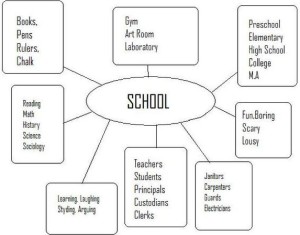 Как же не растерять свой языковой багаж и блеснуть им во всей красе на экзамене? В этом деле мне очень помогли word maps – карты слов или даже фраз, сгруппированных в рамках какой-то темы. Справа вы можете увидеть пример такой карты по теме School. Здесь собраны не только прилагательные, но также существительные, а при желании можно добавить и глаголы, а также всё, что можно использовать в речи по данной теме. Раскладывая всё по полочкам, вы еще лучше запоминаете слова. В какие группы их объединить, вы выбираете сами, руководствуясь собственной логикой.
Еще один плюс в том, что по завершении вы видите сразу всю тему как на ладони, не давая словам «разлететься» и «осесть» в дальних уголках сознания. Для экзамена этот способ прекрасен тем, что одно слово «вытягивает» за собой все остальные.
Don’t keep mum – не молчи
Следующее, что оценят экзаменаторы, – это ваши Fluency («беглость речи») и Pronunciation («произношение»). То есть нужно реагировать на вопросы и задания быстро, естественно и с соответствующей интонацией. Практически так же, как и на родном языке! И тут самый главный мой совет – don’t keep mum («не молчи»), дайте дорогу любой вздорной идее, появившейся в голове.
Вспоминая некоторые свои ответы, я сейчас смущённо улыбаюсь. Но точно знаю, что это было куда лучше, чем потратить отведённое мне время на поиск мыслей и слов в неловком молчании.
Improvise – импровизируй
Помните бородатый анекдот про студента, который к экзамену по зоологии подготовил только билет про блоху? Он умудрился о блохе рассказать и в вопросе о льве (на шерсти у которого водятся блохи) и даже о рыбе (вот если бы у нее была шерсть…). Так вот, этот номер отлично сработает на Speaking test. Так, я сама не заметила, как в ответ на вопрос “Where are you from?” рассказала не только о своём городе, но и том, как мне хочется побывать в дальних странах, назвав всё это полюбившейся мне идиомой pipe dream («несбыточная мечта»). Нет, я не стремилась употребить идиому! Просто мне удалось логично выйти из обычной скучной темы на что-то действительно для меня интересное. Ведь это гораздо лучше, чем односложный ответ и молчание, не правда ли? Так что, если есть темы, в которых вы сильны, не бойтесь завернуть разговор в нужном вам направлении. Особенно это уместно в первой части (Interview), где именно о вас речь и должна идти.
Broaden your horizon – расширяй свой кругозор
Говорить исключительно о себе весь экзамен, как вы догадались, не получится. Задания включают множество разнообразных тем, и каждая из них подразумевает не только определённый словарный запас, но и наличие у вас собственного мнения. Лично у меня сложилось впечатление, что проверяется не только знание языка, но и уровень интеллектуального развития. Если такие вопросы, как проблемы экологии или попавшаяся мне “Computer and network surveillance” вызывают некоторое замешательство, стоит расширить горизонт своих познаний. Я готовилась по современным британским изданиям, поэтому могу сказать, что они богаты интереснейшими текстами и аудиозаписями на актуальные темы. Хотя, думаю, можно найти много альтернативных способов.
Getting the task right – пойми задание правильно
Правильно понять задание – это всегда ключ к успешному его выполнению. Speaking test не исключение. Для кого-то, возможно, это и очевидно, но опыт общения со студентами показывает, что не для всех. Поэтому давайте взглянем на пример задания прошлого года:
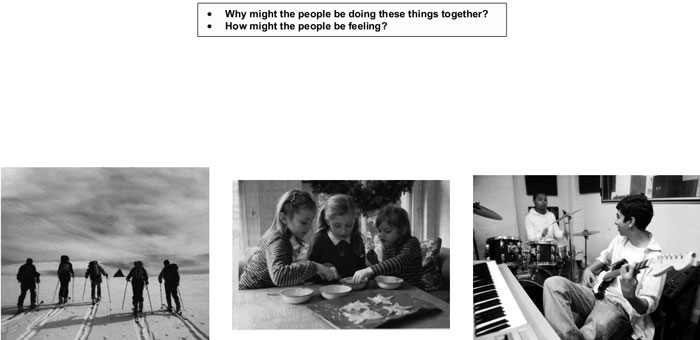
“Why might the people be doing these things together? How might the people be feeling?”
Чего ожидают экзаменаторы от вашего ответа? Прежде всего, не зацикливайтесь исключительно на описании картинки. Сосредоточьтесь на задании. Вам нужно объяснить, почему люди делают что-то вместе, и описать их эмоции. А ещё обратите внимание на слово might – это сигнал к тому, чтобы смягчить свой тон. Выразить догадки и предположения в английском, я бы сказала, – целое искусство. А теперь отгадайте, какой из ответов лучше?
| 1) In the first picture the people are skiing. It’s a polar expedition. They feel worried. They can help each other, so it’s better to go together. | OR | 2) It seems to me the people skiing with huge backpacks are on a polar expedition. I guess they might feel excited on the one hand, but a little worried, on the other hand. They should be more confident if they can rely upon each other. That’s why it’s better to be a part of a team. |
Правильный ответ, думаю, очевиден. Итак, необходимо четко отвечать на задание и не забывать смягчать свой тон. Кстати, британская привычка «сглаживать углы», даже критикуя что-то, – притча во языцех. Стоит ли взять ее на вооружение? Я считаю, да!
Interact – взаимодействуй с партнером
Взаимодействие с партнером – часть вашей оценки. Поэтому следует не просто говорить по очереди, а реагировать на высказывания собеседника. Можно развивать и дополнять его идеи, согласившись с ним, или же не соглашаться и выражать свою собственную точку зрения. Думаю то, насколько вежливо вы это сделаете, экзаменаторы тоже оценят. Страницы учебников пестрят фразами по теме “Agreeing or Disagreeing” («согласие или несогласие»). Вот некоторые из них:
| Agreeing | Disagreeing |
|---|---|
| I totally (completely) agree with you. I can’t but agree with you. You have a point. Absolutely! That’s true. That’s right. We look eye to eye here. We’re on the same page. |
I don’t think so, I’m afraid. I can’t agree with you. I don’t really agree, but what I think is… I can’t be so sure about that. Yes, but don’t you think that… That’s not quite true. I have a different point of view. |
Если же собеседник совсем отклонился от темы, возможно, вам пригодятся фразы типа:
- Let’s stay on topic.
- Let us not wonder away from the subject.
- Yes, but let’s discuss…
- What we have to do is… Right?
Не бойтесь также переспросить, если мысль партнера вам непонятна:
- I don’t quite get your point.
- Do you mean that… ?
- … is that what you are saying?
После всех трудов остаётся только выдохнуть и настроиться на успех! Дрожь в голосе не улучшит вашу оценку! Помните, что оценивают не каждую вашу ошибку, а то, как вы в общем умеете общаться. Так что не краснейте, запнувшись, а ищите нужные слова и стремитесь быть понятым.
Мой личный опыт очень обнадёживает. Сами экзаменаторы были чрезвычайно приветливы. Сначала они шутливо договорились о том, кто из них в этот раз будет сидеть в углу (отмечать ошибки), а кому достанется stop-watch («секундомер»). Выглядело это так, будто малые дети делят игрушки в песочнице. Меня внимательно слушали, улыбались и кивали. Конечно, через пару минут я уже забыла о своём страхе! Чего и вам желаю! Надеюсь, эта статья будет полезна при подготовке. Good luck! And break a leg!
Если вы нашли ошибку, пожалуйста, выделите фрагмент текста и нажмите Ctrl+Enter.
Примеры заданий для экзамена CAE (Certificate in Advanced English) можно найти ниже:
Current papers
Вариант #1
CAE Sample paper 1 Answers
Writing
CAE Sample paper 1 Writing
Reading and Use of English
CAE Sample paper 1 Reading and Use of English
Speaking
CAE Sample paper 1 Speaking
Listening
CAE Sample paper 1 Listening
Part 1 Extract 1
Part 1 Extract 2
Part 1 Extract 3
Part 2
Part 3
Part 4
Вариант #2
CAE Sample paper 2 Answers
Writing
CAE Sample paper 2 Writing
Reading and Use of English
CAE Sample paper 2 Reading and Use of English
Speaking
CAE Sample paper 2 Speaking
Listening
CAE Sample paper 2 Listening
Part 1 Extract 1
Part 1 Extract 2
Part 1 Extract 3
Part 2
Part 3
Part 4
You can get more information from the official website

CAE (Certificate in Advanced English) это один из кембриджских экзаменов, следующий после FCE. При его успешной сдаче кандидаты получают сертификат, подтверждающий, овладение английским языком на продвинутом уровне. Подготовка к экзамену САЕ должна включать планомерную работу над разными навыками владения языком.
Кому нужно сдавать САЕ
- Сертификат, который выдается после прохождения экзамена САЕ, признается в 16 000 иностранных колледжей и университетов для поступления.
- Он документально подтверждает владение английским на довольно высоком уровне. В связи с этим многие международные организации охотно принимают соискателей, имеющих данный сертификат.
- Сертификат САЕ дает преимущество при устройстве на работу в России в организации, где требуется хорошее знание английского языка.
Экзамен САЕ ежегодно сдают студенты более чем в 100 странах мира. Он проходит в специализированных экзаменационных центрах, находящихся в крупных городах. На сегодняшний день насчитывается 2800 подобных центров, в Российской федерации расположено 68 организаций, принимающих экзамен САЕ, точные адреса можно посмотреть на официальном сайте Кембриджских экзаменов https://www.cambridgeenglish.org/find-a-centre/find-an-exam-centre/.
Формат экзамена САЕ
Последние изменения в проведение экзамена САЕ были внесены в 2015 году. В 2020 году в формат экзамена САЕ изменения привнесены не будут. Время и разделы остаются такими же, как были утверждены в 2015 году.
Экзамен состоит из четырех частей:
Чтение и практический английский
Продолжительность 1,5 часа.
Сдающий должен уметь читать, понимать главное, а также детали в содержании текста, уметь находить необходимые сведения. Также в данном разделе выполняются различные словарные и синтаксические задания.
Задания аналогичны предыдущим Кембриджским экзаменам – тексты с пропущенными словами и фразами с вариантами ответов и без них, выбор ответа из нескольких предложенных. Есть задания, где нужно вставить слово в правильной форме, упражнения на понимание структуры текста и позиции автора.
Всего нужно выполнить 56 различных заданий. Оценка составляет 2/5 он общей оценки за весь экзамен САЕ.
Письмо
Продолжительность выполнения 1,5 часа.
Состоит из двух частей:
- написание обязательного эссе, без выбора темы.
- написание работы на выбор из предложенных (письмо, электронное письмо, отчет, отзыв)
При выполнении данного задания учитывается раскрытие темы задания, объем использованной лексики, грамотное употребление слов и правильное построение предложения с точки зрения грамматики. Объем каждой части должен быть не меньше 220 слов.
Оценка составит 1/5 от общей оценки за экзамен.
Аудирование
Продолжительность 40 минут.
Студенту необходимо прослушать несколько текстов: монологов, диалогов, полилогов и ответить на 30 вопросов по этим текстам. Вопросы касаются общего содержания и отдельных деталей в прослушанном материале. Здесь оценивается навык воспринимать иностранную речь на слух и умение вычленить из неё нужную информацию.
Оценка за этот раздел составляет 1/5 от общей оценки за экзамен.
Разговорная речь
Продолжительность выполнения 15 минут.
Данный раздел включает выполнение задания на индивидуальной карточке, интервью с экзаменаторами, совместное задание со вторым кандидатом и обсуждение предложенного вопроса. Также как на Кембриджском экзамене FCE эта беседа проводится в паре со вторым студентом и двумя экзаменаторами. Если количество сдающих нечетное, то последний студент присоединяется к одной из пар.
Оценка за это задание составляет 1/5 от общей оценки за испытание.
Оценка за экзамен CAE
Все сдающие получают отчет о результатах пройденного испытания. В нем можно посмотреть оценку за каждый раздел экзамена и общий результат.
Промер такого отчета можно посмотреть здесь http://www.cambridgeenglish.org/images/201339-understanding-your-sor-advanced-2015.pdf
Сертификат о прохождении выдаётся при оценках А, В и С. Те, кто в процессе сдачи набрал от 160 до 179 баллов получает сертификат уровня B2.
Сертификат, полученный после прохождения экзамена CAE бессрочен.
Хотите получить результат?
Готовьтесь к CAE с профессионалами!
CAE подготовка к экзамену
Работа по подготовке должна вестись в двух направлениях:
- Изучение учебников. Важно прорабатывать каждый раздел, по которому проводится испытание, много говорить на английском, на любые темы, писать, смотреть фильмы без перевода, для того чтобы улучшить навык аудирования, каждый день читать книги, статьи на английском.
- Решение тестов. В помощь для вашей самостоятельной подготовки наши преподаватели разработали тесты, с заданиями аналогичными тестам на экзамене САЕ, выполняйте тесты онлайн на нашем сайте.
Также полезно обращаться к тестам прошлых лет. Здесь важно учесть тот факт, что в 2015 году изменился формат проведения экзамена, выполняйте только тесты, проводимые в 2015 году и позднее. Образцы экзаменационных тестов прошлых лет можно найти на нашем сайте.
Немаловажно также послушать мнение тех, кто уже сдавал экзамен САЕ в новом формате и может похвастаться отличными результатами: https://www.youtube.com/watch?v=xYv0hPGffEE
Подготовиться к экзамену можно на специальных курсах. Плюсами такого обучения является работа по всем разделам, а также то, что подготовку осуществляет специалист, который компетентен в данном вопросе. Среди минусов – высокая цена, наличие подобных курсов не во всех населенных пунктах, отсутствие дифференцированного подхода к каждому студенту.
Оптимальным вариантом подготовки к сдаче экзамена САЕ являются занятия с репетитором. Особенно полезна такая тренировка тем, кто сдал FCE на отметку «удовлетворительно». Преподаватель подберет материал, необходимый для подготовки именно вам. Не всегда в своем городе можно найти компетентного репетитора. Вариантом таких занятий является подготовка к сдаче экзамена САЕ по скайпу.
Онлайн школа дистанционного обучения английскому языку по скайпу Landischool поможет подготовиться к сдаче экзамена САЕ. Наши преподаватели разработают курс специально для Вас, с учетом ваших сильных и слабых сторон во владении английским языком. Учителя Landischool знают структуру экзамена САЕ и содержание заданий на личном опыте, наши преподаватели имеют бессрочные сертификаты САЕ.
Мы поможем вам качественно подготовиться к экзамену САЕ, повысим ваш уровень английского, научим вас нюансам, которые помогут сократить время на выполнение заданий.
Примеры заданий
Проверить свои силы можно прямо сейчас с помощью оригинальных тестов экзамена CAE онлайн. Эти тексты можно взять за основу своей подготовки, отработка этих заданий позволит Вам лучше овладеть английским языком.
Из моей десятилетней практики преподавателя английского, сделала вывод, что часто, даже обладая довольно не плохой базой английского в плане грамматики и лексики, изучающие английский могут испытывать трудности в общение с англоговорящими из-за банального НЕЗНАНИЯ КАК ВЕСТИ ДИАЛОГ, как интересно преподнести и описать ситуацию и т.д.
И, зачастую, просто прокачав данные навыки, исчезали барьеры, страх вступить в диалог, особенно это касается тех, кто уже на хорошем Intermediate уровне (B1 – средний уровень), но испытывает трудности при говорении.
Чем хороша подготовка к FCE, CAE экзаменам — при надлежащей подготовке, тренировке, студенты приобретают отличные коммуникативные навыки. Кстати, это помогает не только в английском, но, в любом случае, дает определенное личностное развитие.
В конце статьи прилагаю отличные видео с фразами. Очень полезно, не только почитать, но и послушать, а также, повторить за диктором разговорные выражения, скопировать интонацию, прочувствовать звучание каждого словосочетания.
Что в данной статье:
1. Как начать дискуссию или обсуждение на английском.
2. Вводные фразы, чтобы выразить свое мнение.
3. Перейти к следующей теме.
4. Завершить свое высказывание, спросить мнение партнера.
5. Вежливо прервать другого кандидата.
6. Фразы для поддержания беседы.
7. Выражения согласия на английском.
8. Выражения несогласия на английском.
9. Как подвести итоги, как сделать вывод на английском, свое заключение.
10. Conversation fillers.
Полезные выражения для устной части
FCE CAE Speaking Part
10 составляющих
1. Начать обсуждение
Starting your discussion
Let’s begin/start with …
Shall I start? / Yeah, go on.
Shall I go first? / Of course, go ahead.
Is it okay if I start? / Sure, no problem.
Bob, I think you know a lot about [topic]. What’s your opinion on it?
Would you like to go first? / Yes, why not?
Would you like to begin?
Which one shall we start with?
What do you think, Bob?
2. Фразы, чтобы выразить свое мнение
Expressing your opinion
As for me / As to me, …
As far as I’m concerned,…
I believe/think that…
I am of the opinion that …
I have the feeling that …
I have no doubt that …
I hold the view that
I think / consider / find / feel / believe / suppose / presume / assume that …
I guess that …
I suppose…
I would say that…
It seems to me that…
It goes without saying that …
I am under the impression that …
In my opinion,…
In my view…
If you ask me,…
My own feeling on the subject is that …
From my point of view, …
The way I see it,…
To my mind, …
3. Перейти к следующей теме
Moving to the Next Item/ Changing the subject
Ah, that connects with the next topic.
As for + one of the options
As to + one of the options
As regards + one of the options
How do you feel about that one?
In relation to + one of the options
I wonder if we can compare [current topic] to [new topic]?
Regarding the question of the task,
Shall we move onto [topic] now?
So what about [topic]?
[Topic] is pretty similar to the last one — maybe we can skip it for now?
We still need to discuss [topic].
What about this one? [pointing to topic]What do you think about this idea?
We’re running out of time, so let’s move on.
With regard to + paraphrased question
4. Завершить свое высказывание, спросить мнение партнера
Ending Your Turn/ asking for your partner’s your opinion/asking for clarification
Don’t you agree?
Do you have anything to say about that?
Do you have anything to add to that?
Do you think…?
Do you believe that…?
Did I forget anything?
«statement», don’t you think/agree?
«statement», wouldn’t you say so?
«statement», wouldn’t you agree?
«statement», right?
How about…?
What about…?
What’s your take on…?
What do you think?
What do you think about…?
What’s your opinion?
What do you reckon?
Do you get what I am saying?
Where do you stand on this?
5. Вежливо прервать другого кандидата
Interrupting
Excuse me, May I please interject
Excuse me, May I please add
I’m sorry, but …
I’m sorry to interrupt, but…
I don’t mean to intrude
Just a second…
Sorry to interrupt but…
Can/May I add something?
While that is an important point its also important to add
6. Фразы для поддержания беседы
Phrases to keep a discussion going
Let’s get back to …
As we just heard …
Where were we?
7. Выражения согласия на английском
Agreeing
I am at one with you on that point.
I guess so!
I fully agree.
I couldn’t agree more.
I was just thinking that!
I was just going to say that!
I (totally) agree with you.
I see it that way, too.
I think so, too.
I have no objection.
I have come to the same conclusion.
I hold the same opinion.
I share your view.
I suppose so!
Exactly!
Fair enough!
Good point.
That’s just what I was thinking.
That’s (absolutely) true.
That’s a great idea.
That’s just it!
You’re totally right.
You’re dead right.
You’re (absolutely) right.
Yes, I see what you mean.
Yes, of course.
Why not!
You hit the nail on the head!
Spot on!
8. Выражения несогласия на английском
Disagreeing
I think it would be better to…
I’m not so keen on that.
I don’t really agree with you there.
I don’t share your view.
I don’t think that’s quite right.
I’m sorry, but I don’t agree.
I’m afraid I don’t see it the same way.
I am afraid that is not quite true.
I’m sorry but I have to disagree.
I’m with you on that, however…
I think otherwise.
I guess not
I suppose not
I see what you’re saying, but I suppose I would add that…
Of course not
Definitely not
You may be right, but I have a different view.
Yeah, but, the thing is…
Maybe, but what about…?
May I also suggest that…
For one thing…[reason 1] And for another… [reason 2]That might be true, but I’m not sure I agree with you.
The problem with what you said is…
Weeeeeell maybe, but…
To be honest…
Fair enough, but…
I see your point… but
9. Как подвести итоги, как сделать вывод, свое заключение на английском
Reaching a Decision/ Concluding the discussion
Are we both in favor of [topic]?
For these reasons,
I guess you think we should choose [topic]?
I don’t think we’re going to agree on this!
I believe we have an agreement, don’t we?
In conclusion
In a nutshell,
Let’s agree to disagree!
Okay, so we agree.
So then, what do you think is the best one?
So, do we have an agreement?
Shall we stick to…?
Shall we agree on..?
Thus,
To sum up
The bottom line is…
Well, I think it’s definitely not [topic]We can eliminate [topic] right away. Don’t you think?
10. Conversation fillers
I’ve never really thought about that, but I suppose…
Let’s me consider this for a moment, it’s quite complicated…
to be honest that’s not a question I’ve ever thought about before…
Еще раз повторюсь, что очень полезно послушать разговорные фразы и выражения, повторить, скопировать фразовое ударение, интонацию, контекст. Поэтому прилагаю сборку видео по приведенным выше фразам и выражениям для ведения диалога.
Уроки английского языка проводятся репетитором Анастасией Валяевой. Все учебники, аудио и видео материал предоставляются. Информацию о процессе обучения можно прочитать в ответах на вопросы или связаться с преподавателем Анастасией Валяевой.