19.07.20
Chinese tea house in Moscow
The bright
building on Myasnitskaya Street in Moscow stands out among others and attracts
the attention of passers-by with its non-typical elements for Russian
architecture. The tea house resembles a Chinese pagoda and it is considered to
be the real office of a company that was involved in tea trade.
This house in the Chinese style was built for the tea merchant Sergei
Vasilievich Perlov (A) ______ in
order to establish his own business. He bought the land on Myasnitskaya Street
in the centre of Moscow in 1875, (B) ______ in
1891. The construction was finished by 1893. The first floor was for Perlov’s
tea shop, (C) ______ profitable apartments for rent and the host’s own family.
The front side of the newly built house was redecorated in the Chinese style
after several years. A little tower in the form of a pagoda appeared (D) ______
molded dragons, snakes, Chinese umbrellas and lanterns. Some materials for
decoration were even brought directly from China. It was made before the visit
of the Chinese Ambassador Li Hongzhang, (E) ______
Nikolai II and Alexandra Fyodorovna coronation. The merchant Perlov thought
that it might be useful for his tea business (F) ______ at
this house. He preferred the house of Perlov’s brother and competitor. But
thanks to this case now there is a beautiful exotic building right in the city
centre, as if it came right from another part of the world.
1.
who was going to visit Moscow for
2.
who left the family tea trade company
3.
and the other two floors were used for
4.
and began to build the new house on it
5.
and the front side was decorated with
6.
which was imported mainly from China
7.
but the Ambassador did not in fact stay
Coffee decaffeination processes
Every day it seems
that medical researchers come out with a new study about coffee, how it is
extremely unhealthy for you and/or full of amazing benefits. The focus of most
of these studies is more particularly about the effects of caffeine on human
health. As caffeine, coffee’s most potent element, is a stimulant, it can
produce both positive and negative effects. It can wake you up in the morning,
but it can also lead to sleeplessness, a racing heartbeat, and anxiety.
It is therefore
no surprise that many people have decided to cut caffeine out of their diets.
As for me, I have grown to like the taste of coffee, but to me the main purpose
of drinking it is to get an extra jolt of energy. That is why I will admit to a
certain prejudice against decaf, perhaps prompted by bad experiences with weak
and tasteless brew, because it is true that the actual process of removing
caffeine from coffee can degrade the taste beyond repair.
Early
decaffeination attempts involved soaking the green beans in water and then
using various solvents to separate the caffeine in the resulting water
solution. The beans were then re-introduced to the caffeine-free solution in
order to absorb some of the flavor they had lost. Solvents used included
benzene, chloroform, and trichloroethylene, all of which were later found to
have toxic effects. In the 1970s, dichloromethane came into use to replace the
earlier solvents before it too was deemed possibly carcinogenic.
In response to
these concerns about solvents, some coffee companies began to run the water
solution through charcoal filters as a means of removing the caffeine. The
so-called Swiss Water Process, developed in Switzerland in the 1930s, goes one
step further. After a batch of coffee beans has been steeped in hot water, that
water is filtered, and then is used to soak the next batch of beans to be
processed. In this way, the beans lose caffeine as they soak, but lose less of
their flavor.
Yet another
method that aims to safely remove caffeine from coffee beans involves a
fascinating compound procedure. The solvent used in this method is neither
water nor one of the earlier toxic solvents. Instead, caffeine in the coffee
beans is dissolved by means of carbon dioxide. In order to accomplish this, the
carbon dioxide must become a supercritical fluid, created when it is compressed
and heated to the point that it has the same density in liquid and gaseous
forms.
As this supercritical CO2 is passed through the beans, it can penetrate
them because of its gaseous properties, and yet is able to dissolve the
caffeine they contain because of its liquid properties.
In 2004,
Brazilian scientists identified a new strain of coffee beans with a naturally
low level of caffeine. They found three coffee plants from Ethiopia that
contain almost no caffeine as they seem lack an enzyme necessary to caffeine
production. If these plants can be crossed with commercial strains of coffee
plants, we may one day see more coffee on the market that is naturally low in
caffeine.
With these
advances, and the current methods of decaffeination, decaf junkies are sure to
be able to get their fix of coffee that not only tastes great, but won’t keep
them up half the night.
As for me, I do
want to stay up half the night, so I’ll stick to my full-strength brew.
12. According to
the text (paragraph 1), the effects of caffeine …
A) have not been
studied well enough.
B) can be of
opposite character.
C) are very
dangerous.
D) are not
strong.
13. The author
believes that caffeine in coffee …
A) is part of a
healthy diet.
B) is quite low.
C) can’t be
removed completely.
D) may determine
its taste.
14. We learn
that the early decaffeination processes …
A) were too
complicated.
B) improved the
taste of coffee.
C) were not
effective.
D) could be
dangerous for health.
15. The Swiss
Water Process is described as …
A) a cheaper
method of decaffeination.
B) a way to
avoid using charcoal.
C) a method to
save coffee’s flavour.
D) the easiest
method of decaffeination.
16. The pronoun “its” in “… its liquid properties” (paragraph 6) refers to …
A) caffeine.
B) carbon
dioxide.
C) coffee.
D) coffee bean.
17. It can be
implied that at present the beans from low-caffeine plants …
A) cannot be
used for big-scale sales.
B) taste poorly.
C) are very
vulnerable.
D) lack
necessary properties.
18. Even though
decaffeinated coffee has been improved, the author …
A) is for the
ban of decaffeination.
B) believes that
it’s bad for health.
C) still prefers
the regular one.
D) doesn’t like
its taste.
16.07.2020
Test your listening skills:
https://en-ege.sdamgia.ru/test?id=1323793
Test your reading skills:
https://en-ege.sdamgia.ru/test?id=1323798
Test your skills in grammar and vocabulary:
https://en-ege.sdamgia.ru/test?id=1323811
Test your skills: tasks 1 — 38
https://en-ege.sdamgia.ru/test?id=1323819
06.07.2020
A new variant
https://en-ege.sdamgia.ru/test?id=1310399
29/06/20
A new variant
https://en-ege.sdamgia.ru/test?id=1304894
письмо, эссе, устную часть присылайте в VK
22.06.20
Вариант письменной части
https://en-ege.sdamgia.ru/test?id=1297488
Вариант устной части
https://en-ege.sdamgia.ru/test?id=1297485
17.06.20
тест ЕГЭ
https://en-ege.sdamgia.ru/test?id=1292691
Traditional school textbooks should be replaced by e-books.
What is your opinion? Do you agree with this statement? Writе 200–250 words. Usе thе following plan:
— makе an introduction (statе thе problеm paraphrasing thе givеn statеmеnt)
— exprеss your personal opinion and give 2–3 reasons for your opinion
— express an opposing opinion and give 1–2 reasons for this opposing opinion
— explain why you do not agree with the opposing opinion
— make a conclusion restating your position
10.06.20
1. Comment on the following statement.
Space tourism is the most perspective type of tourism.
W hat is your opinion? Do you agree with this statement?
Write 200-250 words.
Use the following plan:
— make an introduction (state the problem)
— express your personal opinion and give 2-3 reasons for your opinion
— express an opposing opinion and give 1-2 reasons for this opposing opinion
— explain why you don’t agree with the opposing opinion
— make a conclusion restating your position
2. You will have to start speaking in 1.5 minutes and will speak for not more
than 2 minutes (12-15 sentences). In your talk remember to speak about:
• where and when the photo was taken
• what/who is in the photo
• what is happening
• why you keep the photo in your album
• why you decided to show the picture to your friend
You have to talk continuously, starting with: “I’ve chosen photo number..

You will have to start speaking in 1.5 minutes and will speak for not more
than 2 minutes (12-15 sentences). In your talk remember to speak about:
• where and when the photo was taken
• what/who is in the photo
• what is happening
• why you keep the photo in your album
• why you decided to show the picture to your friend
You have to talk continuously, starting with: “I’ve chosen photo number..

03.06.20
Write an essay:
Fashion industry exists to persuade people to spend
money on things they really don’t need.
29.05.20
Study the two photographs. In 1.5 minutes be ready to compare and contrast the photographs:
• give a brief description of the photos (action, location)
• say what the pictures have in common
• say in what way the pictures are different
• say what kind of fishing presented in the photos you’d prefer
• explain why
You will speak for not more than 2 minutes (12–15 sentences). You have to talk continuously.
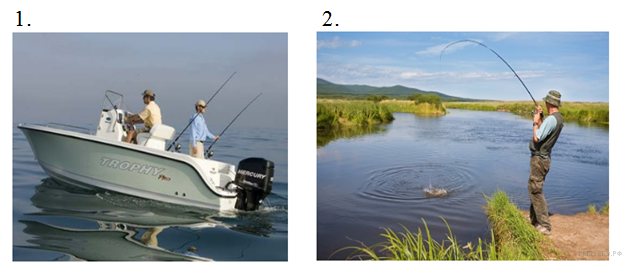
Study the two photographs. In 1.5 minutes be ready to compare and contrast the photographs:
• give a brief description of the photos (action, location)
• say what the pictures have in common
• say in what way the pictures are different
• say what kind of pastime presented in the photos you’ prefer
• explain why
You will speak for not more than 2 minutes (12–15 sentences). You have to talk continuously.

26/05/20
1/ Find a word, which should not be there.
https://www.english-grammar.at/online_exercises/editing-cloze/ed010-producing-your-own-music.htm
2/ Word formation
english-grammar.at/online_exercises/word-formation/wf049-make-money-on-tv.htm
where and when the photo was taken
· what/who is in the photo
· what is happening
· why you keep the photo in your album
· why you decided to show the picture to your friend
You have to talk continuously, starting with: “I’ve chosen photo number …”

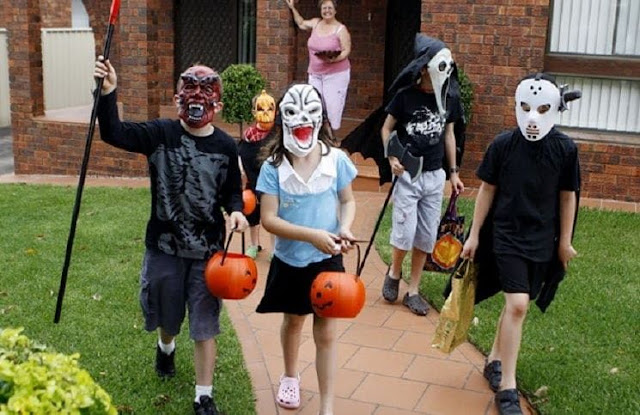
Study the two photographs. In 1.5 minutes be ready to compare and contrast the photographs:
• give a brief description of the photos (action, location)
• say what the pictures have in common
• say in what way the pictures are different
• say what kind of celebration presented in the photos you prefer
• explain why
You will speak for not more than 2 minutes (12–15 sentences). You have to talk continuously.
22.05.20
Compare and contrast these two pictures:
deadline; Saturday, May 23, 7 pm
Study the two photographs. In 1.5 minutes be ready to compare and contrast the photographs:
• give a brief description of the photos (action, location)
• say what the pictures have in common
• say in what way the pictures are different
• say what kind of activities presented in the photos you prefer
• explain why
You will speak for not more than 2 minutes (12–15 sentences). You have to talk continuously.


20.05.20
AT HOME:
record a voice message ( deadline: Thursday, May 21, 9 am)
There
is an established stereotype among foreigners that Russia is a country of
eternal frost and snow-covered streets. This is all because for many years
foreigners have been frightened by the phrase «Russian winter». But
it’s not all that simple, Russia is a vast country and the weather in different
areas can be completely different. Russia consists of several continental
zones. For example, in the north winters are long and harsh, in some places
there is lots of snow and temperatures fall below -40 degrees Celsius . These
winters are normal, not only in the northern regions of the country but even in
the Far East. Summers in these areas don’t even see three warm months out of
the year.
The closer you get to the south the warmer the Russian
climate gets. In the central part of the country summer becomes warm—even
hot—which makes it possible for a good harvest of grain, fruit and vegetables.
Winters here are not extremely cold and the average winter temperature does not
fall below -15 degrees Celsius. By the way, in Russia the real warmth does not
start until the middle of April. And only at the end of May does everything
start to bloom and people go without their warm clothing.
Reading outloud
1. Charles
Darwin was driven by gastronomic, as well as scientific, curiosity and once ate
an oil. While reading Divinity at Cambridge University, he became a member of
the Glutton club which met once a week and actively sought to eat animals not
normally found on menus. Darwin’s son commenting on his father’s letters, noted
that the Glutton club enjoyed, among other things, hawk and bittern.
Over the years, Darwin sharpened up considerably in
the academic arena and lost his faith in God, but he never lost his taste for
the allure of an interesting menu. In the Galapagos, Darwin wolfed down a few
helpings of giant tortoise. Not realising the importance of giant tortoises to
his later evolutionary theory, forty-eight specimens were loaded aboard the
Beagle. Darwin and his shipmates proceeded to eat them, throwing the shells
overboard as they finished.
2. As
well as mercury, gallium and francium can all be liquids at room temperature.
Gallium was discovered by French chemist in 1875. It was the first new element
to confirm Dmitri Mendeleev’s prediction of the periodic table. Gallium is used
chiefly in microchips because of its strange electronic properties. Compact
disc players also make use of it because when mixed with arsenic it transforms
an electric current directly into laser light.
Francium is one of the rarest elements. It has been
calculated there are only ever thirty grams of it present on Earth. This is
because it is so radioactive it quickly decays into other, more stable
elements. So it is a liquid metal, but not for very long – a few seconds at
most. It was the last element to be found in nature. These elements are liquid
at unusually low temperatures for metals because the arrangement of electrons
in their atoms makes it hard for them to get close enough to each other.
3. Until
fairly recently, it was a mystery how certain large bees, bumblebees in
particular, were able to fly. To scientists who study the physical laws of
flight a bee’s body seemed too heavy and its wings too small for it to become
airborne and remain so. Bees “can’t” fly… but do. The mystery became so
intriguing that a few scientists decided to study it.
Most insects fly by using muscles that flap their
wings with great speed. For example, the locust beats its wings at a rate of
about 20 times per second to fly. Other flying insects have to beat their wings
even faster — some as rapidly as 100 times per second.
But bees must work extra hard to become airborne.
Honeybees, for instance, must beat their wings about 200 times a second to fly.
Yet larger bees — like bumblebees — whose bodies are heavier, wider, and longer
— have to do even better.
4. Six of
Earth’s seven continents are inhabited on a large scale. Asia is the most
populated continent, with its 4.3 billion inhabitants. This accounts for 60% of
the worlds population. The two most populated countries of the world are China
and India. These countries together constitute about 37% of the whole
population of our planet. Africa is the second most populated continent. It is
home for about one billion people. This makes 15% of the world’s population.
Europe has 733 million people and this makes up 12%. Latin American and
Caribbean regions are home to around 600 million people (9 %). Northern
America, primarily consisting of the United States and Canada, has a population
of around 352 million (5%), and Oceania, the least populated region, has about
35 million inhabitants (0.5%). What about Antarctica? Though it is not
permanently inhabited by anybody, Antarctica has a small, changing
international population, living in polar science stations.
5. Medicine has existed for thousands of years. At first,
medicine was rather an art than science. It was little based on skills and
knowledge but, instead, it had connections to the religious beliefs. At the
early stages of medicine, doctors relied on religious rituals in the same way
as on medication. For example, a medicine man would apply herbs and say prayers
for healing. The first physicians thought that bloodletting was the best
treatment of all. In recent centuries, since the advent of science, most
medicine has become a combination of art and science. Much depends on the
talent of the doctor and on the efficiency of drugs and surgery. Nowadays, we
come to understand more and more about our body and to know what is going on
inside the cells. Also, genetic engineering opens up new perspectives for
treating inherited diseases. And, of course, new medical technologies have
already saved millions of lives.
19.05.20
1. Essay
Smoking should be prohibited.
What would your arguments be? What do you think other people may claim?
2. · where and when the photo was taken
· what/who is in the photo
· what is happening
· why you keep the photo in your album
· why you decided to show the picture to your friend
You have to talk continuously, starting with: “I’ve chosen photo number …”


AT HOME:
write an essay
Working from home is better than working in an office.
13.05.20
Do you believe in climate change?
This may seem like an odd question for a climate scientist to ask, but it is one I am constantly asked
now. The typical discussion starts: «I know that the climate is changing, but hasn’t it always changed
through natural cycles?» Then they will often give an example, such as the medieval warm period
to prove their point.
Those asking the question include a wide range of people I meet in the pub, friends, politicians and,
increasingly, even some of those active in sustainable development and the renewable energy
businesses. What I find interesting is that I have known many of these people for a long time and
they never asked me this before.
Recent studies show that public acceptance of the scientific evidence for man-made climate change
has decreased. However, the change is not that great. The difference I find in talking to people is
that they feel better able to express their doubts.
This is very hard for scientists to understand. The scientific evidence that humanity is having an
effect on the climate is overwhelming and increasing every year. Yet public perception of this is
confused. People modify their beliefs about uncomfortable truth, they may have become bored of
constantly hearing about climate change; or external factors such as the financial crisis may have
played a role.
Around three years ago, I raised the issue of the way that science can be misused. In some cases
scare stories in the media were over-hyping climate change, and I think we are paying the price
for this now with a reaction the other way. I was concerned then that science is not always
presented objectively by the media. What I don’t think any of us appreciated at the time was the
depth of disconnect between the scientific process and the public.
Which brings me to the question, should you believe in climate change? The first point to make is
that it’s not something you should believe or not believe in – this is a matter of science and
therefore of evidence – and there’s a lot of it out there. On an issue this important, I think people
should look at that evidence and make their own mind up. We are often very influenced by our
own personal experience. After a couple of cold winters in the UK, the common question was:
«Has climate change stopped?» despite that fact that many other regions of the world were
experiencing record warm temperatures. And 2010 was one of the warmest years on record. For
real evidence of climate change, we have to look at the bigger picture.
You can see research by the Met Office that shows the evidence of man-made warming is even
stronger than it was when the last report was published. A whole range of different datasets
and independent analyses show the world is warming. There is a broad consensus that over the
last half-century, warming has been rapid, and man-made greenhouse gas emissions are very likely
to be the cause.
Ultimately, as the planet continues to warm, the issue of whether you believe in climate change will
become more and more irrelevant. We will all experience the impacts of climate change in some
way, so the evidence will be there in plain sight.
The more appropriate questions for today are how will our climate change and how can we prepare
for those changes? That’s why it’s important that climate scientists continue their work, and
continue sharing their evidence and research so people can stay up to date – and make up their
own minds.
1. Paragraph 1 says that people …
1) think that the climate is not changing.
2) doubt that climate change is man-made.
3) believe that in medieval times climate was harsh.
4) tend to ask strange questions about climate change.
2. According to recent studies of public attitude to climate change, more and more people …
1) refuse to accept the scientific proof of warming.
2)know that there is no clear evidence of climate change.
3) think that scientists are wrong about climate warming.
4) have stopped trusting climate science.
3. What is meant by “uncomfortable truth” in paragraph 4?
1)Scientific reports on climate.
2) Evidence of man-made climate change.
3) World financial crisis.
4)People’s personal beliefs.
4. What does “this” in paragraph 5 refer to?
1) Scientific evidence of climate change.
2) Negative public attitude to climate change.
3)The way the climate change used to be presented.
4) The historical impact of climate change.
5. The author gives the example of cold winters in the UK to point out that …
1)the weather in Britain has always been unpredictable.
2) the Met Office doesn’t make public the evidence it collected.
3) there is evidence that the climate change has stopped finally.
4)people draw conclusions based on their own experience rather than scientific evidence.
6. How does the author feel about the evidence of climate change?
1) It’s not enough yet.
2)It’s not very convincing.
3)It soon would become conclusive.
4) It’s irrelevant so far.
7. The author wants climate scientists to continue their work because …
1) they have not shared their findings with the public.
2) people need to know how to get ready for changes.
3)society demands more research in this field.
4)people don’t want to make up their own minds.
13.05.20
Do you believe in climate change?
This may seem like an odd question for a climate scientist to ask, but it is one I am constantly asked
now. The typical discussion starts: «I know that the climate is changing, but hasn’t it always changed
through natural cycles?» Then they will often give an example, such as the medieval warm period
to prove their point.
Those asking the question include a wide range of people I meet in the pub, friends, politicians and,
increasingly, even some of those active in sustainable development and the renewable energy
businesses. What I find interesting is that I have known many of these people for a long time and
they never asked me this before.
Recent studies show that public acceptance of the scientific evidence for man-made climate change
has decreased. However, the change is not that great. The difference I find in talking to people is
that they feel better able to express their doubts.
This is very hard for scientists to understand. The scientific evidence that humanity is having an
effect on the climate is overwhelming and increasing every year. Yet public perception of this is
confused. People modify their beliefs about uncomfortable truth, they may have become bored of
constantly hearing about climate change; or external factors such as the financial crisis may have
played a role.
Around three years ago, I raised the issue of the way that science can be misused. In some cases
scare stories in the media were over-hyping climate change, and I think we are paying the price
for this now with a reaction the other way. I was concerned then that science is not always
presented objectively by the media. What I don’t think any of us appreciated at the time was the
depth of disconnect between the scientific process and the public.
Which brings me to the question, should you believe in climate change? The first point to make is
that it’s not something you should believe or not believe in – this is a matter of science and
therefore of evidence – and there’s a lot of it out there. On an issue this important, I think people
should look at that evidence and make their own mind up. We are often very influenced by our
own personal experience. After a couple of cold winters in the UK, the common question was:
«Has climate change stopped?» despite that fact that many other regions of the world were
experiencing record warm temperatures. And 2010 was one of the warmest years on record. For
real evidence of climate change, we have to look at the bigger picture.
You can see research by the Met Office that shows the evidence of man-made warming is even
stronger than it was when the last report was published. A whole range of different datasets
and independent analyses show the world is warming. There is a broad consensus that over the
last half-century, warming has been rapid, and man-made greenhouse gas emissions are very likely
to be the cause.
Ultimately, as the planet continues to warm, the issue of whether you believe in climate change will
become more and more irrelevant. We will all experience the impacts of climate change in some
way, so the evidence will be there in plain sight.
The more appropriate questions for today are how will our climate change and how can we prepare
for those changes? That’s why it’s important that climate scientists continue their work, and
continue sharing their evidence and research so people can stay up to date – and make up their
own minds.
1. Paragraph 1 says that people …
1) think that the climate is not changing.
2) doubt that climate change is man-made.
3) believe that in medieval times climate was harsh.
4) tend to ask strange questions about climate change.
2. According to recent studies of public attitude to climate change, more and more people …
1) refuse to accept the scientific proof of warming.
2)know that there is no clear evidence of climate change.
3) think that scientists are wrong about climate warming.
4) have stopped trusting climate science.
3. What is meant by “uncomfortable truth” in paragraph 4?
1)Scientific reports on climate.
2) Evidence of man-made climate change.
3) World financial crisis.
4)People’s personal beliefs.
4. What does “this” in paragraph 5 refer to?
1) Scientific evidence of climate change.
2) Negative public attitude to climate change.
3)The way the climate change used to be presented.
4) The historical impact of climate change.
5. The author gives the example of cold winters in the UK to point out that …
1)the weather in Britain has always been unpredictable.
2) the Met Office doesn’t make public the evidence it collected.
3) there is evidence that the climate change has stopped finally.
4)people draw conclusions based on their own experience rather than scientific evidence.
6. How does the author feel about the evidence of climate change?
1) It’s not enough yet.
2)It’s not very convincing.
3)It soon would become conclusive.
4) It’s irrelevant so far.
7. The author wants climate scientists to continue their work because …
1) they have not shared their findings with the public.
2) people need to know how to get ready for changes.
3)society demands more research in this field.
4)people don’t want to make up their own minds.
Skip the sun, get a glow the healthy way
Everyone at some point has wanted a “healthy
glow,” whether it’s a must-have for summer, or a vacation, the thought of tan
skin has crossed the minds of millions. If you are pale, it A__________. There
is wild excitement when after a day in the sun your skin is tan, not burnt.
Surely everyone is familiar with the famous conversation upon the realization
that you got fried at the beach. Your friends reassure you with “Don’t worry it
B__________.” It may all seem like fun and games at the time, but alarming new
research C__________.
Some tan-seekers do it the old-fashioned way,
grab a towel and hit the pool or beach. Recently, millions of young girls
D__________ instead. Regardless of how the tan is achieved, any change in skin
coloring is evidence of skin cell damage. This can lead to cancer. According to
the Skin Cancer Foundation, melanoma, or skin cancer, among people aged 18 to
39 has risen dramatically. In the United States the number of skin cancer cases
due to tanning, is higher than the number of lung cancer cases due to smoking.
While it is true that being outside and active
is great for your body and the sun does provide vitamin D, everyone’s health
still needs protecting. However, it’s E__________, limit time spent in direct
sunlight, between the hours of 10 a.m. and 4 p.m., and wear sunscreen at all
times. A fashionable option is the sun hat: both elegant and fun. Big floppy
hats may seem ridiculous at first, but F__________.
Another advice is to look into sunless tanners:
They are cheap and in no way endanger the lives of users. So, fake it, don’t
bake it!
1. takes
a lot of time and effort to tan
2. have
been turning to tanning beds
3. they
are actually quite classy accessories
4. better
to avoid indoor tanning
5. have
inspired people to get their skin checked
6. will
eventually turn into a tan
7. has
taken the healthy out of healthy glow
12.05.20
· where and when the photo was taken
· what/who is in the photo
· what is happening
· why you keep the photo in your album
· why you decided to show the picture to your friend
You have to talk continuously, starting with: “I’ve chosen photo number …”


Study the two photographs. In 1.5 minutes be ready to compare and contrast the photographs:
— give a brief description of the photos (action, location)
— say what the pictures have in common
— say in what way the pictures are different
— say which way of shopping presented in the pictures you’d prefer
— explain why
You will speak for not more than 2 minutes (12–15 sentences). You have to talk continuously.

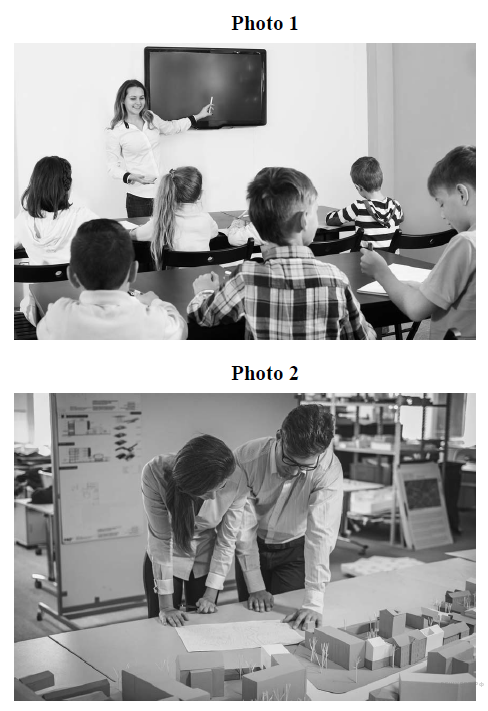
Study the two photographs. In 1.5 minutes be ready to compare and contrast the photographs:
• give a brief description of the photos (action, location)
• say what the pictures have in common
• say in what way the pictures are different
• say which of thе profеssions presented in the pictures you’d prefer
• explain why
You will speak for not more than 2 minutes (12–15 sentences). You have to talk continuously
Study the two photographs. In 1.5 minutes be ready to compare and contrast the photographs:
• give a brief description of the photos (action, location)
• say what the pictures have in common
• say in what way the pictures are different
• say what kind of activities presented in the photos you prefer
• explain why
You will speak for not more than 2 minutes (12–15 sentences). You have to talk continuously.

11.05.20
ТРЕНАЖЁР УСТНОЙ ЧАСТИ ЕГЭ:
https://gosexam.online/ege/
· where and when the photo was taken
· what/who is in the photo
· what is happening
· why you keep the photo in your album
· why you decided to show the picture to your friend
You have to talk continuously, starting with: “I’ve chosen photo number …”

· where and when the photo was taken
· what/who is in the photo
· what is happening
· why you keep the photo in your album
· why you decided to show the picture to your friend
You have to talk continuously, starting with: “I’ve chosen photo number …”

· where and when the photo was taken
· what/who is in the photo
· what is happening
· why you keep the photo in your album
· why you decided to show the picture to your friend
You have to talk continuously, starting with: “I’ve chosen photo number …”

· where and when the photo was taken
· what/who is in the photo
· what is happening
· why you keep the photo in your album
· why you decided to show the picture to your friend
You have to talk continuously, starting with: “I’ve chosen photo number …”

8.05.20
You have received
a letter from your English-speaking pen-friend Ann who writes:
..More and more
young people get involved in environmental protection. Could you tell me what
measures young people in your country take to save the environment? What kind
of support do you get from your local community and family? Is there any Green
Party/Movement where you live? Wouldn’t you like to start one, if there isn’t?
I am very happy
now because I have just passed my last exams.
Write a letter to
Ann. In your letter
answer her
questions
ask 3 questions
about her plans for the coming holiday
You will have to start speaking in 1.5 minutes and will speak for not more than 2 minutes (12–15 sentences). In your talk remember to speak about:
· where and when the photo was taken
· what/who is in the photo
· what is happening
· why you keep the photo in your album
· why you decided to show the picture to your friend
You have to talk continuously, starting with: “I’ve chosen photo number …”
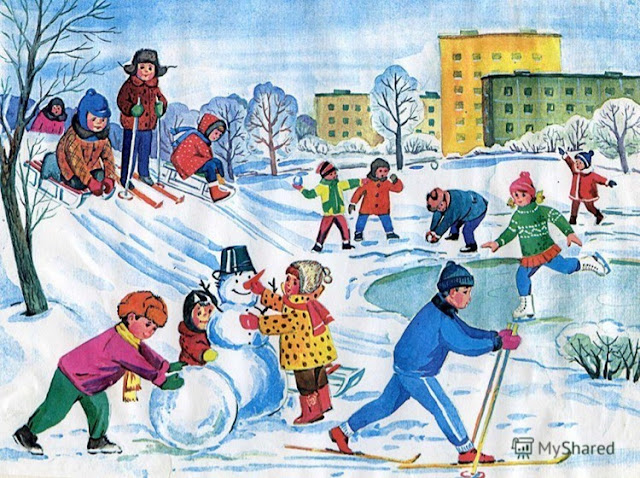
You will have to start speaking in 1.5 minutes and will speak for not more than 2 minutes (12–15 sentences). In your talk remember to speak about:
· where and when the photo was taken
· what/who is in the photo
· what is happening
· why you keep the photo in your album
· why you decided to show the picture to your friend
You have to talk continuously, starting with: “I’ve chosen photo number …”

7.05.20
Back to the opinion essay
1. Friendship
is the greatest gift of life.
2. University
education is essential for young people.
3. Some
people think that you can have only one true friend.
4. The best
teacher is one who is very knowledgeable
Связки для выражения своего мнения:
I believe/ I consider that…/ I am convinced that …
I personally favour …
To my mind…/ In my opinion…/ It seems to me that…
I can’t but agree that…
I am against…/ I do not approve of…/ I do not support
the idea of…/ I personally frown
on…
It is said/ believed that…
It goes without saying that…
Связки для выражения аргументов:
Firstly/ first and foremost/ first of all …
A major benefit is that …
To begin/start with, it is important to emphasize
that…
Furthermore/ Moreover/ What is more/ Besides, …
A further convincing argument is that …
Another (positive/ negative) aspect of …
Связки для выражения противоположного
мнения.
However, not all people share my point of view. They say that …
They are in favour of…/ They approve of… / They
favour…
There is another side to the issue/question of …
There are people who have the opposing opinion./ Not
all people share my viewpoint.
Связки для выражения контраргументов.
To a certain extent it is right, but we should not
forget that… / we should consider the fact that… / one should not disregard… /
one should take into account …
However veracious it sounds, I would not agree with
the above mentioned idea.
However, I disagree with these contentions.
I am afraid I cannot agree with these people here as I
think …
Выражения для завершающего абзаца:
To conclude/ sum up/ summarise
All in all…
All things considered…
Taking all this into account/ consideration…
3.05.20
Contrast and compare these two pictures:
Study the two photographs. In 1.5 minutes be ready to compare and contrast the photographs:
• give a brief description of the photos (action, location)
• say what the pictures have in common
• say in what way the pictures are different
• say what kind of work presentedin the photos you prefer
• explain why
You will speak for not more than 2 minutes (12–15 sentences). You have to talk continuously.

28/04/2020
Home task ( on April 29)
1. compare and contrast two pictures
2. write a letter to Olivia
Compare and contrast these two pictures:


give a brief description of the photos (action, location)
say what the pictures have in common
say in what way the pictures are different
Say which way of performing you’d prefer. Why?
Write a letter to Olivia
You have received a letter from your English-speaking pen-friend Olivia who writes:
… I know it’s often cold in Russia in winter. What do you usually do not to catch a cold? What is a healthy lifestyle for you? How can you catch up with the class if you do fall ill?
My cousin is coming to stay with us for Thanksgiving …
Write a letter to Olivia.
In your letter
answer her questions
ask 3 questions about her cousin
Write 100140 words.
Remember the rules of letter writing.
You have received a letter from your pen-friend Ann who writes:
…At school I won an annual prize for the best research into the culture of a freign country…
As for our news we decided to move into a house in a new neighbourhood which is considered the best in our city…
Write a letter to Ann.
In your letter:
— congratulate her
— ask 3 questions about her new house
Write 100- 140 words.
Remember the rules of letter writing
Assess this letter:
Moscow, Russia
15 December, 2013
Dear Ann,
Thank you for your letter. It was nice to get a reply from you so soon.
First of all, congratulations on your victory! You fellow, you win Prize for the best research culture of another country. This country — Russia? In any case, you’re asking me a lot about my country.
As for me, I have a success in the sport. Our school football team will be playing in a city school tournament! We had to beat three strong teams from other schools.
You write about moving to a new home. This multi-story home? As the name of your microdistrict? How far is your home from the school located?
Well, I have to go because my mom is calling.
Best wishes to you and your family,
Alex
Источник: https://ctege.info/angliyskiy-yazyik-teoriya-ege/pismo-ege-po-angliyskomu-obrazets.html?ddexp4attempt=1
Источник: https://ctege.info/angliyskiy-yazyik-teoriya-ege/pismo-ege-po-angliyskomu-obrazets.html?ddexp4attempt=1
23.04.20
You are considering visiting the fair and now you are calling to find out more information.
Ask direct questions:
— location
— duration
— car parking
— if the fair is a regular event
— entertainment
— organic products
— if it is an indoor fair
— things to buy
— number of stalls
— local products
— a possibility to lunch at the fair
— handmade gifts
— if fun and safety are guaranteed
You have
received a letter from your English-speaking pen-friend Jasper who writes:
… My friends have just come back
from a trip to Africa. It’s been my dream for years! What is your dream trip,
where would you like to go and why? Whom would you like to take with you? What
is the most difficult thing for you when you travel?
My sister is getting married …
Write a letter to Jasper. In
your letter:
— answer his questions;
— ask 3 questions about his
sister. Write 100–140 words.
Remember the rules of letter writing.
22.04.20
Summer
holidays in the countryside are best for teenagers.
What is your opinion? Do you agree with this
statement?
Write 200–250 words.
Use the following plan:
– make an introduction (state the problem paraphrasing
the given statement);
– express your personal opinion and give 2–3 reasons
for your opinion;
– express an opposing opinion and give 1–2 reasons for
this opposing opinion;
– explain why you do not agree with the opposing
opinion;
– make a conclusion restating your position
21.04.20
Для Полины Ш., Насти Л., Сони П.
Установите
соответствие между текстами A–G и заголовками 1–8. Занесите свои ответы в таблицу. Используйте каждую цифру только
один раз. В задании один заголовок лишний.
|
|||||||||||||||||||
|
|
|||||||||||||||||||
|
Прочитайте текст и заполните пропуски AF частями предложений, обозначенными цифрами 17. Одна из частей в списке 17 лишняя. Занесите цифры, обозначающие соответствующие части предложений, в таблицу.
Europe’s best hidden gems
There are incredible destinations in Europe known worldwide, such as Amsterdam and its canals, London and its museums, its shopping and atmosphere, or Paris, the City of Light. Europe also has thousands of hidden treasures. There is a wide selection of the finest unknown destinations in Europe, from Lugano in Switzerland A __________.
Lugano is an international city, the crossroads and melting pot of European culture. It constitutes one of the most interesting regions to be discovered. Lugano is not only Switzerland’s third most important financial centre, B __________ old buildings.
The area of Cinque Terre in Italy represents one of the best preserved natural sights of the Mediterranean. Human activity has contributed to creating a unique landscape in which the development of typical stone walls is so extensive C __________. All this, D __________, makes the Cinque Terre an increasingly popular location among Italian and foreign tourists.
Sintra is a jewel set between the mountains and the sea, waiting to be discovered by tourists E __________, luxuriant nature and cosmopolitan cultural offer. Sintra has a wonderful charm that left a deep impression on the soul and work of the writers F __________. Sintra is truly the capital of Romanticism. It is a place to be experienced by everyone!
|
Прочитайте текст и заполните пропуски AF частями предложений, обозначенными цифрами 17. Одна из частей в списке 17 лишняя. Занесите цифры, обозначающие соответствующие части предложений, в таблицу.
Beautiful cities of Italy
The political and cultural centre of Italy is the ‘Eternal City’, Rome. Ever since the Roman Empire, as its capital, Rome has become famous as a centre of European culture. The most striking sights of Rome are, of course, the Colosseum and the Forum. Once the Colosseum was able to receive about 50 thousand spectators, A __________ and concert halls. The Pantheon, the old temple of all gods, B __________, is also located in Rome.
The second most important town in Italy is Milan. Milan is the capital of fashion and C __________, exhibitions and conferences. The main attraction of Milan is its Cathedral Square, where the monument to the King Victor Emmanuel II is installed. Theatre fans will not be left disappointed by visiting the Theatre of
La Scala.
The most popular city among tourists is Venice. The city is unique because it has more than 120 islands, D __________ and 400 bridges. Venice has been known for more than fifteen hundred years, and for E __________. The main area of the city is Saint Mark’s Square with the Cathedral of San Marco. One of the most beautiful buildings in Venice is the Palace of Doges. The other famous attraction is the Grand Canal F __________.
In addition to this, there are such beautiful cities in Italy as Naples, Turin, Florence, Genoa, Pisa and the islands of Sardinia and Sicily. All of them are outstanding places to visit.
|
|
Прочитайте текст и выполните задания А15–А21. В каждом задании обведите цифру 1, 2, 3 или 4, соответствующую выбранному вами варианту ответа. Avoidance activity I am in Birmingham, sitting in a cafe opposite a hairdresser’s. I’m trying to find the courage to go in and book an appointment. I’ve been here three quarters of an hour and I am on my second large cappuccino. The table I’m sitting at has a wobble, so I’ve spilt some of the first cup and most of the second down the white trousers I was so proud of as I swanked in front of the mirror in my hotel room this morning. I can see the hairdressers or stylists as they prefer to be called, as they work. There is a man with a ponytail who is perambulating around the salon, stopping now and then to frown and grab a bank of customer’s hair. There are two girl stylists: one has had her white blonde hair shaved and then allowed it explode into hundreds of hedgehog’s quills; the other has hair any self-respecting woman would scalp for: thick and lustrous. All three are dressed in severe black. Even undertakers allow themselves to wear a little white on the neck and cuffs, but undertakers don’t take their work half as seriously, and there lies the problem. I am afraid of hairdressers. When I sit in front of the salon mirror stuttering and blushing, and saying that I don’t know what I want, I know I am the client from hell. Nobody is going to win Stylist of the year with me as a model. ‘Madam’s hair is very th …’,they begin to say ‘thin’, think better of it and change it for ‘fine’—ultimately, coming out with the hybrid word ‘thine’. I have been told my hair is ‘thine’ many times. Are they taught to use it at college? Along with other conversational openings, depending on the season: ‘Done your Christmas shopping?’ ‘Going away for Easter?’ ‘Booked your summer holiday?’ ‘You are brown, been way?’ ‘Nights are drawing in, aren’t they?’ ‘Going away for Christmas?’ I am hopeless at small talk (and big talk). I’m also averse to looking at my face in a mirror for an hour and a half. I behave as though I am a prisoner on the run. I’ve looked at wigs in stores, but I am too shy to try them on, and I still remember the horror of watching a bewigged man jump into a swimming pool and then seeing what looked like a medium sized rodent break the surface and float on the water. He snatched at his wig, thrust it anyhow on top of his head and left the pool. I didn’t see him for the rest of the holiday. There is a behavior trait that a lot of writers share—it is called avoidance activity. They will do anything to avoid starting to write: clean a drain, phone their mentally confused uncle in Peru, change the cat’s litter tray. I’m prone to this myself, in summer I deadhead flowers, even lobelia. In winter I’ll keep a fire going stick by stick, anything to put off the moment of scratching marks on virgin paper. I am indulging an avoidance activity now. I’ve just ordered another cappuccino, I’ve given myself a sever talking: For God’s sake, woman! You are forty-seven years of age. Just cross the road, push the salon door open, and ask for an appointment! It didn’t work. I’m now in my room, and I have just given myself a do-it-yourself hairdo, which consisted of a shampoo, condition and trim, with scissors on my Swiss army knife. I can’t wait to get back to the Toni & Guy salon in Leicester. The staff there haven’t once called my hair ‘thine’ and they can do wonders with the savagery caused by Swiss army knife scissors. The narrator was afraid to enter the hairdresser’s because she |
||||||||||||
|
|
Watching the stylists, the narrator concluded that they |
||||||||||||
|
|
The narrator calls herself ‘the client from hell’ mainly because she |
||||||||||||
|
|
The narrator doesn’t like stylists as they |
||||||||||||
|
|
According to the narrator the avoidance activity is |
||||||||||||
|
|
|
The last paragraph means that the Toni &Guy salon in Leicester is the |
||||||||||||
|
18.04.20
Home task:
1

You are considering going to the mountains and now you’d like to get more information. In 1.5 minutes you are to ask five direct questions to find out about the following:
1) departure dates
2) duration of the trip
3) size of the group
4) accommodation
5) price
You have 20 seconds to ask each question.
2
You will have to start speaking in 1.5 minutes
and will speak for not more than 2 minutes (12–15 sentences). In your talk
remember to speak about:
· where
and when the photo was taken
· what/who
is in the photo
· what
is happening
· why
you keep the photo in your album
· why
you decided to show the picture to your friend
You have to talk
continuously, starting with: “I’ve chosen photo number …”

3
Task
4. Study the two photographs. In 1.5 minutes be ready to compare and
contrast the photographs:
· give
a brief description of the photos (action, location)
· say
what the pictures have in common
· say
in what way the pictures are different
· say
which way of preparing for classes presented in the pictures you
prefer
· explain
why
You
will speak for not more than 2 minutes (12–15 sentences). You have
to talk continuously


ТРЕНАЖЁР ПО УСТНОЙ ЧАСТИ:
https://gosexam.online/ege/
ВАРИАНТ ЕГЭ ОНЛАЙН
https://neznaika.info/ege/english/1083-variant-17.html
13/04/20
VOCABULARY AND GRAMMAR ISSUES
******
Разница между remind, remember, recall,
recollect, memorize
Глаголы remind,
remember, recall, recollect, memorise так или иначе связаны с запоминанием информации.
1. REMEMBER
Слово remember встречается чаще других синонимов.
По данным Cambridge Dictionary, глагол remember означает
«возможность восстановить или хранить в своей памяти какую-либо информацию».
Remember употребляется, когда нужно:
1. сказать о том, что вы помните какое-то действие — to
remember doing smth
I remember
walking into the pub. — Я помню, как заходил в бар.
уточнить, что помните какой-то факт — to remember (that)
I remember
that I ordered a cup of tea. — Я помню, что я заказал чашку чая.
2. сказать, что вы точно что-то помните — to remember rightly/correctly
It was
August, 2nd, if I remember correctly. — Это было 2 августа, если я правильно
помню.
3. рассказать
о точных, ярких воспоминаниях — clearly/vividly/distinctly remember или не
очень четких — vaguely/dimly remember
I clearly
remember whiskey was Johnny Walker. — Я четко помню, виски был Джонни Уокер.
I dimly remember what was happening next.
— Я с трудом помню, что происходило дальше.
4. рассказать о деталях какого-то воспоминания — to remember when/where/how
I even
remember when I got home! — Я даже помню, когда я пришел домой.
сказать о чем-то, что вы обещали сделать, попросить кого-то
не забыть о чем-то — to remember to do something
Moreover, I
remembered to lock the front door. — Более того, я не забыл закрыть входную дверь.
Здесь важно подчеркнуть, что после глагола remember может стоять как инфинитив
(глагол в начальной форме), так и герундий (глагол с окончанием —ing).
Смысл сказанного будет
зависеть от формы глагола, например:
I remember to visit my grandmother.
— Я помню, что нужно навестить бабушку.
I remember
visiting my grandmother. — Я помню, как навещал бабушку.
В первом предложении мы говорим о том, что нужно не забыть
выполнить действие в будущем, а во втором примере мы вспоминаем, как уже
выполнили действие.
2. REMIND
Глагол remind переводится как
«напоминать».
Отличие remind от remember
заключается в том, что remind означает «побудить кого-то вспомнить информацию»,
а remember — «помнить какую-либо информацию».
Рассмотрим наиболее популярные случаи
употребления глагола remind:
1. напомнить кому—то сделать что—то — to remind someone to do
something, to remind (somebody) that, to remind somebody about something
My mom always reminds me to put my hat on. — Моя мама постоянно напоминает мне
надевать шапку.
Dustin reminded me that I forgot my laptop at
his house. — Дастин напомнил мне, что я забыл свой ноутбук у
него дома.
Can you remind me about your plans for the
weekend? — Можешь напомнить мне
о своих планах на выходные?
2. когда одна
ситуация/предмет/человек напоминают другую ситуацию/предмет/человека — to remind somebody of, to remind someone what/when/where/how
My colleague reminds me of my classmate. — Мой
коллега напоминает мне моего одноклассника.
Mary reminded me how I acted at the restaurant.
— Мэри напомнила мне, как я вел себя в ресторане
3. RECALL / RECOLLECT
Recall означает «восстанавливать в
памяти какие-либо события или факты, чтобы этим поделиться».
I can still recall how Margareth entered the
room. — Я до сих пор помню, как Маргарет зашла в комнату.
Recall используется:
1. когда что-то вызывает
определенную ассоциацию
This building recalls the baroque style. — Это здание
напоминает стиль барокко.
2. когда какие-то события или
предметы вызывают определенные воспоминания
This song recalls that wonderful evening. — Эта песня
напоминает мне тот чудесный вечер.
Recollect и recall — синонимичные
слова, но стоит учесть, что recollect чаще используется в формальной беседе.
I can hardly recollect the events
of that evening. — Я с трудом могу восстановить в памяти события того вечера.
MEMORIZE
Memorize переводится как
«запоминать», «заучивать».
Этот глагол предполагает проделывание определенных
усилий для запоминания чего-либо наизусть.
Sally memorized all her
coworkers’ names just in a week! — Салли запомнила имена всех своих коллег
только через неделю!
CHECK YOURSELF:
1.
Напомни
мне, пожалуйста, удалить мои сообщения из Facebook.
a.
Please remember me to delete my
messages from Facebook.
b.
Please remind me to delete my
messages from Facebook.
c.
Please recall me to delete my
messages from Facebook.
2.
На
уроках актерского мастерства нам приходилось заучивать длинные монологи.
a.
During the acting class we had to
memorize long monologues.
b.
During the acting class we had to
recall long monologues.
c.
During the acting class we had to
recollect long monologues.
3.
Мозговой
штурм был напрасен. Я не могу вспомнить ни одной из идей.
a.
Brainstorming has been in vain. I
can’t remind any of the ideas.
b.
Brainstorming has been in vain. I
can’t recollect any of the ideas.
c.
Brainstorming has been in vain. I
can’t memorize any of the ideas.
4.
Я
просила тебя больше не устраивать драку в театре, ты помнишь?
a.
I asked you not to pick a fight in
the theatre anymore, do you remind?
b. I asked you not to pick a fight in
the theatre anymore, do you memorize?
c. I asked you not to pick a fight in
the theatre anymore, do you remember?
5.
Это
пугало напоминает мне фильм «Джиперс Криперс»!
a.
This scarecrow recalls me Jeepers
Creepers movie!
b.
This scarecrow remembers me of
Jeepers Creepers movie!
c.
This scarecrow reminds me of Jeepers
Creepers movie!
6.
Его новая песня напоминает один из
хитов the Beatles.
a.
His new song remembers one of the
Beatles hit songs.
b.
His new song memorize one of the
Beatles hit songs.
c.
His new song recalls one of the
Beatles hit songs.
7.
Даже
не пытайся запомнить мой пароль. Я завтра его поменяю.
a.
Don’t even try to remind my password.
I’ll change it tomorrow.
b.
Don’t even try to memorize my
password. I’ll change it tomorrow.
c. Don’t
even try to recall my password. I’ll change it tomorrow.
8.
Я
до сих пор помню каждую деталь его костюма.
a.
I can still recollect every single
detail of his costume.
b.
I can still remind about every single
detail of his costume.
c.
I can still memorize every single
detail of his costume.
9.
Мое
мобильное приложение напоминает мне придерживаться диеты.
a.
My mobile app recalls me to stick to
the diet.
b.
My mobile app reminds me to stick to
the diet.
c.
My mobile app remembers me to stick
to the diet.
10. Я четко помню, как сохранил документ
на диске.
a.
I can clearly remember how I saved
the document on the hard drive.
b.
I can clearly remind about how I
saved the document on the hard drive.
c.
I can clearly memorize how I saved
the document on the hard drive.
11. Ты помнишь о том, что надо проверять
почту каждый день?
a.
Do you remember to check your mail
every day?
b.
Do you memorize to check your mail
every day?
c.
Do you recall to check your mail
every day?
12. Можешь мне напомнить о нашей поездке?
a.
Can you remember me about our trip?
b.
Can you remind me of our trip?
c.
Can you remind me about our trip?
********
HOWEVER
However means ‘but’.
However is
normally used at the beginning of a sentence, before a
comma (,) and after a full stop (.) or
a semicolon (;).
- We didn’t like the hotel. However, we
had a good time. - I would like to have a dog; however, my
husband is allergic to dogs.
ALTHOUGH
Although means ‘despite the fact that’, or ‘but’.
Although can be used at the beginning or in the middle of
a sentence. We do NOT use a comma after
although; we use although + subject + verb.
- Although he had a bad leg, he still won the game.
- I passed the exam, although I
hadn’t studied.
CHECK YOURSELF
1. We need to buy
a new car. _____, we can’t afford it right now.
a.Although
b.So
c.However
2. ______ he is very rich and famous, he lives a very
normal life.
a.Although
b.However
c.Because
3. They had to cancel the concert _____ the bad weather.
a.so
b.because
of
c.however
4. We’ll go out ______ it stops raining.
a.although
b.while
c.as
soon as
5. He didn’t have his car, _____ he had to take a taxi.
a.because
b.so
c.however
10.04.2020
Home task

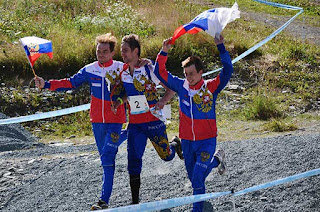
•Study
the two photographs. In 1.5 minutes be ready to compare and contrast the
photographs:•
give a brief description of the photos (action, location)
• say what the pictures have in common
• say in what way the pictures are different
• say which way of keeping fit presented in the pictures you’d prefer
• explain why
You will speak for not more than 2 minutes (12–15 sentences). You have to talk
continuously.

•Study
the
two photographs. In 1.5 minutes be ready to compare and contrast the
photographs:
•
give
a brief description of the photos (action, location)
• say what the pictures have in common
• say in what way the pictures are different
• say which way of travelling presented in the pictures you preferred
• explain why
You will speak for not more than 2 minutes (12–15 sentences). You have to talk
continuously.
05.04.2020
Начинаем дистанционное обучение!
GO!
КАК РАБОТАТЬ ПРИ ДИСТАНЦИОННОМ ОБУЧЕНИИ
1. Подключаемся к трансляции за 10 минут до начала.
2. Заходим под своим именем и фамилией, НИКАКИХ НИКОВ!
3. Выходим со включенной видеокамерой, преподаватель должен видеть ученика. Для этого при входе соглашаемся на»Подключится с видео» и » Использовать звук вашего компьютера»
4. Перед началом урока отключаем микрофон. (Кнопка в левом нижнем углу экрана) , чтобы избежать звуковых помех.
5. В чате используем значки: + , если все ясно, — , если что-то непонятно, ?, если возник вопрос.
6. Микрофон включает ТОЛЬКО конкретный ученик , когда учитель задает ему вопрос
7. После окончания занятия в течение 15 минут, фотографируем то, что сделали на уроке и присылаем фотографию через VK.
8. Домашнее задание присылается ДО начала следующего урока.
9. ПОМНИМ, что занимаемся по обычному расписанию НЕЗАВИСИМО, от того был ли видео урок или нет.
Задание от 6.04
№1 (для сдающих)
Записать 4 аудиофайла (3+1)
Срок сдачи до 18.00 7.04.
№2 (для не сдающих)
смотри на странице Form XI
Задания 3 и 4 устной части ЕГЭ
Task 3. These are photos from your photo album. Choose one photo to describe to your friend.
You will have to start speaking in 1.5 minutes and will speak for not more than 2 minutes
(1215 sentences). In your talk remember to speak about:
· where and when the photo was taken
· what/who is in the photo
· what is happening
· why you keep the photo in your album
· why you decided to show the picture to your friend


Task 4. Study the two photographs. In 1.5 minutes be ready to compare and contrast the photographs:
· give a brief description of the photos (action, location)
· say what the pictures have in common
· say in what way the pictures are different
· say which of the ways of having family meals presented in the pictures you’d prefer
· explain why
You will speak for not more than 2 minutes (1215 sentences). You have to talk continuously.


19.03.2020
Home task for March 20
deadline: TODAY 18.00
audiofiles sent later will not be checked
Human evolution is a lengthy process of change by which people originated from their apelike
ancestors. The traits that we today recognize as human evolved over a period of approximately
six million years. One of the earliest human traits was the ability to walk on two legs. This ability
evolved some four million years ago. A large and complex brain, the ability to use tools and the
capacity for language have developed more recently. Some studies lead us to believe that humans
have some relationship to another group of primate species, the apes. Scientists say that humans
and the great apes of Africa — chimpanzees and gorillas — share a common ancestor who lived
between 8 and 6 million years ago. However, researchers do not all agree about how these
species are related to the modern human. Genetic research into this relationship has produced
some controversial results and more discoveries, perhaps sensational ones, are to be expected.
19.03.2020
Home task for March 20
deadline: TODAY 18.00
audiofiles sent later will not be checked
Human evolution is a lengthy process of change by which people originated from their apelike
ancestors. The traits that we today recognize as human evolved over a period of approximately
six million years. One of the earliest human traits was the ability to walk on two legs. This ability
evolved some four million years ago. A large and complex brain, the ability to use tools and the
capacity for language have developed more recently. Some studies lead us to believe that humans
have some relationship to another group of primate species, the apes. Scientists say that humans
and the great apes of Africa — chimpanzees and gorillas — share a common ancestor who lived
between 8 and 6 million years ago. However, researchers do not all agree about how these
species are related to the modern human. Genetic research into this relationship has produced
some controversial results and more discoveries, perhaps sensational ones, are to be expected.
17/03/20
home task
deadline: March 18, 10 am
record your reading
Islands
that appear and disappear are certainly part of the world’s legends. But in
1963, with the aid of cameras and scientific observers, some of those legends
were given a solid basis of fact. For example, on November 13, 1963, a kind of
miracle occured. An island was born.
On
that day a fishing boat sailed into waters that were boiling and rolling and
foul with a strong smell. The world still had a hard time believing the miracle
that was to occur. It was the first time that scientists were to witness the
unexpected birth of an underwater island.
First
the engineer, then the captain, and at last the cook were aware of awful smell
and the peculiar roll of the sea. But it was the cook who first noticed the
smoke. He thought there was a ship in trouble somewhere on the seas.
05.03.20
Task 3. These are photos from your photo album. Choose one photo to describe to your friend.
You will have to start speaking in 1.5 minutes and will speak for not more than 2 minutes
(1215 sentences). In your talk remember to speak about:
· where and when the photo was taken
· what/who is in the photo
· what is happening
· why you keep the photo in your album
· why you decided to show the picture to your friend


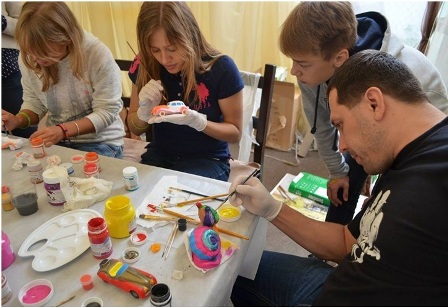

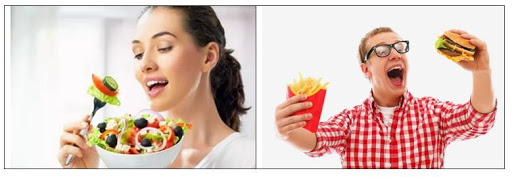
Task 4. Study the two photographs. In 1.5 minutes be ready to compare and contrast the photographs:
· give a brief description of the photos (action, location)
· say what the pictures have in common
· say in what way the pictures are different
· say which of the ways of spending free time presented in the pictures you’d prefer
· explain why
You will speak for not more than 2 minutes (1215 sentences). You have to talk continuously.


2/03/20


1.03.20
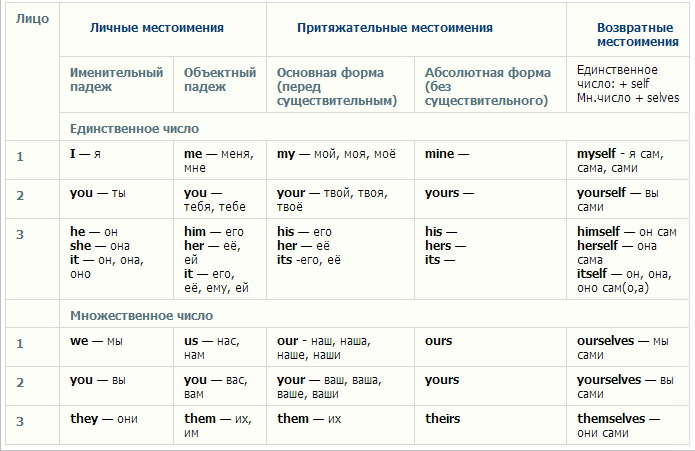
ENGLISH PRONOUNS
complete the test to check your knowledge
http://www.correctenglish.ru/tests/grammar/pronouns/
TEST ON PRONOUNS
1. Выберите правильную форму пропущенного местоимения.
1. Whose dog is that? ……………… is
always in our garden.
a) she b) he c) it d) one
2. He is much taller than ……………….
but I am much stronger.
a) I b) me c)
my d) mine
3. He was the eldest in the family. He had good
advice for ……………… of us.
a) each b) every
c) either d) no
4. He enjoyed ……………… minute of his
holiday.
a) each b) all c)
either d) every
5. The guests sat on ……………… side of
a long table.
a)
neither b) each c) either d)
every
6. I didn’t like the sisters, though they seemed
nice. It was a pity I liked …. of them.
a)
neither b) every c) either d) each
7. I’d like to try one of ………………
shirts on.
a) this b) these c) that d) those
8. I’ve
known him for many years. He is an old friend of …..
a) me b)
I c) my d) mine
2. Вставьте возвратное местоимение, где нужно: myself, himself, yourself, herself, -.
1. He came in and introduced
………………………
2. She cut……………………..so badly
that she had to be taken to hospital.
3. I even didn’t know how to
behave…………………….. in his presence.
4. She isn’t
feeling……………………..well. She can’t talk to you now.
5. Wash and dress…………………….., you
are not a child any more.
6. Don’t worry, I can take care of……………………..
.
3. Вставьте местоимения: a) all; b) the whole; c) everything; d)
everybody; e) both
1. She
believed that……………………was watching her.
2…………………….
city is being reconstructed.
3. You and I, we …………………… know
the truth.
4. He reads a lot and
remembers……………………the details.
5. How was……………………the
information collected?
6. I told you ……………………There is
hardly anything to add.
4. Вставьте местоимения: a) much; b) many; c) little; d) few; e) a
little; f) a few
1. I tried to keep it a secret. Very …………………… people know about
it.
2. Leave the child alone. There is …………………… harm in it.
3. My sister spends so …………………… money on her
clothes. It costs her husband
4. Ann has had
……………………visitors lately. She looks tired.
5. Why don’t you eat? Try …………………… of everything.
6. The station looked almost deserted. There
were …………………. people
waiting for the last train, a woman and three men.
5. Вставьте местоимения: a) some; b) any; c) no; d) none; e) no one
1. I wanted to find some coffee but there
was………………….. in the house.
2. He is here all day. You can find him
…………………..time between nine and six.
3. You are expecting …………………..to
call, are you?
4. Would you have………………….. more
tea? — Thank you.
5. I see………………….. cucumbers in the
salad; why haven’t you added any?
6. There isn’t ………………….. milk
left. Will you buy some?
7. Why are………………….. people so
boring?
8. That’s the only way out. There is
………………….. other choice.
6. Переведите выделенные слова в предложениях, используя слова: other, another, the other, others, the
others.
1. Дома на другой
стороне реки были построены из белого камня.
2. Почему ты один?
Где остальные?
3. Служитель
открыл дверь и впустил еще одного посетителя.
4. Щенок пил
молоко, но отказывался от другой пищи.
5. Она часто
получала письма, они приходили одно за другим.
6. Я потеряла
ручку, нужно купить другую.
7. Один мальчик
ушел, а другие мальчики продолжали работать.
8. Другие люди
рассказывали мне ту же историю.
27.02.20
Список прилагательных для выполнения заданий
39, 40, 43, 44 ЕГЭ
| С положительным значением | С отрицательным значением | С нейтральным значением |
| perfect — идеальный, совершенный charming — очаровательный fantastic — фантастический awesome – крутой, классный gorgeous — непревзойденный magnificent — величественный fascinating – обворожительный, пленительный glamorous — гламурный brilliant — блистательный amazing — изумительный smart – находчивый, нарядный, умный marvelous – чудный, удивительный remarkable – замечательный, выдающийся unforgettable — незабываемый incredible — невероятный pleasant — приятный enjoyable — приятный cheerful — радостный exciting — захватывающий grateful — благодарный successful — успешный romantic — романтический impressive — впечатляющий stunning — ошеломляющий spectacular — зрелищный ideal — идеальный confident — уверенный luxurious — шикарный reliable — надежный unique — уникальный well-built – хорошо сложенный creative — творческий artistic — артистичный sporty — спортивный sympathetic — сочувственный energetic — энергичный |
boisterous — неистовый suspicious — подозрительный stressful – стрессовый, напряженный rebellious – непослушный dramatic- разительный disastrous — бедственный exhausting — истощенный miserable – жалкий, несчастный boring — скучный scary — страшный frightening — пугающий devastated — опустошенный selfish — эгоистичный outrageous — неистовый tedious — утомительный disgusting — отвратительный untidy — неопрятный terrible – ужасный, страшный awful — ужасный horrible – ужасный, противный annoying — надоедливый tiring — изнурительный embarrassing — стеснительный mischievous – озорной, вредный alarming — тревожный exhausted — истощенный wrinkled — сморщенный |
responsible — ответственный suitable — подходящий skillful — умелый determined — решительный decisive — решительный typical — типичный simple — простой ordinary – обычный, ординарный potential — потенциальный expensive — дорогой valuable — ценный priceless — бесценный mature – зрелый, матерый confused — смущенный casual – случайный, небрежный persuasive — убедительный active — активный independent — независимый freckled — веснушчатый weird — странный bizarre — причудливый peculiar — особенный significant — существенный enormous — огромный predictable — предсказуемый huge — огромный tiny — крошечный massive — массивный extraordinary — экстраординарный surprising — поразительный hilarious – веселый, шумный emotional — эмоциональный touching — трогательный |
10/02
It’s interesting to know….
Future of the British Crow:
What will the Next Kings be Called?
6.02
Задание для 11б и 11в на 7.02
1.НАПИСАТЬ ЭССЕ
Preparing for holidays is more fun than celebrating them.
5/02/2020
Who can you see in these pictures?




26.01.
Сравнение фотографий
Task 4. Study the two photographs. In 1.5 minutes be ready to compare and contrast the photographs:
· give a brief description (action, location)
· say what the pictures have in common
· say in what way the pictures are different
· say which way of spending your free time you’d prefer
· explain why
You will speak for not more than 2 minutes. You have to talk continuously.


19/01
The Siege of Leningrad
The Siege of Leningrad, also known as the Leningrad Blockade was a prolonged military operation by the German Army Group North and the Finnish Defence Forces to capture Leningrad in the Eastern Front theatre. It started on 8 September 1941, when the last land connection to the city was severed. Although the Soviets managed to open a narrow land corridor to the city on 18 January 1943, the total lifting took place on 27 January 1944, 872 days after it began. It was one of the longest and most destructive sieges in history and the most costly in terms of casualties.
«This documentary shows the strength of the soviet peoples back in the day, they never gave up, they just kept fighting, always moving forward, not even one step back»
http://www.saint-petersburg.com/history/great-patriotic-war-and-siege-of-leningrad/
16/01/2020
What is Homeschooling?
In the simplest of terms, homeschooling is simply schooling your children at home. Homeschooling has become quite the progressive movement in recent years with more and more parents choosing to homeschool instead of sending their children to public school. There are a number of reasons why a parent might choose to homeschool their child – here are a few:
- The family might have different religious beliefs that those taught (or not taught) in public school. Homeschooling allows you to choose whether to incorporate religion or not.
- Homeschool might offer more specialized educational attention for special needs children.
- Parents may have different educational philosophies than public school administrators and teachers. With homeschool, you choose what philosophies to follow.
- Children may progress faster in a homeschool setting than in public school.
- Schooling at home may promote a closer familiar relationship – many parents find that they enjoy spending extra time with their kids in homeschool.
- Public school options in the area may not offer the preferred degree of educational quality.
- Homeschool can save time since you don’t have to transport your children to and from school every day. The school day can actually be shortened for children.
The homeschool movement really started to gain speed in the 1970s when authors like Raymond Moore and John Holt began writing about educational reform. Homeschooling as a new option in alternative education at the time but, according to the National Home Education Research Institute, there are now more than 2 million children being homeschooled in the United States each year. And that number increases by as much as 7% to 15% each year.
The Pros and Cons of Homeschooling Your Kids
Homeschooling is legal in all fifty states, but there are some requirements you have to meet. Parents are required to choose or create an educational curriculum that meets certain educational standards set forth by the state. As long as those standards are met, however, parents have more educational liberty with homeschooling than with public school. Students may have more opportunities to choose what they learn with homeschooling, and they can learn at their own pace without having to keep up with more advanced students. Homeschool gives parents the opportunity to incorporate religion into their child’s education and it may promote a closer family atmosphere as well.
One of the major downsides of homeschooling is that it takes a lot of time to plan and to implement educational strategies. In most families, one parent needs to make homeschooling the children their full-time concern – it can be very challenging for a single parent to succeed with homeschool. Because one parent may not be able to work, homeschool may put a financial strain on the family finances. Homeschooled children may also have more limited access to extracurricular activities including sports, and they may not have the same level of social interaction as they would in public school. There are, of course, workarounds for these things but they are still challenges associated with homeschool.
The Benefits of Public School vs. Homeschool
Now that you know a little more about homeschool and its associated pros and cons, you may be wondering how public school stacks up. Each child is an individual with individual needs, so the public school may or may not be the best option. However, the only way you’ll know this to be the case is to take time to learn about the potential benefits of public school versus homeschool. Here are some of the top benefits you should consider:
- Public school has a built-in structure. Children, particularly young children, thrive on routine and they require a lot of attention and care. If you are trying to homeschool your children while also being a stay-at-home mom, you may find it more challenging than you imagine.
- Many public schools offer sports and elective options like art and music – these programs may not be available to homeschool students.
- A public school teaches children a certain degree of independence. Depending on the grade, children need to keep track of their own class schedules, find their way from one class to another, purchase their own lunch, and make it to and from the bus every day.
- Teachers are public schools are required to carry education degrees and they may have more experience working with and teaching children. Teaching a child is different from parenting a child and many parents struggle to do both.
- Public school is typically cheaper than homeschool. You could spend $1,000 or more on a homeschool curriculum alone, not to mention supplies. For a public school, you have to buy supplies once or twice a year and you can pack your child’s lunch to save money.
- Children who attend public school have more opportunities for social interaction than many homeschool students. There are homeschool co-ops that can be helpful, but a public school has built-in social benefits.
- Sending your children to public school frees you up to just be a parent. Doing double-duty as both teacher and parent can be both grueling and frustrating at times – especially if you have other non-school-age children to care for.
- Public school gives you and your child some much-needed time apart which helps to foster your child’s independence and gives you a break as well. There is no harm in needing a break from your kids once in a while.
- In addition to the benefits listed above, there are some downsides to public school. For example, public school has a more rigorous and regimented schedule than most homeschool programs and students may not have the same degree of freedom and flexibility to customize their education. But unless you can fully commit yourself to creating and implementing a strong homeschool curriculum, your child may be better off in public school anyway.
While there are many benefits of private school versus homeschool, every situation is different. A public school could very well be the best choice for your child while homeschool is a better option for another child. You may even find that one of your children does better in one environment and another child does better in a separate environment. Your job as a parent is to provide for your child’s needs to the best of your ability. This often means making compromises or making the best of a bad situation. As long as you keep your child’s best interests in mind, you will make the right choice.
Attending public school comes with its own challenges, but homeschool is not always the better option. Before you decide to homeschool your child, take the time to thoroughly consider your options and explore them from all angles. You may just find that public school is a better option than you previously realized – it is up to you to make the most of it.
12/01/2020
Choose the most suitable of the four given words to complete each of the sentences below.
1. He’s not only
tedious
, he’s also…
a. boring b. incompetent c. efficient d. brilliant
2. Despite its director’s high reputation, the film was …
a. extraordinary b. gripping c. embarassing d. powerful
3. I can’t always be elegant; sometimes I enjoy wearing … clothes.
a. scintillating b. scruffy c. shallow d. rude
4. Finally at the end, things hotted up; the ending was really …
a. gripping d. delicate c. chaotic d. ludicrous
5. Not all film stars are beautiful; some are quite …
a. exquisite b. stunning c. vulgur d. plain
6. We need someone well-educated and …
a. illiterate b. dim c. coarse d. well-travelled
7. He’s an extremely … pianist.
a. graceful b. gifted c. exceptional c. refined
8. It wasn’t exactly exciting, but it was certainly …
a. enthralling b. absorbing c. thrilling d. gripping
Task 4. Study the two photographs. In 1.5 minutes be ready to compare and contrast the photographs:
· give a brief description (action, location)
· say what the pictures have in common
· say in what way the pictures are different
· say which kind of getting education you’d prefer
· explain why
You will speak for not more than 2 minutes. You have to talk continuously.


18/12/19
Crime and criminals
listening
https://english-rooms.com/test/upper-intermediate-listening-test-crime
dependent prepositions
https://www.eltbase.com/quiz/063_01.htm
crossword
https://www.eltbase.com/quiz/348_01.htm
15.12.19
конкурс научно-исследовательских работ имени Д.И.Менделеева (для учащихся 8 – 11-х классов)
срок подачи работ до 20 декабря 2019 года. Участие могут принимать школьники 8-11 классов.
С более подробной информацией можно ознакомиться по ссылке
Рождественские и новогодние слова и выражения в английском языке
В преддверии новогодних праздников предлагаю небольшой список слов, которые относятся к Рождеству (Christmas) и Новому Году (New Year). Во всех англоязычных странах Рождество празднуется 25 декабря, а Новый Год — 1 января.Выражения:
Advent — пришествие
Berry — ягода
Bethlehem — Вифлеем
Candle — свечка
Chimney — дымоход (по поверью Санта-Клаус спускается в дома по дымоходам)
Christian — христианин
Christianity — христианство
Christmas — Рождество (празднуется 25 декабря)
Christmas cake — рождественский пирог ( с фруктами и глазурью — смотрите ниже)
Christmas card — рождественская открытка
Christmas carol — колядка (песня, которые поют во время Рождества)
Christmas Day — день Рождества — так обычно называют день 25 декабря
Christmas Eve — сочельник
Christmas holidays — рождественские праздники (обычно неделя после рождества)
Christmas present — рождественский подарок
Christmas tree — рождественская елка
Cracker — хлопушка
Decoration — украшение
Eggnog — рождественский напиток (яичный желток, растёртый с сахаром, с добавлением сливок, молока или спиртного напитка)
Ginger Bread — имбирный кекс, пряник
Father Christmas — или Santa Claus
Fireplace — камин
Frankincense — ладан
Gold — золото
Holly — падуб (растение)
Mistletoe — омела (растение) — традиционное украшение дома на Рождество
Myrrh — мирра (ароматическая смола)
the Nativity — рождение Христа
Nativity play — пьеса о рождестве (инсценировка евангельской легенды, которая исполняется детьми)
New year — новый год
New Year’s Day — 1 января
New Year’s Eve — 31 декабря
Ornament — украшение (синоним с decoration)
Reindeer — северный олень (такие олени тянут сани Санта-Клауса)
Santa Claus — рождественский дед или просто Санта-Клаус
Интересный факт: имя Санта-Клауса представляет собою искажение голландской транскрипции имени св. Николая, день памяти которого отмечается 6 декабря по григорианскому календарю.
Shepherd — пастух
Sleigh — сани; салазки
Snow — снег
Star — звезды
the star of Bethlehem — Вифлеемская звезда
Tinsel — блестки
Turkey — индюшка
White Christmas — снежное или белое Рождество
Xmas — сокращение от Christmas
Пожелания:
Merry Christmas! — Счастливого Рождества!
Happy Christmas! — Счастливого Рождества!
Happy New Year! — С Новым Годом!
Merry Christmas and a Happy New Year! — С Рождеством и Новым Годом!
Wishing you a prosperous New Year — Желаю Вам удачного Нового Года!
All the best for the coming year! — Самого лучшего в новом году!
Seasons Greetings! — С праздниками!
27.11.19
Describe the picture according to the plan
Pay attention to the vocabulary

21.10.19
Task 4. Study the two photographs. In 1.5 minutes be ready to compare and contrast the photographs:
· give a brief description (action, location)
· say what the pictures have in common
· say in what way the pictures are different
· say which kind of life you’d prefer for wild animals
· explain why
You will speak for not more than 2 minutes. You have to talk continuously.
3.10.19
Эссе
You have 40 minutes to do this task.
Comment on the following statement.
To make friends is easier than to keep friends
Write 200–250 words.
Use the following plan:
− make an introduction (state the problem)
− express your personal opinion and give 2–3 reasons for your opinion
− express an opposing opinion and give 1–2 reasons for this opposing opinion
− explain why you don’t agree with the opposing opinion
− make a conclusion restating your position
Испытай себя в роли эксперта ЕГЭ:
оцени данное эссе
по схеме
коммуникативная задача 3 балла
организация текста, логика 3 балла
грамматика 3 балла
лексика 3 балла
орфография, пунктуация 2 балла
итого: 14 баллов

28.09.19
Придаточные причины, цели, следствия, образа действия
Придаточные
предложения следствия
Есть много способов
показать результат в речи, и один из них – это использование придаточных
предложений. Придаточные предложения следствия помогают нам
сообщить о результате какого-либо действия или о последствиях какой-либо
ситуации. Такие предложения вводятся при помощи союзов so,so…that (для
прилагательных и наречий), such…that (для существительных)
Пример:
Nina had a stomach ache so she went
to the doctor. – У Нины болел живот, поэтому она пошла к доктору.
There was so much soup that John
wasn’t able to eat it. – Супа было так много, что Джон не мог его съесть.
Рассмотрим ситуации, в которых используется конструкция such…that.
Первая схема описывает оборот с исчисляемыми существительными в единственном числе:

Схема 1.
Пример:
It was such a beautiful dress that I bought it. – Платье было такое красивое, что я его купила.
Вторая схема описывает оборот с исчисляемыми существительными во множественном числе либо неисчисляемыми существительными:

Схема 2.
Пример:
They were such clever people that it was pleasant to speak to them. – Они были такими умными, что с ними было приятно поговорить.
It was such nice weather that we went to the countryside. – Погода была такая хорошая, что мы поехали за город.
Обратите внимание, что когда мы используем существительное во множественном числе или неисчисляемое существительное, артикль не используется
Особенности употребления конструкции so…that
В придаточных предложениях следствия также употребляется конструкция so…that. Эту конструкцию очень часто сопровождают следующие оценочные местоимения (рис. 3):
- much
- many
- few
- little

Рассмотрим схему:

Схема 3.
Пример:
There was so much water in the bucket that the boy couldn’t carry it alone. – В ведре было так много воды, что мальчик не мог один его унести.
There was so little food in the fridge that I still feel hungry. – В холодильнике было так мало еды, что я все еще голодна.
Не забывайте, чтоmuch иlittle употребляются с неисчисляемыми существительными, а many и few – с исчисляемыми (см. схему 4).

Схема 4.
Пример:
We had so many books at home that mother decided to take some of them to the library. – Дома было так много книг, что мама решила отнести некоторые из них в библиотеку.
I have so few T-shirts that I need to buy some. – У меня так мало футболок, что мне нужно купить несколько.
I. Составьте из двух предложений одно, используя the Clause of Result
- The book was dull. I couldn’t read it to the end.
- There was much work. Mary didn’t know where to begin.
- The water in the sea was cold. The children didn’t want to swim.
- I had little money. I couldn’t buy a new dress.
Придаточные предложения причины – это такие предложения, которые помогают объяснить, почему происходят те или иные события или совершаются те или иные действия. Одним словом, такие предложения отвечают на вопрос почему
Особенности употребления союзов because и as
Придаточные предложения причины присоединяются к главному предложению при помощи союзов :
- as
- since
- because
- because of
- due to

Пример:
- Nina went to the seaside in summer because she wanted to swim in the sea. – Нина поехала на побережье летом, потому что хотела искупаться в море.
Второе предложение начинается с because и поясняет главное предложение.
- As Mike didn’t want to be late for school he caught the bus. – Так как Майк не хотел опоздать в школу, он сел на автобус.
Придаточное предложение (As Mike didn’t want to be late for school) присоединяется к главному при помощи союза as и поясняет его.
Особенности употребления союзов because of и due to
Союзы because of и due to обычно стоят перед существительным.
Пример:
- He didn’t pass his exam because of illness. – Он не сдал экзамен из-за болезни.
- She couldn’t make a report due to the problems with computer. – Она не могла сделать доклад из-за проблем с компьютером.
После союзов because of и due to часто употребляется выражение the fact that, после которого следует придаточное выражение.
Пример:
We couldn’t get to London due to the fact that all the flights were delayed because of the weather. – Мы не могли попасть в Лондон из-за того, что все рейсы были отложены из-за погодных условий.
Упражнения
Чтобы лучше понять и усвоить особенности употребления придаточных предложений причины, необходимо выполнить следующее упражнение.
- Сделайте из двух предложений одно, используя the Clause of reason
- Nick was good at swimming. He won the first prize at camp competition.
- The flight was delayed. There was storm.
- Ann bought a car. She had a lot of money.
- Bob spent two weeks at the hospital. He had broken his leg.
Придаточные предложения цели – это такие предложения, которые отвечают на вопрос “Why?” («Зачем?») (рис. 1), то есть они используются, когда нужно сказать, с какой целью совершается действие, описанное в главном предложении. На русский язык переводятся союзом чтобы, а отрицательные предложения – чтобы не.

Зачем?
Пример:
You study English every day in order to speak it fluently. – Вы изучаете английский язык каждый день, чтобы свободно на нем говорить.
You do your morning exercises to be healthy. – Вы делаете зарядку утром, чтобы быть здоровыми.
You go outside with your friends so as to have fun. – Вы идете гулять со своими друзьями, чтобы развлечься.
You buy new clothing so that you can look nice. – Вы покупаете новую одежду, чтобы хорошо выглядеть.
Особенности употребления союзов in order to, so as to и конструкции to + infinitive
Можно заметить, что в приведенных примерах главное и придаточное предложения соединены следующими союзами :
- in order to
- so as to
- so that
- to + (infinitive)

Слова in order to, so as to и to + infinitive используются, когда в главном и придаточном предложениях одно и то же подлежащее. В разговорном английском конструкция to + infinitive является более употребительной, в то время как in order to и so as to звучат официальнее.
Пример:
Tom learns Chinese to work in China. – Том изучает китайский, чтобы работать в Китае.
You can take this medicine in order to feel better. – Вы можете принять это лекарство, чтобы чувствовать себя лучше.
The pupils must learn this poem by heart so as to get an excellent mark. – Ученики должны выучить это стихотворение наизусть, чтобы получить отличную оценку.

Для того чтобы образовать отрицание в придаточных предложениях цели, необходимо добавить отрицательную частицу not перед to (в таких союзах как in order to и so as to), чтобы получилось: in order not to/ so as not to. Обратите внимание, что форма not to do не используется!
Пример:
Take your umbrella in order not to get wet. – Возьми зонт, чтобы не промокнуть.
You have to be hurry so as not to be late. – Тебе нужно поторопиться, чтобы не опоздать.
Особенности употребления союза so that
Как уже было сказано, придаточные предложения цели могут также использоваться с союзом so that. Этот союз используется, когда подлежащее в главном предложении отличается от подлежащего в придаточном предложении.
Обратите внимание, что so that часто используется с модальными глаголами can/could/will/would.
Пример:
Tim gave his girlfriend red roses so that she would forgive him. – Тим подарил своей девушке красные розы, чтобы она простила его.
Dan gave his sister some money so that she could buy a new dress. – Дэн дал своей сестре немного денег, чтобы она купила себе новое платье.

Когда мы используем настоящее (thePresent Tense) и будущее (theFutureTense) времена в главном предложении, мы используем so that + can/will в придаточном предложении.
Пример:
I have given Alice a book so that she can be ready for the lesson. – Я дал Алисе книгу, чтобы она была готова к уроку.
He will study hard so that his teacher will give him a good mark. – Он будет упорно трудиться, чтобы учитель поставил ему хорошую оценку.
Если же в главном предложении используется прошедшее время (the Past Tense), мы используем so that + could/would в придаточном предложении.
Пример:
Mother woke up her children early so that they could be in time. – Мама разбудила детей рано, чтобы они успели вовремя.
He bought some tickets so that they would go to the cinema. – Он купил несколько билетов, чтобы они пошли в кино.
Когда придаточное предложение цели отрицательное, мы используем so that +can’t/couldn’t/won’t/wouldn’t.
Пример:
They were whispering so that their neighbours couldn’t hear their conversation. – Они шептались, чтобы их соседи не могли слышать их разговор.
We keep our food in the fridge so that it won’t go bad. – Мы держим нашу еду в холодильнике, чтобы она не испортилась.
The taxi driver hurried so that she wouldn’t be late. – Таксист спешил, чтобы она не опоздала.

More ways to express purpose
Есть еще несколько способов выразить цель:
For + Noun – expressing individual purpose
Пример:
I came here for a talk with you. – Я пришел сюда, чтобы поговорить с тобой.
I decided I would save up for a new computer. – Я решил, что буду копить на новый
компьютер.
- For + Gerund – describing the function of an object
Пример:
They use this tool for digging. – Они используют этот инструмент, чтобы копать.
I bought it foropening bottles. – Я купил это, чтобы открывать бутылки.
Упражнения
Чтобы лучше понять и усвоить особенности употребления придаточных предложений цели, необходимо выполнить следующие упражнения.
Составьте из двух предложений одно, используя the Clause of Purpose
Пример: He studied really hard. He wanted to get better marks. (in order to) – He studied really hard in order to get better marks.
- Ann is putting on her warm jacket. She doesn’t want to catch a cold. (so as not to)
- Alex is borrowing some English books. He wants to learn more of this language. (to)
- Sandy has lent her brother some money. He wants to buy a new CD. (so that)
- They are going on holiday soon. They want to have a rest. (so as to)
- He spoke in a low voice. He didn’t want to wake her up. (in order not to)
- Mother packed her camera. She wanted her son to take photos. (so that)
Переведите с английского на русский
- We didn’t tell her the news so that she wouldn’t worry.
- I have saved up enough money to buy a car.
- Linda turned on the lights so that we could see well.
- We are going to the cinema so as to watch a new film.
- He sets his alarm in order not to be late for work.
- Заполните пропуски союзами in order to, so as to, so that или частицей to:
а) They went to the hospital see their friend.
б) The car stopped a woman could walk.
в) My father turned on the television watch the latest news.
г) My sister is going to study French leave London for Paris.
д) We bought a laptop our son could work anywhere.
е) Our teacher asks simple questions all the pupils can answer them.
- Дополните предложения по смыслу:
а) She took several books in order to .
б) He bought a new car so that .
в) My parents called my tutor so as to .
г) I called for Jane to .
д) She read those articles in order to .
е) I’ll attend his lectures so that .
ж) They borrowed some money so as to .
з) We will stop to .
- Переведите на английский язык, обращая внимание на особенности употребления союзов в придаточных предложениях цели:
а) Я позвонил ему, чтобы поздравить с днем рождения.
б) Мы вызвали такси, чтобы успеть на самолет.
в) Она записалась на дополнительные курсы, чтобы лучше знать свой предмет.
г) В библиотеке нужно читать про себя, чтобы не отвлекать других.
д) Я долго готовилась к экзаменам, чтобы сдать их на отлично.
е) Она подменила его на работе, чтобы он смог погулять с сыном в парке.
ж) Мы решили рассказать всю правду, чтобы они не заявили в полицию.
з) Директор подпишет бумаги завтра, чтобы вы могли передать их старшему менеджеру.
Придаточные предложения образа действия. Clauses of Manner
Употребление
Придаточные предложения образа действия в английском языке
вводятся при помощи союзов as if/as though, описывающих в какой манере
производится действие. В таких предложениях встречаются глаголы act, appear, be, behave, feel,
look, seem, smell, sound, taste и т.п.
As if и as though
Мы употребляем as if/as though с глаголами в форме
прошедшего времени для описания ситуаций, нереальных с точки зрения настоящего
момента.
Пример:
He
gives orders as if/as though he was the boss Он
раздает указания, как если бы он был начальником
He is
acting as if/as though nothing had happened Он ведет себя, как если бы ничего не
произошло
Вероятность в настоящий момент
Мы употребляем as if/as though с глаголами в форме
настоящего времени (включая настоящее совершенное) для описания ситуаций,
кажущихся вполне вероятными на настоящий момент.
Пример:
He
looks as if/as though he knows what he’s dong Кажется,
он знает, что делает (он выглядит так, как будто знает)
She looks
as if/as though she hasn’t had a good night’s sleeps for weeks Она выглядит так, как будто не спала несколько недель
As, like и the way
Помимо союзов as if/as though в придаточных образа действия
также употребляются союзы аs, like и the way.
Пример:
I
always drink tea without milk, just as they do on the continent Я всегда пью чай без молока,
точно также как они делают на континенте
She needs the money, like I do, so she works in a bar in the
evenings Ей нужны деньги, как и мне,
поэтому она по вечерам подрабатывает в баре
I was never
allowed to do things the way I wanted to do them Мне никогда не
позволяли поступать так, как я хотел
Match the following clauses with the appropriate manner clause:
| 1. He spends his money | A. like his father does. |
| 2. Your face is white. You look | B. as the the Romans do. |
| 3. He walked straight past me | C. as if you’d seen a ghost. |
| 4. He behaves just | D. as if I hadn’t slept for weeks. |
| 5. I’m so tired. I feel | E. as though I were invisible. |
| 6. When in Rome, do | F. as if he were a millionaire. |
Fill the gaps in the following text with although, despite, even though, as though.
I sometimes have difficulty getting to sleep at night. 1.____________ I’m often tired after a long day’s work, I lie in bed and can’t relax. It’s 2.____________ my brain can’t switch itself off. 3.____________ I know I need to get to sleep to be fresh for the next day, I find myself worrying about all the little problems the day has brought. 4.____________ the fact that I can’t solve any of these problems in the middle of the night, I try to find solutions there and then. The clock keeps ticking away until eventually I realise that 5.____________ there are only two more hours until my alarm goes off, I still haven’t slept at all. Then, as the sun starts to come up, my eyes finally feel 6.____________ they are going to close…
Complete the sentences in the exercise below with an appropriate manner clause:
1. He’s so thin and pale; he looks as if ___________________.
2. I’m so tired; I feel as though___________________.
3. This pizza doesn’t taste as___________________.
4. He walked straight past me as if___________________.
5. Why didn’t you do as ____________________________?
6. Your doors are creaking. They sound as if___________________.
7. She walks around the office telling everyone what to do as though ___________________.
8. You don’t study hard enough. You behave like ___________________.
22.09.19
Letter writing
You have 20 minutes to do this task.
You have received a letter from your English-speaking pen friend George who writes:
… At school we are doing projects on famous singers from different countries. Could you tell me about any famous Russian singer? What is he/she famous for? How long has he/she been singing? Do you enjoy his/her songs? Have you ever been to his/her concerts?
As for my school trip to London it was really wonderful…
Write a letter to George.
In your letter
— tell him about the singer you admire most of all
— ask 3 questions about his trip to London
Write 100 – 140 words.
Remember the rules of letter writing.
Конкурс переводов
Положение о городском открытом конкурсе переводов
с иностранного языка
3. Порядок
проведения Конкурса
3.1. Конкурс проводится с 16.09.2019 по 31.10.2019 в возрастных группах 5 – 6 класс, 7 – 8
класс, 9 – 11 класс.
3.2. Для конкурса подобраны аутентичные тексты на английском, французском,
немецком языках.
3.3. На конкурс принимаются тексты по следующим номинациям:
— проза
— поэзия
3.4. Каждый
участник имеет право направить в адрес оргкомитета только один вариант
работы в одну или обе номинации по любому из рабочих языков
конкурса.
3.5. К участию принимаются переводы, не публиковавшиеся на
русском языке ранее.
3.6 Тексты для перевода в
Приложении 3 (английский), Приложении 4 (французский), Приложении 5 (немецкий).
4. Требования
к переводу и оформлению конкурсных работ
4.1. Для участия в Конкурсе необходимо на адрес электронной почты nmc_conference@mail.ru отправить следующие документы:
·
Заявка
на участие в конкурсе (приложение 1);
·
Конкурсная работа (перевод предложенного отрывка текста,
оформленного согласно требованиям).
4.2. Критерии
оценивания конкурсных работ представлены в приложении 2.
4.3. Все
материалы предоставляются в печатном виде.
4.4.
Требования к печатным материалам:
·
шрифт — Times New Roman, начертание — обычный; кегль
— 14, выравнивание — по ширине, межстрочный интервал – 1,5.
·
в левом верхнем углу первой страницы: фамилия,
имя, отчество автора, место учебы с указанием класса, город, контактный
телефон, e-mail;
·
файл с текстом конкурсной работы должен быть
назван по фамилии автора с указанием номинации и языка перевода и расширением
имени файла .doс (например, Иванова_проза_англ.doc)
4.5.
С 01 ноября по 15 ноября жюри будет проводить оценивание работ участников
конкурса. Итоги конкурса будут опубликованы не позднее 18 ноября 2019 г. на
сайте МБОУ ДПО «Научно-методический центр».
4.6. Материалы, оформленные с нарушением настоящего
Положения и представленные позднее установленных сроков, к рассмотрению не
принимаются. Представленные на конкурс материалы возврату не подлежат.
5. Подведение итогов Конкурса
5.1. Победителям и лауреатам вручаются Дипломы.
5.2. Участники Конкурса получают сертификат
участника.
5.3. Апелляции по итогам Конкурса
не предусмотрены. Оценочные листы не выдаются.
тексты для перевода находятся здесь:
-
1
coffee decaffeination process
Универсальный англо-русский словарь > coffee decaffeination process
См. также в других словарях:
-
Coffee roasting — machine Light roasted coffee beans … Wikipedia
-
Coffee and health — Coffee contains several compounds which are known to affect human body chemistry. The coffee bean itself contains chemicals which are psychotropic (in a way some find pleasing) for humans as a by product of their defense mechanism. These… … Wikipedia
-
Decaffeination — Decaf redirects here. For the computer software program, see DECAF. Decaffeination is the act of removing caffeine from coffee beans, cocoa, tea leaves and other caffeine containing materials. (While caffeine free soft drinks are occasionally… … Wikipedia
-
Coffee processing — Main article: Coffee Traditional coffee drying in Boquete, Panamá Processing of coffee is the method converting the raw fruit of the coffee plant into the coffee. The cherry has the fruit or pulp removed leaving the seed or bean which is then… … Wikipedia
-
Coffee — This article is about the beverage. For the bean it is made from, see Coffee bean. For other uses, see Coffee (disambiguation). Coffee A cup of black coffee Type Hot Country of origin … Wikipedia
-
coffee — /kaw fee, kof ee/, n. 1. a beverage consisting of a decoction or infusion of the roasted ground or crushed seeds (coffee beans) of the two seeded fruit (coffee berry) of certain coffee trees. 2. the seeds or fruit themselves. 3. any tropical tree … Universalium
-
Coffee preparation — For the agricultural and industrial processes for producing whole coffee beans, see Coffee processing. Coffee preparation is the process of turning coffee beans into a beverage. While the particular steps needed vary with the type of coffee… … Wikipedia
-
Coffee production in Indonesia — An old man is peeling coffee near megalithic stones at Bena, Ngada, Flores Indonesia produced 420,000 metric tons of coffee in 2007. Of this total, 271,000 tons were exported and 148,000 … Wikipedia
-
Coffee percolator — Percolator A coffee percolator is a type of pot used to brew coffee. The name stems from the word percolate which means to cause (a solvent) to pass through a permeable substance especially for extracting a soluble constituent.[1] In the case of… … Wikipedia
-
Coffee production in Costa Rica — A coffee plantation in the Orosí valley The coffee production in Costa Rica played a key role in the country s history and still is important for the Costa Rican economy. In 2006, coffee was Costa Rica s number three export,[1] after … Wikipedia
-
Coffee production in Papua New Guinea — Papua New Guinea raw arabica coffee beans Coffee production in Papua New Guinea accounts for approximately 1% of world production according to the United Nations Conference on Trade and Development (UNCTAD).[1] After … Wikipedia
- coffee decaffeination process
-
Пищевая промышленность: процесс декофеинизации кофе
Универсальный англо-русский словарь.
Академик.ру.
2011.
Смотреть что такое «coffee decaffeination process» в других словарях:
-
Coffee roasting — machine Light roasted coffee beans … Wikipedia
-
Coffee and health — Coffee contains several compounds which are known to affect human body chemistry. The coffee bean itself contains chemicals which are psychotropic (in a way some find pleasing) for humans as a by product of their defense mechanism. These… … Wikipedia
-
Decaffeination — Decaf redirects here. For the computer software program, see DECAF. Decaffeination is the act of removing caffeine from coffee beans, cocoa, tea leaves and other caffeine containing materials. (While caffeine free soft drinks are occasionally… … Wikipedia
-
Coffee processing — Main article: Coffee Traditional coffee drying in Boquete, Panamá Processing of coffee is the method converting the raw fruit of the coffee plant into the coffee. The cherry has the fruit or pulp removed leaving the seed or bean which is then… … Wikipedia
-
Coffee — This article is about the beverage. For the bean it is made from, see Coffee bean. For other uses, see Coffee (disambiguation). Coffee A cup of black coffee Type Hot Country of origin … Wikipedia
-
coffee — /kaw fee, kof ee/, n. 1. a beverage consisting of a decoction or infusion of the roasted ground or crushed seeds (coffee beans) of the two seeded fruit (coffee berry) of certain coffee trees. 2. the seeds or fruit themselves. 3. any tropical tree … Universalium
-
Coffee preparation — For the agricultural and industrial processes for producing whole coffee beans, see Coffee processing. Coffee preparation is the process of turning coffee beans into a beverage. While the particular steps needed vary with the type of coffee… … Wikipedia
-
Coffee production in Indonesia — An old man is peeling coffee near megalithic stones at Bena, Ngada, Flores Indonesia produced 420,000 metric tons of coffee in 2007. Of this total, 271,000 tons were exported and 148,000 … Wikipedia
-
Coffee percolator — Percolator A coffee percolator is a type of pot used to brew coffee. The name stems from the word percolate which means to cause (a solvent) to pass through a permeable substance especially for extracting a soluble constituent.[1] In the case of… … Wikipedia
-
Coffee production in Costa Rica — A coffee plantation in the Orosí valley The coffee production in Costa Rica played a key role in the country s history and still is important for the Costa Rican economy. In 2006, coffee was Costa Rica s number three export,[1] after … Wikipedia
-
Coffee production in Papua New Guinea — Papua New Guinea raw arabica coffee beans Coffee production in Papua New Guinea accounts for approximately 1% of world production according to the United Nations Conference on Trade and Development (UNCTAD).[1] After … Wikipedia
При загрузке переводов произошла ошибка. Пожалуйста, проверьте соединение с интернетом и перезагрузите страницу.
При сохранении статуса слова произошла ошибка. Пожалуйста, проверьте соединение с интернетом и перезагрузите страницу.
Sometimes a food can be unacceptable if one process is used but fine if another is used. Decaffeinated Coffee is one example. The chemicals used in some decaffeination processes raise health and environmental concerns.
There are four major commercial processes used to remove caffeine from coffee.
- Conventional decaffeination uses the chemical Methylene Chloride
- «Natural» decaffeination uses the chemical Ethyl Acetate.
- Water decaffeination uses water
- Carbon Dioxide decaffeination..uses, you guessed it, carbon dioxide.
Each of these methods does a good job of removing the caffeine from coffee (to sell a coffee as decaffeinated it must be at least 97% caffeine free). However, there are significant differences in the taste of the decaffeinated product, in the residual chemicals remaining in the beans, and in the effect on the environment.
Natural Decaffeination — uses Methylene Chloride a solvent. Although Methylene Chloride levels in the coffee bean are reduced to residual levels that are «legally safe» (the FDA has set a maximum allowable level of 10 parts per million), health conscious consumers, skeptical of government infallibility, consider these residues unacceptable.
Ethyl Acetate Decaffeination — Coffee decaffeinated using this process is frequently referred to as «Natural Decaffeinated» because Ethyl Acetate (CH3CO2C2H5) can occur naturally in orange rinds and others fruits. But because of the cost of using natural extract the Ethyl Acetate used in decaffeination, a manufactured chemical is used. There is some question as to whether it is legal in the United States to call Ethyl Acetate decaffeinated coffee «naturally decaffeinated,» but currently that is a common practice. The decaffeination process is essentially the same as in conventional Methylene Chloride decaffeination, except Ethyl Acetate replaces Methylene Chloride as the solvent. There are still chemical residues remaining in the coffee beans (10ppm max).
Water Decaffeination — A water process decaffeination plants starts by soaking coffee beans
in pure water. The liquid is drained off, and the coffee is thrown away, because it is now flavorless. The liquid solution, however, is full of both coffee flavors and caffeine. (Of course caffeine is water soluble otherwise they couldn’t put it in your cola. The liquid is then passed through a carbon filter, which removes the caffeine but not the flavor components. This flavor saturated liquid is then poured onto a new batch of coffee. Because the liquid is already full of coffee flavors, it doesn’t extract any additional flavor from the coffee beans. It does, however, extract the caffeine. This cycle of soaking, then filtering out the caffeine, can be repeated indefinitely. No chemicals are used.
Carbon Dioxide (CO2) Decaffeination — In the CO2 decaffeination process, water soaked coffee beans are placed in a stainless steel container or extractor. The extractor is then sealed and liquid CO2 is injected. The CO2 acts as the solvent to dissolve and draw the caffeine from the coffee beans, leaving the larger-molecule flavor components behind. The caffeine laden CO2 is then transferred to another container. Here the pressure is released and the CO2 returns to its gaseous state, leaving the caffeine behind. The caffeine free CO2 gas is pumped back into a pressurized container for reuse. CO2 decaffeination produces the most flavorful decaffeinated coffee. There are no harmful chemicals or byproducts of the process.
In general as a roaster, you would want to choose Carbon Dioxide decaff coffee for the best flavour
- Подробности
-
22136
 |
||
| Прочитайте текст. Заполните пропуски в предложениях под номерами В11-В16 соответствующими формами слов, напечатанных заглавными буквами справа от каждого предложения. TEST 09 (part 2) |
Do you Drink Coffee?
|
B11 |
Drinking coffee is an irresistible habit for millions of people and most of them find it impossible to do without it. |
POSSIBLE |
|
B12 |
Yet, doctors feel pessimistic about drinking coffee and even consider it harmful. |
HARM |
|
B13 |
Some people can drink several cups of coffee with few side effects. Other individuals may be so sensitive that even a small amount of coffee makes them uncomfortable. |
SENSE |
|
B14 |
They may become impatient and notice some nervousness, headaches, and inability to concentrate. |
ABLE |
|
B15 |
It is believed that coffee makes people more energetic. That is why people usually drink coffee in the morning. |
ENERGY |
|
B16 |
However, there are people who actually feel sleepy after a cup of coffee. |
ACTUAL |
Imagine that you are preparing a project with your friend. You have found some interesting material for the presentation and you want to read this text to your friend. You have 1.5 minutes to read the text silently, then be ready to read it out aloud. You will not have more than 1.5 minutes to read it.
When you look at a coffee bean, it’s really hard to believe that such a small thing is so important for so many people. Coffee is the world’s second most traded thing. It is by all means one of the most popular drinks ever. Statistics says that the major part of the planet population drink coffee. Some prefer black coffee, that is coffee served without milk. Others like white coffee — coffee with milk.
However, few people know enough about coffee beans. First of all, coffee beans are actually not beans. They are the pits of a fruit. In fact, coffee comes from coffee cherries and they are only called beans because they look a bit like other beans. Secondly, most of the world’s coffee comes from one country. Brazil is by far the largest producer of coffee in the world selling nearly a third of all the coffee drunk in the world.
Спрятать пояснение
Пояснение.
Полезно вначале прочитать текст задания про себя; выделить трудные для произношения слова; разметить интонацию; прочитать текст шепотом, а потом вслух, обращая внимание на слитность и беглость речи.
Читая текст, избегайте необоснованных пауз в речи, верно расставляйте ударения и правильно используйте интонацию, не нарушайте нормы произношения слов.
Спрятать критерии
Критерии проверки:
| Критерии оценивания выполнения задания | Баллы |
|---|---|
| Фонетическая сторона речи | |
|
Речь воспринимается легко: необоснованные паузы отсутствуют; фразовое ударение и интонационные контуры, произношение слов — без нарушений нормы; допускается не более 5 фонетических ошибок, в том числе 1–2 ошибки, искажающие смысл |
1 |
|
Речь воспринимается с трудом из-за большого количества неестественных пауз, запинок, неверной расстановки ударений и ошибок в произношении слов, ИЛИ сделано более 5 фонетических ошибок, ИЛИ сделано 3 и более фонетические ошибки, искажающие смысл |
0 |
| Максимальный балл | 1 |
Источник: ЕГЭ — 2019. Досрочная волна. Устная часть, ЕГЭ по английскому языку 01.04.2019. Досрочная волна
My husband and I went to Reno for our holiday last year. ‘Isn’t that place where people go to get a quickie divorce?’ asked my second son. ‘Yes’, I said, trying to look enigmatic and interesting. ‘You are not getting divorced, are you?’ he asked bluntly. ‘No,’ I said, ‘we are going to an outdoor pursuit trade fair.’ The children sighed with relief and slouched away, muttering things like ‘boring’. I call them children, but they are all grown up. My eldest son has started to develop fine lines around his eyes — fledgling crow’s feet. A terrible sight for any parent to see. Anyway, the piece isn’t about children. It’s about holidays.
The first thing to be said about holidays is that anybody who can afford one should be grateful. The second thing is that planning holidays can be hard work. In our household it starts with somebody muttering, ‘I suppose we ought to think about a holiday.’ This remark is usually made in July and is received glumly, as if the person making it has said ‘I suppose we ought to think about the Bolivian balance of payment problems.’
Nothing much happens for a week and then the potential holiday-makers are rounded up and made to consult their diaries. Hospital appointments are taken into consideration, as are important things to do with work. But other highlights on the domestic calendar, such as the cat’s birthday, are swept aside and eventually two weeks are found. The next decision is the most painful: where?
We travel abroad to work quite a lot but we return tired and weary, so the holiday we are planning is a slob’s holiday: collapse on a sunbed, read a book until the sun goes down, stagger back to hotel room, shower, change into glad rags, eat well, wave good-bye to teenagers, have a last drink on hotel terrace, go to bed and then lie awake and wait for hotel waiters to bring the teenagers from the disco.
I never want to be guided around another monument, as long as I live. I do not want to be told how many bricks it took to build it. I have a short attention span for such details. I do not want to attend a ‘folk evening’ ever, ever again. The kind where men with their trousers tucked into their socks wave handkerchiefs in the direction of women wearing puff-sleeved blouses, long skirts and headscarves.
I also want to live dangerously and get brown. I want my doughy English skin change from white sliced to wheat germ. I like the simple pleasure of removing my watch strap and gazing at the patch of virgin skin beneath.
I don’t want to make new friends — on holidays or in general; I can’t manage the ones I have at home. I do not want to mix with the locals and I have no wish to go into their homes. I do not welcome tourists who come to Leicester into my home. Why should the poor locals in Holidayland be expected to? It’s bad enough that we monopolize their beaches, clog their pavements and spend an hour in a shop choosing a sunhat that costs the equivalent of 75 pence.
So, the slob’s holiday has several essential requirements: a hotel on a sunny beach, good food, a warm sea, nightlife for the teenagers, a big crowd to get lost in, and the absence of mosquitoes.
As I write, we are at the planning stage. We have looked through all the holiday brochures, but they are full of references to ‘hospitable locals’, ‘folk nights’, ‘deserted beaches’, and ‘interesting historical sights’. Not our cup of tea, or glass of sangria, at all.
1. The parents’ choice of holiday destination made the narrator’s children feel
1) jealous.
2) excited.
3) alarmed.
4) indifferent.
2. The narrator’s words ‘A terrible sight for any parent to see’ refer to
1) the way children behave.
2) the fact that children are aging.
3) the way children change their image.
4) the fact there is a generation gap.
3. When the need for holiday planning is first announced in the narrator’ family, it
1) is regarded as an important political issue.
2) is met with enthusiasm by all the family.
3) seems like an impossible task.
4) is openly ignored.
4. To find a two-week slot for a holiday potential holiday-makers have to
1) negotiate the optimum period for travel.
2) cancel prior business appointments.
3) re-schedule individual summer plans.
4) make a list of the things to be taken into account.
5. The slob’s holiday is the type of holiday for people, who
1) do not want to go on holiday abroad.
2) go on holiday with teenagers.
3) do not like public life.
4) prefer peaceful relaxing holidays.
6. When the narrator says ‘I also want to live dangerously’, she means
1) getting lost in the crowd.
2) going sightseeing without a guide.
3) choosing herself the parties to go to.
4) lying long hours in the sun on the beach.
7. The main reason the narrator doesn’t want to mix up with locals is because she
1) doesn’t let tourists to her house at Leicester.
2) doesn’t want to add to their inconveniencies.
3) is afraid to make friends with local people.
4) values her own privacy above all.
Coffee is decaffeinated in its green state, before the delicate oils are developed through roasting.
Hundreds of patents exist for decaffeination processes, but only a few are actually used. The trick,
of course, is how to take out the caffeine without also removing the various components that give
coffee its very complex flavor.
Traditional or European Process
In the process variously called the solvent process, European process, traditional process or
conventional process, that trick is accomplished through the use of a solvent that selectively unites
with the caffeine. There are two variants to the solvent approach.
The direct solvent process opens the pores of the beans by steaming them and applies the
solvent directly to the beans before removing both solvent and caffeine by further steaming.
The indirect solvent process first removes virtually everything, including the caffeine, from
the beans by soaking them in hot water, then separates the beans and water and strips the caffeine
from the flavor-laden water by means of the caffeine-attracting solvent. The solvent-laden caffeine
is then skimmed from the surface of the water, and the water, now free of both caffeine and solvent,
is reunited with the beans, which soak up the flavor components again. The beans are then dried and
sold.
With both direct and indirect solvent methods the caffeine is salvaged and sold to makers of
pharmaceuticals and soft drinks.
Solvents currently in use are methylene chloride and ethyl acetate. Neither has been fingered
as a health threat by the medical establishment, although methylene chloride has been implicated in
the depletion of the ozone layer. Ethyl acetate is found naturally in fruit, so you may see coffees
decaffeinated by processes making use of it called natural process or naturally decaffeinated.
Note that both methylene chloride and ethyl acetate evaporate very easily. Even if small
amounts of solvent remain in the beans, it is highly unlikely that significant residues survive the
high temperatures of the roasting and brewing processes that occur before the coffee is actually
drunk. Nevertheless, consumers’ almost metaphysical fear of such substances has led to the
commercial development of alternative processes.
Swiss-Water or Water-Only Process
There are two phases to this commercially successful process. In the first, start-up phase, green
beans are soaked in hot water, which removes both flavor components and caffeine from the beans.
This first, start-up batch of beans is then discarded, while the caffeine is stripped from the water by
means of activated charcoal filters, leaving the flavor components behind in the water and producing
what the Swiss-Water Process people call “flavor-charged water” — water crammed full of the
goodies but without the caffeine. This special water becomes the medium for the decaffeination of
subsequent batches of green beans.
When soaked in the flavor-charged but caffeine-free water, new batches of beans give up
their caffeine but not their flavor components, which remain more or less intact in the bean.
Apparently the water is so charged with flavor components that it can absorb no more of them,
whereas it can absorb the villainous caffeine.
Having thus been deprived of their caffeine but not their flavor components, the beans are
then dried and sold, while the flavor-charged water is cleaned of its caffeine by another run through
charcoal filters and sent back to decaffeinate a further batch of beans.
The problem with this process from a specialty coffee point of view is the fact that the
flavor components of various batches of beans may become a bit blurred. If your coffee is an
Ethiopia, for example, and yesterday’s batch was a Colombia, it may be hard to determine exactly
whose flavor components actually inhabit the bean at the end of the process. Your Ethiopia may
end up with a little of yesterday’s Colombia in it, whereas tomorrow’s Costa Rica may end up with
a little of your Ethiopian, and so on.
The Swiss-Water people apparently have various ways of correcting for this problem,
however, and over the years have steadily improved the quality of their product. This success,
combined with the encouraging fact that no solvent whatsoever is used in the process and the
reassuring ring of “Swiss-Water,” with its associations of glaciers, alpine health enthusiasts, and
chewy breakfast cereal, have combined to make this process the most popular of the competing
decaffeination methods among specialty coffee consumers
Carbon Dioxide or CO2 Process
In this method, the green beans are bathed in highly compressed carbon dioxide (CO2), the same
naturally occurring substance that plants consume and human beings produce. In its compressed
form the carbon dioxide behaves partly like a gas and partly like a liquid, and has the property of
combining selectively with caffeine. The caffeine is stripped from the CO2 by means of activated
charcoal filters.
Choosing Coffee by Decaffeination Method
If you are concerned only about health issues, I suggest that you buy the decaffeinated coffee that
tastes good to you, regardless of process. Given the temperature at which all currently used
solvents evaporate, it does not appear likely that enough of the chemical could possibly survive the
roasting and brewing processes to be anything more than the tiniest pea under the health-conscious
consumer’s mattress.
If, however, you are concerned about the environment, there may be some reason to avoid
coffees decaffeinated by methods using methylene chloride, which has been plausibly accused of
attacking the ozone layer. Choose instead coffees decaffeinated by the Swiss Water method, by
solvent methods using ethyl acetate, or by CO2 processes. Coffees decaffeinated by the Swiss-
Water method are usually (though not always) so labeled. Signs and labels typically identify CO2-
decaffeinated coffees as well. When no decaffeination method is indicated, a good guess is that the
coffee has been decaffeinated by a method involving use of a solvent.
Decaffeination and Flavor
Since caffeine in itself is virtually tasteless, coffee flavor should not be affected by its removal.
However, in the process of its removal, coffee beans are subjected to considerable abuse, including
(depending on the process) prolonged steaming and exposure to solvent or soaking in hot water
and/or liquid CO2. Consequently, most caffeine-free coffees are difficult to roast, which I find is
usually the problem with disappointing decaffeinated coffees rather than the impact of the
decaffeination itself.
Which method influences coffee flavor least?
It is difficult to say for two reasons. First, it is virtually impossible to find the identical
coffee decaffeinated by a range of different methods, and the character of the original coffee
obviously influences the character of the final cup. Second, decaffeinated coffees are difficult to
roast properly, and any subtle differences in decaffeination method may be overwhelmed by
differences in the quality of the roast.
Nevertheless, my own experience suggests that the Swiss Water Process tends (emphasis on
tends) to develop body while muting acidity and high notes, whereas the European or solvent
process tends to preserve acidity, nuance, and high notes, but may reduce body and dimension. As
for coffees processed using the CO2 method, I have tasted some excellent samples but not enough
of them to generalize.
The above material is adopted from the books Coffee: A Guide to Buying, Brewing &
Enjoying and Espresso: Ultimate Coffee, both by Kenneth Davids and published by St.
Martin’s Press. Available on www.espresso101.com; click on Coffee Business Books.
In the Carbon Dioxide Process of decaffeinating coffee, green coffee beans (milled but not yet roasted) are soaked in supercritical carbon dioxide (highly compressed carbon dioxide) at 73 to 300 atmospheres of pressure for about ten hours, which extracts the caffeine from the coffee beans.
Then the pressure is reduced and the CO2 either evaporates or goes through water (in the Sparkling Water Process) or activated carbon filters (in the Carbon Dioxide Process) to eliminate the caffeine. The CO2 is then used again.
This method removes anywhere from 95% to 99% of caffeine, meaning that most 12-oz cups of coffee end up with about 5mg of caffeine. The captured caffeine is sold to beverage and supplement companies for use in their products.
However, other chemical compounds within the coffee — many of which are beneficial to health — are also stripped in the process. This results in a coffee that’s slightly less healthy than the origin, unaltered coffee, but is suitable for those with caffeine sensitivity or want to reduce their caffeine intake and help deal with withdrawal side effects. It also reduces the acidity of the coffee, resulting in a smoother tasting coffee.
Decaf Coffee Flavor
The removal of caffeine from coffee is not 100% exact, and many of the 1000 other chemical compounds in coffee are also affected, including some that affect taste. While decaffeinated coffee tastes better than no coffee, some people swear that there’s a lack of flavor.
Another factor to consider is that decaf coffees are typically made using very mild coffees to begin with — Colombian, Mexican, Brazilian, Peru — which means that they’re made from coffees that are smooth and mild rather than robust and interesting.
Our recommendation is to simply enjoy your decaf coffee if you’re avoiding caffeine.
Supercritical Carbon Dioxide
The supercritical state of carbon dioxide is superior to water in this process because it has the desirable diffusive properties of a gas yet an increased density like a liquid.
An advantage of this decaffeination method is the avoidance of the use of potentially harmful chemical solvents. The Carbon Dioxide method is also called the Supercritical Fluid Extraction Process; Sparkling Water Process; and CO2/Water Process, with variations.
Decaffeinated Coffee and Espresso Tips
For tips on brewing the perfect cup of decaffeinated coffee see our section on coffee brewing. You can also read detailed coffee flavor profiles of gourmet coffee and instructions on preparing Espresso Drink Recipes.
For step-by-step instructions see Pulling A Perfect Espresso Shot as well as How to make Lattes and Cappuccinos.
For detailed definitions of coffee terminology see the Coffee and Espresso Glossary. Also check out the World’s Best History of Coffee.