
- Подробности
-
19473
| Essay Sample 3 | |
|
Марк Харрисон |
Comment on the following statement: |
| Some people say that damage to the environment is the biggest problem facing the world. However, other people say that there are other problems that are more important. | |
|
What is your opinion? Do you agree with this statement? |


Some people think that environmental problems are the most dangerous whereas others don’t agree.

I think that nowadays environmental catastrophe is the biggest threat. First of all, global worming can bring us a lot of troubles. If the ice melts, a lot of countries will be flooded. Second, Ozone holes can cause the death of a lot of lands. Also bad food, air and water can be the reason of various diseases.

At the same time there are people who say that overpopulation, lack of food and nuclear war can be even more dangerous.

In my opinion these people have a point. These threats can kill our planet too. Nevertheless, they are easier to control than environmental problems. Nuclear moratorium, new technologies allow us to solve these problems.

In conclusion I’d like to say that if we weigh all the facts that say that danger to the environment is the biggest problem against the ones that support other threats, we’ll see that the facts that support the statement outweigh those against.
Read by Neil Geitz


ОБУЧЕНИЕ НАПИСАНИЮ
письменного высказывания с элементами рассуждения
(эссе)
Ecological problems
TASK: COMMENT ON THE FOLLOWING STATEMENT
Some people think that they can’t solve the world’s environmental problems on their own and that the government must care about these problems, others think the other way round.
What is your opinion? Is it the duty of the government or every person can make his contribution in solving this problem?
Remember that you have to express your opinion concisely and clear, not less than 4 times without any ambiguous meaning.
Vocabulary which can help you in writing this essay:
|
Disastrous ( severe) consequences |
Гибельные последствия |
|
Greenhouse effect |
Парниковый эффект |
|
To pollute the atmosphere |
Загрязнять атмосферу |
|
Recycle cans, bottles |
Перерабатывать банки. Бутылки |
|
To protect rare animals and plants |
Защищать редких животных и растения |
|
Unfit for living |
Неподходящий для жизни |
|
Ecology projects |
Экологические проекты |
|
To control air and water pollution |
|
|
Destruction of wildlife |
|
|
To influence public opinion |
|
|
To concern everybody |
|
|
To threaten human life |
|
|
To use less washing up liquids |
|
|
To be convinced that |
|
|
Carpooling |
Совместное использование машины по дороге на работу |
|
To disappear at an alarming rate |
|
|
Deforestation |
|
|
Soil erosion |
|
|
The lungs of our planet |
|
|
agriculture |
|
|
timber |
стройматериалы |
|
To pick up herbs |
|
|
The increasing number of |
|
|
A significant amount of |
|
|
Variety of insects, plants and birds |
|
|
Disposal of waste |
Избавление от отходов |
|
Landfill sites |
Мусорные свалки |
|
Water supplies |
Запасы воды |
|
Obvious solution |
|
|
To sort rubbish into different categories |
|
|
To reduce gradually |
Постепенно сокращать |
|
Purified water |
Очищенная вода |
|
Suffer from drought and salt |
Страдать от засухи и |
|
To encounter new diseases |
Столкнуться с новыми болезнями |
|
Can’t afford to ignore |
Не могу позволить проигнорировать |
|
Environmentally friendly |
|
|
sewage |
Сточные воды |
|
Heavy downpour |
Сильный ливень |
|
landslide |
оползень |
|
emerge |
появляться |
- Use the following plan:
- make introduction
- give arguments to prove your personal opinion (2-3)
- give arguments for the opposite point of view (1-2)
- explain why you don’t agree with it
- draw a conclusion
Step1. Introduction
Exam tip
— Try to paraphrase the topic statement, using different grammatical structures and vocabulary. -Remember to express your opinion.
-You can ask a rhetorical question or use a famous saying.
Use the following beginnings for you introduction:
- It is often said…
- Nowadays, we are becoming aware of the fact that…
- There is no doubt that …
- Many people are convinced that…
- It is well-known that…
- There seems to be…
Step 2. The body of the essay
There are 3 paragraphs in it:
- Your opinion
- Opposite opinion
- Explain why you do not agree with the opposing opinion
Use the following expressions:
- Personally, I think
- To my mind,
- In my opinion,
- I strongly feel that
- I believe that
- Think about style
— use neutral style and avoid overgeneralizations
-Don’t use contractions (can’t, don’t etc.)
-Avoid simple sentences
- Think about linking words to introduce arguments
- Firstly,
- To begin with
- Secondly,
- Finally,
- On the one hand,…/ on the other hand
- First of all,
- I should like to consider
To add arguments you can use the following expressions:
Для добавления аргументов можно использовать такие выражения как:
- Also
- In addition,
- What’s more,
- Besides,
- Moreover,
Step 3 Conclusion
Think about language
- To sum up,
- To summarize.
- All in all,
- On the whole,
- In conclusion,
- To conclude,
IV Example of the body of the essay
With the progress of humanity a lot of environmental problems have appeared. They spoil people’s life, so humans try to overcome them, at least to reduce level of pollution. However, many people think environmental problems are not their concern, and the authorities should take care of nature.
To my mind, if you want to change the world, you should change yourself first. You can talk about environmental problems and not take action. The government cannot solve these issues without support of citizens. First of all, people ought to love and respect wildlife. Besides, they have to be active and responsible for not relying on the government in all cases. For instance, everybody can throw rubbish into bins and use plastic bags several times etc.
Other people believe only government is able to protect the environment. Firstly, they are sure citizens are not born with the desire to be environmentally friendly. The government has to adopt the laws and make people follow them. Secondly, the government has funds to implement nature-protecting programs.
I cannot agree with this point of view. As for me, despite the good will the authorities are not able to keep an eye on putting these laws into practice. So they are useless. In addition, the government has other important purposes to spend money as pensions, housing, improving of infrastructure etc.
In conclusion, I want to say that government and citizens should take action together to protect the environment and not to kill themselves.
Тексты по теме «Экология & Экологические проблемы» для активизации лексики при подготовке к экзамену. Тексты даются в порядке по возрастанию сложности. Предварительно рекомендуется повторить английские слова по теме «Ecology. Ecological Problems».
Содержание:
- Text №1 «Help wild animals»
- Text №2 «Climatic changes»
- Text №3 «Environmental problems» (for pre-intermediate)
- Text №4 «Green peace»
- Text №5 «Green fuel»
- Text №6 «Ecological problems»
- Text №7 «Protection of the environment in Russia»
- Text №8 «Environmental problems» (for upper-intermediate)
- Summary (Выводы)
- Questions
Texts on the topic «Ecologу. Ecological Problems»

Text 1. Help Wild Animals
I think it is necessary to help wild animals. Many of them are in danger now. For example, pandas which live in the jungle and white bears which live in the Arctic.
White bears eat fish. If people pollute rivers and seas, animals die.
All woods are home to animals and birds. It is important to take care of them. If trees are damaged and flowers and grass are cut, birds and animals will become instinct.
Each of us can do something to help nature. We must not frighten animals and birds. We must never break plants or baby trees.
There are a lot of ways to help our planet. We must take care of it.
Questions:
- How does the growth of cities influence nature?
- How can people help wild animals?
Text 2. Climatic Changes
Words:
- carbon dioxide — углекислый газ
- oxygen — кислород
- heat – тепло
- to get in — пропускать
- to get out — выпускать
Climate is a weather a certain place has over a long period of time. Climate has a very important influence on plants, animals and humans and is different in different parts of the world.
But recently the climate has changed a lot, especially in Europe. Scientists think that the reason is greenhouse effect. It is caused by carbon dioxide (углекислый газ). Carbon dioxide is produced when we burn things. Also people and animals breathe in oxygen and breathe out carbon dioxide. As you know, trees take this gas from air and produce oxygen. But in the last few years people have cut down and burn big areas of rainforest. This means that there are fewer trees and more carbon dioxide.
This gas in the atmosphere works like glass in a greenhouse. It lets heat get in, but it doesn’t let much heat get out. So the atmosphere becomes warmer.
Greenhouse effect is sometimes called global warming.
Questions:
- What is climate like?
- What do you know about greenhouse effect?
- What role does carbone dioxide play in the process of global warming?
Text 3. Environmental problems (for pre-intermediate)
Words:
- severely polluted — сильно загрязнены
- harmful substances — вредные вещества
We are the caretakers of the earth. We know that polluted air, water and land are harmful to plants, animals and people. In Russia there a lot of regions which are severely polluted. It is plants that pollute our atmosphere with tons of harmful substances. These are very dangerous wastes. They go into the air and are carried by winds for great distances.
60% of the air pollution is caused by different means of transport: cars, trucks, buses.
Then we must remember that when we use aerosol sprays, we destroy the ozone layer which protects the Earth from the dangerous ultraviolet rays of the sun.
The list of serious environmental problems can be continued …..
Questions:
- What kinds of pollution can you name?
- What is the main source of air pollution?
- What do you know about the ozone layer?
Text 4. Green Peace
Green Peace is an international environmental organization which fights against the pollution of the environment. It was founded in 1969 by a group of Canadian environmentalists. Members of Green Peace appear in the places where the environment is endangered. They always act fast.
The world knows about the Green Peace action to stop hunting whales or killing baby seals. They block the way to the ships that try to dump waste, and work hard to create a nuclear-free world.
The activity of Green Peace often annoys governments, companies and people who don’t care about the future of the world.
Green Peace has offices in many countries, including Russia. People, who can’t take part in Green Peace actions directly support this organization with money.
Green Peace members are often called “greens”. The “greens” are group of people whose aim is protection of natural things, e.g. plants and animals.
Questions:
- How can we save the world’s wildlife?
- What do you know about Green Peace?
- Would you like to join the organization?
Text 5. Green Fuel
Words:
- fuel — топливо
- biotechnology [ˌbaɪəutek’nɔləʤɪ] – биотехнология
- environmentally friendly — экологически чистый
- to derive from– получать, извлекать
- emission – выделение
- to penetrate — завоевывать, проникать
- finite – ограниченный, исчерпаемый
- fossil – ископаемое
A new low-cost fuel is being developed by a biotechnology company. It is called biobutanol and is expected to be the best environmentally friendly fuel for transport.
Butanol is derived from waste plant material (biomass) and is an attractive replacement for petrol.
It reduces not only CO2 emissions but also our dependence on finite fossil fuels.
The UK’s Minister for Science said: “The development of biofuels is expected to play a major part in reducing transport emissions. Climate change is a huge global problem. We believe the UK must put its best efforts towards developing the new technologies.”
Questions:
- How can people save nature resources?
- What is the most promising fuel of the future?
- Why is butanol environmentally-friendly?
Text 6. Ecological Problems
Ecology is a science which studies the relationship between all forms of life on our planet and the environment.
Since ancient times Nature has served Man, giving him everything he needs: air to breathe, food to eat, water to drink, wood for building and fuel for heating his home. For thousands of years people lived in harmony with the environment and it seemed to them that the resources of Nature had no end or limit.
With the industrial revolution our negative influence on Nature began to increase. Large cities with thousands of polluting plants and factories can be found nowadays all over the world. They pollute the air we breathe, the water we drink, the fields where our crops are grown. Big cities suffer from smog. Cars with their engines have become the main source of polluting in industrial countries.
Vast forests are cut down everywhere for the needs of industries. As a result many kinds of animals, birds, fish and plants are disappearing nowadays.
The pollution of the air and the world’s oceans and the thinning the ozone layer are the other problems arising from men’s careless attitude to ecology.
Active measures should be taken to save the life on our planet. There is an international organization called Greenpeace which is doing much to preserve the environment.
Questions to the text on ecological problems:
- Why are the wild animals in danger?
- What climatic changes are the most threatening?
- Is there any way to make our air cleaner
- What is Green Peace?
- What are the main ecological problems?
Text 7. Protection of the Environment in Russia
There are many big and small rivers, green forests, high mountains, lakes and seas in Russia. There are a lot of industrial enterprises in our country, that’s why we can’t ignore the problem of the protection of our environment. In Russia and former Soviet republics there are some areas where the environment is in poor state. It is the Aral Sea, Lake Baikal and Chernobyl. We have to control atmospheric and water pollution, to study man’s influence on the climate.
The pollution of the environment influences the life of animals, plants and human life. If we don’t use chemicals in a proper way we’ll pollute our environment. Our plants and factories put their waste materials into water and atmosphere and pollute the environment. There are many kinds of transport in our big cities, that ‘s why we must pay attention to the protection of our nature and the health of the people.
Now radiation has become one of the main problems. It is not good for health of people. Many people died from radiation some years ago in Chernobyl. It was a tragedy.
Another problem is earthquakes. We know some terrible earthquakes in the world. Our scientists try to forecast earthquakes, then we can protect ourselves from them.
The people all over the world do everything to protect nature, to make their country richer, to make their life happier. We need to haves laws and decisions on this important subject.
Text 8. Environmental problems (for upper-intermediate)
Words:
- exceptionally – исключительно
- interference – вмешательство
- degree — степень
- involve – вовлекать
- industrial enterprises –промышленные предприятия
- in addition to – в добавление к
- present — представлять
- a threat – угроза
- a source – источник
The present environmental problems have become exceptionally urgent. If many years ago people lived in harmony with the environment, today their interference in the Nature has reached such a degree that it becomes dangerous for their lives. And if the same tendencies remain for the next years, our planet will soon become uninhabited. The ecological problems are not the problems of a single isolated country. They are global in character and involve all countries in the world. The ecological problems have much in common. The main problem is pollution. It is not a secret that every year more and more industrial enterprises are built.
And they have a very bad effect on the environment. They pollute the air we breathe, the water we drink and the land that grain and vegetables grow on.
In addition to air pollution people upset the oxygen balance of our planet because people cut down forests and woods. One of the most dangerous things is radiation. There is a greаt number of nuclear power stations. They have many advantages for the industry, but they present a threat for the life.
Nature is a source of our life and destroying it we destroy ourselves. People forget that natural resources are not endless even though they seem unlimited. Nature has enough resources for the present generation. But their amount becomes less with every year. To protect nature is a duty of all people.
Я надеюсь, что данные тексты по теме «Ecology. Ecological problems» помогут вам подготовиться к экзамену по английскому языку. Тексты взяты из разных источников.
Summary (Выводы:)
I. The main environmental problems are the source of the Man’s activity. They are water pollution, air pollution, land pollution and atmospheric change.
- Water pollution, which is caused by plants & factories, by testing nuclear weapons, dumping industrial waste.
ПРИМЕР. Thousands of fish die every year as a result of the illegal dumping of waste.
- Air pollution, which is caused both by buses and cars and also by plants and factories.
ПРИМЕР. One of the effects of air pollution is acid rain. It is damaging to water, forests and soil resources. It is blamed for disappearance of fish from many lakes, for the wide-spread death of forests in European mountains.
- Land pollution, which is caused by nuclear waste, dumps (свалки), dirty water, fertilizers, pesticides.
ПРИМЕР It is interesting to know that the main source of pollution are children under two years old, because every second a “pampers” is dumped.
- Atmospheric change which leads to climatic changes (because of the greenhouse effect), the increasing radiation from the sun (because the ozone layer is thinning).
Груды памперсов, скопились на Британских островах. Они не разлагаются в земле (процесс занимает около 100 лет) Чтобы бороться с этой проблемой, правительство стало доплачивать женщинам, которые пользуются обычными пеленками или бумажными подгузниками. Уже накопившиеся памперсы решили сжигать на специальных предприятиях. Ученые заверяют, что смогут уменьшить выбросы в атмосферу с помощью специальных очистных фильтров. Но стоит ли верить, что можно будет избежать загрязнения воздуха?
II. Nowadays there is a great risk of ecological disasters. It is nuclear pollution and leak of radiation.
- Nuclear pollution (=radioactive contamination), which is caused by nuclear power stations if they go wrong. Such nuclear accident happened in Chernobyl. In 1986 the Chernobyl nuclear power station suffered a fire, which causes radioactive contamination of a lot of regions. As a result many people died, those who had survived suffered terrible deceases till the end of their life.
- Leak of radiation as a result of improper nuclear-waste disposal (утечка радиации из-за неправильного захоронения ядерных отходов)
III. Destruction of wildlife & countryside beauty also takes place . The key problems are:
- mass-tourism — массовый туризм
- cutting down forests — вырубка
- poaching — браконьерство
People need wood for building furniture. Every day they use paper and cardboard, which is also made from wood. But every day some species (kinds) of animals and plants disappear from the Earth. It’s the result of the pollution air, land and water. Also some animals are hunted for the sake of fur, ivory, horns or tusks. More than that, cutting down trees people have turned the areas of thick forest into deserts. The animals simply have no place to live as their habitats are destroyed.
Questions on the topic «Ecological problems»
- What can common people do to protect nature (to stop pollution)? / What measures should be taken to protect nature?
- What can you personally do to help nature?
- Why is it dangerous to pollute land?
- What can pollution of air and water lead to?
- What can you say about global warming?
- What do you know about Green Peace?
- Why are the nuclear power stations so dangerous for people? What do you know about Chernobyl?
- Why are forests important for life on the Earth?
- What are the main ecological problems nowadays?
- What must people do to protect wild animals?
- Do you think that life was better in the past (the air was cleaner, the water was purer)?
- What may happen to our planet if our interference in the Nature remains the same?
- What are advantages and disadvantages of the industrial progress?
- What is the dramatic result of cutting down forests and woods?
- What would you suggest to attract people to the problems of pollution and ecology?
- What can you say about the present ecological situation? Is the problem of environmental protection urgent today?
- What does nature give to man?
- How is the problem solved today?
- Is acid rain damaging to nature?
- What do you know about radioactive contamination of environment?
- Why do some species of animals and plants disappear from the Earth?
- What cause the “greenhouse effect”?
- Has anything been done to solve ecological problems?
- What does the ozone layer protect the Earth from?
- Where does the carbon dioxide come from?
ОТВЕТЫ:
1. What can common people do to protect nature?
- to stop pollution ( use filters, recycle waste, develop new technologies)
- to save natural resources
- to take care of nature ( not to cut down forests, etc.)
People must do something! For example, to protect water people make special filters and air purifiers. People must collect waste properly so it does not get into water or land and also recycle. There is a good formula of RRR. It is Reduce, Reuse and Recycle.
But I think the best solution is to develop technologies which produce no waste. There are also some alternatives to cleaners and pesticides, soda, for example. Also solar energy can be used instead of fossil fuels (ископаемое топливо).
People also should not cut down forests and other plants. To protect animals they must organize National parks and Wildlife reservations.
Nuclear bombs testing must be stopped to prevent radioactive contamination of the atmosphere.
2. What can you personally do to help nature?
To protect nature people should change their attitude to it. Man should stop taking everything he needs. It is good that at last people start to realize that they should keep air and water clean. Efforts are made to reduce pollution from automobile engines. What can we common people do? I think the first and the simplest thing is to keep our environment clean, clear away the rubbish after yourselves, be careful with the fire. The other thing that we should cultivate a sense of duty in our children, in our youth to take care of our nature, our planet.
We can reduce the usage of electricity and drinking water. For example, when you clean your teeth and let the water run, you lose two or three liters of water. Now multiply 3 liters by the number of people in our city and you will see that it is a lot. But we can stop it if we switch off the water. We can reduce the usage of packing and buying things in plastic packs. It is important because it is very difficult to recycle plastic. If we reuse plastic bags, the factories will produce less of them and will harm Nature less.
In short: I can reduce the usage of gas, electricity and water. I can reuse many things (clothes, for example), paper, bottles.
3. Why is it dangerous to pollute land?
We eat plants, but if the land is polluted, the plants become poisonous. If we eat them, we ruin our health. The same is with water.
4. What can pollution of air and water lead to?
4. What can you say about global warming?
Over the past two decades the temperature of the Earth’s atmosphere has gradually increased. Global warming is one of the climatic effects of polluted air. It worries a lot of people. If the temperature rises, the Arctic ice will melt and cover the land.
5. What do you know about Green Peace?
Green Peace organizes campaigns to protect Nature. See Text №4
6. Why are the nuclear power stations so dangerous for people? What do you know about Chernobyl?
Nuclear power stations can went wrong and cause the radioactive contamination of the environment. Everyone remembers Chernobyl’s disaster. There was a nuclear accident in 1986. Many people died from radiation there. Those who had survived suffered from terrible deceases for the rest of their lives.
7. Why are forests important for life on the Earth?
They produce oxygen and give home for wild animals.
8. What are the main ecological problems nowadays?
See the summary.
9. What must people do to protect wild animals?
To protect animals they must organize National parks and Wild life reservations.
10. Do you think that life was better in the past (the air was cleaner, the water was purer)?
11. What may happen to our planet if our interference in the Nature remains the same?
The ecological balance of our planet will be broken. If pollution and contamination of land, water and air continues the damage caused by this to nature may become irreversible. If people carry on like this, the world will eventually run out of energy, fresh air and clean water. It can bring to the extermination of the people, and turning the whole planet into either a desert or the North Pole. People couldn’t walk without special masks and had to buy air to breathe. It would be a disaster.
13. What are advantages and disadvantages of the industrial progress?
14. What is the dramatic result of cutting down forests and woods?
15. What would you suggest to attract people to the problems of pollution and ecology?
16. What can you say about the present ecological situation? Is the problem of environmental protection urgent today?
Yes, the problem of protection the nature is of primary importance today. Through their daily activities people pollute and contaminate land, water and air. If it continues the damage may become irreversible. People have always polluted their surroundings. But it was not a serious problem as long as there was enough space for people to live. Nowadays with the rise of advanced technology, the rapid spread of industrialization and the increase of human populations pollution has become a universal problem. The price for rapid industrial development is very high: natural resources are exhausted, the ecological balance of the planet is disturbed.
17. What does nature give to man?
See text №6.
18. How is the problem solved today?
There are some anti-pollution organizations. The most famous of them is Green peace.
The mass media often campaign against different acts of polluting nature. Numerous anti-pollution acts are passed in different countries.
19. Is acid rain damaging to nature?
One of the effects of air pollution is acid rain. It is damaging to water, forests and soil resources. It is blamed for disappearance of fish from many lakes, for the wide-spread death of forests in European mountains.
20. What do you know about radioactive contamination of environment?
Radioactive materials from nuclear weapons could cause serious damage to environment.
Another concern is accidents at nuclear power plants. In 1986 the Chernobyl nuclear power plant near Kiev suffered a fire, resulting in a major release of radioactive particles.
21. Why do some species of animals and plants disappear from the Earth?
The disappearance of some species is the result of the pollution air, land and water. City and industrial waters, chemicals and fertilizers endanger fish in the lakes, rivers and ponds. Moreover some animals were exterminated (истреблены) because of people greediness.
These animals were hunted for the sake of fur, ivory, horns or tusks. Also cutting down trees people have turned the areas of thick forest into deserts. The animals simply have no place to live.
22. What cause the “greenhouse effect”?
The “greenhouse effect” is caused by carbon dioxide, which prevents heat from escaping. Global warming or the “greenhouse effect” can cause melting of the polar ice, raising of the sea level and flooding of the coast areas of the world.
23. Has anything been done to solve ecological problems?
In recent years people have understood the necessity of protecting natural resources and wildlife. It becomes clear that to keep air and water clean, strict pollution control is necessary. Numerous pollution acts passed in different countries. This led to considerable improvements. In many countries measures have been taken to protect rivers and seas from oil contamination, purifying systems for industrial water have been installed. Reservations and national parks for wild animals and undisturbed nature are being developed in some parts of the world.
24. What does the ozone layer protect the Earth from?
It protects the Earth from space radiation. It is being destroyed because through many process poisonous gases are thrown out into the air.
25. Where does the carbon dioxide come from?
- We produce it when we burn things.
- People and animals breathe in oxygen and breathe out carbon dioxide.
- Trees take this gas from air and produce oxygen. But in the last few years people have cut down and burn big areas of rainforest. This means that there are fewer trees and more carbon dioxide.
Introduction
«Ecology»
is a very popular word today. But what does it mean? Ecology is a science,
which studies the relationship between all forms of life on our planet and the
environment. This word came from Greek «oikos» which means home. The
idea of home includes our whole planet, its population, nature, animals, birds,
fish, insects, all other living beings, and even the atmosphere around our planet.
Some people live
in a town environment; for others their environment is the countryside.
Nowadays people understand how important it is to solve the environment
problems that endanger people’s lives. The most serious environmental problems
are: Pollution in its many forms (water pollution, air pollution, nuclear
pollution)
• Noise from cars, buses, planes, etc.
• Destruction of wildlife and countryside beauty
• Shortage of natural resources (metals, different kinds of
fuel)
• The growth of population
Since ancient times Nature
has served Man, being the source of his life. For thousands of years people
lived in harmony with environment and it seemed to them that natural riches
were unlimited. But with the development of civilization man’s interference in
nature began to increase.
Large cities with thousands
of smoky industrial enterprises appear all over the world today. The byproducts
of their activity pollute the air we breathe, the water we drink, the land we
grow grain and vegetables on. That is why those who live in cities prefer
spending their days off and their holidays far from the noise of the city, to
be closer to nature. Perhaps they like to breathe fresh air or to swim in clear
water because the ecology is not as poor as in the cities.
Every year world industry pollutes the
atmosphere with about 1000 million tons of dust and other harmful substances.
Many cities suffer from smog. Vast forests are cut and burn in fire. Their disappearance
upsets the oxygen balance. As a result some rare species of animals, birds,
fish and plants disappear forever, a number of rivers and lakes dry up.
The pollution of
air and the world’s ocean, destruction of the ozone layer is the result of
man’s careless interaction with nature, a sign of the ecological crises.
In some way, they are the
result of scientific and technological progress of the 20-th century. But
people also do a lot of harm to nature because they don’t understand that the
man is the part of environment. The relationship between man and nature has
become one of the most vital problems facing civilization today.
Pollution
of water and air is one of the problems millions of people are concerned today.
Acid rains, unsafe of nuclear and hydraulic power stations, radioactive and
other poisonous materials, disposal of wastes became the global disasters. Cars
are one of the most harmful and dangerous polluters of air.
In more
than a hundred towns and cities the concentration of harmful substances in the
air and water is over 10 times the admissible level. Archangelsk is one of the
most «dirty» towns of the country. The Northern Dvina — our main
water source is fully polluted with industrial and communal wastes — the result
of side-effect in the work of three giant pulp and paper mills. Water is not
suitable for drinking.
Besides we must
remember about ozone holes over our heads. The ozone layer doesn’t protect us
from dangerous ultraviolet rays any more. They get through the atmosphere
causing skin cancer and other diseases.
All these facts
make us become more sensitive towards the environment. The poisoning of the
world’s land, air, and water is the fastest-spreading disease of civilization.
It probably produces fewer headlines than wars, earthquakes and floods, but it
is potentially one of history’s greatest dangers to human life on earth. If
present trends continue for the next several decades, our planet will become
uninhabitable.
Ecological
Problems
1. Water pollution
One of the
most important pollution problems is the oceans. Many ships sail in the ocean
water- fishing ships, some ships carrying people, some carrying oil. If a ship
loses some of the oil in the water, or waste from the ships is put into the
ocean, the water becomes dirty. Many sea birds die because of the polluted
water. Some beaches are dangerous for swimming.
There is no
ocean or sea, which is not used as a dump. Many seas are used for dumping
industrial and nuclear waste. This poisons and kills fish and sea animals.
«Nuclear-poisoned» fish can be eaten by people. Many fish are dying
in the sea, others are getting contaminated. Fishermen catch contaminated fish
which may be sold in markets, and people may get sick from eating them. Many
rivers and lakes are poisoned too. Fish and reptiles can’t live in them. There
is not enough oxygen in the water. In such places all the birds leave their
habitats and many plants die. If people drink this water they can die too. It
happens so because factories produce a lot of waste and pour it into rivers. So
they poison water. For a long time people did not realize the danger. The first
alarm came from Japan: sixty people died because they have eaten polluted fish.
The Baltic Sea is a special
case. Because it is such a small sea and it becomes dirty very easily. Its
water changes slowly through the shallow straits. As many as 250 rivers run
into the Baltic. There are hundreds of factories in these rivers and millions
of people live along them. Quite a lot of big cities lie on its coast. All these
combined with the active navigation of the sea naturally affects the state of
the sea water and the shore line flora and fauna. People suffer from the water
pollution; cancer deaths increase people’s concern. Seven industrial countries
surround the Baltic. Once we have polluted the sea, it is very difficult to
clean it.
The seas are in
danger. The Mediterranean is already nearly dead; the North Sea is following.
The Aral Sea is on the brink of extinction. If nothing is done about it, one
day nothing will be able to live in the seas. Every ten minutes one kind of
animal or plant dies out forever.
Seventy percent of
the Earth is covered by oceans. Oceans are vital for the life on Earth. They
provide homes for millions of plants and animals, provide people with food and
help regulate the climate. But now they are a big dumping ground for tons of
toxic waste. Most big cities pour their waste into seas and rivers.
Virtually all
types of water pollution are harmful to the health of humans and animals. Water
pollution may not damage our health immediately but can be harmful after long
term exposure. Different forms of pollutants affect the health of animals in
different ways:
—
Heavy metals from
industrial processes can accumulate in nearby lakes and rivers. These are toxic
to marine life such as fish and shellfish, and subsequently to the humans who
eat them. Heavy metals can slow development; result in birth defects and some
are carcinogenic.
—
Industrial waste often
contains many toxic compounds that damage the health of aquatic animals and
those who eat them. Some of the toxins in industrial waste may only have a mild
effect whereas other can be fatal. They can cause immune suppression,
reproductive failure or acute poisoning.
—
Microbial pollutants
from sewage often result in infectious diseases that infect aquatic life and
terrestrial life through drinking water. Microbial water pollution is a major
problem in the developing world, with diseases such as cholera and typhoid
fever being the primary cause of infant mortality.
—
Organic matter and
nutrients causes an increase in aerobic algae and depletes oxygen from the
water column. This causes the suffocation of fish and other aquatic organisms.
—
Sulfate particles from
acid rain can cause harm the health of marine life in the rivers and lakes it
contaminates, and can result in mortality.
—
Suspended particles in
freshwater reduces the quality of drinking water for humans and the aquatic
environment for marine life. Suspended particles can often reduce the amount of
sunlight penetrating the water, disrupting the growth of photosynthetic plants
and micro-organisms.
Air pollution Humans probably
first experienced harm from air pollution when they built fires in poorly
ventilated caves. Since then we have gone on to pollute more of the earth’s
surface. Until recently, environmental pollution problems have been local and
minor because of the Earth’s own ability to absorb and purify minor quantities
of pollutants.
Air becomes
polluted in many ways. Cars, trucks, buses, airplanes, factories and plants
send burnt gases into the air.

Air pollution is a
very serious problem. In Cairo just breathing the air is life threatening
equivalent to smoking two packs of cigarettes a day. The same holds true for
Mexico City and 600 cities of the former Soviet Union. Industrial enterprises
emit tons of harmful substances. These emissions have disastrous consequences
for our planet. They are the main reason for the greenhouse effect and acid
rains. Because of acid rains the Earth looses twenty million acres of tropical
rainforests every year. This means the extinction of thousands of species that
live there, for example tigers. Only 67 thousand tigers remain. Tigers are
hunted and killed for their body parts, which are used in oriental medicines. The
ozone layer is destroyed too and the dangerous rays get through the atmosphere
causing skin cancer and other diseases. More and more often people are told not
to be in direct sunlight, because ultraviolet radiation from the sun can cause
skin cancer. Normally the ozone layer in the atmosphere protects us from such
radiation, but if there are holes in the ozone layer ultraviolet radiation can
get to the earth. Many scientists think that these holes are the result of air
pollution.
Nuclear
power stations can go wrong and cause nuclear pollution. Both clean air and
clean water are necessary for our health. If people want to survive they must
solve these problems quickly. Man is beginning to understand that his
environment is not just his own town or country, but the whole earth. That’s
why people all over the world think and speak so much about ecology.
You cannot escape air
pollution, not even in your own home. «In 1985 the Environmental
Protection Agency (EPA) reported that toxic chemicals found in the air of
almost every American home are three times more likely to cause some type of
cancer than outdoor air pollutants». The health problems in these
buildings are called «sick building syndrome». «An estimated
one-fifth to one-third of all U.S. buildings are now considered
«sick». The EPA has found that the air in some office buildings is
100 times more polluted than the air outside. Poor ventilation causes about
half of the indoor air pollution problems. The rest come from specific sources
such as copying machines, electrical and telephone cables, mold and
microbe-harboring air conditioning systems and ducts, cleaning fluids,
cigarette smoke, carpet, latex caulk and paint, vinyl molding, linoleum tile,
and building materials and furniture that emit air pollutants such as
formaldehyde. A major indoor air pollutant is radon-222, a colorless, odorless,
tasteless, naturally occurring radioactive gas produced by the radioactive
decay of uranium-238. «According to studies by the EPA and the National
Research Council, exposure to radon is second only to smoking as a cause of
lung cancer». Radon enters through pores and cracks in concrete when
indoor air pressure is less than the pressure of gasses in the soil. Indoor air
will be healthier than outdoor air if you use an energy recovery ventilator to
provide a consistent supply of fresh filtered air and then seal air leaks in
the shell of your house.
The primary air pollutants
found in most urban areas are carbon monoxide, nitrogen oxides, sulfur oxides,
hydrocarbons, and particulate matter (both solid and liquid). These pollutants
are dispersed throughout the world’s atmosphere in concentrations high enough
to gradually cause serious health problems. Serious health problems can occur
quickly when air pollutants are concentrated, such as when massive injections
of sulfur dioxide and suspended particulate matter are emitted by a large
volcanic eruption.
a) Greenhouse effect.
Also one of the most serious
problems is green house effect. How can we explain the global climate warming?
Haven’t you noticed that in this country winters have become much warmer with
hardly any snow? What are the reasons for this? The first and the main reason
is the greenhouse effect. It works like this: sunlight gives us heat. Some of
the heat warms the atmosphere and some of the heat goes back into space.
Nowadays the heat can’t go into space. That is why winter and summer
temperatures in many places have become higher. If the temperature continues
growing up the snow on the mountains and ice will melt, so the most of the
earth will be under water.
Without a natural
greenhouse effect, the temperature of the Earth would be about zero degrees F
(-18°C) instead of its present 57°F (14°C). However, the concern is not with
the fact that we have a greenhouse effect, but it is with the question
regarding whether human activities are leading to an enhancement of the
greenhouse effect. Human activity has been increasing the concentration of
greenhouse gases in the atmosphere (mostly carbon dioxide from combustion of
coal, oil, and gas; plus a few other trace gases). There is no scientific
debate on this point. A greenhouse effect is expected to cause cooling in
higher parts of the atmosphere because the increased «blanketing»
effect in the lower atmosphere holds in more heat.
There has been a
general, but not global, tendency toward reduced diurnal temperature range (the
difference between high and low daily temperatures) over about 50% of the
global land mass since the middle of the 20th century.
So what are the
potential effects of rising temperatures? In general scientists believe that
rising temperature will lead to increase evaporation and therefore to more
precipitation. But while some regions will experience increased rainfall,
others will become dryer. Another effect is the rise of the sea levels, which
will result in flooding low-lying coastal areas. This may also lead to
increasing the salinity of the rivers and to decrease of water supplies. Finally
climate changes may cause extinction of many species of birds, animals and
plants.
b) Acid rains.
What is Acid Rain? «Acid rain» is a broad term referring to a mixture
of wet and dry deposition (deposited material) from the atmosphere containing
higher than normal amounts of nitric and sulfuric acids. The precursors, or
chemical forerunners, of acid rain formation result from both natural sources,
such as volcanoes and decaying vegetation, and man-made sources, primarily
emissions of sulfur dioxide (S02) and nitrogen oxides (NOx) resulting from
fossil fuel combustion. In the United States, roughly 2/3 of all S02 and 1/4 of
all NOx come from electric power generation that relies on burning fossil
fuels, like coal. Acid rain occurs when these gases react in the atmosphere
with water, oxygen, and other chemicals to form various acidic compounds. The
result is a mild solution of sulfuric acid and nitric acid. When sulfur dioxide
and nitrogen oxides are released from power plants and other sources,
prevailing winds blow these compounds across state and national borders,
sometimes over hundreds of miles.

Wet
Deposition
Wet deposition refers to
acidic rain, fog, and snow. If the acid chemicals in the air are blown into
areas where the weather is wet, the acids can fall to the ground in the form of
rain, snow, fog, or mist. As this acidic water flows over and through the
ground, it affects a variety of plants and animals. The strength of the effects
depends on several factors, including how acidic the water is; the chemistry
and buffering capacity of the soils involved; and the types of fish, trees, and
other living things that rely on the water.
Dry Deposition In
areas where the weather is dry, the acid chemicals may become incorporated into
dust or smoke and fall to the ground through dry deposition, sticking to the ground,
buildings, homes, cars, and trees. Dry deposited gases and particles can be
washed from these surfaces by rainstorms, leading to increased runoff. This
runoff water makes the resulting mixture more acidic. About half of the acidity
in the atmosphere falls back to earth through dry deposition.

Effects of Acid Rain
Acid rain causes
acidification of lakes and streams and contributes to the damage of trees at
high elevations (for example, red spruce trees above 2,000 feet) and many
sensitive forest soils. In addition, acid rain accelerates the decay of
building materials and paints, including irreplaceable buildings, statues, and
sculptures that are part of our nation’s cultural heritage. Prior to falling to
the earth, sulfur dioxide (S02) and nitrogen oxide (NOx) gases and their
particulate matter derivatives—sulfates and nitrates—contribute to visibility
degradation and harm public health.
Reducing Acid Rain
There are
several ways to reduce acid rain—more properly called acid deposition—ranging
from societal changes to individual action. It is critical that acid deposition
be reduced, not only in the United States and Canada, but also throughout the
world to preserve the integrity of natural habitats, as well as to reduce
damage to man-made structures.
Additionally,
individuals and society as a whole can participate in various efforts to help
reduce acid deposition:
•
Understand acid
deposition’s causes and effects
•
Clean up smokestacks
and exhaust pipes
•
Use alternative energy
sources
•
Restore a damaged environment
•
Look to the future
•
Take action as
individuals
•
Understand acid
deposition’s causes and effects
To solve the acid
rain problem, people need to understand how acid rain damages the environment.
They also need to understand what changes could be made to the air pollution
sources that cause the problem. The answers to these questions help leaders
make better decisions about how to control air pollution and therefore, how to
reduce—or even eliminate—acid rain. Because there are many solutions to the acid
rain problem, leaders have a choice of which options or combination of options
is best.
Take action as individuals
It may seem
like there is not much that one individual can do to stop acid deposition.
However, like many environmental problems, acid deposition is caused by the
cumulative actions of millions of individual people. Therefore, each individual
can also reduce their contribution to the problem and become part of the
solution. Individuals can contribute directly by conserving energy, since energy
production causes the largest portion of the acid deposition problem. For
example, you can:
•
Turn off lights,
computers, and other appliances when you’re not using them.
•
Use energy-efficient
appliances: lighting, air conditioners, heaters, refrigerators, washing
machines, etc. For more information, see EPA’s ENERGY STAR Program.
•
Only use electric
appliances when you need them.
•
Keep your thermostat
at 68°F in the winter and 72°F in the summer. You can turn it even lower in the
winter and higher in the summer when you are away from home.
•
Insulate your home as
best you can.
•
Carpool, use public
transportation, or better yet, walk or bicycle whenever possible
•
Buy vehicles with low
NOx emissions, and properly maintain your vehicle.
•
Be well informed.
As nations
we all share a single ecological space. Acid rains, for example, have no
boundaries. This pollution does not respect administrative or national regions.
The other problem is that our forests are dying from acid rains. Deforestation,
especially destruction of tropical forests, affects the balance of nature in
many ways. It kills animals, changes the climate and ecosystem in the world. It
is damaging to water, forest, and soil resources. It is blamed for the
disappearance of fish from many lakes, for the widespread death of forests in
European mountains, and for damaging tree growth in the United States and
Canada. Acid rain has been reported in areas as far apart as Sweden and Canada,
and in parts of the United States from New England to Texas.
All the nations must
assume a position as responsible members of the world community level,
cooperating in matters of environmental protection. Radioactive materials
present health and safety problems in an increasing number of countries. The
acid falls to earth in form of rain or snow that can damage anything from the
monuments to living organisms.. Unfortunately acid rain doesn’t always fall on
the countries which produce the pollution
c) Nuclear pollution.
Also we have problem with
nuclear pollution. People concern over the dangers resulting from massive
releases of radioactive materials from nuclear weapons, which, if used on a
major scale, could seriously endanger all of humanity. Nuclear pollution cannot
be seen but its effect can be terrible.
Underground
nuclear-weapon tests are a major threat to the environment. Steps must be taken
to do away with nuclear tests.
Another concern is
accidents at nuclear power plants. In 1978 a nuclear power plant in
Pennsylvania suffered a severe accident leading to partial meltdown of its
radioactive core. Nuclear power stations are of great danger. We all know how
tragic the consequences of the Chernobyl disaster are. Radiation.
Now it has become one of the
main problems. It is not good for health of people. Many people died from
radiation some years ago in Chernobyl.
About 18 percent of the
territory of Belarus was also polluted with radioactive substances. A great
damage has been done to the agriculture, forests and people’s health. The
consequences of this explosion at the atomic power-station are tragic for many
nations. More than 20% of the population has also suffered. A death rate among
children has increased considerably. The wide researches are carried out, but
health state of the people living in polluted areas, is worsened. The level of
thyroid gland cancer has increased, the immunity of children and women is
weakened, many diseases appear out only a few years later. Everyone understands
that this catastrophe is a threat to health of our nation and though many years
have already passed, the results will be shown on the future generations.
Animals need help
People have lived on our
planet for many years. They lived and live on different continents, in
different countries. People depend on their planet, on the sun, on animals and
plants around them. People must take care of Earth. Ever since
people lived on earth, they have used animals and plants to give them everything
they need. Animals are killed for meat and skin, trees are cut down for paper,
plants uprooted for food, and minerals are dug from ground. We know that the
supply of animals and plants is not endless. Our ecology becomes worse and worse
with every new day. Many species of animals and birds are disappearing nowadays.
People destruct wildlife, cut down trees to make furniture. They forget
that people can’t live without trees and plants, because they fill air with
oxygen. And, of course, great problems are pollution and animals’ destruction.
All around
the world there are species of animals that are about to become extinct, disappearing
for ever. We need to do something to stop this happening. If we go on using
nature as thoughtlessly as we have been doing, there will soon be nothing left.
So nature has to be looked after carefully.
Pollution isn’t the only
actual problem. Every day a big number of animals disappear. People kill
animals for different aims: e.g. people hunt whales for their meat and oil,
elephants for their tusks, crocodiles for their leather and so on. And
also animals are used for medical
experiments. The blue whale is the largest animal which has ever lived. Once
there were over 200000 of these creatures living in the Atlantic and Pacific
oceans. Since the seventeenth century they have been hunted for their oil and
meat. In fact, so many of them were killed that by 1963 their population had
been reduced to just 1000. Today it is even less than that. The African
elephant is the world’s largest land animal. Today there are fewer than one
million of these animals left. Even though they are now protected, they are
still being hunted because of their tusks, which are used to make ornaments and
jewellery. There is only one way to save wild animals and wild habitats
-conservation
Modern life
is bad for animals, birds, and fish. The air isn’t tresh and the water isn’t
pure. They don’t have good meal and facilities for the life. You can find their
names in the Red Book.
Today,
nearly 400 animals are listed as threatened or endangered in the United States.
Many are at risk of becoming extinct or disappearing permanently. Unless
efforts to save these vulnerable animals succeed, many of the country’s
greatest creatures will be lost forever. From the facts listed under each
question mark, guess which animals are endangered.
Man has always been a hunter.
He still is. But many modern hunters don’t just kill for food — they kill for
profit. That’s why so many rare and protected animals are still dying. Hunters
like these are called poachers. In 1981 there were 15,000 black rhinos in
Africa. Today, because of illegal hunting, that number is 4,500.
In the
1970s there were 1.3 million African elephants. Today, because of poaching,
there are under 85,000.In the 1940s, 90% of skins and furs came from wild
animals. Today that number is 15%. That’s because most modern skins come from
fur farms.
Fur Farm
Facts:
—
There are more than
2,000 in Scandinavia and 340 in Russia.
—
They don’t keep rare
or protected animals.
—
Fur farmers kill and
sell over 34 million mink every year.
—
Animals in fur farms
live in good conditions and die without pain (the farmers give them an
injection).
Perhaps the
most famous rare animals is the panda. Twenty years ago it was nearly extinct.
Now, its numbers are growing again. It’s even become a symbol for wildlife
conservation. But many other species have been less lucky than the panda. Sonic
are already extinct. Today, many more are in serious danger. This is because
man hunts them destroys and pollutes their habitat. There is a serious habitat
problem because:
After pollution or
destruction, habitats take many years (sometimes hundreds or even thousands) to
grow again.
Pollution
and destruction change the balance of nature. Each species in a habitat (for
example, wood, jungle, marsh or forest) needs and helps the rest. If one
animal, bird or insect disappears, all the others suffer, too.
This is what’s
happening in the rainforests of South America, Africa and Asia. These are some
of the world’s oldest habitats. Or they were. Man is destroying an area of
rainforest as big as Switzerland every year.
But the problem
doesn’t stop there. Habitats and animals are disappearing in Europe, too. Since
1947 in Britain, for example…
•
50% oft he woods have
disappeared.
•
50% of the marshes
have disappeared.
•
95% of the meadows
have disappeared.
And what
has taken the place of these green, natural places? Houses farms, cities,
streets, roads and factories. Because of this (and pollution, too) several
British species are dying. In fact scientists believe that 30 British animals,
fish and birds may become extinct by the year 2000.
The solution:
There is only one way to save wild animals and wild habitats-conservation.
•
protecting animals in
danger by law
•
opening more national
parks
•
building fewer new
roads
•
planting more new
forests
•
cutting pollution
If this
doesn’t happen, many wild animals will soon have just one habitat, the zoo.
But what
about the other 15% of furs? Well, these still come from wild animals. Hunters
catch most of them in traps. These are made of metal and are very sharp. Most
animals caught in traps die very slowly.
The USA traps over 20 million
animals every year. The most popular furs are… mink, sable, fox, squirrel and
lynx. These rare animals are all in danger because hunters kill them for their
fur… snow leopard, jaguar, ocelot, Indian tiger cat, and lynx.
The
solution: The fur trade argument.
•
Stop the fur trade.
•
It’s wrong to keep
wild animals in cages.
•
It’s wrong to kill
animals for fashion and profit.
•
It’s wrong to kill
wild animals in traps. It’s wrong to sell the fur of rare, protected species.
Rubbish
One of the
main reasons of pollution is rubbish. We are surrounded by waste. Our rubbish
is fly-tipped into railway cuttings, buried in landfill sites, and dumped at
the bottom of oceans and rivers. Despite increasing recycling rates, we live on
a planet awash with trash.
Most of our
rubbish goes to big holes in the ground, called ‘dumps’. But dumps are very
dangerous for our life because they are full of rats, which can carry
infections away from dumps. Another way to get rid of rubbish is to burn it. But
the fires make poisons, which go into the air and pollute it
The rubbish situation has
become a big concern in cities all around the country and not only is this a
political issue, but it is also a problem that has caught the attention of the
general population. We all realize there is a growing problem but nobody likes
to admit that their rubbish is contributing to the problem.
Burning
rubbish isn’t a solution — it pollutes the air and may release toxic
substances. Composting and recycling are healthier options for you, your
neighbours and the environment.
If there is
no other option for dealing with our rubbish then a modern, well-designed and
operated landfill is a reasonable option for managing our rubbish.
While landfills
effectively contain our rubbish, did you know that:
—
rubbish doesn’t break
down very well in a landfill. Plastic, steel, aluminium and even paper and
cardboard take tens or hundreds of years to break down
—
while modern landfills
don’t tend to cause dust or odour problems, nobody wants to live near one
—
as garden rubbish and
kitchen scraps break down in a landfill they produce methane. Methane is a
potent greenhouse gas (20 times worse than carbon dioxide, the main greenhouse
gas) and can reach explosive concentrations in enclosed spaces such as
basements
—
rainwater percolating
through the landfill and the break down of garden rubbish and kitchen scraps
contribute to a liquid called leachate. In old landfills, leachate can escape
and contaminate surface and groundwater. In modern, well-managed landfills it
costs a lot of money to collect and treat the leachate.
Environmental protection The Royal Society
for the prevention of cruelty to animals
Of course, people can’t stay
indifferent to these problems. There are a lot of special organizations, which
try to save our nature. The most known are: The Royal Society for the
prevention of cruelty to animals (The RSPCA), the World Wildlife Fund (WWF),
«Friends of the Earth» (FoE) and Greenpeace.
The RSPCA tries to protect
animals from bad use. It operates big nation campaigns aimed at lost pets,
circus animals.
The World Wildlife Fund
(WWF), The WWF rescued several species of animals, mammals as well as birds.
These organizations also help to create more than 250 National parks.
«Friends of the Earth»
(FoE)
«Friends of the
Earth» (FoE) is one of the British pressure groups with an international
reputation. Its general aim is to conserve the planet’s resources and reduce
pollution. FoE was established in 1971 and now it operated in 44 countries worldwide.
It campaigns among other things, for recycling and renewable energy, and the
destruction of wildlife and habitat The main campaigning issues of the FoE are:
—
The protection of all
animals and plants in danger of extinction.
—
An end to the
destruction of wildlife and habitats.
—
A program of energy
conservation measures, etc. So, a number of campaigns resulted in:
—
The ban or other
hunting in England and Wales
—
And indefinite delay
in the construction of the Commercial East Breeder Reactor, etc.
But not only great groups can
influence the problem of pollution. So, different people have their own
opinions on this problem:
—
The continued
pollution of the earth, if unchecked, well eventually destroys the fitness of
this planet as a place for human life.
—
The Earth has enough
for every man’s need, but not for man’s greed. 4. Greenpeace.
Greenpeace
began its work 20 years
ago from saving whales. And now Greenpeace is a world-famous organization,
which saves plants, animals and people. Greenpeace is a very famous pressure
group. It started functioning in 1971. Its headquarters are at Amsterdam, but
it operates in 25 countries worldwide. The aim of Greenpeace is to protect
wildlife of toxic wastes, nuclear tests.
These organizations want to
rescue animals, to help them to survive and to save jungle rain forests, which
are in danger of destruction. And they also help animals because many of them
have already gone as they have nowhere to live. Their homes, the trees have
disappeared
Environmental
protection is of a universal concern. That is why serious measures to create a
system of ecological security should be taken. We must save wild animals. And
we must find the right way to save land, people and animals. We must take care
of nature, because we are part of it. And I agree with them because it is
really so. We are to stop pollution. So, we can grow plants and trees, to
purify waste, to start urgent campaigns in order to preserve environment.
For example, one
of such actions was held in 1989 in Australia, Sydney. In a year the same kind
of action was held all over Australia and it was called «Clean up
Australia». The following years 110 countries hold the similar actions
within the ecological program of the UNO.
Fortunately
all the countries realized the problems and cooperated to solve ecological
problems. I would like to dwell on practical measures which must be taken in
order to improve the ecological situation: the factories and plants must be
removed from cities; green zones must be created; pollution control systems
must be introduced; purifying systems for cleaning and trapping harmful
substances must be widely used; almost everything is recyclable today — recycling
is a great way to reduce waste. We need clean air to breathe and pure water to
drink. We need also food that is safe to eat and housing to shelter us. We
can’t get all these things by ourselves. We live in community so we can solve
our problems only working together.
Russia is
cooperating in the field of environmental protection with the USA, Canada, Norway,
Finland and other countries. A lot of public organizations have been
established. One of them is Green Peace which was formed in 1971 with its
Head-quarters in Amsterdam. The area of operation is 25 countries world-wide.
Its objectives are to protect wild life and atmosphere, to prevent disposal of
toxic waste and nuclear tests.
Some progress has
been already made in this direction. As many as 159 countries — members of the
UNO — have set up environmental protection agencies. Numerous conferences have been
held by these agencies to discuss problems facing ecologically poor regions
including the Aral Sea, the South Urals, Kuzbass, Doribas, Semipalatinsk and
Chernobyl. An international environmental research centre has been set up on
Lake Baikal. The international organization Greenpeace is also doing much to
preserve the environment.
But these
are only the initial steps and they must be carried onward to protect f nature,
to save life on the planet not only for the sake of the present but also for
the future generations.
Whether scientist or
politicians, bankers or student, whether Greek, Norwegian, Hungarian or Finn…
all are encouraged to make a contribution towards protecting the environment
Dedication and the courage to change one’s way of thinking are called for.
Ecological situation …
At present the
Russian Federation accommodates some of the most polluted cities and areas in
the world. The environment in such cities as Nizhniy Tagil, Magnitogorsk,
Novocherkassk and Bratsk is really dangerous as the volumes of various
contaminants exceed the maximum allowed amounts by as much as 100%. Due to many
diseases, the death rate is higher and the life expectancy is shorter overall
in Russia and in these cities in particular. In the North and North-West Russia
such cities as Nickel, Kostomuksha, Murmansk and St Petersburg are the most
polluted.
In most Russian
regions the main sources of water pollution are residential areas and
industrial and agricultural enterprises. The share of residential areas in total
water pollution amounts to 96% in Moscow, from 80 to 90% in St Petersburg | and
Omsk, more than 50% in Nizhniy Novgorod and Saratov, 40% in Samara and about
30% in Yekaterinburg, Krasnoyarsk and Chelyabinsk.
Pollution also
contributes to forest degradation. For example, air pollution from huge nickel
smelters in the Arctic city of Norilsk has killed 350,000 hectares of forest
and has damaged another 140,000 hectares. The Norilsk plant emits 2.3 million
metric tons of sulphur dioxide every year, five times the total sulphur
emissions of Sweden. Industrial emissions are blamed for killing off 1 million
hectares of forest land, whereas the 1986 Chernobyl nuclear power plant
accident contaminated 4 million hectares of forests in Russia, Belarus, and
Ukraine.
In Saratov
region On January 14,2010, public organizations — the Partnership for
Development Association, Centre for Promotion of Environmental Initiatives, and
Bird Conservation Union of Russia — held in Saratov a roundtable «Global
climate change: a regional perspective.» Its participants recognized the
need to develop a system of adaptation to the adverse effects of climate change
in the region.
The round table was attended
by representatives of universities and scientific institutions of Saratov
(Saratov State University, Saratov Stage Agricultural University, Saratov State
Technical University, Institute of Agricultural Problems of the Russian Academy
of Sciences, the Saratov Regional Center for Hydrometeorology and Environmental
Monitoring, the Federal Office of Energy Efficiency and Energy Saving in the
South-Volga region), non-governmental environmental organizations and the media
in the region. The round table was also attended by the officials of the
Government of Saratov region (Ministry of Forestry, the Committee on
Environment and Nature, Ministry of Housing and Communal Services, Ministry of
Industry, Public Relations Committee and National Policy).
According
to the head of the Regional Center for Hydrometeorology and Environmental
Monitoring, the average temperature in the Saratov region has increased by more
than 1,5 C, the annual runoffof small rivers decreases (in 2008 it amounted to
2-10% of average annual values), the number of adverse and dangerous hydro-and
agro-meteorological events (strong winds, tornadoes, hails, frosts, droughts,
extreme temperatures, etc.) increases.
Despite the
inevitable debate on the question of human contribution to climate change, all
participants agreed that the adverse effects of climate change could have a significant
impact on many spheres of activity, particularly in agriculture and forestry
(which is especially important given the agrarian specific of the region).
The
discussions also touched ways to reduce greenhouse gas emissions, implementing
energy-saving technologies and alternative energy sources. Ministry of Housing
announced the development of the Energy efficiency programme for 2011 and
subsequent years (as a continuation of the current one), with account for the
Law on energy saving and the Climate doctrine. The Committee on Environmental
Protection and Nature reported on the program of environmental improvement and
urged all participants to submit proposals in the Action Plan to implement the
Concept of eco-safety (which, while in the outline, includes a paragraph on the
development of the program of ecological house-building). However, the question
by OlgaPitsunova, the Chairperson of the Committee on Environmental Policy,
Public Chamber of the Saratov region, was left unanswered: Why the Action Plan
for 2010 does not include the section «Development of measures for
adaptation to climate change and for reduction of greenhouse gas
emissions» proposed by NGOs.
Unfortunately,
the Ministry of Industry and Energy did not make any presentation, although many
participants raised issues that are within its sphere of competence (gas
flaring, lack of equipment industrial treatment plants, etc.). The structures
responsible for the population health and welfare — The Federal Service and the
Ministry of Health—also kept silence. Meanwhile, the report by the Centre for
Hydrometeorology and Environmental Monitoring definitely noted that the
decrease in annual river flow will not only cause water shortages, but also the
deterioration of water quality. Due to existing and projected climate changes,
this will create fevorable conditions for the spread of infectious and
parasitic diseases, and deteriorate the situation for high-risk groups.
The Round table
participants agreed that there is the need to develop the regional climate
strategy, as well as the system for adaptation to climate change. This follows
not only from the Climate Doctrine of Russia, but is forced by currently
manifested effects of climate change on the regional level.
Taking into
account teconplexity о an interagency task force that will work
on developing a regional climate strategy and action plans.
Conclusion
People have
affected Nature. But during the last two centuries due to the development of
industry mankind has transformed the environment radically. So we must ask the
question: «Are you a friend of the planet?» If so, everyone must
follow some environmental slogans.
—
Please be quiet, leave radios at home.
—
Help to keep all water clean — Protect wildlife,
plants
and trees. — Do not spoil the gardens- do not
leave
Utter. — Do not take flowers and plants.
—
Do not damage the banks of the river
-Do
not disturb animals
Students of our
school answered the questions about their attitude towards the problems. Most
of them think that environmental protection is a universal concern. To protect
nature people should change their attitude to it Also they consider that man
should stop taking from it everything he needs. It is good that at last people
started to realize that they should keep air and water сlean by establishing strict pollution control.
I believe that environment
disasters can be avoided if people broaden ecological education and every
person understands that the beauty of nature is extremely fragile and people must
obey the unwritten laws of nature. Governments must be prepared to take action
against pollution Air pollution could be reduced if plants and factories were
made to fit effective filters on chimneys and car exhausts. Green zones around
big cities must be protected and extended. Natural resources should be used
economically because their stocks are net unlimited I suppose the solution of
the problem quires the cooperation the people’s efforts.
Дорогой ученик! В этом материале подготовлен рассказ про проблемы окружающей среды. Под английским текстом есть перевод на русский язык.
Our environment is constantly changing. This is the fact we cannot deny. Today humanity is facing numerous environmental problems. If we do not pay attention to these problems right now, we may face even bigger natural disasters in the future.
1. Air pollution |
|
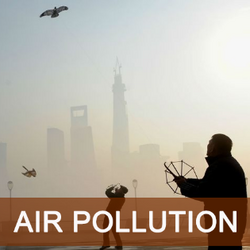 |
Air pollution is one of the most urgent environmental problems. Hazardous atmospheric emissions have increased with the development of industry and transport. Air in big cities is a lot more polluted than air in the countryside. In 1997 many countries signed the Kyoto Protocol in an effort to fight air pollution. |
2. Global warming |
|
 |
Global warming is the result of human activity. The industrial development causes the release of harmful substances into the atmosphere. That means that air on our planet is getting hotter. This results in such consequences as raising of water level in the World ocean and changes in agricultural productivity. |
|
|
|
3. Water pollution |
|
 |
Water pollution is another serious problem. Plants and factories release harmful substances not only into the air but into the natural reservoirs, too. As a result of that, animals and plants lose their habitat, and people suffer from the shortage of high-quality drinking water. |
|
|
|
4. Loss of biodiversity |
|
 |
Lately, animal world and plant kingdom of our planet have been at serious risk as human activity endangers their serene existence. Ecosystems play an important role and preserving biodiversity is vital for our planet. Extermination of animals and carelessness towards plants must be prevented. |
5. Human overpopulation |
|
 |
It is well known that our planet is overpopulated. This depletes natural resources. Some countries already suffer from scarcity of water, food and fuel. Our mission is to act towards natural resources with care and use them efficiently. |
|
|
|
6. Deforestation |
|
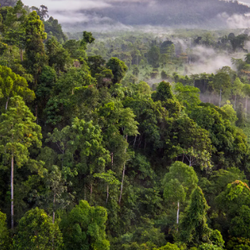 |
Today forests cover about 30% of land. Every year this figure decreases more and more. People clear new territories for residential buildings, new plants and factories. We must realize that deforestation causes the extinction of animals and plants. |
Перевод на русский язык
Окружающая нас среда постоянно меняется. Мы не можем отрицать этот факт. Сегодня человечество сталкивается со множеством экологических проблем. Если вовремя не обратить на них внимания, мы рискуем столкнуться с гораздо более серьезными бедствиями в будущем.
1. Загрязнение атмосферы |
|
|
Загрязнение атмосферы является одной из наиболее насущных проблем окружающей среды. С развитием промышленности и транспорта увеличились выбросы вредных веществ в атмосферу. В больших городах воздух намного грязнее, чем в сельской местности. В целях борьбы с загрязнением атмосферы многими странами в 1997 году был подписан Киотский протокол. |
|
|
|
2. Глобальное потепление |
|
|
Глобальное потепление является результатом деятельности человека. Развитие промышленности приводит к выбросу вредных веществ в атмосферу. Это значит, что воздух на нашей планете нагревается. Это приводит к таким последствиям, как повышение уровня воды Мирового океана и изменение в производительности сельского хозяйства. |
3. Загрязнение воды |
|
|
Загрязнение воды – еще одна серьезная проблема. Заводы и фабрики выбрасывают вредные вещества не только в атмосферу, но и в природные водоемы. В результате животные и растения лишаются среды обитания, а люди страдают от нехватки качественной пресной воды. |
|
|
|
4. Потеря биоразнообразия |
|
|
В последнее время животный и растительный мир нашей планеты находятся в серьезной опасности, так как деятельность человека угрожает их спокойному существованию. Экосистемы играют важную роль, и сохранение биоразнообразия чрезвычайно важно для нашей планеты. Необходимо предотвратить истребление животных и беззаботное отношение к растениям. |
|
|
|
5. Перенаселение |
|
|
Известно, что наша планета сильно перенаселена. Это приводит к истощению природных ресурсов. В некоторых странах остро ощущается нехватка воды, питания и топлива. Наша задача – бережно относиться к природным ресурсам и рационально их использовать. |
|
|
|
6. Вырубка лесов |
|
|
На сегодняшний день около 30% поверхности земли покрыто лесами. С каждым годом их становится все меньше. Человек вырубает леса, освобождая площадь под строительство новых домов, заводов и предприятий. Мы должны задуматься о том, что вырубка лесов приводит к вымиранию животных и исчезновению растений. |