
FCE Speaking (говорение) — это заключительная часть международного экзамена Cambridge English: First, подтверждающего ваше владение английским языком на уровне Upper-Intermediate (выше среднего). В разделе FCE Speaking необходимо показать, что вы действительно соответствуете этому уровню и можете достаточно свободно общаться на английском языке. В этой статье мы расскажем, как подготовиться к FCE Speaking, чтобы сдать эту часть экзамена на высший балл.
Содержание:
- 1. FCE Speaking Part 1. Interview
- 2. FCE Speaking Part 2. Long turn
- 3. FCE Speaking Part 3. Collaborative task
- 4. FCE Speaking Part 4. Discussion
- 5. Общие советы о том, как отвечать на FCE Speaking
Формат экзамена FCE в 2015 году претерпел некоторые изменения. Они несильно коснулись раздела Speaking. Структура и общее время прохождения остались прежними: 14 минут на 4 части. Изменилось распределение времени на каждое задание, и в третьей части задание представлено не в виде картинок, а в виде текста. FCE Speaking состоит из следующих частей:
- Part 1. Interview — 2 минуты.
- Part 2. Long turn — 3 минуты.
- Part 3. Collaborative task — 5 минут.
- Part 4. Discussion — 4 минуты.
В разделе FCE Speaking проверяется беглость речи, словарный запас, знание грамматики, произношение (именно произношение, а не акцент). Особенность этой части экзамена заключается в том, что вы сдаете ее не самостоятельно, а с другим кандидатом, в редких случаях — с двумя. Задания проверяют 2 экзаменатора. Один экзаменатор задает вопросы и предлагает темы для обсуждения, второй — оценивает ваши умения и делает пометки относительно вашего ответа. Во время теста вы общаетесь и с экзаменатором, и с другим кандидатом.
FCE Speaking Part 1. Interview
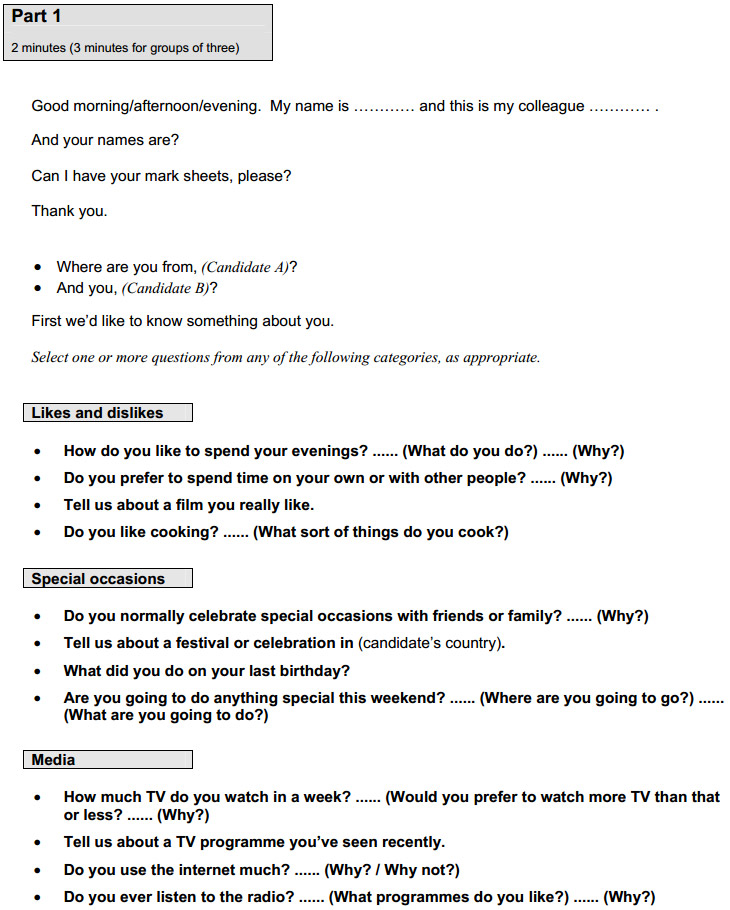
Interview — это своего рода знакомство, на которое отводится по одной минуте для каждого кандидата. В этой части вы беседуете только с экзаменатором. Круг тем в interview довольно стандартный: ваша семья, родной город, интересы, учеба, работа, свободное время, планы на будущее. В большинстве случаев экзаменатор выбирает одну тему и задает по ней 3-4 вопроса. Ознакомьтесь с примерами вопросов, которые могут встретиться на экзамене:
Are you working or studying at the moment? Where?
What sort of job would you like to do in the future?
How do you like to spend your evenings? What do you usually do? Why?
Is your town large or small / clean or polluted / quiet or noisy?
Are you going to do anything special this weekend? Where are you going to go?
Do you use the Internet much? Why? Why not?
Что проверяется: умение рассказать о себе и ответить на вопросы общего характера.
Как готовиться
Потренируйтесь давать краткие, но емкие ответы на типичные вопросы. Давайте рассмотрим на примере, что значит «краткий, но емкий ответ».
В задании interview есть вступительная часть, которая называется warm up (разогрев). Эта часть обычно состоит из двух вопросов: What is your name? (Как вас зовут?) и Where are you from? (Откуда вы?).
Отвечая на вопрос Where are you from?, вы можете сказать не только название города, но и добавить какую-то его особенность:
- Большой город или маленький: It is a small provincial town / big city / megalopolis.
- Где он находится: It is situated in the North/South/East/West of the country.
- Чем он примечателен: It is a cultural capital / a capital of fashion / an industrial city.
Вы можете указать любую другую особенность вашего города. Увлекаться подробностями тоже не стоит, 1-2 фактов будет достаточно.
Как отвечать
- Не впадайте в крайности. Не следует отвечать одним словом Yes/No или элементарными предложениями, такими как I like it / I agree with you. В то же время не стоит давать длинные, пространные ответы и вдаваться в подробности.
- Отвечайте на вопрос прямо. Если вас спросили о планах на будущее, не надо рассказывать, где вы работаете сейчас и почему хотите поменять работу. Такая формулировка не даст ответ на конкретно поставленный вопрос — ваши планы на будущее. Скажите, что в ваших планах поменять работу, потому что, возможно, вы нашли что-то более интересное или планируете переехать за границу.
- Старайтесь звучать естественно. Ваша речь должна быть достаточно беглой. Если вы забыли какое-то слово, скажите другое. Не тратьте время на то, чтобы вспомнить нужное слово, это выглядит крайне неестественно.
Пример задания:
Пример задания interview на экзамене FCE
FCE Speaking Part 2. Long turn
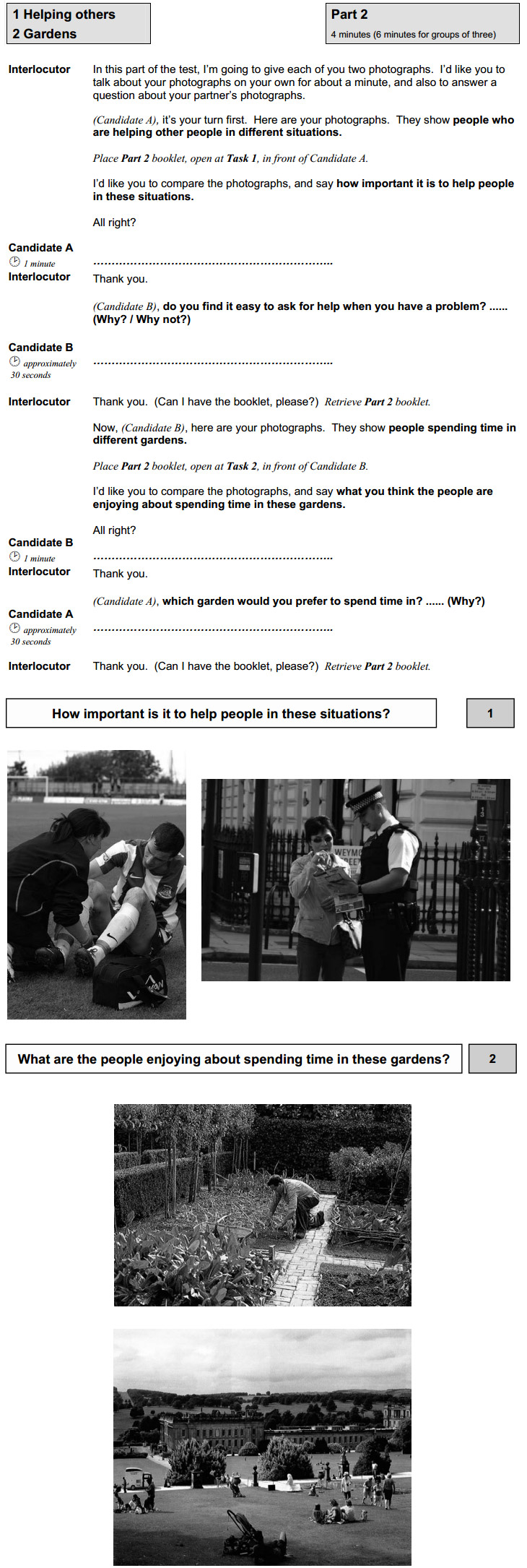
В этом задании вы получаете буклет с двумя фотографиями, на которых, как правило, изображены люди. Вверху страницы, над фотографиями, стоит вопрос, на который вам надо ответить. Экзаменатор попросит вас в течение одной минуты ответить на вопрос, описать и сравнить фотографии, сказать, что вы думаете об этих снимках, нравятся они вам или нет. Времени на подготовку не дается, вы начинаете говорить сразу и говорите в этой части только с экзаменатором. После вашего рассуждения экзаменатор задает второму кандидату вопрос о ваших картинках. Второй участник должен отвечать в течение 30 секунд. Затем вы меняетесь ролями: второй кандидат получает другие фотографии и отвечает в течение минуты, а после его рассказа экзаменатор спрашивает, что думаете вы о картинках собеседника. На ответ вам дается 30 секунд.
Что проверяется: монологическая речь — умение описывать, сравнивать, рассуждать, представлять свое мнение.
Как готовиться
- Тренируйтесь описывать и сравнивать картинки. Для этого надо работать с как можно большим числом картинок.
- Тренируйтесь выражать свою точку зрения. Запаситесь красивыми фразами, которые вам в этом помогут. Например: As far as I’m concerned… (Я убежден в том, что…), I tend to think that… (Я склонен думать, что…). Не ограничивайте себя банальными I think / I like / I don’t like.
- Засекайте время на ответ. В этой части вам дается всего 1 минута, за которую вы должны успеть описать, сравнить и высказать свое мнение.
Как отвечать
- Начните свою речь с общего описания: кто изображен, что он делает. Обязательно обозначьте тему картинок.
- Не забывайте сравнивать изображения. Если вы сначала расскажете все об одной фотографии, а затем о другой, то элемент сравнения потеряется. Для сравнения используйте фразы:
- These two pictures show people who… — На этих фотографиях мы видим людей, которые…
- In the first picture … is depicted, and in the second picture we can see… — На первой картинке изображен …, а на второй картинке мы видим…
Довольно большой список таких выражений мы собрали в статье «Фразы для сравнения и противопоставления».
- Не растекайтесь мыслью по древу. Помните, что на ответ у вас есть всего 1 минута.
Пример задания:
Пример задания long turn на экзамене FCE
FCE Speaking Part 3. Collaborative task
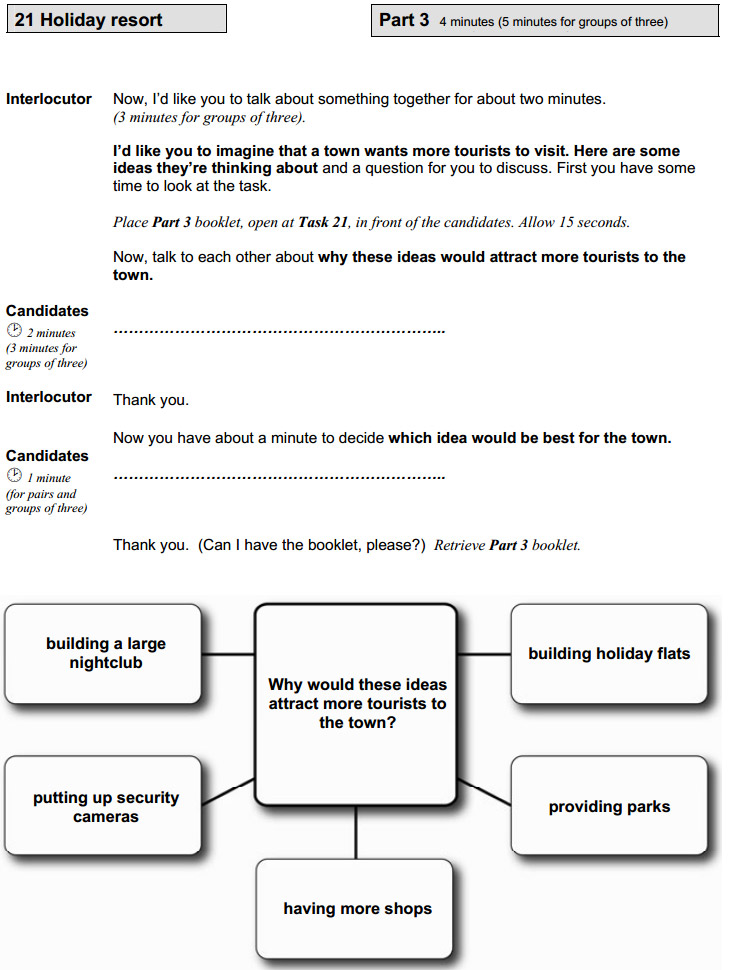
В части collaborative task вам снова придется выражать свое мнение, только на этот раз уже в форме беседы с другим кандидатом. Экзаменатор предлагает вам тему для обсуждения и несколько идей, которые вы должны осветить в своем диалоге. Ваша задача — обсудить выбранную тему и прийти в итоге к согласию с другим кандидатом. На обсуждение вы получаете 2 минуты, после чего экзаменатор останавливает вас и просит прийти к общему выводу, на это дается еще одна минута.
Что проверяется: диалогическая речь и ваше умение общаться с людьми — обмениваться мыслями, обосновывать и подтверждать свое мнение, оценивать чужое мнение, соглашаться или не соглашаться с собеседником.
Как готовиться
- Самый лучший вариант подготовки — создать условия, максимально приближенные к условиям экзамена. Поэтому тренируйтесь обсуждать разные ситуации с кем-нибудь, кто хорошо знает английский. Если такой возможности нет, придется выкручиваться и рассуждать самостоятельно. Чтобы ваш ответ не превратился в монолог, засекайте время. Вы должны говорить примерно половину отведенного на задание времени.
- Темы на экзамене могут встретиться самые разные, но слова и выражения общего плана, которые помогут вам высказать свое мнение, согласиться или не согласиться с собеседником, понадобятся обязательно. Вы можете найти такие выражения на сайтах vocabulary.cl и learnenglishteens.britishcouncil.org.
Как отвечать
- Начните с какой-нибудь вступительной фразы: Let’s begin with… (Давайте начнем с…); Why don’t we start by discussing… (Почему бы нам не начать с обсуждения…); We could start by talking about… (Мы могли бы начать говорить о…).
- Сначала обсудите плюсы и минусы каждой идеи, после переходите к заключению. Очень важно прийти к общему мнению в заключении. То есть, обсудив все варианты, вы должны остановиться на каком-то одном, который, по вашему мнению и мнению второго кандидата, отвечает на главный вопрос.
- Слушайте второго кандидата и взаимодействуйте с ним. Ваш ответ должен выглядеть полноценным диалогом, а не двумя отдельными монологами на общую тему.
- Старайтесь говорить 50 на 50. Если вам попался молчаливый собеседник, задавайте ему наводящие вопросы: What do you think of it? (Что ты об этом думаешь?); What is your opinion on the issue? (Каково твое мнение по этому вопросу?); I think… What about you? (Я думаю… А ты что думаешь?). Если ваш собеседник слишком разговорчивый, не перебивайте его резко, постарайтесь вежливо вступить в диалог. В этом вам помогут фразы из статьи «Как мастерски прервать собеседника? Dealing with interruptions»
- Взаимодействуйте не с экзаменатором, а со вторым кандидатом, иначе ваш ответ будет выглядеть как проверка домашнего задания на уроке английского языка. Вы должны вести себя естественно, чтобы экзаменатор видел, что вы уверены в своих знаниях и владеете английским языком на данном уровне.
Пример задания:
Пример задания collaborative task на экзамене FCE
FCE Speaking Part 4. Discussion
Discussion — заключительная часть, в которой вы общаетесь и с экзаменатором, и с другим кандидатом. Discussion — это продолжение collaborative task. Здесь вы продолжаете обсуждать тему, которая была в предыдущем задании. Всего на четвертую часть дается 4 минуты. Сначала экзаменатор задает вам и второму кандидату по два вопроса, на которые вы по очереди отвечаете, затем он просит вас обсудить какой-то вопрос вместе.
Что проверяется: умение вести дискуссию на заданную тему. Здесь вы должны показать, что можете рассуждать на предложенную тему, подтверждать свои слова, приводить доводы.
Как готовиться
- Как и в части collaborative task, потренируйтесь вести диалог с кем-нибудь на английском языке.
- Если такой возможности нет, засекайте время, которое вы тратите на ответ. Всего экзаменатор задает 5-6 вопросов. Следовательно, ответ на каждый вопрос должен занимать 20-30 секунд. При этом качество ответа не должно страдать: вы должны использовать слова и грамматические конструкции, соответствующие уровню Upper-Intermediate.
- Тренируйтесь отвечать кратко. В этой части экзаменатор задает вопросы, которые в основном начинаются со слов: What do you think… / What is your opinion… / What can you tell about… ? — Что вы думаете о… ? То есть вам необходимо представить свою точку зрения. Но времени дается немного.
- Для того чтобы не тратить много времени, придумывая, как перейти к следующей мысли, и не использовать много лишних слов, учите linking words (слова-связки). С их помощью вы сможете логично и последовательно дополнить мысль, противопоставить одну идею другой, подвести итог всему вышесказанному. Найти эти слова можно здесь: dlsweb.rmit.edu.au.
Как отвечать
- Начинайте говорить со вторым кандидатом, когда экзаменатор вам это предложит. Не следует вовлекать в разговор второго кандидата, если вопрос адресован только вам. Когда вопрос будет задан обоим участникам, экзаменатор обязательно даст вам это понять.
- Смотрите на того, с кем разговариваете. Если экзаменатор обращается к вам, установите зрительный контакт с ним. Если экзаменатор задает вопрос обоим участникам экзамена, значит, надо повернуться ко второму кандидату и начать с ним разговор.
- Не забывайте использовать linking words и выражения, которые помогут вам сформулировать мнение.
Пример задания:
Пример задания discussion на экзамене FCE
Общие советы о том, как отвечать на FCE Speaking
1. Не молчите
Если вы не поняли вопрос или вам нужно пару секунд подумать над ответом, скажите об этом. Вежливо переспросить вам помогут фразы:
- Sorry, I didn’t hear what you said. Could you repeat the question, please? — Извините, я не расслышал, что Вы сказали. Не могли бы Вы повторить вопрос, пожалуйста?
- Sorry, I didn’t catch what you said. — Извините, я не понял, что Вы сказали.
- I’m sorry. Could you repeat the question again, please? — Извините, не могли бы Вы повторить еще раз?
Если вам нужно пару секунд на размышления, используйте выражения:
- That’s a hard question. Can I have a second to think about it. — Это сложный вопрос. Могу я подумать пару секунд?
- Well, let me think. — Надо подумать.
- That’s a good idea/question. — Хорошая мысль/вопрос.
- It’s difficult to say. But I suppose that… — Сложно сказать. Но я предполагаю, что…
2. Приукрасьте действительность
Вам никто не запрещает придумывать ответы, даже если на самом деле вы думаете по-другому. Никто не будет проверять, сказали вы правду или нет. Экзаменатор оценивает форму ответа, то есть насколько грамотно вы говорите, используете ли грамматику и лексику уровня FCE. А содержание ответа его интересует мало.
3. Практикуйтесь как можно больше
Многие полагают, что к устному вопросу трудно подготовить ответ заранее, ведь речь должна быть спонтанной. Тем не менее ко всем типичным вопросам можно подготовиться. Учите наизусть фразы, грамматические конструкции в контексте, а потом старайтесь вставить их в свой ответ. Успешная сдача экзамена — это 10% удачи и 90% подготовки. И под подготовкой подразумевается все, что вы делаете в отношении английского. Смотрите сериал на английском — развиваете навык восприятия речи и уменьшаете вероятность не понять, что говорит вам собеседник. Читаете книги на английском — машинально запоминаете фразы в контексте и как их употреблять. Пишете сочинение — зазубриваете правильные конструкции. Запомните — все имеет значение!
Посмотрите пример FCE Speaking с комментариями экзаменаторов. Комментарии от экзаменаторов доступны в этом документе.
Практиковать разговорную речь самостоятельно нелегко. Намного легче, когда есть собеседник. А если вы хотите получить за раздел FCE Speaking высший балл, то собеседник должен быть грамотным. Среди преподавателей нашей школы вы сможете найти такого грамотного собеседника. На курсе «Подготовка к экзамену FCE», он поможет вам не только разговориться, но и научит вас выражать свои мысли красивыми словами и правильными конструкциями.
© 2023 englex.ru, копирование материалов возможно только при указании прямой активной ссылки на первоисточник.
Здесь можно найти карточки для второй части устного экзамена FCE:
A one-minute «long turn» for each candidate plus 20 second responce from the second candidate.
The examiner gives you two photographs and asks you to talk about them for one minute. The examiner then asks your partner a question about your photographs and your partner responds briefly.
Then the examiner gives your partner two different photographs. Your partner talks about these photographs for one minute. This time the examiner asks you a question about your partner’s photographs and you reaspond briefly.
#1

Partner’s question: Where would you prefer to live?
#2

Partner’s question: What do you enjoy doing in your free time?
#3

Partner’s question: How do you prefer to relax?
#4

Partner’s question: Where would you prefer to go for holidays?
#5

Partner’s question: Do you think it’s difficult to ask for help?
#6

Partner’s question: Do you enjoy shopping?
#7

Partner’s question: Would you like to learn to cook?
#8

Partner’s question: Would you like to try a risky hobby?
You might also like:
FCE SPEAKING Part 1 Sample questions
FCE SPEAKING Part 3 Sample cards/Карточки #1
You can get more information from the official website
Затем, экзаменатор задает второму кандидату короткий вопрос, связанный с этим же фото. Второй участник отвечает в течение 30 секунд. Очень важно не повторять лексики, которую употребил другой кандидат. Потом кандидаты меняются ролями.
Времени на подготовку не предусмотрено. Нужно говорить сразу. Эта часть общение только с экзаменатором.Какие навыки проверяются: монологическая речь — умение сравнивать, обсуждать, выражать определенное мнение.
Что в данной статье:
— Как готовиться к FCE/CAE Speaking Part 2.
— Пять этапов, как отвечать на FCE Speaking Part 2.
— Примеры хороших и плохих ответов FCE/CAE Speaking Part 2.
— Какую грамматику желательно использовать, чтобы получить лучший бал.
— Что нужно опасаться на FCE/CAE Speaking Part 2.
— Советы, как нужно отвечать на вопрос, когда спрашивают вторым по очереди на FCE/CAE Speaking Part 2.
— Полезные фразы и выражения сходства.
— Полезные фразы и выражения для сравнения и противопоставления.
— Фразы для рассуждения или предположения (speculating) на английском.
Как готовиться к FCE/CAE Speaking Part 2
1. Учить лексику по темам, наиболее распространенным на FCE Speaking. Лучше всего, детально изучать лексику по специальным лексическим пособиям, таким как, English Vocabulary in Use, Key words for fluency etc.
2. Тренировать краткое описание фотографий. Можно, дополнительно, пользоваться ресурсами по сочетаемости слов:
Flax http://flax.nzdl.org/greenstone3/flax;jsessionid=DF59A2E215D5DC5755EF5F515A9A58DC?a=fp&sa=collAbout&c=collocations&if=flax
Online Oxford Collocation Dictionary http://www.freecollocation.com
Дополнительно, уточнять значение слов, можно пользоваться
Cambridge English Dictionary https://dictionary.cambridge.org/dictionary/english/
Найти синоним в виде выражения или идиомы, чтобы заменить basic vocabulary интересным аналогом
http://www.phrases.net/
3. Тренировать навык сравнения фотографий.
Хороший ресурс с фотографиями для сравнения по темам http://www.cristinacabal.com/?page_id=4906.
4. Знать красивые фразы, чтобы выразить определенную точку зрения. Советую пользоваться серией in Use, например, English Collocation in Use (для FCE – Intermediate, CAE CPE – Advanced).
5. Тренироваться, чтобы успеть за 1 минуту или чуть больше, но не меньше, (экзаменатор сам остановит вас), красиво изложить свой ответ, все в него включив: сравнение, рассуждение, персональное отношение.
5 этапов, как отвечать на FCE/CAE Speaking Part 2
Первый этап ответа на части FCE/CAE Speaking Part 2
Описываем
Начать с общего описание, кто на картинке, где находится, что делает.
Например:
— Looking at the first photo I can see a woman drinking tea by herself in a cafe.
— In the first photo I can see a woman drinking tea by herself in a cafe.
Совет
Если, действительно, не понятно, что сказать и нужно собраться с мыслями, правильно иметь запасной план. Желательно обладать в запасе несколькими идеями «backup ideas», что описывать и сравнивать. Это несколько простых вещей, которые можно использовать практически для всех фотографий:
— в чем одеты люди
— их примерный возраст (молодые, среднего возраста, пожилые)
— предположить, что люди думают, чувствуют, делают.
Эти идеи довольно полезны, потому что они могут помочь дальнейшему рассуждению.
Например:
This image shows people swimming, whereas these people appear to be doing some kind of dance.
These people are wearing the same clothes. Likewise, the people in this picture seem to be dressed in national costumes.
Второй этап на части FCE/CAE Speaking Part 2
Сравниваем!
Очень важно помнить, что наша ГЛАВНАЯ задача не описывать фото, а сравнивать их! Как только упомянули о первой фотографии, нужно СРАЗУ СРАВНИТЬ ее с другой.
Например:
— Whereas in the second photo, I can see a group of friends drinking in a restaurant.
— But in the second photo, there are friends drinking together.
СОВЕТ 1
Если не знаешь, как сравнить данные фотографии, можно постараться найти что-то общее… Например:
In both pictures we can see people drinking.
СОВЕТ 2
Важно не забывать использовать сравнительные прилагательные (comparative adjectives), наречия (adverbs), когда сравниваешь фото.
Например:
The second photo shows a busier, livelier environment than the first photo.
Несколько полезных фраз для сравнения (больше фраз в конце статьи):
— In the same way
— Similarly
— Likewise
— Also
Например:
— The woman in the first photo is sitting by herself; however, the second photo shows a group of friends sitting together.
— In the second picture I can see a group of friends enjoying the company; by contrast the woman in the first picture seems happy on her own.
Важно помнить, что нужно,практически, сразу приступать к сравнению, это увеличивает шанс на более высокую оценку по FCE/CAE Speaking. Ответ должен быть очень лаконичным, помнить, что это всего лишь 1 минута!
Нужно помнить, что типичный вопрос по картинкам содержит, в основном, две части:
— сравнить две фото
— порассуждать, как люди на картинках себя чувствуют или причина их поведения.
Третий этап на части FCE/CAE Speaking Part 2
Предполагаем, рассуждаем!
После сравнения, очень важно проявить навык РАССУЖДЕНИЯ (you should speculate about photos). Что это значит – нужно сказать, что ТЫ думаешь, ПРЕДПОЛОЖИТЬ о том, что происходит на фото и почему.
Например:
— The boy looks like he is enjoying himself.
— It seems like he is having a good time.
— He could be going to meet some of his friends.
Полезные фразы:
— look(s) like
— seem(s) like
— appears
— could
— might
Четвертый этап на части FCE/CAE Speaking Part 2
Почему вы думаете так?
Можно сделать свой ответ еще интереснее, добавив «почему вы думаете так».
Например:
— The boy looks like he is enjoying himself because he is outside with a football.
— It seems like he is having a good time as he is doing something fun on a beautiful day.
— He could be going to meet some of his friends, because you can’t play football by yourself.
Если предположения выходят весьма сомнительные, можно использовать такие фразы:
— I guess…
— I imagine…
— I suppose…
— Perhaps…
— Possibly…
Например:
— I suppose it’s a warm day as the boy’s wearing a T-shirt.
— I imagine it’s the summer holidays because there’s a blue sky and the boy isn’t at school.
Пятый этап на части FCE/CAE Speaking Part 2
Личное мнение
Выразить свое личное мнение по поводу происходящего на картинке.
Personally, I’d rather be in the second photo.
It looks like the perfect way to spend your holiday.
Примеры хороших и плохих ответов
FCE/CAE Speaking Part 2
Давайте приведет примеры хороших и плохих ответов из видео Oxford Online English. Данные видео расположено в конце статьи.
Нужно описать, сравнить и порассуждать над данной картинкой…
1. Слабый ответ (FCE/CAE Speaking Part 2 — bad sample answer):
In the first photo I can see a man painting a picture. He’s professional artist. The painting is very big and has different colors in it. He is a very good artist; the picture is beautiful.
Что не так? – Ответ описывает только одно фото.
2. Лучше ответ (FCE/CAE Speaking Part 2 — better sample answer):
In the first photo I can see a man painting a picture. He’s professional artist, whereas the man in the second photo isn’t; he is painting for a hobby or because he likes it.
Что хорошего: присутствуют союзы (conjunctions) – whereas, or.
Чего не хватает: нет рассуждения.
3. Хороший ответ (FCE/CAE Speaking Part 2 — good sample answer):
It looks like the man in the first picture is a professional artist because he is standing in a studio, whereas the man in the second photo is painting outside. It seems like he’s painting as a hobby because I can see that his picture is more basic than the first one.
Что хорошего: союзы, сравнения, рассуждения.
4. Отличный ответ (FCE/CAE Speaking Part 2 — great sample answer):
It looks like the man in the first picture is a professional artist because he is standing in a studio, whereas the man in the second photo is painting outside. It seems like he’s painting as a hobby because I can see that his picture is more basic than the first one. However, I like this painting the most because it’s simple and bright; it’s a happy painting.
Что хорошего: кроме всего, что обязательно для хорошего ответа (союзы, сравнения, рассуждения) ответ содержит мнение говорящего.
5. Великолепный ответ (FCE/CAE Speaking Part 2 – great sample answer):
Если вы достаточно уверены в себе и сможете уложиться в одну минуту, используя более сложную лексику, можно не только выразить свое мнение, но и доказать его определенно интересным, в отношении использования более сложной лексики, рассуждением…
Что можно добавить…
I like the second painting the most because although it’s simpler, it’s very bright and colorful. I like that he probably painted it while he was relaxing outside, in contrast to the man in the first photo, who I think paints for his job. In my opinion it’s happier painting and I would enjoy seeing this kind of painting on my wall.
Мнение кандидата дается довольно, расширенно, и связано с некоторыми положениями, которые были сделаны при сравнении этих двух фотографий, что делает ответ более последовательным (coherent) и четким.
6. Великолепный ответ (CAE Spekaing Part 2 – great sample answer). Данный отрывок приведен из видео на тему CAE Speaking Part 2, Oxford Online English (видео в конце статьи).
This image seems to show a family spending the holiday together. In the same way, this might be a couple. However it doesn’t look like they have their children with them. In this picture, the family seems to be at home, or at a holiday house, whereas in this picture these people appear to be in some kind of exotic destination, far away from civilization. There are animals in this photo, whereas there are only people only people in this one. Both scenes show people having a holiday outdoors. I suppose the key difference is that the people in this image appear to be having a real adventure, and are free, whereas the people here are spending time with family. If it were me, I’d prefer to be going on this kind of holiday – flying around in a plane in a new and wild place!
Какую грамматику желательно использовать, чтобы получить
более высокий бал на части FCE/CAE Speaking Part 2
— Модальные глаголы в значении предположения
She could be a doctor.
— Причастия (действительные и страдательные)
I can see a group of friends sitting in a cafe.
— Конструкции предпочтения
I’d rather be in the second photo.
— Предложения в пассивном залоге
The pictures were taken in September.
Что нужно опасаться на FCE/CAE Speaking Part 2
1. Нужно опасаться тишины (silence). Иногда, даже если английский довольно хорошего уровня, проблема именно в способности применить свое воображение, чтобы порассуждать, сравнить фотографии. Как решить данную задачу – постоянные тренировки, описывать много картинок.
2. Отойти от темы вопроса – incomplete. Обратно, даже если кандидат показал великолепный английский, но не ответил полностью на вопрос, балы будут снижены.
3. Basic English – использовать выражения базового английского. Из-за того, что кандидат сосредотачивается на том, ЧТО СКАЗАТЬ, можно, не обратить внимание на то, КАК ВЫСКАЗАТЬ свою мысль, и перейти к простым фразам «basic vocabulary» и не показать свой богатый лексический запас, достойный уровня upper-intermediate или advanced.
В данном случае, нужно понять, что это всего лишь экзамен и тут вполне допустимо «выдумывать», другими словами «лгать». Например, если выражать свое мнение по поводу происходящего на картинке, можно упомянуть «свой личный» опыт, которого, в реальности, никогда не было…
Главное — не отойти от темы вопроса и показать надлежащий уровень словарного багажа.
Советы, как нужно отвечать на вопрос, когда спрашивают вторым по очереди на FCE/CAE Speaking Part 2
У кандидата есть всего 30 секунд на ответ
1. Важно слушать первого кандидата, и при ответе на встречный вопрос, не использовать повторно лексику.
2. Пока отвечает первый кандидат, подготовить про себя несколько хороших идей по данной теме, чтобы, если будет уместно, воспользоваться ими.
Читайте статьи:
Как готовиться и отвечать FCE/CAE Speaking Part 1
Как готовиться и отвечать FCE/CAE Speaking Part 3
Полезные фразы и выражения сходства
Describing similarities for FCE/CAE Speaking Exam
they both show/have
they’re both quite similar because they both show/have
there are … in both photograph
both of them have…
A striking similarity is…
…, and so is/ does…
…, and… is/ does too.
…, and… is/ does as well.
One thing that… and… have in common is…
One of the (few) similarities between… and… is…
Another/ An additional similarity (which is instantly apparent) is…
… and… are (quite/ very/ really/ really quite) similar, for example…
… and…. are (quite/ very/ really/ really quite) similar in terms of…
is similar, in that…
…, as is/ does….
… and… have a lot in common, for example…
There are more similarities than differences between… and… For instance,…
The main similarity between… and… is…
The only similarity between… that I can see is…
…. In a similar way,…
The most apparent similarity between… and… is…
…and that is the same for…
… and… share…
Neither… nor…
The common theme
Полезные фразы и выражения для сравнения и противопоставления
Describing differences FCE/CAE Speaking Exam
this one is not as … as the other one.
it’s quite difficult to compare them
this picture reminds me … whereas the other one…
the one on the left is/shows/has… but the one on the right is…
The most obvious/ important/ apparent similarity/ difference (for me) between… and… is…
A striking difference is…
One of the (few) similarities/ differences between… and… is…
Another/ An additional difference (which is instantly apparent) is…
… and… are (quite/ very/ really/ really quite) different, for example…
… and…. are (quite/ very/ really/ really quite) different in terms of…
… and… don’t have much in common, but…
The main difference between… and… is…
The only difference between… that I can see is…
In comparison to…, …
Each picture illustrates how…
Compared to…,…
A/ One contrast between… and… is that…
is (slightly/ a bit/ somewhat/ quite a lot/ a great deal/ substantially/ a lot/ much/ far/ much much/ far far) … er/ more… than…
… is not (nearly/ quite) as… as…
Contrasting… and…,…
The photos deal with different aspects of…
The most apparent difference between… and… is…
…and that is more or (less) for…
A more subtle difference is…
… differs from… in that…
…. Likewise,…
All the photos show problems which…
One resemblance between… and… is that…
They all depict…
The theme that connects them is…
In the background …
In the foreground …
Из перечисленного списка видно, что нужно четко знать формы нескольких слов: differ, difference, different, similar, similarities, similar, be in common, share, compare, resemblance, contrast, contrasting, compare, compared to.
Фразы для рассуждения или предположения
(speculating) на английском
…seems…
…probably…
I guess/ I imagine…
…might/ may/ maybe/ perhaps…
…clearly…
…appears…
…looks like…
I suppose…
I get the impression that…
My initial impression is…
…must…
…could (possibly)…
…is obviously…
Читать статьи для сдачи FCE CAE по ССЫЛКЕ
Уроки английского языка проводятся репетитором Анастасией Валяевой. Все учебники, аудио и видео материал предоставляются. Информацию о процессе обучения можно прочитать в ответах на вопросы или связаться с преподавателем Анастасией Валяевой.
Here you will find speaking cards for FCE Speaking Part 2 (pictures comparison) with answers and useful phrases. You can print them or save in PDF. Check our FCE Speaking Part 2 Tips to know how to get better score!
Sample answers are written in italics
#1. Living in different places; Exercising
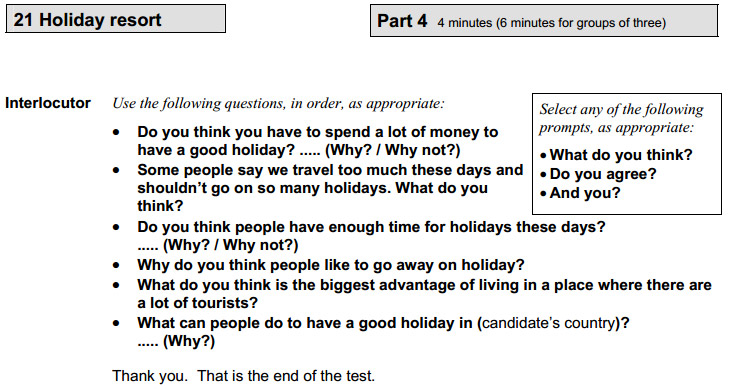
Candidate A, here are the photographs. They show various places where people live. I’d like you to compare the photographs, and say why people might choose to live there, okay? (1 minute)
Candidate A: The left picture shows some big city with a line of apartment blocks built right next to the sea, while in the picture on the right we can see a peaceful village next to a train station and a train passing by. While both photos have various residences in them, the right one looks much more quiet than the other.
I believe that people who choose to live in a flat of a busy city do so because they have a more active lifestyle – they commute to work, go to parties, restaurant, exhibitions and other activities a city has to offer. In contrast, those who reside in a remote place like in picture two prefer the more relaxed and slow pace of life.
Candidate B, which place would you prefer to live in, and why? (~20 seconds).
Candidate B: Personally, I’d go with the quiet place next to the train station. I could commute to the city centre by train, take morning strolls in the woods and enjoy everything nature has to offer. I don’t party that much and I’m not into eating out, so I won’t miss out on most things a busy city has to offer.
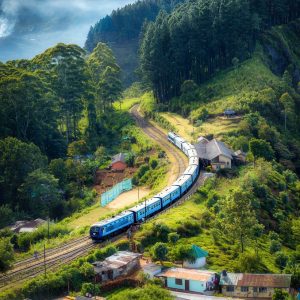
Candidate B, now it’s your long turn. These pictures show people exercising. Compare the photographs and say how the exercising might make people feel. (1 minute)
Candidate B: The right photo shows a girl on a river bank doing what looks like gymnastics, while in the left picture a lady is in the middle of a tennis match. Both do some kind of sports activity, however one is performed outside, while the other is done indoors. Moreover, tennis requires special equipment such as a racket, while the other exercise doesn’t need anything at all.
I believe that both people feel content with what they’re doing as exercising energises you and if you spend enough time doing it you might feel pleasantly exhausted. It is also beneficial for your brain, allowing your mind to wander.
Candidate A, which type of exercising would you prefer and why?
Candidate A: Even though I’m not very good at tennis, I would have to choose it over the activity in the other picture – I’m hopeless when it comes to body balance! Tennis is a nice combination of physical exercising and thinking – you don’t simply run after the ball – you have to calculate your hits and plan ahead. I like this aspect of tennis very much.
#2. Different types of work; Places for holiday

Candidate A, here are the two pictures. They show people performing different jobs. I’d like you to compare the two pictures and say what difficulties the people might have when doing their jobs. (1 minute)
Candidate A: Both pictures here show people at work, but the nature of their activity is very different. The lady in the picture on the left is facing a difficult creative task, judging by her body language and the images on her laptop screen. In contrast, the man in the second photo does a very physically-demanding job at something that looks like a construction site.
While the man’s job is fairly straightforward, it can be very dangerous to his health and well-being. The woman’s task here seems to be rather tricky as she seems to be stuck with the task. Undeniably, both jobs can be very stressful.
Candidate B, which job do you think is more difficult? (~20 seconds).
Candidate B: I think the duties shown in picture two are much more challenging. Sure, creative thinking is not easy, but physical and manual labour is always a struggle. No matter how good you are at it, you have to perform very tiring, repetitive actions which is demanding both mentally and physically.
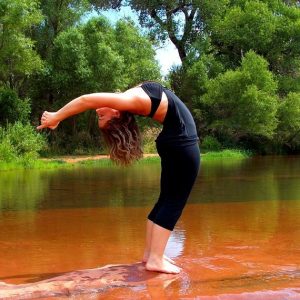
Candidate B, now it’s your long turn. The pictures show different holiday location. Compare them and say why people might choose to spend their holiday in each place. (1 minute)
Candidate B: Both picture one and two show various types of resorts. While the left picture looks warm and peaceful, the other one looks rather cold and even a bit dangerous. However, somehow both of them look equally cozy, though for different reasons.
People looking for a place to spend their holiday at may prefer huts by the seaside if they come from a colder country and want to experience warmer, more pleasant climate. They are also likely to appreciate the local food, rich with fruits and vegetables. As for the second photo, it might be favoured by more active, young people, who are really keen on sports and exercising.
Candidate A, which of the two places is better to spend a family holiday at? (~20 seconds)
Candidate B: The location shown in the first photo is definitely much better for a family with kids. Every member of the household can enjoy sunbathing and swimming, while some kids can be too young to try skiing. Also, low temperatures of a ski resort may not be to some people’s liking.
#3. Eating; Business meetings

Candidate A, here are your pictures. They show people eating. I’d like you to compare these pictures and say who you think enjoys their meal most. (1 minute)
Candidate A: Picture one and picture two both show people having a meal. One of the places seems to be an expensive restaurant or a café, the other looks like a regular apartment. In the left picture the people are dressed up for the occasion, while the right photo shows us a person dressed very casually.
I believe that the girl in the right picture is enjoying her food more – she didn’t even put it on plate, she is eating it right out of the frying pan. I guess she must be really hungry! The women in the photo on the left seem to be more preoccupied with the conversation rather than the food itself. They probably came to the restaurant to meet each other, not to eat.
Candidate B, how often do you eat out? (~20 seconds).
Candidate B: Almost never, I’m afraid. Eating out is rather expensive in my city. You also need to put on some fancy clothes – you know, because everybody else does, and you don’t really want to stand out. When I do go out, it is usually a very special occasion that needs to be celebrated – like somebody’s wedding or a graduation ceremony. It makes it even better – each time is really memorable!

Candidate B, now it’s your turn. These two pictures show people in business meetings. Compare them and say how people in these environments might feel. (1 minute)
Candidate B: In both of these photos we can see people discussing things connected with business. The picture on the right shows a traditional, face-to-face way of communication, where everybody is in the same room. However, the left photo presents a different way to communicate – that is, using modern technology such as video conferencing.
I believe that the person in the left photo feels a bit detached from the meeting as the people she’s communicating with are not physically present. However, she probably appreciates the flexibility that online communication offers. As for the situation in picture two, the office workers there are probably much more comfortable, engaged in the old-fashioned business conversation in a meeting room.
Candidate A, which type of business meeting is more efficient? (~20 seconds)
Candidate A: Well, I’d say that both ought to be pretty effective as businesses across the globe use them. I believe that having a meeting using video calls might be a better choice – you don’t have to spend time to go to the meeting and it’s much easier to arrange, you know, to make sure everybody has free time. When every participant has to come to some place, it gets more complicated.
#4. Rush Hour; Watching a movie

Candidate A, here are your pictures. In these pictures you can see people commuting. I’d like you to compare the two pictures and say why they might have chosen to commute this way.(1 minute)
Candidate A: In both of these pictures we see people on their way somewhere. It could be their job, or place where they study. However, are differences that are easy to see from the first glance. In the left photo, people have almost no personal space because it’s very crowded and they have to stand really close to each other. In the right picture, on the contrary, most cars are private and drivers with their passengers must be feeling more comfortable.
As for the reason of their choice, I assume that not many people actually have this luxury, to choose how to travel. I think the vast majority of train passengers from the first picture would gladly commute by their own car, if they could afford it. However, some of them might choose public transport to save the environment and reduce their carbon footprint.
Candidate B, how do you usually commute? (~20 seconds).
Candidate B: I use my bike for most in-city journeys, but when it snows I prefer to go by taxi or ask some friends to give me a lift. I’m not very keen on buses as they take forever to get somewhere and usually they are packed with people. I can walk too, if it’s not too far away, but it is never my first choice.

Candidate B, here are your pictures. They show people watching a movie. Compare the pictures and say what are the benefits of watching movies in these ways. (1 minute)
Candidate B: In both pictures we can see people enjoying a film. One looks like a a cinema theatre and the other seems to be an ordinary living room. The theatre seems to be half-empty with some vacant seats in the first two rows.
I believe that the advantages of watching a show from home are rather obvious – you don’t have to go dress up and go somewhere. It’s so much more comfortable just to stay at home, grab your favourite snack and put a nice flick on. However, movie theatres have their advantages as well – both the picture and the sound are much better, you can really feel the explosion for example, if it is an action movie. So yeah, each situation is good in its own way.
Candidate A, is it better to enjoy a film on your own or with others? (~20 seconds)
Candidate A: If it is a mainstream movie then I guess it’s much more fun to watch it with your friends. They say that sharing an experience makes it more enjoyable. And on the contrary, if the film is of less popular genre, something like a documentary or other niche variety, then it would be much better to watch it on your own since not everyone is going to find it fun.
#5. Shopping; Free time

Candidate A, here are the two photos. They show people making purchases. I’d like you to compare the photos and say which person is facing a more difficult choice? (1 minute)
Candidate A: In the left picture a lady is in what looks like a very expensive shop. She is deciding on the particular style and colour of shoes to buy. The right photo shows us a teenage girl is going through rack of clothes in what seems to be a thrift shop. The main difference between the two situation is the amount of money the person is willing to spend – one is ready to pay extra for the brand and prestige while the other probably wants to save money on the purchase.
I believe that the girl from the right picture is having more difficult time as she has to find something that suits her taste and won’t break the bank. The person in the right picture seems to find shopping as yet another fun activity, a way to spend her time.
Candidate B, how often do you shop for clothes? (~20 seconds).
Candidate B: To tell the truth, I don’t do much shopping for things to wear. Our family is rather big with lots of brothers and cousins, so I usually get a lot of hand-me-downs, you know, things they no longer wear so I get them instead. I actually like this arrangement – I get free stuff and it makes them feel better, it’s a win-win situation for everybody!

Candidate B, here are your pictures which show people spending their free time. Compare the two pictures and say what are the advantages and disadvantages of spending your free time in these ways. (1 minute)
Candidate B: In both of these pictures we see people doing things they enjoy. The girl in the left picture probably prefers solitude, that’s why she is in a quiet library sitting between bookstalls. In contrast, the group of friends from the second picture seem like the outgoing and sociable type – they seem to be camping somewhere in the woods.
I hold it that the advantages of being on your own are not that many – you don’t depend on other people and you don’t have to do something you might not like. The disadvantage is that sometimes your may feel lonely. As for the positive aspects of camping with friends – they are numerous. The fresh air, good company, a nice change from your routine. I can’t really think of any disadvantages!
Candidate A, do you prefer spending free time alone or in a company? (~20 seconds)
Candidate A: I’m the reclusive type. I don’t need people around me all the time to feel comfortable. Whether it’s reading, long walks in a park or even travelling – I’m in my element when I’m on my own. I don’t mind being with friends occasionally, but I don’t feel like spending too much time with others.
#6. Shopping for food; Kids with bikes

Candidate A, here are your pictures. They show people shopping for food. I’d like you to compare these two photos and say what they might find enjoyable while doing their shopping. (1 minute)
Candidate A: While in the left picture we can see people making purchases in a supermarket, the right picture had people buying food from a street vendor. The place in the first photo probably has a wider variety of goods, but the food in the other picture is more likely to be fresh and natural.
I believe that the family in the supermarket enjoy doing it together, making those decision taking everyone’s opinion into account. They look really happy. The people in the right picture are probably glad to have the opportunity to purchase fresh produce. The buyer and the street vendor are likely to know each other, too.
Candidate B, Which type of shopping is more common in your country? (~20 seconds).
Candidate B: I can’t say that either of these types is more popular than the other. It really depends on the part of country. Smaller towns and villagers tend to have many outdoor markets where you could buy fresh, natural food. In bigger cities, people mostly shop in supermarkets.
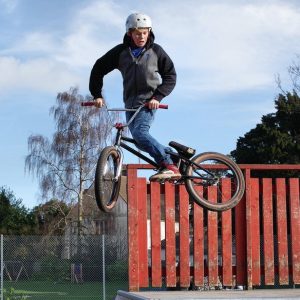
Candidate B, here are your pictures. They show young people on bicycles. Compare the pictures and say what challenges they might be facing. (1 minute)
Candidate B: Well, the little girl in the left picture is being taught how to ride the bike by her father. In contrast, the boy in the right picture looks really confident with his BMX bicycle, performing a stunt jump. Both of them are probably enjoying the experience, but for different reasons.
The girl is probably feeling nervous, because she has to be steering the bike, maintaining balance and being aware of her surroundings at the same time. It must be really difficult to do all that when you’re just a beginner cyclist. This can’t be said about the boy, whose challenge is quite different – he has to land his bike safely without breaking it or hurting himself.
Candidate A, is cycling popular where you live? (~20 seconds)
Candidate A: No, not at all. We have harsh winters with lots of snow and our summers are really short. You can see an occasional cyclist, but it is more like a exception. It’s a shame, really – I wish we had warmer climate, because cycling really looks like a fun thing to do!
#7. Manual work; Cooking

Candidate A, here are your pictures. They show people doing manual work. I’d like you to compare the photos and say why they might have chosen to do this work. (1 minute)
Candidate A: The man in the right picture seems to be hanging from a high-rise building, cleaning windows – this looks a bit scary, to be honest. On the contrary, the left picture has an old man, probably he is father to the young girl next to him. They are tending to their crops – a much more peaceful picture, if you ask me!
The man cleaning the windows probably chose that activity to make money, because it looks rather dangerous – or maybe he is really into doing risky things, you know, for adrenaline. The people in the right photo might be looking after the crops because they depend on them, or it could be just their hobby, it’s hard to tell.
Candidate B, which person finds their activity more satisfying? (~20 seconds).
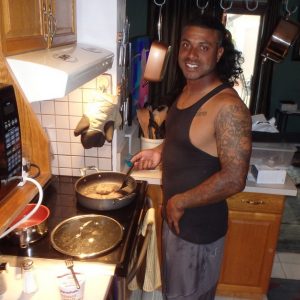
Candidate B, here are your pictures. They show people cooking. Compare the two pictures and say how experienced they might be at what they do, okay? (1 minute)
Candidate B: The left picture shows professional cooks preparing some elaborate dish in a spacious kitchen of a restaurant or a café. The second picture, on the other hand, has an apartment with a man cooking a much simpler meal.
Even though the people in the first picture are more likely to have more experience of dealing with food, it is not necessarily true. They could only be trainees – both of them look rather young. The man is the second picture looks about the same age, but he might have more years of cooking behind his belt, so you never know!
Candidate A, who does the cooking in your family? (~20 seconds)
Candidate: My wife does it, thankfully. I’m hopeless at cooking – anything more complex than frying some eggs or boiling a sausage is way too much for me. I realise that it’s one of the best skills to have, so I will probably try to deal with this shortcoming of mine in the future.
Most of the pictures here are taken from pexels.com – a great site for copyright-free visual content.
We use cookies on our website to give you the most relevant experience by remembering your preferences and repeat visits. By clicking “Accept”, you consent to the use of ALL the cookies.
You need to describe pictures at almost every level of Cambridge exams, but not just any pictures. It’s important to practise with pictures that are similar to what you will find in the exam. In FCE Speaking Part 2, you’ll see pictures connected to a variety of topics which are considered standard at B2 level. For FCE, describing pictures will generally involve talking about a person of group of people participating in some type of activity. The people themselves may be the focus of the question, or it may be related to the experience or place.
Check here for 5 complete First (FCE) Speaking exams as part of Breakout English’s premium materials collection.
At B2 level you start to see a wider variety of speaking part 2 topics. There can be questions related to everyday activities, but also about feelings, time, society or environment. These more abstract topics first appear in B2 exams like the First Certificate.
Here’s a list of topics that come up at B2 and are likely to be seen in FCE Speaking Part 2 pictures.
- communication
- competition
- culture and customs
- daily life
- education
- entertainment and media
- environmental issues
- family and friends
- fashion
- feelings and emotions
- food and drink
- free time activities
- health, medicine and fitness
- hobbies and leisure
- house and home
- money
- obligations
- places and buildings
- relations with other people
- science and technology
- shopping
- social interaction
- society
- sport
- technology
- the natural world
- time
- transport
- travel and holidays
- weather
- work and jobs
As you prepare for First Speaking Part 2, find appropriate pictures to describe and a question to answer. We’ve got a selection below based on the topic list, but if you are looking for more pictures to describe, look for two pictures on the same topic and consider carefully what question could be asked about them.
First (FCE) Speaking Part 2 Example
In part 2 of the First (FCE) Speaking Exam you will be asked to compare two pictures and to answer a question about those pictures. You have one minute to complete the task. Your partner will then be asked a question about your pictures. This should be a short answer (approximately 30 seconds). The process is then repeated with the other candidate.
Here is an example of a First (FCE) Speaking Exam Part 2.
| In this part of the test, I’m going to give each of you two photographs. I’d like you to talk about your photographs on your own for about a minute, and also to answer a question about your partner’s photographs.
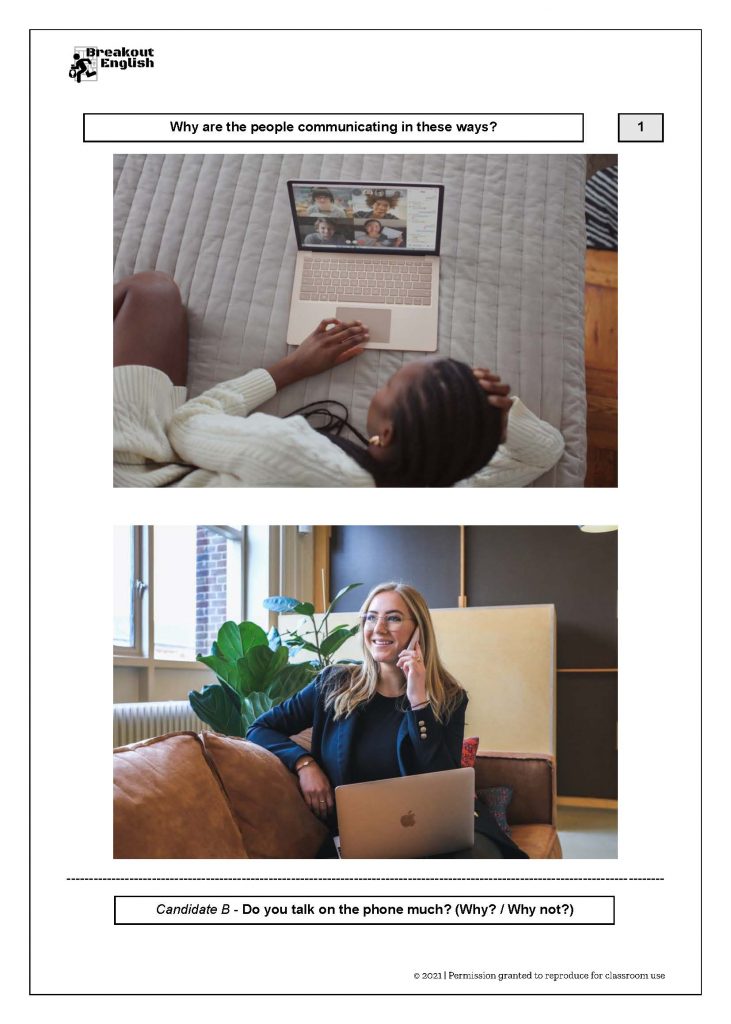
(Candidate A), it’s your turn first. Here are your photographs. They show people communicating in different ways. I’d like you to compare the photographs, and say why the people are communicating in these ways. All right? |
| …………………………………………………… |
| Thank you.
(Candidate B), do you talk on the phone much? …… (Why? / Why not?) |
| …………………………………………………… |
| Thank you. (Can I have the booklet, please?)
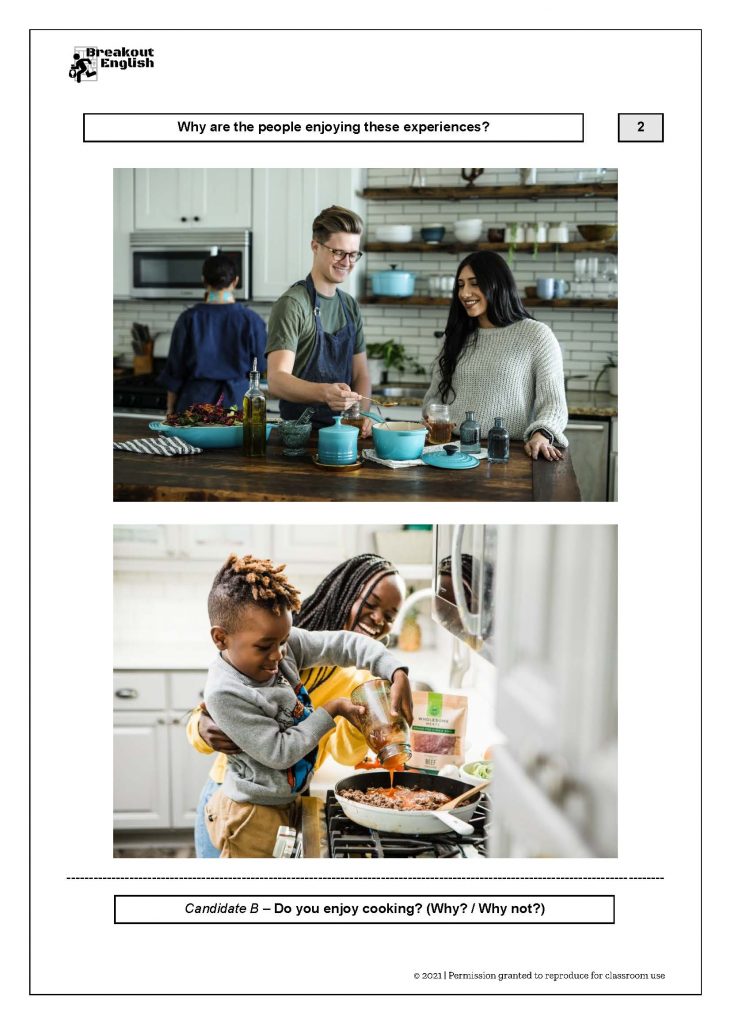
Now, (Candidate B), here are your photographs. They show people cooking. I’d like you to compare the photographs, and say why you think the people are enjoying these experiences. All right? |
| …………………………………………………… |
| Thank you.
(Candidate A), do you enjoy cooking? …… (Why? / Why not?) |
| …………………………………………………… |
| Thank you. (Can I have the booklet, please?) |
The examiner won’t verbally interact with you while you are speaking, but they may encourage you to speak more using gesture if your minute has not finished. It’s important to continue speaking until the examiner stops you by saying “Thank you”. If you stop speaking before your time is up, you may find yourself waiting in an awkward silence.
The Materials
Practise with these First Speaking Part 2 pictures. Either use them from the website or download the pdf to practise, print or display.
If doing it with a class, don’t be strict about the time limit with the first set of pictures, but as your students get more practice, make them complete the task with the one minute limit. Write down things that they do well and errors. After each set of pictures, do a correction/praise feedback stage before trying again.
Check here if you are looking for some more materials about how to do First (FCE) Speaking Part 2 and some useful phrases.
EXAM PART: Speaking
EXAM SKILLS: Comparing and contrasting, discourse management, using a range of appropriate vocabulary
TIME: 5-10 minutes per set of pictures + feedback
Download the pictures
First (FCE) – Speaking Part 2 – Pictures
Pictures to describe
Communication
Food and drink
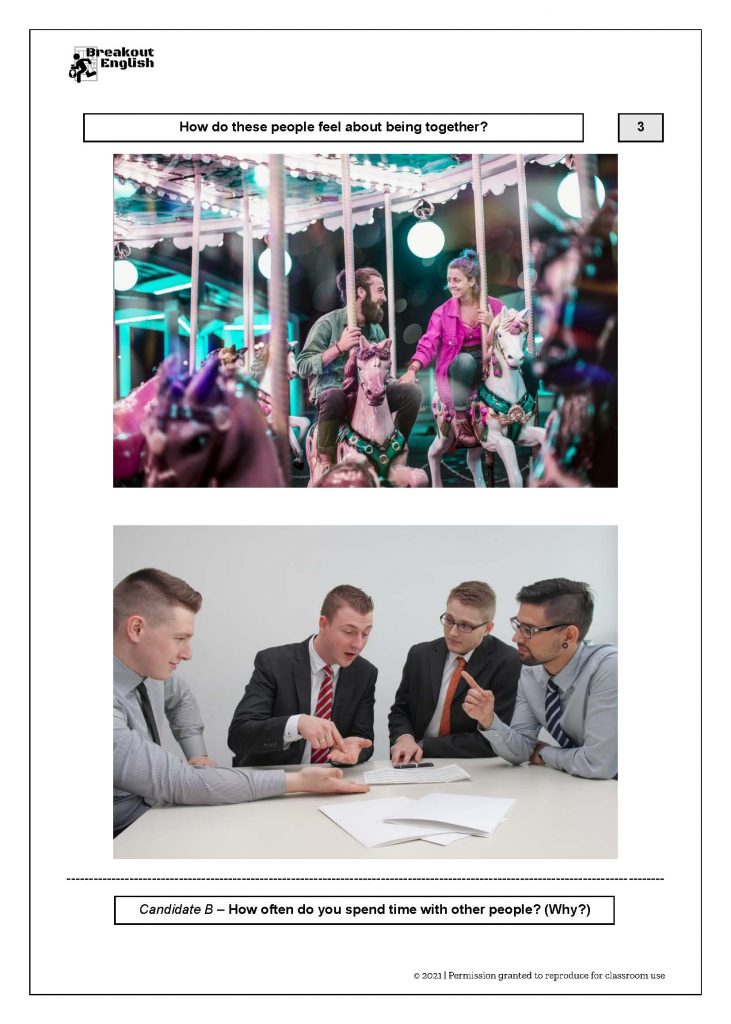
Relations with other people
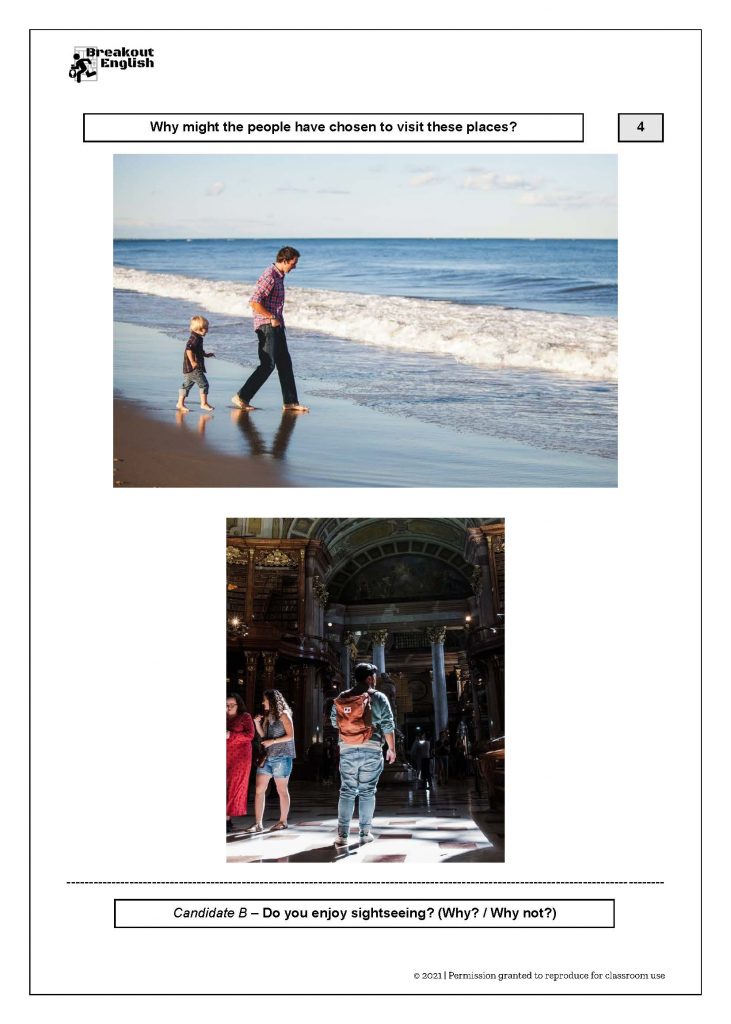
Travel
Education
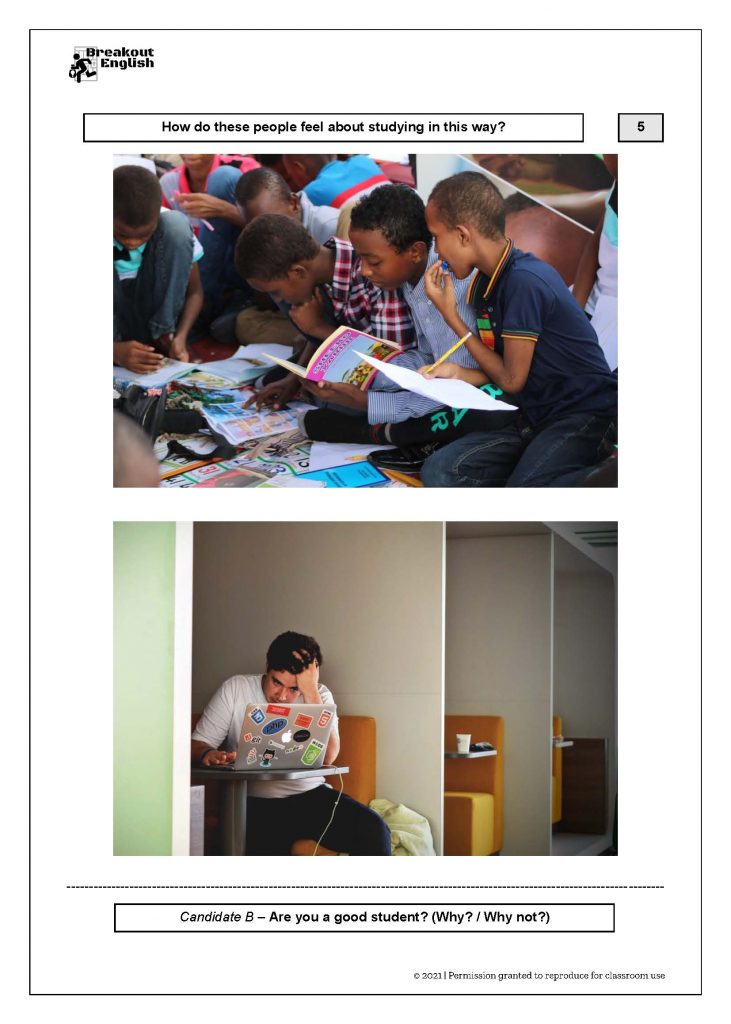
Feelings
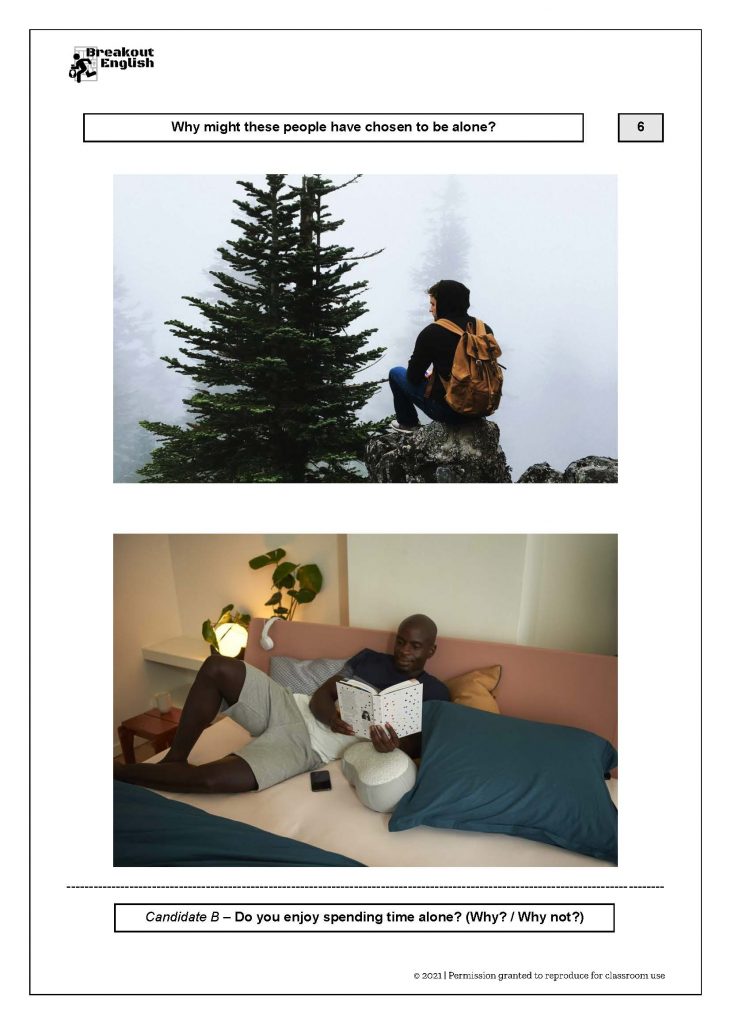
Obligation
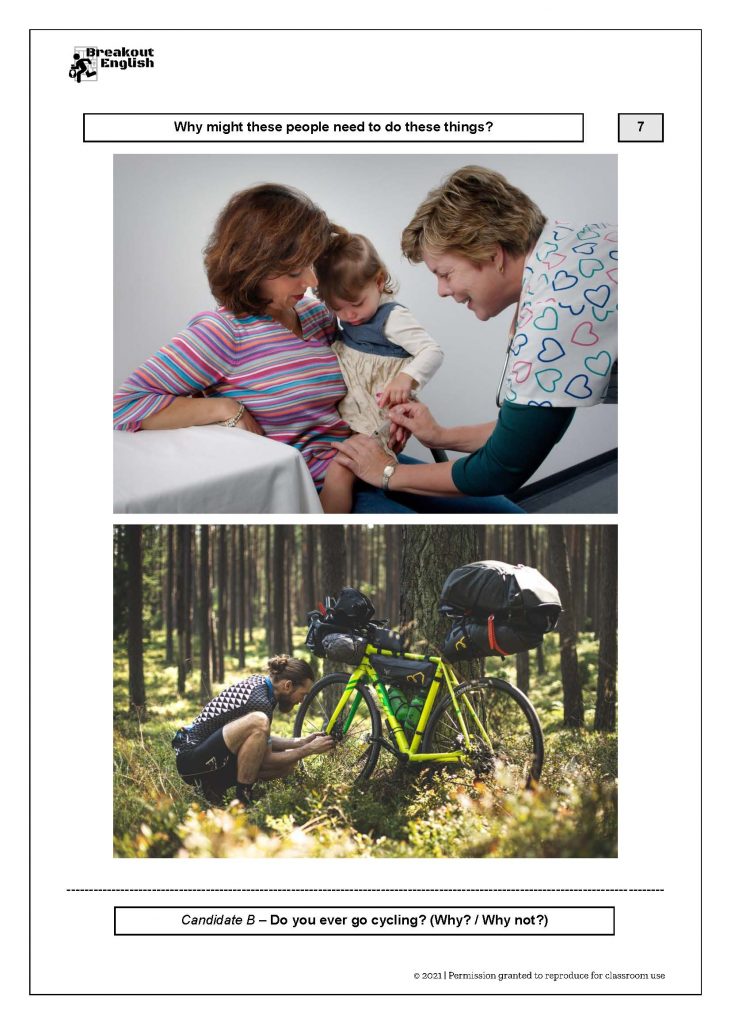
Natural world
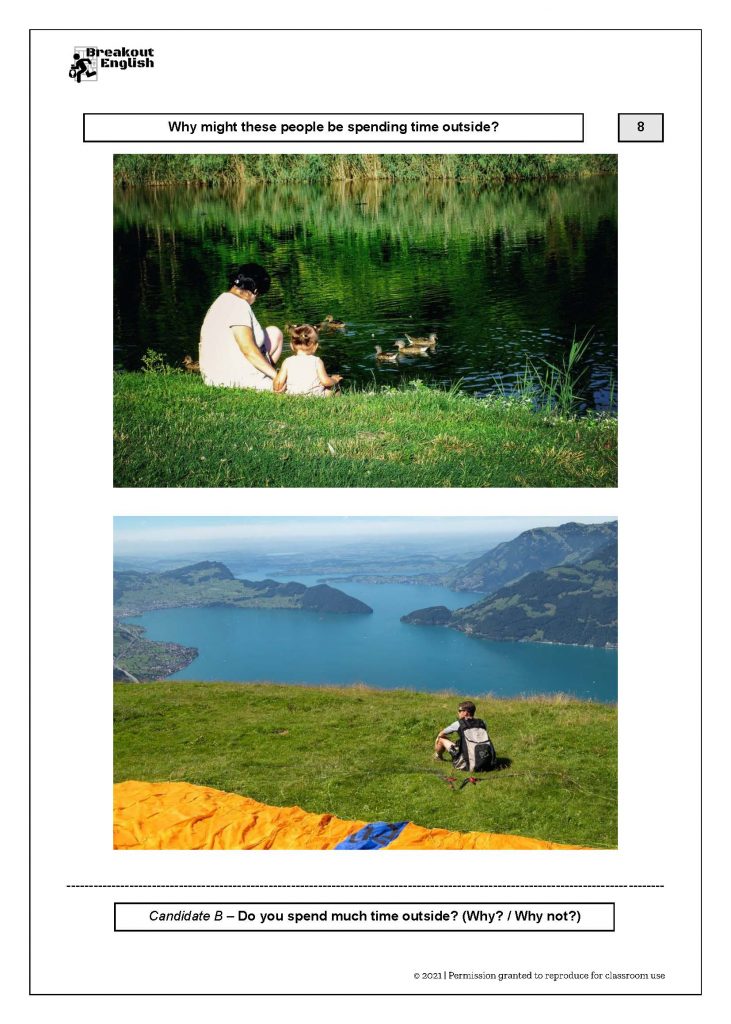

ЕГЭ по английскому языку за курс средней школы соответствует уровню Upper-Intermediate (B2) по общеевропейской шкале. Задание: сравнить две фотографии на английском языке, которое с 2015 входит в устную часть ЕГЭ, частично взято из этого экзамена.
FCE (англ. First Certificate in English, известный как Первый Кембриджский сертификат) — экзамен по английскому языку, разрабатываемый и проводимый подразделением ESOL экзаменационного совета Кембриджского университета.
Как сравнить две фотографии FCE (First Certificate in English)
Вот стандартное описание фотографии на английском языке, а в этой статье мы расскажем, как описать и как сравнить две фотографии согласно требованиям FCE.
Итак, в устной части ЕГЭ по английскому языку также требуется сравнить две фотографии — задание С4.
Task 4. Study the two photographs. In 1.5 minutes be ready to compare and contrast the photographs:
- give a brief description (action, location)
- say what the pictures have in common
- say in what way the pictures are different
- say which kind of life you’d prefer
- explain why
You will speak for not more than 2 minutes. You have to talk continuously.
Согласно требованиям ЕГЭ на сравнение фотографий дается 2 минуты. Что же касается FCE, на такое сравнение надо потратить еще меньше времени — всего 1 минуту.

Kак сравнить две фотографии по требованиям FCE
1) Описываем первую фотографию / Describing the first picture – 10 seconds
Let me see. In the first picture I can see a group of people sitting under a big tree. It looks like summer and everyone looks relaxed.

2) Описываем вторую фотографию / Describing the second picture – 10 seconds
In the second picture there are a lot of people sunbathing on the beach. In the background we can see lots of apartments. The beach is really crowded.

3) Сравниваем две фотографии: что общего / Comparing the pictures – 10 seconds
Obviously, the pictures were taken in the summer time and maybe the common theme is about what people like doing on holidays.
4) Сравниваем две фотографии: чем отличаются / Contrasting the pictures – 10 seconds
The scene in the first picture looks very peaceful. On the other hand, the beach scene looks very noisy and chaotic.
5) Делаем предположения / Speculating — 10 seconds
Maybe, the people in the second picture are on a package holiday and normally they live in cities where as the people sitting under the tree live in the country. They could be farmers or something.
Предложения из данного пункта (FCE) вы можете использовать в пунктах 1-4, добавив по одному предложению в каждый.
6) В заключение, выражаем личное мнение / Personal Feelings – 10 seconds
Personally, I’d rather be in the first photo. It looks like a perfect way to spend the summer afternoon. The scene at the beach … Well, it’s my idea of a nightmare. I mean I like going to the beach but I don’t really like crowds.
Данное сравнение идеально соответствует опциям задания С4 (устной части ЕГЭ) за исключением одного момента — времени. Так как, повторюсь, по требованиям ЕГЭ сравнение фотографий должно занимать 2 минуты. Значит, его нужно немного расширить. Я рекомендую расширить собственно описание фотографий — пункт 1 и пункт 2. Для этого используйте стандартное (полное) описание фотографии .
Вводные слова и выражения, в том числе выражающие личное мнение:
- Let me see. – Дайте подумать.
- Well, … — Ну, …
- Obviously, … — Очевидно …
- I mean … — Я имею в виду …
- On the other hand, … — С другой стороны (при сравнении фотографий)
Слова и выражения для описания и сравнения фотографий:
- In the first picture I can see … — На первой картинке я вижу …
- In the second picture there are … — На второй картинке находятся …
- It looks like … — Похоже на …
- The scene looks like … — Сцена выглядит …
- Everybody looks like … — Все выглядят …
- In the background … — На заднем плане …
- In the foreground … — На переднем плане …
- The common theme – Общее на фотографиях …
- where as — в то время как (сравниваем одну фотографию с другой)
- It’s my idea of a … — Это мое представление о …
При описании фотографий нужно обязательно показать, что владеете продвинутыми грамматическими конструкциями. Поэтому используйте:
1) Предложения в пассивном залоге
The pictures were taken in the summer time. — Эти фотографии были сделаны летом.
2) Модальные глаголы в значении предположения
They could be farmers or something. — Они, возможно, фермеры или кто-нибудь в этом роде.
3) Причастия (действительные и страдательные)
In the first picture I can see a group of people sitting under a big tree. — На первой фотографии я вижу группу людей, сидящих под деревом.
In the second picture there are a lot of people sunbathing on the beach.
4) Конструкции предпочтения
I’d rather be in the first photo. — Я предпочел бы быть на первой фотографии.
Cambridge First Certificate Speaking (FCE) – это, пожалуй, самый популярный экзамен по английскому языку, который является одной из квалификаций Cambridge English. FCE – это подтверждение ваших языковых навыков. Сдача данного экзамена открывает двери во многие учебные заведения и предприятия по всему миру.
Вторая часть FCE – сложнейший этап устного экзамена. От нее напрямую зависит ваша успешная сдача. Поэтому данному этапу определенно стоит уделить внимание. В нашей статье мы расскажем, что содержит в себе вторая часть FCE, а также что поможет вам в сдаче данного этапа.
Что представляет из себя вторая часть Speaking в экзамене FCE?
Итак, поговорим о формате сдачи. Сразу стоит отметить, что весь модуль Speaking сдается парно.
Во второй устной части вам выдается лист с двумя изображениями на одну и ту же тему (например, путешествие, развлечения, учеба, работа и т.п.). Экзаменатор озвучивает тему при выдаче листов. Также в верхней части находится вопрос, на которой вам предстоит ответить.
Данный экзаменационный этап длится в среднем 3 минуты. Одна минута выделяется на описание фотографий и ответ на вопрос. При описании вы должны указать основные сходства и различия двух изображений. После этого вашему напарнику задается дополнительный вопрос по тем же самым картинкам, либо по их теме, на который он отвечает в течении 30 секунд. Далее вы меняетесь ролями. Напарник получает лист с другими изображениями, естественно, с другой тематикой, также отвечает на вопрос, описывает фотографии. Далее вам задается дополнительный вопрос по картинкам напарника, на ответ которого у вас также есть 30 секунд.
Советы, которые пригодятся вам при ответе
Помните, что на ответ дается всего лишь одна минута, поэтому говорите четко и по делу.
Начинать свое описание лучше с общих характеристик. Как правило, на картинках изображены люди, поэтому расскажите, кто изображен и чем увлечен.
Не забудьте обозначить тему картинок. После чего начинайте сравнение. Не заостряйте внимание на каком-то одном изображении, проводите параллели со вторым.
Полезные выражения
Начало сравнения:
Both of these pictures show… — Обе эти фотографии показывают…
The two situations in these pictures are… — Две ситуации на этих картинках…
При выделении сходств:
In both pictures we can see… — На обеих фотографиях мы видим…
One similarity between these two pictures/situations is that… — Сходство между этими двумя картинками/ситуациями заключается в том, что…
These two pictures/situations are similar because/in that… — Эти две картинки/ситуации похожи, потому что/в этом…
При выделении различий:
One of the most obvious differences (between these two pictures) is that… — Одно из самых очевидных отличий (между этими двумя картинками) заключается в том, что…
Another difference is that… — Еще одно отличие в том, что…
What makes these two situations (so/completely) different is… — Что делает эти две ситуации (настолько/полностью) разными, так это…
При ответе на вопрос:
In response to the question, I’d say that… — Отвечая на вопрос, скажу, что…
As regards the question,… — Что касается вопроса,…