
I must have been about eight when I made my first train trip. I think I was in second grade at that time. It was midsummer, hot and wet in central Kansas, and time for my aunt Winnie’s annual vacation from the store, where she worked as a clerk six days a week. She invited me to join her on a trip to Pittsburgh, fifty miles away, to see her sister, my aunt Alice. ‘Sally, would you like to go there by train or by car?’ aunt Winnie asked. ‘Oh, please, by train, aunt Winnie, dear! We’ve been there by car three times already!’
Alice was one of my favourite relatives and I was delighted to be invited to her house. As I was the youngest niece in Mother’s big family, the aunties all tended to spoil me and Alice was no exception. She kept a boarding house for college students, a two-storey, brown brick building with comfortable, nicely decorated rooms at the corner of 1200 Kearney Avenue. She was also a world-class cook, which kept her boarding house full of young people. It seemed to me that their life was so exciting and joyful.
Since I’d never ridden a train before, I became more and more excited as the magic day drew near. I kept questioning Mother about train travel, but she just said, ‘Wait. You’ll see.’ For an eight-year-old, waiting was really difficult, but finally the big day arrived. Mother had helped me pack the night before, and my little suitcase was full with summer sundresses, shorts and blouses, underwear and pyjamas. I was reading Billy Whiskers, a fantastic story about a goat that once made a train trip to New York, and I had put that in as well. It was almost midnight when I could go to bed at last.
We arrived at the station early, purchased our tickets and found our car. I was fascinated by the face-to-face seats so some passengers could ride backwards. Why would anyone, I thought, want to see where they’d been? I only wanted to see what lay ahead for me.
Finally, the conductor shouted, ‘All aboard!’ to the people on the platform. They climbed into the cars, the engineer blew the whistle and clanged the bell, and we pulled out of the station.
This train stopped at every town between my home in Solomon and Pittsburgh. It was known as the ‘milk train’ because at one time it had delivered goods as well as passengers to these villages. I looked eagerly at the signs at each station. I’d been through all these towns by car, but this was different. The shaky ride of the coaches, the soft brown plush seats, the smells of the engine drifting back down the track and in through the open windows made this trip far more exotic.
The conductor, with his black uniform and shiny hat, the twinkling signals that told the engineer when to stop and go, thrilled me. To an adult, the trip must have seemed painfully slow, but I enjoyed every minute.
Aunt Winnie had packed a lunch for us to eat along the way as there was no dining car in the train. I was dying to know just what was in that big shopping bag she carried, but she, too, said, ‘Wait. You’ll see.’ Midway, Aunt Winnie pulled down her shopping bag from the luggage rack above our seats. My eyes widened as she opened it and began to take out its contents. I had expected lunchmeat sandwiches, but instead there was a container of fried chicken, two hardboiled eggs, bread and butter wrapped in waxed paper, crisp radishes and slim green onions from Winnie’s garden, as well as rosy sliced tomatoes. She had brought paper plates, paper cups and some of the ‘everyday’ silverware. A large bottle of cold tea was well wrapped in a dishtowel; the ice had melted, but it was still chilly. I cautiously balanced my plate on my knees and ate, wiping my lips and fingers with a large paper napkin. This was living!
When we had cleaned our plates, Aunt Winnie looked into the bag one more time. The best treat of all appeared — homemade chocolate cakes! Another cup of cold tea washed these down and then we carefully returned the remains of the food and silverware to the bag, which Aunt Winnie put into the corner by her feet.
‘Almost there,’ said my aunt, looking out of the window at the scenery passing by. And sure enough, as we pulled into the Pittsburgh station we immediately caught sight of aunt Alice,
waiting for us, a smile like the sun lighting up her face, arms wide open. We got off the train and she led us past the taxi rank and the bus stop to her car that was parked near the station. And all the way to her home she was asking about my impressions of my first train trip and I could hardly find the words to express all the thrill and excitement that filled me.
ВОПРОС 1: The first time Sally travelled by train was when she
1) had to move to her aunt Alice.
2) had a summer vacation at school.
3) went to Pittsburgh for the first time in her life.
4) visited her aunt Alice together with aunt Winnie.
ВОПРОС 2: Aunt Alice made her living by
1) working as a cook.
2) keeping a boarding house.
3) decorating houses.
4) working as a teacher at college.
ВОПРОС 3: Sally was waiting for her first train trip impatiently that she
1) packed her things long before the trip.
2) lost her appetite a week before the trip.
3) asked her Mother many questions about train trips.
4) couldn’t sleep the night before the trip.
ВОПРОС 4: Sally didn’t like the idea of riding backwards because
1) it could make her sick.
2) she could miss her station.
3) she could miss the conductor.
4) she wanted to see where she was going.
ВОПРОС 5: The trip to Pittsburgh by train seemed so exotic to Sally because
1) she had never travelled so far from her native town.
2) travelling by train was very different from a car ride.
3) she had never travelled in comfort.
4) she had never travelled without her parents.
ВОПРОС 6: Sally thought that at lunchtime they would have
1) meat sandwiches.
2) bread and butter with coffee.
3) fried chicken, eggs and vegetables.
4) tea with chocolate cakes.
ВОПРОС 7: Aunt Alice was waiting for Sally and aunt Winnie
1) at home.
2) in her car.
3) on the platform.
4) at the bus stop.
ВОПРОС 1: – 4
ВОПРОС 2: – 2
ВОПРОС 3: – 3
ВОПРОС 4: – 4
ВОПРОС 5: – 2
ВОПРОС 6: – 1
ВОПРОС 7: – 3
- Главная
-
Английский язык
-
Чтение
-
Чтение 12-18
2. Чтение
Формат ответа: цифра или несколько цифр, слово или несколько слов. Вопросы на соответствие «буква» — «цифра» должны записываться как несколько цифр. Между словами и цифрами не должно быть пробелов или других знаков.
Примеры ответов: 7 или здесьисейчас или 3514
Раскрыть
Скрыть
Прочитайте текст и выполните задания 12–18. Запишите в поле ответа цифру 1, 2, 3 или 4, соответствующую выбранному Вами варианту ответа.
For almost 125 years, the secrecy surrounding the recipe for Coca-Cola has been one of the world’s great marketing tricks. As the story goes, the fizzy drink’s famous ‘7X’ formula has remained unchanged since it was developed in 1886. Today, the recipe is entrusted only to two Coke executives, neither of whom can travel on the same plane for fear the secret would go down with them.
Now, one of America’s most celebrated radio broadcasters claims to have discovered the Coke secret. Ira Glass, presenter of the public radio institution This American Life, says he has tracked down a copy of the recipe, the original of which is still supposedly held in a burglar-proof vault at the Sun Trust Bank in Atlanta, Georgia.
The formula was created by John Pemberton, an Atlanta chemist and former Confederate army officer who crafted cough medicines in his spare time. In 1887, he sold the recipe to a businessman, Asa Griggs, who immediately placed it for safekeeping in the Georgia Trust Bank.
Glass came across a recipe that he believes is the secret formula in a back issue of Pemberton’s local paper, the Atlanta Journal-Constitution, while he was researching an entirely different story. Tucked away on an inside page of the 8 February 1979 edition, he stumbled on an article that claimed to have uncovered the closely guarded ‘7X’ formula.
The column was based on information found in an old leather-bound notebook that belonged to Pemberton’s best friend and fellow Atlanta chemist, RR Evans. Glass was intrigued and, after some digging, found that the notebook had been handed down over generations until it reached a chemist in Georgia called Everett Beal, whose widow still possesses it.
The rediscovered recipe includes extract of coca leaves, caffeine, plenty of sugar (it specifies 30 unidentified units thought to be pounds), lime juice, vanilla and caramel. Into that syrup, the all-important ‘7X’ ingredients are added: alcohol and six oils – orange, lemon, nutmeg, coriander, neroli and cinnamon. The formula is very similar to the recipe worked out by Mark Pendergrast who wrote a history of the drink in 1993 called For God, Country & Coca-Cola.
Coke’s secret recipe is, in fact, partly a myth. The soda has changed substantially over time. Cocaine, a legal stimulant in Pemberton’s day, was removed from the drink in 1904 after mounting public unease about the drug. Extract of coca leaves is still used but only after the cocaine has been removed.
In 1980, the company replaced sugar, squeezed from beet and cane, with the cheaper corn sweetener that is often found in American food and drink. Coke fans were not impressed.
Despite such occasional controversies, one element has remained constant: Coke’s commitment to keeping its own secret. Speculation about the recipe has been a popular talking point for more than a century, proving good for business. The company has reacted to the This American Life story in a way that has been typical of its commercial strategy since the 19th century. “Many third parties have tried to crack our secret formula. Try as they might, they’ve been unsuccessful,” Coca-Cola’s Kerry Tressler said.
12. The best title reflecting the message of the story probably is
- Coca-Cola secret recipe revealed?
- Tracking down the famous recipe.
- The secret recipe is a fraud.
- The History of The Coca-Cola Company.
13. Who is supposed to know the Coke secret recipe nowadays?
- RR Evans.
- The director of Atlanta Sun Trust Bank.
- Certain Coca-Cola executives.
- A broadcaster.
14. How did Ira Glass learn about the recipe?
- Accidentally reading an article in an old Atlanta paper.
- Studying an old notebook that belonged to Pemberton.
- Talking to a relative of John Pemberton.
- Working in Atlanta archives.
15. Which of the following does NOT belong to the famous ‘7X’ ingredients?
- Alcohol.
- Orange oil.
- Caffeine.
- Nutmeg oil.
16. Why might the secret recipe be considered a myth?
- The company has been regularly changing the ingredients.
- The quality of the ingredients has been changing.
- It has never been a secret.
- The recipe has never existed.
17. What disappointed Coca-Cola fans in 1980?
- The price of the drink went up with the price of sugar.
- Sugar was removed from the drink.
- The recipe of the drink was revealed.
- Beet and cane sugar was replaced with the corn one.
18. The phrase “proving good for business” in the last paragraph means that the rumors about the recipe …
- helped to keep the recipe in secret.
- were supported by the company.
- helped the company’s sales.
- provided unnecessary problems for the company.
Прочитайте текст и выполните задания 12-18. Запишите в поле ответа цифру 1, 2, 3 или 4, соответствующую выбранному Вами варианту ответа.
Yves Henri Donat Matthieu Saint Laurent was born on August 1, 1936, in Oran, Algeria. He grew up in a villa by the Mediterranean with his two younger sisters, Michelle and Brigitte. While his family was relatively well off—his father was a lawyer and insurance broker who owned a chain of cinemas—childhood for the future fashion icon was not easy. Saint Laurent was not popular in school, and was often bullied by schoolmates. As a consequence, Saint Laurent was a nervous child, and sick nearly every day.
He found solace, however, in the world of fashion. He liked to create intricate paper dolls, and by his early teen years he was designing dresses for his mother and sisters. At the age of 17, a whole new world opened up to Saint Laurent when his mother took him to Paris for a meeting she had arranged with Michael de Brunhoff, the editor of French Vogue.
A year later, Saint Laurent, who had impressed de Brunhoff with his drawings, moved to Paris and enrolled at the Chambre Syndicale de la Couture, where his designs gained notice very quickly. De Brunhoff also introduced Saint Laurent to designer Christian Dior, a giant in the fashion world. «Dior fascinated me,» Saint Laurent later recalled. «I couldn’t speak in front of him. He taught me the basis of my art. Whatever was to happen next, I never forgot the years I spent at his side.» Under Dior’s tutelage, Saint Laurent’s style continued to mature and gain still more notice.
In 1960 Saint Laurent was called back to his home country of Algeria to fight for its independence. He managed to secure an exemption based on health grounds, but when he returned to Paris, Saint Laurent found that his job with Dior had disappeared. The news, at first, was traumatic for the young, fragile designer. Then it became ugly, with Saint Laurent successfully suing his former mentor for breach of contract, and collecting £48,000.
Over the next two decades, Saint Laurent’s designs sat atop the fashion world. Models and actresses gushed over his creations. He outfitted women in blazers and smoking jackets, and introduced attire like the pea coat to the runway. His signature pieces also included the sheer blouse and the jumpsuit.
By the 1980s, Yves Saint Laurent was a true icon. He became the first designer to have a retrospective on his work at the Metropolitan Museum in New York City. The fashion house flourished as a money making venture.
12. Yves Saint Laurent didn’t have a happy childhood because
- he lived far from the city
- his family was very poor
- he didn’t get along with his classmates
- his father was too busy at work
13. The turning point in his life was
- the first time he saw Paris
- the acquaintance with a well-known representative of the fashion industry
- the moment when his relatives started to wear clothes of his own design
- his new hobby of creating dolls
14. At the Chambre Syndicale de la Couture the work of Yves Saint Laurent
- aroused interest almost immediately
- wasn’t appreciated at the beginning
- didn’t find appraisal at all
- flourished only after his studies with Christian Dior
15. Why couldn’t Yves Saint Laurent speak in front of Christian Dior?
- he was too shy
- he didn’t know what to say
- he was afraid of Dior
- he was in awe with Dior
16. After Yves Saint Laurent returned from Algeria, Christian Dior
- made him pay £48,000
- continued working with him
- broke his dream of becoming a well-known designer
- was made to pay a huge sum because of firing Yves
17. The expression “sat atop” in the first line of the 5th paragraph means
- was passive and didn’t make any contribution to the fashion development
- played the leading role in the fashion world
- lost his influence in the fashion world
- became less popular in the fashion world
18. During the 80-s the profits of the fashion ‘Saint Laurent’ house were
- very modest
- critically low
- huge
- satisfactory
Прочитайте текст и выполните задания 12 – 18. Запишите в поле ответа цифру 1, 2, 3 или 4, соответствующую выбранному Вами варианту ответа.
«I don’t mind staying after school,» I said to Professor Herbert, «but I’d rather you’d whip me with a switch and let me go home early. Pa will whip me anyway for getting home two hours late.» «You are too big to whip,» said Professor Herbert, «and I have to punish you for climbing up in that cherry tree. The other five boys have paid their dollar each. You have been the only one who has not helped pay for the tree. Can you borrow a dollar?» «I can’t,» I said. «I’ll have to take the punishment. I wouldn’t mind. My father believes that if you spare the rod you spoil the child. I’ll never be able to make him understand about the cherry tree.”
«You must take the punishment,» said Professor Herbert. «You must stay two hours after school today and two hours after school tomorrow. I’m allowing you twenty-five cents an hour. That is good money for a high-school student. You can sweep the schoolhouse floor, wash the blackboards, clean windows. I’ll pay the dollar for you.»
It was six o’clock when I left the schoolhouse. I hurried home. I saw Pa spreading fodder on the ground to the cattle. That was my job. I ran up to the fence. I said, «Leave that for me, Pa. I’ll do it. I’m just a little late.» «I see you are,» said Pa. He turned and looked at me. His eyes danced fire. «What in the world has kept you so? Why ain’t you been here to help me with this work?» I didn’t want to tell him why I was late from school. Pa stopped scattering the bundles of fodder. He said, «Why are you getting in here this time of night?» I said, «I had to stay after school.»
I couldn’t lie to Pa. He’d go to school and find out why I had to stay. If I lied to him it would be too bad for me. I said, «Our biology class went on a field trip today. Six of us boys broke down a cherry tree. We had to give a dollar apiece to pay for the tree. I didn’t have the dollar. Professor Herbert is making me work out my dollar. He gives me twenty-five cents an hour. I had to stay in this afternoon. I’ll have to stay in tomorrow afternoon!» “Are you telling me the truth?” asked Pa. «Yes,» I said, «go and see for yourself.» «That’s just what I’ll do in the morning,» said Pa.
It was early when we got to the county high school the next morning. Professor Herbert had just got there. «You’re the Professor here, ain’t you?» asked Pa. «Yes,» said Professor Herbert, «and you are Dave’s father.» «Yes,» said Pa, «just a few things about this school I want to know. I’m trying to make a scholar of Dave. He’s the only one out of eleven young ones I’ve sent to high school. Here he comes in late and leaves me all the work to do! He says you all were out bug hunting yesterday and he broke a cherry tree down. He had to stay two hours after school yesterday and work out money to pay on that cherry tree! Is that right?» «I guess it is,» said Professor Herbert. «Well,» said Pa, «this ain’t no high school. It’s a bug school, a lizard school, a snake school! It ain’t no school no how!»
«I was only doing my duty, Mr. Sexton, and following the course of study the state provided us with.» said Professor Herbert. «Course o’ study,» said Pa, «what study, bug study? Taking young ones to the woods and their poor old Ma’s and Pa’s at home slaving to keep them in school and give them education!» «We were not only hunting snakes, toads, flowers, butterflies, lizards,» said Professor Herbert, «but I was hunting dry timothy grass to put in an incubator and raise some protozoa.» «I don’t know what that is,» said Pa. «The incubator is the new-fangled way of cheating the hens and raising chickens. I ain’t so sure about the breed of chickens you mentioned.»
«You’ve heard of germs, Mr. Sexton, haven’t you?» said Professor Herbert. «Yes,» said Pa, «but I don’t believe in germs. I’m sixty-five years old and I ain’t seen one yet!» «You can’t see them with your naked eye,» said Professor Herbert. «Just stay with me in the high school today. I have a few things to show you. That scum on your teeth has germs in it.» «What,» said Pa, «you mean to tell me I’ve got germs on my teeth!» «Yes,» said Professor Herbert. «I don’t mean to dispute your word,» said Pa, «but I don’t believe it. I don’t believe I have germs on my teeth!» «Stay with me today and I’ll show you”, said Professor Herbert. «I’ll stay with you,» said Pa. «I want to see the germs on my teeth. I’ve never seen one in my life.»
12. The narrator thought that the most suitable punishment for him under the circumstances was to …
1) be detained after school.
2) be whipped by the Professor.
3) be whipped by his father.
4) find a way to pay the money.
13. The pedagogical credo of the narrator’s father “If you spare the rod you spoil the child” implies that …
1) the corporal punishment is the most effective way to bring up children.
2) you should use the rod sparingly when you deal with children.
3) the more you use the rod, the more spoilt the child becomes.
4) parents shouldn’t spoil children by giving them too much freedom.
14. Professor Herbert suggested that the narrator should …
1) do some odd jobs to earn the money he had to repay his teacher.
2) take up the job of a school cleaner to help his family.
3) help Professor Herbert with the household chores like cleaning windows.
4) look for a job for at least twenty-five cents an hour.
15. The narrator’s Pa was angry with his son because …
1) his son was reluctant to help him with the farm work.
2) his son was unwilling to explain why he was late.
3) he had to do his son’s share of routine work on the farm.
4) his son had broken down a cherry tree.
16.The narrator’s father went to the county high school in order to …
1) find out if his son had really been offered a job.
2) forbid Professor Herbert to detain his son after school.
3) apologize for his son and pay the money for the broken tree.
4) express his dissatisfaction with the school curriculum.
17. When Professor Herbert used the word “protozoa”, which the narrator’s Pa didn’t know, the father …
1) felt humiliated by his own ignorance.
2) asked the Professor to clarify the meaning of the word.
3) understood the meaning of the word from the context.
4) thought it was a new breed of chickens.
18. The narrator’s father made up his mind to stay at school for a day in order to …
1) make sure his son was taught properly.
2) satisfy his natural curiosity.
3) expose Professor Herbert as a charlatan.
4) prove that his teeth were absolutely clean.
Прочитайте текст и выполните задания 12–18. Запишите в поле ответа цифру 1, 2, 3 или 4, соответствующую выбранному Вами варианту ответа.
REUNION
The last time I saw my father was in Grand Central Station. I was going from my grandmother’s in the Adirondacks to a cottage on the Cape that my mother had rented, and I wrote my father that I would be in New York between trains for an hour and a half, and asked if we could have lunch together. His secretary wrote to say that he would meet me at the information booth at noon, and at twelve o’clock sharp I saw him coming through the crowd.
He was a stranger to me – my mother divorced him three years ago and I hadn’t been with him since – but as soon as I saw him I felt that he was my father, my flesh and blood, my future and my doom. I knew that when I was grown I would be something like him; I would have to plan my campaigns within his limitations. He was a big, good-looking man, and I was terribly happy to see him again.
He struck me on the back and shook my hand. «Hi, Charlie,» he said. «Hi, boy. I’d like to take you up to my club, but it’s in the Sixties, and if you have to catch an early train I guess we’d better get something to eat around here.» He put his arm around me, and I smelled my father the way my mother sniffs a rose. It was a rich compound of whiskey, after-shave lotion, shoe polish, woollens, and the rankness of a mature male. I hoped that someone would see us together. I wished that we could be photographed. I wanted some record of our having been together.
We went out of the station and up a side street to a restaurant. It was still early, and the place was empty. The bartender was quarrelling with a delivery boy, and there was one very old waiter in a red coat down by the kitchen door. We sat down, and my father hailed the waiter in a loud voice. «Kellner!» he shouted. «Garcon! You!» His boisterousness in the empty restaurant seemed out of place. «Could we have a little service here!» he shouted. Then he clapped his hands. This caught the waiter’s attention, and he shuffled over to our table.
«Were you clapping your hands at me?» he asked.
«Calm down, calm down,» my father said. «It isn’t too much to ask of you – if it wouldn’t be too much above and beyond the call of duty, we would like a couple of Beefeater Gibsons.»
«I don’t like to be clapped at,» the waiter said.
«I should have brought my whistle,» my father said. «I have a whistle that is audible only to the ears of old waiters. Now, take out your little pad and your little pencil and see if you can get this straight: two Beefeater Gibsons. Repeat after me: two Beefeater Gibsons.»
«I think you’d better go somewhere else,» the waiter said quietly.
«That,» said my father, «is one of the most brilliant suggestions I have ever heard. Come on, Charlie.»
I followed my father out of that restaurant into another. He was not so boisterous this time. Our drinks came, and he cross-questioned me about the baseball season. He then struck the edge of his empty glass with his knife and began shouting again. «Garcon! You! Could we trouble you to bring us two more of the same.»
«How old is the boy?» the waiter asked.
«That,» my father said, «is none of your business.»
«I’m sorry, sir,» the waiter said, «but I won’t serve the boy another drink.»
«Well, I have some news for you,» my father said. «I have some very interesting news for you. This doesn’t happen to be the only restaurant in New York. They’ve opened another on the corner. Come on, Charlie.»
He paid the bill, and I followed him out of that restaurant into another …
12.The narrator was looking forward to meeting with his father because he
1) expected to get a valuable present from him.
2) missed the feeling of being with him.
3) wanted to stay with him in New York.
4) hoped that his parents would get back together.
13.The narrator’s request to meet was accepted by his father
1) with great pleasure.
2) unwillingly.
3) in business-like manner.
4) with much hope and expectation.
14.The narrator wanted to be photographed with his father because
1) he was proud of his father’s good looks.
2) he wished to remember their moments together.
3) it was the happiest time of his life.
4) he wanted to boast of his father to his friends.
15.The father did not invite his son to his club because
1) the son was pressed for time to catch a train.
2) it was a closed club with no children allowed.
3) the man feared that his son would not behave properly.
4) it was necessary to book in advance to enter the club.
16.The father’s behaviour in the first restaurant was inappropriate as he
1) was too boisterous in an empty restaurant.
2) tried to boast of his knowledge of foreign languages.
3) could not afford to pay the bill.
4) treated the waiter in a rude manner.
17.The waiter in the next restaurant refused to bring them more drinks as
1) the restaurant was closing soon.
2) the son looked pale and faint.
3) the boy was too young to drink alcohol.
4) the waiter got angry with the son.
18.The title of the story “Reunion” actually implies that the
1) son found his lost father after decades of separation.
2) son now would be living together with his father.
3) “father – son” relations is what both sides feel the need for.
4) son made an attempt to re-establish relations with his father.
Прочитайте текст и выполните задания 12-18. Запишите в поле ответа цифру 1, 2, 3 или 4, соответствующую выбранному Вами варианту ответа.
The London Marathon celebrates its 23rd birthday. That is 23 years of stresses and strains, blisters and sore bits, and incredible tales. Somehow, I truly managed to run four of them. And I have medals to prove it. It seemed like a good idea at the time. I watched the inaugural London Marathon on March 29th, 1981. It seemed extraordinary that normal people would want to run 26 miles and 385 yards. And, it must be said, they looked strange and not quite steady at the end of it all. There are, indeed, terrible tales of people losing consciousness by the time they reach that glorious finishing line. But I was captivated. I knew I had to do it.
Three years later I was living in London, not far from Greenwich where the event begins, and it seemed the perfect opportunity to give it a go. I was only a short train ride from the starting line, but more than 26 miles from the finish. “Who cares?” I thought. By the end I did. The moment I crossed that finishing line, and had that medal placed around my neck, was one of the finest in my life. The sense of achievement was immense. It was a mad thing to do, and ultimately pointless. But knowing that I’d run a Marathon – that most historic of all distant races – felt incredible.
London provides one of the easiest of all the officially sanctioned marathons because most of it is flat. Yes, there are the cobblestones while running through the Tower of London, and there are the quiet patches where crowds are thin and you are crying out for some encouragement – those things matter to the alleged “fun” runners like myself, the serious runners don’t think of such things.
This year London will attract unprecedented number of athletes, a lot of title holders among them. It is set to witness what is probably the greatest field ever for a marathon. In the men’s race, for example, among numerous applicants there’s the holder of the world’s best time, Khalid Khannouchi of the USA; the defending champion El Mouriz of Morocco; Ethiopia’s Olympic bronze-medallist Tesfaye Tola. And, making his marathon debut, is one of the finest long distance runners of all time Haile Gebrselassie.
Since 1981, almost half a million people have completed the London Marathon, raising more than $125 million for charity. For the majority of the runners, this is what it is all about. It is for charity, for fun, for self-development. It is a wonderful day. I have run it with poor training, with proper training. And I have always loved it.
It’s crazy, and it’s one of the greatest things I’ve ever done. If you want to feel as though you’ve achieved something, run a marathon.
12. Participation in the London Marathon resulted for the author in
1)stresses and strains.
2)blisters and sore bits.
3)memorable medals.
4)incredible tales.
13. When the author watched the end of the first marathon he saw people who were
1)extraordinary steady.
2)feeling weak and exhausted.
3)losing consciousness.
4)having a glorious time.
14. The reason for the author’s participation in the marathon was the fact that he
1)was fascinated by it.
2)lived not far from its finishing line.
3)wanted to receive a medal.
4)wanted to do something incredible.
15. “By the end I did” means that the author
1)found the distance suitable.
2)found the distance challenging.
3)decided to take part in the marathon.
4)eventually took a train to the finish.
16. According to the author, the London Marathon is one of the easiest because
1)it goes through the Tower of London.
2)there are quiet patches without crowds.
3)many “fun” runners participate in it.
4)its course does not slope up or down.
17. “… the greatest field ever for a marathon” means that the marathon
1)will take place on a big field.
2)is to be run by the famous runners only.
3)will be witnessed by more people.
4)will welcome a huge number of sportsmen.
18. According to the author, one should run the London Marathon to
1)raise money for charity.
2)get some training.
3)feel self-fulfillment.
4)have fun in a crazy way.
Прочитайте текст и выполните задания 12-18. Запишите в поле ответа цифру 1, 2, 3 или 4, соответствующую выбранному Вами варианту ответа.
Although many countries are saddled with stereotypes, in Switzerland’s case they’re dead on.
The alpine nation really is highly efficient. And meticulously punctual. Clean, too. For chronically tardy, resolutely inefficient (not to mention slovenly) people like myself, a visit to Switzerland yields a cocktail of emotions: awe, relief and a dash of irritation.
For the Swiss, punctuality is not merely a nicety, a bonbon in the buffet of life. It is a source of deep contentment. The Swiss, it seems, subscribe to the German philosopher Schopenhauer’s definition of happiness as “an absence of misery”. They derive genuine joy from the fact that life unfolds on time and in a highly efficient manner.
Whenever I visit Switzerland, I go through several stages of punctuality reaction. At first it delights me, especially if I’m coming from neighbouring Italy or France with their rather more flexible approach to timekeeping. By contrast, life in Switzerland is sturdy and dependable, like a Saint Bernard dog. If someone says they will meet me at 2 pm, they arrive at 2 pm not 2:05 (or 1:55, for that matter). I like this. For a while. Then it annoys me. The extreme punctuality strikes me as a kind of stinginess, and I find myself agreeing with the English writer Evelyn Waugh who said that “punctuality is the virtue of the bored.” That is unfair though, and finally, invariably, I come to appreciate Swiss punctuality for what it is: a deep expression of respect for other people. A punctual person is a considerate one. By showing up on time – for everything – a Swiss person is saying, in effect, “I value your time and, by extension, I value you.”
It’s no coincidence that the Swiss are the world’s watchmakers. Which came first – the precise timekeepers or the precise people? Hard to say, but the result is the same: a nation where the trains – and everything else – really do run on time. Then there are the toilets. “Have you seen our public toilets?” asked Dieter, a Swiss doctor, over an afternoon beer in Geneva. “They are very clean.” He’s right. Swiss toilets are indeed clean, as is everything else too. In some countries it would be suicidal to drink the tap water. In Switzerland it is fashionable to do so; the water comes from natural springs.
How to explain this cleanliness and punctuality? No one knows for sure. But a popular theory is that, historically, it stems from the unforgiving, mountainous terrain. Either you planted your crops on time and harvested them promptly or, well, you starved.
Punctuality, sadly, is a dying art in many parts of the world. Mobile phones are partly to blame. We feel less compelled to arrive on time if we can always text to say we’re running a few minutes late. I don’t sense that is happening in Switzerland, though.
Susan Jane Gilman, an American author who has lived in Geneva for the past 11 years, recounted with awe how she’s “never had a taxi that arrived late, that wasn’t there exactly when it said it would be”. She marvelled at how, for instance, when she’s ordered a new refrigerator, the company gives her a precise two-hour window for delivery – and sticks to it.
Switzerland has changed her. Once a “chronically late person”, Gilman is now meticulously punctual. “I feel a greater respect for people’s time,” she said, sounding very Swiss.
The flip side, though, is that when she visits New York, her hometown, she is annoyed by the relative lack of punctuality: the bus that is 15 minutes behind schedule or doesn’t show up at all, the friends who saunter into a restaurant 30 minutes late. “My friends will say ‘Suze hon, this isn’t Switzerland, relax. They’ll hold our table.’ but I get annoyed if people are late.”
Punctuality is not without its drawbacks. For one thing, it creates a kind of bunching effect. Coffee shops in Swiss cities tend to be crowded at 4pm every day because everybody takes their coffee break at exactly 4pm. In apartment buildings, residents must abide by a strict weekday schedule for use of the laundry room.
Extreme punctuality also creates an expectation, and if that expectation is not met, disappointment ensues. On those rare occasions that things do not function smoothly, the Swiss get flustered – and angry. Recently, the country was thrown into a tizzy with the disturbing news that only 87.5% of the trains run by the federal railroad arrived within three minutes of their scheduled time, shy of their 89% target.
But perhaps that frustration has some merit. After all, Switzerland has some fierce competition when it comes to punctuality. In Japan, the Shinkansen bullet trains make the Swiss railroads look downright tardy. The average annual delay? Thirty six seconds.
12. What does the word “tardy” from the 1st paragraph mean?
- Dirty
- Lazy
- Late
- Ignorant
13. What is true about how the Swiss treat punctuality?
- It’s a satisfying part of life
- It’s a part of etiquette
- It’s a taboo concept
- It’s a miserable part of life
14. What stage of punctuality reaction is not mentioned in the text?
- Aversion
- Accepting
- Annoyance
- Joy
15. What is the reason for Swiss punctuality, according to one theory mentioned in the text?
- The Swiss are the watchmakers
- Switzerland never participated in wars
- Switzerland’s geographical position
- The Swiss certain agricultural customs
16. What disadvantage does punctuality cause to Susan?
- Her friends get annoyed with her
- She gets annoyed with her friends
- The restaurants don’t hold the tables up
- If the service is late, she is angry
17. What is the drawback of being punctual mentioned in the text?
- You get frustrated if something breaks your plan
- You can’t get service on time
- Your expectations are too undetermined
- You can’t use laundry
18. What is the tone of the last paragraph?
- Respectful
- Mocking
- Indifferent
- Ironic
Прочитайте текст и выполните задания 12- 18. Запишите в поле ответа цифру 1, 2, 3 или 4, соответствующую выбранному Вами варианту ответа.
First Train Trip
I must have been about eight when I made my first train trip. I think I was in second grade at that time. It was midsummer, hot and wet in central Kansas, and time for my aunt Winnie’s annual vacation from the store, where she worked as a clerk six days a week. She invited me to join her on a trip to Pittsburgh, fifty miles away, to see her sister, my aunt Alice. «Sally, would you like to go there by train or by car?» asked aunt Winnie. «Oh, please, by train, aunt Winnie, dear! We’ve been there by car three times already!»
Alice was one of my favourite relatives and I was delighted to be invited to her house. As I was the youngest niece in Mother’s big family, the aunties all tended to spoil me and Alice was no exception. She kept a boarding house for college students, a two-storey, brown brick building with comfortable, nicely decorated rooms at the corner of 1200 Kearney Avenue. She was also a world-class cook, which kept her boarding house full of young people. It seemed to me that their life was so exciting and joyful.
Since I’d never ridden a train before, I became more and more excited as the magic day drew near. I kept questioning Mother about train travel, but she just said, «Wait. You’ll see.» For an eight-year-old, waiting was really difficult, but finally the big day arrived. Mother had helped me pack the night before, and my little suitcase was full with summer sundresses, shorts and blouses, underwear and pyjamas. I was reading Billy Whiskers, a fantastic story about a goat that once made a train trip to New York, and I had put that in as well. It was almost midnight when I could go to bed at last.
We arrived at the station early, purchased our tickets and found our car. I was fascinated by the face-to-face seats so some passengers could ride backwards. Why would anyone, I thought, want to see where they’d been? I only wanted to see what lay ahead for me.
Finally, the conductor shouted, «All aboard!» to the people on the platform. They climbed into the cars, the engineer blew the whistle and clanged the bell, and we pulled out of the station.
This train stopped at every town between my home in Solomon and Pittsburgh. It was known as the «milk train» because at one time it had delivered goods as well as passengers to these villages. I looked eagerly at the signs at each station. I’d been through all these towns by car, but this was different. The shaky ride of the coaches, the soft brown plush seats, the smells of the engine drifting back down the track and in through the open windows made this trip far more exotic.
The conductor, with his black uniform and shiny hat, the twinkling signals that told the engineer when to stop and go, thrilled me. To an adult, the trip must have seemed painfully slow, but I enjoyed every minute.
Aunt Winnie had packed a lunch for us to eat along the way as there was no dining car in the train. I was dying to know just what was in that big shopping bag she carried, but she, too, said, «Wait. You’ll see.» Midway, Aunt Winnie pulled down her shopping bag from the luggage rack above our seats. My eyes widened as she opened it and began to take out its contents. I had expected lunchmeat sandwiches, but instead there was a container of fried chicken, two hardboiled eggs, bread and butter wrapped in waxed paper, crisp radishes and slim green onions from Winnie’s garden, as well as rosy sliced tomatoes. She had brought paper plates, paper cups and some of the «everyday» silverware. A large bottle of cold tea was well wrapped in a dishtowel; the ice had melted, but it was still chilly. I cautiously balanced my plate on my knees and ate, wiping my lips and fingers with a large paper napkin. This was living!
When we had cleaned our plates, Aunt Winnie looked into the bag one more time. The best treat of all appeared ⎯ homemade chocolate cakes! Another cup of cold tea washed these down and then we carefully returned the remains of the food and silverware to the bag, which Aunt Winnie put into the corner by her feet.
«Almost there,» said my aunt, looking out of the window at the scenery passing by. And sure enough, as we pulled into the Pittsburgh station we immediately caught sight of aunt Alice, waiting for us, a smile like the sun lighting up her face, arms wide open. We got off the train and she led us past the taxi rank and the bus stop to her car that was parked near the station. And all the way to her home she was asking about my impressions of my first train trip and I could hardly find the words to express all the thrill and excitement that filled me.
12. The first time Sally travelled by train was when she1) had to move to her aunt Alice.
2)had a summer vacation at school.
3)went to Pittsburgh for the first time in her life.
4)visited her aunt Alice together with aunt Winnie.
13. Aunt Alice made her living by
1)working as a cook.
2)keeping a boarding house.
3)decorating houses.
4)working as a teacher at college.
14. Sally was waiting for her first train trip so impatiently that she
1)packed her things long before the trip.
2)lost her appetite a week before the trip.
3)asked her Mother many questions about train trips.
4)couldn’t sleep the night before the trip.
15. Sally didn’t like the idea of riding backwards because
1)it could make her sick.
2)she could miss her station.
3)she could miss the conductor.
4)she wanted to see where she was going.
16. The trip to Pittsburgh by train seemed so exotic to Sally because
1)she had never travelled so far from her native town.
2) travelling by train was very different from a car ride.
3)she had never travelled in comfort.
4)she had never travelled without her parents.
17. Sally thought that at lunchtime they would have
1)meat sandwiches.
2)bread and butter with coffee.
3)fried chicken, eggs and vegetables.
4)tea with chocolate cakes.
18.Aunt Alice was waiting for Sally and aunt Winnie
1)at home.
2)in her car.
3)on the platform.
4)at the bus stop.
Прочитайте текст и выполните задания 12–18. Запишите в поле ответа цифру 1, 2, 3 или 4, соответствующую выбранному Вами варианту ответа.
Chronic lack of sleep affects one in three British workers
One in three British workers suffers from poor sleep, research shows, with stress, computers and taking work home blamed for the lack of quality sleep. Some employees get fewer than five hours sleep a night, only one in seven feels completely refreshed when they wake and more women have poor shut-eye than men. The alarming findings emerged from a study of self-assessments completed by 38,784 staff working in the UK for firms such as telecoms firm, O2, drugs developer, Quintiles and medical technology manufacturer, Medtronic.
A third was dissatisfied with the amount and quality of their sleep, with 8.4% saying they were «very unhappy» with it, and another 24.4% describing themselves as «unhappy». When asked how they felt 30 minutes after getting up, only 15.5% said «refreshed». Of the others, 3.3% said they were «exhausted», 24% said «unrefreshed» and 57.2% were still «a little tired».
While experts say that everyone should ideally get seven to eight hours sleep a night, only 38.5% of the 38,784 respondents did so. More had between five and seven hours (45%), only a lucky 10% reported sleeping for eight to nine hours and one in 100 enjoyed more than nine hours.
When researchers combined those results to give each respondent an overall «sleep score» out of 100, some 33.8% got a mark of less than 30 — the lowest category. That means someone either has, or is at high risk of developing, a sleeping problem. «This research is telling us that a large number of working adults, one in three in the UK, has a sleeping problem,» said Dr Tony Massey, medical director of Vielife, the health and productivity firm that carried out the assessments between 2009 and 2011. «A very concerning number of British workers get too little sleep.» Britain is near the top of an international league table for lack of sleep. A Vielife study of 116,452 staff in America found that 23.4% scored poorly for sleep.
The extent of inadequate rest has prompted fears that many people are too tired to do their jobs properly, with some so sleep-deprived their brains are as confused as if they had consumed too much alcohol.
«Too few people practice sleep hygiene,» said Massey. «That involves little things that people can do without professional help, like ensuring your room is dark and quiet, getting to bed at the same time every night — just like a two-year-old — reading a book, which is a proven relaxant, and not looking at bright screens, such as the TV or computer, for an hour before you go to bed as that will disturb your sleep.»
The growing tendency for employees to do extra work in the evenings and at weekends, which may have risen in the recession, also seems to be linked to poor sleep. «More people are scrunching the golden hour before they go to sleep, and they are paying the price in that their sleep isn’t refreshing and they end up in a vicious cycle of fatigue, poor productivity and then feeling that they have to do the same again the next day to compensate,» said Massey.
The best guarantee of good quality shut-eye is to work five days a week and sleep seven to eight hours a night. Five-days-a-week staff had the best sleep score, while those getting seven to eight hours a night scored 72.7.
«These are very worrying findings because lack of sleep is a risk factor for a whole range of serious health problems, such as stroke and heart disease,» said Massey.
12. Which of the following is mentioned among the reasons for poorer sleep?
1) work for telecom firms
2) consumption of drugs
3) work done at home
4) lack of communication
13. According to the research, just about … percent of people have the recommended number of sleeping hours.
1) forty
2) twenty
3) thirty
4) ten
14. Paragraph 4 stresses that …
1) the “sleep score” in Britain is relatively low.
2) many people in Britain are unaware of sleeping disorders.
3) he number of Britons who don’t get enough sleep is alarming.
4) British workers get more sleep than American ones.
15. The inadequate nighttime rest of employees might result in …
1) brain damage
2) inefficiency at work
3) lack of job satisfaction
4) problems with alcohol
16. What does “sleep hygiene” NOT involve?
1) professional help
2) a darkened room
3) a relaxing book
4) regular bedtime
17. The phrase “vicious cycle” in paragraph 7 means …
1) a sudden ware of tiredness
2) a course of everyday events
3) a large amount of extra work
4) a repetitive cycle of poor sleep consequences
18. What, according to the article, is important for good quality sleep?
1) higher productivity at work
2) a five-day working week
3) five to seven hours of nighttime sleep
4) absence of health problems

Пора зарегистрироваться!
Так твой прогресс будет сохраняться.
Регистрация



Начало работы
Привет сейчас ты за 5 шагов узнаешь, как пользоваться платформой
Смотреть

Выбери тест
«Выбери тест, предмет и нажми кнопку «Начать решать»
1 / 6

Вкладки
После выбора предмета необходимо выбрать на вкладке задания, варианты ЕГЭ, ОГЭ или другого теста, или теорию
2 / 6

Задания
Решай задания и записывай ответы. После 1-ой попытки
ты сможешь посмотреть решение
3 / 6

Статистика
Сбоку ты можешь посмотреть статистику и прогресс по предмету
4 / 6

Решение
Нажми, чтобы начать решать вариант. Как только ты перейдешь
на страницу, запустится счетчик времени, поэтому подготовь заранее все, что может тебе понадобиться
5 / 6

Отметки
Отмечай те статьи, что прочитал, чтобы было удобнее ориентироваться в оглавлении
6 / 6

Молодец!
Ты прошел обучение! Теперь ты знаешь как пользоваться сайтом
и можешь переходить к решению заданий
Раздел 1. Аудирование
Прослушайте шесть высказываний.Установите соответствие между высказываниями
каждого говорящего A–F и утверждениями, данными в списке 1–7.
Используйте каждое утверждение, обозначенное соответствующей цифрой,
только один раз. В задании есть одно лишнее утверждение.
Занесите свои ответы в таблицу.
1) Climate can influence national character.
2) The weather changes according to some objective phenomena.
3) The stock market depends on weather conditions.
4) Bad weather can be the result of human behavior.
5) Wet weather can be good in any season.
6) Some people have a gift for predicting things.
7) The weather can affect people’s health and emotions.
Прослушайте интервью. В заданиях А8–А14 укажите номер выбранного
Вами варианта ответа.
A8 Greg believes that his present professional success depends on …
1)rich experience.
2)putting pressure on himself.
3)his happy family life.
A9 Speaking about his past Greg says that he …
1)was too busy achieving his goals.
2)was a good family man.
3)never experienced a failure.
A10 What is said about Dina’s relations with Greg’s children from his previous marriage?
1)She is friendly with them.
2)She tries to avoid meeting them.
3)She doesn’t know anything about them.
A11 Describing his relations with his little daughter, Greg stresses that …
1)he now has the opportunity to give her enough attention and care.
2)it is quite difficult to raise a child at his age.
3)she is brighter and more spiritual than his other children.
A12 In his youth, Greg had a dream to …
1)act in westerns.
2)play jazz.
3)serve in the army.
A13 What does Greg say about his age?
1)It has no influence on his career.
2)It has affected his strength and energy.
3)It makes him think about stopping work.
A14 Which of the following may refer to one of the most important lessons of Greg’s life?
1)Plan your life and follow your ambitions.
2)Life cannot be always perfect.
3)Anger helps to achieve a lot in life.
Раздел 2. Чтение
Установите соответствие между заголовками 1–8 и текстами A–G.
Занесите свои ответы в таблицу. Используйте каждую цифру только один раз.
В задании один заголовок лишний.
1) It had its finest hour 5) Ideas on sale
2) A long way to popularity 6) Brilliant ideas and brave deeds
3) A stairway to heaven 7) Borrowed ideas
4) Extraordinary combinations  Revolutionary materials
A) Born in 1743, Thomas Jefferson helped shape the new American nation and
also shaped some of the country’s most famous buildings. The twentieth century
architects who designed the circular Jefferson Memorial in Washington D.C. drew
inspiration from Thomas Jefferson’s architectural ideas. And from where did
Jefferson get his ideas? The Pantheon in Rome! This building with its classical
portico became a model that influenced Western architecture for 2,000 years.
B) Postmodern architecture evolved from the modernist movement, yet
contradicts many of the modernist ideas. Combining new ideas with traditional
forms, postmodernist buildings may startle, surprise, and even amuse. Familiar
shapes and details are used in unexpected ways. Philip Johnson’s AT&T
Headquarters is often cited as an example ofpostmodernism. Like many buildings
in the international style, this skyscraper has a classical facade.
C) The Industrial Revolution in Europe brought about a new trend: the use of
metals instead of wood and stone in construction. Built in 1889, the Eiffel Tower
is perhaps the most famous example of this new use for metal. For 40 years, the
Eiffel Tower measured the tallest in the world. The metal lattice-work, formed
with very pure structural iron, makes the tower both extremely light and able
to withstand tremendous wind forces.
D) By the early 1800s, Belfast had become a major port at the beating heart of
the region’s industry. The launching of the Titanic from the shipways was
attendedby an estimated 100,000 people, showing how important this event
was for Belfast.Many more impressive ships would leave the yard in the coming
years before the decline of the shipbuilding industry began in the 1950s, but the
Titanic marked the zenith of the great shipbuilding era in Belfast.
E) Thomas Andrews was the chief naval architect at the Harland and Wolff
shipyard in Belfast during the early 1900s. He brought the idea of ‘Olympic
class’ ocean liners to life. The most famous of these was Titanic, which he joined
on its first voyage. His actions when the ship sank on 15 April 1912 are believed
to have saved many lives, but at the cost of his own. In his home town of
Comber, the life of Thomas Andrews is commemorated by the Memorial Hall,
opened in 1915.
F) An e-book or “electronic book” is available digitally downloaded, and accessed
through a device such as a computer, a smart phone or, popularly, a portable e-book
reader. In 1971, Michael Hart began storing vast contents of libraries in electronic formats.
Hart named his efforts Project Gutenberg, after the inventor of the printing press. Libraries
were early adopters of the technology. But it took nearly thirty years for the idea of the e-book
to take firm hold with the consumer.
G) The Frankfurt Book Fair is held in October of each year. It usually hosts more than 7,300
exhibitors from 100 countries ranging from Albania to Zimbabwe. For the American book publishing
industry, the Frankfurt Book Fair is predominantly a trade fair, that is, a professional meeting
place for publishers, editors, librarians, book subsidiary rights managers, booksellers, film
producers, authors and many others who are involved in the creation and licensing of book content.
Прочитайте рассказ и выполните задания 1–7. В каждом задании
обведите букву A, B, C или D, соответствующую выбранному вами
варианту ответа.
First Train Trip
I must have been about eight when I made my first train trip. I think I was in
second grade at that time.It was midsummer, hot and wet in central Kansas,
and time for my aunt Winnie’s annual vacation from the store, where she
worked as a clerk six days a week. She invited me to join her on a trip to
Pittsburgh, fifty miles away, to see her sister, my aunt Alice.
«Sally, would you like to go there by train or by car?» aunt Winnie asked.
«Oh, please, by train, aunt Winnie, dear! We’ve been there by car three times
already!»
Alice was one of my favourite relatives and I was delighted to be invited to her
house. As I was the youngest niece in Mother’s big family, the aunties all tended
tospoil me and Alice was no exception. She kept a boarding house for college
students, a two-storey, brown brick building with comfortable, nicely decorated
rooms at the corner of 1200 Kearney Avenue. She was also a world-class cook,
which kept her boarding house full of young people. It seemed to me that their
life was so exciting and joyful.
Since I’d never ridden a train before, I became more and more excited as the
magic day drew near. I kept questioning Mother about train travel, but she just
said,»Wait. You’ll see.» For an eight-year-old, waiting was really difficult, but
finally the big day arrived. Mother had helped me pack the night before, and my
little suitcase was full with summer sundresses, shorts and blouses, underwear
and pyjamas. I was reading Billy Whiskers, a fantastic story about a goat that
once made a train trip to New York, and I had put that in as well. It was almost
midnight when I could go to bed at last.
We arrived at the station early, purchased our tickets and found our car. I was
fascinated by the face-to-face seats so some passengers could ride backwards.
Why would anyone, I thought, want to see where they’d been? I only wanted to
see what lay ahead for me.
Finally, the conductor shouted, «All aboard!» to the people on the platform. They
climbed into the cars, the engineer blew the whistle and clanged the bell, and we
pulled out of the station.
This train stopped at every town between my home in Solomon and Pittsburgh.
It was known as the «milk train» because at one time it had delivered goods as
well as passengers to these villages. I looked eagerly at the signs at each station.
I’d been through all these towns by car, but this was different. The shaky ride of
the coaches, the soft brown plush seats,the smells of the engine drifting back
down the track and in through the open windows made this trip far more exotic.
The conductor, with his black uniform and shiny hat, the twinkling signals that
told the engineer when to stop and go, thrilled me. To an adult, the trip must
haveseemed painfully slow, but I enjoyed every minute.
Aunt Winnie had packed a lunch for us to eat along the way as there was no
dining car in the train. I was dying to know just what was in that big shopping
bag she carried, but she, too, said, «Wait. You’ll see.» Midway, Aunt Winnie pulled
down her shopping bag from the luggage rack above our seats. My eyes widened
as she opened it and began to take out its contents.
I had expected lunchmeat sandwiches, but instead there was a container of fried
chicken, two hardboiled eggs, bread and butter wrapped in waxed paper, crisp
radishes and slim green onions from Winnie’s garden, as well as rosy sliced
tomatoes. She had brought paper plates, paper cups and some of the «everyday»
silverware.A large bottle of cold tea was well wrapped in a dishtowel; the ice had
melted,but it was still chilly. I cautiously balanced my plate on my knees and ate,
wiping mylips and fingers with a large paper napkin. This was living!
When we had cleaned our plates, Aunt Winnie looked into the bag one more
time. The best treat of all appeared – homemade chocolate cakes! Another cup
of cold tea washed these down and then we carefully returned the remains of
the food and silverware to the bag, which Aunt Winnie put into the corner by her
feet. «Almost there,» said my aunt, looking out of the window at the scenery
passing by. And sure enough, as we pulled into the Pittsburgh station we
immediately caught sight of aunt Alice, waiting for us, a smile like the sun
lighting up her face, arms wide open. We got off the train and she led us past the
taxi rank and the bus stop to her car that was parked near the station.
And all the way to her home she was asking about my impressions of my first
train trip and I could hardly find the words to express all the thrill and excitement
that filled me.
A15. The first time Sally travelled by train was when she
А) had to move to her aunt Alice.
B) had a summer vacation at school.
C) went to Pittsburgh for the first time in her life.
D) visited her aunt Alice together with aunt Winnie.
A16. Aunt Alice made her living by
А) working as a cook.
B) keeping a boarding house.
C) decorating houses.
D) working as a teacher at college.
A17. Sally was waiting for her first train trip so impatiently that she
А) packed her things long before the trip.
B) lost her appetite a week before the trip.
C) asked her Mother many questions about train trips.
D) couldn’t sleep the night before the trip
A18. Sally didn’t like the idea of riding backwards because
А) it could make her sick.
B) she could miss her station.
C) she could miss the conductor.
D) she wanted to see where she was going.
A19. The trip to Pittsburgh by train seemed so exotic to Sally because
А) she had never travelled so far from her native town.
B) travelling by train was very different from a car ride.
C) she had never travelled in comfort.
D) she had never travelled without her parents.
A20. Sally thought that at lunchtime they would have
А) meat sandwiches.
B) bread and butter with coffee.
C) fried chicken, eggs and vegetables.
D) tea with chocolate cakes.
A21. Aunt Alice was waiting for Sally and aunt Winnie
А) at home.
B) in her car.
C) on the platform.
D) at the bus stop.
МИНИСТЕРСТВО ОБРАЗОВАНИЯ И НАУКИ РФ
ФБГОУ ВПО «ОРЕНБУРГСКИЙ ГОСУДАРСТВЕННЫЙ ПЕДАГОГИЧЕСКИЙ УНИВЕРСИТЕТ»
ИНСТИТУТ ПОВЫШЕНИЯ КВАЛИФИКАЦИИ И ПРОФЕССИОНАЛЬНОЙ ПЕРЕПОДГОТОВКИ РАБОТНИКОВ ОБРАЗОВАНИЯ
ВЫПУСКНАЯ РАБОТА
Формирование стратегий выполнения текстовых заданий
в формате ЕГЭ по английскому языку
(на примере раздела «Чтение»)
Выполнила:
Сергеева Анастасия Ивановна, учитель английского языка, МАОУ «Михайловская СОШ»
Руководитель: Репина Надежда Анатольевна, доцент, кандидат педагогических наук
Оренбург, 2015
Содержание
Пояснительная записка ………………………………………………………………………1-13
Комплекс упражнений ……………………………………………………………………….14-50
Список использованных источников ……………………………………………………..51
Приложение ………………………………………………………………………………………52-57
Пояснительная записка
В хорошо известном документе Совета Европы «Общеевропейские компетенции владения иностранным языком: изучение, преподавание, оценка» компетенция определяется как сумма знаний, умений и личностных качеств, которые позволяют человеку совершать различные действия. Единый государственный экзамен (ЕГЭ) по английскому языку позволяет установить уровень освоения участниками федерального государственного стандарта среднего (полного) общего образования в области иноязычной коммуникативной компетенции. Предполагается, что учащиеся общеобразовательных школ должны достигнуть уровень В1 иноязычной коммуникативной компетенции (общеевропейская терминология), а учащиеся школ с углубленным изучением иностранного языка, гимназий и лицеев – уровня В2.
Актуальность темы
•Перспектива перехода ЕГЭ по английскому языку в разряд обязательных;
Чтение является составной частью ЕГЭ. В связи с этим чтение занимает существенное место в современных учебно-методических комплексах по английскому языку на всех этапах обучения. Раздел «Чтение» – объемный вид деятельности в ЕГЭ, который оценивает умение читать. Чтение – трудный вид речевой деятельности.
Проблема в том, что анализ результатов подготовки к ЕГЭ показывает, что 50% учащихся трудно дается выполнение раздела «Чтение», в частности поисковое. Следовательно, необходимо приучать учащихся работать с текстами на более высоком уровне. Все вышесказанное определило тему работы: «Формирование стратегий выполнения текстовых заданий в формате ЕГЭ по английскому языку (на примере раздела «Чтение»)».
Объект исследования: подготовка учащихся общеобразовательной школы к сдаче Единого государственного экзамена.
Предмет исследования: подготовка к сдаче раздела ЕГЭ «Чтение».
Цель данной работы – теоретически обосновать виды чтения и разработать систему упражнений, способствующую наиболее эффективной подготовке учащихся к успешному выполнению заданий ЕГЭ по разделу «Чтение».
Основными задачами работы являются:
-
охарактеризовать виды чтения как вида речевой деятельности;
-
разработать систему упражнений для работы с текстами;
-
разработать методические рекомендации по развитию навыков чтения.
Спецификация контрольных измерительных материалов для проведения единого государственного экзамена по английскому языку
1. Назначение экзаменационной работы
Контрольные измерительные материалы позволяют установить уровень освоения выпускниками Федерального компонента государственного образовательного стандарта основного общего и среднего (полного) общего образования.
Результаты единого государственного экзамена по иностранному языку признаются общеобразовательными учреждениями, в которых реализуются образовательные программы среднего (полного) общего образования, как результаты государственной (итоговой) аттестации, а образовательными учреждениями среднего профессионального образования и образовательными учреждениями высшего профессионального образования — как результаты вступительных испытаний по иностранному языку.
2. Документы, определяющие содержание экзаменационной работы
1. Федеральный компонент государственных стандартов основного общего и среднего (полного) общего образования, базовый и профильный уровень (приказ Минобразования России от 05.03.2004 № 1089).
2. Примерные программы по иностранным языкам // Новые государственные стандарты по иностранному языку. 2-11 классы / Образование в документах и комментариях. М.: АСТ: Астрель, 2004.
3. Программы общеобразовательных учреждений. Английский язык для 10-11 классов школ с углубленным изучением иностранных языков. М.: Просвещение, 2003.
4. Программы для общеобразовательных учреждений. Немецкий язык для общеобразовательных школ с углубленным изучением немецкого языка. М.: Просвещение: МАРТ, 2004.
5. Программы общеобразовательных учреждений. Французский язык для 1-11 классов школ с углубленным изучением иностранных языков. М.: Просвещение, 2001.
6. Программы общеобразовательных учреждений. Испанский язык для 5-11 классов школ с углубленным изучением иностранных языков. М.: Просвещение, 2005.
При разработке КИМ также учитываются:
7. Общеевропейские компетенции владения иностранным языком: Изучение, преподавание, оценка. МГЛУ, 2003.
3. Подходы к отбору содержания, разработке структуры КИМ ЕГЭ
Целью единого государственного экзамена по иностранному языку является определение уровня иноязычной коммуникативной компетенции экзаменуемого. Основное внимание при этом уделяется речевой компетенции, т.е. коммуникативным умениям в разных видах речевой деятельности: аудировании, чтении, письме, а также языковой компетенции, т.е. языковым знаниям и навыкам. Социокультурные знания и умения проверяются опосредованно в разделе «Чтение».
Следовательно, КИМ ЕГЭ по иностранным языкам содержит разделы «Аудирование», «Чтение», «Грамматика и лексика» и «Письмо». При этом следует иметь в виду, что раздел «Чтение» имеет в качестве объектов контроля умения в соответствующих видах речевой деятельности, эти умения обеспечиваются необходимым уровнем развития языковой компетенции экзаменуемых. Успешное выполнение заданий на контроль рецептивных видов речевой деятельности обеспечивается знанием лексических единиц, морфологических форм и синтаксических конструкций и навыками их узнавания/распознавания.
4. Структура КИМ ЕГЭ
При подготовке к ЕГЭ по английскому языку в разделе «Чтение» следует заранее ознакомить учащихся с форматом данной части экзаменационной работы. Рекомендуемое время выполнения данного раздела – 30 минут. Максимальный результат -20 баллов. Раздел «Чтение» состоит из трех заданий. Каждое задание проверяет тот или иной вид чтения: понимание основного содержания текста, понимание структурно-смысловых связей текста, детальное понимание текста.
Задание базового уровня (10) – задание на контроль умений просмотрового чтения, направленного на понимание основного содержания прочитанного материала. Максимальный балл -7. Задание повышенного уровня(11)- задание на контроль понимания структурно-смысловых связей текста. Максимальный балл -6. Задания высокого уровня (12-18) направлено на контроль изучающего чтения, требующего детального понимания прочитанного. Максимальный балл -7.
Кодификатор
элементов содержания и требований к уровню подготовки выпускников
образовательных организаций для проведения единого государственного
экзамена по АНГЛИЙСКОМУ ЯЗЫКУ
Кодификатор элементов содержания и требований к уровню подготовки выпускников образовательных организаций для проведения единого государственного экзамена по английскому языку (далее – кодификатор) является одним из документов, определяющих структуру и содержание КИМ ЕГЭ. Он составлен на основе Федерального компонента государственных стандартов основного общего и среднего (полного) общего образования по иностранному языку (базовый и профильный уровни) (приказ Минобразования России от 05.03.2004 № 1089).
В кодификатор не включены элементы содержания, выделенные курсивом в разделе «Обязательный минимум содержания основных образовательных программ» стандарта: данное содержание подлежит изучению, но не включается в раздел «Требования к уровню подготовки выпускников» стандарта, т.е. не является объектом контроля.
1. Перечень элементов содержания, проверяемых на едином
государственном экзамене по английскому языку
|
Раздел |
Элементы содержания, проверяемые на ЕГЭ |
|
2 |
Чтение |
|
2.1 |
Понимание основного содержания сообщений, несложных публикаций научно-познавательного характера, отрывков из произведений художественной литературы |
|
2.2 |
Полное и точное понимание информации прагматических текстов, публикаций научно-популярного характера, отрывков из произведений художественной литературы |
|
2.3 |
Выборочное понимание необходимой/интересующей информации из текста статьи, проспекта |
|
2.4 |
Понимание структурно-смысловых связей текста |
2. Перечень требований к уровню подготовки выпускников, достижение которых проверяется на едином государственном экзамене по английскому языку
|
Код требования |
Знания, умения и навыки, проверяемые на ЕГЭ |
|
2.3.1 |
Читать аутентичные тексты различных стилей (публицистические, художественные, научно-популярные, прагматические) с использованием различных стратегий/видов чтения в соответствии с коммуникативной задачей |
|
2.3.2 |
Использовать ознакомительное чтение в целях понимания основного содержания сообщений, интервью, репортажей, публикаций научно-познавательного характера, отрывков из произведений художественной литературы |
|
2.3.3 |
Использовать просмотровое/поисковое чтение в целях извлечения необходимой/запрашиваемой информации из текста статьи, проспекта |
|
2.3.4 |
использовать изучающее чтение в целях полного понимания информации прагматических текстов, публикаций научно- познавательного характера, отрывков из произведений художественной литературы |
|
2.3.5 |
Отделять главную информацию от второстепенной, выявлять наиболее значимые факты |
|
2.3.6 |
Определять свое отношение к прочитанному |
|
2.3.7П |
Определять временную и причинно-следственную взаимосвязь событий, прогнозировать развитие/результат излагаемых фактов/событий, обобщать описываемые факты/явления |
|
2.3.8П |
Определять замысел автора; оценивать важность/новизну информации; понимать смысл текста и его проблематику, используя элементы анализа текста |
Стратегии подготовки к разделу «Чтение»
Для успешной сдачи экзамена необходимо отработать стратегии выполнения всех трех типов заданий. Это поможет избежать потери времени на экзамене и поможет сконцентрировать внимание на важных моментах каждого задания. При подготовке рекомендуется выполнять задание, опираясь на пошаговые инструкции. Данные рекомендации к каждому типу заданий предлагаю использовать учащимся при выполнении работы.
В первом задании (10) надо установить соответствие между заголовком, темой или кратким утверждением и небольшим текстом. В задании предлагаются семь коротких текстов, отмеченных цифрами 1-7 и восемь заголовков , отмеченных буквами А-Н. Один заголовок — лишний. За каждое правильно установленное соответствие дается 1 балл, максимально 7- баллов. Проверяются умения понимать основную идею (содержание) высказывания, отделять главное от второстепенного, игнорировать избыточную информацию и незнакомые слова, не мешающие пониманию основного содержания.
До чтения текстов следует:
-
Внимательно прочитать инструкцию.
-
Прочитать заголовки (темы или краткие утверждения) и попытаться определить:
-
что их объединяет (тема, проблема, ситуация, ключевое слово и т.д.)
-
чем они отличаются друг от друга: проблемой, отношением к проблеме и т.д.
-
В процессе изучения заголовков подчеркивать в них ключевые слова, делать другие пометки, помогающие понять их смысл и отличия.
-
Глядя на заголовки, попытаться предвосхитить основное содержание текста, подобрать слова/словосочетания, которые необходимы для раскрытия данной темы/ проблемы/ ситуации.
Во время второго прочтения последовательно просматривать каждый из предложенных текстов, игнорируя незнакомые слова и выражения, не углубляясь в детальное понимание.
-
После беглого просмотра каждого текста подобрать к нему один или несколько заголовков, предложенных в задании.
-
По мере прочтения каждого текста отмечать все возможные варианты ответа рядом с текстом.
-
Делать нужные исправления по ходу чтения, т.к. некоторые варианты предыдущих ответов будут отпадать методом исключения
-
При возникших затруднениях с определением соответствия текста заголовку (теме, краткому утверждению), прочитать текст и попытаться сформулировать его основную идею самостоятельно, затем выбрать наиболее близкую по содержанию из оставшихся вариантов ответа и отметить ее.
Во время второго прочтения
-
Обратить особое внимание на тексты, где изначально были выбраны несколько возможных соответствий.
-
Обосновать самому себе выбор того или иного соответствия с опорой на текст.
-
Проверить правильность других выбранных соответствий.
После прочтения
-
Записать окончательный вариант ответа в таблицу после задания.
-
Определить лишний заголовок (тему, краткое утверждение)
-
Еще раз проверить точность записи всех ответов.
Во втором задании (11) задании дается текст с шестью пропусками, обозначенными буквами (A-F), и семь фрагментов предложений для заполнения пропусков, обозначенных цифрами (1-7). Один фрагмент предложения — лишний. Надо установить соответствие между частью текста и пропущенным фрагментом предложения. За каждое правильно установленное соответствие дается 1 балл. Максимально — 6 баллов.
Во время первого прочтения
-
Заранее ознакомиться с форматом задания и с требованиями по заполнению бланков для данного задания.
-
Бегло просмотреть весь текст (без выделенных фрагментов), попытаться определить его тему и основное содержание.
-
Прочитать выделенные фрагменты и определить структурные особенности начала фрагмента (с точки зрения использования грамматических и лексических норм сочетаемости), если таковые имеются.
Во время второго прочтения:
-
Читать текст последовательно, обращая особое внимание на последнее слово или выражение перед каждым пропуском; Если это слово или выражение требует определенного согласования или управления (использование герундия, инфинитива, предлога, союза и т.д.), надо искать соответствующее начало в выделенном фрагменте.
-
Если одна и та же грамматическая структура используется в начале нескольких выделенных фрагментов, учитывать смысловое содержание предложения с пропуском. а также предыдущих и последующих предложений.
-
По ходу чтения отмечать все возможные варианты соответствий, указывая нужные буквы рядом с цифрой пропуска или нужные цифры рядом с буквами, обозначающими выделенные фрагменты,
-
Делать нужные исправления по ходу чтения, т.к. после каждого заполненного пробела неясные варианты ответов будут определяться точнее, отпадать методом исключения.
-
Обратить особое внимание на про пуски , где изначально были выбраны несколько возможных соответствий. Обосновать для себя выбор того или иного соответствия с учетом грамматических и лексических норм сочетаемости, принятых в английском языке и/или с опорой на содержание текста.
-
Проверить обоснованность других выбранных соответствий.
После прочтения
-
Записать окончательный вариант ответа в таблицу после задания.
-
Определить лишний фрагмент.
-
Еще раз проверить точность записи всех ответов.
В третьем задании (12-18) части раздела чтения предлагаются семь тестовых заданий (12-18). К каждому заданию предлагается четыре варианта ответа, обозначенных цифрами (1-4), из которых только один является правильным. Как правило, это либо начало предложения, к которому предлагается четыре возможных варианта окончания, либо вопрос, к которому дается четыре варианта ответа. Для каждого задания (12-18) надо выбрать один правильный ответ из четырех предложенных. За каждый правильно выбранный ответ дается 1 балл; максимально — 7 баллов.
До чтения текста
-
Заранее ознакомиться с форматом задания и с требованиями по заполнению бланков ответа для данного задания.
-
Прочитать только вопросы или начала предложений без предложенных вариантов ответа, чтобы определить примерное содержание текста, а также характер запрашиваемой информации:
3. Прочитать варианты предлагаемых ответов в тех случаях, когда без них неясна суть запрашиваемой информации.
Во время первого прочтения
-
Выполнять задание последовательно. Помнить, что последовательность тестовых вопросов связана с последовательностью развития сюжета текста.
-
С каждым вопросом работать по предлагаемой схеме:
-
прочитать текстовое задание целиком (начало предложения или вопрос и все варианты ответа);
-
определить суть запрашиваемой информации, т.е. понять, что лежит в основе запрашиваемой информации: слово, словосочетание, предложение, абзац и или весь текст;
-
найти место, где запрашиваемая информация дается в тексте;
-
понять, чем предлагаемые варианты ответов отличаются друг от друга;
-
отбросить очевидно неверные варианты и определить наиболее вероятный ответ;
-
доказать, что остальные варианты неверны или что в тексте нет информации, предлагаемой в , а также на различия между явно и неявно выраженной информацией.
-
Если не можете осознанно выбрать ни один из предложенных вариантов, не понимаете сути вопроса, все равно не оставляйте задание без ответа. Выбирайте ответ интуитивно.
После прочтения
-
Убедиться в правильности выбора ответа в каждом тестовом задании.
-
Зафиксировать результаты выполнения задания на черновике так, чтобы их можно было легко перенести в бланк ответа.
При регулярном выполнении заданий по чтению с учетом данных стратегий данные алгоритмы выполнения заданий способны стать тем руководством к действию, которое позволит эффективно выполнить задание.
II Комплекс упражнений.
Тренировочные упражнения
№1

№ 2
№ 3


№ 4


№ 5



-
Понимание основного содержания текста
№1
Установите соответствие между заголовками 1–8 и текстами A–G. Запишите свои ответы в таблицу. Используйте каждую цифру только один раз. В задании есть один лишний заголовок.
1. Places to stay in
2. Arts and culture
3. New country image
4. Going out
5. Different landscapes
6. Transport system
7. National languages
8. Eating out
A. Belgium has always had a lot more than the faceless administrative buildings that you can see in the outskirts of its capital, Brussels. A number of beautiful historic cities and Brussels itself offer impressive architecture, lively nightlife, first-rate restaurants and numerous other attractions for visitors. Today, the old-fashioned idea of ‘boring Belgium’ has been well and truly forgotten, as more and more people discover its very individual charms for themselves.
B. Nature in Belgium is varied. The rivers and hills of the Ardennes in the southeast contrast sharply with the rolling plains which make up much of the northern and western countryside. The most notable features are the great forest near the frontier with Germany and Luxembourg and the wide, sandy beaches of the northern coast.
C. It is easy both to enter and to travel around pocket- sized Belgium which is divided into the Dutchspeaking north and the French-speaking south. Officially the Belgians speak Dutch, French and German. Dutch is slightly more widely spoken than French, and German is spoken the least. The Belgians, living in the north, will often prefer to answer visitors in English rather than French, even if the visitor’s French is good.
D. Belgium has a wide range of hotels from 5-star luxury to small family pensions and inns. In some regions of the country, farm holidays are available. There visitors can (for a small cost) participate in the daily work of the farm. There are plenty of opportunities to rent furnished villas, flats, rooms, or bungalows for a holiday period. These holiday houses and flats are comfortable and well-equipped.
E. The Belgian style of cooking is similar to French, based on meat and seafood. Each region in Belgium has its own special dish. Butter, cream, beer and wine are generously used in cooking. The Belgians are keen on their food, and the country is very well supplied with excellent restaurants to suit all budgets. The perfect evening out here involves a delicious meal, and the restaurants and cafes are busy at all times of the week.
F. As well as being one of the best cities in the world for eating out (both for its high quality and range), Brussels has a very active and varied nightlife. It has 10 theatres which produce plays in both Dutch and French. There are also dozens of cinemas, numerous discos and many night-time cafes in Brussels. Elsewhere, the nightlife choices depend on the size of the town, but there is no shortage of fun to be had in any of the major cities.
G. There is a good system of underground trains, trams and buses in all the major towns and cities. In addition, Belgium’s waterways offer a pleasant way to enjoy the country. Visitors can take a one-hour cruise around the canals of Bruges (sometimes described as the Venice of the North) or an extended cruise along the rivers and canals linking the major cities of Belgium and the Netherlands.
№ 2
Установите соответствие между заголовками 1–8 и текстами A–G. Запишите свои ответы в таблицу. Используйте каждую цифру только один раз. В задании есть один лишний заголовок.
1. Places to stay in
2. Public transport
3. Cultural differences
4. Nightlife
5. Camping holidays
6. Contacts with neighbours
7. Different landscapes
8. Eating out
A. Sweden is a land of contrast, from the Danish influence of the southwest to the Laplanders wandering freely with their reindeer in the wild Arctic north. And while Sweden in cities is stylish and modern, the countryside offers many simpler pleasures for those who look for peace and calm. The land and its people have an air of reserved calm, and still the world’s best-selling pop group Abba, which used to attract crowds of hysterical fans, come from Sweden.
B. Historically, Sweden has an interesting story. Its dealings with the outside world began, in fact, during Viking times, when in addition to the well- known surprise attacks of the nearby lands, there was much trading around the Baltic, mostly in furs and weapons. Swedish connections with the other Scandinavian countries, Norway and Denmark, have been strong since the Middle Ages. The monarchies of all three are still closely linked.
C. Sweden’s scenery has a gentler charm than that of neighbouring Norway’s rocky coast. Much of Sweden is forested, and there are thousands lakes, notably large pools near the capital, Stockholm. The lakeside resort in the centre of Sweden is popular with Scandinavians, but most visitors prefer first the Baltic islands. The largest island, Gotland, with its ruined medieval churches, is a particular attraction.
D. Sweden boasts a good range of hotels, covering the full spectrum of prices and standards. Many of them offer discounts in summer and at weekends during the winter. In addition, working farms throughout Sweden offer accommodation, either in the main farmhouse or in a cottage nearby. Forest cabins and chalets are also available throughout the country, generally set in beautiful surroundings, near lakes, in quiet forest glades or on an island in some remote place.
E. Living in a tent or caravan with your family or friends at weekends and on holiday is extremely popular in Sweden and there is a fantastic variety of special places. Most are located on a lakeside or by the sea with free bathing facilities close at hand. There are over 600 campsites in the country. It is often possible to rent boats or bicycles, play mini-golf or tennis, ride a horse or relax in a sauna. It is also possible to camp in areas away from other houses.
F. Swedes like plain meals, simply prepared from the freshest ingredients. As a country with a sea coast and many freshwater lakes, fish dishes are found on all hotel or restaurant menus. Top-class restaurants in Sweden are usually fairly expensive, but even the smallest towns have reasonably priced self-service restaurants and grill bars. Many restaurants all over Sweden offer a special dish of the day at a reduced price that includes main course, salad, soft drink and coffee.
G. Stockholm has a variety of pubs, cafes, clubs, restaurants, cinemas and theatres but in the country evenings tend to be very calm and peaceful. From August to June the Royal Ballet performs in Stockholm. Music and theatre productions take place in many cities during the summer in the open air. Outside Stockholm in the 18th-century palace there are performances of 18th-century opera very popular with tourists.
№ 3
Установите соответствие между заголовками 1–8 и текстами A–G. Запишите свои ответы в таблицу. Используйте каждую цифру только один раз. В задании есть один лишний заголовок.
1. Education
2. Way of life
3. Public transport
4. Geography
5. Places to stay in
6. Favourite food
7. Hot spots for kids
8. Nightlife
A. Denmark, a small kingdom in northern Europe, has a lot of interesting places for tourists with children. For example, Legoland, a theme park, has become the largest tourist attraction in Denmark outside its capital Copenhagen. And Copenhagen itself is world famous for its Tivoli Gardens amusement park, which opened in 1843 in the heart of the city. The park offers ballet and circus performances, restaurants, concerts, and fireworks displays.
B. Denmark is the smallest Scandinavian country, consisting of the Jutland peninsula, north of Germany, and over 400 islands of various sizes, some inhabited and linked to the mainland by ferry or bridge. Throughout the country, low hills provide a constant change of attractive views; there are also cool and shady forests of beech trees, large areas of open land covered with rough grass, a beautiful lake district, sand dunes and white cliffs on the coast.
C. More than four-fifths of all Danes live in towns. The main cities represent a combination of medieval buildings, such as castles and cathedrals, and modern office buildings and homes. Denmark’s high standard of living and wide-ranging social services guarantee that the cities have no poor districts. Most people in the cities live in flats. But in the suburbs many also live in single-family houses.
D. Denmark’s fine beaches attract many visitors, and there are hotels and pensions in all major seaside resorts. Besides, excellent inns are to be found all over the country. Some are small and only serve local travellers, but others are adapted to the tourist and have established reputations for both international dishes and local specialities. There are also private rooms to let, usually for one night, and chalets all over Denmark.
E. There is a wide selection of places to go out in the evening, particularly in Copenhagen. Jazz and dance clubs in the capital city are top quality and world-famous performers appear regularly. There are numerous cafes, beer gardens and speciality beer bars. Entertainment available includes opera at the recently opened opera house in Copenhagen, ballet and theatre at a number of places in the larger cities, and live music of all kinds.
F. Most Danes eat four meals a day — breakfast, lunch, dinner, and a late-evening supper. Breakfast generally consists of cereal, cheese, or eggs. Dinner, which includes fish or meat, is usually the only hot meal. A traditional Danish dinner consists of roast duckling stuffed with apples, served with red cabbage and boiled potatoes. The other Danish meals consist mostly of sandwiches.
G. Almost all adult Danes can read and write. Danish law requires children to attend nine years of school. Primary school consists of the first seven grades, and secondary school lasts from three to five years. A five-year secondary school student can enter a university. Denmark has three universities. The University of Copenhagen is the oldest and largest. It was founded in 1479 and has about 24,000 students.
№ 4
These people are interested in doing part-time courses. Read these adverts about part-time courses and choose a suitable course for each person.
A. Sue
Sue’s an engineer and she works for an American company. At the moment she’s managing a project in London. She loves working abroad and she’d like to work in South America or Asia one day. She hardly ever meets people that aren’t connected with her job. She wants to meet new people, use her mind and discuss ideas. She’s looking for an interesting evening course where she can do these things.
B. Jackie
Jackie loves music and wants to work in music industry when she leaves school. She plays the violin very well and has lessons once a week. Now she wants to learn to play the guitar or the piano. She isn’t going out or getting much exercise at the moment because she’s studying for her exams. She isn’t happy about this because she’s usually quite an active person.
С. Danilo
Danilo is from Italy but he’s living in London at the moment. He’s working as a waiter in an Italian restaurant. He’d like to go to university in England and he’s trying to find out about courses. He likes travelling and he’s interested in talking to people from different countries. In his free time he goes to the cinema a lot and one day he’d like to work in the film industry.
1. Bring out the writer in you!
Learn how to write articles, short stories, novels.
Our professional team of writers can teach you everything you need to know. Don’t delay! Fill in the form and send it to us.
2. Current affairs — what is behind those headlines?
Do you know what’s happening in the world at the moment? This course gives you all information and chance to discuss it in small, friendly groups. You can make friends from different countries.
3. Film studies
This course is for anyone who loves film. We will look at the work of Hitchcock, Fellini, Tarantino and others.
4. Guitar and violin lessons
I’m a patient, experienced professional musician and I’m looking for students — beginners are welcome!
Lessons at students’ homes.
5. Information technology evening courses
No computer skills? No problem! Come to our introductory courses!
№ 5
These people want to find a coffee shop or a nice place to eat. Decide which cafe would be the most suitable for them. Here are descriptions of five cafes in town. Decide which cafe would be the most suitable for the people above.
1. Ann works for a travel agency in a small seaside resort. Every morning she has a big breakfast, as she only has a one hour lunch break. Sometimes there’s even extra work to do at lunchtime. There are a few cafes around her office, but they all serve traditional British food. She prefers unusual and quite strong flavours.
2. Mrs Black is a retired 75-year-old History teacher. She is proud of her British origin and is looking for a traditional place to spend her empty afternoons in. She doesn’t like crowded or noisy coffee shops.
3. Mr Ridle and Mr Radison are two businessmen who always work long hours. They have to deal with sales reps coming from all over Europe. At the end of a long meeting they like having a quick but high- quality meal with them.
4. Keith is a personal trainer in a sports centre. At the moment he’s much more interested in travelling. Unfortunately he is allergic to some food. He can’t stand meat, but he loves eating lots of other types of dishes, particularly eggs.
a. The Hidden place
The most unspoilt place in town. Delicious homemade cakes and proper tea and coffee for anybody who enjoys taking their time. Try next door if you’re in a hurry! Pets welcomed. Cheap prices.
b. At Eddie’s
This is more of all you can eat salad bar! The ideal place where you can enjoy all vegan food including French fries, hash-brown nuggets and omlettes! Parking places available.
c. Food Paradise
We are a small family owned restaurant and coffee shop located in the city centre. We offer the biggest variety in authentic Mexican food. All dishes are for very reasonable prices.
d. Coffee Shop «Bella Italia»
Forget expensive luxury Italian restaurants. We offer classic Italian cooking at coffee shop prices. Self-service area and five tables always reserved for nearby companies. Closed Sat-Sun.
е. Cafe Antalya
Popular Turkish cafe on the coast. If you are fed up with the usual tomato and cheese sandwich, try our Adana Kebab, a spicy hot, grilled meat specialty. For a quick snack, sweet syrupy pasties and strong black coffee await you! Good prices and outdoor seating available.
№ 6
These people want to buy a CD. These are descriptions of some CDs. Decide which CD would be the most suitable for the following people.
1. Peter is an English teacher. He has travelled a lot, and he likes to listen to foreign music, especially from India and other Asian countries. He is quite fond of folk music.
2. Karen is a high school student who enjoys listening to the newest pop songs to practice her English. She likes to sing along with the music while she listens. She especially enjoys listening to music sung in English by groups of attractive young men who can dance.
3. Bob is retired. He likes to listen to music from his youth because it reminds him of when he used to play the piano in a band at university. He doesn’t like music with a lot of singing because it’s difficult to hear the instruments well.
4. Mick is a high school student who plays the violin. He likes listening to well-known orchestras playing classical music and hopes to play in one of them some day.
A. The Singer was 111 For lovers of classical music who don’t like opera-style singing, the famous New York City Opera Orchestra has made this unusual CD. Listeners can hear some of the most famous opera melodies of all time with one important difference: there is no singing at all.
B. The Golden Age of Jazz 1960
Here is a great disc for lovers of music from this important year in the history of jazz. There is very little singing on this CD, just lots of fantastic playing by some of the greatest musicians of the time.
C. Get up and Dance
This collection of newly recorded updated versions of pop songs from your parents’ generation will have you singing and dancing all night! Some of these songs are sure to be hits again for the second time.
D. China and its Music
China is an enormous country with many different languages, traditions and music. Fifteen unusual songs will give you an idea of the variety of traditional music that can be found in this beautiful, interesting country.
E. Music Video Gold
This CD has thirteen songs from the most popular music videos of this year. The words to all of the songs are also included for your maximum enjoyment. As a special bonus, you can also hear all of the songs without singing if you’d like to sing and pretend you are your favourite pop star!
№ 7
Read the newspaper advertisements and choose who can live there:
a) a tourist
b) a student
c) a couple
d) a family with child
1. ______
A separate flat facing the river, on the second floor, central heating, hot water, a bathroom, a big kitchen, a living room with large windows, a bedroom. All the rooms are furnished. The rent is 100 pounds a month.
2. ______
The Victoria is a large and comfortable hotel in the center of Oxford. There are double rooms and single ones. All the bedrooms have television, telephone and central heating. There are two restaurants, a coffee shop and a bar. The hotel has a lift and a car park.
3. ________
A separate room on the fifth floor for a single man, with furniture and a bathroom. There is a desk, a sofa, a TV set and a bookcase. The telephone is in the hall. There is no lift. The room is small but warm and cosy. The rent is only 50 pounds a month.
4. ________
A two-bedroom apartment facing a park on the tenth floor, a big living room, furnished. There is small kitchen with modern equipment. A swimming pool and a laundry are in the basement. The rent is 150 pounds a month.
№ 8
Friendship
Read the text and give the title to the parts of the text:
a. Who else can be real friends?
b. Why do friendships end?
c. What is friendship?
d. What should a friend be like?
1. ____ The famous 4th century philosopher Aristotle once said,
‘Without friends nobody would want to live’. Friendship is indeed universal and one of the most important human emotions. Friendship is important for everybody. According to scientists, people who have lots of friends get ill less often, looking younger and are more willing to work. Children who have lots of friends become more generous and do better at school, while old people who have lots of friends age less.
2. _______First of all, a friend must be honest and loyal. Then they
must be able to listen and participate, not only in their friend’s joy, but in their suffering, too. Also, they must have the same interests and opinions as their friends. Friends are the important part of your life. And the best friend must keep secret and you can rely on him or her. Usually real friendship becomes stronger with age.
3. _______A friendship can end for many different reasons. One im
portant reason is trust. If you tell a secret to your friend and they don’t keep it, you might fall out and the friendship could end. Jealousy and envy are other causes. In fact, a jealous or envious friend is not a real friend!
4. ________Animals can be great friends. For many people the com
panionship of a dog or a cat is very important. There is even a therapy ‘Pet Therapy’, that uses contact with animals to help people with physical and psychological problems.
№ 9
Read the text and give the title to the parts of the text:
a. the problems of driving
b. the second capital
c. traffic in the city
d. business centre
e. cultural centre
1. ____Everyone knows something about New York- the Statue
of Liberty, the skyscrapers, the beautiful shops on Fifth Avenue, and many theatres of Broadway. This is America’s cultural capital, and her biggest city, with a population of nearly eight million. In the summer it is hot and in winter it can be very cold, but there are hundreds of things to do and see all the year round.
2. ____There are five parts in New York: Brooklyn, the Bronx, Manhattan, Queens and Richmond. Only one of them, the Bronx, is not on an island. Manhattan, the smallest island in New York, is the real centre of the city. When people say ‘New York City’ they usually mean Manhattan. Most of the interesting shops, buildings and museums are here, and Manhattan is the scene of New York’s busy night life.
3. ____Wall Street in Manhattan is the financial heart of the USA
and the most important banking centre in the world. It is a street of skyscrapers. Five million people work here every day.
4. _____Like every big city, New York has its own traffic system.
Traffic jams can be terrible, and it’s usually quickest to go by subway. It goes to almost every corner of Manhattan. But be careful at night, it’s better not to go by subway. There are more than 30,000 taxis in New York. They are easy to see because they are bright yellow.
5. If you really have to drive in New York, remember that
nearly all the east-west streets and most of the north-south streets are one way only. This can be difficult for the visitor who doesn’t know his way. Try to get a map that shows the directions of the traffic, and good luck!
№ 10
The people are planning to take up a new activity. Decide which class would be the most suitable for them. There are descriptions of six classes.
1. Susan is a waitress and works a lot of hours at different times of the day and evening. She’d like to be able to do something creative in her own time.
2. Peter works with computers and feels he needs to do something that will keep him fit. He isn’t sure what to do so he’d like to be able to try an activity before making a final decision.
3. Robert wants to take up an activity that will give him plenty of contact with other people. He is confident and enjoys performing.
4. Hannah has a busy and stressful job and wants to find a way of relaxing that she can also do at home. She wants to look better and feel better.
A. Art Scene
You don’t have to be Picasso to learn to draw and paint in a friendly and relaxing atmosphere. Our evening course includes trips to art galleries and visits by local artists.
B. Pen to Paper
To help you become a first-class writer, we offer you a home-study course. We have excellent tutors who will guide you through the course and show you how to make the most of your ability. Write and study when and where you want. It couldn’t be easier.
C. Mind and Body
Try yoga to help you deal with life’s worries! It can also help improve the way you look and develop concentration. Best of all, once you’ve learned the basics, it’s something you can do anywhere.
D. Salsa for Beginners
Dancing is great exercise! Find out if it’s for you with our free ‘Salsa for Beginners’. Spend an hour having fun in a lively class. We’re sure you’ll want to book straight onto one of our courses after that!
E. What’s cooking?
Would you like to create fantastic meals and dinner parties for your friends, or do you simply have trouble making an omelette? If the answer is ‘yes’ to either of these questions, why not try one of our Friday evening cooking classes? You’ll always have ideas for the weekend!
F. On Stage
If you’d like something new and interesting to do, why not join the Talking Theatre Group? We work hard but we have a lot of fun too! We put on two shows a year for local people, which are always very popular!
№ 11
Put the parts of the text into right order
.
A. This modern festival started in California in the United States in the 1960s because some black people wanted to celebrate their original history and culture in their new country. Some Africans in the USA, especially those living in white areas, want their children to value their African-American history. Kwanzaa is not a religious festival, but a festival that celebrates several important ideas and principles like unity, cooperation and creativity, for example.
B. As Kwanzaa becomes popular, it is also becoming more commercialized. There are now Kwanzaa cards, books on Kwanzaa, poetry and recipes. Parents are buying more expensive gifts for their children. Now there is also ’Nia Umoja’ a kind old man, rather like Father Christmas,
who attracts children to the festival. Kwanzaa is an interesting balance of African and modern American influence.
C. Kwanzaa is a modern festival celebrated by African Americans. It comes from traditional African agricultural festivals. In fact, the name ‘Kwanzaa’ comes from the Swahili word for the first fruit. African Americans also use a Swahili greeting, ‘What’s new?’ during their festival of Kwanzaa.
D. The festival lasts for seven days, from December 26. People light candles, give gifts, and talk about one special principle every day, on each day. On each night there is a dance, and on the final night there is a big feast.
№ 12
Put the parts of the text into right order.
Meals in Britain
A. ‘Tea means two things. It is a drink and a meal! Some people have afternoon tea, with sandwiches, cakes, and, of course, a cup of tea. Cream teas are popular. You have scones (a kind of cake) with cream and jam.
B. A traditional English breakfast is a very big meal — sausages, bacon, eggs, tomatoes, mushrooms… But nowadays many people just have cereal with milk and sugar or toast with marmalade, jam or honey.
Marmalade and jam are not the same. Marmalade is made from oranges and jam is made from other fruit. The traditional breakfast drink is tea, which people have with cold milk. Some people have coffee, often instant coffee, which is made with hot water. Many visitors to Britain find this coffee disgusting.
C. British like food from other countries too, especially Italian, French, Chinese, and Indian. People often get take-away meals. You buy the food at the restaurant and then bring it home to eat. Eating in Britain is quite international.
D. On Sundays many families have a traditional lunch. They have roast meat, either beef, lamb, chicken or pork, with potatoes, vegetables and gravy. Gravy is a sauce made from the meat juices.
E. For many people lunch is a quick meal. In cities there are a lot of sandwich bars, where office workers can choose the kind of bread they want — brown, white or a roll — and then all sorts of salad and meat or fish to go in the sandwich. Pubs often serve good, cheap food, both hot and cold. School children can have a hot meal at school, but many just take a snack from home.
F. The evening meal is the main meal of the day for many people. They usually have it quite early, between 6 and 8 p.m., and often the whole family eats together.
-
Понимание структурно-смысловых связей в тексте
№ 1
Прочитайте текст и заполните пропуски A–F частями предложений, обозначенными цифрами 1–7. Одна из частей в списке 1–7 — лишняя. Занесите цифры, обозначающие соответствующие части предложений, в таблицу.
Fire Crews Hunt Escaped Hamster
Eight firefighters have been called in to help find an escaped hamster. Two crews used a chocolate-covered camera and a vacuum cleaner A ____ , called Fudgie, at the home of a six-year-old girl in Dunbar, Scotland.
The girl’s mother said: ‘We came down for breakfast and discovered Fudgie had opened the top lid of her cage and had made her way into the kitchen and we think she has gone В ____ .’
The fire crews spent five hours trying to recover the pet after it ran down a hole in the kitchen floor. But, the hamster still refused С ____ .
In the search for Fudgie, the firefighters took the family cooker and gas pipes apart. They also dropped a mini-camera coated with chocolate under the floorboards. They then hoped to take out the hamster using a vacuum cleaner. Despite all their efforts, they failed to find Fudgie.
In the end, the firefighters put another camera down the hole D ____ , connected to the screen of the family home computer, to see if Fudgie appeared. Besides, the girl and her parents regularly dropped food E ____ .
At last, after eight days the hamster returned to her cage safe and sound. She crawled from the hole in the kitchen floor early in the morning. It was the girl’s father who first found Fudgie F ____ .
The girl said that day it was like Christmas morning for her. Her parents added that they too felt extremely happy when Fudgie had finally returned.
1. through a small hole in the floor
2. through the hole for the hamster
3. and locked the runaway hamster
4. to come out of the hole
5. to look after the pet
6. to try and locate the missing hamster
7. and left it under the floorboards
№ 2
Прочитайте текст и заполните пропуски A–F частями предложений, обозначенными цифрами 1–7. Одна из частей в списке 1–7 — лишняя. Занесите цифры, обозначающие соответствующие части предложений, в таблицу.
If you eat very quickly, it may be enough to increase your risk of being overweight, research suggests.
Osaka University scientists looked at the eating habits of 3,000 people. Just about half of them told researchers that theyA ______ . Compared with those who did not eat quickly, fast-eating men were 84% more likely to be overweight, and women were 100% more likely to В ______ .
Japanese scientists said that there were a number of reasons why eating fast С ______ . They said it could prevent the work of a signalling system which tells your brain to stop eating because your stomach is full. They said: ‘If you eat quickly you basically fill your stomach before the system has a chance to react, so you D _____ .
The researchers also explained that a mechanism that helps make us fat today, developed with evolution and helped people get more food in the periods when they were short of it. The scientists added that the habit of eating fast could be received from one’s parents genes or E ______ .
They said that, if possible, children should be taught to F ______ , and allowed to stop when they felt full up at mealtimes. ‘The advice of our grandmothers about chewing everything 20 times might be true — if you take a bit more time eating, it could have a positive influence on your weight.
1. just overfill your stomach
2. could be bad for your weight
3. have a habit of eating quickly
4. linked to obesity
5. eat as slowly as possible
6. put on weight
7. learned at a very early age
№ 3
Прочитайте текст и заполните пропуски A–F частями предложений, обозначенными цифрами 1–7. Одна из частей в списке 1–7 — лишняя. Занесите цифры, обозначающие соответствующие части предложений, в таблицу.
Hi-Tech Brings Families Together
Technology is helping families stay in touch like never before, says a report carried out in the US.
Instead of driving people apart, mobile phones and the Internet are A ______ . The research looked at the differences in technology use between families with children and single adults. It found that traditional families have more hi-tech gadgets in their home В ______ . Several mobile phones were found in 89% of families and 66% had a high-speed Internet connection. The research also found that 58% of families have more С ______ .
Many people use their mobile phone to keep in touch and communicate with parents and children. Seventy percent of couples, D ______ , use it every day to chat or say hello. In addition, it was found that 42% of parents contact their children via their mobile every day.
The growing use of mobile phones, computers and the Internet means that families no longer gather round the TV to spend time together. 25% of those who took part in the report said they now spend less time E ______ . Only 58% of 18—29 year olds said they watched TV every day. Instead the research found that 52% of Internet users who live with their families go online F ______ several times a week and 51% of parents browse the web with their children.
Some analysts have worried that new technologies hurt families, but we see that technology allows for new kinds of connectedness built around cell phones and the Internet/ said the report.
1. than any other group
2. watching television
3. in the company of someone else
4. than two computers in the home
5. communicated with their families
6. helping them communicate
7. owning a mobile
№ 4
Прочитайте текст и заполните пропуски A–F частями предложений, обозначенными цифрами 1–7. Одна из частей в списке 1–7 — лишняя. Занесите цифры, обозначающие соответствующие части предложений, в таблицу.
The Power of ‘Hello’
I work at a company where there are hundreds of employees. I know most of them and almost all of them know me. It is all based on one simple principle: I believe every single person deserves to be acknowledged, A ______ .
When I was about 10 years old, I was walking down the street with my mother. She stopped to speak to Mr. Lee. I knew I could see Mr. Lee any time around the neighborhood, В ______ .
After we passed Mr. Lee, my mother said something that has stuck with me from that day until now. She said, ‘You let that be the last time you ever walk by somebody and not open up your mouth to speak, because even a dog can wag its tail С______ . That phrase sounds simple, but it has been a guidepost for me and the foundation of who I am. I started to see that when I spoke to someone, they spoke back. And that felt good. It is not just something I believe in — D ______ . I believe that every person deserves to feel someone acknowledges their presence, no matter how unimportant they may be.
At work, I always used to say ‘hello’ to the founder of the company and ask him how our business was doing. But I was also speaking to the people in the cafe, and asked how their children were doing. I remembered after a few years of passing by the founder, I had the courage to ask him for a meeting. We had a great talk.
At a certain point, I asked him E ______ . He said, ‘If you want to, you can get all the way to this seat.’ I have become vice president, but that has not changed the way I approach people. I speak to everyone I see, no matter where I am. I have learned that speaking to people creates a pathway into their world, F ______ .
1. it has become a way of life.
2. when it passes you on the street.
3. when you see him and talk to him.
4. and it lets them come into mine, too.
5. so I did not pay any attention to him.
6. however small or simple the greeting is.
7. how far he thought I could go in his company.
№ 5
Прочитайте текст и заполните пропуски A–F частями предложений, обозначенными цифрами 1–7. Одна из частей в списке 1–7 — лишняя. Занесите цифры, обозначающие соответствующие части предложений, в таблицу.
Friendship and Love
A strong friendship takes a significant amount of time to develop. It will not just magically mature overnight. A friendship involves committing oneself to help another person A ______ . I believe that, nothing can replace a true friend, not material objects, or money, and definitely not a boy.
I met this guy a couple summers ago who I ended up spending almost all of my free time with. His parents did not approve of our dating because of our age difference, В ______ . He had told me the day we met that he had joined the air force and would leave for overseas that coming October. After three months had past, the time came when he had to leave. This left me feeling completely alone.
I turned to my friends for support, but to my surprise, С ______ . I had spent so much time with this guy and so little time with them, that they did not feel sorry for me when he left. For so long they had become the only constant in my life, and I had taken them for granted over something D ______ .When my boyfriend came back, our relationship changed. I tried to fix all the aspects in my life that had gone so wrong in the previous six months.
This experience taught me that true friendships will only survive if one puts forth effort to make them last. Keeping friends close will guarantee that E ______ . When a relationship falls apart, a friend will always do everything in their power to make everything less painful. As for me, I try to keep my friends as close as I can. I know they will always support me in whatever I do, and to them, I F ______ .
1. but we did anyway.
2. whenever a need arises.
3. they did not really care.
4. whenever they need your help.
5. could not guarantee would even last.
6. am eternally grateful’for a second chance.
7. someone will always have a shoulder to cry
№ 6
№ 7
№ 8
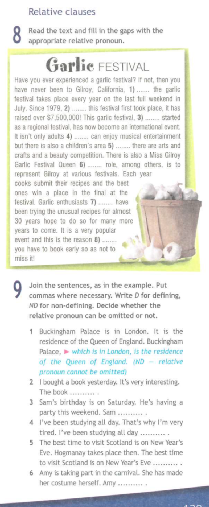
№ 9

-
Полное понимание информации в тексте
№ 1
Прочитайте текст, ответьте на вопросы
Why did schoolchildren like the new teacher, Mr. Sampson?
1) They liked his appearance.
2) He often went for a walk with them.
3) He organized competitions for them.
4) They enjoyed listening to his stories.
A School Story
It happened at my private school thirty odd years ago, and I still can’t explain it. I came to that school in September and among the boys who arrived on the same day was one whom I took to. I will call him McLeod. The school was a large one: there must have been from 120 to 130 boys there as a rule, and so a considerable staff of masters was required. One term a new master made his appearance. His name was Sampson. He was a tall, well-built, pale, black-bearded man. I think we liked him. He had travelled a good deal, and had stories which amused us on our school walks, so that there was some competition among us to get a chance to listen to him.
Well, the first odd thing that happened was this. Sampson was doing Latin grammar with us. One of his favourite methods was to make us construct sentences out of our own heads to illustrate the rules he was trying to teach us. Now, on this occasion he ordered us each to make a sentence bringing in the verb memlnij ‘I remember.’ Well, most of us made up some ordinary sentence such as ‘I remember my father, ’ but the boy I mentioned — McLeod — was evidently thinking of something more interesting than that. Finally, very quickly he wrote a couple of lines on his paper, and showed it up with the rest. The phrase was “Remember the lake among the four oaks.” Later McLeod told me that it had just come into his head. When Sampson read it he got up and went to the man- tel-piece and stopped quite a long time without saying anything looking really embarrassed. Then he wanted to know why McLeod had put it down, and where his family lived, and if there was such a lake there, and things like that.
There was one other incident of the same kind. We were told to make a conditional sentence, expressing a future consequence. We did it and showed up our bits of paper, and Sampson began looking through them. All at once he got up, made some odd sort of noise in his throat, and rushed out. I noticed that he hadn’t taken any of the papers with him, so we went to look at them on his desk. The top paper on the desk was written in red ink — which no one used — and it wasn’t in anyone’s handwriting who was in the class. I questioned everyone myself! Then I thought of counting the bits of paper: there were seventeen of them on the desk, and sixteen boys in the form. I put the extra paper in my bag and kept it. The phrase on it was simple and harmless enough: ‘If you don’t come to me, I’ll come to you.’ That same afternoon I took it out of my bag — I know for certain it was the same bit of paper, for I made a fingermark on it — and there was no single piece of writing on it!
The next day Sampson was in school again, much as usual. That night the third and last incident in my story happened. We — McLeod and I — slept in a bedroom the windows of which looked out at the main building of the school. Sampson slept in the main building on the first floor. At an hour which I can’t remember exactly, but some time between one and two, I was woken up by somebody shaking me. I saw McLeod in the light of the moon which was looking right into our windows. ‘Come,’ he said, — ‘come, there’s someone getting in through Sampson’s window. About five minutes before I woke you, I found myself looking out of this window here, and there was a man sitting on Sampson’s window-sill, and looking in.’ ‘What sort of man? Is anyone from the senior class going to play a trick on him? Or was it a burglar?!’ McLeod seemed unwilling to answer. ‘I don’t know,’ he said, ‘but I can tell you one thing — he was as thin as a rail, and water was running down his hair and clothing and/ he said, looking round and whispering as if he hardly liked to hear himself, ‘I’m not at all sure that he was alive.’ Naturally I came and looked, and naturally there was no one there.
And next day Mr. Sampson was gone: not to be found, and I believe no trace of him has ever come to light since. Neither McLeod nor I ever mentioned what we had seen to anyone. We seemed unable to speak about it. We both felt strange horror which neither could explain.
№ 2
Прочитайте текст, ответьте на вопросы
The first time Sally travelled by train was when she
1) had to move to her aunt Alice.
2) had a summer vacation at school.
3) went to Pittsburgh for the first time in her life.
4) visited her aunt Alice together with aunt Winnie.
First Train Trip
I must have been about eight when I made my first train trip. I think I was in second grade at that time. It was midsummer, hot and wet in central Kansas, and time for my aunt Winnie’s annual vacation from the store, where she worked as a clerk six days a week. She invited me to join her on a trip to Pittsburgh, fifty miles away, to see her sister, my aunt Alice. ‘Sally, would you like to go there by train or by car?’ aunt Winnie asked. ‘Oh, please, by train, aunt Winnie, dear! We’ve been there by car three times already!’
Alice was one of my favourite relatives and I was delighted to be invited to her house. As I was the youngest niece in Mother’s big family, the aunties all tended to spoil me and Alice was no exception. She kept a boarding house for college students, a two-storey, brown brick building with comfortable, nicely decorated rooms at the corner of 1200 Kearney Avenue. She was also a world-class cook, which kept her boarding house full of young people. It seemed to me that their life was so exciting and joyful.
Since I’d never ridden a train before, I became more and more excited as the magic day drew near. I kept questioning Mother about train travel, but she just said, ‘Wait. You’ll see.’ For an eight-year-old, waiting was really difficult, but finally the big day arrived. Mother had helped me pack the night before, and my little suitcase was full with summer sundresses, shorts and blouses, underwear and pyjamas. I was reading Billy Whiskers, a fantastic story about a goat that once made a train trip to New York, and I had put that in as well. It was almost midnight when I could go to bed at last.
We arrived at the station early, purchased our tickets and found our car. I was fascinated by the face-to-face seats so some passengers could ride backwards. Why would anyone, I thought, want to see where they’d been? I only wanted to see what lay ahead for me.
Finally, the conductor shouted, ‘All aboard!’ to the people on the platform. They climbed into the cars, the engineer blew the whistle and clanged the bell, and we pulled out of the station.
This train stopped at every town between my home in Solomon and Pittsburgh. It was known as the ‘milk train’ because at one time it had delivered goods as well as passengers to these villages. I looked eagerly at the signs at each station. I’d been through all these towns by car, but this was different. The shaky ride of the coaches, the soft brown plush seats, the smells of the engine drifting back down the track and in through the open windows made this trip far more exotic.
The conductor, with his black uniform and shiny hat, the twinkling signals that told the engineer when to stop and go, thrilled me. To an adult, the trip must have seemed painfully slow, but I enjoyed every minute.
Aunt Winnie had packed a lunch for us to eat along the way as there was no dining car in the train. I was dying to know just what was in that big shopping bag she carried, but she, too, said, ‘Wait. You’ll see.’ Midway, Aunt Winnie pulled down her shopping bag from the luggage rack above our seats. My eyes widened as she opened it and began to take out its contents. I had expected lunch- meat sandwiches, but instead there was a container of fried chicken, two hardboiled eggs, bread and butter wrapped in waxed paper, crisp radishes and slim green onions from Winnie’s garden, as well as rosy sliced tomatoes. She had brought paper plates, paper cups and some of the ‘everyday’ silverware. A large bottle of cold tea was well wrapped in a dishtowel; the ice had melted, but it was still chilly. I cautiously balanced my plate on my knees and ate, wiping my lips and fingers with a large paper napkin. This was living!
When we had cleaned our plates, Aunt Winnie looked into the bag one more time. The best treat of all appeared — homemade chocolate cakes! Another cup of cold tea washed these down and then we carefully returned the remains of the food and silverware to the bag, which Aunt Winnie put into the corner by her feet.
‘Almost there,’ said my aunt, looking out of the window at the scenery passing by. And sure enough, as we pulled into the Pittsburgh station we immediately caught sight of aunt Alice, waiting for us, a smile like the sun lighting up her face, arms wide open. We got off the train and she led us past the taxi rank and the bus stop to her car that was parked near the station. And all the way to her home she was asking about my impressions of my first train trip and I could hardly find the words to express all the thrill and excitement that filled me.
№ 3
Прочитайте текст, ответьте на вопросы
Why is the collage of photographs more important for Kathy than the other wedding presents?
1) It reminds Kathy of her wedding.
2) Kathy didn’t like the other wedding presents.
3) It was the most expensive present.
4) Kathy’s sister made it for her.
Sisters
‘Dear Kathy! Chance made us sisters, hearts made us friends.’ This quote is at the center of a collage of photographs — covering our twenty-something years — that now hangs in my office. My sister, Susie, made it for me as a wedding present. It probably cost very little to make (she is a starving college student, after all), but it means more to me than any of the more ‘traditional’ wedding presents my husband and I received from family and friends last June. Whenever I look at the collage, it reminds me of my sister and what a true friend she is.
Susie and I weren’t always close friends. Far from it, in fact. We shared a room for nearly fifteen years when we were younger, and at the time I thought I couldn’t have asked for a worse roommate. She was always around! If we argued and I wanted to go to my room to be alone, she’d follow me right in. If I told her to go away, she’d say right back, ‘It’s my room, too! And I can be here if I want to.’ I’d consult my mother and she usually agreed with Susie. I suppose being three years younger has its benefits.
When we were kids, she’d ‘borrow’ my dolls without asking. (And no toy was safe in her hands.) When we got older, Susie quit borrowing my toys and started borrowing my clothes. That was the final straw. I couldn’t take it anymore. I begged my parents to let me have a room of my own — preferably one with a lock on the door. The answer was always a resounding ‘no.’ ‘Please?!’ I’d beg. My parents would just shake their heads. They didn’t agree with each other on much, but for some reason they had a united front on this issue.
To crown it all, she had this habit of doing everything I did. Choirs, rock bands, sports teams, dance studios: There was no place where I was safe. ‘She looks up to you,’ my mom would say. I didn’t care. I just wanted a piece of my life that didn’t involve my little sister. When I complained to my mother, she’d just smile and say, ‘One day you’ll want her around.’ Sure.
It’s strange how mothers have this habit of being right about everything. When I was sixteen and my sister was thirteen, we went through a series of life-chang- ing events together that would forever change our relationship. First, my parents announced that they were divorcing. My dad packed up and moved to an apartment in New Hampshire — more than a half hour drive away from our cozy house in Massachusetts. He bought me my first car and I often went with Susie to his place when we missed him a lot. During those trips we started discussing our troubles and making plans about how to reunite the family again. But a year later, our father met his future second wife and moved again; this time to Indiana. This meant we could only see him once or twice a year, as opposed to once every few weeks. That was hard.
Yet those few months changed my relationship with my sister forever. We started having more heart-to-heart talks as opposed to silly fights. Over time, she became my most cherished friend. It’s not uncommon for us to have three-hour-long telephone conversations about everything or about nothing—just laughing over memories from childhood or high school.
She’s the only person who’s been through all of the tough stuff that I’ve been through, and the only person who truly understands me. Susie and I have shared so much. She’s been my roommate, my friend, and my partner in crime. We’ve done plays together, gone to amusement parks, sang, and taken long road trips together. We’ve laughed until our sides hurt, and wiped away each others’ tears.
Even though distance separates us now, we’re closer than ever. Sisters share a special bond. They’ve seen all of your most embarrassing moments. They know your deepest, darkest secrets. Most importantly, they love you unconditionally. I’m lucky to be able to say that my little sister is my best friend. I only wish everyone could be so fortunate.
№ 4
Прочитайте текст, выполните упражнения после текста
William Shakespeare
On April 23, 1564 William Shakespeare was born in Stratford-upon-Avon. His mother was the daughter of a farmer. His father was a glove-maker. William attended a grammar school in Stratford and had quite a good education. There he learned to love reading.
While he was a teenager, he married a woman some years older than himself. He had three children: the eldest is the daughter and then twins – a son and another girl. In 1587 William went to work in London leaving his family at home. Some people say that the reason was his love of poetry and theatre.
In London Shakespeare began to write plays and become an important member of a well-known acting company. Most of his plays were performed in the new Globe Theatre built on the bank of the river Thames. In 1613 he stopped writing and went to live in Stratford when he died in 1616. His plays are well-known and still acted not only in England but in the whole world.
-
Write down the words and phrases used in the text
-
worker, farmer 3. 2 children, 3 children
-
listening, reading 4. cinema, theatre
-
-
Complete the sentences according to the text
1.Shakespeare was born…
a) on April 22 b) on April 23 c) on August 23
2. Shakespeare’s father was…
a) a glove-maker b) a clock-maker c) a shoe-maker
3. At school William learned to love…
a) dancing b) reading c) singing
4. Shakespeare went to work in…
a) New York b) Cardiff c) London
-
Write down if the sentences are true to the text or false
-
Shakespeare had twin daughters.
-
In 1587 Shakespeare went to work in London.
-
The Globe Theatre was built on the bank of the river Clyde.
-
Shakespeare’s plays are staged only in Britain
-
-
Answer the questions on the text
-
Where was W. Shakespeare born?
-
What school did W. Shakespeare attend in Stratford?
-
What did Shakespeare do in London?
-
Where and when did Shakespeare die?
-
Put the sentences in the order they are used in the text
-
Most of his plays were staged in the Globe Theatre.
-
He married a woman some years older than himself.
-
William had quite a good education.
-
He stopped writing and went to live in Stratford.
-
№ 5
Прочитайте текст, выполните упражнения после текста
A Sad Story
Three men came to New York for their holidays. Their names were Tom, Pete and Andy. They came to a hotel and asked for a room. The friends got a room on the forty-fifth floor.
They went sightseeing, visited the picture gallery and looked into some shops. In the evening they came back to the hotel from the cinema.
The servant in the hotel told them: “ I’m sorry, gentlemen, the lift doesn’t work. If you don’t want to go up to your room, you can sleep here, in the hall. I’ll bring you the bed linen.”
“ No, no”, said the men, “ we shan’t sleep in the hall. We shall go up to our room.” Then Tom said to his friends:” It’s not easy to go up to the forty-fifth floor. I know what we shall do. I shall tell you a lot of jokes. Andy will sing us songs and Pete will tell us an interesting story”.
The three friends went up to their room. They listened to Tom’s jokes, then Andy sang songs. When they came to the thirty-fifth floor, Tom said to Pete: “ Now we shall listen to your long and interesting story.”
“ Yes”, answered Pete, “but my story is short and very sad. I have no key with me. It is on the table in the hall.”
Reading- Comprehension Test №2
I. Choose the phrases which were used in the text
1. three men, four men 3. Theatre, cinema
2. New York, London 4. Funny stories, jokes
II. Choose the sentences which were used in the text
1. A)The friends got a room on the thirty-fifth floor.
B) The friends got a room on the forty-fifth floor.
2 A) They looked into some shops.
B) They looked into some supermarkets.
3. A) We shall go up to our room.
B) We shall sleep in the hall.
4. A) Andy told interesting stories.
B) Andy sang songs.
III. Complete the sentences according to the text
-
Three men came to…
-
The friends got a room on the…
-
Tom will..
-
Pete has left the key…
IV. Write down if the sentences are true to the text or false
1. Three men came to a restaurant.
2. Three men visited a picture gallery.
3. They came back from the cinema in the afternoon.
4. Pete will sing songs.
V. Answer the questions on the text
1. Where did three men come to?
2. Why did they go up to their room on foot?
3. Who told jokes?
4. What was Peter’s story?
№ 6
Прочитайте текст, ответьте на вопросы после текста
Festival Fun!
Summer time is a time for festival in Britain. Join us as we go to three fabulous festivals.
Notting Hill Carnival
The Notting Hill Carnival takes place in the Notting Hill area of London on the last weekend in August. It is a huge multicultural arts festival and is the largest street festival in Europe. Groups come from all over the world to take part. There’s music, dancing, street theatre and decorated floats. Up to 1.5 million people come to the festival and there’s something for everyone to see and do.
Glastonbury Festival
It’s the world’s biggest open air music festival. The festival covers 1,000 acres of farmland in south-west England. It takes place in June and lasts four days. About 700 acts are played on over 80 stages. There is continual music from 9 o’clock in the morning until 6 o’clock the next morning. Last year 190,000 people attended the festival and paid 200 for a ticket. Hundreds of famous names have performed at Glastonbury. It also supports charities such as Greenpeace, WaterAid and others. The festival is famous for its rain! In 1997,1998 and 2005 it rained, every day, and the festival-goers danced in the mud.
Eisteddford
Eisteddfod, a celebration of Welsh music and poetry, is the biggest cultural event in Wales and it takes place in the first week of August. There are competitions for all the best singers, choirs and poets. The Gorsedd of the Bards, an association of the best poets, writers, musicians and artists in Wales, selects the winners. The members of the Gorsedd are called druids and they wear long colourful robes. All the events are in Welsh, but there are headphones with English language translations for anyone who doesn’t understand Welsh!
1. Where does the Notting Hill Carnival take place?
a. in suburbs of London
b. in one of the parts of London
c. in the centre of London
2. Who usually attends this festival?
a. only Londoners
b. British people
c. different people
3. When does Glastonbury host its music event?
a. at the beginning of summer
b. in the middle of summer
c. at the end of summer
4. What does this festival support?
a. some handicrafts
b. environmental projects
c. foreign people
5. What is Eisteddfod?
a. it’s only a music festival
b. it’s a folk festival
c. it’s a poetry competition
6. In what language are the events at Eisteddfod?
a. in English
b. in Scottish
c. in Welsh
№ 7
Read the text. Say if the following statements are true (T) or false (F).
Niagara Falls
Niagara Falls is located between Southern Ontario (Canada) and New York State (USA). The first inhabitants who settled in the Niagara Falls region were the Iroquois. They worked as farmers and trades along the banks of the Niagara River. When the first Europeans set foot in the area, they also settled there. The 19th century brought the most important developments to the area. The Village of Manchester (Niagara Falls) became an important centre for manufacturing companies during the early years of the industrial development. Tourists started to arrive in the 1820s and they still visit this after almost two centuries.
The most comfortable way to visit Niagara Falls is a boat trip on the world famous Maid of the Mist. This historical boat tour takes millions of tourists to the Falls from the Canadian to the American side every year. Don’t miss two other important attractions: the White Water Walk, an amazing tour through a deep narrow gorge and the Journey Behind the Falls, a self-guided tour which takes you to an observation platform at the base of the Falls in a lift. You can then go on a short journey through some tunnels which lead you behind the Falls.
After a day of exciting adventure, visit Niagara Square with all its shops, cinemas and boutiques. There are lots of restaurants that serve locally grown products and regional cuisine. At night, experience local clubs with live music and entertainment. Don’t forget the fireworks over the Falls every Friday and Sunday!
Read the text below to decide if each sentence is correct (True) or incorrect (False)._____________________________________________
1. This information is to help tourists who want to spend a holiday in Canada.
True False
2. You can see the Falls only on board a boat.
True False
3. The first people who made their home there were Europeans.
True False
4. You can taste only local food.
True False
5. You can have a fun at night.
True False
№ 8
Read the text. Say if the following statements are true (T) or false (F).
Mexico City
Many people travelling to Mexico pass through Mexico City, but most of them never actually visit Mexico’s capital city. If you asked those people why, they would probably say something about the air. Mexico City is very big, and air pollution is always a problem in big cities. But a lot of its inhabitants say that air pollution is less of problem than in the past.
The historic centre was built on what used to be an island in an ancient lake. It’s the oldest part of the city and includes the Zocalo, the largest public square in the Americans. There is an enormous Mexican flag in the centre of the square.
The best way to see the most sights in the shortest time is to take the ‘Turibus’, a red, two-level bus similar to the double-decker buses in London, except that the top level has no roof. This means that you see the city better, but it also means that you need to wear lots of sun cream. A daily ticket allows you unlimited rides.
The amazing National Museum of Anthropology is located in the Chapultepec Park. It’s perhaps the most famous of the city’s museums and also one of the biggest. Other sights in the park include an amusement park, a forest with beautiful old trees and a large zoo with giant pandas.
Plaza Garibaldi always has street musicians playing traditional Mexican music. There’s also birria, a spicy goat meat soup sold at self- service restaurants in a large building just off the square.
Let’s go to this exciting, beautiful city.
Read the text below to decide if each sentence is correct (True) or incorrect (False)._____________________________________________
1. Most travelers to Mexico spend a lot of time in Mexico City.
True False
2. Mexico City is the capital of Mexico.
True False
3. Air pollution is a problem in Mexico City.
True False
4. The centre of Mexico City used to be under water.
True False
5. The Zocalo is the biggest public square in the world.
True False
6. The Turibus is an efficient and convenient way to see the major sights.
True False
7. Birria is a type of Mexican music.
True False
№ 9
Прочитайте текст, ответьте на вопросы после текста
Pret A Manger
In the 1980s Julian Metcalfe and Sinclair Beecham spent a lot of time walking around London looking for a good, fast lunch. They never found one. So in 1986 they opened their own sandwich shop, Pret a Manger.
Today there are 150 Pret a Mangers in the UK and Hong Kong. Why have they become successful? Firstly, the food. Every night a van delivers fresh ingredients to the Pret a Manger stores. Early in the morning the chefs check the ingredients carefully, and then they make fresh sandwiches for the day. And these days it isn’t only sandwiches. Pret a Manger sells many different types of food; it even includes sushi on the menu. Quality and care is important for the company. For people who want to know exactly what they are eating, its website gives information about each dish. For example, if you want to know how many calories are in a ham and cheese sandwich, you can find out.
Pret a Manger also does good things for the community. At the end of the day, charities take any extra unwanted food and give it to homeless people.
McDonald’s owns 33% of the company, and this is one reason why people all over the world now know this trade name.
1. When did the first Pret a Manger open?
a. 1980 b. 1986 c. 1990
2. How is the food made?
a. in a factory
b. by chefs in the sandwich shops every day
c. by chefs the night before
3. What does Pret a Manger sell?
a. only sandwiches
b. only sandwiches and sushi
c. sandwiches, sushi and other types of food
4. How can you find information about the calories in each dish?
a. look on the website
b. ask the Pret a Manger workers
c. write to owners
5. What happens to the food that isn’t eaten?
a. they throw it away
b. it is recycled
c. charities take it
№ 10
Прочитайте текст, ответьте на вопросы после текста
Going to the Theatre
Many big towns in England have professional theatres now. There are about 200 professional theatres in Great Britain but London is the centre of theatrical activity. There are over thirty important theatres in the West End. The Royal Opera House at Covent Garden is the home of opera and ballet.
Some theatres stage ‘classics’ and serious drama. A lot of English people are fond of light comedy and musicals. They are very popular in England.
The evening performances begin at 7.30 or 8.00 p.m. There is a rush hour at this time in the West End. A lot of people come out of nearby underground stations, taxis and private cars drop theatre-goers outside the entrance to each theatre. There is another rush hour when the performances are over.
It is certainly not easy to book a seat for a good play in London though the seats are not cheap. That is why some people prefer matinees (they start at 1-3 p.m.), but you will never see famous stars in these performances.
Complete the sentences based on the text.
1. There are over 200 professional theatres in Britain but London is
a________________.
2. The Royal Opera House is a_________.
3. A lot of English people are fond of________.
4. There is a rush hour in the West End_______.
5. It is not easy to book a seat for a good play in London, though___.
6. Some people prefer matinees but______.
a. not very serious performances.
b. theatrical center.
c. the tickets are very expensive.
d. after the working day.
e. they can’t see famous actors there.
f. place where you can see ballet and opera performances.
№ 11
Read the text. Say if the following statements are true (T) or false (F).
The Exercise craze
Old and young, men and women are jogging, dancing, jumping up and down, bending and stretching. Exercise is in fashion. Everybody wants to be fit, feel good, look slim, and stay young.
It started with jogging. Millions of Americans put on their new coloured sports shoes and fashionable jogging suits and ran through the parks or along the streets for half an hour a day. Then the joggers got the marathon craze. Popular marathons are now held everywhere. Lots of people want to see if they can run 42 kms and do it faster than everyone else. The big city marathons, in London and New York, are important sporting events. Television cameras and newspapers report them in detail. Some remarkable people take part in the marathons: seventy-five year old grandfathers and nine year old grandchildren, and even disabled in wheelchairs.
But marathons are not for everyone. Some prefer to get fit at home. For them, there ’s a big choice of books, cassettes and video programmers with music and instructions. Sometimes the action is more like dancing than exercises. That’s why one big company calls it ‘Dancercise’.
Taking exercise is only one part of keeping fit. You’ve got to get slim too. Books and magazines about slimming are bestsellers and these days.
Say if the following statements are true (T) or false (F).
1. Everybody is doing excercise, old and young, men and women.___
2. Millions of Americans ran through the parks or along the streets.
3. The big city marathons, in London and New York, are important
sporting events.___
4. Everyone takes part in marathons.____
5. People cannot get fit at home.____
№ 12
Read the text. Say if the following statements are true (T) or false (F).
Most British and American state schools provide their students with the option to eat lunch at school, but do they provide them with the option to eat well? Jamie Oliver is one of Britain’s most popular stars. He’s a young cook whose TV and cookery programmes are watched by
millions. In his last TV series, he tried to make British school dinner both eatable and healthy. He showed just how poor many school diets were. Many of them contained too many fats and carbohydrates and not enough vitamins. His campaign to get tastier and healthier school meals called Feed me better has caused politicians to take the problem seriously and promise to improve the quality of food on school dinner plates. Obesity is on the increase in all western countries. The biggest causes are bad diet and people being less active than they were in the past. Some people allege that schools also make the problem worse because they allow the sale of fizzy drinks and sugary snacks in school tuck shops and vending machines. Other people believe that advertising is to blame. UK politicians are promoting a voluntary agreement to stop junk food advertising at times when younger children watch the television.
1. Most teens don’t have healthy food at school______
2. Jamie Oliver is a famous school teacher._______
3. J. Oliver’s aim is to change meal at schools.______
4. Teens are getting fatter in western countries._______
5. School canteens don’t serve fast food.______
6. Adverts teach teens to eat fast food.______
№ 13
Read the text. Say if the following statements are true (T) or false (F).
The pack of biscuits
One night there was a woman at the airport who had to wait for several hours before catching her next flight. While she waited she bought a book and a pack of biscuits to spend the time. She looked for a place to sit and waited. She was deep into her book, when suddenly she realized that there was a young man sitting next to her who was stretching his hand, with no concern whatsoever, and grabbing the pack of cookies lying between them. He started to eat them one by one. Not wanting to make a fuss about it she decided to ignore him. The woman, slightly bothered, ate the cookies and watched the clock, while the young and shameless thief of biscuits was also finishing them. The woman started to get really angry at this point and thought, “If I wasn’t such a good and educated person, I would have given this daring man a black eye by now.” Every time she ate a biscuit, he had one too. The dialogue between their eyes continued and when only one biscuit was left, she wondered what was he going to do. Softly and with a nervous smile, the young man grabbed the last biscuit and broke it in two. He offered one half to the woman while he ate the other half. Briskly she took the biscuit and thought, “What an insolent man! How uneducated! He didn’t even thank me!” She had never met anybody so fresh and sighed relieved to hear her flight announced. She grabbed her bags and went towards the boarding gate refusing to look back to where that insolent thief was. After boarding the plane and nicely seated, she looked for her book, which was nearly finished by now. While looking into her bag she was totally surprised to find her pack of biscuits nearly intact. «If my biscuits are here», she thought feeling terribly, «those others were his and he tried to share them with me. Too
late to apologize to the young man». She realized with pain, that it was her who had been insolent, uneducated and a thief, and not him!
Read the story and say if the statements are true (T), false (F) or not mentioned (NM).
1. A young woman at the airport had to wait for several hours before catching her next flight.
2. She bought a book and a pack of cookies.
3. She was reading the book, when suddenly she realized that a young man was eating her biscuits.
4. The woman and the man didn’t want to talk to each other.
5. The man shared the last cookie with the woman.
|
6. The woman apologized to the young man. |
|
|
Match the word and the translation. |
|
|
1. flight |
а. нетронутый |
|
2. realize |
b. осознавать |
|
3. fuss |
с. нахальный |
|
4. daring |
d. почти |
|
5. briskly |
e. высокомерный, наглый |
|
6. insolent |
f. живо, оживленно |
|
7. nearly |
g. полёт |
|
8.intact |
h. суета, шум |
№ 14
Прочитайте текст, ответьте на вопросы после текста
The shoebox
A man and woman had been married for more than 60 years. They had shared everything. They had talked about everything. They had kept no secrets from each other except that the little: old woman had a shoebox in the top of her closet that she had cautioned her husband never to open or ask her about.
For all of these years, he had never thought about the box, but one day the little old woman got very sick and the doctor said she would not recover.
In trying to sort out their affairs, the little old man took down the shoebox and took it to his wife’s bedside. She agreed that it was time that he should know what was in the box. When he opened it, he found two knitted dolls and a stack of money totaling $95,000.
He asked her about the contents.
‘When we were to be married,’ she said, ‘ my grandmother told me the secret of a happy marriage was to never argue. She told me that if I ever got angry with you, I should just keep quiet and knit a doll.’
The little old man was so moved; he had to fight back tears. Only two precious dolls were in the box. She had only been angry with him two times in all those years of living and loving. He almost burst with happiness.
‘Honey,’ he said, ‘that explains the dolls, but what about all of this money? Where did it come from?’
‘Oh,’ she said, ‘that’s the money I made from selling the dolls.’
____________________Answer the questions.____________________
1. How long had a man and a woman been married?
2. Who had a little secret?
3. What kind of secret it was?
4. Why did the man take down the shoebox and take it to his wife’s bedside?
5. What was in the box?
6. What secret did grandmother tell me the woman?
7. Do you think the woman often got angry with her husband? Why?
№ 15

Список использованной литературы:
-
Ваулина Ю., УМК «Spotlight-9»(Ю.Ваулина, В.Эванс),Просвещение, 2010.
-
Вербицкая М.В., ЕГЭ-2013. Английский язык: тематические и типовые экзаменационные варианты: 25 вариантов / Под ред. М.В. Вербицкой. — М.: Издательство «Национальное образование», 2012. — + CD. — (ЕГЭ-2013. ФИПИ-школе)
-
Вербицкая М.В., ЕГЭ-2013. Английский язык: актив-тренинг : выполнение заданий А, В, С / Под ред. М.В. Вербицкой. — М.: Издательство «Национальное образование», 2012. — (ЕГЭ-2013. ФИПИ-школе)
-
Вербицкая М.В., ЕГЭ-2013 Английский язык + CD / ФИПИ автор-составитель: М.В. Вербицкая– М.: Астрель, 2012
-
Клековкина Е., Учебное пособие для подготовки к ЕГЭ по английскому языку. Malcolm Mann, Steve Taylore Knowles,Елена Клековкина. Macmillan. 2010
-
Клековкина Е., Сборник тестов для подготовки к ЕГЭ по англ.яз.E.Klekovkina, Malcolm Mann, Steve Taylore-Knowles. Macmillan. 2010
-
Соловова Е.Н., Методика обучения иностранным языкам. Базовый курс. Е.Н. Соловова. 2008
-
Соловова Е.Н., State Exam.Maximiser. Подготовка к Экзаменам. Е.Н.Соловова,И.Е. Солокова.Longnan. 2007
-
Трубанева Н.Н., ГИА-2013 Экзамен в новой форме. Английский язык. 9 класс/ ФИПИ авторы- составители: Трубанева Н.Н., Бабушис Е.Е., Спичко Н.А. — М.: Астрель, 2012
-
www.reshuege.ru, сайт «Решу ЕГЭ»
-
www.fipi.ru, сайт «Федеральный институт педагогических измерений».
Приложение № 1
Что делать с незнакомыми словами?
Приготовьтесь к тому, что вам будут встречаться незнакомые слова, и это хорошо. Если новых слов вы в книге не обнаружили, значит, вам лучше взять книгу, посложнее уровнем или на другую тему.
Смотреть в словаре желательно только те слова, без значения которых не понятен общий смысл предложения или отрывок текста. Если же заглядывать в словарь за каждым незнакомым словом, то чтение из удовольствия превратится в пытку.
Читая бумажную книгу с простым карандашом в руках, подчеркивайте незнакомые слова. Лишь после прочтения определенного количества страниц выписывайте их в тетрадь, блокнот-словарик, карточки и смотрите значения в толковом словаре на английском.
Обязательно обратите внимание на примеры употребления в конкретных предложениях и идиомы с этим словом.
Когда Вы выписываете незнакомое слово или идиому, то обязательно записывайте всё предложение, чтобы запомнить слово в контексте.
Определите части речи и члены предложения в нем, чтобы запомнить, какие, слова и в какой последовательности употребляются с тем или иным словом.
Приложение №2
Ключи
ГЛАВА II
Task 1
4 — В 3-C
Task 2
2 — a 3-d 4 — b
Task 3
2 — E 3-B 4 — A
Task 4
2 — D 3-F 4 — C
2-A 1 — e 1 — D
1-B
Task 5
З-В 4-D
Task 6
3-a 4-b 5-b 6-c
Task 7
3-F 4 -T 5-T
Task 8
2-T 3-F 4-F 5-F 6-T 7-
Task 9
3-c 4-a 5-c
Task 10
3-d 4 -c 5-a
Task 11
3-b 4-a
Task 12
3-d 4-b
Task 13
3 -e 4-a 5 -f 6-b
Task 14
1 — e 2 — c 3-a 4-h 5-f 6-d 7-g 8-b
Task 15
1 — c 2 -e 3 — b 4-d 5-a
Task 16
l-b 2-f 3-a 4-d 5-c 6-e
Task 17
1 — c 2 -a 3-d 4-b
1-C 2 -A
l-b 2 -c
1-F 2-F
1 -F
l-b 2 -b
l-b 2 -e
1 — c 2 — d
1 — c 2 — a
1 — c 2 — d
1-T
2 — T
1-T
2 — F
1 — c
2 — a
1-B
2 — E
I. 1NM
2 T
II. 1-g
2 — b
3 — h
Task 18
З-Т 4-F
Task 19
З-Т 4-Т
Task 20
3-d 4-b
Task 21
3 — A 4 — F
Task 22
3T 4
4 — c 5 — f 6 — e 7
Task 23
5 — F
5 — F 6-T
5-D 6-C
M 5 T 6 F
d 8 — a
1. for 60 years
2. a woman
3. an old woman had a shoebox in the top of her closet
4. the little old woman got very sick and the doctor said she would not recover.
5. two knitted dolls and $95,000
6. the secret of a happy marriage / She told that if the woman ever got angry with her husband, she should just keep quiet and knit a doll.’
7. Yes, she made $95,000 from selling the dolls.
[Key: 1. easily learned, 2. really valuable, 3. rarely beaten, 4. quickly growing, 5. surprisingly successful, 6. sadly disappearing, 7. extremely dangerous]
[Key: 1. working out, 2. top, 3. basics, 4. online, 5. rapidly, 6. explosion, 7. phenomenon, 8. hit, 9. dominated, 10. got the better of, 11. circles, 12. die out, 13. pastimes, 14. dated from, 15. unique, 16. average]
[Key: 1. got the better of, 2. unique, 3. online, 4. basics, 5. average, 6. hit]
[Key: 1. A, 2. G, 3. F, 4. E, 5. C, 6. D]
[Key: 1. F, 2. B, 3. A, 4. C, 5. G, 6. E, 7 D]
[Key: a. 4, b. 6, c. 5, d. 2, e. 1, f. 3]
[Key: 1. C, 2. B, 3. G, 4. E, 5. A, 6. D]
46
1) Установите соответствие между заголовками 1 — 8 и текстами A — G. Используйте каждую цифру только один раз. В задании один заголовок лишний.
1. Getting bigger
2. The weather in Paris
3. Why live in Paris?
4. Key facts
5. Becoming stronger
6. Location
7. A rich place
8. The jewel of Paris
A. Paris is the capital city of France. It is situated in the north-central part of the country. People were living on the site of the present-day city, located along the Seine River by about 7600 BC. The modern city has spread far beyond both banks of the Seine. Paris is by far the country’s most important centre of commerce and culture. The area of the city is 41 square miles (105 square km); the population of Paris and its suburbs is approximately 10 million people.
B. For centuries Paris has been one of the world’s most important and attractive cities. It is appreciated for the opportunities it offers for business and commerce, for study, culture, and entertainment; its gastronomy, haute couture, painting, literature, and intellectual community especially enjoy an enviable reputation. It is called the City of Light and it lives up to its reputation being an important centre for education and intellectual pursuits.
C. Paris is situated at a crossroads of both water and land routes significant not only to France but also to Europe. It has had a continuing influence on its growth. Under Roman administration, in the 1st century BC, the original site on the Île de la Cité was designated the capital of the territory. Under King Hugh Capet (ruled 987 – 996), the preeminence of Paris was firmly established, and Paris became a political and cultural hub as modern France took shape.
D. Paris is located on the western side of Europe and in a plain relatively close to the sea. Thanks to the Gulf Stream, it has a fairly temperate climate. The weather can be very changeable, however, especially in the winter and spring, when the wind can be sharp and cold. The annual average temperature is roughly 12 °C; the July average is about 19 °C, and the January average is about 3 °C. The temperature drops below freezing for about a month each year, and snow falls on such days.
E. At the eastern end of the Île de la Cité we can see the cathedral of Notre-Dame de Paris. It is situated on a spot that Parisians have always reserved for the practice of religious rites. Like all cathedrals in France, Notre-Dame is the property of the state, although its operation as a religious institution is left entirely to the Roman Catholic Church. The cathedral looks stunning. It is certainly the most famous landmark in Paris, attracting millions of tourists each year.
F. In 1850, Paris had approximately 600,000 inhabitants. It then grew rapidly as industrial expansion attracted a constant stream of people from the provinces. By 1870, the population had surpassed 1,000,000, and by 1931 the conurbation contained some 5,000,000 people, more than half of them living in the city of Paris, the administrative city within the old gates. After World War II, this growth continued, and in the early 21st century Greater Paris had over 10 million people.
G. Paris is not only the political and cultural capital of France but also its major financial and commercial centre. It is a very wealthy city, home to many vast private fortunes, both of French and foreign origin. It serves as the base for numerous international business concerns, and even if large French firms have their manufacturing plants in the provinces, nearly all keep their headquarters in Paris, conveniently close to major banks and key ministries.
| A | B | C | D | E | F | G |
2) Прочитайте текст и заполните пропуски A — F частями предложений, обозначенными цифрами 1 — 7. Одна из частей в списке 1—7 лишняя.
Santa Claus
The man we know as Santa Claus has a history all to his own. Today, he is thought of mainly as the jolly man in red, but his story ___ (A) the 3rd century to a monk named St. Nicholas. It is believed that Nicholas was born sometime around 280 AD in modern-day Turkey. Much admired for his kindness, St. Nicholas ___ (B). It is said that he gave away all of his inherited wealth and traveled the countryside helping the poor and sick. Over the course of many years, Nicholas’s popularity spread and he became known as the protector of children and sailors. His feast day ___ (C) his death, December 6. This was traditionally considered a lucky day to make large purchases or to get married. By the Renaissance, St. Nicholas was the most popular saint in Europe.
St. Nicholas first ___ (D) at the end of the 18th century. The name Santa Claus evolved from a Dutch shortened form of Sint Nikolaas. As his popularity grew, Sinter Klaas was described as everything from a jocker with a blue three-cornered hat, red waistcoat, and yellow stockings to a man wearing a broad-brimmed hat and a huge pair of Flemish trousers.
In the 19th centuries big stores ___ (E) using images of the newly-popular Santa Claus. In 1841, thousands of children visited a Philadelphia shop to see a life-size Santa Claus model. It ___ (F) before stores began to attract children, and their parents, with the lure of a peek at the “real-life” Santa Claus with his famous white beard and red gown.
1. was only a matter of time
2. stretches all the way back to
3. is celebrated on the anniversary of
4. became the subject of many legends
5. appeared in American popular culture
6. began dressing up unemployed men in
7. began to advertise Christmas shopping
| A | B | C | D | E | F |
3) Прочитайте текст и запишите в поле ответа цифру 1, 2, 3 или 4, соответствующую выбранному Вами варианту ответа.
Показать текст. ⇓
According to the text, soft skills are the
1) skills you get when in professional education.
2) individual traits that influence your job performance.
3) skills that allow you to work with technology.
4) only skills employers look for in the employees.
4) Прочитайте текст и запишите в поле ответа цифру 1, 2, 3 или 4, соответствующую выбранному Вами варианту ответа.
Показать текст. ⇓
Why are proper soft skills necessary?
1) They make you an interesting personality.
2) They help establish contact with bosses.
3) They allow you to do tasks quickly.
4) They may give you an advantage over others.
5) Прочитайте текст и запишите в поле ответа цифру 1, 2, 3 или 4, соответствующую выбранному Вами варианту ответа.
Показать текст. ⇓
The expression «on a par with» in “If your technical skill is on a par with other candidates …” (paragraph 4) means
1) similar to.
2) different from.
3) superior to.
4) secondary to.
6) Прочитайте текст и запишите в поле ответа цифру 1, 2, 3 или 4, соответствующую выбранному Вами варианту ответа.
Показать текст. ⇓
Which of the following, according to the text, is one of communication skills?
1) Brief and logical argumentation.
2) Clear and reasoned writing.
3) Non-verbal communication.
4) Active and supportive listening.
7) Прочитайте текст и запишите в поле ответа цифру 1, 2, 3 или 4, соответствующую выбранному Вами варианту ответа.
Показать текст. ⇓
The pronoun «it» in “share how you handled it” (paragraph 7) refers to
1) resolving a disagreement in teamwork.
2) speaking about your skills at an interview.
3) inability to demonstrate your skills.
4) having an opinion different from others.
Прочитайте текст и запишите в поле ответа цифру 1, 2, 3 или 4, соответствующую выбранному Вами варианту ответа.
Показать текст. ⇓
Which of the following is NOT mentioned as an example of how soft skills could be demonstrated?
1) Taking everyone’s opinion into account.
2) Encouraging people to come to an agreement.
3) Setting a goal and reaching it.
4) Backing an undervalued suggestion.
9) Прочитайте текст и запишите в поле ответа цифру 1, 2, 3 или 4, соответствующую выбранному Вами варианту ответа.
Показать текст. ⇓
The general advice the author’s gives in the last paragraph is
1) “take quick decisions when applying for a job”.
2) “include the list of your soft skills in your résumé”.
3) “try to impress the employer at the interview”.
4) “in an interview provide examples of your soft skills in use”.

- Текст
- Веб-страница
I must have been about eight when I made my first train trip. I think I was in second grade at that time. It was midsummer, hot and wet in central Kansas, and time for my aunt Winnie’s annual vacation from the store, where she worked as a clerk six days a week. She invited me to join her on a trip to Pittsburgh, fifty miles away, to see her sister, my aunt Alice. «Sally, would you like to go there by train or by car?» aunt Winnie asked. «Oh, please, by train, aunt Winnie, dear! We’ve been there by car three times already!»
Alice was one of my favourite relatives and I was delighted to be invited to her house. As I was the youngest niece in Mother’s big family, the aunties all tended to spoil me and Alice was no exception. She kept a boarding house for college students, a two-storey, brown brick building with comfortable, nicely decorated rooms at the corner of 1200 Kearney Avenue. She was also a world-class cook, which kept her boarding house full of young people. It seemed to me that their life was so exciting and joyful.
Since I’d never ridden a train before, I became more and more excited as the magic day drew near. I kept questioning Mother about train travel, but she just said, «Wait. You’ll see.» For an eight-year-old, waiting was really difficult, but finally the big day arrived. Mother had helped me pack the night before, and my little suitcase was full with summer sundresses, shorts and blouses, underwear and pyjamas. I was reading Billy Whiskers, a fantastic story about a goat that once made a train trip to New York, and I had put that in as well. It was almost midnight when I could go to bed at last.
We arrived at the station early, purchased our tickets and found our car. I was fascinated by the face-to-face seats so some passengers could ride backwards. Why would anyone, I thought, want to see where they’d been? I only wanted to see what lay ahead for me.
Finally, the conductor shouted, «All aboard!» to the people on the platform. They climbed into the cars, the engineer blew the whistle and clanged the bell, and we pulled out of the station.
This train stopped at every town between my home in Solomon and Pittsburgh. It was known as the «milk train» because at one time it had delivered goods as well as passengers to these villages. I looked eagerly at the signs at each station. I’d been through all these towns by car, but this was different. The shaky ride of the coaches, the soft brown plush seats, the smells of the engine drifting back down the track and in through the open windows made this trip far more exotic.
The conductor, with his black uniform and shiny hat, the twinkling signals that told the engineer when to stop and go, thrilled me. To an adult, the trip must have seemed painfully slow, but I enjoyed every minute.
Aunt Winnie had packed a lunch for us to eat along the way as there was no dining car in the train. I was dying to know just what was in that big shopping bag she carried, but she, too, said, «Wait. You’ll see.» Midway, Aunt Winnie pulled down her shopping bag from the luggage rack above our seats. My eyes widened as she opened it and began to take out its contents. I had expected lunchmeat sandwiches, but instead there was a container of fried chicken, two hardboiled eggs, bread and butter wrapped in waxed paper, crisp radishes and slim green onions from Winnie’s garden, as well as rosy sliced tomatoes. She had brought paper plates, paper cups and some of the «everyday» silverware. A large bottle of cold tea was well wrapped in a dishtowel; the ice had melted, but it was still chilly. I cautiously balanced my plate on my knees and ate, wiping my lips and fingers with a large paper napkin. This was living!
When we had cleaned our plates, Aunt Winnie looked into the bag one more time. The best treat of all appeared – homemade chocolate cakes! Another cup of cold tea washed these down and then we carefully returned the remains of the food and silverware to the bag, which Aunt Winnie put into the corner by her feet.
«Almost there,» said my aunt, looking out of the window at the scenery passing by. And sure enough, as we pulled into the Pittsburgh station we immediately caught sight of aunt Alice, waiting for us, a smile like the sun lighting up her face, arms wide open. We got off the train and she led us past the taxi rank and the bus stop to her car that was parked near the station. And all the way to her home she was asking about my impressions of my first train trip and I could hardly find the words to express all the thrill and excitement that filled me.
0/5000
Результаты (русский) 1: [копия]
Скопировано!
Я должен был о восемь когда я сделал мой первый поезд. Я думаю, что я был во втором классе в то время. Это был Иванов, жаркий и влажный в центре Канзас и время для ежегодного отпуска моя тетя Винни из магазина, где она работала клерком шесть дней в неделю. Она предложила мне присоединиться к ней на поездку в Питтсбурге, 50 км, чтобы увидеть ее сестра, моя тетя Алиса. Тетя «Салли, вы хотели бы ехать туда на поезде или на машине?», спросил Винни. «Ах, пожалуйста, на поезде, тетя Винни, дорогой! Мы были там на машине в три раза уже!»Алиса была одной из моих любимых родственников, и я был рад пригласить к себе в дом. Как я был молодой племянницей матери большой семьи, тетушки все, как правило, испортить мне и Алиса не был исключением. Она хранится в пансионат для студентов колледжа, двухэтажный, коричневый кирпичное здание с комфортабельные, прекрасно оформленные номера в углу авеню Kearney 1200. Она также была мирового класса Кук, который держал ее пансионата полный молодых людей. Мне казалось, что их жизнь была настолько интересной и радостной.Так как я никогда не был ездил поездом до, я стал более взволнован, так как волшебный день приближения. Я держал допрос матери о поездах, но она просто сказала: «ждать. Вы увидите.» Для восьми летний ожидание было очень сложно, но большой день, наконец, прибыл. Мать помогла мне упаковать в ночь перед, и мой маленький чемодан был полон летние сарафаны, шорты и блузки, нижнее белье и пижамы. Я чтении Билли усы, фантастический рассказ о козла, который однажды сделал поезд поездка в Нью-Йорк, и я поставил, также. Она была почти полночь, когда я мог бы лечь в постель наконец.Мы приехали на станции рано, купили наши билеты и нашел нашу машину. Я был очарован очные места, так что некоторые пассажиры могли ездить в обратном направлении. Почему бы кто-нибудь, я думал, хочу видеть, где они были? Я только хотел, чтобы увидеть, что впереди для меня.Наконец дирижер кричал, «Все на борт!» для людей на платформе. Они поднялись в автомобили, инженер подорвал свисток и clanged колокол, и мы вышли из станции.Этот поезд остановился на каждый город между моим домом в Соломона и Питтсбург. Он был известен как «молоко поезд», потому что одно время он доставлен товаров, а также пассажиры в эти деревни. Я жадно смотрел на знаки на каждой станции. Я был через все эти города на машине, но это было иначе. Шаткой ездить тренеров, мягкий коричневый плюш мест, запахи обратно дрейфующих вниз по дорожке и в открытые окна двигателя сделал эту поездку гораздо более экзотические.Дирижер, с его черной единообразного и блестящие шляпе, мерцающих сигналы, которые рассказал инженер когда остановить и уходят, в восторге мне. Для взрослого человека, поездка должна казалось мучительно медленно, но я любил каждую минуту.Тетя Винни ланч для нас есть по пути, как там было не вагона-ресторана в поезде. Я умираю, чтобы знать, только то, что было в этой большой корзине она несла, но она, тоже, говорит, «Wait. Вы увидите.» Мидуэй, тетя Винни потянул вниз ее сумка из багажника выше наших мест. Мои глаза расширились, как она открыла его и начал принимать свое содержимое. Я ожидал lunchmeat бутерброды, но вместо этого там был контейнер с жареной курицы, два яйца вкрутую, хлеб и масло завернутые в промасленную бумагу, свежий редис и тонкий зеленый лук от Винни в Сад, а также розовые нарезанные помидоры. Она принесла бумажные тарелки, стаканчики и некоторые из «быта» серебро. Большая бутылка холодного чая хорошо был завернут в dishtowel; лед растаял, но было еще холодно. Я осторожно сбалансированы мою тарелку на колени и ели, вытирая мои губы и пальцы большой бумажной салфеткой. Это жизнь!Когда мы очистили наши тарелки, тетя Винни посмотрел в сумку еще один раз. Лучший лечения всех появился – шоколадные торты! Эти запил еще чашку холодного чая и затем мы тщательно вернулись остатки пищи и серебро в мешок, который тетя Винни поставить в угол на ее ноги.«Почти там», говорит бабушка, глядя в окно на пейзаж, проходя мимо. И конечно же, как мы подъехали к станции Питтсбург, мы сразу же поймал взгляд тетя Алиса, ожидая нас, улыбки, как солнце, освещая ее лицо, руки широкий открытый. Мы сошли с поезда, и она привела нас мимо такси и автобусная остановка в ее автомобиль, который был припаркован возле станции. И вплоть до ее дома, которую она просит о моих впечатлениях от мой первый поезд поездка и я едва ли мог найти слов, чтобы выразить все волнение и волнение, что наполнило меня.
переводится, пожалуйста, подождите..
Результаты (русский) 2:[копия]
Скопировано!
Я, должно быть, было около восьми, когда я сделал свой первый рейс поезд. Я думаю, что я был во втором классе в то время. Это было в середине лета, жарко и влажно в центре города Канзас, и время для моей тети ежегодный отпуск Винни из магазина, где она работала клерком шесть дней в неделю. Она пригласила меня присоединиться к ней в поездке в Питсбург, пятьдесят миль, чтобы увидеть ее сестра, моя тетя Элис. «Салли, вы хотели бы пойти туда на поезде или на машине?» спросила тетя Винни. «О, пожалуйста, на поезде, тетя Винни, дорогой! Мы были там на машине уже три раза!»
Алиса была одна из моих любимых родственников, и я был рад быть приглашенным к ней в дом. Как я был молодым племянница в большой семье матери, все тетеньки, как правило, портят мне и Элис не стал исключением. Она продолжала пансионате для студентов, двухэтажный, коричневого кирпичное здание с удобными, красиво оформленные номера на углу 1200 Kearney авеню. Она была также мирового класса повар, который держал ее дома полно молодых людей. Мне казалось, что их жизнь была настолько интересной и радостной.
Так как я никогда не ездил на поезде до этого, я стал все больше и больше волновался, как магический день приблизился. Я продолжал допрос матери о путешествии на поезде, но она только сказала: «Подождите. Вы увидите.» Для восьми-летний, ожидая было действительно трудно, но в конце концов большой день прибыл. Мать помогла мне собраться накануне, и мой маленький чемодан был полон летние сарафаны, шорты и блузки, нижнее белье и пижамы. Я читал Билли усы, фантастический рассказ о козла, что однажды совершил поездку на поезде в Нью-Йорке, и я положил, что, как хорошо. Была уже почти полночь, когда я мог пойти спать в прошлом.
Мы прибыли на станцию раньше, купили наши билеты и нашли наш автомобиль. Я был очарован лицом к лицу мест, поэтому некоторые пассажиры могли ездить в обратном направлении. Зачем кому-то, думал я, хотят видеть, где они были? Я только хотел посмотреть, что впереди меня.
И, наконец, дирижер кричал, «Все на борт!» для людей на платформе. Они поднялись в вагоны, инженер дул в свисток и с лязгом колокол, и мы вышли из станции.
Это поезд остановился на каждом городе между моим домом в Соломона и Питтсбурге. Он был известен как «молочной поезда», потому что в свое время он поставил товар, а также пассажиров этих деревень. Я с нетерпением смотрели на знаки на каждой станции. Я бы прошел через все эти города на машине, но это было по-другому. Шатким езды из тренеров, мягкие коричневые плюшевые сиденья, запахи двигателя дрейфующих обратно вниз по дорожке и через открытые окна сделали эту поездку гораздо более экзотические.
дирижер, с его черной форме и блестящей шляпе, мерцающих сигналов что сказал инженер, когда нужно остановиться и пойти, в восторге меня. Для взрослого, поездка должна была казаться мучительно медленным, но я наслаждался каждой минутой.
Тетя Винни упаковал обед для нас есть по пути, как не было вагона-ресторана в поезде. Я умираю, чтобы знать, что было в большой сумке она несла, но она тоже сказала, «Подождите. Вы увидите.» Midway, тетя Винни одернула сумку из багажника выше наших мест. Мои глаза расширились, когда она открыла его и начала принимать его содержимое. Я ожидал, бутерброды lunchmeat, но вместо этого был контейнер жареного цыпленка, два вкрутую яйца, хлеб и масло, завернутый в вощеную бумагу, свежий редис и тонкий зеленый лук из сада Винни, а также розовые нарезанными помидорами. Она принесла с собой бумажные тарелки, бумажные стаканчики и некоторые из «повседневной» серебра. Большая бутылка холодного чая был хорошо завернуты в кухонным полотенцем; лед растаял, но это было все еще холодно. Я осторожно сбалансированы мою тарелку на коленях и съел, вытирая губы и пальцы с большой бумажной салфеткой. Это было жить!
Когда мы очищены наши тарелки, тетя Винни посмотрел в сумку еще раз. Лучше всего лечить всего оказалось — домашние шоколадные пирожные! Еще чашка холодного чая промывали их вниз, а затем мы тщательно вернул остатки пищи и серебра на мешок, который тетя Винни положить в угол за ноги.
«Почти там», сказала тетя, глядя в окно на пейзажи мимо. И, конечно, когда мы подъехали к станции Питтсбурга мы сразу увидел тети Элис, нас ждет, улыбка, как солнце освещает ее лицо, руки широко открыты. Мы сошли с поезда, и она привела нас мимо стоянки такси и автобусной остановки до ее автомобиля, который был припаркован возле станции. И всю дорогу к ее дому, она просит о моих впечатлениях от моей первой поездки на поезде, и я вряд ли мог найти слов, чтобы выразить всю трепет и волнение, которое наполнило меня.
переводится, пожалуйста, подождите..
Результаты (русский) 3:[копия]
Скопировано!
Я, должно быть, примерно в восемь, когда я первый раз путешествие на поезде.Я был, я думаю, второй класс.Это является центральной в летнюю, штат Канзас, жаркий и влажный, и время — это моя тетя Винни ежегодный отпуск из магазина, где она в качестве сотрудников, шесть дней в неделю.Она предложила мне пойти 匹兹堡 поездки, пятьдесят миль, видеть ее сестра, моя тетя Элис «.Салли,Ты хочешь поедемна машине или туда? «Тетя 温妮问 «.О, пожалуйста, на поезде, тетя Винни, дорогая!Мы уже три раза машину! «
Элис — это один из моих любимых родственников, я очень рад пригласить на ее дом.Я в большой семье мама самый молодой племянница, тети, как правило, испортил мне, Элис не исключение.Снес учащихся в интернатах, этаже расположены два слоя высокий комфорт, коричневые кирпичных зданий, украшения, хороший номер 1200 Керни авеню в углу.Она также является мировой первоклассный повар, это делает ее посадки дом полон молодых людей.на мой взгляд, их жизнь — это так захватывающе и радость.
потому, что я никогда не ездил на поезде,как волшебный день приближается, все больше и больше, я взволнован.Я спрашивала мама путешествовать на поезде, но она просто говорит, что «Подождите.Вы увидите «. восемь лет, ждать было трудно, но, наконец, большой день.мама, помоги мне пакет накануне вечером, мой маленький чемодан наполнен летнее солнце платья, шорты и футболки, белье и пижамы.Я читал Билли бороду, когда поезд в Нью — Йорк коза удивительная история, я бы этого тоже.это почти в полночь, когда я могу пойти спать.
мы прибыли на станцию в начале мы, купить билет, найти нашу машину.Я очарован сидений, некоторые пассажиры могут ехать назад.Почему кто — то, я думаю,хочу увидеть их?Я просто хочу увидеть, что мне уготовано.
наконец, дирижер, кричали, «все на борт!»в платформе.Они забрался в автомобиль инженеров, свист, звон колокола, мы из станции в.
это поезд я в Соломон, и между 匹兹堡 дома каждого города остановился.Это называется «молоко машину», потому что в то же время, она также имеет пассажиров этих деревень сдачи груза.Я рассчитываю на каждой остановке признаки.Я уже через все эти города автомобиль, но это не то же самое.Тренер Браун сидеть нестабильности, мягкие плюшевые сиденья,двигатель с орбиты дрейфующих вниз, открытое окно поездка более экзотические запах.
дирижер, его черный форму и блестящие шляпы, мигающий сигнал, сказал инженер, когда остановиться и пойти, волнует меня.для взрослых, поездки, является медленным, но я наслаждаюсь каждой минутой.
Тетя Винни уже упакованы обед мы едим на дороге, в поезде не вагон — ресторан.Я хочу знать, что она в большой сумки с покупками, но она также сказал, что «Подождите,.Вы увидите, когда тетя Винни. «снял свои сумки с покупками из багажные полки наши места.я смотреть в глаза, когда она открыла его, и начал его содержание.Я ожидал обед мясные сэндвичи, но есть один контейнер жареного цыпленка, два сваренных вкрутую яйца, хлеб и масло пакет в Вощенная бумага, хрупкие редис и стройная зеленый лук с Винни сад, и красные помидоры.Она положила бумажные тарелки, чашки и некоторые бумаги «повседневной» трофей.большая бутылка травяной чай, завернутый в полотенце;лёд растаял, но это все еще холодно.Я тщательно сбалансировать мои колени я тарелки и съесть, вытереть мои губы и большой палец и салфетки.это жизнь!
Когда мы убирать наши тарелки, тетя Винни выглядит еще раз в сумку.лучшее лечение, по — видимому, – самодельных шоколадный торт!стакан холодного чая мы тщательно вымыть эти вниз и затем возвращает питание по — прежнему мешок и посуда, это тетя Винни ноги на углу.
«почти нет, сказал:» Моя тетя, смотрит в окно и пейзажи, мимо.Конечно, когда мы 匹兹堡 тянуть до станции мы сразу вызвала перед Тетя Элис, ждет нас,улыбка, как солнце освещает ее лицо, открой руку.Мы сняли с поезда, она во главе мы последние такси и автобус стоял в ее машину в районе станции.и весь путь до ее дома, она спрашивает, я первый поезд на меня впечатление, я почти не могу найти выражение всех рад и взволнован, полна мои слова.
переводится, пожалуйста, подождите..
Другие языки
- English
- Français
- Deutsch
- 中文(简体)
- 中文(繁体)
- 日本語
- 한국어
- Español
- Português
- Русский
- Italiano
- Nederlands
- Ελληνικά
- العربية
- Polski
- Català
- ภาษาไทย
- Svenska
- Dansk
- Suomi
- Indonesia
- Tiếng Việt
- Melayu
- Norsk
- Čeština
- فارسی
Поддержка инструмент перевода: Клингонский (pIqaD), Определить язык, азербайджанский, албанский, амхарский, английский, арабский, армянский, африкаанс, баскский, белорусский, бенгальский, бирманский, болгарский, боснийский, валлийский, венгерский, вьетнамский, гавайский, галисийский, греческий, грузинский, гуджарати, датский, зулу, иврит, игбо, идиш, индонезийский, ирландский, исландский, испанский, итальянский, йоруба, казахский, каннада, каталанский, киргизский, китайский, китайский традиционный, корейский, корсиканский, креольский (Гаити), курманджи, кхмерский, кхоса, лаосский, латинский, латышский, литовский, люксембургский, македонский, малагасийский, малайский, малаялам, мальтийский, маори, маратхи, монгольский, немецкий, непальский, нидерландский, норвежский, ория, панджаби, персидский, польский, португальский, пушту, руанда, румынский, русский, самоанский, себуанский, сербский, сесото, сингальский, синдхи, словацкий, словенский, сомалийский, суахили, суданский, таджикский, тайский, тамильский, татарский, телугу, турецкий, туркменский, узбекский, уйгурский, украинский, урду, филиппинский, финский, французский, фризский, хауса, хинди, хмонг, хорватский, чева, чешский, шведский, шона, шотландский (гэльский), эсперанто, эстонский, яванский, японский, Язык перевода.
- The item is pre-advised
- match
- Мы все понимаем
- Вы верите в бога?
- Серія
- Once completed, `rank’ the list of probl
- У него скоро будут экзамены
- A signature is required upon delivery of
- У него скоро будут экзамены
- Answer to me ????
- Я уже дома, хотела встретиться с тобой н
- somniferum
- У него
- даже ,если к тому времени я не научусь х
- Когда были потеряны документы?
- 18:09 — Guy Fawkes: btw bendetto’s hold
- 是啦 你是我的外星人
- нет судьбы кроме той,которую мы сами тво
- 18:09 — Guy Fawkes: btw bendetto’s hold
- У
- found a bug on Die interface step.After
- инициировать
- Привет, меня зовут Анастасия. Приятно по
- Почему ты постоянно споришь со мной?