
Прочитайте текст и заполните пропуски A–F частями предложений, обозначенными цифрами 1–7. Одна из частей в списке 1–7 — лишняя. Занесите цифры, обозначающие соответствующие части предложений, в таблицу.
Duration of life and its social implications
The world’s population is about to reach a landmark of huge social and economic importance, when the proportion of the global population over 65 outnumbers children under 5 for the first time. A new report by the US census bureau shows A ______ , with enormous consequences for both rich and poor nations.
The rate of growth will shoot up in the next couple of years. The В ______ a combination of the high birth rates after the Second World War and more recent improvements in health that are bringing down death rates at older ages. Separate UN forecasts predict that the global population will be more than nine billion by 2050.
The US census bureau was the first to sound the С ______ . Its latest forecasts warn governments and international bodies that this change in population structure will bring widespread challenges at every level of human organization, starting with the structure of the family, which will be transformed as people live longer. This will in turn place new burdens on carers and social services providers, D ______ for health services and pensions systems.
“People are living longer and, in some parts of the world, healthier lives,” the authors conclude. “This represents one of the greatest achievements of the last century but also a significant challenge E ______ .”
Ageing will put pressure on societies at all levels. One way of measuring that is to look at the older dependency ratio, F ______ population that must be supported by them. The ODR is the number of people aged 65 and over for every 100 people aged 20 to 64. It varies widely, from just six in Kenya to 33 in Italy and Japan. The UK has an ODR of 26, and the US has 21.
1. which recently replaced Italy as the world’s oldest major country
2. alarm about these changes
3. a huge shift towards an ageing population
4. change is due to
5. while patterns of work and retirement will have huge implications
6. which shows the balance between working-age people and the older
7. as proportions of older people increase in most countries
| Пропуск | A | B | C | D | E | F |
| Часть предложения |
Предлагаем попробовать свои силы и выполнить полное аудирование в формате ЕГЭ. Ответы и полные тексты к аудио даны в спойлерах. Здесь представлен вариант 3.
Задание 1
Вы услышите 6 высказываний. Установите соответствие между высказываниями каждого говорящего А-F и утверждениями, данными в списке 1-7. Используйте каждое утверждение, обозначенное соответствующей цифрой, только один раз. В задании есть одно лишнее утверждение. Вы услышите запись дважды.
Play Задание 1
1. The best cafes are those located near busy pedestrian streets.
2. A cafe should be quiet if it wants to attract readers.
3. Playing board games with friends is a great cafe pastime.
4. The decor of a cafe can make or break its business.
5. A cafe can make a business meeting more casual and less dull.
6. You can even watch news programmes in cafes these days.
7. A town should have a variety of cafes for every taste.
ответ
A – 3
B – 5
C – 6
D – 2
E – 1
F – 4
Speaker A: Sitting around drinking coffee has never been one of my favourite things to do, but I do love playing games, and so do some of my mates. So were decided to meet at weekends and do that in a cafe. The place we go to has got a lot of fun things to choose from, and sometimes we bring our own. It’s a nice quiet and relaxed place, and never too busy, so we like it.
Speaker B: I work in an advertising agency and creativity is a focus. I meet with clients in our offices quite often, but more and more I’ve started asking them to meet me at a cafe down the street from our building. The atmosphere and decor are really arty, and the clients tend to feel a bit more relaxed when we meet there. I think both myself and my clients can come up with more interesting ideas for campaigns while were there.
Speaker С: Cafés have almost become like living rooms. It reminds me of that TV series Friends, where they drink coffee on a big sofa as if they’re at home. In fact, a lot of cafes have put televisions up on the wall. It’s usually just in the background, so it doesn’t steal your attention. It’s not to everyone’s taste, but I think it’s nice to look up occasionally and see a bit of current affairs or a sporting event.
Speaker D: For those of us who like to spend hours with a good book, a cafe is an excellent place to do it. That is, of course, if it’s not one with loud music, big-screen TVs and loads of noisy people. There are quite of few of those in my area, and they’re obviously not interested in keeping my business. That’s OK; I’ve got at least two or three to choose from that cater to bookworms like myself.
Speaker E: I think there are more cafes in my town than people! That’s what life is like in the Mediterranean. The weathers nice most of the year, and it’s great to sit outside, catch up on everyone’s news and, of course, do people-watching. The best places to do that are in sightseeing areas, with lots of people walking up and down the pavement, looking at the sights and enjoying the day. You see all walks of life in these places.
Speaker F: There are lots of different cafés in my town. A surprising number, in fact. To be honest, I don’t know how they all stay in business. A few of them have really bad interiors – bright fluorescent lighting, tacky furniture, even cracked plates. I hardly ever see anyone in them either. In my opinion, the look and feel of a café is the most important thing. Otherwise, it’s not going to be successful.
Задание 2
Вы услышите диалог. Определите, какие из приведённых утверждений A-G соответствуют содержанию текста (1 – True), какие не соответствуют (2 – False) и о чём в тексте не сказано, то есть на основании текста нельзя дать ни положительного, ни отрицательного ответа (3 – Not stated).
Play Задание 2
A) Ryan doesn’t do some of the things mentioned in the recycling lesson.
B) Until today, Macy has used the bin in her bedroom for recycling only.
C) Ryan’s dad has got a very large recycling bin in his office.
D) Macy never eats food in her bedroom.
E) Ryan has visited a recycling plant in the past.
F) Macy makes a complaint about rinsing containers.
G) Ryan’s family empty their recycling bin less frequently than their rubbish bin.
ответ
A – 1
B – 2
C – 3
D – 2
E – 3
F – 1
G – 1
Macy: Hey Ryan, what did you think of our class lesson about recycling?
Ryan: It was very informative. We do recycling at home, but we don’t do all the things Mr Singh mentioned, such as rinsing bottles and containers out before you put them in the recycling, or keeping bins far recycling in other parts of the house. Do you, Macy?
Macy: We only have one recycling bin in the house, in the kitchen. We’ve got small rubbish bins in other rooms, such as the living room and our bedrooms. I put lots of things in the rubbish bin in my bedroom that could be recycled though.
Ryan: Our house is similar. We’ve got one recycling bin in the kitchen that we mainly use, although my dad’s got a bin in his office that he puts his papers into. Funny though, he rarely empties it!
Macy: The rubbish bin in my bedroom is full of mostly recyclable things, so I felt a bit bad about that. I took all of it to the kitchen straight away.
Ryan: That’s good of you.
Macy: I’ve decided that from now on I’m only going to pul recyclable materials in the bin in my bedroom , just old homework papers I don’t need or cardboard packaging. No more banana skins!
Ryan: We’re not allowed to eat in our bedrooms. Mum hates the mess we leave.
Macy: I guess I’ve just been too lazy to take things into the kitchen. That’s going to change now!
Ryan: I didn’t realise how rinsing things helped. I didn’t know they have to rinse things out at the recycling plant before they can recycle it. We’ll save them time if we do it, which makes their job easier.
Macy: Yes, that’s a good idea. The only problem is we have to use our water to do it. Some things take a lot of rinsing. But really, it does make the recycling bin cleaner.
Ryan: I know what you mean. We empty ours when it gets full, but sometimes it takes a while for that to happen. It’s large, and we don’t empty it as often as the rubbish bin. So it’s better hygiene if those jars and plastic containers are well rinsed.
Macy: Exactly. Well, these are good changes to make round the house.
Ryan: I agree. They’re useful and easy to do, too! See you later, Macy!
Задание 3
Вы услышите интервью. В заданиях выберите правильный вариант ответа. Вы услышите запись дважды.
Play Задание 3
1) What is true about Martin’s appointments with students?
1) He sees about a dozen students every day.
2) Students pay a small fee for the service.
3) He usually meets with a student for an hour.
2) The questionnaire asks students about…
1) previous work experience.
2) what careers they’re interested in.
3) the kind of situations they like.
3) What kind of answers do students give in regard to their interests?
1) They sometimes put down several completely different interests.
2) They give a clear indication of their interests.
3) They often don’t put anything down.
4) Students return to see Martin …
1) because they’ve changed their minds about their interests.
2) to fill out their questionnaire forms.
3) to complain about the advice they’ve been given.
5) What does Martin do with the students’ СVs?
1) He doesn’t handle any aspect of that.
2) He reviews them and then gives them to his assistant.
3) He gets his assistant to make initial comments.
6) Martin doesn’t do practice interviews because …
1) he can’t fit them into his daily work schedule.
2) he doesn’t think they’re useful.
3) students don’t like doing them.
7) What advice does Martin give about talking about weaknesses?
1) Try to describe them so they sound more positive.
2) Avoid being honest about them.
3) Spend as little time on them as possible.
ответ
1 – 1
2 – 3
3 – 1
4 – 1
5 – 3
6 – 1
7 – 1
Presenter: Hi everyone and welcome to our programme, Youth Talk. Today our guest is careers advisor Martin Shaw, who’s going to discuss how he helps students find a career and a job. Thanks for joining us, Mr Shaw.
Speaker: I’m glad to be here. Please, call me Martin.
Presenter: Tell us what you do in your job, Martin.
Speaker: Well, I work for a university in their careers advice office. I meet with university students on a daily basis. Students make an appointment with me, which is free of charge and included in their student services package. I see about ten to twelve students a day, and we meet for around twenty minutes to half an hour.
Presenter: How do you help them find a career?
Speaker: For starters, I administer a questionnaire which determines their aptitudes. It asks them what skills they think they have, and it also asks them about their likes and dislikes, how well they get on with others, whether they like to work independently, and whether they’re self-motivated, highly organised, or very creative. They answer the questionnaire and I assess it at a later date.
Presenter: How do you assess the information they present to you?
Speaker: First I look at what subjects they’ve put down that seem to interest them the most. Keep in mind that sometimes they don’t know exactly what those are, so they might put down a wide range. Then, I take a look at their skills. If, for example, they’re interested in the arts, are highly creative and communicative, and like working with people, I might suggest a career in advertising.
Presenter: So you meet with students more than once, yes?
Speaker: Oh definitely. Firstly, I have to give them the results of their questionnaire, but really, I meet with them as often as they like. The goal is to get them on the right track. Sometimes a student comes back to me because they have second thoughts about their preferences, meaning they’ve realised they’d rather work alone than with other people, for example. That will obviously affect the advice I give them.
Presenter: I see. What other types of assistance do you give students?
Speaker: I help them with their CVs, to make sure they’re well-written and informative. I get them to bring a CV in at our first meeting, and I usually ask my assistant to look it over and make comments, which I review, Then I meet with the student again, usually when I give them their questionnaire results, and I give them some tips on how to improve their CV.
Presenter: Do you discuss interview techniques?
Speaker: I usually give them some information about the dos and don’ts of interviewing, and we discuss any questions they have. I’d like to do practice interviewing, but we simply don’t have the time or resources for that, which is a shame because students would find it very useful. I give them advice on how to answer tougher interview questions though, such as when an interviewer asks you what your weaknesses are.
Presenter: And what do you say to that?
Speaker: Well, obviously in an interview you should be truthful, but you would never want to say, “I hate getting up in the morning.” While that may be a true weakness, you can just imagine how that would go down in an interview! I urge students to think of a weakness that can actually be a strength. You could say that you tend to spend too much time on organising, so you have to stop for a moment and prioritise duties. This sounds impressive in an interview.
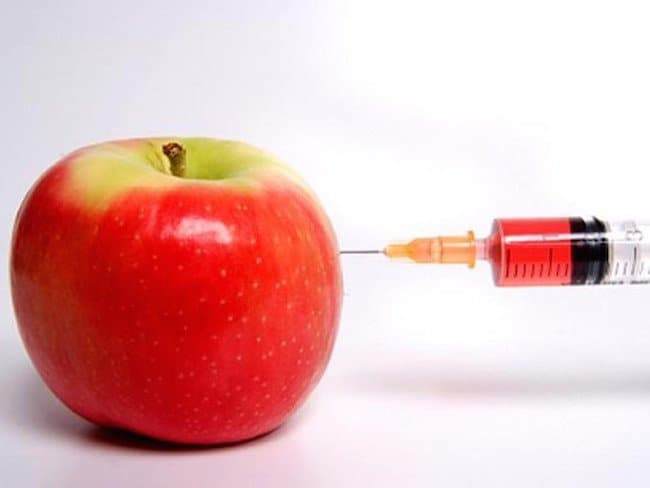
Genetically modified foods are fast becoming a common occurrence on supermarket shelves, with an estimated 60 to 70% of processed foods in the U.S. containing genetically modified ingredients, and are likely to become more and more common as technology advances and traditional methods of food growth and production fail to meet growing demands.
However, there is a huge amount of controversy surrounding food that has been genetically engineered and the potential it has to affect our health, the environment and the food chain.
What are GM foods?
Genetically modified, (GM), foods are organisms which have had their genetic material altered in some way that does not occur naturally. Genes from one organism are transferred into others to create genetically modified plants.
In this way it is possible to choose certain characteristics displayed in one species and implant these desirable traits into another. For example, the gene which codes for vitamin A production has been transplanted into the rice genome, meaning that the new GM variety of rice has a high content of vitamin A where it would normally have a low content of the nutrient.
What are the benefits of GM foods?
GM foods have been created because they are perceived to have an advantage over the original. The advantage could be in the form of nutrition value, which is beneficial to the consumer and indirectly to the producers who can use it as a selling point, or an advantage in growth or production that makes it easier to produce the plant and therefore the food in large quantities.
The main advantage of the first GM crops was that they increased production and decreased costs due to inserted genes that allowed them to grow under specific desirable conditions. These genes gave them characteristics such as increased resistance to viruses or pests and higher tolerance to herbicides.
This is obviously beneficial for the producers in terms of cost efficiency, but may also be part of a solution for creating a larger food supply in an ever growing global population. Although increased production is the most common reason for genetically modified foods, the technology opens up a huge field of possibility in terms of increasing nutritional value of foods, even to the point of using certain modified foods to treat potentially devastating nutritional deficiencies.
Are GM foods bad for our health?
The World Health Organization states that it is not possible to confirm the safety of all genetically modified foods, due to the differences in the way genes are inserted, however, they also suggest that foods currently available to the public should be safe for consumption due to strict testing and assessment protocols that are in place.
Although GM foods are still relatively new, no adverse health outcomes have been reported to date in countries that have approved their use.
There is still some debate however as to how the technique could have adverse effects on our health. One concern is that genetically modified foods may be more likely to provoke allergies due to genes from other species being present, but consumers not being aware of the fact.
For example, if a gene from a peanut was incorporated into another foods genome, would it trigger an allergic reaction in those sensitive to peanuts? However, to counteract this possibility, using genes from highly allergenic food is discouraged and tests are in place to determine if the protein produced by the gene is likely to have an allergenic effect.
Another area of concern is that using antibiotic resistant genes in GM crop production could result in the production of antibiotic resistant bacterial strains that could endanger the population. However, once again, the possibility is low and experts are now encouraging the use of different technologies that do not require an antibiotic resistant gene.
Concerns were also voiced as the potential for GM foods to be less nutritious that conventional foods and may not have the same health benefits, but testing thus far has not confirmed these theories.
Conclusion
In general, it has been concluded that GM foods available on the market for human consumption can be considered safe; however, further research is required as to the possible long term effects on the human population.
Current testing procedures for GM foods in the U.S. are at least as stringent as those for conventional food products, in some cases more so, and it should be noted that even non-GM foods have the potential to do harm and there is no 100% guarantee that any food we eat is completely safe.
The technology is supported by the majority of health organizations including the American Medical Society, suggesting that as far as current knowledge goes, these products are safe for consumption.
Furthermore, the technology used in creating genetically modified foods has the potential to confer health benefits to the human population, although this is not common practice as yet.
References used in this article
- Подробности
-
39952
 |
||
| Прочитайте текст. Заполните пропуски в предложениях под номерами В11-В16 соответствующими формами слов, напечатанных заглавными буквами справа от каждого предложения. TEST 04 (part 2) |
Distance Learning
|
B11 |
Many people have done research on how to improve the course work of distance learning and also the evaluation of how the material is being taught. |
EVALUATE |
|
B12 |
One big concern is that people are cheating with distance learning classes. Many professors are now developing ways to keep distance learning |
MEANING |
|
B13 |
One way to improve them is to continually change the way they are taught. |
CONTINUAL |
|
B14 |
Teachers are beginning to require different classwork for the same course that they teach. |
DIFFER |
|
B15 |
They also ask students to become more interactive with their homework and the projects they have to complete. |
ACTIVE |
|
B16 |
Moreover, students are given tests from a test bank. The test is made up when they log into the test website. These requirements are the same for students taking distant classes at school or at special courses. |
REQUIRE |

Gm food products have been at the centre of a global debate for several years. Some people claim that the genetic engineering of food products brings many advantages and they argue that making crops more resistant to pets can massively increase food production. Also, they believe that food can actually be improved by adding vitamins or removing problem genes that lead to allergies, for example In peanuts. Fruits and vegetables can also last much longer if the gene that ripens them is modified. In addition, they can be stored for much longer period and so there will be less waste. However, people who appose the widespread use of GM techniques worry that there could be long-term negative effects. They are concerned that so far for the GM industry has not been able to prove that they are safe. This issue is firstly how safe such foods are for humans, secondly what long-term effects they may have on the environment and wildlife populations. In addition, there is some evidence to suggest that GM crops may contaminate nearby plants. In consolation, I personally tend to agree with these concerns. I think that besides there may be obvious benefits to GM crops, though they present more potential dangers. Their impact could be so large and so irreversible that more long-term studies should be carried out before their use spreads any further.
Ход урока.
-
Организационный момент. Вводная беседа с учащимися о новых технологиях и изобретении генно-модифицированных продуктов. Постановка целей и задач урока. Hello, ladies and gentlemen! I’m very glad to meet you. My name is Olga Nikolayevna and I’m the English teacher of Kuganak high school. I’ll be teaching you English at this lesson. I hope everybody is OK and we can start now. At the previous lesson you have spoken about new world technologies and great inventions, also in producing foods. The English proverb says: “You are what you eat”. Do you agree with it? And one of the greatest human inventions is producing GM foods. Can you say what does this word mean? GM foods mean Genetically Modified foods. Can you imagine what are we going to speak about? Yes, you are right. The topic we are going to discuss is GM foods, their effect on our health and the environment. (слайд №1). Look at the board, please and define the aim of our lesson all together. What do you like to know about GM foods? May be what kind of food contains GM? What companies produce GM foods? I’m sure, during our lesson you will have some arguments for and against GM. So we can say that the aim of our lesson is to get more information about the origin of GM foods and their effects on the environment, to find arguments for and against GM, and we’ll see which of these arguments will be more convincing. (слайд 2).
-
Речевая зарядка. I’d like you to look at the third slide and answer the questions:
-
What do Genetically Modified foods contain?
-
When did the first GM foods appear?
As you can see, GM foods appeared in the world in 1970-s and in Russia only at the end of 90-s. So, look into your student’s books (page 104? Ex. 80 b) and unjumble the definition:
GM, is, a different organism, a gene, picking up, it, and, transporting, into:
GM is a gene picking up and transporting into a different organism.
3.Аудирование учащимися текста о достоинствах и недостатках генно-модифицированных продуктов, об их пользе и вреде для человека.
Let’s listen what the speaker thinks about GM foods and answer the questions in your books, page 104, exercise 81. Самоконтроль.
Now listen to the text once again and find the arguments of the speaker for and against GM food. Fill in the table on your sheets of paper. Name these arguments. Let’s check your answers.
|
Arguments for GM |
Arguments against GM |
4.Физкультминутка.
5. Работа в группах. Чтение текста “A Change for the Better ”, обсуждение. Представление мини – проектов. The next question is: Which products , in your opinion, can contain GM genes? Look at slide 3 (слайд 3). And what do you think: can new technologies be dangerous for our environment? (слайд 9).
To find the right answer on this question I suggest you to be divided into groups. Each group has got a leader. You will get an article about advantages and disadvantages of GM foods. Read the article all together for 5 minutes and discuss it. Then I’d like you to compare the opinion described in this article with the opinion of your group. Do you agree or disagree? Use 3 -4 sentences.
Well, it’s time to finish. (Представление групповых мини-проектов).
6.Подведение итогов выступлений учащихся. Let’s sum up.
1) Does producing of GM food have many advantages? Which can you name?
2) Does it have any disadvantages? Which of them can you name?
3) Can GM food effect badly on the environment?
4) Can GM food cause any diseases?
5) What is your opinion: must GM food be produced or not?
So, write on the blackboard your results.. How many per cent of students are for and how many are against GM food? (Учащиеся пишут на доске процент тех, кто за производство продуктов с ГМО и тех, кто против).
Look at slides 10, 11, 13. You can see here which companies produce GM foods.
It’s interesting to know that the 15th of March is the Day of Actions against GM foods. Did you know about this fact? (слайд 12).
7. Заключительный этап урока. Подведение итогов урока. Выставление и комментирование оценок. Домашнее задание. Let’s come to the conclusion. What have we learned about GM foods today?
Is this problem very actual nowadays?
Are there many debates about the safety of such food and its effect on the environment? (слайды 14, 15).
Only you can decide if you eat GM foods or not. There is a good English proverb:
“Who has health has hope, and who has hope has everything”. I wish you to be always healthy. Thank you and good-bye.
Министерство образования Республики Башкортостан
Муниципальный район Стерлитамакский район
Муниципальное общеобразовательное бюджетное учреждение
Средняя общеобразовательная школа села Большой Куганак
Урок английского языка в 11 классе по теме “ Genetically Modified Foods ”
Подготовила и провела:
Козлова О.Н., учитель
английского языка
МОБУ СОШ с. Б Куганак
2013 г.
Вид урока: урок с применением ИКТ.
Тип урока: повторительно – обобщающий.
Цели урока:
1)Практическая: совершенствование навыков межкультурной коммуникации
В устной и письменной формах по теме «Генетически модифицированные продукты».
2)Воспитательная: воспитание у учащихся умения слушать собеседника, вести дискуссию, выражать собственное суждение по проблеме; воспитание чувства
3)Образовательная: расширение кругозора учащихся посредством знакомства их с новыми мировыми технологиями.
4)Развивающая: совершенствование учебно-информационных, учебно – коммуникативных навыков.
Задачи урока:
-
Стимулировать использование учащимися уже известной информации, а также ранее изученной лексики для составления собственных высказываний по заданной теме.
-
Использовать
Лексический материал: GM (Genetically Modified) food, safe, to cure a diseases, a gene, to transport, to produce, to contain, the arguments for and against GM food, poisonous; obvious benefits of GM food, products that improve one’s health.
Грамматический материал: the Infinitive after modal verbs, Complex Object.
Социокультурная информация: the West, Europe, the US, the United Nations, New York, Colonel Robert Johnson, Paul Berg, the firm “Mansanto”, “Coca – Cola”, “Mars”, “Nestle”, “Lipton”, “Brooke Bond”, “Pringles”, “Cheetos”, “Calve”, “Heinz”, “Pepsi Cola”, “Nestle”, “Nesquik”, “Kit – Kat”.
Оснащение урока: учебник, компьютер, проекционный экран.
Подготовка урока:
1)Постановка целей и задач урока.
2)Продумывание ролевой ситуации.
3)Подбор лексико – грамматического материала.
4)Оформление урока.
Используемый материал:
-
Учебник “Enjoy English”, 11 класс, Биболетова М.З., Бабушис Е.Е., Снежко Н.Д.
-
Учебник “Click On”, Эванс В., О’Сулливан Н.
Переведите пожалуйста текст
Some people say that genetically modified (GM) food is dangerous to their health. Others believe that it is absolutely harmless and has a number of advantages.
Nowadays people are getting more and more concerned about the food they eat as it is closely connected with the way they look and feel. That is why there are so many arguments about the safety of genetically modified food.
Genetically modified crops have been developed by changing the plant’s genetic structure in order to help the plant resist against different diseases or produce larger crops. Personally, I try not to buy GM food as there is no scientific conclusion so far to prove its safety for human consumption. We don’t know what unforeseen consequences there might be. I prefer not to risk my health because scientists are not sure if GM food is absolutely harmless or not.
However, a lot of people are not worried about the negative influence of GM food on their health. Besides, producers of this food say that it has a number of advantages in terms of price, durability and nutritional value. They also say there is no risk to human health, although possible side effects connected with the use of GM products have not been studied.
Can we trust producers of GM food? I don’t think so. Unfortunately, in Russia the law does not prohibit the use of GM products. I believe that it’s up to you to decide whether to buy GM food or not. Anyway, producers of this food must mark their products if they contain GM ingredients.