Household chores
#1
In our flat I end up doing most of the household chores, really.
I don’t mind this because Maria has a very busy lifestyle,
while mine is much more relaxed,
so I do most of the washing-up, cleaning and washing the clothes, cleaning the windows and these kind of things.
However, sometimes I get home and find that Maria’s done it all,
so this is only a generalization really.
We try to share financial responsibility for the flat. Sometimes Maria gets a lot of work, while other times I have a lot of work,
so we both put in what we can, and things seem to bubble along OK.
#
В нашей квартире я делаю большую часть дел по хозяйству.
Я не возражаю против этого, потому что у Марии очень напряженная жизнь,
в то время как моя намного свободнее,
поэтому я выполняю большую часть работ по мытью посуды, уборке и стирке, мытью окон и тому подобное.
Но иногда я прихожу домой и обнаруживаю, что Мария все это уже сделала, так что это как бы обобщение.
Мы стараемся делить плату за квартиру.
Иногда у Марии много работы, тогда как в другое время — у меня,
поэтому каждый из нас вкладывает всё, что сможет, и пока у нас все идет нормально.
#2
In Maria’s parents’ flat, because her mother and father both have active careers, and very busy weeks,
once a week a cleaning lady comes to hoover the floors and clean underneath the rugs,
dust the shelves and that kind of thing.
#
В квартиру Марии, из-за того, что ее родители очень загружены на работе и заняты всю неделю,
раз в неделю приходит домработница — пылесосит полы и чистит под коврами,
протирает пыль с полок и тому подобное.
#3
In my family home as a child, nobody ever came to clean our house,
it was always my mother’s job, really.
In the daytime when we were playing, or out at school,
she used to do all of the cleaning and the washing.
Every day when we came home, there’d be food waiting for us.
We generally had a small tea when we came home from school, which was a snack,
and when my father came home, we’d have a main evening meal together, which would be something bigger, like a piece of meat with potatoes and vegetables, or some stew, or something that my mother had cooked in the oven.
#
Когда я был маленьким, к нам в дом никто никогда не приходил убираться,
все это, на самом деле, делала мама.
Днем, когда мы играли или были в школе,
она везде убирала и стирала белье.
Каждый день, когда мы возвращались из школы, нас ждала еда.
Обычно мы пили чай после школы, то есть перекусывали,
а когда приходил отец, тогда уже у нас была главная совместная вечерняя трапеза, и еды было побольше,
ели, например, мясо с картошкой и овощами или что-нибудь тушеное, или что-нибудь, что мама готовила в духовке.
#4
Sometimes my mother had small jobs that would be for a couple of afternoons a week,
but she always gave them up because she found that she didn’t have enough time for them.
#
Иногда мама устраивалась на какую-нибудь подработку на пару дней в неделю после обеда, но она всегда бросала её, потому что обнаруживала, что у нее не хватает времени.
#5
My father used to take care of all of the handicraft jobs around the house, like mending things that had been broken, electrical repairs, putting up new shelves, painting the walls, putting new wallpaper up every couple of years
or mending the tiles which had fallen down from the roof.
Everything connected with the car was also his responsibility.
He was the only member of our family who could drive, so he used to drive us around.
#
Отец, обычно, выполнял всякие технические работы по дому: чинил что-нибудь, что сломалось, ремонтировал электроприборы, вешал полки, красил стены, каждые два года клеил новые обои
или менял упавшую с крыши черепицу.
Все, что связано с машиной, также было на его совести.
Он был единственным членом семьи, который умел водить машину, поэтому он везде нас возил.
#6
If I were married, I’d like to create a situation where all of these tasks would be shared fairly equally between myself and my wife.
We wouldn’t fall into routines, like «This is what I do and this is what my wife does»,
but we’d share the effort that’s needed for all of these things.
Of course, if I like doing some things more and my wife would like other things more this would be OK, but I don’t like the idea of a situation where I’m going out to work all week, every day, and my wife would be just stuck inside the house looking after children,
keeping the clothes clean and cooking everything. This seems very unequal to me.
#
Если бы я был женат, то я бы хотел устроить так, чтобы мы с женой делили все эти обязанности по дому поровну.
Мы бы не стали строго определять, что делаешь ты и что делаю я, но мы бы прилагали совместные усилия, необходимые для выполнения всего этого.
Конечно, если мне больше нравится делать одно, а жене другое, то это прекрасно,
но мне не нравится ситуация, когда я всю неделю хожу на работу, а жена все это время сидит дома и следит за детьми,
постоянно стирает и готовит.
Мне это кажется очень несправедливым.
#7
I think responsibility for all of the important aspects of life should be shared by both of us,
especially bringing up the children.
I think that the care and early education of children shouldn’t only fall into the hands of the mother,
but that the father should also take an active role.
#
Мне кажется, что ответственность за все важные стороны жизни должна делиться между нами обоими,
особенно воспитание детей.
По-моему, забота о детях и их воспитание в раннем возрасте не должны перекладываться только в руки матери,
отец тоже должен играть в этом активную роль.
#8
I think that children should be given as much responsibility as they’d like to take on from as early an age as possible.
I don’t think that they should be too smothered by parents and have everything done for them
if they can do things for themselves.
It’s very good for a child to learn to be able to take care of itself, and these things,
and also, of course, the more things it can do, the more versatile person it can become.
Я думаю, на детей должно быть возложено столько обязанностей, сколько они могут на себя взять по возможности с более раннего возраста. Мне кажется, родителям не следует очень баловать детей и все за них делать, если дети сами могут это сделать.
Очень хорошо, если ребенок учится обслуживать себя и делать что-то сам,
и, разумеется, чем больше ребенок умеет, тем более разносторонней личностью он может стать.
#9
In the communities I’ve lived in,
responsibility for the children was shared much more than usual between all of the parents,
and there wasn’t this situation of the child spending all its time only with its father and mother.
The children spent most of their time with their own mother and father,
but sometimes with other people in the community who they liked as well,
and they learn to do the things that these people are doing,
thus picking up many skills and a diversity of perspectives on life.
So, in this situation, the development of the child is also affected by other adults,
not just the child’s father and mother.
Also, to a degree, the children learn to take care of each other.
#
В тех местах, где я жил,
ответственность за детей в гораздо большей степени, чем обычно, ложилась на обоих родителей,
и ребенок никогда не оказывался в ситуации, когда все свое время он проводил только со своими родителями.
Дети проводили большую часть времени со своими родителями, но иногда они оставались и с чужими людьми, которые им также нравились, и они учились делать то, что делали эти люди, таким образом, они усваивали много навыков и шире смотрели на жизнь с разных точек зрения.
Поэтому в подобной ситуации развитие ребенка оказывается также под влиянием других взрослых, а не только своих собственных родителей. Кроме того, дети в некоторой степени учатся заботиться друг о друге.
Вы услышите 6 высказываний. Установите соответствие между высказываниями каждого говорящего A–F и утверждениями, данными в списке 1–7. Используйте каждое утверждение, обозначенное соответствующей цифрой, только один раз. В задании есть одно лишнее утверждение. Вы услышите запись дважды. Занесите свои ответы в таблицу.
Воспользуйтесь плеером, чтобы прослушать запись.
1. There are house chores that keep you fit.
2. Make your house chores enjoyable!
3. Sharing responsibilities is the best way.
4. Why spoil childhood with house chores?
5. No decorations is better than hard work.
6. Have your child do house chores gladly!
7. Technology is the answer to house chores.
| Говорящий | A | B | C | D | E | F |
| Утверждение |
Расшифровка записи
Speaker A. Washing the dishes has been my house chore ever since I was a little boy. Quite surprisingly, I’ve always liked it. There’s something quiet and peaceful about it. I normally do the dishes with my headphones on, listening to music and thinking about anything that comes to my head, or listening to a podcast. I usually do it right before taking my evening shower and going to bed. This way the kitchen is always clean in the morning which makes everyone in my family happy, especially my wife!
Speaker B. Dust! Why is it that there’s so much dust in my apartment? I live alone. I’m very tidy. I don’t do anything messy like sewing or making furniture. And yet, if I don’t wash the floor for two or three days, I find dust bunnies under my bed! I’ve already got rid of all the pretty vases and framed photos on my shelves — it’s just too much work dusting them all the time! Now they live in boxes in my closet. I wonder if it’s a city problem. Maybe I should move to the country.
Speaker C. Unlike many people, I hate carpets. Mostly because I have a dog and two cats. I really don’t think that any vacuum-cleaner is up to the task of getting rid of all the dirt they bring from outside and all the fur they shed. I have beautiful wooden floors that I wash every morning, once my dog and I are back from our morning walk. You wouldn’t believe what a great start to the day it makes. And if you look at my muscles, you’d think I spend hours in the gym. Nope! Just wash the floor the traditional way!
Speaker D. I think all house chores should be done by robots or special machines. Isn’t it obvious? We already use washing machines, and dish washers, and vacuumcleaners. But not everybody thinks this way. Daddy and I decided that it would be great to give mommy a floor-washing robot for her birthday. But she wasn’t as impressed as we’d expected her to be. She says the quality is low. The only member of our family who really appreciates it is our parrot Polly. She loves riding on it!
Speaker E. When I was a kid, I did lots of chores around the house. But I was paid to do it. My parents were really young and lazy and preferred paying me rather than doing everything on their own. So, from the age of seven, I washed the dishes, vacuumed the whole house, took the garbage out and dusted. For me it was like a game. But the best part of it was getting my money and spending it on music records! I think it’s a good reward for a job well-done and makes a child feel responsible.
Speaker F. I think house chores should be equally divided between all the family members. Otherwise it feels really unfair. Nowadays, most women work as much as their husbands, so why expect them to do more housework? Children should also learn to contribute once they are physically capable of helping. They will feel that they can do something important. If everyone does a little bit, nobody feels bad and all the work gets done.
Спрятать пояснение
Пояснение.
A — 2: Quite surprisingly, I’ve always liked it. There’s something quiet and peaceful about it.
B — 5: It’s just too much work dusting them all the time! Now they live in boxes in my closet.
C — 1: You wouldn’t believe what a great start to the day it makes.
D —7: I think all house chores should be done by robots or special machines. Isn’t it obvious? We already use washing machines, and dish-washers, and vacuum-cleaners.
E — 6:I washed the dishes, vacuumed the whole house, took the garbage out and dusted. For me, it was like a game.
F — 3:I think house chores should be equally divided between all the family members. Otherwise, it feels really unfair.
Ответ: 251763.
do household chores — заниматься домашними делами, it takes a lot of time — это занимает много времени, share our household chores — разделить домашние дела, a messy person — неопрятный человек, pick up — забирать, is helpful with doing housework — быть полезным в работе по дому, tidy up my room — прибраться в комнате, feel a bit lazy — лениться, take out rubbish — выносить мусор, special duty — особая обязанность, dust the furniture — протирать пыль , do the laundry — стирать, iron the clothes — гладить одежду, arrange the things — наводить порядок, mop the floor — мыть пол, water the plants — поливать растения, I am busy with — я занимаюсь , responsibility of the whole family — ответственность всей семьи, help about the house — помогать по дому, I am responsible for — я отвечаю за, I prefer _______ing rather than _______ing — я предпочту сделать это,чем то,

Таблица лидеров
Эта таблица лидеров в настоящее время является частной. Нажмите Поделиться, чтобы сделать ее общедоступной.
Эта таблица лидеров была отключена владельцем ресурса.
Эта таблица лидеров отключена, так как у вас и у владельца ресурса разные значения параметров.
Сопоставить — это открытый шаблон. Он не создает баллы для таблицы лидеров.
Требуется вход в систему
Тема
Требуется вход в систему
Параметры

Переключить шаблон
Интерактивный
Дополнительные форматы будут отображаться при выполнении занятия.
Home
Expert solutions
to mop / sweep / vacuum the floor
Click the card to flip 👆

Created by
CarpeDiemCDTeacher
Terms in this set (50)
to mop / sweep / vacuum the floor
мыть шваброй / подметать / пылесосить пол
to walk / feed the dog
выгуливать / кормить собаку
to dust / polish / wipe the furniture / the surfaces
смахивать пыль / полировать / протирать мебель /поверхности
to water the flowers / plants
поливать цветы / растения
to lay / set / clean off the table
накрыть на стол / убрать со стола
to mow the lawn
косить газон
to tidy / sort out / clean up your bedroom
убрать свою комнату
to do housework
выполнять работу по дому
to put away the books / your things
убрать книги / свои вещи
to get the plates out of the dishwasher/ unload the dishwasher
вынуть тарелки из посудомоечной машины / разгрузить посудомоечную машину
Sets found in the same folder
Урок 12. Книги и фильмы
88 terms

pat_young4Teacher
Career and Job Громова
51 terms

miss_ponichevaTeacher
EGE environment
24 terms
CarpeDiemCDTeacher
Громова, Орлова. Урок 3. Мода и выбор одежды
92 terms

Ulyana_LebedevaTeacher
Other sets by this creator
More 3 story
20 terms
CarpeDiemCDTeacher
SM 2 unit 1 words
16 termsImages
CarpeDiemCDTeacher
Prepare 5 Unit 20
37 terms
CarpeDiemCDTeacher
Prepare 5 Unit 19
27 terms
CarpeDiemCDTeacher
Other Quizlet sets
Chapter 32 vocabulary
26 terms
lilianap14
state license insurance exam
64 terms

tanika1998
Anesthetics
25 terms
lotuslilly
ECON
10 terms

Patrick_Lass
1
/
3
Household Chores! Learn useful list of daily chores in English with pictures and examples. Being able to talk about household chores when speaking English can be useful in a variety of conversations. For example, if you are living in a house with English speaking people and you wish to delegate chores between each housemate. Perhaps you are talking to someone and wish to explain your favourite household chores or which ones your regularly do at home.
You are now going to be learning a good variety of vocabulary relating to household chores which will prove useful in both day to day conversation and when listening to other people.
Learn more with a big list of verbs in English.
Daily Chores Verbs
- Fold
- Iron
- Hang
- Dry
- Make (the bed)
- Change (the sheets)
- Vacuum
- Take out (the rubbish/ garbage)
- Wipe off (the table)
- Scrub
- Repair
- Tighten
- Nail
- Drill
Household Chores with Pictures
Learn these household chores list to enhance your vocabulary in English.
Fold
Will you help me fold up the clothes?
Iron
I can’t be bothered to iron my clothes.
Hang
He is hammering a tack into the wall to hang a picture.
Dry
Tom dried his face with a towel.
Make (the bed)
My mother always airs the sheets before she makes the beds.
Change (the sheets)
We should change the sheets once a week.
Vacuum
Tom was vacuuming the rug while Mary was mopping the kitchen floor.
Take out (the rubbish/ garbage)
It’s your turn to take out the rubbish/ garbage.
Wipe off (the table)
Would you wipe off the table for me?
Scrub
She scrubbed the kitchen floor with a brush.
Repair
I got my son to repair our TV.
Tighten
Can you tighten up the bolts for me?
Nail
Will you nail down that loose board in the floor?
Drill
Drill a series of holes in the frame.
Household Chores | Picture
Verbs with Pictures for Kids
Learn useful verbs list commonly used in English with verbs pictures for kids.
- List of action verbs with images.
- Classroom verbs vocabulary in English.
- Restaurant verbs in English.
- Household chores with pictures in English.
- List of daily routines in English.
- Body movement verbs with images in English.
- Action words with pictures.
- List of cooking verbs in English.
- Sport words and exercise actions vocabulary words.
Learn common verbs in English with American English pronunciation.
Вот список продвинутых выражений, которые помогут вам получить хорошие баллы при подготовке монолога на тему «Домашние обязанности» (Daily Family Duties / Household Chores). Список подойдет как для учащихся 9, так и 11 классов. К выражениям предлагаются варианты предложений для устной и письменной речи. Прежде чем начать изучать этот список слов, ознакомьтесь с статьей «Как готовиться к монологу по английскому языку».
- family duties = household chores — домашние обязанности
- typical duties for a teenager such as …- типичные обязанности для подростка, такие как…
- be responsible for … — отвечать за….
- take part in … — принимать участие в …
- I don’t mind … — Я не возражаю, против того чтобы…
- prefer to … rather than … — Я отдаю предпочтение …, а не …
- I consider myself an independent person that’s why … — Я считаю себя самостоятельным человеком, поэтому я …
- help about the house — помогать по дому
- get used to it — привыкнуть к чему-либо
- share daily duties (equally) — разделить обязанности поровну
Примеры предложений с словами (выражениями) по теме «My Daily Duties / Household Chores»
- In our family all of us have household chores.
- I have typical daily duties for a teenager. My usual duites are waching up the dishes, peeling the potatoes and tidying up my room. (вариант для устной речи) = I have typical daily duties for a teenager such as waching up the dishes, peeling the potatoes and tidying up my room. (вариант для письменной речи)
- Each of us is responsible for keeping our rooms tidy.
- I usually take part in cleaning up the flat at weekends.
- I don’t mind going shopping when I am asked for.
- Although I prefer to wash the dishes rather than lay the table.
- I consider myself an independent person.That’s why I always tidy up my room and iron my clothes.
- For me, helping about the house is a usual thing. I get used to it.
- We usually share our daily duties. It is because each of us can do something useful for the family. (вариант для устной речи) = We usually share our daily duties so that each of us could do something for the family. (вариант для письменной речи)
Обратите внимание, что длинные сложные предложения характерны для письменной речи. В устной речи используйте короткие предложения с вводными словами.
Вопросы по теме «My Daily Duties / Household Chores»
- What are the typical family duties for a teenager?
- What are your family duites?
- What are your parents’ household chores?
- What is an ideal situation concerning household chores in a family?
- Is there any way to divide daily duties between the member of a family so that nobody could argue?
Как сдать ОГЭ и ЕГЭ на максимальный балл ?
Изменилось условие задания
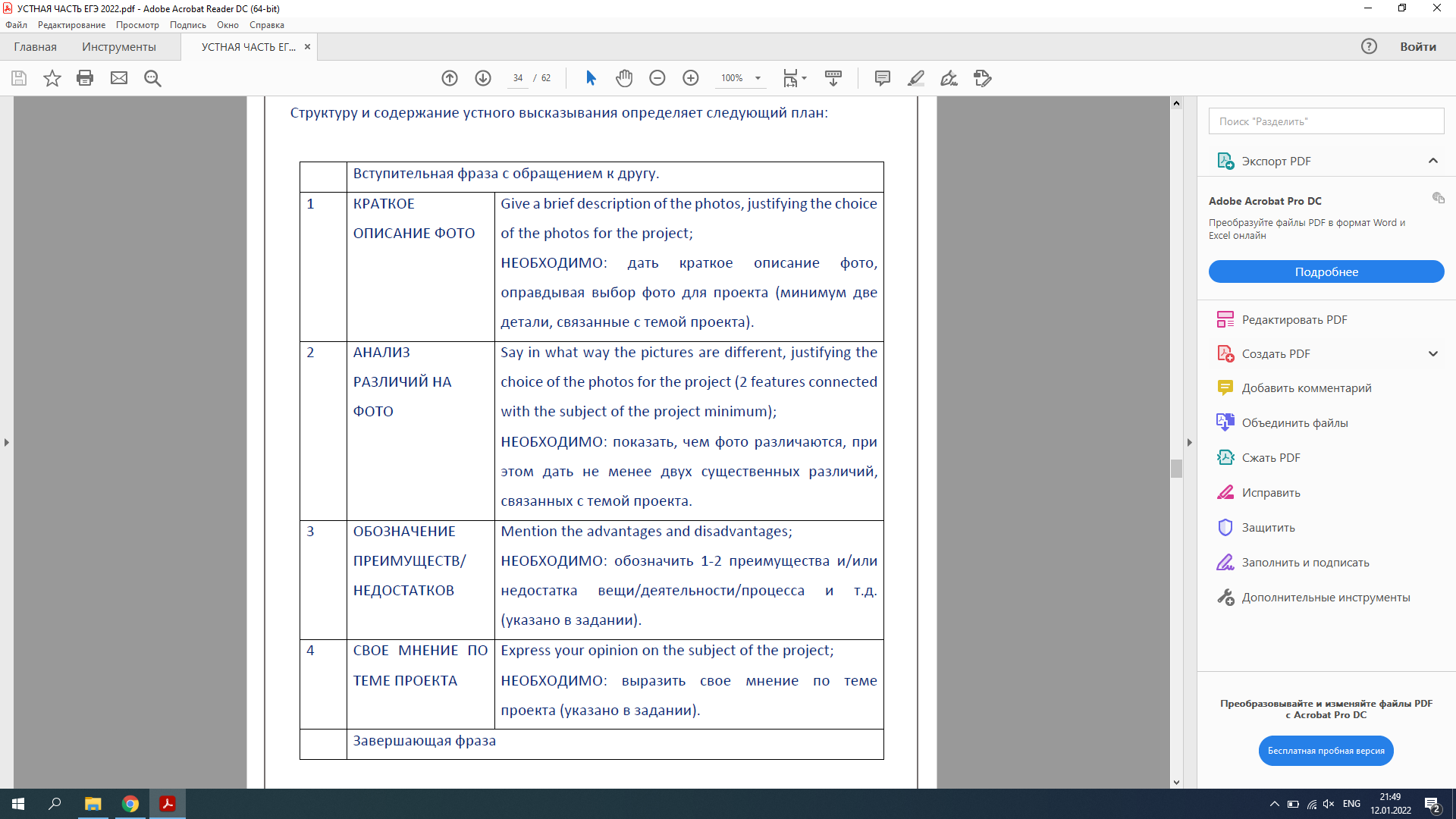
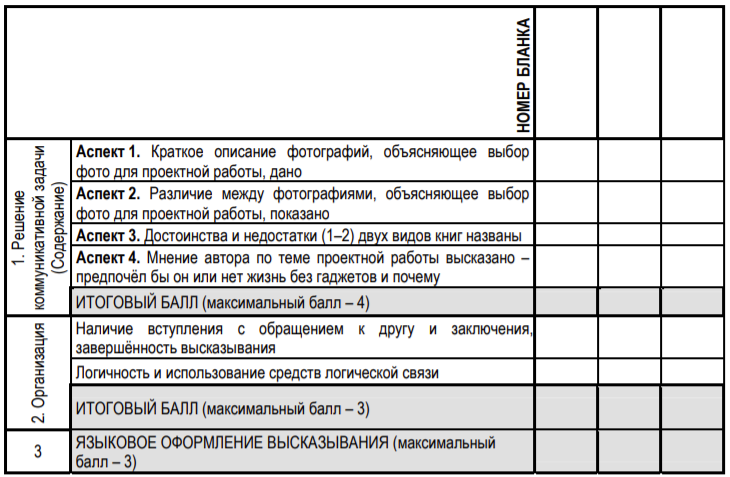
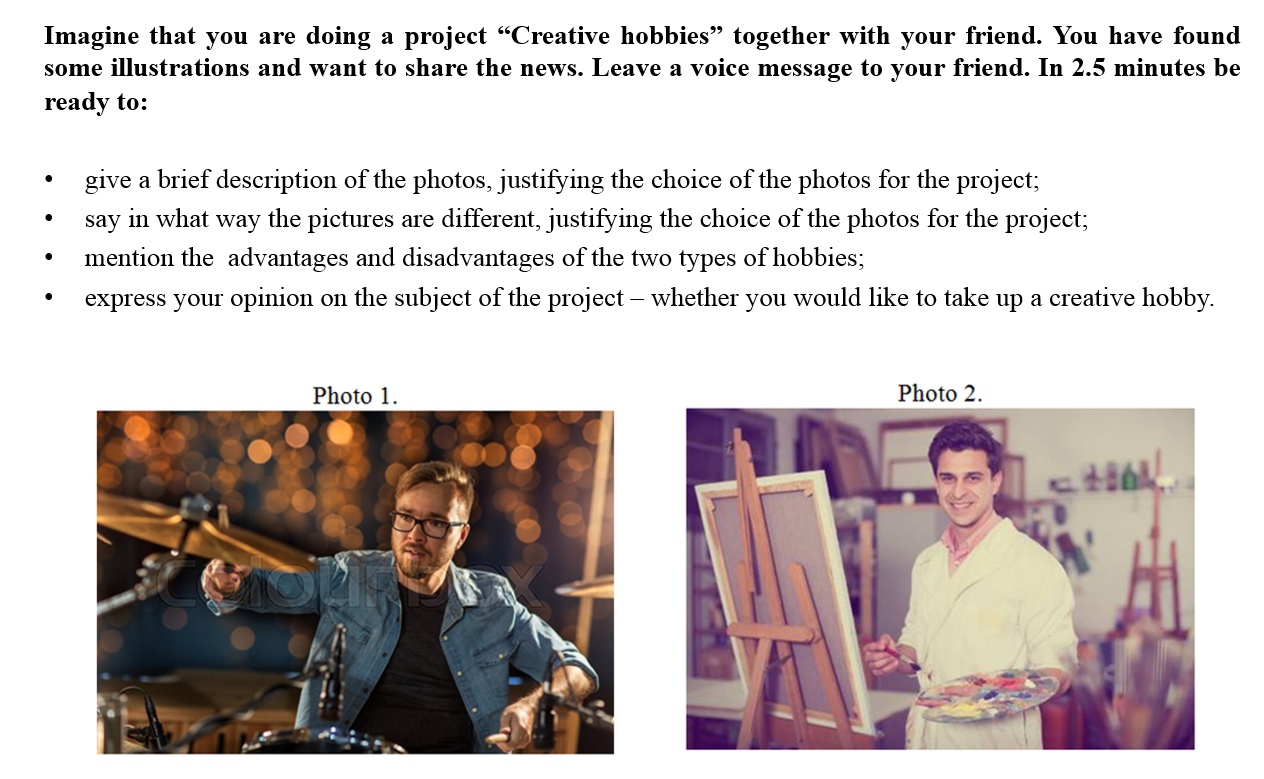
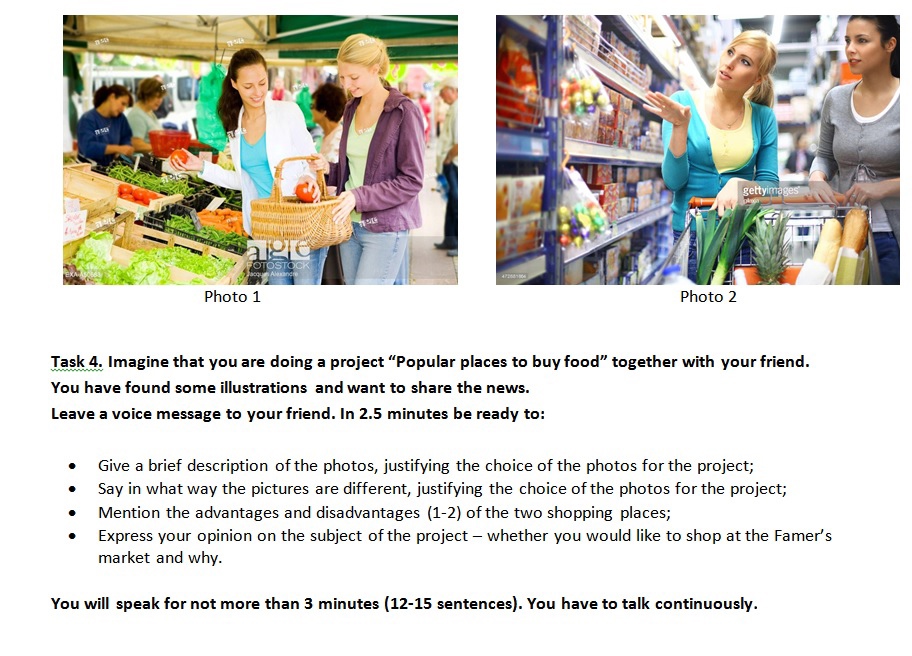
Теперь по условию задания вы вместе с другом выполняете проектную работу на какую-то конкретную тему (в демоверсии ЕГЭ–2022 приведена тема «Жизнь без гаджетов»). Вы нашли фотографии по теме вашей проектной работы и хотите рассказать о них другу, записав голосовое сообщение.
В своем ответе вам необходимо:
– дать краткое описание фотографий, объясняющее выбор фотографий для проектной работы
– рассказать о различиях между снимками, объясняющих выбор этих самых снимков для проектной работы
– Перечислить достоинства и недостатки (1–2) чего-то, что сравнивается в проектной работе (в демоверсии ЕГЭ–2022 в задании 4 сравниваются бумажные и электронные книги).
То есть, к примеру, в задании 4 демоверсии ЕГЭ–2022 вам достаточно будет привести по одному достоинству и одному недостатку бумажных книг и по одному достоинству и одному недостатку электронных (всего 4).
– Высказать мнение по теме проектной работы
Вступление и заключение
Один из пунктов, по которому будет оцениваться ваш ответ (смотрите дополнительную схему оценивания ниже): «Наличие вступления с обращением к другу и заключения, завершённость высказывания.» Поэтому в начале и в конце высказывания не забудьте добавить по 1-2 фразы со вступлением и заключением.
Важна привязка к теме проекта
Теперь, выполняя данное задание, вам необходимо помнить, что вы не просто сравниваете две фотографии, а подбираете их к вашей проектной работе (не забывайте, что по условию задания вы отправляете голосовое сообщение другу, который вместе с вами работает над проектом). Именно поэтому описание фотографий и перечисление их различий должно быть привязано к теме проектной работы.

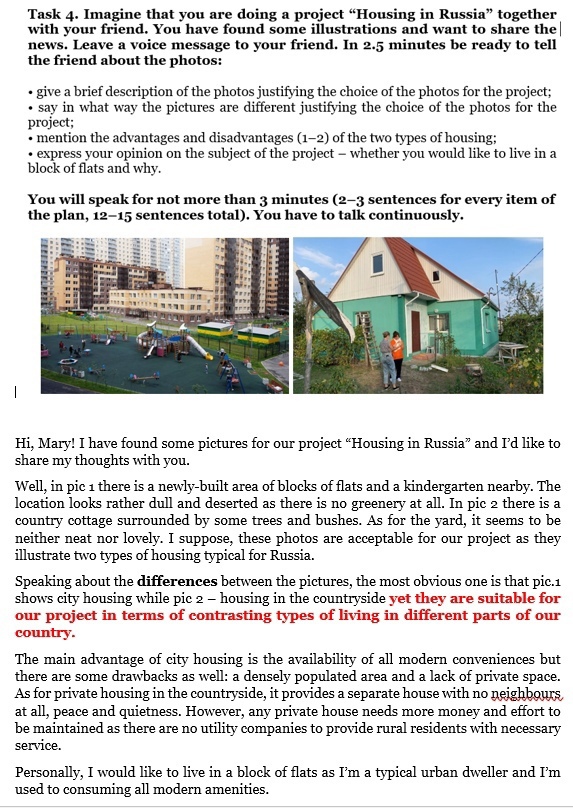
Hi, Jack! I’ve just found two pictures for our project «Household chores in a family». Let me tell you about them.
I consider, they are quite relevant to our project, as both pictures have certain features which just perfectly illustrate the main idea of it. So, in the first picture we see a girl who is throwing away a bag of garbage. She seems to be using a special garbage bin situated in the neighborhood. In the second photo there is a girl standing at the sink and washing the frying pan. She seems to have a lot of dishes to wash.
It is necessary to mention, that these household chores have differences, which may help us illustrate the project much better. The girl in the first photo has to go outside whatever the weather in order to throw the rubbish away while the girl in the second picture is doing the dishes in a comfortable atmosphere of her family kitchen. And the second difference is that a girl in the second picture seems to feel disgusted to deal with rubbish since she is wearing a mask whereas judging by the facial expression of the girl in the second photo, she doesn’t mind doing the washing up
Using these photos, we can always show that both household chores have their advantages and disadvantages. If you are in charge of throwing out the rubbish, you do it twice or three times a week and spend just five or ten minutes on it, but at the same time you can be forced to go outside any time your bin is overfilled. As for the washing up, itis more time-consuming and tiring. It can take an hour or even more if a lot of dirty dishes are left after the meals. However, the advantage of this chore is noticeable order in the kitchen when the washing up is finished.
Personally, Ithink all family members should do their share of household chores as it reduces stress on women. Household chores are done faster that allows the family to spend more quality time together.
So, what do you think? Shall we use these photos in our project? Let me know.

ЕГЭ. Устная часть. Изменения и уточнения в формате ГИА по английскому языку в 2022
В этом разделе мы собрали финальные изменения по формату проведения ЕГЭ, были опубликованы на сайте ФИПИ в ноябре 2021 года. При подготовке следует ориентироваться на них.
Задание 1
Задание оценивается в 0 баллов, если:
-
участник экзамена не сумел (не успел) прочитать весь текст в отведенное за это время, за исключением случая, если экзаменуемый не успел дочитать одно-два слова, в этом случае оценка будет зависеть от качества прочтения текста;
-
участник экзамена при чтении пропустил строку или ее часть;
-
участник экзамена допустил более пяти фонетических ошибок или три и более фонетические ошибки, искажающие смысл.
Задание 3
Ответы на вопросы должны быть полными и развёрнутыми, содержать не менее 2-х фраз.
Задание 4
В новом варианте задания в плане содержатся 4 пункта вместо 5.
-
Ответ на задание должен начинаться с вступительной фразы. Например: Hello, Olga/Oleg, I‘d like to discuss with you the choice of the photos for our project. / Hi,Misha/Masha, I’ve found two photos for our project and I’d like to discuss them with you.
-
Во 1-ом пункте плана требуется дать в описании фотографий по две черты/характеристики каждой фотографии, причем они должны быть связаны с темой проекта. Можно начать с общего описания того, что вы видите на фото, например: The first photo shows two people in the street. / I can see a group of people in the mountains in the first photo. Элементы, которые могут быть упомянуты: аction, location, who, weather, emotions.
-
2-ой пункт описания требует далее сравнить фотографии, выделив два различия с точки зрения темы проекта. Различия могут быть в местах действия, видах деятельности, атмосфере картинок, выборе стиля жизни, привычек, хобби/блюда и т.д., но они должны быть связаны с темой проекта.
-
Нужно определить преимущества и недостатки объектов/ситуаций, иллюстрирующих /раскрывающих тему проекта. В этом пункте важно назвать к каждой фотографии и преимущества и недостатки объектов/ситуации. Выделить преимущества одной ситуации и недостатки другой будет ошибкой.
-
В 4-ом пункте плана необходимо высказать свое мнение о теме/проблеме проектной работы и обосновать его.
-
Обязательно завершить свой монолог заключительной фразой. Например: That’s all I wanted to discuss with you. / That’s all for now.