
Задание 17 на подготовку к ЕГЭ по английскому. В тексте имеются пропуски слов. Для каждого пропуска даны несколько вариантов. Определите, какой вариант верный.
ЗаданиеОтвет
A(n) transnational / cosmopolitan / international / universal group of 23 biology and conservation scientists is calling on the provincial governments and Ottawa to forever prevent / shut out / avoid / check the development of at least 50 per cent of the boreal forest that spans the Canadian north.
The Boreal Conservation Science Panel, made up of scientific heavyweights from Canada, the United States, Australia and Great Britain, will present a paper on Monday at the world International Congress of Conservation Biology in Baltimore that says the boreal’s value as a carbon store, fresh water source, and wildlife apartment / habitation / habitat / settlement is crucial to global ecology.
Although 80 per cent of the boreal is intact, only 10 per cent of the 1.2 billion acres of forest, tundra, peat lands, rivers and lakes is protected. The new report, a copy of which was оccupied / gathered / obtained / saved by The Globe and Mail, says the ‘rules and regulations for managing industrial extraction of resources in Canada’s boreal forest have not kept pace with the rapidly expanding footprint of industrial activities and plans.’
The boreal contains the world’s best / top / highest / most densities of terrestrial carbon stores, has the largest surface of fresh water, is the nesting place for billions of song birds, and is home to viable populations of animals like caribou, grizzly bear, lynx and wolf.
‘The boreal forest overall has an overriding potential influence on the global climate, marine productivity, the wildlife in the case of birds that move across / go across / pass over / meet the entire hemisphere. So it actually has a huge influence on the rest of the world,’ said Jeff Wells, the science and policy director for the Boreal Songbird Initiative and one of the authors of the report.
The science indicates that no less than half of the region should be protected from development, Dr. Wells said. ‘The exact specifics as to how to load / to pack / to parcel / to bundle that out across different regions and so forth is beyond the scope of what we talked about in the report and obviously would need to be figured out by people working in those regions. But that is the basic overarching guidance.’
It is not the first pitch of this sort. Back in 2007, the International Boreal Conservation Campaign of the Pew Charitable Trusts also argued for expanding the protected area, saying it was one of the world’s five remaining regions that help preserve the global environmental balance.
An international group of 23 biology and conservation scientists is calling on the provincial governments and Ottawa to forever prevent the development of at least 50 per cent of the boreal forest that spans the Canadian north.
The Boreal Conservation Science Panel, made up of scientific heavyweights from Canada, the United States, Australia and Great Britain, will present a paper on Monday at the world International Congress of Conservation Biology in Baltimore that says the boreal’s value as a carbon store, fresh water source, and wildlife habitat is crucial to global ecology.
Although 80 per cent of the boreal is intact, only 10 per cent of the 1.2 billion acres of forest, tundra, peat lands, rivers and lakes is protected. The new report, a copy of which was obtained by The Globe and Mail, says the ‘rules and regulations for managing industrial extraction of resources in Canada’s boreal forest have not kept pace with the rapidly expanding footprint of industrial activities and plans.’
The boreal contains the world’s highest densities of terrestrial carbon stores, has the largest surface of fresh water, is the nesting place for billions of song birds, and is home to viable populations of animals like caribou, grizzly bear, lynx and wolf.
‘The boreal forest overall has an overriding potential influence on the global climate, marine productivity, the wildlife in the case of birds that move across the entire hemisphere. So it actually has a huge influence on the rest of the world,’ said Jeff Wells, the science and policy director for the Boreal Songbird Initiative and one of the authors of the report.
The science indicates that no less than half of the region should be protected from development, Dr. Wells said. ‘The exact specifics as to how to parcel that out across different regions and so forth is beyond the scope of what we talked about in the report and obviously would need to be figured out by people working in those regions. But that is the basic overarching guidance.’
It is not the first pitch of this sort. Back in 2007, the International Boreal Conservation Campaign of the Pew Charitable Trusts also argued for expanding the protected area, saying it was one of the world’s five remaining regions that help preserve the global environmental balance.
1) Вставьте слово, которое грамматически будет соответствовать содержанию текста.
Air pollution and climate change
Overloading of the atmosphere and of ocean waters with carbon. Atmospheric CO2 absorbs and re-emits infrared-wavelength radiation, leading to warmer air, soils, and ocean surface ___ (WATER) — which is good because the planet would be frozen solid without this.
2) Вставьте слово, которое грамматически будет соответствовать содержанию текста.
Unfortunately, there’s now too much carbon in the air. Burning of fossil fuels, deforestation for agriculture, and industrial activities ___ (PUSH) up atmospheric CO2 concentrations from 280 parts per million (ppm) 200 years ago, to about 400 ppm today. That’s an unprecedented rise, in both size and speed. The result: climate disruption.
3) Вставьте слово, которое грамматически будет соответствовать содержанию текста.
Carbon overloading is only one form of air pollution ___ (CAUSE) by burning coal, oil, gas and wood.
4) Вставьте слово, которое грамматически будет соответствовать содержанию текста.
The World Health Organization recently ___ (ESTIMATE) that one in nine deaths in 2012 were attributable to diseases caused by carcinogens and other poisons in polluted air.
5) Вставьте слово, которое грамматически будет соответствовать содержанию текста.
Solutions to be taken involve ___ (REPLACE) fossil fuels with renewable energy…
6) Вставьте слово, которое грамматически будет соответствовать содержанию текста.
…reducing emissions from agriculture as well as ___ (CHANGE) industrial processes.
7) Вставьте слово, которое грамматически будет соответствовать содержанию текста.
The good news is that clean energy is abundant — it just needs to be harvested. Many say a 100 percent renewable-energy future is feasible with existing technology now. But the bad news is that even though renewable energy infrastructure — solar panels, wind turbines, energy storage and distribution systems — are already widespread, and getting cheaper and more efficient all the time, experts say we ___ (NOT APPLY) them quickly enough to prevent catastrophic climate disruption. Barriers in policy and finance remain to be overcome.
 Вставьте слово, которое грамматически и лексически будет соответствовать содержанию текста.
The need for change in our ___ (DAY) lives and the movements of our government is the and growing.
9) Вставьте слово, которое грамматически и лексически будет соответствовать содержанию текста.
Because so many ___ (DIFFER) factors come into play; voting, governmental issues, desire to stick to routine, many people don’t consider that what they do will affect future generations.
10) Вставьте слово, которое грамматически и лексически будет соответствовать содержанию текста.
If humans continue moving forward in such a ___ (HARM) way towards the future, then there will be no future to consider.
11) Вставьте слово, которое грамматически и лексически будет соответствовать содержанию текста.
Although it’s true that we cannot physically stop our ozone layer from ___ (THIN) (and scientists are still having trouble figuring out what is causing it exactly,) there are still so many things we can do to try put a dent in what we already know.
12) Вставьте слово, которое грамматически и лексически будет соответствовать содержанию текста.
By raising ___ (AWARE) in your local community and within your families about these issues…
13) Вставьте слово, которое грамматически и лексически будет соответствовать содержанию текста.
…you can help contribute to a more Environmentally conscious and ___ (FRIEND) place for you to live.
14) Запишите в поле ответа цифру 1, 2, 3 или 4, соответствующую выбранному Вами варианту ответа.
Scientists call for protection of Canada’s boreal forest
An ___ group of 23 biology and conservation scientists…
1) transnational
2) cosmopolitan
3) international
4) universal
15) Запишите в поле ответа цифру 1, 2, 3 или 4, соответствующую выбранному Вами варианту ответа.
…is calling on the provincial governments and Ottawa to forever ___ the development of at least 50 per cent of the boreal forest that spans the Canadian north.
1) prevent
2) shut out
3) avoid
4) check
16) Запишите в поле ответа цифру 1, 2, 3 или 4, соответствующую выбранному Вами варианту ответа.
The Boreal Conservation Science Panel, made up of scientific heavyweights from Canada, the United States, Australia and Great Britain, will present a paper on Monday at the world International Congress of Conservation BiologyinBaltimore that says the boreal’s value as a carbon store, fresh water source, and wildlife ___ is crucial to global ecology.
1) apartment
2) habitation
3) habitat
4) settlement
17) Запишите в поле ответа цифру 1, 2, 3 или 4, соответствующую выбранному Вами варианту ответа.
Although 80 per cent of the boreal is intact, only 10 per cent of the 1,2 billion acres of forest, tundra, peat lands, rivers and lakes is protected. The new report, a copy of which was ___ by The Globe and Mail, says the ‘rules and regulations for managing industrial extraction of resources in Canada’s boreal forest have not kept pace with the rapidly expanding footprint of industrial activities and plans.’
1) оccupied
2) gathered
3) obtained
4) saved
18) Запишите в поле ответа цифру 1, 2, 3 или 4, соответствующую выбранному Вами варианту ответа.
The boreal contains the world’s ___ densities of terrestrial carbon stores, has the largest surface of fresh water, is the nesting place for billions of song birds, and is home to viable populations of animals like caribou, grizzly bear, lynx and wolf.
1) best
2) top
3) highest
4) most
19) Запишите в поле ответа цифру 1, 2, 3 или 4, соответствующую выбранному Вами варианту ответа.
‘The boreal forest overall has an overriding potential influence on the global climate, marine productivity, the wildlife in the case of birds that ___ the entire hemisphere.
1) move across
2) go across
3) pass over
4) meet
20) Запишите в поле ответа цифру 1, 2, 3 или 4, соответствующую выбранному Вами варианту ответа.
So it actually has a huge influence on the rest of the world,’ said Jeff Wells, the science and policy director for the Boreal Songbird Initiative and one of the authors of the report. The science indicates that no less than half of the region should be protected from development, Dr. Wells said. ‘The exact specifics as to how ___ that out across different regions and so forth is beyond the scope of what we talked about in the report and obviously would need to be figured out by people working in those regions. But that is the basic overarching guidance.’ It is not the first pitch of this sort. Back in 2007, the International Boreal Conservation Campaign of the Pew Charitable Trusts also argued for expanding the protected area, saying it was one of the world’s five remaining regions that help preserve the global environmental balance.
1) to load
2) to pack
3) to parcel
4) to bundle
Introduction
With the advent of GIS capabilities and the availability of complete global coverage of remote sensing products over the last two decades, identification of the biomes of the world with the least large-scale human impacts has become possible. Notwithstanding the various methodological and definitional questions around how to define and map such areas (Potapov et al., 2017; Venier et al., 2018; Watson et al., 2018) there has been broad consensus that there are five regions of the world that encompass the largest areal extent of forest habitat that has not been subject to large-scale industrial logging, roadbuilding, mining, or other modern industrial land-use impacts. First identified in 1997 (Bryant et al., 1997) and termed “frontier forests” these forest areas have subsequently been mapped under different criteria and terms including “wilderness,” “intact forest” and “primary forest” in a number of other publications and analyses (Sanderson et al., 2002; Mittermeir et al., 2003; Potapov et al., 2008, 2017; Hansen et al., 2013; Mackey et al., 2014; Watson et al., 2016, 2018; Dinerstein et al., 2017). These five regions–the forests of New Guinea and Borneo, the Congo Basin, the Amazon Basin, the Russian Boreal Forest, and the North American Boreal Forest (Figure 1) – have all seen major losses in forest area since their original identification in 1997 (Hansen et al., 2013; Haddad et al., 2015; Venter et al., 2016; Watson et al., 2016).
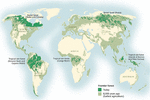
Figure 1. The largest intact forest regions on earth are primarily confined to five regions: the forests of New Guinea and Borneo, the Congo Basin, the Amazon Basin, the Russian Boreal Forest, and the North American Boreal Forest. Map courtesy of Canadian Geographic.
Increasingly, terrestrial protected areas work in these and other regions around the world has focused on increasing protected areas coverage (Dinerstein et al., 2017, 2018; Watson et al., 2018). The first goal that many governments and non-governmental organizations have focused on is reaching the Convention on Biodiversity Target 11 goal of 17% of each nation protected as outlined in the so-called Aichi treaty (Environment and Climate Change Canada, 2016; Canadian Parks and Wilderness Society, 2018; Indigenous Circle of Experts, 2018). Academics and conservation practitioners have also increased awareness for the need to increase protected areas goals to much higher levels in order to achieve the goal of maintaining biodiversity and ecosystem services (Noss et al., 2012; International Boreal Conservation Science Panel, 2013; Wilson, 2016). These higher-level goals are being achieved in certain landscapes as a result of the leadership of Indigenous peoples and often through reconciliation processes that result in strong Indigenous self-government (Indigenous Circle of Experts, 2018; Zurba et al., 2019).
Conservation Values of the North American Boreal Forest Biome That Make It a Global Priority for Conservation
North America’s Boreal Forest biome (Figure 2) is one of the most intact of these global forested ecosystems (Lee et al., 2003, 2006; Andrew et al., 2012, 2014; Dinerstein et al., 2017; Venier et al., 2018). The biome is estimated to harbor 25% of the world’s remaining intact forests (Aksenov et al., 2002; Lee et al., 2003, 2006). Spanning from Newfoundland and Labrador in the east and across Canada to interior Alaska, it encompasses 6.27 million km2. Within its boundaries are some of the largest peatlands, lakes, and rivers in the world (Schindler and Lee, 2010; Wells et al., 2010) and a significant amount of the world’s terrestrial carbon (Carlson et al., 2009, 2010; Tarnocai et al., 2009).
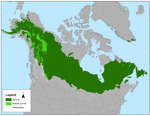
Figure 2. The North American Boreal Forest biome as defined in Brandt (2009). The biome is estimated to harbor 25% of the world’s remaining intact forests.
North American Boreal Forest biome peatlands include a wetland that is considered one of the largest in the world, the Hudson Bay-James Bay Lowlands that extend over 370,000 km2 (Abraham and Keddy, 2005; Webster et al., 2015). Along with being enormous storehouses of carbon, these wetlands store and filter massive amounts of freshwater (Schindler and Lee, 2010; Wells et al., 2010). Canada’s portion of the Boreal Forest biome is thought to hold a minimum of 208 billion tons of carbon in its trees and other plants, soils, peatlands, as well as under permafrost (Carlson et al., 2009). The biome’s natural capital is worth an estimated $703 billion annually (Anielski and Wilson, 2009). Ecosystem goods and services are relatively unimpaired across the region due to its large degree of intactness.
The highest densities of trees on earth occur in the global boreal forest biomes and are estimated to support 24% of the world’s individual trees (Crowther et al., 2015). Using Crowther et al.’s (2015) boreal tree density average applied to the North American Boreal Forest biome suggests that the biome holds as many as 500 billion individual trees representing 16% of the world’s total number of individual trees. Many plants species are largely confined to the North American Boreal Forest biome or at least reach their greatest abundance and distributional extent within the biome. This includes many coniferous tree species which are considered characteristic of the North American Boreal Forest biome including Picea glauca, Picea mariana, Larix laricina, Abies balsamea, Pinus banksiana, Pinus contorta var. latifolia, and Abies lasiocarpa but also characteristic deciduous tree species like Populus tremuloides, Populus balsamifera, and Betula papyrifera (Brandt, 2009).
The North American Boreal Forest biome encompasses millions of lakes and ponds (Wells et al., 2010) and Canada’s Boreal Forest holds more available freshwater than any other single country on earth (Minns et al., 2008). Freshwater outflows from the North American Boreal Forest biome to marine systems play an important role in driving large-scale ocean currents, moving nutrients, impacting weather patterns and the productivity of marine fisheries across the globe (Aagaard and Carmack, 1989; Woo et al., 2008; Wells et al., 2010). Within the biome are four of the world’s ten largest lakes. This includes Great Bear Lake in the Northwest Territories, one of the world’s most pristine (Figure 3). Many large lakes here support healthy, age-structured fish populations that includes a significant proportion of larger and older fish that often become scarce under heavy fishing pressure. The largest known individuals of species like lake trout, brook trout, and Arctic grayling have been documented from these lakes (Wells et al., 2010). North America’s Boreal Forest biome is rich also in free-flowing, undammed rivers (Figure 4) – more than now occur in the remainder of North America (Dynesius and Nilsson, 1994; Webster et al., 2015). Dams, pollution and water over-subscription have imperiled river biodiversity across much of the world, but rivers in North America’s Boreal Forest biome are among the remaining strongholds for populations of many anadromous fish species (Wells et al., 2010). Pacific salmon continue to migrate up the Stikine, Nass, and Skeena rivers into the Sacred Headwaters of northern B.C. and the Yukon River through Alaska to the Yukon. Anadromous fish ascend the Mackenzie River southward from the Arctic over 1,000 km, some reaching to tributaries in B.C. and Alberta. Atlantic salmon runs along the Atlantic Coast of North America have been lost or are endangered in the United States and southern Canada (Limburg and Waldman, 2009). Yet healthy populations still ascend rivers in the boreal regions of Quebec and Newfoundland and Labrador.
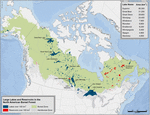
Figure 3. North America’s Boreal Forest biome contains millions of lakes, including Lake Superior, Great Bear Lake and Great Slave Lake, which rank amongst the world’s largest in both surface area and overall volume.
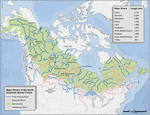
Figure 4. The North American Boreal Forest biome encompasses most of the continent’s remaining, large undammed rivers, which maintain globally significant water, nutrient, and migratory fish movements between terrestrial and ocean ecosystems.
North America’s Boreal Forest biome is also home to both Old and New World evolutionary lineages of caribou (Polfus et al., 2017) and migratory and non-migratory lineages of wolves (Musiani et al., 2007) that persist together in the biome. Unfortunately, all populations and forms of caribou that occur in Canada (woodland, mountain, barren-ground) are now listed as Endangered, Threatened, or of Special Concern by the Committee on the Status of Endangered Wildlife in Canada (COSEWIC, 2019) with major harvest restrictions now in place on caribou throughout Canada.
Within the biome are some of Earth’s only remaining unfettered large mammal migrations – those particularly of herds of migratory tundra caribou (Rangifer tarandus) that can traverse 500–1500 km in an annual migration between boreal forest wintering ranges and tundra summer calving grounds (Hummel and Ray, 2008; Wilcove, 2008; Joly et al., 2019). The Porcupine Caribou Herd in western Canada and Alaska travels over 1300 km each year as do the Bathurst and Beverly herds of western Canada and the Leaf River Herd of Quebec (Gurarie et al., 2019; Joly et al., 2019). The Western Arctic Caribou Herd of Alaska and the Qamanirjuaq Herd of Canada travel at least 1200 km each year (Joly et al., 2019). Loss of migration corridors threatens many herbivore species across the globe as habitat modification reduces the ability of animals to move across large tracts of intact landscape (Wilcove, 2008; Ripple et al., 2015).
The North American Boreal Forest biome supports significant populations of large carnivores that have been lost from much of their southern range including wolves, grizzly bears, and wolverine (Laliberte and Ripple, 2004; Cardillo et al., 2006; Bradshaw et al., 2009). One of the southernmost populations of polar bears in the world occurs in the Boreal Forest biome in the Hudson Bay and James Bay region where the bears have the unusual habit of maternity denning in the ground (rather than in snow) sometimes hundreds of kilometers inland (Peacock et al., 2010).
Within the North American Boreal Forest biome are a variety of range-restricted mammal species including the Ungava collared lemming (found only in northern Ungava peninsula), Richardson’s collared lemming, singing vole (found only in parts of Alaska, Yukon and the Northwest Territories), Dall’s sheep, collared pika, and the American wood bison (Bowers et al., 2004). A subspecies of freshwater harbor seal is separated from the sea and found only in Quebec’s Tursujuq National Park (Smith, 1996, 1997; COSEWIC, 2007).
A great abundance of invertebrates, especially insects, occur only or primarily in peatlands and other wetlands and lakes, rivers and streams of North America’s Boreal Forest biome. This includes species of chironomid flies, lepidopterans, dragonflies, and beetles (Spitzer and Danks, 2006). Species of dragonfly whose range is primarily within the biome include the Boreal Snaketail, Quebec Emerald, Hudsonian Emerald, Kennedy’s Emerald, Boreal Whiteface, Lake Darner, and Zigzag Darner (Cannings and Cannings, 1994; Dunkle, 2000).
Butterflies that are wetland-dependent and that have most of their range confined to the North American Boreal Forest biome include the Bog Fritillary, Titania Fritillary, Disa Alpine, Jutta Arctic, and Cranberry Blue (Opler and Malikul, 1992). Peatlands of the biome support unusual species, like the sphagnum bog cricket (Neonemobius palustris), bog katydid (Metrioptera sphagnorum), the pitcher plant mosquito (Wyeomyia smithii), and the pitcher plant midge (Metriocnemus knabi) (Capinera et al., 2004; Spitzer and Danks, 2006).
The North American Boreal Forest biome supports billions of songbirds, millions of waterfowl and shorebirds, and is the last stronghold for globally endangered species like the Whooping Crane (Wells and Blancher, 2011). The intactness of the North American Boreal Forest biome is a critical reason it has remained one of the world’s most important breeding reservoirs for migratory birds, supporting an estimated 1–3 billion nesting birds each summer including billions of songbirds and millions of waterfowl and shorebirds (Wells, 2011; Wells and Blancher, 2011). The biome is the last stronghold for the globally endangered Whooping Crane which nests in or near Wood Buffalo National Park straddling the border between Alberta and the Northwest Territories (Wells and Blancher, 2011). Each fall, the biome annually “exports” some 3–5 billion birds once the young have hatched and migrated to populate their wintering ranges, from southern Canada and the United States south through Mexico, the Caribbean, Central America and South America (Robertson et al., 2011; Wells and Blancher, 2011; Wells et al., 2014). At least 96 species are estimated to have at least half of their North American breeding distribution within the biome and 151 to have at least 25% of their breeding distribution in the biome (Wells and Blancher, 2011). Wetlands within Alaska’s portion of the Boreal Forest biome have long been known as an important stronghold for the original wild populations of Trumpeter Swan and these same wetlands are hosting increased densities of nesting waterfowl in recent decades, perhaps three times as many as in the 1950’s (Petrie and Reid, 2009).
Sadly, there are a growing number of Boreal bird species in steep decline with six species considered globally threatened under IUCN Red List and eight Near Threatened. Boreal-dependent birds like the Rusty Blackbird, the Olive-sided Flycatcher, and Canada Warbler have shown declines in abundance of more than 50% over the last half-century. All three are now on Canada’s list of Threatened or Special Concern species and Olive-sided Flycatcher appears on Audubon Alaska’s Redlist (Warnock, 2017). Boreal-breeding waterbirds are also featured on that list, including the eastern populations of Barrow’s Goldeneye and Harlequin Duck, the western populations of Horned Grebe, and Yellow Rail, Hudsonian Godwit and Red-necked Phalarope (Wells et al., 2014). The candidate species for future inclusion on that list include a number of shorebirds that are dependent on Boreal wetlands for breeding, including Lesser Yellowlegs, Semipalmated Sandpiper, Short-billed Dowitcher, Stilt Sandpiper, and Pectoral Sandpiper (COSEWIC, 2019). Many other Boreal-breeding species have seen steep declines in the last 50 years, including Black Scoter (listed at Near Threatened on the IUCN Red List), Surf, and White-winged Scoters, Lesser Scaup, Long-tailed Duck (listed as Vulnerable on the IUCN Red List), Blackpoll Warbler, and even well-loved backyard feeder birds like White-throated Sparrow and Dark-eyed Junco (Wells, 2007; Slattery et al., 2011; Sauer et al., 2015; Wells et al., 2016, 2018). Many of the species in steep decline on Alaska’s Watchlist are found seasonally within Alaska’s Boreal Forest biome (Warnock, 2017).
Governance and Policy Context of the Canadian Boreal Forest
Virtually all of North America’s Boreal Forest biome is considered (at least by non-Indigenous governments) to be under the dominion of federal, provincial and territorial governments as so-called “crown land” in Canada (Bone, 2000). Decisions about the management of that land have historically largely been under the control of provincial and territorial governments (Frideres and Rowe, 2010) in Canada. Indigenous governments, on the other hand, consider their traditional territories within the region to be sovereign lands for which they should have complete authority or co-authority with federal, provincial, and territorial governments. In some regions, these lands were never under a historic treaty and some areas of Canada remain without even a modern-day treaty (Bone, 2000). In other regions, there are historic treaties that are sometimes invoked by federal, provincial or territorial governments to suggest that all Indigenous land management rights were extinguished (Long, 2010). Recent legal cases have challenged the latter view and have been supported, at least in part, by court rulings including at the Canadian Supreme Court (Ariss and Cutfeet, 2012).
Provincial and territorial governments as opposed to the federal government, in the Canadian confederation system, hold the rights to make decisions about the use of crown lands. One of the types of land uses granted by provinces and territories that encompasses much of the southern half of the Boreal Forest biome is for industrial scale logging (International Boreal Conservation Science Panel, 2013). Often long-term land tenures to single logging companies cover vast areas, larger than some United States states. These tenures give those companies the rights to harvest logs and build roads, bridges and other infrastructure in order to do so. Mining companies and oil and gas companies can similarly license claims for areas of the boreal forest for exploration (Wells et al., 2010). If exploration has indicated a substantial mineral deposit, then those companies can apply for the right to develop mines or oil extraction facilities. Hydropower corporations in Canada are largely all public-private corporations. These entities must also be granted rights to develop dams, roads, transmission line corridors and other infrastructure within Boreal Forest lands. Historically, Indigenous peoples were rarely consulted on the management of their lands including the granting of rights to resource extraction companies to operate on their traditional territories (Ariss and Cutfeet, 2012; Indigenous Circle of Experts, 2018) or the designation of protected areas (Indigenous Circle of Experts, 2018). In the last two decades, more engagement and consultation of Indigenous governments and communities has begun taking place. But the degree of authority in land use decisions that any particular Indigenous government or community has over the use of its traditional territory varies greatly across Canada depending especially on the views of the provincial or territorial government and bureaucratic leadership and the level of pressure exerted by resource extraction industries in that region.
Governance and Policy Context of the Alaska Boreal Forest
The Alaska portion of the Boreal Forest biome is managed by the federal government (51%), Native Corporations (24%), state and local governments (25%), and private landowners (0.4%). Federal lands in the Alaska Boreal Forest biome are primarily managed by the Bureau of Land Management. The Bureau of Land Management is governed by a multiple-use mandate, seeking to balance a host of resources. This is outlined in federal statute 43 U.S.C. §1732(a) which states: “Multiple use means the management of the public lands and their various resource values so that they are utilized in the combination that will best meet the present and future needs of the American people,” and includes “the use of some land for less than all of the resources.” The resources to be managed specifically include, but are not limited to “recreation, range, timber, minerals, watershed, wildlife and fish, and natural scenic, scientific and historical values.” In addition, the Bureau of Land Management is required to “give priority to the designation and protection of Areas of Critical Environmental Concern,” which are areas that receive special management “to protect and prevent irreparable damage to important historic, cultural, or scenic values, fish and wildlife resources or other natural systems or processes…” (Federal Land Policy and Management Act, 43 U.S.C. § § 1712[b][3], 1702[a]).
Management for the Bureau of Land Management Boreal Forest lands in Alaska is defined in Resource Management Plans that govern land use for decades at a time. These Resource Management Plans are based on ongoing inventories of existing resources and identify which lands will be managed as Areas of Critical Environmental Concern or for other special purposes, as well as which lands will be available for oil and gas leasing and which lands will be recommended for withdrawal from mining (Federal Land Policy and Management Act, 43 U.S.C. §§1711, 1712). Based on its perception of the multiple use mandate, the Bureau of Land Management is generally reluctant to set aside lands for protection or to close them to leasing or other forms or development. For example, the Kobuk-Seward Record of Decision and Approved Resource Management Plans did not close any of the 11.9 million acres under consideration to oil and gas leasing (Bureau of Land Management, 2016). Nonetheless, many existing Resource Management Plans in Alaska do contain some Areas of Critical Environmental Concern that protect cultural and subsistence values for Tribes (e.g., Bureau of Land Management, 2008a; Bureau of Land Management, 2008b). In addition, much of the Boreal Forest lands, close to 50 million acres, were withdrawn from mining and leasing pursuant to the Alaska Native Claims Settlement Act, subject to later actions by the Bureau of Land Management and the Department of the Interior to revoke those withdrawals (Alaska Native Claims Settlement Act, 43 U.S.C. § 1616[d][1]).
Indigenous Leadership in Boreal Forest Land-Use Planning and Land Conservation
In recent years in Canada, Indigenous governments have increasingly been asserting more decision-making authority over their lands (Ariss and Cutfeet, 2012). One of the ways that this has been accomplished has been by Indigenous nations developing leading edge comprehensive land-use plans for their traditional lands (International Boreal Conservation Science Panel, 2013). These plans consolidate the Indigenous government’s vision for the future of their lands and include protected lands as well as lands that may be available for resource development under the oversight of Indigenous governments through their laws, policies and regulations.
In some areas, these plans have led Indigenous governments to declare certain areas as off limits to resource development activities sometimes through a declaration of an Indigenous protected or conserved area (Ariss and Cutfeet, 2012; Indigenous Circle of Experts, 2018). Conflicts have arisen when a provincial or territorial government ignores the declaration and grants permits for private industry to operate within the area designated by the Indigenous government as off-limits to such activity. Those conflicts can result in actual on-the-ground standoffs with Indigenous blockades of access roads and/or may begin a string of protracted legal battles that can be financially debilitating for the Indigenous government (Ariss and Cutfeet, 2012).
The Challenge for Non-Governmental Conservation Organizations
For non-governmental conservation organizations (NGCO), the political landscape is a complicated one within which to operate. In essence, both Indigenous and provincial or territorial governments control or strongly influence land use decisions across the Boreal Forest biome. NGCOs must develop and maintain supportive partnerships with many distinct and independent Indigenous governments and with provincial or territorial government officials to understand the intricacies of reinforcing Indigenous-led conservation actions and not overstep the Indigenous government’s leadership.
Current Conservation Status of the North American Boreal Forest Biome
Large tracts of North American Boreal Forest ecosystems remain intact not by design, but rather as the outcome of the inaccessibility of access (Andrew et al., 2012). The historical and current difficulty in accessing these lands has also made it one of the last industrial development frontiers on earth. The area protected is estimated to be only between 8 (Andrew et al., 2014) and 12.7% (Lee and Cheng, 2010; Carlson et al., 2015) and development and land-use management decisions are underway at an increased rate. Yet estimates do not yet reflect gains made in the last 2 years in creating new, large-scale protected areas in Canada’s Boreal Forest region.
The overall areal extent of the North American Boreal Forest biome considered intact or relatively free of industrial anthropogenic impacts (including forestry, mining, oil and gas, hydropower, and infrastructure but not including climate change) has been estimated at 80–83% (Lee and Cheng, 2010; Lee et al., 2010; Andrew et al., 2012; Powers et al., 2013; Smith and Cheng, 2016). An area of contention in global analyses of areal extent of intact forest is whether areas impacted by forest fires should be considered as part of the anthropogenic footprint (Venier et al., 2018). Most forest fires in the North American Boreal Forest biome have historically been considered to be lightning-caused (Veraverbeke et al., 2017) and part of the long-term ecological history of the biome (Brandt et al., 2013; Venier et al., 2018). Very large forest fires have historically occurred across much of the North American Boreal Forest biome. In recent decades, the size and frequency of fires has increased, especially in the Alaskan and western Canada portions of the biome, perhaps to a level that has not occurred in the last 10,000 years (Kelly et al., 2013).
In contrast, in the Russian Boreal Forest biome most forest fires are generally considered to be human caused. Most experts now agree that the area burned in forest fires in the North American Boreal Forest should not be considered part of the anthropogenic footprint since most large fires are in remote areas lacking industrial infrastructure and these burned over areas will regrow and remain intact. However, because of the inclusion of areas burned by forest fires, several global analyses have suggested that the North American Boreal Forest biome has lost forest cover in recent decades at exceptionally high rates (e.g., Hansen et al., 2013; Haddad et al., 2015). An estimated 399,000 km2 of the Canadian portion of the North American Boreal Forest biome was impacted by forest fires between 1985 and 2010 (White et al., 2017), amounting to 9% of the Canadian portion of the biome. If this were considered part of the anthropogenic footprint, the area considered intact would be lowered to approximately 74%.
A 1987 study reported that, of the “frontier forests” of North American (most in the Boreal Forest biome), 26% were under moderate or high threat (Bryant et al., 1997). An expert review of the state of all of North America’s ecoregions categorized two southern Boreal Forest ecoregions as in Critically Endangered condition, one as Endangered, and an additional seven Boreal Forest ecoregions as Vulnerable (Ricketts et al., 1999).
As these studies reflect, the loss and fragmentation of intact ecosystems of the North American Boreal Forest biome is increasing as industrial access infrastructure is established from south to north. This is clear from the fact that while northern portions of the biome like the Taiga Plains ecozone are substantially intact (78% of the ecozone consists of intact landscapes of 10,000 ha or larger), substantial disturbance has occurred in southern portions like the Boreal Plains ecozone which is only 36% intact (Lee et al., 2006). In the southern portion of the North American Boreal Forest biome, estimates of the amount of no-longer-intact habitat range up to 66% (Ricketts et al., 1999) encompassing 1.77 million km2. Lee et al. (2006) demonstrated that less than fifteen percent of the 710,000 km2 Boreal Plains ecozone (the portion of the southern Boreal ranging from the eastern foothills of the Canadian Rockies to south-central Manitoba) was in forested landscapes that were still large and intact. More than 4,000 km2 of the southern Boreal Forest biome within Saskatchewan and Manitoba and over 24,000 km2 of the Boreal Forest biome within Quebec was impacted between 1900 and 2000 by forestry, road-building, and other infrastructure development (Stanojevic et al., 2006a, b).
Forest Industry Impacts in the North American Boreal Forest Biome
Forestry practices differ across international boundaries within the North American Boreal Forest Biome but forestry clearly has impacted more area of the Boreal Forest biome than any other industrial activity. A third of the North American Boreal Forest biome is tenured (leased) for forestry in Canada (Carlson et al., 2015). As of 2003, an estimated 61% of the 1.6 million km2 Canadian commercially managed portion of the North American Boreal Forest biome had been logged at least once – an area of over 1 million km2 (Venier et al., 2014) or 16% of the entire biome (note that this does not include any portion of Alaskan boreal that was logged). Using Landsat time series, White et al. (2017) estimated that 104,000 km2 were disturbed by harvest in boreal ecozones of Canada between 1985 and 2010 while 399,000 km2 were impacted by wildfire during the same period. A remote sensing analysis in 2013 estimated that 240,000 km2 of Canada’s portion of the Boreal Forest biome showed visible forest cutblocks (Pasher et al., 2013; Webster et al., 2015). A number of declining and Canadian federally listed Boreal Forest dependent birds species show major overlap with the most heavily impacted southern portion of the Boreal Forest biome (Wells, 2011) as does the Canadian federally threatened Woodland Caribou (Environment Canada, 2008, 2011; International Boreal Conservation Science Panel, 2011).
In the eastern Canadian part of the North American Boreal Forest biome, the pace and scale of forest harvest has increased in recent decades. Combined with increased size and frequency of forest fires, this is diminishing the amount of older age forest on the landscape to critically low levels (Cyr et al., 2009; Venier et al., 2014; Gauthier et al., 2015; Bergeron et al., 2017). Similarly, only 16.5% of old growth was estimated to be remaining in the managed portion of the Boreal Forest biome in Ontario and only 10% in Alberta (Venier et al., 2014).
The Alaska portion of the Boreal Forest biome has experienced limited timber harvest that has been concentrated near communities with infrastructure. Less than 5% of the total timber harvested in Alaska comes from Boreal Forests (Wurtz et al., 2006). Forested boreal lands make up 47 million hectares of land (roughly the size of California) in interior Alaska. Most timber extraction occurs in mature stands of white spruce where volumes are highest, with much of this harvest being devoted to local wood product needs. During the late 1980’s and early 1990’s, many high-quality white spruce logs were exported to Pacific Rim countries from state and private lands in the Boreal Forest. However, changing global markets largely ended these exports and the likelihood of future log exports from Alaska’s interior forests appears small. Timber harvest in Alaska’s Boreal Forest remains low due to distance from markets, low population densities, and lack of accessible timber lands for harvest.
Mining and Oil and Gas Industry Impacts in the North American Boreal Forest Biome
A variety of other types of industrial disturbances occur within the North American Boreal Forest biome. In the western Canada portion of the biome, oil and gas extraction and exploration are rapidly increasing. As many as 22,800 oil and gas wells were drilled in 2004 and there were 222,000 active and abandoned well sites as of 2011 (Brandt et al., 2013). There are now at least 441,000 km of pipelines and 1.7 million km of seismic lines (1.75–10 m wide cleared corridors for deploying equipment to search for oil and gas deposits) set primarily in the Alberta portion of the North American Boreal Forest biome (Lee and Boutin, 2006; Brandt et al., 2013; Dabros et al., 2018). The industrial footprint from the oil and gas industry in Canada’s portion of the Boreal Forest biome as of 2003 was estimated at 460,000 km2 or approximately 8% of Canada’s portion of the biome (Anielski and Wilson, 2009). Habitat that would have supported an estimated 58,000–402,000 breeding birds has already been lost within Alberta’s oil sands region (Timoney and Lee, 2009) and future accumulated losses have been estimated into the tens of millions (Wells et al., 2008).
Mining may be one of the most damaging of the natural resource extraction industries to both the environment and local communities. Effects include cumulative impacts, disruption of ecological and social systems, and lasting contamination. Because many of these impacts occur over decades or centuries, the ways that mining activities impact the broad ecological landscape and environment is often not widely acknowledged. Eighty percent of Canada’s mines occur within the Boreal Forest biome (Wells et al., 2010). There were 108 mineral, metal, and coal mines in the Canadian portion of the North American Boreal Forest biome as of 2009 and 1300 or more abandoned mines (Brandt et al., 2013). Although there is no existing estimate of the impact to waterways of abandoned and active mines in Canada’s portion of the Boreal Forest biome, at least 3,000 such sites are known to occur within 1 km of a stream, river, or lake into which they have the potential to leach contaminants (Wells et al., 2010).
The biggest anthropogenic challenges, other than climate change, for Alaska’s Boreal Forest biome, come from proposed development projects that include infrastructure for large-scale mining operations and access to currently roadless landscapes. Some of these projects will threaten the ecological integrity of existing protected areas (Wilson et al., 2014). The proposed Ambler road would develop a 400 km route through western Alaska Boreal Forests, cross three major salmon-producing rivers (including two Wild and Scenic designated rivers), and bisect the southern portion of Gates of the Arctic National Park. The proposed road would allow access and spur development for at least twelve individual mines that would create the largest mining district in Alaska and one of the largest mining districts in the world’s Boreal Forest biome (Guettabi et al., 2016). Global development scenarios suggest oil, gas, mining, and renewable energy development in Alaska will concentrate across regions of the Boreal Forest biome (Oakleaf et al., 2019). Four of Alaska’s six largest operating mines and six of the seven largest, proposed mining projects occur within the Boreal Forest biome (Spengler, 2013).
Hydropower Project Impacts in the North American Boreal Forest Biome
Large hydropower projects in Canada, many developed in the 1970s and 1980s, have inundated millions of hectares (Wells et al., 2010; Cheskey et al., 2011), especially in parts of the eastern Boreal Forest biome. For example, 1.1 million hectares of terrestrial habitat were lost to five reservoirs established in the La Grande River region of central Quebec (Gauthier and Aubry, 1996). According to Brandt et al. (2013) there were 713 large dams (>5 m in height) and another 290 smaller dams in Canada’s portion of the Boreal Forest biome as of 2011. The total surface area of hydropower impoundments was estimated at 50,724 km2. Most of this surface area was formerly terrestrial habitat (Wells et al., 2010; Lee et al., 2011).
Large, proposed hydropower projects in Alaska would bring significant changes to Alaska’s Boreal Forest biome. The Susitna-Watana Hydroelectric project would destroy over 20 km of spawning habitat for Arctic grayling and impact 100 km of salmon spawning habitat. The dam created by the project would be the fifth largest concrete dam in the world. Proposed dams and both claimed and surveyed mining claims encompass a significant portion of Alaska’s Boreal Forest, indicating the potential for large-scale industrial development in a currently intact ecological region larger than the size of California.
Road Network and Agriculture Impacts in the North American Boreal Forest Biome
Roads and associated infrastructure threaten the ecological integrity of large portions of North America’s Boreal Forest biome. Between 1959 and 1970, over 6,000 km of new permanent roads were built in Canada, largely in the Boreal Forest biome (Bone, 1992). A vast network of hundreds of thousands of kilometers of logging roads still span Canada’s southern Boreal Forest biome – at least 51,000 km (ten times the driving distance between Montreal and Vancouver) in Quebec alone. In addition, there are over 1,200 km of new or upgraded roads under consideration in Quebec’s northern regions (Government of Quebec, 2011). In British Columbia, there are now over 600,000 km of resource roads with an estimated 10,000 km of new roads added every year (Forest Practices Board, 2015).
In Alaska’s portion of the Boreal Forest biome, the 577 km Dalton Highway was built in 1974 to serve the oilfields on Alaska’s Arctic coastline. It bisects Boreal Forest and has accelerated the degradation of permafrost in the region and shifted plant community composition due to the accumulation of road dust. The extent of the degradation footprint from the road extends 115 km2 along the road corridor (Farmer, 1993; Connor and Harper, 2013). The Red Dog Mine haul road in northwestern Alaska has impacted birds, mammals and vegetation communities in the region through heavy metal contamination and road dust pollutants (Hasselbach et al., 2005; Neitlich et al., 2017). Even the Denali Park Road, which extends through Denali National Park and allows limited vehicle traffic, has shown degradation of wilderness characteristics within the national park along the road corridor (Burrows et al., 2016).
Land use conversion for agriculture is significant in some parts of the Boreal Forest biome. In the western Canadian Province of Saskatchewan, deforestation rates for agriculture can reach 1% per year (Hobson and Bayne, 2000). Parts of the biome in Alberta, Manitoba, and northeastern British Columbia have also experienced significant conversion to agriculture.
Policy Change Impacts in Alaska’s Boreal Forest
In Alaska, current government actions by the Department of Interior and the Bureau of Land Management are putting the ecological and subsistence functions of Alaska’s Boreal Forest lands at even further risk. The Bureau of Land Management is preparing revised Resource Management Plans that govern millions of acres and proposes to remove all protections for Areas of Critical Environmental Concern while declining to designate any new Areas of Critical Environmental Concern, despite its statutory obligation. For instance, in the Bering Sea Western Interior Resource Management Plan, the Bureau of Land Management has proposed to remove Areas of Critical Environmental Concern protection from approximately 1.9 million acres (769,000 ha) and refused to give protection to an additional 4.2 million acres (1.7 million ha) that the agency found merited such protection (Bureau of Land Management, 2019). Further, the United States Department of the Interior has issued Public Land Orders revoking withdrawals on nearly 2 million acres (809,000 ha) of Boreal Forest lands (Rait, 2019; Rowland-Shea et al., 2019).
Climate Change Impacts in North America’s Boreal Forest Biome
While large areas of the North American Boreal Forest biome are being rapidly transformed by industrial activities, the biome is also undergoing major impacts from climate change (Price et al., 2013; Gauthier et al., 2015; Wells et al., 2018). Books, reviews and thousands of pages of government reports are published annually on the changes underway and expected from climate change in the Boreal Forest biome. While these are important (and we summarize some of the major impacts below), we focus in this review on impacts from land-use change activities and policies and actions related to large landscape conservation.
Mean annual temperatures across the biome are projected to be higher by 4–5°C by 2100 with an increase in droughts significant enough to cause tree mortality in the western portion of the biome coupled with increased size and frequency of forest fires and the severity of tree-killing insect outbreaks (Price et al., 2013). Climate warming may initially increase boreal tree growth but after an average 2°C temperature increase is reached, tree growth is expected to decrease as a result of warming and drying (D’Orangeville et al., 2018). The areal extent of the North American Boreal Forest biome is predicted to shrink by 25% by the end of the century (Rehfeldt et al., 2012). More than half of birds dependent on forested habitats within the biome are projected to decline by 2100 as a result of less favorable climate conditions (Wells et al., 2018).
Climate change is also accelerating ecological changes across the Boreal Forest biome. In Alaska, over 50% of these forests have low biomass production due to underlying discontinuous permafrost that leads to stunted timber growth. White spruce is vulnerable to permafrost degradation and may be replaced by grasslands and deciduous trees. Black spruce recruitment is declining due to shortened fire-free periods of time. Drought stress, insects, and displacement of conifers by deciduous species are driving ecological regime shift through much of the Boreal Forest biome. Boreal Forests in Alaska are expected to resemble the mixed deciduous-conifer forests of southern Canada as early as 2040 (Mann et al., 2012) and in Canada there is evidence that deciduous species are already becoming more prominent in the southern extent of the Boreal Forest and that shift may be exacerbated by modern forestry practices (Cyr et al., 2009; Cadieux et al., 2020).
Several recent publications have outlined the regions within the Boreal Forest biome that are predicted to be important future climate change refugia for a variety of wildlife and plants and the factors that are important in determining what areas will show rapid change and what areas will show slower changes (Stralberg et al., 2018, 2020a,b).
A Vision for the Future of the North American Boreal Forest Biome
The recognition of the increasing pressure for industrial resource development led a Canadian senate subcommittee in 1999 to describe the Canadian portion of the North American Boreal Forest biome as “under siege” (Sub-Committee on Boreal Forest of the Standing Senate Committee on Agriculture and Forestry, 1999). The senate subcommittee suggested that management of these lands was not living up to government commitments to sustainable management and ecosystem protection (e.g., Canada’s Forest Accord and National Forest Strategies). A forward-thinking recommendation of the subcommittee was for the establishment of industrial footprint thresholds – an idea that has been proposed and debated in the context of protecting the remaining herds of Threatened Woodland Caribou in Canada’s portion of the Boreal Forest biome (Environment Canada, 2008, 2011; Festa-Blanchet et al., 2011; International Boreal Conservation Science Panel, 2011). Significantly, the senate subcommittee pointed out that recognition and protection of Indigenous rights and participatory land-use planning were critical to the region’s future.
A coalition of Indigenous governments, conservation non-governmental organizations, and forward-thinking industry soon came together after this to form the Boreal Leadership Council (BLC). The BLC has promoted a vision for maintaining the special ecological and cultural values of the Boreal Forest biome within Canada (Carlson et al., 2015). They published this collaborative vision in 2003, describing the idea of an approach to land-use within the biome that would balance conservation and industrial activities with a suggestion that half or more of the biome should be considered for some form of protected area status (Boreal Leadership Council, 2003; Carlson et al., 2015). The need to significantly raise targets for protected areas goals in order to represent all native ecosystems, maintain populations of native species in natural patterns of abundance, maintain ecological processes, and maintain resilience to climate change (Noss and Cooperrider, 1994: International Boreal Conservation Science Panel, 2013; Carlson et al., 2015) is now widely acknowledged and discussed by both scientists and policymakers (Schmiegelow et al., 2006; Noss et al., 2012; International Boreal Conservation Science Panel, 2013; Locke, 2013; Wilson, 2016; Dinerstein et al., 2017).
Conservation Successes and Opportunities in Canada
Fortunately, large conservation gains have been and continue to be made in North America’s Boreal Forest biome through innovative, collaborative efforts of Indigenous, provincial, territorial, and federal governments and NGCO. Over 450,000 km2 of protected areas have been formalized in Canada’s portion of the Boreal Forest biome since 2000 and 400,000 km2 of forest tenures had been certified through the Forest Stewardship Council (Carlson et al., 2015). In partnership with provinces and territories, the Canadian federal government has embarked on an ambitious effort to reach its Convention on Biodiversity-Aichi obligation of protecting at least 17% of its terrestrial landscape by 2020 (Wulder et al., 2018) through, among other things, establishing a $500 million Nature Fund, including a $175 million Target 1 Challenge Fund. A significant proportion of Challenge Fund support has been used to assist Indigenous and provincial/territorial governments in developing protected areas proposals. Because of its relative intactness, lands in the Boreal Forest biome of Canada make up the vast proportion of these proposals.
Conservation Opportunities in Alaska
In Alaska, National Wildlife Refuges, and National Parks and Preserves make up the current protected areas of the Boreal Forest biome. Over 12 million hectares within the Boreal Forest biome were protected under the Alaska National Interest Lands Conservation Act in 1980. These land protections included subsistence rights for Indigenous Peoples within Alaska, but did not convey management or ownership to Indigenous Peoples. In fact, Alaska’s 229 Federally recognized Tribes do not have equal land rights to those of Native Corporations, or state and federal government. Even with the current political structure, Indigenous Peoples have engaged in land use management planning efforts to establish Areas of Critical Environmental Concern and other types of protected areas within management plans. In Alaska, species-based co-management groups govern specific wildlife populations, but they do not have authority over land management decisions. For example, the Western Arctic Caribou Herd Working Group makes management recommendations for the Western Arctic Caribou Herd and the Alaska Migratory Bird Co-Management Council makes recommendations to inform state and federal wildlife guidelines for migratory birds. However, the conservation of species must include the conservation of species’ habitats, and thus, the co-management models that have been built by species-specific co-management boards should be expanded to include land units for conservation. Although these efforts have not resulted in permanent protection for specific places, the opportunity exists to build new collaborations and secure protections for Alaska’s Boreal Forest biome that are consistent with the requests of Indigenous governments and communities across the region.
Indigenous-Led Conservation
Indigenous governments across the Boreal Forest biome of Canada are leading in many of the most modern, cutting edge land and wildlife management plans and models in the world (International Boreal Conservation Science Panel, 2013; Wells et al., 2013; Carlson et al., 2015). Land-use plans developed by Indigenous governments cover vast regions involving hundreds of thousands of hectares of habitat (Wells et al., 2014). The recommendations for protected areas and sustainable development zones in these landscape plans are some of the most significant conservation efforts ongoing in North America and the world. In 2018, the Canadian federal government announced $175 million in new funds (Target 1 Challenge Funds as mentioned above) to support new protected areas proposals, including those led by Indigenous governments. New Indigenous land-use plans and protected areas proposals (often termed Indigenous Protected and Conserved Areas) for areas within the Boreal Forest biome continue to be announced and developed.
Example Indigenous Large-Scale Land-Use Plans and Protected and Conserved Areas Proposals
The Łutsël K’e Dene First Nation in the Northwest Territories is implementing a conservation plan for their traditional territory. On August 21st 2019, the Łutsël K’e Dene First Nation signed an agreement with the Parks Canada Agency and the Government of the Northwest Territories to permanently protect 26,376 km2 of boreal lands. The entire area, called Thaidene Nëné, is an Indigenous Protected and Conserved Area. Parts of it are also designated as a national park, territorial park and wildlife conservation area (S. Nitah, personal communication).
The Dehcho First Nation in the southwestern part of the Northwest Territories finalized a sophisticated land-use plan in 2006 for their more than 200,000 km2 traditional territory (Dehcho Land Use Planning Committee, 2006). While negotiations with the Government of the Northwest Territories and the Canadian federal government are still ongoing, the original Dehcho plan called for more than 100,000 km2 of protected lands (International Boreal Conservation Science Panel, 2013; Wells et al., 2013). In October 2018, Dehcho leaders and federal government representatives held a signing ceremony to designate the Edéhzhíe Dehcho Protected Area and National Wildlife Area. Spanning 14,249 km2 of Boreal Forest, Edéhzhíe marked the first Indigenous protected and conserved area established since Canada laid out its pathway process to protect at least 17% of lands and freshwaters by 2020.
The Sahtúgot’ine Dene in the Northwest Territories proposed and established the Tsá Tué Biosphere Reserve in 2016. The Biosphere Reserve encompassed more than 90,000 km2 of area including Great Bear Lake (one of the world’s largest and most pristine) and its watershed. More recently the Sahtúgot’ine Dene have proposed creating an Indigenous protected and conserved area in their traditional territory.
In Yukon, the Peel River Watershed Land Use Plan which was developed through a many-year process involving a number of First Nations as well as conservation organizations and the Yukon Government, was approved in 2019 requiring 55,000 km2 of new protected areas be formally established in coming years (Government of Yukon, 2019).
In Manitoba and Ontario, several First Nations that developed and implemented land-use plans for their traditional territories, worked with the governments of Manitoba and Ontario to be granted World Heritage status under the name of Pimachiowin Aki (the Land that Gives Life). They protected 29,040 km2 of intact forest within the southern portions of the Boreal Forest biome in eastern edge of Manitoba and western Ontario (Davidson-Hunt et al., 2012; Wells et al., 2013). In northern Manitoba, the Sayisi Dene First Nation has proposed protection of the entire 50,000 km2 of the Seal River watershed, a 260 km free-flowing river whose watershed is free of any large-scale industrial development. Other Indigenous governments and NGCOs are working toward creating a marine protected area at the mouth of the Seal River to protect important beluga calving habitat and other marine protected areas in western Hudson Bay (Labun and Debicki, 2018).
In Ontario the Moose Cree First Nation has submitted a proposal to protect an additional 5,080 km2 of the North French River watershed (of which 1,583 km2 is currently protected) that flows north into James Bay (Canadian Parks and Wilderness Society, 2018).
In Quebec, the Cree Nation has completed a comprehensive protected areas proposal (Cree Nation Government, 2015) with community proposals for more than twenty large, new protected areas together totaling about 80,000 km2 in extent (Cree Nation Government, 2019b). A new agreement was signed in 2019 between the Cree Nation and the Canadian federal government to launch a feasibility assessment for considering a new national marine conservation area in Eastern James Bay (Cree Nation Government, 2019a). A marine protected area had been proposed in 2009 off the central east coast of James Bay by the Wemindji First Nation (Mulrennan and Scott, 2019).
The Innu Nation in Labrador developed a Forest Ecosystem Strategy Plan that directs that more than 50% of the 71,000-km2 agreement area be protected for ecological or cultural values – an area of 35,000 km2 (Forsyth et al., 2003; Wells et al., 2014).
Although technically north of the Boreal Forest biome in Alaska, there is an opportunity for a new United States model of co-management or Indigenous leadership in protected area management for the Arctic National Wildlife Refuge (Arctic Refuge). The Arctic Refuge was established in 1960 and expanded in 1980 in Alaska. Adjacent to the Arctic Refuge are Ivvavik National Park and Vuntut National Park in Canada. The Porcupine Caribou Management Board, which includes Alaska Native Tribes, Canada First Nations, federal, state and provincial governments, was established in 1987 to fulfill the international treaty obligations to protect the Porcupine Caribou Herd within these protected areas. These landscapes have been proposed as an international Arctic Wilderness area with an emphasis of continuing to protect a land base for the Gwich’in and Inupiat cultures (Miller, 1995) and to protect the ecological integrity of habitats and migration corridors for the Porcupine Caribou Herd. Adoption of such a new co-management model in Alaska could be an important step toward establishment of other new co-managed protected areas within Alaska’s Boreal Forest biome.
Indigenous Guardian Programs
Increasingly, Indigenous governments across the North American Boreal Forest biome region are also developing programs to train and equip Indigenous people from their own nations to serve as on-the-ground guardians. Indigenous guardians fulfill a wide range of duties including land and people management, biological monitoring, safety and enforcement, and education within their traditional territories and protected areas using both Indigenous knowledge and western science. Often termed “Indigenous ranger” programs in Australia, such efforts already employ about 840 full time equivalent Indigenous people managing protected areas in Australia (Woinnarski et al., 2014) and the Australian government has committed another $700 million to support rangers until 2028. One of the earliest modern examples of this approach in Canada was initiated by the Haida Gwaii in 1981 under the name of the Haida Watchmen Program (M. Richardson, personal communication). Since that time, the program has expanded to other First Nations and is now collectively called the Guardian Watchmen Program (Coastal First Nations–Great Bear Initiative, 2018). There are now about 60 Indigenous Guardian programs operating across Canada. The Łutsël K’e Dene First Nation, for instance, established the Ni hat’ni Dene (the “Dene Watching the Land”) program in 2008 that trains and employs young people from the community in Indigenous knowledge, scientific monitoring and visitor education and safety duties (Łutsël K’e Dene First Nation, 2018). In 2017, the Canadian Federal government committed $25 million to help support existing and establish more such guardian programs. By the end of 2020, more than 70 existing and new programs will have received financial support for guardian programs.
Conservation Recommendations for North America’s Boreal Forest Biome
• Land-use decisions across the North American Boreal Forest biome will determine its ecological future. Those decisions must be led by Indigenous governments and communities. This is consistent with Free Prior and Informed Consent (FPIC) principles that state that Indigenous peoples have the right to determine and develop priorities and strategies for the development or use of lands and waters or other resources within their traditional territories (Boreal Leadership Council, 2012).
• Federal, provincial and territorial governments should make large-scale, multi-year investments in providing financial resources for Indigenous governments and communities to train and hire Indigenous land-use planners, managers, and on-the-land guardians. Such programs can fill existing gaps in ecological data particularly in remote northern regions where data are most sparse.
• Federal, provincial and territorial governments should make large-scale, multi-year investments in providing financial resources for Indigenous governments and communities for the planning, development, and management of Indigenous protected and conserved areas. This will be essential for Canada to meet both its current and any future conservation commitments, including the Government of Canada’s 2019 Speech from the Throne commitment to protect 25% of lands and waters by 2025.
• To maintain the full complement of all plant and animal species and associated ecological processes, at least 50 percent of the North American Boreal Forest biome should be within a network of protected areas free of large-scale industrial disturbance, including from forestry, mining and exploration activity, oil and gas extraction and exploration, agriculture and hydropower production (International Boreal Conservation Science Panel, 2013; Wells et al., 2014). Industrial development that does occur must be carried out at the highest sustainability standards and only with Indigenous government consent and oversight.
• The protected area networks must include very large landscapes – ideally on the order of 10,000–30,000+ km2 (2.5–7+ million acres) in size – connected to allow wildlife populations to survive and to ensure the full range of habitat diversity and ecosystem functions that will serve as biodiversity reservoirs in the face of climate change (International Boreal Conservation Science Panel, 2011).
• Conservation of lands must accommodate Indigenous traditional uses of the land and should be managed or co-managed by Indigenous governments and guardians. In all conservation areas, there should be protection of traditional values and uses, including hunting, trapping, gathering plants for food, materials, medicines and spiritual and ceremonial practices.
• Planning must take into account the cumulative impacts of development over meaningful time periods (i.e., decades to a century). This is necessary to ensure that the full consequences of land use are understood and addressed. Given the unprecedented speed of climate change impacts to ecological systems, especially in northern regions, the viability of wildlife populations is dependent on managing land use to maintain large, intact habitat areas and landscape connectivity.
• While Alaska has examples of species-specific co-management plans, such a co-management model must be applied to Indigenous protected areas or ecosystem-based plans that can be implemented through Indigenous resource management, such as the approach originally envisioned for the Arctic National Wildlife Refuge.
• In Alaska, the foregoing recommendations generally apply. However, they will also need to be implemented in a manner that addresses the challenges of current land ownership and management within the state. The federal agencies, as well as the State of Alaska, can and should use their management flexibility to enter into co-management arrangements for landscapes and set up Indigenous guardian programs, similar to those employed in Canada. They should undertake an effort to identify the best places for management with Indigenous governments and communities immediately. The opportunity to protect large, intact Boreal Forest landscapes in Alaska will require coordination among diverse stakeholders, investment in Indigenous governments and communities, and recognition of the issues that have resulted from the history of colonization across the United States.
Conclusion
The North American Boreal Forest biome is one of the last, large intact landscapes remaining on Earth. The intactness of the biome has allowed it to retain globally significant conservation values and features and ecological functions. As the human industrial footprint and climate change impacts continue to degrade ecosystems and increase the loss of biodiversity on the planet, the protection of the North American Boreal Forest biome becomes even more essential. Maintaining its massive terrestrial carbon storehouse is critical to preventing further carbon from being released into the atmosphere (Bradshaw et al., 2009; Carlson et al., 2009; Bradshaw and Warkentin, 2015). The biome will also become increasingly important as a place of refuge for species forced northward by inhospitable climate further south (Stralberg et al., 2015, Stralberg et al., 2017). Further, the best insurance for maintaining resilience of plant and animal communities to climate change will be the maintenance of intact ecosystems and robust populations (Wells et al., 2018). Species that must shift ranges northward to survive will have their best opportunity to so do when unimpeded by fragmented habitat full of human-made barriers. Careful land-use planning now that conserves very large parts of the North American Boreal Forest biome will provide the best likelihood of survival for countless species, including humans. The most significant land-use planning and conservation proposals underway across the biome are led by Indigenous governments. Governments, non-governmental organizations, academics and indeed the public at large, should be finding ways to support and encourage Indigenous-led land-use planning, Indigenous guardians and Indigenous protected and conserved areas.
Author Contributions
JW, ND, NC, FR, and SM contributed to the writing and editing of the manuscript. All authors contributed to the article and approved the submitted version.
Conflict of Interest
The authors declare that the research was conducted in the absence of any commercial or financial relationships that could be construed as a potential conflict of interest.
Acknowledgments
We thank the organizers of several international conferences for an opportunity to present some of the content and concepts reflected in this manuscript including the Intact Forests in the 20th Century conference in Oxford, United Kingdom, in June 2018 and the International Boreal Forest Research Association “Cool Forests at Risk” conference in Laxenburg, Austria in September 2018. We also thank the current and former staff and board of the Boreal Songbird Initiative for their support over many years including Lane Nothman, David Childs, Marilyn Heiman, Kelly Frawley, Jen Cerulli, Meredith Trainor, and Alecia Wells. Thanks to James Guindon, Lindsay McBlane, and Kevin Smith of Ducks Unlimited Canada for GIS support and Valerie Courtois, Emily Cousins, and Cathy Wilkinson and several reviewers for comments on earlier versions of the manuscript. General program support has come from millions of members and donors of the National Audubon Society and Ducks Unlimited, Inc., as well as foundations including the Pew Charitable Trusts and the Hewlett Foundation.
References
Aagaard, K., and Carmack, E. C. (1989). The role of sea ice and other fresh water in the Arctic circulation. J. Geophys. Res. 94, 14485–14498.
Google Scholar
Abraham, K. F., and Keddy, C. J. (2005). “The hudson bay lowland,” in The World’s Largest Wetlands, eds L. H. Fraser and P. A. Keddy (Cambridge: Cambridge University Press), 118–148.
Google Scholar
Aksenov, D., Dobrynin, D., Dubinin, M., Egorov, A., Isaev, A., Karpachevskiy, M., et al. (2002). Atlas of Russia’s Intact Forest Landscapes. Moscow: Global Forest Watch.
Google Scholar
Andrew, M. E., Wulder, M. A., and Cardille, J. A. (2014). Protected areas in boreal Canada: a baseline and considerations for the continued development of a representative and effective reserve network 1. Environ. Rev. 22, 135–160. doi: 10.1139/er-2013-0056
CrossRef Full Text | Google Scholar
Andrew, M. E., Wulder, M. A., and Coops, N. C. (2012). Identification of de facto protected areas in boreal Canada. Biol. Conserv. 146, 97–107. doi: 10.1016/j.biocon.2011.11.029
CrossRef Full Text | Google Scholar
Anielski, M., and Wilson, S. (2009). Counting Canada’s Natural Capital: Assessing the Real Value of Canada’s Boreal Ecosystems. Ottawa, ON: Canadian Boreal Initiative and Pembina Institute.
Google Scholar
Ariss, R., and Cutfeet, J. (2012). Keeping the Law: Kitchenuhmaykoosib Inninuwug, Reconciliation and Canadian Law. Halifax, HR: Fernwood Publishing, 176.
Google Scholar
Bergeron, Y., Vijayakumar, D. B. I. P., Ouzennou, H., Raulier, F., Leduc, A., and Gauthier, S. (2017). Projections of future forest age class structure under the influence of fire and harvesting: implications for forest management in the boreal forest of eastern Canada. Forestry 90, 485–495. doi: 10.1093/forestry/cpx022
CrossRef Full Text | Google Scholar
Bone, R. M. (1992). The Geography of the Canadian North: Issues and Challenges. Toronto, ON: Oxford University Press.
Google Scholar
Bone, R. M. (2000). The Regional Geography of Canada. Oxford: Oxford University Press, 507.
Google Scholar
Boreal Leadership Council (2003). Canadian Boreal Forest Conservation Framework. Ottawa, ON: Canadian Boreal Initiative.
Google Scholar
Bowers, N., Bowers, R., and Kaufman, K. (2004). Mammals of North America. Boston, MA: Houghton Mifflin.
Google Scholar
Bradshaw, C. J. A., and Warkentin, I. G. (2015). Global estimates of boreal forest carbon stocks and flux. Glob. Plan. Change 128, 24–30. doi: 10.1016/j.gloplacha.2015.02.004
CrossRef Full Text | Google Scholar
Bradshaw, C. J. A., Warkentin, I. G., and Sodhi, N. S. (2009). Urgent preservation of Boreal carbon stocks and biodiversity. Trends Ecol. Evol. 24, 541–548. doi: 10.1016/j.tree.2009.03.019
PubMed Abstract | CrossRef Full Text | Google Scholar
Brandt, J. P., Flannigan, M. D., Maynard, D. G., and Thompson, I. D. (2013). An introduction to Canada’s boreal zone: ecosystem processes, health, sustainability, and environmental issues. Environ. Rev. 21, 207–226. doi: 10.1139/er-2013-0040
CrossRef Full Text | Google Scholar
Bryant, D., Nielsen, D., and Tangley, L. (1997). The Last Frontier Forests. Ecosystems and Economies on the Edge. Washington, DC: World Resources Inst.
Google Scholar
Burrows, R., Tricker, J., Abbe, D., Landres, P., Paynter, J., Schirokauer, D., et al. (2016). Mapping Wilderness Character in Denali National Park and Preserve: Final report. Natural Resource Report NPS/DENA/NRR—2016/1223. Colorado: National Park Service, Fort Collins.
Google Scholar
Cadieux, P., Boulanger, Y., Cyr, D., Taylor, A. R., Price, D. T., Sólymos, P., et al. (2020). Projected effects of climate change on boreal bird community accentuated by anthropogenic disturbances in western boreal forest, Canada. Divers Distrib. 20, 1–15. doi: 10.1111/ddi.13057
CrossRef Full Text | Google Scholar
Canadian Parks and Wilderness Society (2018). Path to What’s Next: Parks and Protected Areas to 2020 and Beyond. Ottawa, ON: Canadian Parks and Wilderness Society, 80.
Google Scholar
Cannings, S. G., and Cannings, R. A. (1994). The Odonata of the Northern Cordilleran peatlands of North America. Mem. Entomol. Soc. Canada 126, 89–110. doi: 10.4039/entm126169089-1
CrossRef Full Text | Google Scholar
Capinera, J. L., Scott, R. D., and Walker, T. J. (2004). Field Guide to Grasshoppers, Katydids, and Crickets of the United States. Ithaca, NY: Cornell University Press.
Google Scholar
Cardillo, M., Mace, G. M., Gittleman, J. L., and Purvis, A. (2006). Latent extinction risk and the future battlegrounds of mammal conservation. Proc. Natl. Acad. Sci. U.S.A. 103, 4157–4161. doi: 10.1073/pnas.0510541103
PubMed Abstract | CrossRef Full Text | Google Scholar
Carlson, M., Chen, J., Elgie, S., Henschel, C., Montenegro, A., Roulet, N., et al. (2010). Maintaining the role of Canada’s forests and peatlands in climate regulation. Forestry Chronicle 86, 434–443. doi: 10.5558/tfc86434-4
CrossRef Full Text | Google Scholar
Carlson, M., Wells, J., and Jacobson, M. (2015). Balancing the relationship between protection and sustainable management in Canada’s Boreal Forest. Conser. Soc. 13, 13–22.
Google Scholar
Carlson, M., Wells, J. V., and Roberts, D. (2009). The Carbon the World Forgot: Conserving the Capacity of Canada’s Boreal Forest Region to Mitigate and Adapt to Climate Change. Canadian Boreal Initiative, Ottawa, Ontario. Seattle, WA: Boreal Songbird Initiative.
Google Scholar
Cheskey, E., Wells, J., and Casey-Lefkowitz, S. (2011). Birds at Risk: The Importance of Canada’s Boreal Wetlands and Waterways. Ottawa, ON: Nature Canada, Boreal Songbird Initiative.
Google Scholar
Connor, B., and Harper, J. (2013). How vulnerable is Alaska’s transportation to climate change? Trans. Res. News 284, 23–29.
Google Scholar
COSEWIC (2007). COSEWIC Assessment and Update Status Report on the Harbour Seal Atlantic and Eastern Arctic Subspecies Phoca Vitulina Concolor and Lacs des Loups Marins Subspecies Phoca Vitulina Mellonae in Canada. Ottawa, ON: Committee on the Status of Endangered Wildlife in Canada, vii+40.
Google Scholar
Crowther, T. W., Glick, H. B., Covey, K. R., Bettigole, C., Maynard, D. S., Thomas, S. M., et al. (2015). Mapping tree density at a global scale. Nature 525, 201–205.
Google Scholar
Cyr, D., Gauthier, S., Bergeron, Y., and Carcaillet, C. (2009). Forest management is driving the eastern North American boreal forest outside its natural range of variability. Front. Ecol. Environ. 7:519–524. doi: 10.1890/080088
CrossRef Full Text | Google Scholar
Dabros, A., Pyper, M., and Castilla, G. (2018). Seismic lines in the boreal and arctic ecosystems of North America: Environmental impacts, challenges, and opportunities. Environ. Rev. 2018, 214–229. doi: 10.1139/er-2017-0080
CrossRef Full Text | Google Scholar
Davidson-Hunt, I. J., Deutsch, N., and Miller, A. M. (2012). Pimachiowin aki cultural landscape atlas: land that gives life. pimachiowin aki corporation. Winnipeg 12:165.
Google Scholar
Dinerstein, E., Olson, D., Joshi, A., Vynne, C., Burgess, N. D., Wikramanayake, E., et al. (2017). An ecoregion-based approach to protecting half the terrestrial realm. BioScience 67, 534–545.
Google Scholar
Dinerstein, E., Vynne, C., Sala, E., Joshi, A., Fernando, S., Lovejoy, T., et al. (2018). A global deal for nature: guiding principles, milestones, and targets. Sci. Adv. 5:2869. doi: 10.1126/sciadv.aaw2869
PubMed Abstract | CrossRef Full Text | Google Scholar
D’Orangeville, L., Houle, D., Duchesne, L., Phillips, R. P., Bergeron, Y., and Kneeshaw, D. (2018). Beneficial effects of climate warming on boreal tree growth may be transitory. Nat. Commun. 9:3213.
Google Scholar
Dunkle, D. W. (2000). Dragonflies Through Binoculars: A Field Guide to Dragonflies of North America. New York, NY: Oxford University Press.
Google Scholar
Environment Canada (2008). Scientific Review for the Identification of Critical Habitat for Woodland Caribou (Rangifer Tarandus Caribou), Boreal Population, in Canada. August 2008, 72 pp. Plus 180 pp. Appendices. Ottawa, ON: Environment Canada.
Google Scholar
Environment Canada (2011). Scientific Assessment to Inform the Identification of Critical Habitat for Woodland Caribou (Rangifer Tarandus Caribou), Boreal Population, in Canada: 2011 Update. Ottawa, ON: Environment Canada.
Google Scholar
Environment and Climate Change Canada (2016). Canadian Protected Areas Status Report 2012-2015. Gatineau, QC: Environment and Climate Change Canada.
Google Scholar
Farmer, A. M. (1993). The effects of road dust on vegetation-a review. Environ. Pollut. 79, 63–75. doi: 10.1016/0269-7491(93)90179-r
CrossRef Full Text | Google Scholar
Festa-Blanchet, M., Ray, J. C., Boutin, S., Cote, S. D., and Gunn, A. (2011). Conservation of caribou (Rangifer tarandus) in Canada: an uncertain future. Canad. J. Zool. 89, 419–434.
Google Scholar
Forest Practices Board (2015). Access Management and Resource Roads: 2015 Update. Victoria, BC: Forest Practices Board.
Google Scholar
Frideres, J. S., and Rowe, C. (2010). Alberta Government Policy, First Nations Realities: Barriers to Land use Policy and Cumulative Impact Assessment, eds M. G. Stevenson and D. C. Natcher (Edmonton: CCI Press), 17–38.
Google Scholar
Gauthier, J., and Aubry, Y. (1996). The Breeding Birds of Quebec. Province of Quebec Society for the Protection of Birds and Canadian Wildlife Service. Quebec Region, MO: Environment Canada, 1302.
Google Scholar
Gauthier, S., Bernier, P., Kuuluvainen, T., Shvidenko, A., and Schepaschenko, D. (2015). Boreal forest health and global change. Science 349, 819–822.
Google Scholar
Government of Quebec (2011). Plan Nord: Building Northern Quebec Together, The Project of a Generation. Quebec QC: Government of Quebec.
Google Scholar
Guettabi, M., Greenberg, J., Little, J., and Joly, K. (2016). Evaluating potential economic effects of an industrial road on subsistence in north-central alaska. Arctic 69:305. doi: 10.14430/arctic4583
CrossRef Full Text | Google Scholar
Gurarie, E., Hebblewhite, M., Joly, K., Kelly, A. P., Adamczewski, J., Davidson, S. C., et al. (2019). Tactical departures and strategic arrivals: divergent effects of climate and weather on caribou spring migrations. Ecosphere 10, e02971. doi: 10.1002/ecs2.2971
CrossRef Full Text | Google Scholar
Haddad, N. M., Brudvig, L. A., Clobert, J., Davies, K. F., Gonzalez, A., Holt, R. D., et al. (2015). Habitat fragmentation and its lasting impact on Earth’s ecosystems. Sci. Adv. 1:e1500052. doi: 10.1126/sciadv.1500052
PubMed Abstract | CrossRef Full Text | Google Scholar
Hansen, M. C., Potapov, P. V., Moore, R., Hancher, M., Turubanova, S. A., Tyukavina, A., et al. (2013). High-resolution global maps of 21st-century forest cover change. Science 342, 850–853. doi: 10.1126/science.1244693
PubMed Abstract | CrossRef Full Text | Google Scholar
Hasselbach, L., Ver, H. J. M., Ford, J., Neitlich, P., Crecelius, E., Berryman, S., et al. (2005). Spatial patterns of cadmium and lead deposition on and adjacent to National Park Service lands in the vicinity of Red Dog Mine, Alaska. Sci. Total Environ. 1–3, 211–230. doi: 10.1016/j.scitotenv.2004.12.084
PubMed Abstract | CrossRef Full Text | Google Scholar
Hobson, K. A., and Bayne, E. M. (2000). Effects of forest fragmentation by agriculture on avian communities in the southern boreal mixed woods of western Canada. Wilson Bull. 112, 373–387. doi: 10.1676/0043-5643(2000)112[0373:eoffba]2.0.co;2
CrossRef Full Text | Google Scholar
Hummel, M., and Ray, J. C. (2008). Caribou and The North: A Shared Future. Toronto, ON: Dundurn Press.
Google Scholar
Indigenous Circle of Experts (2018). We Rise Together: Achieving Pathway to Canada Target 1 through the creation of Indigenous Protected and Conserved Areas in the spirit and practice of reconciliation. The Indigenous Circle of Experts’ Report and Recommendations, March 2018. Toronto, ON: Indigenous Circle of Experts, 112.
Google Scholar
Joly, K., Gurarie, E., Sorum, M. S., Kaczensky, P., Cameron, M. D., Jakes, A. F., et al. (2019). Longest terrestrial migrations and movements around the world. Sci. Rep. 9:15333. doi: 10.1038/s41598-019-51884-5
PubMed Abstract | CrossRef Full Text | Google Scholar
Kelly, R., Chipman, M. L., Higuera, P. E., Stefanova, I., Brubaker, L. B., and Hu, F. S. (2013). Recent burning of boreal forests exceeds fire regime limits of the past 10,000 years. Proc. Natl. Acad. Sci. U.S.A. 110, 13055–13060. doi: 10.1073/pnas.1305069110
PubMed Abstract | CrossRef Full Text | Google Scholar
Laliberte, A. S., and Ripple, W. J. (2004). Range contractions of North American carnivores and ungulates. BioScience 54, 123–138.
Google Scholar
Lee, P., Aksenov, D., Laestadius, R., Nogueron, R., and Smith, W. (2003). Canada’s Large Intact Forest Landsapes. Edmonton, AL: Global Forest Watch Canada, 84.
Google Scholar
Lee, P., and Boutin, S. (2006). Persistence and developmental transition of wide seismic lines in the western Boreal Plains of Canada. J. Environ. Manag. 78, 240–250. doi: 10.1016/j.jenvman.2005.03.016
PubMed Abstract | CrossRef Full Text | Google Scholar
Lee, P., and Cheng, R. (2010). Canada’s Terrestrial Protected Areas Status Report 2010: Number, Area and “Naturalness”. Edmonton, AL: Global Forest Watch Canada.
Google Scholar
Lee, P., Gysbers, J. D., and Stanojevic, Z. (2006). Canada’s Forest Landscape Fragments: A First Approximation. Edmonton, AL: Global Forest Watch Canada.
Google Scholar
Lee, P. G., Cheng, R., Hanneman, M., and Scheelar, C. (2011). Hydropower Developments in Canada: Number, Area, and Jurisdiction and Ecological Distribution. Edmonton, AL: Global Forest Watch Canada.
Google Scholar
Lee, P. G., Hanneman, M., Gysbers, J. D., and Cheng, R. (2010). Cumulative Access in Canada’s Forest Ecozones. Edmonton, AL: Global Forest Watch Canada.
Google Scholar
Limburg, K. E., and Waldman, J. R. (2009). Dramatic declines in North Atlantic diadromous fishes. BioScience 59, 955–965. doi: 10.1525/bio.2009.59.11.7
CrossRef Full Text | Google Scholar
Long, J. S. (2010). Treaty No, 9. Making the Agreement to Share the Land in Far Northern Ontario in 1905. Edmonton, AL: McGill-Queen’s University Press, 601.
Google Scholar
Mackey, B. G., DellaSala, D. A., and Kormos, C. (2014). Policy options for the world’s primary forests in multilateral environmental agreements. Conserv. Lett. 14:12120. doi: 10.1111/conl.12120
CrossRef Full Text | Google Scholar
Mann, D. H., Rupp, T. S., Olson, M. A., and Duffy, P. A. (2012). Is Alaska’s boreal forest now crossing a major ecological threshold? Arctic Antar. Alp. Res. 44, 319–331. doi: 10.1657/1938-4246-44.3.319
CrossRef Full Text | Google Scholar
Miller, P. (1995). “Sustainable wilderness in the Arctic,” in World Wilderness Congress: Arctic Wilderness. The International Wilderness Leadership (WILD) Foundation, 5 Edn, eds V. G. Martin and N. Tyler (Golden, CO: North American Press), 210–217.
Google Scholar
Minns, C. K., Moore, J. E., Shuter, B. J., and Mandrak, N. E. (2008). A preliminary national analysis of some key characteristics of Canadian lakes. Canad. J. Fish. Aqua. Sci. 65, 1763–1778. doi: 10.1139/f08-110
CrossRef Full Text | Google Scholar
Mittermeir, R. A., Mittermeier, C. G., Brooks, T. M., Pilgrim, J. D., Konstant, W. R., Da Fonseca, G. A. B., et al. (2003). Wilderness and biodiversity conservation. Proc. Natl. Acad. Sci. 100, 10309–10313.
Google Scholar
Mulrennan, M. E., and Scott, C. H. (2019). “A responsibility to protect and restore: advancing the Tawich (Marine) Conservation Area,” in Caring for Eeyou Istchee – Protected Area Creation on Wemindji Cree Territory, eds M. E. Mulrennan, C. H. Scott, and K. Scott (Vancouver, BC: University of British Columbia Press), 340–363.
Google Scholar
Musiani, M., Leonard, J. A., Cluff, H., Gates, C. C., Mariani, S., Paquet, P. C., et al. (2007). Differentiation of tundra/taiga and boreal coniferous forest wolves: genetics, coat colour and association with migratory caribou. Mol. Ecol. 16, 4149–4170. doi: 10.1111/j.1365-294x.2007.03458.x
PubMed Abstract | CrossRef Full Text | Google Scholar
Neitlich, P. N., Ver Hoef, J. M., Berryman, S. D., Mines, A., Geiser, L. H., Hasselbach, L. M., et al. (2017). Trends in spatial patterns of heavy metal deposition on national park service lands along the Red Dog Mine haul road, Alaska, 2001–2006. PLoS One 2017:144936. doi: 10.1371/journal.pone.0177936
PubMed Abstract | CrossRef Full Text | Google Scholar
Noss, R. F., and Cooperrider, A. Y. (1994). Saving Nature’s Legacy: Protecting and Restoring Biodiversity. Washington, DC: Island Press.
Google Scholar
Noss, R. F., Dobson, A. P., Baldwin, R., Beier, P., Davis, C. R., Dellasala, D. A., et al. (2012). Bolder thinking for conservation. Conserv. Biol. 26, 1–4. doi: 10.1111/j.1523-1739.2011.01738.x
PubMed Abstract | CrossRef Full Text | Google Scholar
Oakleaf, J. R., Kennedy, C. M., and Baruch-Mordo, S. (2019). Mapping global development potential for renewable energy, fossil fuels, mining and agriculture sectors. Sci. Data 6:101. doi: 10.1038/s41597-019-0084-8
PubMed Abstract | CrossRef Full Text | Google Scholar
Opler, P. A., and Malikul, V. (1992). A Field Guide to Eastern Butterflies. Boston, Massachusetts: Houghton Mifflin.
Google Scholar
Pasher, J., Seed, E., and Duffe, J. (2013). Development of Boreal ecosystem anthropogenic disturbance layers for Canada based on 2008 to 2010 Landsat imagery. Canad. J. Remote Sens. 39, 42–58. doi: 10.5589/m13-007
PubMed Abstract | CrossRef Full Text | Google Scholar
Peacock, E., Derocher, A. E., Lunn, N. J., and Obbard, M. E. (2010). “Polar bear ecology and management in Hudson Bay in the face of climate change,” in A Little Less Arctic: Top Predators in the World’s Largest Northern Inland Sea. Hudson Bay, eds S. H. Ferguson, L. l Loseto, and M. L. Mallory (New York, NY: Springer), 93–115.
Google Scholar
Petrie, M. J., and Reid, F. A. (2009). Alaska – Waterfowl in the Last Frontier. Ducks Unlim. Magaz. 2009, 36–41.
Google Scholar
Polfus, J. L., Micheline, M., Cornelya, F. C., Klütsch, D. S., and Paul, J. W. (2017). Ancient diversification in glacial refugia leads to intraspecific diversity in a Holarctic mammal. J. Biogeogr. 44, 386–396. doi: 10.1111/jbi.12918
CrossRef Full Text | Google Scholar
Potapov, P., Hansen, M. C., Laestadius, L., Turubanova, S., Yaroshenko, A., Thies, C., et al. (2017). The last frontiers of wilderness: tracking loss of intact forest landscapes from 2000 to 2013. Sci. Adv. 2017:e1600821. doi: 10.1126/sciadv.1600821
PubMed Abstract | CrossRef Full Text | Google Scholar
Potapov, P., Yaroshenko, A., Turubanova, S., Dubinin, M., Laestadius, L., Thies, C., et al. (2008). Mapping the world’s intact forest landscapes by remote sensing. Ecol. Soc. 13:5.
Google Scholar
Powers, R. P., Coops, N. C., Nelson, T., Wulder, M. A., and Drever, C. R. (2013). Integrating accessibility and intactness into large-area conservation planning in the Canadian boreal forest. Biol. Conserv. 167, 371–379. doi: 10.1016/j.biocon.2013.08.032
CrossRef Full Text | Google Scholar
Price, D., Alfaro, R. I., Brown, K. J., Flannigan, M., Fleming, R. A., Hogg, E. H., et al. (2013). Anticipating the consequences of climate change for Canadian boreal forest ecosystems. Environ. Rev. 21, 322–365. doi: 10.1139/er-2013-0042
CrossRef Full Text | Google Scholar
Rait, K. (2019). Millions of Acres of Public Lands Could Lose Protections. Washington, DC: Pew Charitable Trusts.
Google Scholar
Rehfeldt, G. E., Crookston, N. L., Sáenz-Romero, C., and Campbell, E. M. (2012). North American vegetation model for land-use planning in a changing climate: a solution to large classification problems. Ecol. Appl. 22, 119–141. doi: 10.1890/11-0495.1
CrossRef Full Text | Google Scholar
Ricketts, T. H., Dinerstein, E., Olson, D. M., Loucks, C. J., et al. (1999). Terrestrial Ecoregions of North America: A Conservation Assessment. Washington, DC: Island Press, 485.
Google Scholar
Ripple, W. J., Newsome, T. M., Wolf, C., Dirzo, R., Everatt, K. T., Galetti, M., et al. (2015). Collapse of the world’s largest herbivores. Sci. Adv. 1:e1400103. doi: 10.1126/sciadv.1400103
PubMed Abstract | CrossRef Full Text | Google Scholar
Robertson, B. A., MacDonald, R., Wells, J. V., Blancher, P., and Bevier, L. (2011). Boreal Migrants in Winter Bird Communities, Vol. 41, ed. J. V. Wells (Berkeley, CA: University of California Press), 85–94.
Google Scholar
Rowland-Shea, J., Chung, S., Hardin, S., Lee-Ashley, M., and Kelly, K. (2019). A Vast Liquidation of Public Lands Is Underway in Alaska. Washington, DC.: Center for American Progress.
Google Scholar
Sanderson, E. W., Jaiteh, M., Levy, M. A., Redfrod, K. H., Wannebo, A. V., and Woolmer, G. (2002). The human footprint and the last of the wild. BioScience 52, 891–904.
Google Scholar
Sauer, J. R., Hines, J. E., Fallon, J. E., Pardieck, K. L., Ziolkowski, D. J. Jr., and Lin, W. A. (2015). The North American Breeding Bird Survey, Results and Analysis 1966 — 2013. Version 01.30.2015. Laurel, MA: USGS Patuxent Wildlife Research Center.
Google Scholar
Schindler, D., and Lee, P. (2010). Comprehensive conservation planning to protect biodiversity and ecosystem services in Canadian boreal regions under a warming climate and increasing exploitation. Biol. Conserv. 143, 1571–1586. doi: 10.1016/j.biocon.2010.04.003
CrossRef Full Text | Google Scholar
Schmiegelow, F. K. A., Cumming, S. G., Harrison, S., Leroux, S., Lisgo, K., Noss, R., et al. (2006). Conservation Beyond Crisis Management: A Conservation-Matrix Model. Edmonton, AL: Canadian BEACONs.
Google Scholar
Slattery, S. M., Morissette, J. L., Mack, G. G., and Butterworth, E. W. (2011). “Waterfowl conservation planning: science needs and approaches,” in Boreal birds of North America. Studies in Avian Biology, Vol. 41, ed. J. V. Wells (Berkeley, CA: University of California Press), 23–40.
Google Scholar
Smith, R. J. (1996). COSEWIC Assessment and Status Report on the Harbour seal Lacs des Loups Marins Subspecies Phoca Vitulina Mellonae in Canada. Ottawa, ON: Committee on the Status of Endangered Wildlife in Canada, 17.
Google Scholar
Smith, R. J. (1997). Status of the lacs des loups marins harbour seal, Phoca vitulina mellonae, in Canada. Canad. Field Natur. 111, 270–276.
Google Scholar
Smith, W., and Cheng, R. (2016). Canada’s Intact Forest Landscapes Updated to 2013. Ottawa, ON: Global Forest Watch Canada, 26.
Google Scholar
Stanojevic, Z., Lee, P., and Gysbers, J. D. (2006a). Recent Anthropogenic Changes Within the Boreal Plains Ecozone of Saskatchewan and Manitoba: Interim Report (A Global Forest Watch Canada Report). Edmonton, AL: Global Forest Watch Canada, 44.
Google Scholar
Stanojevic, Z., Lee, P., and Gysbers, J. D. (2006b). Recent Anthropogenic Changes Within the Northern Boreal, Southern Taiga, and Hudson Plains Ecozones of Québec (A Global Forest Watch Canada Report). Edmonton, AL: Global Forest Watch Canada, 63.
Google Scholar
Stralberg, D., Arsenault, D., and Baltzer, J. L. (2020a). Climate−change refugia in boreal North America: what, where, and for how long? Front. Ecol. Environ. 18, 261–270. doi: 10.1002/fee.2188
CrossRef Full Text | Google Scholar
Stralberg, D., Carroll, C., and Nielsen, S. E. (2020b). Toward a climate-informed North American protected areas network: Incorporating climate-change refugia and corridors in conservation planning. Conserv. Lett. 20:12712. doi: 10.1111/conl.12712
CrossRef Full Text | Google Scholar
Stralberg, D., Carroll, C., and Pedlar, J. H. (2018). Macrorefugia for North American trees and songbirds: climatic limiting factors and multi-scale topographic influences. Glob. Ecol. Biog. 27, 690–703. doi: 10.1111/geb.12731
CrossRef Full Text | Google Scholar
Stralberg, D., Matsuoka, S. M., Handel, C. M., Schmiegelow, F. K. A., Hamann, A., and Bayne, E. M. (2017). Biogeography of Boreal passerine range dynamics: past, present, and future. Ecography 40, 1050–1066. doi: 10.1111/ecog.02393
CrossRef Full Text | Google Scholar
Stralberg, D., Matsuoka, S. M., Hamann, A., Bayne, E. M., Sólymos, P., Schmiegelow, F. K. A., et al. (2015). Projecting boreal bird responses to climate change: the signal exceeds the noise. Ecol. Appl. 25, 52–69. doi: 10.1890/13-2289.1
CrossRef Full Text | Google Scholar
Sub-Committee on Boreal Forest of the Standing Senate Committee on Agriculture and Forestry (1999). Competing Realities: the Boreal Forest at Risk. Ottawa, ON: Government of Canada.
Google Scholar
Tarnocai, C., Canadell, J. G., Schuur, E. A. G., Kuhry, P., Mazhitova, G., and Zimov, S. (2009). Soil organic carbon pools in the northern circumpolar permafrost region. Glob. Biogeochem. Cycles 23:GB2023. doi: 10.1029/2008GB003327
PubMed Abstract | CrossRef Full Text | Google Scholar
Timoney, K., and Lee, P. (2009). Does the Alberta tar sands industry pollute? The scientific evidence. Open Conserv. Biol. J. 3, 69–92.
Google Scholar
Venier, L. A., Thompson, I., Fleming, R., Malcolm, J., Aubin, I., Trofymow, J. A., et al. (2014). Effects of natural resource development on the terrestrial biodiversity of Canadian boreal forests. Environ. Rev. 22, 457–490. doi: 10.1139/er-2013-0075
CrossRef Full Text | Google Scholar
Venier, L. A., Walton, R., Thompson, I. D., Arsenault, A., and Titus, B. D. (2018). A review of the intact forest landscape concept in the Canadian boreal forest: its history, value, and measurement. Environ. Rev. 26, 369–377. doi: 10.1139/er-2018-0041
CrossRef Full Text | Google Scholar
Venter, O., Sanderson, E. W., Magrach, A., Allan, J. R., Beher, J., Jones, K. R., et al. (2016). Sixteen years of change in the global terrestrial human footprint and implications for biodiversity conservation. Nat. Commun. 7:12558. doi: 10.1038/ncomms12558
PubMed Abstract | CrossRef Full Text | Google Scholar
Veraverbeke, S., Rogers, B. M., Goulden, M. L., Jandt, R. R., Miller, C. E., Wiggins, E. B., et al. (2017). Lightning as a major driver of recent large fire years in North American boreal forests. Nat. Climate Change 7, 529–534. doi: 10.1038/nclimate3329
CrossRef Full Text | Google Scholar
Warnock, N. (2017). The Alaska WatchList 2017. Anchorage, AK: Audubon Alaska, 99501.
Google Scholar
Watson, J. E. M., Shanahan, D. F., Di Marco, M., Allan, J., Laurance, W. F., Sanderson, E. W., et al. (2016). Catastrophic declines in wilderness areas undermine global environment targets. Curr. Biol. 26, 2929–2934. doi: 10.1016/j.cub.2016.08.049
PubMed Abstract | CrossRef Full Text | Google Scholar
Watson, J. E. M., Venter, O., Lee, J., Jones, K. R., Robinson, J. G., Possingham, H. P., et al. (2018). Protected the last of the Wild. Nature 563, 27–30.
Google Scholar
Webster, K. L., Beall, F. D., Creed, I. F., and Kreutzweiser, D. P. (2015). Environ. Rev. 23, 78–131. doi: 10.1139/er-2014-0063
CrossRef Full Text | Google Scholar
Wells, J., and Blancher, P. (2011). “Global role for sustaining bird populations,” in Boreal Birds of North America: A Hemispheric View of their Conservation Links and Significance. Studies in Avian Biology, Vol. 41, ed. J. V. Wells (Berkeley, CA: University of California Press), 7–22.
Google Scholar
Wells, J., Casey-Lefkowitz, S., Chavarria, G., and Dyer, S. (2008). Danger in the Nursery: Impact on Birds of tar Sands oil Development in Canada’s Boreal Forest. Boreal Songbird Initiative, Pembina Institute. Seattle, WA: Natural Resources Defense Council.
Google Scholar
Wells, J., Childs, D., Reid, F., Fraser, K., Roberto-Charron, A., Fitzpatrick, J., et al. (2016). Charting a Healthy Future for North America’s Birds: 100 Years After the Migratory Bird Treaty, Innovative Conservation and Technology Essential to Overcome New Challenges. Seattle, WA: Boreal Songbird Initiative, 36.
Google Scholar
Wells, J., Childs, D., Reid, F., Smith, K., Darveau, M., and Courtois, V. (2014). Boreal Birds Need Half: Maintaining North America’s Bird Nursery and Why it Matters. Seattle, WA: Boreal Songbird Initiative.
Google Scholar
Wells, J., Reid, F., Darveau, M., and Childs, D. (2013). Ten Cool Canadian Biodiversity Hotspots: How a New Understanding of Biodiversity Underscores the Global Significance of Canada’s Boreal Forest. Seattle, WA: Boreal Songbird Initiative, 19.
Google Scholar
Wells, J., Stralberg, D., and Childs, D. (2018). Boreal Forest Refuge: Conserving North America’s Bird Nursery in the Face of Climate Change. Seattle, WA: Boreal Songbird Initiative, 28.
Google Scholar
Wells, J. V. (2007). Birder’s Conservation Handbook: 100 North American Birds at Risk. Princeton, NJ: Princeton University Press.
Google Scholar
Wells, J. V. (2011). “Chapter 1: threats and conservation status,” in Boreal birds of North America. Studies in Avian Biology, Vol. 41, ed. J. V. Wells (Berkeley, CA: University of California Press), 1–6.
Google Scholar
Wells, J. V., Roberts, D., Lee, P., Cheng, R., and Darveau, M. (2010). A Forest of Blue: Canada’s Boreal Forest, the World’s Waterkeeper. Washington, DC: Pew Environment Group, 74.
Google Scholar
White, J. C., Wulder, M. A., Hermosilla, T., Coops, N. C., and Hobart, G. W. (2017). A nationwide annual characterization of 25 years of forest disturbance and recovery for Canada using Landsat time series. Remote Sens. Environ. 194, 303–321. doi: 10.1016/j.rse.2017.03.035
CrossRef Full Text | Google Scholar
Wilcove, D. S. (2008). No Way Home: The Decline of the World’s Great Animal Migrations. Washington, DC: Island Press.
Google Scholar
Wilson, E. O. (2016). Half-Earth. New York, NY: W. W. Norton & Company.
Google Scholar
Wilson, R. R., Gustine, D. D., and Joly, K. (2014). Evaluating potential effects of an industrial road on winter habitat of caribou in North-Central Alaska. Arctic 67, 472–482.
Google Scholar
Woinnarski, J., Traill, B., and Booth, C. (2014). The Modern Outback: Nature, People and the Future of Remote Australia. Washington, DC: Pew Charitable Trusts.
Google Scholar
Woo, M., Thorne, R., Szeto, K., and Yang, D. (2008). Streamflow hydrology in the Boreal region under the influences of climate and human interference. Philos. Trans. R. Soc. B 363, 2249–2258. doi: 10.1098/rstb.2007.2197
PubMed Abstract | CrossRef Full Text | Google Scholar
Wulder, M. A., Cardille, J. A., White, J. C., and Rayfield, B. (2018). Context and opportunities for expanding protected areas in Canada. Land 7:137. doi: 10.3390/land7040137
CrossRef Full Text | Google Scholar
Wurtz, T., Ott, R., and Maisch, J. (2006). “Timber harvest in interior Alaska,” in Alaska’s Changing Boreal Forest, eds F. Chapin, M. Oswood, K. Van Cleve, L. Viereck, and D. Verbyla (New York, NY: Oxford University Press).
Google Scholar
Zurba, M., Beazley, K., English, E., and Buchmann-Duck, J. (2019). Indigenous protected and conserved areas (IPCAs), Aichi Target 11 and Canada’s pathway to Target 1: focusing conservation on reconciliation. Land 8:10. doi: 10.3390/land8010010
CrossRef Full Text | Google Scholar
| Taiga | |
|---|---|

Jack London Lake in Kolyma, Russia |
|

The taiga is found throughout the high northern latitudes, between the tundra and the temperate forest, from about 50°N to 70°N, but with considerable regional variation. |
|
| Biome | Terrestrial subarctic, humid |
| Countries | Russia, Mongolia, Japan, Norway, Sweden, Iceland, Finland, United States, Canada, Scotland, Saint-Pierre-et-Miquelon (France) |
| Climate type | Dfc, Dwc, Dsc, Dfd, Dwd, Dsd |
Taiga (; Russian: тайга́, IPA: [tɐjˈɡa]; relates to Mongolic[1] and Turkic[2] languages), generally referred to in North America as a boreal forest or snow forest, is a biome characterized by coniferous forests consisting mostly of pines, spruces, and larches.
The taiga or boreal forest has been called the world’s largest land biome.[3] In North America, it covers most of inland Canada, Alaska, and parts of the northern contiguous United States.[4] In Eurasia, it covers most of Sweden, Finland, much of Russia from Karelia in the west to the Pacific Ocean (including much of Siberia), much of Norway and Estonia, some of the Scottish Highlands,[citation needed] some lowland/coastal areas of Iceland, and areas of northern Kazakhstan, northern Mongolia, and northern Japan (on the island of Hokkaidō).
The main tree species, the length of the growing season and summer temperatures vary across the world. The taiga of North America is mostly spruce, Scandinavian and Finnish taiga consists of a mix of spruce, pines and birch, Russian taiga has spruces, pines and larches depending on the region, while the Eastern Siberian taiga is a vast larch forest.
Taiga in its current form is a relatively recent phenomenon, having only existed for the last 12,000 years since the beginning of the Holocene epoch, covering land that had been mammoth steppe or under the Scandinavian Ice Sheet in Eurasia and under the Laurentide Ice Sheet in North America during the Late Pleistocene.
Although at high elevations taiga grades into alpine tundra through Krummholz, it is not exclusively an alpine biome, and unlike subalpine forest, much of taiga is lowlands.
The term «taiga» is not used consistently by all cultures. In the English language, «boreal forest» is used in the United States and Canada in referring to more southerly regions, while «taiga» is used to describe the more northern, barren areas approaching the tree line and the tundra. Hoffman (1958) discusses the origin of this differential use in North America and how this differentiation distorts established Russian usage.[5]
Climate change is a threat to taiga,[6] and how the carbon dioxide absorbed should be treated by carbon accounting is controversial.[7]

Climate and geography[]

Taiga covers 17 million square kilometres (6.6 million square miles) or 11.5% of the Earth’s land area,[8] second only to deserts and xeric shrublands.[3] The largest areas are located in Russia and Canada. In Sweden taiga is associated with the Norrland terrain.[9]
Temperature[]
After the tundra and permanent ice caps, taiga is the terrestrial biome with the lowest annual average temperatures, with mean annual temperature generally varying from −5 to 5 °C (23 to 41 °F).[10] Extreme winter minimums in the northern taiga are typically lower than those of the tundra. There are taiga areas of eastern Siberia and interior Alaska-Yukon where the mean annual reaches down to −10 °C (14 °F),[11][12] and the lowest reliably recorded temperatures in the Northern Hemisphere were recorded in the taiga of northeastern Russia.
Taiga has a subarctic climate with very large temperature range between seasons. −20 °C (−4 °F) would be a typical winter day temperature and 18 °C (64 °F) an average summer day, but the long, cold winter is the dominant feature. This climate is classified as Dfc, Dwc, Dsc, Dfd and Dwd in the Köppen climate classification scheme,[13] meaning that the short summers (24 h average 10 °C (50 °F) or more), although generally warm and humid, only last 1–4 months, while winters, with average temperatures below freezing, last 5–7 months.
In Siberian taiga the average temperature of the coldest month is between −6 °C (21 °F) and −50 °C (−58 °F).[14] There are also some much smaller areas grading towards the oceanic Cfc climate with milder winters, whilst the extreme south and (in Eurasia) west of the taiga reaches into humid continental climates (Dfb, Dwb) with longer summers.
According to some sources, the boreal forest grades into a temperate mixed forest when mean annual temperature reaches about 3 °C (37 °F).[15] Discontinuous permafrost is found in areas with mean annual temperature below freezing, whilst in the Dfd and Dwd climate zones continuous permafrost occurs and restricts growth to very shallow-rooted trees like Siberian larch.

The taiga in the river valley near Verkhoyansk, Russia, at 67°N, experiences the coldest winter temperatures in the northern hemisphere, but the extreme continentality of the climate gives an average daily high of 22 °C (72 °F) in July.

Growing season[]
The growing season, when the vegetation in the taiga comes alive, is usually slightly longer than the climatic definition of summer as the plants of the boreal biome have a lower temperature threshold to trigger growth than other plants. Some sources claim 130 days growing season as typical for the taiga.[3]
In Canada and Scandinavia, the growing season is often estimated by using the period of the year when the 24-hour average temperature is +5 °C (41 °F) or more.[16] For the Taiga Plains in Canada, growing season varies from 80 to 150 days, and in the Taiga Shield from 100 to 140 days.[17]
Other sources define growing season by frost-free days.[18] Data for locations in southwest Yukon gives 80–120 frost-free days.[19] The closed canopy boreal forest in Kenozersky National Park near Plesetsk, Arkhangelsk Province, Russia, on average has 108 frost-free days.[20]
The longest growing season is found in the smaller areas with oceanic influences; in coastal areas of Scandinavia and Finland, the growing season of the closed boreal forest can be 145–180 days.[21] The shortest growing season is found at the northern taiga–tundra ecotone, where the northern taiga forest no longer can grow and the tundra dominates the landscape when the growing season is down to 50–70 days,[22][23] and the 24-hr average of the warmest month of the year usually is 10 °C (50 °F) or less.[24]
High latitudes mean that the sun does not rise far above the horizon, and less solar energy is received than further south. But the high latitude also ensures very long summer days, as the sun stays above the horizon nearly 20 hours each day, or up to 24 hours, with only around 6 hours of daylight, or none, occurring in the dark winters, depending on latitude. The areas of the taiga inside the Arctic Circle have midnight sun in mid-summer and polar night in mid-winter.
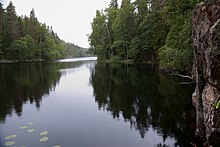
Lakes and other water bodies are common in the taiga. The Helvetinjärvi National Park, Finland, is situated in the closed canopy taiga (mid-boreal to south-boreal)[25] with mean annual temperature of 4 °C (39 °F).[26]
Precipitation[]
The taiga experiences relatively low precipitation throughout the year (generally 200–750 mm (7.9–29.5 in) annually, 1,000 mm (39 in) in some areas), primarily as rain during the summer months, but also as snow or fog. Snow may remain on the ground for as long as nine months in the northernmost extensions of the taiga biome.[27]
The fog, especially predominant in low-lying areas during and after the thawing of frozen Arctic seas, stops sunshine from getting through to plants even during the long summer days. As evaporation is consequently low for most of the year, annual precipitation exceeds evaporation, and is sufficient to sustain the dense vegetation growth including large trees. This explains the striking difference in biomass per square metre between the Taiga and the Steppe biomes, (in warmer climates), where evapotranspiration exceeds precipitation, restricting vegetation to mostly grasses.

Late September in the fjords near Narvik, Norway. This oceanic part of the forest can see more than 1,000 mm (39 in) precipitation annually and has warmer winters than the vast inland taiga.
In general, taiga grows to the south of the 10 °C (50 °F) July isotherm, occasionally as far north as the 9 °C (48 °F) July isotherm,[28] with the southern limit more variable. Depending on rainfall, and taiga may be replaced by forest steppe south of the 15 °C (59 °F) July isotherm where rainfall is very low, but more typically extends south to the 18 °C (64 °F) July isotherm, and locally where rainfall is higher (notably in eastern Siberia and adjacent Outer Manchuria) south to the 20 °C (68 °F) July isotherm. In these warmer areas the taiga has higher species diversity, with more warmth-loving species such as Korean pine, Jezo spruce, and Manchurian fir, and merges gradually into mixed temperate forest or, more locally (on the Pacific Ocean coasts of North America and Asia), into coniferous temperate rainforests where oak and hornbeam appear and join the conifers, birch and Populus tremula.
Glaciation[]
The area currently classified as taiga in Europe and North America (except Alaska) was recently glaciated. As the glaciers receded they left depressions in the topography that have since filled with water, creating lakes and bogs (especially muskeg soil) found throughout the taiga.
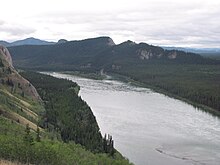
Soils[]

Taiga soil tends to be young and poor in nutrients, lacking the deep, organically enriched profile present in temperate deciduous forests.[29] The colder climate hinders development of soil, and the ease with which plants can use its nutrients.[29] The relative lack of deciduous trees, which drop huge volumes of leaves annually, and grazing animals, which contribute significant manure, are also factors. The diversity of soil organisms in the boreal forest is high, comparable to the tropical rainforest.[30]
Fallen leaves and moss can remain on the forest floor for a long time in the cool, moist climate, which limits their organic contribution to the soil. Acids from evergreen needles further leach the soil, creating spodosol, also known as podzol,[31] and the acidic forest floor often has only lichens and some mosses growing on it. In clearings in the forest and in areas with more boreal deciduous trees, there are more herbs and berries growing, and soils are consequently deeper.
Flora[]
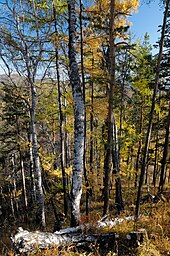
Since North America and Asia used to be connected by the Bering land bridge, a number of animal and plant species (more animals than plants) were able to colonize both continents and are distributed throughout the taiga biome (see Circumboreal Region). Others differ regionally, typically with each genus having several distinct species, each occupying different regions of the taiga. Taigas also have some small-leaved deciduous trees like birch, alder, willow, and poplar; mostly in areas escaping the most extreme winter cold. However, the Dahurian larch tolerates the coldest winters in the Northern Hemisphere in eastern Siberia. The very southernmost parts of the taiga may have trees such as oak, maple, elm and lime scattered among the conifers, and there is usually a gradual transition into a temperate mixed forest, such as the eastern forest-boreal transition of eastern Canada. In the interior of the continents with the driest climate, the boreal forests might grade into temperate grassland.
There are two major types of taiga. The southern part is the closed canopy forest, consisting of many closely spaced trees with mossy ground cover. In clearings in the forest, shrubs and wildflowers are common, such as the fireweed. The other type is the lichen woodland or sparse taiga, with trees that are farther-spaced and lichen ground cover; the latter is common in the northernmost taiga.[32] In the northernmost taiga the forest cover is not only more sparse, but often stunted in growth form; moreover, ice pruned asymmetric black spruce (in North America) are often seen, with diminished foliage on the windward side.[33] In Canada, Scandinavia and Finland, the boreal forest is usually divided into three subzones: The high boreal (north boreal) or taiga zone; the middle boreal (closed forest); and the southern boreal, a closed canopy boreal forest with some scattered temperate deciduous trees among the conifers,[34] such as maple, elm and oak. This southern boreal forest experiences the longest and warmest growing season of the biome, and in some regions (including Scandinavia, Finland and western Russia) this subzone is commonly used for agricultural purposes. The boreal forest is home to many types of berries; some are confined to the southern and middle closed boreal forest (such as wild strawberry and partridgeberry); others grow in most areas of the taiga (such as cranberry and cloudberry), and some can grow in both the taiga and the low arctic (southern part of) tundra (such as bilberry, bunchberry and lingonberry).

Taiga spruce forest in the Kenai National Wildlife Refuge, Alaska. Trees in this environment tend to grow closer to the trunk and not «bush out» in the normal manner of spruce trees.
The forests of the taiga are largely coniferous, dominated by larch, spruce, fir and pine. The woodland mix varies according to geography and climate so for example the Eastern Canadian forests ecoregion of the higher elevations of the Laurentian Mountains and the northern Appalachian Mountains in Canada is dominated by balsam fir Abies balsamea, while further north the Eastern Canadian Shield taiga of northern Quebec and Labrador is notably black spruce Picea mariana and tamarack larch Larix laricina.
Evergreen species in the taiga (spruce, fir, and pine) have a number of adaptations specifically for survival in harsh taiga winters, although larch, which is extremely cold-tolerant,[35] is deciduous. Taiga trees tend to have shallow roots to take advantage of the thin soils, while many of them seasonally alter their biochemistry to make them more resistant to freezing, called «hardening».[36] The narrow conical shape of northern conifers, and their downward-drooping limbs, also help them shed snow.[36]
Because the sun is low in the horizon for most of the year, it is difficult for plants to generate energy from photosynthesis. Pine, spruce and fir do not lose their leaves seasonally and are able to photosynthesize with their older leaves in late winter and spring when light is good but temperatures are still too low for new growth to commence. The adaptation of evergreen needles limits the water lost due to transpiration and their dark green color increases their absorption of sunlight. Although precipitation is not a limiting factor, the ground freezes during the winter months and plant roots are unable to absorb water, so desiccation can be a severe problem in late winter for evergreens.

Although the taiga is dominated by coniferous forests, some broadleaf trees also occur, notably birch, aspen, willow, and rowan. Many smaller herbaceous plants, such as ferns and occasionally ramps grow closer to the ground. Periodic stand-replacing wildfires (with return times of between 20 and 200 years) clear out the tree canopies, allowing sunlight to invigorate new growth on the forest floor. For some species, wildfires are a necessary part of the life cycle in the taiga; some, e.g. jack pine have cones which only open to release their seed after a fire, dispersing their seeds onto the newly cleared ground; certain species of fungi (such as morels) are also known to do this. Grasses grow wherever they can find a patch of sun, and mosses and lichens thrive on the damp ground and on the sides of tree trunks. In comparison with other biomes, however, the taiga has low biological diversity.
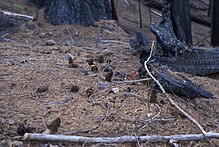
Conifer cones and morels after fire in a boreal forest.
Coniferous trees are the dominant plants of the taiga biome. A very few species in four main genera are found: the evergreen spruce, fir and pine, and the deciduous larch. In North America, one or two species of fir and one or two species of spruce are dominant. Across Scandinavia and western Russia, the Scots pine is a common component of the taiga, while taiga of the Russian Far East and Mongolia is dominated by larch. Rich in spruces, Scots pines in the western Siberian plain, the taiga is dominated by larch in Eastern Siberia, before returning to its original floristic richness on the Pacific shores. Two deciduous trees mingle throughout southern Siberia: birch and Populus tremula.[14]
Fauna[]

The boreal forest, or taiga, supports a relatively small variety of animals due to the harshness of the climate. Canada’s boreal forest includes 85 species of mammals, 130 species of fish, and an estimated 32,000 species of insects.[37] Insects play a critical role as pollinators, decomposers, and as a part of the food web. Many nesting birds rely on them for food in the summer months. The cold winters and short summers make the taiga a challenging biome for reptiles and amphibians, which depend on environmental conditions to regulate their body temperatures, and there are only a few species in the boreal forest including red-sided garter snake, common European adder, blue-spotted salamander, northern two-lined salamander, Siberian salamander, wood frog, northern leopard frog, boreal chorus frog, American toad, and Canadian toad. Most hibernate underground in winter. Fish of the taiga must be able to withstand cold water conditions and be able to adapt to life under ice-covered water. Species in the taiga include Alaska blackfish, northern pike, walleye, longnose sucker, white sucker, various species of cisco, lake whitefish, round whitefish, pygmy whitefish, Arctic lamprey, various grayling species, brook trout (including sea-run brook trout in the Hudson Bay area), chum salmon, Siberian taimen, lenok and lake chub.
The taiga is home to a number of large herbivorous mammals, such as moose and reindeer/caribou. Some areas of the more southern closed boreal forest also have populations of other deer species such as the elk (wapiti) and roe deer.[38][39] The largest animal in the taiga is the wood bison, found in northern Canada, Alaska and has been newly introduced into the Russian far-east.[40] Small mammals of the Taiga biome include rodent species including beaver, squirrel, North American porcupine and vole, as well as a small number of lagomorph species such as snowshoe hare and mountain hare. These species have adapted to survive the harsh winters in their native ranges. Some larger mammals, such as bears, eat heartily during the summer in order to gain weight, and then go into hibernation during the winter. Other animals have adapted layers of fur or feathers to insulate them from the cold. Predatory mammals of the taiga must be adapted to travel long distances in search of scattered prey or be able to supplement their diet with vegetation or other forms of food (such as raccoons). Mammalian predators of the taiga include Canada lynx, Eurasian lynx, stoat, Siberian weasel, least weasel, sable, American marten, North American river otter, European otter, American mink, wolverine, Asian badger, fisher, gray wolf, coyote, red fox, brown bear, American black bear, Asiatic black bear, polar bear (only small areas at the taiga – tundra ecotone) and Siberian tiger.
More than 300 species of birds have their nesting grounds in the taiga.[41] Siberian thrush, white-throated sparrow, and black-throated green warbler migrate to this habitat to take advantage of the long summer days and abundance of insects found around the numerous bogs and lakes. Of the 300 species of birds that summer in the taiga only 30 stay for the winter.[42] These are either carrion-feeding or large raptors that can take live mammal prey, including golden eagle, rough-legged buzzard (also known as the rough-legged hawk), and raven, or else seed-eating birds, including several species of grouse and crossbills.
Fire[]

Fire has been one of the most important factors shaping the composition and development of boreal forest stands;[43] it is the dominant stand-renewing disturbance through much of the Canadian boreal forest.[44] The fire history that characterizes an ecosystem is its fire regime, which has 3 elements: (1) fire type and intensity (e.g., crown fires, severe surface fires, and light surface fires), (2) size of typical fires of significance, and (3) frequency or return intervals for specific land units.[45] The average time within a fire regime to burn an area equivalent to the total area of an ecosystem is its fire rotation (Heinselman 1973)[46] or fire cycle (Van Wagner 1978).[47] However, as Heinselman (1981) noted,[45] each physiographic site tends to have its own return interval, so that some areas are skipped for long periods, while others might burn two-times or more often during a nominal fire rotation.
The dominant fire regime in the boreal forest is high-intensity crown fires or severe surface fires of very large size, often more than 10,000 ha (100 km2), and sometimes more than 400,000 ha (4000 km2).[45] Such fires kill entire stands. Fire rotations in the drier regions of western Canada and Alaska average 50–100 years, shorter than in the moister climates of eastern Canada, where they may average 200 years or more. Fire cycles also tend to be long near the tree line in the subarctic spruce-lichen woodlands. The longest cycles, possibly 300 years, probably occur in the western boreal in floodplain white spruce.[45]
Amiro et al. (2001) calculated the mean fire cycle for the period 1980 to 1999 in the Canadian boreal forest (including taiga) at 126 years.[44] Increased fire activity has been predicted for western Canada, but parts of eastern Canada may experience less fire in future because of greater precipitation in a warmer climate.[48]
The mature boreal forest pattern in the south shows balsam fir dominant on well-drained sites in eastern Canada changing centrally and westward to a prominence of white spruce, with black spruce and tamarack forming the forests on peats, and with jack pine usually present on dry sites except in the extreme east, where it is absent.[49] The effects of fires are inextricably woven into the patterns of vegetation on the landscape, which in the east favour black spruce, paper birch, and jack pine over balsam fir, and in the west give the advantage to aspen, jack pine, black spruce, and birch over white spruce. Many investigators have reported the ubiquity of charcoal under the forest floor and in the upper soil profile.[50] Charcoal in soils provided Bryson et al. (1965) with clues about the forest history of an area 280 km north of the then-current tree line at Ennadai Lake, District Keewatin, Northwest Territories.[51]

The Shanta Creek Fire began in a taiga area that had not had a major fire in over 130 years, and so was allowed to burn unchecked until it began to threaten populated areas.
Two lines of evidence support the thesis that fire has always been an integral factor in the boreal forest: (1) direct, eye-witness accounts and forest-fire statistics, and (2) indirect, circumstantial evidence based on the effects of fire, as well as on persisting indicators.[49] The patchwork mosaic of forest stands in the boreal forest, typically with abrupt, irregular boundaries circumscribing homogenous stands, is indirect but compelling testimony to the role of fire in shaping the forest. The fact is that most boreal forest stands are less than 100 years old, and only in the rather few areas that have escaped burning are there stands of white spruce older than 250 years.[49] The prevalence of fire-adaptive morphologic and reproductive characteristics of many boreal plant species is further evidence pointing to a long and intimate association with fire. Seven of the ten most common trees in the boreal forest—jack pine, lodgepole pine, aspen, balsam poplar (Populus balsamifera), paper birch, tamarack, black spruce – can be classed as pioneers in their adaptations for rapid invasion of open areas. White spruce shows some pioneering abilities, too, but is less able than black spruce and the pines to disperse seed at all seasons. Only balsam fir and alpine fir seem to be poorly adapted to reproduce after fire, as their cones disintegrate at maturity, leaving no seed in the crowns.
The oldest forests in the northwest boreal region, some older than 300 years, are of white spruce occurring as pure stands on moist floodplains.[52] Here, the frequency of fire is much less than on adjacent uplands dominated by pine, black spruce and aspen. In contrast, in the Cordilleran region, fire is most frequent in the valley bottoms, decreasing upward, as shown by a mosaic of young pioneer pine and broadleaf stands below, and older spruce–fir on the slopes above.[49] Without fire, the boreal forest would become more and more homogeneous, with the long-lived white spruce gradually replacing pine, aspen, balsam poplar, and birch, and perhaps even black spruce, except on the peatlands.[53]
Threats[]
Human activities[]

Some of the larger cities situated in this biome are Murmansk,[54] Arkhangelsk, Yakutsk, Anchorage,[55] Yellowknife, Tromsø, Luleå, and Oulu.
Large areas of Siberia’s taiga have been harvested for lumber since the collapse of the Soviet Union. Previously, the forest was protected by the restrictions of the Soviet Forest Ministry, but with the collapse of the Union, the restrictions regarding trade with Western nations have vanished. Trees are easy to harvest and sell well, so loggers have begun harvesting Russian taiga evergreen trees for sale to nations previously forbidden by Soviet law.[56]
In Canada, only eight percent of the taiga is protected from development, and the provincial governments allows clearcutting to occur on Crown land, which destroys the forest in large blocks. The blocks are replanted with monocrop seedlings in the following season, but the trees do not grow back for many years, and the forest ecosystem is radically changed for 100s of years. Products from logged boreal forests include toilet paper, copy paper, newsprint, and lumber. More than 90% of boreal forest products from Canada are exported for consumption and processing in the United States.
Most companies that harvest in Canadian forests use some certification by agencies such as the Forest Stewardship Council (FSC), Sustainable Forests Initiative (SFI), or the Canadian Standards Association (CSA), in their marketing. While the certification process differs between these groups, all of them include some mention of undefined «forest stewardship», «respect for aboriginal peoples», and compliance with local, provincial or national environmental laws, forest worker safety, education and training, and other issues. The certification is largely about tracking, to ensure traceability, and does not de-certify lumber obtained from clearcuts, or taken without the consent of aboriginal peoples.
Climate change[]

Seney National Wildlife Refuge
During the last quarter of the twentieth century, the zone of latitude occupied by the boreal forest experienced some of the greatest temperature increases on Earth. Winter temperatures have increased more than summer temperatures. In summer, the daily low temperature has increased more than the daily high temperature.[57]
The number of days with extremely cold temperatures (e.g., −20 to −40 °C (−4 to −40 °F) has decreased irregularly but systematically in nearly all the boreal region, allowing better survival for tree-damaging insects.[58]
In Fairbanks, Alaska, the length of the frost-free season has increased from 60 to 90 days in the early twentieth century to about 120 days a century later. Summer warming has been shown to increase water stress and reduce tree growth in dry areas of the southern boreal forest in central Alaska, western Canada and portions of far eastern Russia. Precipitation is relatively abundant in Scandinavia, Finland, northwest Russia and eastern Canada, where a longer growth season (i.e. the period when sap flow is not impeded by frozen water) accelerate tree growth. As a consequence of this warming trend, the warmer parts of the boreal forests are susceptible to replacement by grassland, parkland or temperate forest.[59]
In Siberia, the taiga is converting from predominantly needle-shedding larch trees to evergreen conifers in response to a warming climate. This is likely to further accelerate warming, as the evergreen trees will absorb more of the sun’s rays. Given the vast size of the area, such a change has the potential to affect areas well outside of the region.[60]
In much of the boreal forest in Alaska, the growth of white spruce trees are stunted by unusually warm summers, while trees on some of the coldest fringes of the forest are experiencing faster growth than previously.[61] Lack of moisture in the warmer summers are also stressing the birch trees of central Alaska.[62]
Insects[]
Recent years[when?] have seen outbreaks of insect pests in forest-destroying plagues: the spruce-bark beetle (Dendroctonus rufipennis) in Yukon and Alaska;[63] the mountain pine beetle in British Columbia; the aspen-leaf miner; the larch sawfly; the spruce budworm (Choristoneura fumiferana);[64] the spruce coneworm.[65]
Pollution[]
The effect of sulphur dioxide on woody boreal forest species was investigated by Addison et al. (1984),[66] who exposed plants growing on native soils and tailings to 15.2 μmol/m3 (0.34 ppm) of SO2 on CO2 assimilation rate (NAR). The Canadian maximum acceptable limit for atmospheric SO2 is 0.34 ppm. Fumigation with SO2 significantly reduced NAR in all species and produced visible symptoms of injury in 2–20 days. The decrease in NAR of deciduous species (trembling aspen [Populus tremuloides], willow [Salix], green alder [Alnus viridis], and white birch [Betula papyrifera]) was significantly more rapid than of conifers (white spruce, black spruce [Picea mariana], and jack pine [Pinus banksiana]) or an evergreen angiosperm (Labrador tea) growing on a fertilized Brunisol. These metabolic and visible injury responses seemed to be related to the differences in S uptake owing in part to higher gas exchange rates for deciduous species than for conifers. Conifers growing in oil sands tailings responded to SO2 with a significantly more rapid decrease in NAR compared with those growing in the Brunisol, perhaps because of predisposing toxic material in the tailings. However, sulphur uptake and visible symptom development did not differ between conifers growing on the 2 substrates.
Acidification of precipitation by anthropogenic, acid-forming emissions has been associated with damage to vegetation and reduced forest productivity, but 2-year-old white spruce that were subjected to simulated acid rain (at pH 4.6, 3.6, and 2.6) applied weekly for 7 weeks incurred no statistically significant (P 0.05) reduction in growth during the experiment compared with the background control (pH 5.6) (Abouguendia and Baschak 1987).[67] However, symptoms of injury were observed in all treatments, the number of plants and the number of needles affected increased with increasing rain acidity and with time. Scherbatskoy and Klein (1983)[68] found no significant effect of chlorophyll concentration in white spruce at pH 4.3 and 2.8, but Abouguendia and Baschak (1987)[67] found a significant reduction in white spruce at pH 2.6, while the foliar sulphur content significantly greater at pH 2.6 than any of the other treatments.
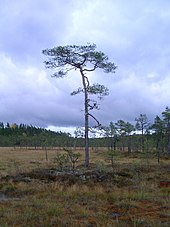
Peat bog in Dalarna, Sweden. Bogs and peatland are widespread in the taiga. They are home to a unique flora, and store vast amounts of carbon. In western Eurasia, the Scots pine is common in the boreal forest.
The taiga stores enormous quantities of carbon, more than the world’s temperate and tropical forests combined, much of it in wetlands and peatland.[69] In fact, current estimates place boreal forests as storing twice as much carbon per unit area as tropical forests.[70]
Some nations are discussing protecting areas of the taiga by prohibiting logging, mining, oil and gas production, and other forms of development. Responding to a letter signed by 1,500 scientists calling on political leaders to protect at least half of the boreal forest,[71] two Canadian provincial governments, Ontario and Quebec, offered election promises to discuss measures in 2008 that might eventually classify at least half of their northern boreal forest as «protected».[72][73] Although both provinces admitted it would take decades to plan, working with Aboriginal and local communities and ultimately mapping out precise boundaries of the areas off-limits to development, the measures were touted to create some of the largest protected areas networks in the world once completed. Since then, however, very little action has been taken.
For instance, in February 2010 the Canadian government established limited protection for 13,000 square kilometres of boreal forest by creating a new 10,700-square-kilometre park reserve in the Mealy Mountains area of eastern Canada and a 3,000-square-kilometre waterway provincial park that follows alongside the Eagle River from headwaters to sea.[74] This represents .001 percent of Canada’s boreal forest. In the rest, mining, logging and tar sands extraction continue unabated.
Natural disturbance[]
One of the biggest areas of research and a topic still full of unsolved questions is the recurring disturbance of fire and the role it plays in propagating the lichen woodland.[75] The phenomenon of wildfire by lightning strike is the primary determinant of understory vegetation, and because of this, it is considered to be the predominant force behind community and ecosystem properties in the lichen woodland.[76] The significance of fire is clearly evident when one considers that understory vegetation influences tree seedling germination in the short term and decomposition of biomass and nutrient availability in the long term.[76] The recurrent cycle of large, damaging fire occurs approximately every 70 to 100 years.[77] Understanding the dynamics of this ecosystem is entangled with discovering the successional paths that the vegetation exhibits after a fire. Trees, shrubs, and lichens all recover from fire-induced damage through vegetative reproduction as well as invasion by propagules.[78] Seeds that have fallen and become buried provide little help in re-establishment of a species. The reappearance of lichens is reasoned to occur because of varying conditions and light/nutrient availability in each different microstate.[78] Several different studies have been done that have led to the formation of the theory that post-fire development can be propagated by any of four pathways: self replacement, species-dominance relay, species replacement, or gap-phase self replacement.[75] Self-replacement is simply the re-establishment of the pre-fire dominant species. Species-dominance relay is a sequential attempt of tree species to establish dominance in the canopy. Species replacement is when fires occur in sufficient frequency to interrupt species dominance relay. Gap-Phase Self-Replacement is the least common and so far has only been documented in Western Canada. It is a self replacement of the surviving species into the canopy gaps after a fire kills another species. The particular pathway taken after fire disturbance depends on how the landscape is able to support trees as well as fire frequency.[79] Fire frequency has a large role in shaping the original inception of the lower forest line of the lichen woodland taiga.
It has been hypothesized by Serge Payette that the spruce-moss forest ecosystem was changed into the lichen woodland biome due to the initiation of two compounded strong disturbances: large fire and the appearance and attack of the spruce budworm.[80] The spruce budworm is a deadly insect to the spruce populations in the southern regions of the taiga. J.P. Jasinski confirmed this theory five years later stating, «Their [lichen woodlands] persistence, along with their previous moss forest histories and current occurrence adjacent to closed moss forests, indicate that they are an alternative stable state to the spruce–moss forests».[81]
Taiga ecoregions[]
See also[]
- Birds of North American boreal forests
- Boreal Forest Conservation Framework
- Drunken trees – effect of global warming on the taiga
- Intact forest landscape
- Agafia Lykov
- Scandinavian and Russian taiga
- Success of fire suppression in northern forests
- Taiga Rescue Network (TRN)
References[]
- ^ «taiga | Definition of taiga in English by Oxford Dictionaries». Oxford Dictionaries | English. Retrieved 2018-07-17.
- ^ «Definition of taiga | Dictionary.com». dictionary.com. Retrieved 2019-06-12.
- ^ a b c «Berkeley: The forest biome». Ucmp.berkeley.edu. Archived from the original on 2019-06-20. Retrieved 2019-05-12.
- ^ «List of Plants & Animals in the Canadian Wilderness». Trails.com. 2010-07-27. Retrieved 2016-12-26.
- ^ Hoffmann, Robert S. (1958). «The Meaning of the Word «Taiga»«. Ecology. 39 (3): 540–541. doi:10.2307/1931768. JSTOR 1931768.
- ^ Graham, Karen (2021-05-19). «‘Zombie fires’ may become more common as the climate warms». Digital Journal. Retrieved 2021-06-04.
- ^ «How should the world’s nations account for the carbon absorbed by their forests? We better figure it out». Bellona.org. 2021-05-18. Retrieved 2021-06-04.
- ^ «Taiga biological station: FAQ». Wilds.m.ca. Retrieved 2011-02-21.
- ^ Sporrong, Ulf (2003). «The Scandinavian landscape and its resources». In Helle, Knut (ed.). The Cambridge History of Scandinavia. Cambridge University Press. pp. 22. ISBN 9780521472999.
- ^ «Marietta the Taiga and Boreal forest». Marietta.edu. Retrieved 2011-02-21.
- ^ «Yakutsk climate». Worldclimate.com. 2007-02-04. Retrieved 2011-02-21.
- ^ «Interior Alaska-Yukon lowland taiga». Terrestrial Ecoregions. World Wildlife Fund. Retrieved 2011-02-21.
- ^ «radford:Taiga climate». Radford.edu. Archived from the original on 2011-06-09. Retrieved 2011-02-21.
- ^ a b Encyclopedia Universalis édition 1976 Vol. 2 ASIE – Géographie physique, p. 568 (in French)
- ^ «The eastern forest – boreal transition». Terrestrial Ecoregions. World Wildlife Fund. Retrieved 2011-02-21.
- ^ «Canada: Taiga Shield reference» (PDF). Enr.gov.nt.ca. Retrieved 28 February 2022.[permanent dead link]
- ^ «Climate of Canadian ecozones». Geography.ridley.on.ca. Archived from the original on 2011-05-05. Retrieved 2011-02-21.
- ^ «Taiga». Blueplanetbiomes. Archived from the original on 2011-04-10. Retrieved 2011-02-21.
- ^ «Southwest Yukon:Frost-free days». Yukon.taiga.net. Archived from the original on 2011-07-24. Retrieved 2011-02-21.
- ^ «Kenozersky National Park». Wild-russia.org. Retrieved 2011-02-21.
- ^ «University of Helsinki: Carabid diversity in Finnish taiga» (PDF). Retrieved 2011-02-21.
- ^ «Tundra». Blueplanetbiomes. Retrieved 2011-02-21.
- ^ «NatureWorks:Tundra». Nhptv.org. Retrieved 2011-02-21.
- ^ «The Arctic». saskschools.ca. Archived from the original on 2011-04-10. Retrieved 2011-02-21.
- ^ «Finland vegetation zone and freshwater biome» (PDF). 113.139. Retrieved 19 April 2018.
- ^ «Tampere/Pirkkala, Finland Weather History and Climate Data». Worldclimate.com. 2007-02-04. Retrieved 2011-02-21.
- ^ A.P. Sayre, Taiga, (New York: Twenty-First Century Books, 1994) 16.
- ^ Arno & Hammerly 1984, Arno et al. 1995
- ^ a b Sayre, 19.
- ^ «Study reveals for first time true diversity of life in soils across the globe, new species discovered». Physorg.com. Retrieved 2012-01-14.
- ^ Sayre, 19–20.
- ^ Sayre, 12–13.
- ^ C. Michael Hogan, Black Spruce: Picea mariana, GlobalTwitcher.com, ed. Nicklas Stromberg, November, 2008 Archived 2011-10-05 at the Wayback Machine
- ^ George H. La Roi. «Boreal forest». The Canadian Encyclopedia. Archived from the original on 2015-10-16. Retrieved 2013-11-27.
- ^ «Forest». forest.jrc.ec.europa.eu. Retrieved 2018-02-04.
- ^ a b Sayre, 23.
- ^ «hww:Nature in the boreal forest biome». Hww.ca. Archived from the original on 2011-01-03. Retrieved 2011-02-21.
- ^ «Wapiti facts and range». Hww.ca. Archived from the original on 2011-01-03. Retrieved 2011-02-21.
- ^ «western roe deer: facts and range». Borealforest.org. Archived from the original on 2011-05-26. Retrieved 2011-02-21.
- ^ «Government of Canada to Send Wood Bison to Russian Conservation Project». Archived from the original on 2013-02-09. Retrieved 2012-12-11.
- ^ «Boreal songbird initiative». Borealbirds.org. Retrieved 2011-02-21.
- ^ Sayre, 28.
- ^ Rowe, J. S. (1955). «Factors influencing white spruce reproduction in Manitoba and Saskatchewan». Can. Dep. Northern Affairs and National Resources. For. Branch, For. Res. Div., Ottawa ON, Project MS-135, Silv. Tech. Note 3.
- ^ a b Amiro, B. D.; Stocks, B. J.; Alexander, M. E.; Flannigan, M. D.; Wotton, B. M. (2001). «Fire, climate change, carbon and fuel management in the Canadian boreal forest». Internat. J. Wildland Fire. 10 (4): 405–13. doi:10.1071/WF01038.
- ^ a b c d Heinselman, M. L. (1981). «Fire intensity and frequency as factors in the distribution and structure of northern ecosystems». Proceedings of the Conference: Fire Regimes in Ecosystem Properties, Dec. 1978, Honolulu, Hawaii. USDA. For. Serv., Washington DC, Gen. Tech. Rep. WO-26. pp. 7–57.
- ^ Heinselman, M. L. (1973). «Fire in the virgin forests of the Boundary Waters Canoe Area, Minnesota». Quat. Res. 3 (3): 329–82. Bibcode:1973QuRes…3..329H. doi:10.1016/0033-5894(73)90003-3.
- ^ Van Wagner, C. E. (1978). «Age-class distribution and the forest cycle». Can. J. For. Res. 8: 220–27. doi:10.1139/x78-034.
- ^ Flannigan, M. D.; Bergeron, Y.; Engelmark, O.; Wotton, B. M. (1998). «Future wildfire in circumboreal forests in relation to global warming». J. Veg. Sci. 9 (4): 469–76. doi:10.2307/3237261. JSTOR 3237261.
- ^ a b c d Rowe, J. S.; Scotter, G. W. (1973). «Fire in the boreal forest». Quaternary Res. 3 (3): 444–64. Bibcode:1973QuRes…3..444R. doi:10.1016/0033-5894(73)90008-2. [E3680, Coates et al. 1994]
- ^ La Roi, G. H. (1967). «Ecological studies in the boreal spruce–fir forests of the North American taiga. I. Analysis of the vascular flora». Ecol. Monogr. 37 (3): 229–53. doi:10.2307/1948439. JSTOR 1948439.
- ^ Bryson, R. A.; Irving, W. H.; Larson, J. A. (1965). «Radiocarbon and soil evidence of former forest in the southern Canadian tundra». Science. 147 (3653): 46–48. Bibcode:1965Sci…147…46B. doi:10.1126/science.147.3653.46. PMID 17799777. S2CID 46218641.
- ^ Rowe, J. S. (1970). «Spruce and fire in northwest Canada and Alaska». In Komarek, E. V. (ed.). Proc. 10th Annual Tall Timbers Fire Ecology Conference, Tallahassee FL. pp. 245–54.
- ^ Raup, H. M.; Denny, C. S. (1950). «Photointerpretation of the terrain along the southern part of the Alaska highway». US Geol. Surv. Bull. 963-D: 95–135. doi:10.3133/b963D.
- ^ «Murmansk climate». Worldclimate.com. 2007-02-04. Retrieved 2011-02-21.
- ^ «Anchorage climate». Worldclimate.com. 2007-02-04. Retrieved 2011-02-21.
- ^ «Taiga Deforestation». American.edu. Retrieved 2011-02-21.
- ^ Wilmking, M. (2009-10-09). «Coincidence and Contradiction in the Warming Boreal Forest». Geophysical Research Letters. 32 (15): L15715. Bibcode:2005GeoRL..3215715W. doi:10.1029/2005GL023331. Retrieved 2012-01-14.
- ^ Seidl, Rupert; Thom, Dominik; Kautz, Markus; Martin-Benito, Dario; Peltoniemi, Mikko; Vacchiano, Giorgio; Wild, Jan; Ascoli, Davide; Petr, Michal; Honkaniemi, Juha; Lexer, Manfred J.; Trotsiuk, Volodymyr; Mairota, Paola; Svoboda, Miroslav; Fabrika, Marek; Nagel, Thomas A.; Reyer, Christopher P. O. (2017-05-31). «Forest disturbances under climate change». Nature. 7 (6): 395–402. Bibcode:2017NatCC…7..395S. doi:10.1038/nclimate3303. PMC 5572641. PMID 28861124.
- ^ «Archived copy». Archived from the original on 2011-07-27. Retrieved 2011-03-25.
{{cite web}}: CS1 maint: archived copy as title (link) - ^ Shuman, Jacquelyn Kremper; Shugart, Herman Henry; O’Halloran, Thomas Liam (2011-03-25). «Russian boreal forests undergoing vegetation change, study shows». Global Change Biology. 17 (7): 2370–84. Bibcode:2011GCBio..17.2370S. doi:10.1111/j.1365-2486.2011.02417.x. S2CID 86357569. Retrieved 2012-01-14.
- ^ «Fairbanks Daily News-Miner – New study states boreal forests shifting as Alaska warms». Newsminer.com. Archived from the original on 2012-01-19. Retrieved 2012-01-14.
- ^ Morello, Lauren. «Forest Changes in Alaska Reveal Changing Climate». Scientific American. Retrieved 2012-01-14.
- ^ «A New Method to Reconstruct Bark Beetle Outbreaks». Colorado.edu. Archived from the original on 2011-06-06. Retrieved 2011-02-21.
- ^ «Spruce budworm and sustainable management of the boreal forest». Cfs.nrcan.gc.ca. 2007-12-05. Archived from the original on 2008-12-02. Retrieved 2011-02-21.
- ^ «ALASKA’S CHANGING BOREAL FOREST» (PDF). Fs.fed.us. Retrieved 2022-02-28.
- ^ Addison, P.A.; Malhotra, S.S.; Khan, A.A. 1984. «Effect of sulfur dioxide on woody boreal forest species grown on native soils and tailings». J. Environ. Qual. 13(3):333–36.
- ^ a b Abouguendia, Z.M.; Baschak, L.A. 1987. «Response of two western Canadian conifers to simulated acidic precipitation». Water, Air and Soil Pollution 33:15–22.
- ^ Scherbatskoy, T.; Klein, R.M. 1983. «Response of spruce Picea glauca and birch Betula alleghaniensis foliage to leaching by acidic mists». J. Environ. Qual. 12:189–95.
- ^ Ruckstuhl, K. E.; Johnson, E. A.; Miyanishi, K. (July 2008). «Boreal forest and global change». Philos. Trans. R. Soc. Lond. B Biol. Sci. 363 (1501): 2245–49. doi:10.1098/rstb.2007.2196. PMC 2387060. PMID 18006417.
- ^ «Report: The Carbon the World Forgot». Boreal Songbird Initiative. 2014-05-12.
- ^ «1,500 Scientists Worldwide Call for Protection of Canada’s Boreal Forest». Borealbirds.org. Retrieved 25 June 2012.
- ^ Gillespie, Kerry (2008-07-15). «Ontario to protect vast tract». Toronto Star. Retrieved 25 June 2012.
- ^ Marsden, William (2008-11-16). «Charest promises to protect north». Montreal Gazette. Archived from the original on 5 April 2011. Retrieved 25 June 2012.
- ^ Braun, David (February 7, 2010). «Boreal landscapes added to Canada’s parks Boreal landscapes added to Canada’s parks». NatGeo News Watch: News Editor David Braun’s Eye on the World. National Geographic Society. Retrieved 17 February 2010.
- ^ a b Kurkowski, 1911.
- ^ a b Nilsson, 421.
- ^ Johnson, 212.
- ^ a b Johnson, 200
- ^ Kurkowski, 1912.
- ^ Payette, 289.
- ^ Jasinski, 561.
- General references
- Arno, S. F. & Hammerly, R. P. (1984). Timberline. Mountain and Arctic Forest Frontiers. Seattle: The Mountaineers. ISBN 0-89886-085-7.
- Arno, S. F.; Worral, J. & Carlson, C. E. (1995). «Larix lyallii: Colonist of tree line and talus sites». In Schmidt, W. C. & McDonald, K. J. (eds.). Ecology and Management of Larix Forests: A Look Ahead. USDA Forest Service General Technical Report GTR-INT-319. pp. 72–78.
- Hoffmann, Robert S. (1958). «The Meaning of the Word ‘Taiga’«. Ecology. 39 (3): 540–541. doi:10.2307/1931768. JSTOR 1931768.
- Nilsson, M. C. (2005). «Understory vegetation as a forest ecosystem driver, evidence from the northern Swedish boreal forest». Frontiers in Ecology and the Environment. 3 (8): 421–428. doi:10.1890/1540-9295(2005)003[0421:UVAAFE]2.0.CO;2.
- Kurkowski, Thomas (2008). «Relative Importance of Different Secondary Successional Pathways in an Alaskan Boreal Forest». Canadian Journal of Forest Research. 38 (7): 1911–1923. doi:10.1139/X08-039. S2CID 17586608.
- Payette, Serge (2000). «Origin of the lichen woodland at its southern range limit in eastern Canada: the catastrophic impact of insect defoliators and fire on the spruce-moss forest». Canadian Journal of Forest Research. 30 (2): 288–305. doi:10.1139/x99-207.
- Johnson, E. A. (1981). «Vegetation Organization and Dynamics of Lichen Woodland Communities in the Northwest Territories». Ecology. 62 (1): 200–215. doi:10.2307/1936682. JSTOR 1936682. S2CID 86749540.
- Jasinski, J. P. (2005). «The Creation of Alternative Stable States in Southern Boreal Forest: Quebec, Canada». Ecological Monographs. 75 (4): 561–583. doi:10.1890/04-1621.
Further reading[]
- Sayre, April Pulley (1994), Taiga, Twenty-First Century Books, ISBN 978-0-8050-2830-0
- Gawthrop, Daniel (1999), Vanishing Halo: Saving the Boreal Forest, Greystone Books/David Suzuki Foundation, ISBN 978-0-89886-681-0
- Day, Trevor; Richard Garratt (2006), Taiga, Facts On File, ISBN 978-0-8160-5329-2
External links[]
 |
Wikimedia Commons has media related to Taiga. |
- The Conservation Value of the North American Boreal Forest from an Ethnobotanical perspective a report by the Boreal Songbird Initiative
- Boreal Canadian Initiative
- Boreal Forests Project Regeneration
- International Boreal Conservation campaign
- Tundra and Taiga
- Threats to Boreal Forests Greenpeace
- Campaign against lumber giant Weyerhaeuser’s logging practices in the Canadian boreal forest Rainforest Action Network
- Arctic and Taiga Canadian Geographic
- Terraformers Canadian Taiga Conservation Foundation
- Coniferous Forest, Earth Observatory Archived 2008-07-04 at the Wayback Machine NASA
- Taiga Rescue Network (TRN) A network of NGOs, indigenous peoples or individuals that works to protect the boreal forests.
- Index of Boreal Forests/Taiga ecoregions at bioimages.vanderbilt.edu
- The Canadian Boreal Forest The Nature Conservancy and its partners
- Slater museum of natural history: Taiga
- Taiga Biological Station founded by Dr. William (Bill) Pruitt, Jr., University of Manitoba.
Announcements
1,500 highly respected scientists from more than 50 countries around the world call for protection of Canada’s boreal forest. The scientists identify the 1.4 billion acre Canadian boreal forest as one of the largest intact forest and wetland ecosystems remaining on earth.
However, the boreal forest is under increasing pressure from corporate logging, mining and oil and gas operations and only 12% has been protected to date, far less than what is scientifically recognized as necessary to sustain the ecosystem over time.
The scientists’ letter recommends preserving a minimum of half of Canada’s boreal forest in protected areas while allowing only carefully managed development on the rest, in accordance with the Boreal Forest Conservation Framework, a plan already endorsed by Canadian conservation groups, 25 Canadian First Nations, and more than 75 major businesses with annual sales of $30 billion.
Selected Media Coverage
The Globe and Mail: Scientists plead for protection of forests
Nature: Canadian government pushed to protect land
The Vancouver Sun: Scientists urge Canada to save forests
New Zealand Herald: Plea to rescue the forests
An international panel of scientists is recommending protections for Canada’s Boreal Forest. The 1.4-billion-acre region encompasses some of the largest blocks of intact forest and wetlands remaining on the planet. Millions of ducks breed in this vast, largely unspoiled area. In some years, this amounts to about 40 percent of the continental duck population.
The Boreal Forest is under increasing threat from development, including forestry, mining, oil and gas, and hydropower. The authors of a paper released today recommend protecting at least 50 percent of the Boreal Forest. They also recommend using world-class sustainable development practices to conserve wildlife habitat and natural processes in the other 50 percent. These protections and conservation measures will be achieved through the cooperative work of progressive industries, First Nations, governments, the Pew Charitable Trust and conservation groups like Ducks Unlimited.
«Protecting the water and key waterfowl habitats within the Boreal Forest is achievable under the 50/50 framework we are recommending,» said Dr. Frederic Reid, Director of DU’s Boreal and Arctic Conservation Programs and a member of the International Boreal Conservation Science Panel. «Ducks such as scaup, ring-necked ducks, green-winged teal, American wigeon and bufflehead all will benefit with this conservation strategy.»
The International Boreal Conservation Science Panel recommendations were announced today at the International Congress for Conservation Biology in Baltimore. The panel is an independent, interdisciplinary team of scientists from the U.S. and Canada, including representatives from Ducks Unlimited and DU Canada. Their report—Conserving the World’s Last Great Forest is Possible: Here’s How—outlines how governments across Canada can balance the maintenance of the natural heritage of Canada’s boreal forest region with industrial development. It includes examples from across Canada where collaborative efforts aimed at positive solutions are balancing protection with economic opportunities.
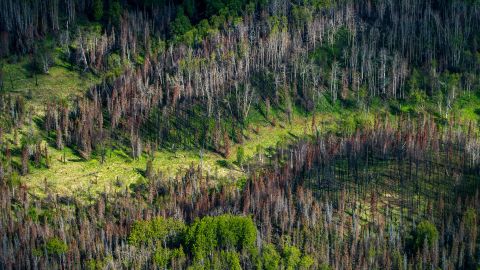
CNN
—
Wildfires in the vast and pristine forests of Canada, Europe and the far Northern US could release an enormous amount of planet-warming emissions between now and 2050, putting the world’s climate goals in peril, scientists reported Wednesday.
A study published in the journal Science Advances found that wildfires in the North American boreal forests — already increasing due to global warming — could spew nearly 12 gigatons of carbon emissions into the atmosphere over the next three decades. That’s equivalent to the annual emissions of 2.6 billion fossil fuel-powered cars.
Carly Phillips, lead author of the study and a fellow with the Union of Concerned Scientists’ Western States Climate Team, said it’s a “cascade of consequences” brought on by the climate crisis.
“The biggest takeaway is that these fires in boreal areas are releasing huge quantities of carbon to the atmosphere, and as a result are really jeopardizing our ability to meet certain climate targets.” Phillips told CNN. “A lot is at stake.”
“It almost goes without saying that there are real effects for people on the ground who are living through these wildfires,” she added. “There are transportation impacts, tourism impacts, economic impacts and so on from these fires that can be really devastating on local communities.”
The boreal forest, also known as the “taiga,” is the world’s largest and most intact biome, forming a sprawling, dense ring of woodlands situated below the Arctic circle and spanning vast tracts of the Northern Hemisphere in North America, Europe and Russia. This ecosystem — with trees like spruce, pine, and fir — make up about one-third of all forests on the planet.
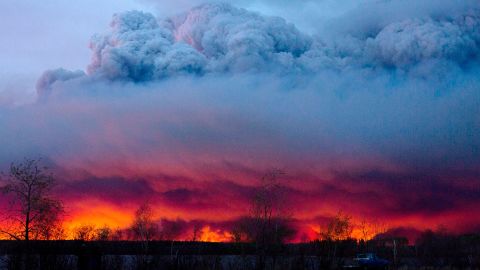
In the past, researchers have called the boreal forests “the carbon the world forgot,” because it stores roughly 30 to 40% of all land-based carbon in the world, mostly tucked in the soil. The northern hemisphere’s cold temperatures prevent dead biomass from breaking down, storing carbon for thousands of years deep in the permafrost.
But as climate change and industrial activities advanced deeper into the vital ecosystem, degrading the land and spewing more planet-warming gases that fuel devastating wildfires, many climate researchers fear that the boreal could reach a tipping point, beyond which they shift from absorbing carbon dioxide from the atmosphere to emitting it.
The boreal forests are warming twice as fast as other parts of the world. Over the years, researchers say it has become a vicious climate change feedback loop: the emissions from wildfires contributes to increasing global temperatures, which in turn fuel wildfires.
“One of the challenging and interesting things about wildfires right now is that they are both driven by climate change and drivers of climate change,” Phillips said.
The burned area in the Alaskan boreal forests could increase as much as 169% by 2050, the study notes, while burned area in the Canadian boreal could expand by up to 150%.
Philips says their findings are likely conservative estimates, considering they did not assess rapid permafrost thaw and other harmful greenhouse gases emitted from the fires including methane and nitrous oxide, which lead to higher atmospheric temperatures.
“We know that the implications of wildfires in these areas is that there can be feedbacks to permafrost thaw and as a result, the exposure and release of that anciently stored carbon,” she said. “Secondly, we are only accounting for the direct emissions from the fire and then regrowth but we aren’t accounting for the decomposition that can occur after the fire.”
A recent UN report, which found that the number of extreme wildfire events globally will increase by up to 30% by 2050, said that it’s time for the planet to adapt and “learn to live with fire” through better fire management practices to prevent more lives and economies from being put in harm’s way.
Still, Phillips and her colleagues found the North American boreal forests disproportionately receive little funding for fire management efforts. According to the report, Alaska accounts for about 20% of the country’s burned land area as well as half of its fire emissions annually, yet the state only receives roughly an average of 4% of federal fire management funding.
“We’re now seeing the smoke from these fires move across the world, and so that really underscores that this is a global issue, while some of the most detrimental impacts are localized,” Phillips said. “The effects of these fires is of global significance. And this is an opportunity for us to address these heat-trapping emissions that are coming out of these wildfires.”