
ГРАММАТИКА И ЛЕКСИКА
Упражнение 1
Прочитайте приведенный ниже текст. Преобразуйте слова, напечатанные заглавными буквами
в конце строк, обозначенных номерами 1 — 7 так, чтобы они грамматически соответствовали
содержанию текста. Заполните пропуски полученными словами. Каждый пропуск
соответствует отдельному заданию.
SIFTING THROUGH THE SANDS OF TIME
When you are on the beach, you are stepping on ancient mountains,
skeletons of marine animals, even tiny diamonds. Sand provides a
mineral treasure-trove, a record of geology’s earth-changing processes.
Sand: as 1)… we play on it and as adults we relax on it. 1)CHILD
It is something we complain about when it gets in our food, and praise
when it’s moulded into castles. But we don’t often look at it. If we did,
we would discover an account of a geological past and a history of marine
life that 2)… back thousands and in some cases millions of 2)GO
years.
Sand covers not just sea-shores, but also ocean beds, deserts and
mountains. It is one of the 3)… substances on earth. And 3) COMMON
it is a major element that 4)…. use — concrete is largely 4)MAN
sand, while glass 5)…. of little else. 5)MAKE
What exactly is sand? Well, it is 6)… than fine dust. 6)LARGE
Depending on its age and origin, a particular sand can consists of tiny
pebbles or porous granules. Its shape may have the shapes of stars or
spirals, their edges jagged and smooth.
They 7)…. from the erosion of rocks or from the skeletons 7)COME
Of marine organisms, which accumulate on the bottom of the oceans,
or even from volcanic eruptions.
When you’re on the beach, you’re stepping on ancient mountains, skeletons of marine animals, even tiny diamonds. Sand provides a mineral treasure-trove, a record of geology’s earth-changing processes.
Sand: as children we play on it and as adults we relax on it. It is something we complain about when ft gets in our food, and praise when it’s moulded into castles. But we don’t often look at it, If we did, we would discover an account of a geological past and a history of marine life that goes back thousands and in some cases millions of years.
Sand covers not just sea-shores, but also ocean beds, deserts and mountains. It is one of the most common substances on earth, And it is a major element in man made materials too –concrete is largely sand, while glass is made of little else.
What exactly is sand? Well, it is larger than fine dust and smaller than shingle. In fact, according to the most generally accepted scheme of measurement, devised by the Massachusetts Institute of Technology, grains qualify if their diameter is greater than 0.06 of a millimeter and less than 0.6 of a millimeter.
Depending on its age and origin, a particular sand can consist of tiny pebbles or porous granules. Its grains may have the shape of stars or spirals, their edges lagged or smooth. They have come from the erosion of rocks, or from the skeletons of marine organisms, which accumulate on the bottom of the oceans, or even from volcanic eruptions.
Color is another clue to sand’s origins. If it is a dazzling white, its grains may be derived from nearby coral outcrops, from crystalline quartz rocks or from gypsum, like the white sands of New Mexico. On Pacific Islands jet black sands form from volcanic minerals. Other black beaches are magnetic. Some sand is very recent indeed, as is the case on the island of Kaomagma in Hawaii, where a beach was created after a volcanic eruption in 1990, Motten lava spilled into the sea and exploded in glassy droplets.
Usually, the older the granules, the finer they are and the smoother their edges. The fine, white beaches of northern Scotland, for instance, are recycled from sandstone several hundred million years old. Perhaps they will be stone once more, in another few hundred million.
Sand is an irreplaceable industrial ingredient whose uses are legion: but ft has one vital function you might never even notice. Sand cushions our land from the sea’s impact, and geologists say it often does a better job of protecting our shores than the most advanced coastal technology.
6 Questions
|
By Gevans | Updated: Mar 22, 2022
| Attempts: 6730
Questions

 Settings
Feedback
During the Quiz
End of Quiz
Difficulty
Sequential
Easy First
Hard First
Play as
Quiz
Flashcard

Create your own Quiz

.
Questions and Answers
-
1.
What TWO materials made by humans are mentioned in the passage?
[Blank] and [Blank] -
2.
Which part of a grain of sand have scientists measured?
[Blank] -
3.
What TWO factors determine the size and shape of a piece of sand?
[Blank] and [Blank] -
4.
Which event produced the beach at Kamoama island?
[Blank] -
5.
Where, according to the passage, can beaches made of very ancient sand be found?
[Blank] -
6.
Who claims that sand can have a more efficient function than coastal technology?
[Blank]
Related Topics
- Sentence Structure
- Word
- Phrase
- Linguistics
- Adjective
- Clause
Recent Quizzes
Quiz: Identify if the Sentence is a Problem or a Solution
Quiz: Identify if the Sentence is a Problem or a Solution
Sentence Formulation Test — Fill In The Blanks
Sentence Formulation Test — Fill In The Blanks
Quiz: Is the Word Order Correct?
Quiz: Is the Word Order Correct?
English Sentences- Fill-In-The-Blanks Quiz
English Sentences- Fill-In-The-Blanks Quiz
English Grammar- Sentence Building Test
English Grammar- Sentence Building Test
English Grammar- Sentence Building Quiz
English Grammar- Sentence Building Quiz
English Sentence- Fill-In-The-Blanks Quiz
English Sentence- Fill-In-The-Blanks Quiz
English- Make The Right Sentence Quiz
English- Make The Right Sentence Quiz
English Grammar Test: Fill In The Blanks Part- I
English Grammar Test: Fill In The Blanks Part- I
Featured Quizzes
Which Sonic character are you quiz
Which Sonic character are you quiz
Where Should I Live Quiz
Where Should I Live Quiz
Who Am I? Quiz
Who Am I? Quiz
What beautiful woman from history are you?
What beautiful woman from history are you?
subject verb agreement quiz
subject verb agreement quiz
True Love Test Meter Quiz!
True Love Test Meter Quiz!
Popular Topics
-
Active And Passive Voice Quizzes
-
Adverb Quizzes
-
Article Quizzes
-
Capitalization Quizzes
-
Comparatives And Superlatives Quizzes
-
Conjunction Quizzes
-
Dangling Modifier Quizzes
-
Definition Quizzes
-
Dictionary Quizzes
-
Direct And Indirect Quizzes
-
Essay Quizzes
-
Glossary Quizzes
-
Idiom Quizzes
-
Metaphor Quizzes
-
Noun Quizzes
-
Parts Of Speech Quizzes
-
Plural Quizzes
-
Prefix Quizzes
-
Prefix And Suffix Quizzes
-
Preposition Quizzes
-
Pronoun Quizzes
-
Pronunciation Quizzes
-
Punctuation Quizzes
-
Riddle Quizzes
-
Sentence Quizzes
-
Simile Quizzes
-
Slang Quizzes
-
Speaking Quizzes
-
Speech Quizzes
-
Spelling Quizzes
-
Subject And Predicate Quizzes
-
Suffix Quizzes
-
Synonym Quizzes
-
Synonyms And Antonyms Quizzes
-
Tense Quizzes
-
Verb Quizzes
-
Voice Quizzes
-
Writing Quizzes
+ Show more

Back to top
Related Quizzes
Simple, Compound And Complex Sentences Quiz
Simple, Compound And Complex Sentences Quiz
Conditional Sentences Quiz With Answers
Conditional Sentences Quiz With Answers
Sentence Structure Quiz With Answers!
Sentence Structure Quiz With Answers!
Types Of Sentences MCQ With Answers
Back to top
Làm thế nào để làm scanning đúng cách? Và IELTS reading cần bạn scan gì ngoài tên riêng và con số?
Scanning yêu cầu người đọc tìm ra thông tin chi tiết (tên riêng, số, từ khóa, ký hiệu) một cách nhanh chóng nhất. Sau đó người đọc cần đọc xung quanh từ khóa đó để tìm câu trả lời. Vậy scanning giúp định vị thông tin của câu trả lời trong bài.
1.Các kĩ thuật scanning:
Khi đọc, mắt chúng ta thường quét từ trái sang phải và từ trên xuống dưới theo chiều phát triển của bài viết. Nhưng nếu đọc như vậy mà bạn gặp vài mẩu thông tin bạn thích thú, hoặc gặp phải vài từ khó bạn cần phải đọc chậm lại và kiểm tra ngữ cảnh phía trước và sau từ đó để hiểu. Những việc đó làm chậm tốc độ đọc của bạn và ưu tiên cho việc hiểu thông tin.
Tuy nhiên kĩ thuật scanning yêu cầu bạn tìm ra thông tin càng nhanh càng tốt, không cần bạn hiểu những đoạn bạn đã lướt qua. Tốc độ ở đây là tính bằng giây chứ không phải phút. Vì vậy có một số kiểu scan bằng cách đọc ngược sau đây để các bạn tham khảo và áp dụng.
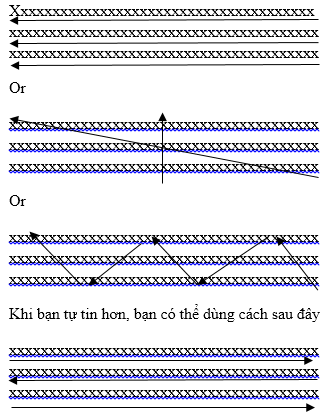
2. Các bước cần làm khi gặp câu hỏi cần scanning:
Bước 1. Đọc câu hỏi và gạch chân từ khóa bạn cần scan trong câu hỏi + dự đoán từ đồng nghĩa bạn sẽ gặp trong bài
(vì ngoại trừ số, và tên riêng thì còn lại đa phần bạn sẽ chỉ thấy từ đồng nghĩa của từ khóa trong câu hỏi chứ ít khi gặp chính xác từ ấy trong bài đọc).
Bước 2. Scan bài đọc để tìm ra vị trí từ khóa thật nhanh và đánh dấu từ khóa ấy (bằng khoanh tròn hay gạch chân).
Bước 3: Đọc xung quanh từ được đánh dấu để tìm câu trả lời.
Bài tập áp dụng.
Áp các bước ở trên vào trả lời các câu hỏi 1-6 với tối đa 3 từ bằng cách scan bài đọc sau
Bước 1. Đọc câu hỏi, gạch chân từ khóa + tìm từ đồng nghĩa của từ được gạch chân.
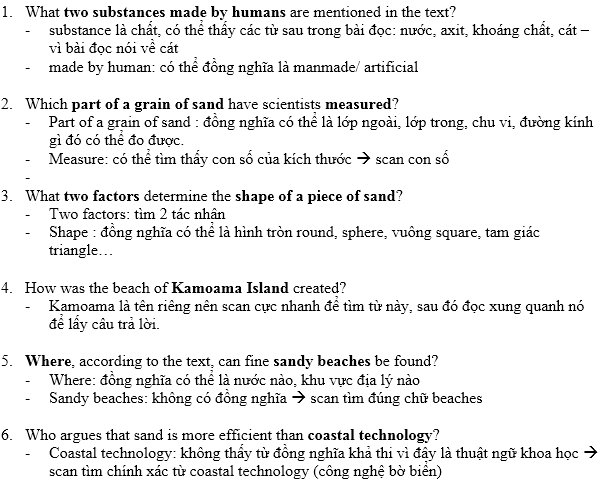
Áp dụng
Bây giờ các bạn hãy đọc bài đọc sau đây và trả lời 6 câu hỏi trên dùng scanning để xác định nhanh vị trí từ khóa cần đọc và đọc xung quanh từ khóa đó để tìm câu trả lời.
Sifting Through The Sands Of Time
When you’re on the beach, you’re stepping on ancient mountains, skeletons of marine animals, even tiny diamonds. Sand provides a mineral treasure-trove, a record of geology’s earth-changing processes.
Sand: as children we play on it and as adults we relax on it. It is something we complain about when it gets in our food, and praise when it’s molded into castles. But we don’t often look at it, If we did, we would discover an account of a geological past and a history of marine life that goes back thousands and in some cases millions of years.
Sand covers not just sea-shores, but also ocean beds, deserts and mountains. It is one of the most common substances on earth, and it is a major element in manmade materials too –concrete is largely sand, while glass is made of little else.
What exactly is sand? Well, it is larger than fine dust and smaller than shingle. In fact, according to the most generally accepted scheme of measurement, devised by the Massachusetts Institute of Technology, grains qualify if their diameter is greater than 0.06 of a millimeter and less than 0.6 of a millimeter.
Depending on its age and origin, a particular sand can consist of tiny pebbles or porous granules. Its grains may have the shape of stars or spirals, their edges lagged or smooth. They have come from the erosion of rocks, or from the skeletons of marine organisms, which accumulate on the bottom of the oceans, or even from volcanic eruptions.
Color is another clue to sand’s origins. If it is a dazzling white, its grains may be derived from nearby coral outcrops, from crystalline quartz rocks or from gypsum, like the white sands of New Mexico. On Pacific Islands jet black sands form from volcanic minerals. Other black beaches are magnetic. Some sand is very recent indeed, as is the case on the island of Kaomaoma in Hawaii, where a beach was created after a volcanic eruption in 1990, molten lava spilled into the sea and exploded in glassy droplets.
Usually, the older the granules, the finer they are and the smoother their edges. The fine, white beaches of Northern Scotland, for instance, are recycled from sandstone several hundred million years old. Perhaps they will be stone once more, in another few hundred million.
Sand is an irreplaceable industrial ingredient whose uses are legion: but it has one vital function you might never even notice. Sand cushions our land from the sea’s impact, and geologists say it often does a better job of protecting our shores than the most advanced coastal technology.
Bạn nên đọc thêm về câu hỏi cần dùng nhiều scanning.
Sifting through the sands of time
When you are on the beach, you are stepping on ancient mountains, skeletons of marine animals, even tiny diamonds.
As children we play on it and as adults we relax on it. We complain when it gets in our food and we praise when it’s moulded into castles.
If we looked at it, we would discover an account of a geological past and a history of marine life that goes back thousands and in some cases millions of years.
The sand covers not just seashores, but also ocean beds, deserts and mountains. It is one of the most common substances on earth. And it is a major element that people use.
What exactly is sand? Well, it is larger than fine dust. Depending on its age and origin, a particular sand can consists of tiny pebbles or porous granules. Its shape may have the shapes of stars or spirals, their edges jagged and smooth. They have come from the erosion of rocks or from the skeletons of marine organisms, which accumulate on the bottom of the oceans, or even from volcanic eruptions.
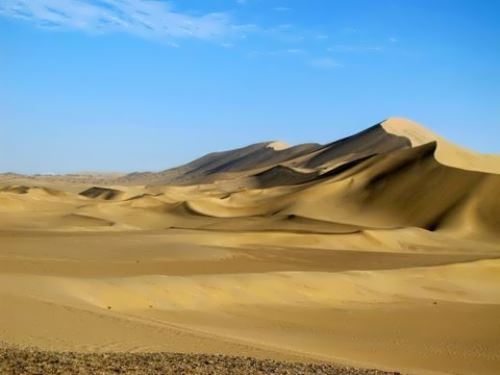
Desert
Mysteries of quicksand
There are many legends and myths about quicksand. Many scientists are interested in it. The man who fell into the sand trap shouldn’t make any sudden movements.
There is so-called “ship graveyard” – the Cape of South Foreland in England. One of the victims of this “ship cemetery” was the ship “Helena Modjeska” with the cargo worth $ 3 million. The captain could not survive such a tragedy and shot himself in the hotel room on September 17, 1946.
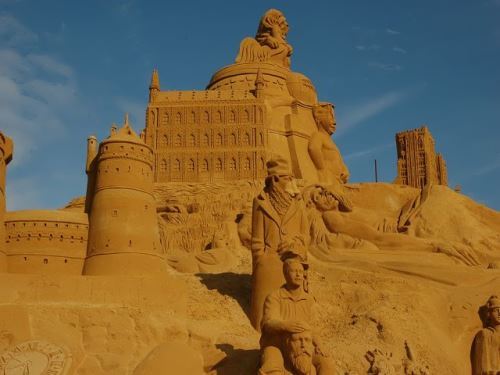
Sand Castle
Singing Sands
“When the gods laugh, beware!” the old man said, warning his companions. He fell to his knees and began to draw a circle in the sand, and the sand howled and screamed…” So the writer Jack London describes the effect of “singing” sand. Strictly speaking, “singing” sand is a set of melodic whistling and other sounds.
In ancient legends sand sounds were connected with the ringing of the bells of cities under the sand, the voice of the sirens trying to lure the traveler into the desert. In the old times this phenomenon of nature frightened people no less than quicksand which could swallow its prey.
Only dry sand can sing)
Amazing Sand Drawings
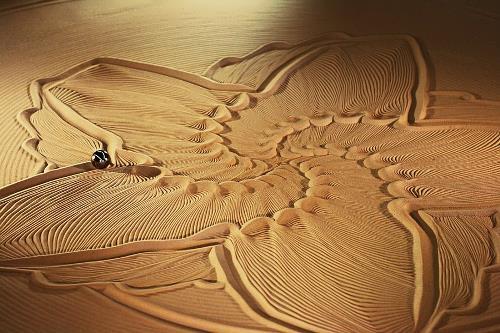
Sand artist Kseniya Simonova draws wonderful pictures on an illuminated sand table.
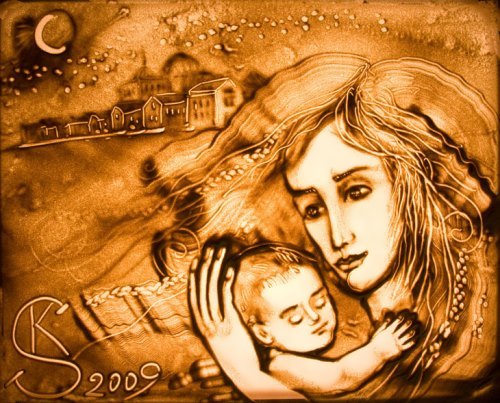
Art by Kseniya Simonova
Jim Denevan travels the globe creating large-scale pieces of land art. Drawn on sand, earth, and ice, these incredible works of art are both created and destroyed by the very materials that enable their existence.

Art by Jim Denevan
Jamie Wardley draws on beaches all over the north of England and Scotland.
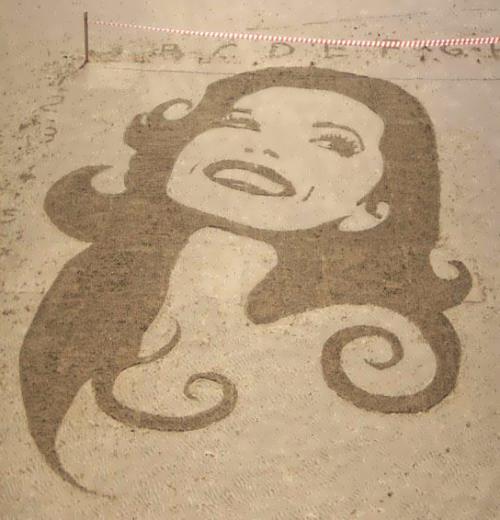
Art by Jamie Wardley
Iranian artist Ahmad Nadalian has etched thousands of stones, small and large, with images of fish, crabs, faces, hands and feet, which he then buries in the earth or tosses into bodies of water around the world.

Art by Ahmad Nadalian
Sifting through the sands of time

Amazing works by Andres Amador
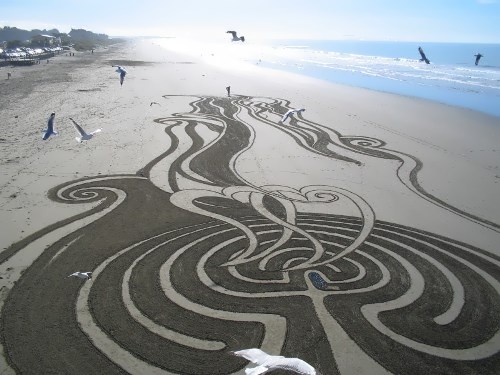
Art by Peter Donnelly
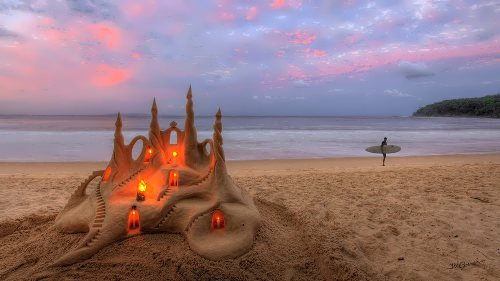
Sand Castle
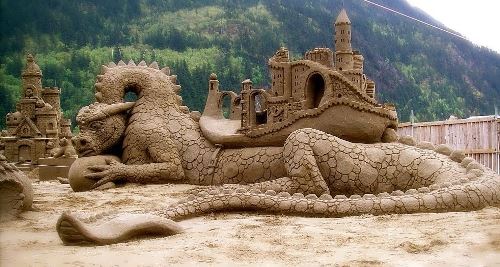
Sand Dragon

Sand picture in the bottle
Sifting through the sands of time
When you are on the beach, you are stepping on ancient mountains, skeletons of marine animals, even tiny diamonds.
As children we play on it and as adults we relax on it. We complain when it gets in our food and we praise when it’s moulded into castles.
If we looked at it, we would discover an account of a geological past and a history of marine life that goes back thousands and in some cases millions of years.
The sand covers not just seashores, but also ocean beds, deserts and mountains. It is one of the most common substances on earth. And it is a major element that people use.
What exactly is sand? Well, it is larger than fine dust. Depending on its age and origin, a particular sand can consists of tiny pebbles or porous granules. Its shape may have the shapes of stars or spirals, their edges jagged and smooth. They have come from the erosion of rocks or from the skeletons of marine organisms, which accumulate on the bottom of the oceans, or even from volcanic eruptions.
Desert
Mysteries of quicksand
There are many legends and myths about quicksand. Many scientists are interested in it. The man who fell into the sand trap shouldn’t make any sudden movements.
There is so-called “ship graveyard” – the Cape of South Foreland in England. One of the victims of this “ship cemetery” was the ship “Helena Modjeska” with the cargo worth $ 3 million. The captain could not survive such a tragedy and shot himself in the hotel room on September 17, 1946.
Sand Castle
Singing Sands
“When the gods laugh, beware!” the old man said, warning his companions. He fell to his knees and began to draw a circle in the sand, and the sand howled and screamed…” So the writer Jack London describes the effect of “singing” sand. Strictly speaking, “singing” sand is a set of melodic whistling and other sounds.
In ancient legends sand sounds were connected with the ringing of the bells of cities under the sand, the voice of the sirens trying to lure the traveler into the desert. In the old times this phenomenon of nature frightened people no less than quicksand which could swallow its prey.
Only dry sand can sing)
Amazing Sand Drawings
Sand artist Kseniya Simonova draws wonderful pictures on an illuminated sand table.
Art by Kseniya Simonova
Jim Denevan travels the globe creating large-scale pieces of land art. Drawn on sand, earth, and ice, these incredible works of art are both created and destroyed by the very materials that enable their existence.
Art by Jim Denevan
Jamie Wardley draws on beaches all over the north of England and Scotland.
Art by Jamie Wardley
Iranian artist Ahmad Nadalian has etched thousands of stones, small and large, with images of fish, crabs, faces, hands and feet, which he then buries in the earth or tosses into bodies of water around the world.
Art by Ahmad Nadalian
Amazing works by Andres Amador
Art by Peter Donnelly
Sand Castle
Sand Dragon
Sand picture in the bottle
Time, only by the time
Never will we know if our love is true
At night I sleep and dream of you
Only to awake in my empty room
You give me power
You give me reason
So, will you love me?
Time only knows, time only knows
You give me power
You give me reason
So, will you love me?
Time only knows, time only knows
Time, and only by the time
Never will we know if our love is true
At night I sleep and dream of you
Only to awake in my empty room
You give me power
You give me reason
So, will you love me?
Time only knows, time only knows.
You give me power
You give me reason
So, will you love me?
Time only knows, time only knows.Время, только время
Мы никогда не знаем, если наша любовь настоящая
Ночью я сплю и мечтаю о тебе
Только просыпаюсь в пустой комнате
Ты дай мне силу
Ты дай мне повод
Так, ты меня любишь?
Время знает, знает только время
Источник teksty-pesenok.ru
Ты дай мне силу
ТЫ даете мне повод
Так, ты меня любишь?
Время знает, знает только время.
Время, только время
Мы никогда не знаем, если наша любовь настоящая
Ночью я сплю и мечтаю о тебе
Только просыпаюсь в пустой комнате
Ты дай мне силу
Ты дай мне повод
Так, ты меня любишь?
Время знает, знает только время
Ты дай мне силу
ТЫ даете мне повод
Так, ты меня любишь?
Время знает, знает только время
английский
арабский
немецкий
английский
испанский
французский
иврит
итальянский
японский
голландский
польский
португальский
румынский
русский
шведский
турецкий
китайский
русский
Синонимы
арабский
немецкий
английский
испанский
французский
иврит
итальянский
японский
голландский
польский
португальский
румынский
русский
шведский
турецкий
китайский
украинский
На основании Вашего запроса эти примеры могут содержать грубую лексику.
На основании Вашего запроса эти примеры могут содержать разговорную лексику.
пески времени
песках времени
Sands of Time
песков времени
The sands of time are shifting, mostly south.
The sands of time… have already begun to pour against you.
And every day that we didn’t spend together is-is a day lost in the sands of time.
И каждый день, что мы не были вместе это день потерянный в песках времени.
The footprints of our Secretary-General, Kofi Annan, are indelibly etched in the sands of time because of his continuing achievements and the pace at which he works on behalf of our United Nations.
Следы нашего Генерального секретаря Кофи Аннана, бесспорно, останутся на песках времени благодаря его постоянным успехам и той энергии, с которой он трудится, представляя Организацию Объединенных Наций.
westward in the wagons, and across the sands of time until we
when the only things waiting for us on shore are the sands of time.
These useful writers had fulfilled the poet’s saying: departing, they had left behind them Footprints on the sands of time, Footprints which perhaps another — and I was the other!
Эти полезные авторы подтверждают слова поэта: уходя, они оставили следы на песках времени, следы, которые, возможно, чьи-то ещё — и я был этим другим!
Prince of Persia: The Sands of Time
Nachmanoff previously contributed to the script for Prince of Persia: The Sands of Time earlier in its development history.
Начманофф ранее внёс вклад в сценарий фильма «Принц Персии: Пески времени» в истории производства.
In May 2009, Mike Newell, who was then directing Prince of Persia: The Sands of Time for Bruckheimer and Disney, entered negotiations to direct Lone Ranger.
В мае 2009 режиссёр Майк Ньюэлл, который тогда был занят на съёмках фильма «Принц Персии: Пески времени» (также проекта Брукхаймера и Диснея), начал переговоры о постановке «Одинокого рейнджера».
The dagger blade is the only thing that can pierce the Sandglass and remove the Sands of Time, but the handle only holds one minute.
И она стала первой хранительницей. только этим кинжалом можно проткнуть песочные часы и взять пески времени, но кнопка возвращает лишь одну минуту.
Warcraft became the highest-grossing video game adaptation worldwide, with $433.5 million, surpassing Prince of Persia: The Sands of Time ($336.4 million in 2010).
Тем самым «Варкрафт» стал первым и единственным из фильмов основанных на видеоиграх, сборы которого превысили порог в 400 млн долларов, побив рекорд фильма «Принц Персии: Пески времени» — 336,4 млн долларов.
It was thought to be lost in the sands of time.
The sands of time are inexorably flowing out of them.
For good or for ill, he has left his footprints on the sands of time.
Хорошо это или плохо, но он оставил свой след в анналах истории.
Pages that do find sanctuary under the advancing sands of time are never truly safe.
Страницы, которые нашли убежище под движущимися песками времени, всегда под угрозой.
It has been said that no one leaves footprints in the sands of time by lying down.
Уже говорилось о том, что нельзя оставить следов на песке времени, если лежать на одном месте.
As if, suddenly, there were a depth so… so immense, so extensive through the sands of time.
Как если бы внезапно обнажилась глубина… столь грандиозная, столь пространная, прошедшая через пески времен.
Though I cannot draw back the sands of time, I can break the hourglass.
Тем не менее, я не могу отменить прошлое, я не могу сломать песочные часы.
Beneath the streets of this city lies an ancient force, a container, holding the fabled Sands of Time.
Под улицами этого города находится древнее хранилище легендарных песков времени.
Результатов: 35. Точных совпадений: 35. Затраченное время: 58 мс
Documents
Корпоративные решения
Спряжение
Синонимы
Корректор
Справка и о нас
Индекс слова: 1-300, 301-600, 601-900
Индекс выражения: 1-400, 401-800, 801-1200
Индекс фразы: 1-400, 401-800, 801-1200
When you’re on the beach, you’re stepping on ancient mountains, skeletons of marine animals, even tiny diamonds. Sand provides a mineral treasure-trove, a record of geology’s earth-changing processes.
Sand: as children we play on it and as adults we relax on it. It is something we complain about when ft gets in our food, and praise when it’s moulded into castles. But we don’t often look at it, If we did, we would discover an account of a geological past and a history of marine life that goes back thousands and in some cases millions of years.
Sand covers not just sea-shores, but also ocean beds, deserts and mountains. It is one of the most common substances on earth, And it is a major element in man made materials too –concrete is largely sand, while glass is made of little else.
What exactly is sand? Well, it is larger than fine dust and smaller than shingle. In fact, according to the most generally accepted scheme of measurement, devised by the Massachusetts Institute of Technology, grains qualify if their diameter is greater than 0.06 of a millimeter and less than 0.6 of a millimeter.
Depending on its age and origin, a particular sand can consist of tiny pebbles or porous granules. Its grains may have the shape of stars or spirals, their edges lagged or smooth. They have come from the erosion of rocks, or from the skeletons of marine organisms, which accumulate on the bottom of the oceans, or even from volcanic eruptions.
Color is another clue to sand’s origins. If it is a dazzling white, its grains may be derived from nearby coral outcrops, from crystalline quartz rocks or from gypsum, like the white sands of New Mexico. On Pacific Islands jet black sands form from volcanic minerals. Other black beaches are magnetic. Some sand is very recent indeed, as is the case on the island of Kaomagma in Hawaii, where a beach was created after a volcanic eruption in 1990, Motten lava spilled into the sea and exploded in glassy droplets.
Usually, the older the granules, the finer they are and the smoother their edges. The fine, white beaches of northern Scotland, for instance, are recycled from sandstone several hundred million years old. Perhaps they will be stone once more, in another few hundred million.
Sand is an irreplaceable industrial ingredient whose uses are legion: but ft has one vital function you might never even notice. Sand cushions our land from the sea’s impact, and geologists say it often does a better job of protecting our shores than the most advanced coastal technology.
| Through the night an old man breeds spells While the wind is taking its first steps The Ancient rites blow life into the darkness Let your sense spread this charm inside your heart Grains of sand slip out of my hands Sea of sand and stars is rising in my heart Bring me to life Fly, follow your dreams Face, fight all your fears Now taste the quite Bring me to life Fly, follow your dreams Face, fight all your fears Смотрите также:
Все тексты The Dogma >>>
|
Всю ночь старик порождает заклинания
В то время как ветер делает первые шаги
Древние обряды взорвать жизнь в темноте
Пусть ваше чувство распространить эту прелесть в твоем сердце
догма
Теперь вкусдовольно
Объятия лунном свете
Мечты и грехи объединить
Вырастет пески ‘ до солнца
Зерна песка выскользнуть из моих рук
Из Как моей жизни они текут без удержания
Море песка и звезд растет в моем сердце
время
Теперь вкусдовольно
Объятия лунном свете
Мечты и грехи , объединенных
‘до солнца будет расти
Верни меня к жизни
Не глаза мои
Я буду рад,
К этому восточной ночи
Fly , следовать вашей мечты
Через пустынь и морей
Там вы найдете ваш сам
Лицо , бороться со всеми своими страхами
Видения ясны
Теперь вы получили этот дар …
Теперь вкусдовольно
Объятия лунном свете
Мечты и грехи , объединенных
‘до солнца будет расти
Верни меня к жизни
Не глаза мои
Я буду рад,
К этому восточной ночи
Fly , следовать вашей мечты
Через пустынь и морей
Там вы найдете ваш сам
Лицо , бороться со всеми своими страхами
Догма Видения ясны
Теперь вы получили этот дар …
What do the underlined word mean in the following sentences?
.
Sifting
through the sand of time.
. Sand covers not just sea-shores, but also
ocean beds
, deserts and mountains.
. Sand is larger than
fine dust
and smaller than shingle.
. Sand
cushions
our land from the sea’s impact.
. On Pacific Islands
jet
black sands form from volcanic minerals.
.
Sifting
through the sand of time.— Searching carefully
. Sand covers not just sea-shores, but also
ocean beds
, deserts and mountains.— The bottom of the oceans
. Sand is larger than
fine dust
and smaller than shingle.-— Powder; small, waterworn stones or pebbles such as lie in loose sheets or beds on a beach
. Sand
cushions
our land from the sea’s impact.— Partially protects; effect
. On Pacific Islands
jet
black sands form from volcanic minerals.— very black; chemical substances not plant or animal in origin
Answer this Question
