
Outstanding Universal Value
Brief synthesis
The Curonian Spit is a unique and vulnerable, sandy and wooded cultural landscape on a coastal spit which features small Curonian lagoon settlements. The Spit was formed by the sea, wind and human activity and continues to be shaped by them. Rich with an abundance of unique natural and cultural features, it has retained its social and cultural importance. Local communities adapted to the changes in the natural environment in order to survive. This interaction between humans and nature shaped the Curonian Spit cultural landscape.
The history of the Curonian Spit is dramatic: 5,000 years ago, a narrow peninsula (98 km in length and 0.4-3.8 km in width), the Great Dune Ridge separating the Baltic Sea from the Curonian Lagoon, was formed on moraine islands from sand transported by currents, and later covered by forest. After intensive logging in the 17th and 18th centuries, the dunes began moving towards the Curonian Lagoon, burying the oldest settlements. At the turn of the 19th century, it became evident that human habitation would no longer be possible in the area without immediate action. Dune stabilisation work began, and has continued ever since. By the end of the 19th century, a protective dune ridge was formed along the seashore to prevent inland sand migration, and the Great Dune Ridge was reinforced using trees and brushwood hedges. Currently, forests and sands dominate the Curonian Spit. Urbanised areas (eight small settlements) cover just about 6% of the land.
The most valuable elements and qualities of the Curonian Spit cultural landscape are its unique size and general spatial structure, demonstrating the harmonious coexistence between humans and nature; the characteristic panoramas and the silhouette of the Curonian lagoon; cultural elements including the remains of postal tracks, trade villages from the 10th and 11th centuries, traditional fishermen villages and other archaeological heritage covered by sand; the spatial-planned structure and architecture of ancient fishermen villages turned into resort settlements (ancient wooden fishermen houses, professionally designed buildings of the 19th century, including lighthouses, piers, churches, schools, villas); and elements of marine cultural heritage; natural and human-made elements including the distinctive Great Dune Ridge and individual dunes, relics of ancient parabolic dunes; a human-made protective coastal dune ridge; relics of moraine islands, seacoast and littoral forests and littoral capes; ancient forests, mountain pine forests and other unique sand flora and fauna including a bird migration path; and the social-cultural traditions, spirituality, and the social perception of the area, which reflect the local lifestyle formerly centred on fishermen, artists, scientists, yachtsmen and gliders, travellers and other visitors.
Criterion (v): The Curonian Spit is an outstanding example of a landscape of sand dunes that is under constant threat from natural forces (wind and tide). After disastrous human interventions that menaced its survival, the Spit was reclaimed by massive protection and stabilization works that began in the 19th century and are still continuing to the present day.
Integrity
The entire area of the Curonian Spit cultural landscape reflects valuable qualities and underlying processes, retains historical functions and specific sustainable land use methods related to the peculiarities of the natural environment, and reflects the unique spiritual bond between humans and nature. The boundaries of the World Heritage property are sufficient to express all the attributes of its Outstanding Universal Value. Some of these attributes, such as the fishermen houses, need careful maintenance. In general, these attributes are particularly sensitive to pressures such as climate change, severe weather events, fire, excessive development and tourism. Because of the continuous evolution and development of the cultural landscape, it is very important to regulate the number of visitors to the property. New developments and other economic activities must be regulated to avoid any irreversible changes that may threaten the Outstanding Universal Value. The most vulnerable elements of the Curonian Spit cultural landscape are the oldest wooden fishermen’s houses, the wooden decor of professionally designed buildings, and the human-made protective coastal dune ridge, which is influenced by the natural coastal processes under the influence of global climate change.
Authenticity
The Curonian Spit showcases high landscape values. It is an example of a special landform subjected to human intervention and natural phenomena such as climatic variations. The former has been both catastrophic, as with the drastic deforestation in the 16th century, and beneficial, as demonstrated in the 19th century with the creation of artificial barriers against further incursions by the sea. The cultural, natural and human-made elements of the Curonian Spit cultural landscape illustrate the most important features of its formation through their shapes, volumes, materials, and functions. The authenticity of the landscape is reflected by the tangible and spiritual values of the different historical periods that shaped its identity.
The vitality, spirituality and special mood of the cultural landscape and its unique characteristics is further highlighted by authentic forms of local intangible heritage. These include the marine cultural heritage; traditional trades, folklore and artistic traditions; the ethnographic elements of the fishermen’s lifestyles; unique methods of protective coast and dune ridge management and forest maintenance; sustainable recreational activities and a cultural leisure tradition dating back to the 19th century.
Protection and management requirements
The Curonian Spit is situated in the Curonian Spit National Park in Lithuania and the Kurshskaya National Park of the Russian Federation. The status of these National Parks guarantees the protection of the cultural landscape. Both National Parks have the common goal of preserving the natural and cultural attributes that express the Outstanding Universal Value of the property. A very important prerequisite for the protection of the Outstanding Universal Value is state land ownership by the National Parks.
The governments of both states are responsible for the conservation of the Curonian Spit: in the Republic of Lithuania through the Ministry of Environment and authorised agencies, and in the Russian Federation through the Ministry of Natural Resources and Environment. The protection of immovable cultural heritage is the responsibility of the cultural Heritage Department under the Ministry of Culture of the Republic of Lithuania and the State Service for Protection of cultural Heritage of the Kaliningrad region of the Russian Federation. The Governments have created the National Parks authorities, who play a key role in the conservation of the property, forest and coastal management.
The territory of the Curonian Spit is administered by Neringa and Klaipėda City municipalities of the Republic of Lithuania and by the Federal State corporation National Park Kurshskaja kosa, along with the municipal unit of Kurshskaja kosa of the Zelenogradsk area of the Kaliningrad region of the Russian Federation. The local authorities in the Republic of Lithuania determine the main trends of socio-economic development, manage and plan settlements, and generally take care of the protection and management of the territory by implementing territorial planning documents in the Lithuanian part of the Curonian Spit. The local community is directly involved in the conservation of the property’s tangible heritage and also carries the region’s intangible heritage.
For the effective management and protection of the property’s Outstanding Universal Value, closer collaboration of all institutions and stakeholders is needed within and between States.
In the Republic of Lithuania, any activity posing a threat to the Outstanding Universal Value of the Curonian Spit is prohibited by the Law on Protected Areas (2001), and Protection Regulation of the Curonian Spit National Park (2002). In the Russian Federation, the relevant laws are the Federal Law of Specially Protected Nature Territories of the Russian Federation (1995) and the Law on Federal State Enterprise (FSBA, 2012), implemented through territorial planning documents.
Different attributes of the property require different protection regimes and management activities. Therefore, different zones have been established in the National Parks for various specific purposes, such as strict reserves, reserves, recreational, residential and other zones. All these measures are outlined in the territorial planning documents.
The main territorial planning documents in the Republic of Lithuania are the Special Management Plan of the Curonian Spit (a territorial planning document adopted by the government in 2012), and the National Park Borders Plan (adopted by Parliament in 2010). Klaipėda’s municipal General Plan has been in place since 2007, while Neringa’s General Plan was adopted by the municipality in 2012.
The preparation of a single territorial planning document for the management of the area, aiming to ensure the preservation of the property’s Outstanding Universal Value in Lithuania is foreseen. The main territorial planning document in the Russian Federation is the Development Plan for the National Park Kurshskaja Kosa for 2009-2013.
The coordination of actions between the States is necessary to protect the Outstanding Universal Value of the property. Once finalised and agreed upon, an integrated Curonian Spit Management Plan covering the whole property will be implemented in order to ensure the conservation of the Outstanding Universal Value, to improve cooperation between all institutions in both States, and to reach joint agreements on future activities. The preparation of this Management Plan is an essential step in the appropriate management of the property and particular attention should be paid to including a Tourism Management Plan and addressing the other major pressures potentially affecting the property. The implementation of territorial planning documents and the safeguarding of the implementation of existing legislation are high priorities.
Curonian Spit Overview
From the Curonian Spit World Heritage inscription:
The Curonian Spit is a unique and vulnerable, sandy and wooded cultural landscape on a coastal spit which features small Curonian lagoon settlements. The Spit was formed by the sea, wind and human activity and continues to be shaped by them. Rich with an abundance of unique natural and cultural features, it has retained its social and cultural importance. Local communities adapted to the changes in the natural environment in order to survive. This interaction between humans and nature shaped the Curonian Spit cultural landscape.
The Curonian Spit is perhaps the top natural attraction in Lithuania and one of the top attractions in the Baltic Region. I visited the Curonian Spit on a G Adventures tour of the Baltic States.
Most of the information in this article will pertain to visiting the Lithuanian side of the Curonian Spit, however, half of the spit is shared with Russia. The Lithuanian side is much easier for most tourists to visit unless you have gone through the process of getting a Russian visa. This article will deal mostly with the Lithuanian side.
History

Geologically, the spit is approximately 3 million years old. The spit is the remnant of a glacial moraine which terminated in the area. The spit stays in existence by a constant balance of sand deposition and transportation. Similar sand spits and barrier islands can be found around the world.
In mythology, the Curonian Spit was created by a giant named Neringa who was playing on the seashore. There has been evidence of a human presence on the spit for at least 1,000 years and a well-documented history going back to the 13th Century where the spit was the home to the Order of Teutonic Knights.
Fishing was always the most popular industry on the spit as the soil was poor for agriculture. In the 19th Century the spit became the location of an artists colony, especially
Today it is primarily a tourist destination.
What to see / Sights

The Curonian Spit is nothing more than a long sandy peninsula. As such, everything can be visited along a single main road which goes along the length of the spit.
- Beaches There are several public beaches along the length of the spit. There is an enormous difference between the Baltic Sea beaches and the lagoon side beaches. The spit protects the lagoon from the waves, and as such, the water is much calmer and slightly warmer. The Baltic (western) side has much rougher seas and higher winds.
- Bird Watching. There is a large colony of herons and cormorants outside of the village of Juodkrant?. All of the trees in the area are dead due to the bird droppings which have made the soil too acidic. The spit was home to the Rossitten Bird Observatory, which was the first dedicated bird observatory in the world. It operated from 1901 to 1944.
- Hill of Witches. Located in the village of Juodkrante is a collection of almost 100 wood carvings which show stories from Lithuanian folklore. The wooden sculptures show frightening and grotesque images from stories from Lithuania’s pagan past. (Lithuania was one of the last pagan countries in Europe.) The hill is open 24/7.
Visit the Curonian Spit on a day trip from Vilnius.

What to do / Activities
- Biking. The spit is rather flat which makes it a perfect place for biking. Many people will visit the Curonian Spit on cycling tours. If you do not have your own bike, you can rent a bicycle in Nida. They will drop you and your bike off further up the spit and let you ride your bike back to town. There are dedicated bicycle paths the entire length of the spit.
- Kite Surfing. The Baltic side of the spit is one of the best places for kitesurfing and windsurfing in the entire region. While it is a great spot for it, you will probably have to bring your own gear as there aren’t any rental companies on the spit.
Book a private tour of the Curonian Spit.
Photography Tips
The spit is pretty flat so there isn’t much in terms of dramatic landscapes available. Some of the following locations might get some great shots:

- Along the beach. Try to capture kitesurfers in the distance.
- Bicycle and hiking paths. They go through the pine forest on the spit and provide some interesting perspective shots.
- Climb the sand dunes south of Nida. They aren’t incredibly high, but they will give you one of the best vantage points on the entire spit.
- Visit the Witch Hill and focus on the details in the wood carvings. Consider creating black & white photos of the sculptures which bring out the drama in the woodwork.
Where to Eat

Check out Tik Pas Jona in Nida. They specialize in smoked fish. The entire menu for that day will be displayed before dinner and you can pick the fish you want to eat.
Other restaurants in the area will serve local dishes. There are no major chain restaurants anywhere on the Curonian Spit. If you haven’t had it yet, you should try cepelinai, which is a potato dumpling and is the national dish of Lithuania.
As this is near one of the biggest regions for amber production in the world, you might find some places with amber infused vodka. They simply take the bits and pieces of amber which come from preparing stones for jewelry, and they infused it in vodka for several months. The result is an amber colored vodka with a 25 million-year-old, slightly sweet taste!
Operating Hours
The spit is open year-round as people live it on. However, the peak season for tourists is in the summer and many of the establishments which cater to tourists may be closed in the winter.
Where to stay
Hotels
There are no large or chain hotels on the spit. All of the lodging options are smaller hotels and guesthouses. Hotels can fill up during the peak season during the summer months.
Book hotels on the Curonian Spit
How to get there
Airports
The largest international airport would be in Vilnius (VNO), which is several hours away. The Kaunas Airport (KUN) is slightly closer and is serviced by flights from Ryanair. Both have car rentals counters at the airport.
By Car
To get to the spit by car on the Lithuanian side, you have to take a ferry. The ferries operate on a regular basis from the city of Klaipeda, Lithuania. Ferries leave every hour during the day. Fees for foot passengers are 1 Euro, and passenger cars are 12.50 Euro.
Information on the ferry is available online.
Rent cars at the Vilnius Airport
Public Transportation
There are buses which go to Nida from Kaunas and Vilnius. Each of them makes a stop in Klaipeda before going on the ferry.
Cost
Weather
The Baltic Sea tends to moderate temperatures on the Spit. The winters seldom get below freezing and the summers are seldom very hot.
Get current temperates and forecasts for Nida, Lithuania.
Shopping
The signature item to get from the Curonian Spit would be amber. The area along the Baltic Sea is the biggest amber producing area in the world, especially the Russian province of Kaliningrad just south of the Spit. There are several stores that exclusively sell amber. As with other gemstones, prices can be quite expensive depending on size and quality, and in the case of amber, what other creatures are embedded inside it.
You can also buy a small bag of amber chips for about 20 Euro which can be used to infuse drinks such as vodka. The infusion process takes about 3 months, but in the end, you have an amber-colored vodka that is 25 million years old!

Gary has been traveing the world since 2007. His travels have taken him to over 200 countries and territories and 400 UNESCO World Heritage Sites.
He is a 3x Lowell Thomas Award winner and a 3x North American Travel Photographer of the Year.

- Текст
- Веб-страница
The Curonian Spit is a unique and vulnerable, sandy and wooded cultural landscape on a coastal spit which features small Curonian lagoon settlements. The Spit was formed by the sea, wind and human activity and continues to be shaped by them. Rich with an abundance of unique natural and cultural features, it has retained its social and cultural importance. Local communities adapted to the changes in the natural environment in order to survive. This interaction between humans and nature shaped the Curonian Spit cultural landscape.
0/5000
Результаты (русский) 1: [копия]
Скопировано!
Куршская коса-это уникальный и уязвимые, песчаные и лесистом культурного ландшафта на прибрежной косы, которая включает небольшие поселения Куршскую лагуну. Коса была образована море, ветер и деятельность человека и продолжает формироваться под их воздействием. Богатые с обилием уникальных природных и культурных особенностей, он сохранил свое социальное и культурное значение. Местные общины адаптируются к изменениям в естественной среде, для того, чтобы выжить. Такое взаимодействие между человеком и природой формы культурного ландшафта Куршской косы.
переводится, пожалуйста, подождите..
Результаты (русский) 2:[копия]
Скопировано!
Куршская коса является уникальным и уязвимым, песчаные и лесистой культурный ландшафт на прибрежной косе, которая показывает небольшие Куршского залива поселений. Коса была образована в море, ветер и деятельность человека и продолжает формироваться ими. Богатый с обилием уникальных природных и культурных особенностей, она сохранила свою социальную и культурную значимость. Местные сообщества адаптировались к изменениям в природной среде, чтобы выжить. Это взаимодействие между человеком и природой формы культурного ландшафта Куршской косы.
переводится, пожалуйста, подождите..
Другие языки
- English
- Français
- Deutsch
- 中文(简体)
- 中文(繁体)
- 日本語
- 한국어
- Español
- Português
- Русский
- Italiano
- Nederlands
- Ελληνικά
- العربية
- Polski
- Català
- ภาษาไทย
- Svenska
- Dansk
- Suomi
- Indonesia
- Tiếng Việt
- Melayu
- Norsk
- Čeština
- فارسی
Поддержка инструмент перевода: Клингонский (pIqaD), Определить язык, азербайджанский, албанский, амхарский, английский, арабский, армянский, африкаанс, баскский, белорусский, бенгальский, бирманский, болгарский, боснийский, валлийский, венгерский, вьетнамский, гавайский, галисийский, греческий, грузинский, гуджарати, датский, зулу, иврит, игбо, идиш, индонезийский, ирландский, исландский, испанский, итальянский, йоруба, казахский, каннада, каталанский, киргизский, китайский, китайский традиционный, корейский, корсиканский, креольский (Гаити), курманджи, кхмерский, кхоса, лаосский, латинский, латышский, литовский, люксембургский, македонский, малагасийский, малайский, малаялам, мальтийский, маори, маратхи, монгольский, немецкий, непальский, нидерландский, норвежский, ория, панджаби, персидский, польский, португальский, пушту, руанда, румынский, русский, самоанский, себуанский, сербский, сесото, сингальский, синдхи, словацкий, словенский, сомалийский, суахили, суданский, таджикский, тайский, тамильский, татарский, телугу, турецкий, туркменский, узбекский, уйгурский, украинский, урду, филиппинский, финский, французский, фризский, хауса, хинди, хмонг, хорватский, чева, чешский, шведский, шона, шотландский (гэльский), эсперанто, эстонский, яванский, японский, Язык перевода.
- He visited Great Britain,Canads and Fran
- Он интересуется мотоциклами и яхтами
- He visited Great Britain,Canads and Fran
- эдгар немецкий студент.он живёт на юге Г
- старше
- Sames with his set lips and squared chin
- Салам нечесен меним севкилим ?
- sia ty nekur neuzrādīt
- ben cok düstüm
- advertisement
- read, translate and remember.
- Fossa iliaca
- 1.ответьте на вопросы к тексту:BUSINESSM
- The lawyer, in broad sense, is one whose
- я знаю мы навсегда останемся друзьми со
- Art. What s
- я знаю мы навсегда останемся друзьми со
- вам необходимо заполнить таблицу
- minerva noctuas amat
- вам необходимо заполнить таблицу
- Жоным
- Я доверяю твоему вкусу поэтому ты можешь
- I angry all day
- Джон и Билл-друзья.Они новенькие в 4 а к
The fantastic combination of forests, beach and desert makes this place unique. The curonian spit is home to the moving sand dunes in Europe. Their average height is 35 metres, but some reach a height of 60 metres. Between 10 and 20 million birds fly over the during the spring and autumn migrations. Most of them stop to have a rest on the curonian spit. The curonian spit belongs to both the Russian federation and Lithuania.
Ответ или решение1

Куршская коса — это 98-километровая тонкая песчаная дюна. Она отделяет Куршскую лагуну от Балтийского моря. Это уникальное сочетание леса, пляжа и пустыни. Куршская коса является родиной движущихся песчаных дюн в Европе. Их средняя высота составляет 35 метров, но некоторые достигают высоты 60 метров. От 10 до 20 миллионов птиц пролетают над ней во время весенних и осенних миграций. Большинство из них перестают отдыхать на Куршской косе. Куршская коса принадлежит как Российской Федерации, так и Литве.
Будьте внимательны!
- Копировать с других сайтов запрещено. Стикеры и подарки за такие ответы не начисляются. Используй свои знания.
- Публикуются только развернутые объяснения. Ответ не может быть меньше 50 символов!
Главная / Экскурсия по Куршской Косе / Excursions to Curonian Spit
One day Trip to Curonian Spit and Vacation in the Kaliningrad Region. How to get to Curonian Spit in Kalinigrad.
If you are planning a trip to Russia then Don’t miss to visit the most western city of Russia, which is Kaliningrad. And the most popular attraction in Kaliningrad is the Curonian Spit. You may need a visa for a vacation in Russia, but when you have one you can easily travel to Kaliningrad from Moscow, St Petersburg or other big cities by plane, train or a car. In winter time there are also very cheap tickets for flights from Rome to Kaliningrad by the Russian low-cost airline Pobeda. You can also take a Road Bike from Nida (Lithuania) to Kaliningrad since in the middle of Curonian Spit there is a border checkpoint Russia / Lithuania.
Good News for the travelers. Starting from July 1st 2019, tourists of 53 countries may get an e-visa to enter the Russian Federation through the border crossing points located in Kaliningrad region. E-visa is free and is issued within 4 days including week-ends and holidys. You just need to fill in the application form on the website OF THE MINISTRY OF FOREIGN AFFAIRS OF THE RUSSIAN FEDERATION http://electronic-visa.kdmid.ru/klgd_home_en.html
For visitors to Kaliningrad we organize excursions to Curonian Spit which we call «One day Trip to Curonian Spit»
The Curonian Spit is a treasure we are proud of because it is a real jewel of the Kaliningrad region, a visit that leaves an indelible impression on you and gives the opportunity to take unique photos for real photographers and amateurs as well.
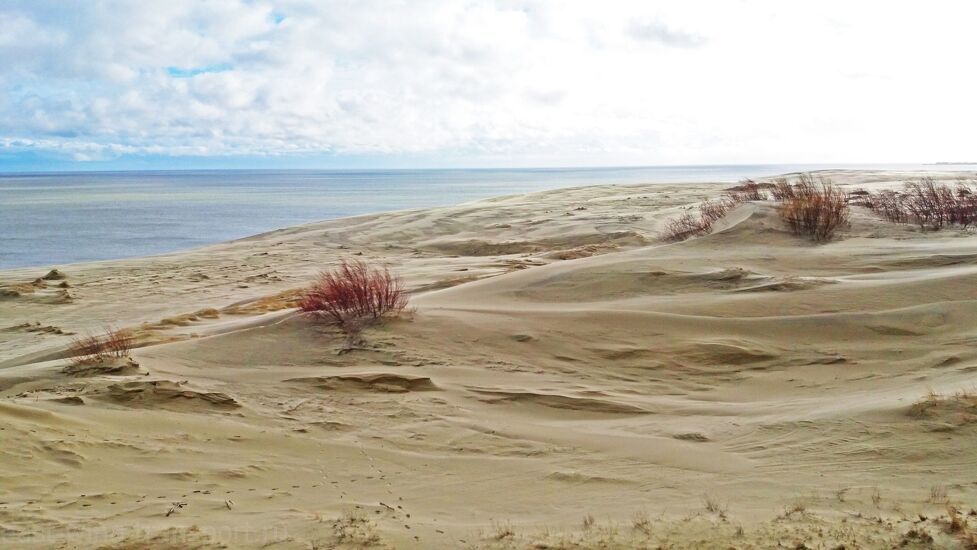
The Curonian Spit is UNESCO World Heritage Site, home to the great sand drifting dunes. It is a unique and vulnerable, sandy and wooded cultural landscape on a coastal spit. The average height of the sand dunes is about 35 meters, but some are around 60 meters. There is only 1 single road which traverses the Curonian Spit.
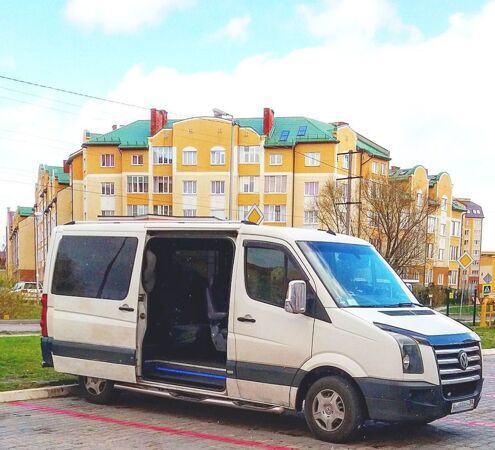
One day Tour to Curonian Spit is held for small groups of up to 7 people, accompanied by an individual guide. The comfortable 9 seaters air-conditioned minibus Volkswagen Crafter with TV, cosy seats, individual tables.
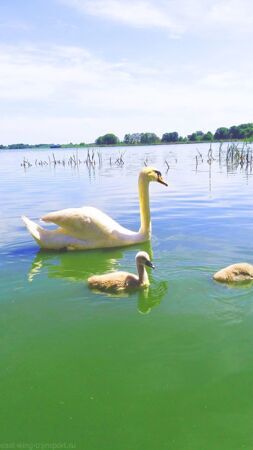
One day trip to Curonian Spit lasts 6-7 hours. During all that time You will be enjoying the fresh pine air, take pictures, watch beautiful places and be surprised to find out how amazing energy of the Curonian Spit helps to get rid of stress and restore your inner zen and energy


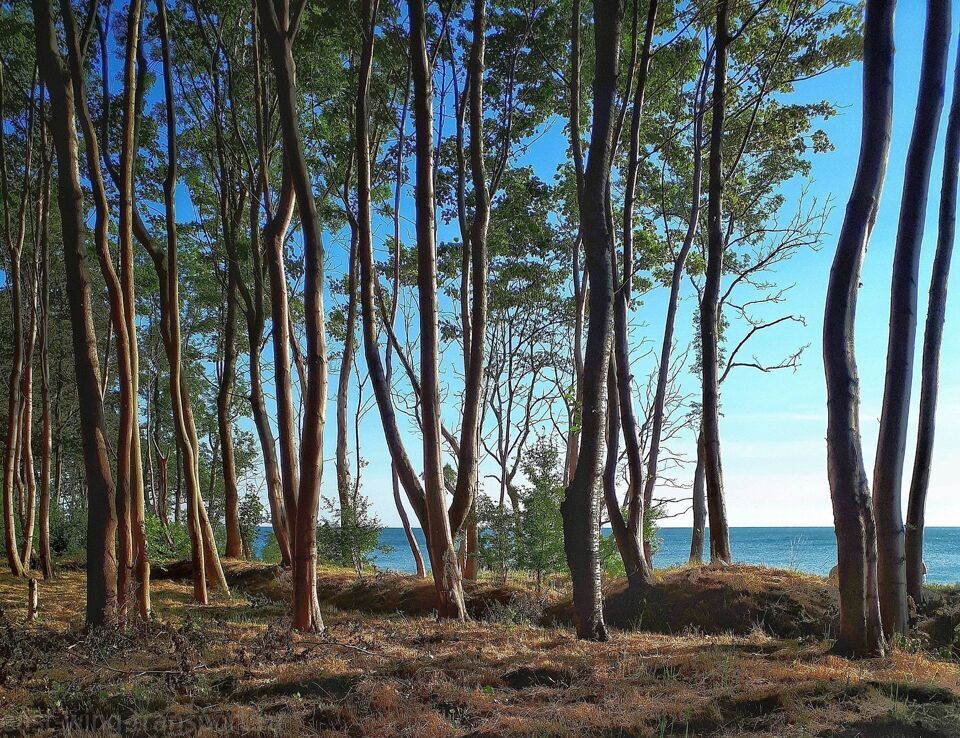
And while walking along the paths laid in the shade of a pine forest, you will meet with the sea and the Gulf of moving sand dunes, dancing forest.

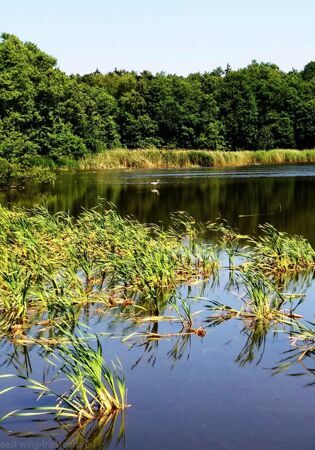
These small hiking forest trails to the main local attractions — The Dancing Forest, Dune Efa, height Muller, Swan Lake is the most interesting tours of the Curonian Spit. You’ll learn why trees are dancing in the dance forest, how many moved dune over the past 50 years, the lake was formed in the sand, and other interesting facts.
Do not forget during the tour to the Curonian Spit climb in the ring formed by bent trunk of one of the dancing trees and capture the moment on camera. Your friends will leave a lot of comments FACEBOOK to this photo.


If during a tour of the Curonian Spit to stop in towns forest, marine or Rybachy located on the shores of the sea and the bay, you will enchant the smells of smoked fish. Here you will find numerous stalls, local folk art of amber and juniper. Here are the Museum of spit and ornithological station.

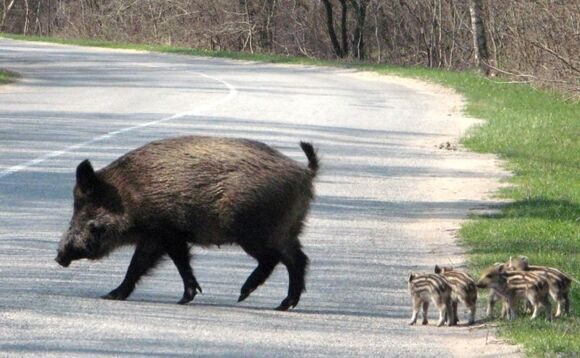
Speed on the Curonian Spit is limited up to 60 km/hour, because suddenly the road may cross the local animals; foxes, wild boars and roe deer.
The Curonian spit is 98 km long and divided in two equal parts, one of it belongs to Lithuania and another to Russian Federation. The Lithuanian side of the Curonian spit has more tourist attractions, whereas the Russian side of the Curonian spit is more nature friendly, with wild forest reserves and bird watching stations.
Sea, bay, unique air, nature and energy of the Curonian Spit, all of these factors in a complex rejuvenate, strengthen sleep and relieve stress. In general, it give us what we have lacked in modern life, a feeling of fullness of life in harmony with nature.

Our prices to Curonian Spit
Effective from 15 January 2021
Individual tour for 1 person- 70 eur
Individual tour for 2 persons: 50 eur x 2 = totally 100 eur
Individual tour for 3 persons: 50 eur x 3 = totally 150 eur
Individual tour for 4 persons: 50 eur x 4 = totally 200 eur
Individual tour for 5 persons: 45 eur x 5 = totally 225 eur
Individual tour for 6 persons: 40 eur x 6 = totally 240 eur
Individual tour for 7 persons: 35 eur x 7 = totally 245 eur
The price includes:
*excursion to the Curonian Spit in a comfortable 8-seater minibus Volkswagen Crafter. We’ll visit to the whole Сuronian Spit, including Korolevsky Bor, height / dune Efa, where you can see the sea on one side and the bay on the other, Muller’s height, Dancing Forest, Chaika Lake. We will also go for a walk along the wild coast of the Baltic Sea where, after the storm, you can find pieces of real amber.
*environmental fee at the entrance to the national park,
*a work of an english/espanol speaking tour guide who leads groupe of visitors to national park Curonian spit, a guide who loves his land and his work
*transfer from your hotel or the airport to the Curonian Spit and back to the hotel or airport
*
 designer souvenir magnet Curonian Spit as a gift
We will be very HAPPY to see you among our clients !!
Starting time of excursions to Curonian Spit about 9.00 (it could be changed for your convenience, also during the hot summer season we can start the tour early to avoid getting stuck in traffic jams)
Ending time of excursions to Curonian Spit about 15-16.00. It may depend on how many photos you are going to take:))
Call and get registered on the trip by phone +7 9114 83 75 73 or WhatsApp 
also you could send an e-mail to east-wing@mail.ru
Your call is important to us, please stay on the line! we may show visitors around at the moment
As it would be a long tour, schedule time for a café or take along some sandwiches.
If you want to buy souvenirs or smoked fish, take care of the cash — in tents the sellers do not always accept cards.
Tours to Curonian Spit run 7 days a week. Only pay attention to the fact that on sunny sommer weekends you can face a staying lines. All Kaliningradians having a car, motorcycle, bicycle try to get to this unique piece of nature in order to recuperate after intense working week
The Curonian (Courish) Spit (Lithuanian: Kuršių nerija; Russian: Ку́ршская коса́ (Kurshskaya kosa); German: Kurische Nehrung,  German pronunciation (help·info); Latvian: Kuršu kāpas) is a 98-kilometre (61 mi) long, thin, curved sand-dune spit that separates the Curonian Lagoon from the Baltic Sea coast. Its southern portion lies within Kaliningrad Oblast, Russia, and its northern within southwestern Klaipėda County, Lithuania. It is a UNESCO World Heritage Site shared by Lithuania and Russia.
Geography[edit]

The Curonian Spit stretches from the Sambia Peninsula on the south to its northern tip next to a narrow strait, across which is the port city of Klaipėda on the mainland of Lithuania. The northern 52 km (32 mi) long stretch of the Curonian Spit peninsula belongs to Klaipėda County, Lithuania, while the rest is part of the Kaliningrad Oblast, Russia. The width of the spit varies from a minimum of 400 m (1,300 ft) in Russia (near the village of Lesnoy) to a maximum of 3,800 m (12,500 ft; 2.4 mi) in Lithuania (just north of Nida).
Geologic history[edit]
The Curonian Spit was formed about 3rd millennium BC.[1] A glacial moraine served as its foundation; winds and sea currents later contributed enough sand to raise and keep the formation above sea level.[1]
The existence of this narrow shoal is inherently threatened by the natural processes that govern shoreline features.[2] It depends on a dynamic balance between sand transport and deposition. If (hypothetically) the source area to the south-west were cut off, say, by a large port construction with a pier, the spit would erode and eventually disappear. It is thus a geologically speaking ephemeral coast element. The most likely development, however, is that the shallow bay inside the Curonian Spit will eventually fill up with sediment, thus creating new land.
Human history[edit]
Mythology[edit]
According to Baltic mythology, the Curonian Spit was formed by a giantess, Neringa, who was playing on the seashore. This child also appears in other myths (in some of which she is shown as a strong young woman, similar to a female version of the Greek Heracles).
The Medieval period[edit]
From c. 800 to 1016, the Spit was the location of Kaup, a major pagan trading centre which has not been excavated yet. The Teutonic Knights occupied the area in the 13th century, building their castles at Memel (1252), Neuhausen (1283), and at Rossitten (1372). The spit may have been the home of the last living speaker of a now-extinct Baltic language, Old Prussian.[3]
Kursenieki habitation[edit]
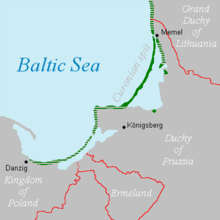
Significant human impacts on the area began in the 16th century.[1] Deforestation of the spit due to overgrazing, timber harvesting, and building of boats for the Battle of Gross-Jägersdorf in 1757 led to the dunes taking over the spit and burying entire villages. Alarmed by these problems, the Prussian government sponsored large-scale revegetation and reforestation efforts, which started in 1825. Other sources credit George David Kuwert, the owner of a post station in Nida in the late 19th century, with beginning the spit’s reforestation.[citation needed] Owing to these efforts, much of the spit is now covered with forests.
In the 19th century the Curonian Spit was inhabited primarily by Kursenieki, with a significant German minority in the south and a Lithuanian minority in the north. The population of Kursenieki eventually dwindled due to assimilation and other reasons; it is close to non-existent these days and had been even before 1945, when the spit had become ethnic German.[citation needed]
Artists’ colony[edit]

From the late 19th century, the dune landscape around Nidden became popular with landscape and animal painters from the Kunstakademie Königsberg arts school. The local inn of Herman Blode was the nucleus of the expressionist artists’ colony (Künstlerkolonie Nidden). Lovis Corinth stayed here in 1890, followed by artists such as Max Pechstein, Alfred Lichtwark, Karl Schmidt-Rottluff, and Alfred Partikel.[4] Painters from Königsberg such as Julius Freymuth and Eduard Bischoff visited the area, as did poets like Ernst Wiechert and Carl Zuckmayer.[4] Other guests included Ernst Kirchner, Ernst Mollenhauer, Franz Domscheit, and Herrmann Wirth. The painters usually took accommodations at Blode’s hotel, and left some of their works with him. Some also built their own residences in the vicinity.
20th century[edit]

Curonian Spit in Kaliningrad Oblast, Russia
Until the 20th century, most people in the area made their living by fishing. From 1901 to 1946 the village of Rossitten, now Rybachy, became the site of the pioneering Rossitten Bird Observatory, the world’s first, founded by German ornithologist Johannes Thienemann there because of the Spit’s importance as a bird migration corridor.
After World War I, Nidden, together with the northern half of the Curonian Spit became part of the Klaipėda Region according to the 1919 Treaty of Versailles and was annexed by Lithuania in 1923. Officially renamed Nida, the village nevertheless remained a German-majority settlement – the border with the remaining East Prussian half of the Spit lay only a few kilometres to the south.
In 1929 Nobel Prize-winning writer Thomas Mann visited Nida while on holiday in nearby Rauschen and decided to have a summer house erected on a hill above the Lagoon, mocked as Uncle Tom’s Cabin (Onkel Toms Hütte) by locals. He and his family spent the summers of 1930–1932 in the thatched cottage; parts of the epic novel Joseph and His Brothers (Joseph und seine Brüder) were written here. Threatened by the Nazis, Mann left Germany after Hitler’s Machtergreifung in 1933 and never returned to Nida. After the Klaipėda Region was again annexed by Nazi Germany in 1939, his house was seized at the behest of Hermann Göring and served as a recreation home for Luftwaffe officers.
The German population was expelled by force after World War II by the occupying Soviet forces, accompanied by widespread ethnic cleansing. Like elsewhere in present-day Kaliningrad Oblast, the assimilation of the territory and colonization by Russian settlers was completed by changing the historic German toponyms to Russian ones throughout the Russian-controlled part of the Spit.
Today[edit]
After the breakup of the Soviet Union, tourism flourished; many Germans, mostly the descendants of the inhabitants of the area, choose the Curonian Spit (especially Nida, as no visas are needed for Germans in Lithuania) as their holiday destination.
Kursenieki[edit]
While today the Kursenieki, also known as Kuršininkai, are a nearly extinct Baltic ethnic group living along the Curonian Spit, in 1649 Kuršininkai settlement spanned from Memel (Klaipėda) to Danzig (Gdańsk). The Kuršininkai were eventually assimilated by the Germans, except along the Curonian Spit where some still live. The Kuršininkai were considered Latvians until after World War I, when Latvia gained independence from the Russian Empire, a consideration based on linguistic arguments. This was the rationale for Latvian claims over the Curonian Spit, Memel and other territories of East Prussia, which would be later dropped.
-

-

-

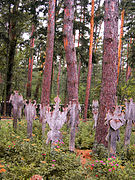
Old cemetery in Nida
-

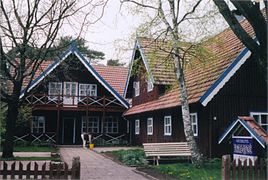
Small inn and cafe in Nida
-
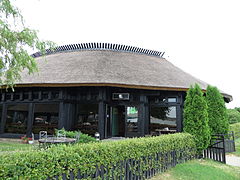
Fish restaurant in Nida


Current state[edit]


The Curonian Spit is home to the highest moving (drifting) sand dunes in Europe. Their average height is 35 metres (115 ft), but some attain a height of 60 metres (200 ft). Several ecological communities are present on and near the Spit, from its outer beaches to dune ridges, wetlands, meadows, and forests.[5] Its location on the East Atlantic Flyway means it is frequently visited by migratory waterfowl. Between 10 and 20 million birds fly over the feature during spring and fall migrations, and many pause to rest or breed there.[5]
Both the Russian and Lithuanian parts of the spit are national parks.
The settlements of the Curonian Spit (from north to south) are:
- Smiltynė
- Alksnynė
- Juodkrantė
- Pervalka
- Preila
- Nida
- Morskoe
- Rybachy
- Lesnoy
The first six are on the Lithuanian side, while the last three are on the Russian side. The Russian side of the Curonian Spit belongs to Zelenogradsky District of the Kaliningrad Oblast, while the Lithuanian side is partitioned among Klaipėda city municipality and Neringa municipality in Klaipėda County.
There is a single road that traverses the whole length of the Curonian Spit. In the Russian side it goes to Zelenogradsk, while on the Lithuanian side it goes to Smiltynė. The spit is not connected to mainland Lithuania. Car ferries provide a transportation link between Smiltynė, located on the spit, and the port town of Klaipėda.
Since 2000, the Curonian Spit has been on UNESCO’s World Heritage List under cultural criteria «V» («an outstanding example of a traditional human settlement, land-use, or sea-use which is representative of a culture […], or human interaction with the environment especially when it has become vulnerable under the impact of irreversible change»).
Currently[when?] there is a demand to tear down a number of homes on the Curonian Spit. These homes are owned by people who were given permits to build by corrupt local government[specify] officials. The demand to tear the homes down is based on the fact that the Spit is a UN World Heritage Site and the only structures that were to be allowed outside official settlements were fishing shacks.[6]
Tourism[edit]
The largest town on the spit is Nida in Lithuania, a popular holiday resort, mostly frequented by Lithuanian and German tourists. The western shoreline of Curonian Spit is the site of beaches for tourists.
Parnidis dune and sundial[edit]
Parnidis sand dune, subjected to drift by harsh winds, is rising up to 52 metres (171 ft) above sea level. Local residents believe that the name Parnidis comes from the phrase meaning «passed across Nida», because this wind-blown dune has several times passed through the village of Nida. Scientists estimated that each person climbing or descending on the steep dune slopes moves several tons of sand, so hikers are allowed to climb only in designated paths.
There is a granite sundial built on Parnidis dune in 1995 that accurately shows the time. The sundial was rebuilt in 2011 following storm damage. The sundial is a stone pillar 13.8 metres (45 ft) high and weighing 36 tonnes (35 long tons; 40 short tons). It consists in small steps covered with granite slabs, carved with hour and half-hour notches, as well as one notch for each month, and four additional notches for solstices and equinoxes. From the astronomical point of view Parnidis dune is an ideal place for the sundial in Lithuania.[7]
Environmental concerns[edit]

The Curonian Spit is known for its fine sandy beaches (Nida, Lithuania).
There are environmental concerns related to the Curonian Spit, which is often promoted as a refuge of clean nature.
Due to the importance of tourism and fishing for the regional economy, pollution of sea and coastlines may have disastrous effects for the area as the unique nature and the economy would be damaged.
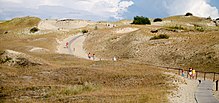
Sand dunes near Nida, Lithuania
The construction of an offshore drilling facility (the Kravtsovskoye (D-6) oilfield) in the territorial waters of Russia, 22.5 km (14.0 mi) from the coastline of the Curonian Spit raised concerns over possible oil spills. Between 2002 and 2005 local environmentalists in Kaliningrad Oblast[8] and Lithuania[9] protested against Lukoil’s plans to exploit the oilfield, objecting to the possible great damage to the environment and tourism (a vital source of income in the area) in case of oil leakage. These concerns did not engender support in the government of Russia. They were, however, supported by the government of Lithuania. The oilfield is about 4 km (2.5 mi) from the boundary of Lithuanian territorial waters; the prevailing northward currents means that the Lithuanian coastlines would receive much potential damage in case of leakage. Opposition to the operation of D-6 met little international support, and the oil platform was opened in 2004. During the first decade of the 21st century the two states agreed to a joint environmental impact assessment of the D-6 project, including plans for oil spill mitigation.[10] The assessment and mitigation project had not been completed as of 2010.[10]
Another concern is that increased tourism destroys the very nature that attracts it. For this reason, protective measures have been taken, such as banning tourists from hiking in certain areas of the spit.
Natural hazards are more dangerous in the Curonian Spit than elsewhere in Lithuania or the Kaliningrad Oblast. For example, storms tend to be stronger there. Due to the importance of trees in preventing soil erosion, forest fires that happen in summer are more dangerous to the ecology.
See also[edit]
- Kuršių Nerija National Park
- Curonian Spit National Park (Russia)
References[edit]
External links[edit]
- UNESCO World Heritage Site Curonian Spit
- Kursiu Nerija National Park (in Lithuania)
- National Park Kurshskaya Kosa (in Russia)
- Rybachy Biological Station, Russian Academy of Sciences
- Curonian Spit at Natural Heritage Protection Fund
печать
The Curonian spit is a natural formation.
It took several thousand years for the spit to shape out from the sands blown by the wind and dragged by the sea waves and to finally form a narrow sandy neck of land that separates the Curonian Gulf from the Baltic Sea.
The gulf’s water is sweet and the gulf’s bottom level is higher than the bottom level of the sea. The spit is about 100 km long (98 km, to be more precise) and connects the Kaliningrad region with Lithuania. Its widest part is 3.8 km and the narrowest point is 400 m.
This place has no rivals in the world. Try to cross the spit from gulf to sea and you will notice how the landscape changes from a bare desert to a pine forest.
For many centuries the Curonian spit was the place of attraction for migrant birds, which was very important for the German ornithologists, who in 1901 set up here a bird-ringing station Fringilla, called so after the Latin name of chaffinches, a bird specie nesting and flocking here in great number.
The size of the Curonian spit is astonishing, it has no analogies in the world; its majestic scenery and the lavishness of the flora and fauna cannot but amaze the tourists
The vegetation of the spit is quite diverse, varying from the taiga-like plants, mountain pines, and alder-trees to the tumbleweeds rolling in the deserts of the sand dunes rising up to 70 m high.
The sand dunes are constantly changing. The highest dune Efa opens a breathtaking panoramic view of both the gulf and the Baltic Sea.
The hotels on the Curonian spit offer high quality services at good prices.

Travel request

Contacts
Baltic Exotic Ltd.,
Generala Ozerova Str., 10
Kaliningrad 236022,
Russia
Phone: +7- 4012-991-100, 563-100, 762-100, 933-101.
Phone/fax: + 7-4012-563-110
E-mail:
[email protected]
[email protected]
The Curonian Spit is stretching along the coast of the Baltic Sea: lying partly in Russia, partly in Lithuania, it has the total length of 98 kilometres. The name of this sand-dune spit, which separates the Curonian Lagoon from the Baltic Sea, is connected to the ancient tribe called Curonians who had been inhabiting these lands long before the colonization of Prussia by Germans. In 2000 the Spit was listed as a World Natural Heritage Site by UNESCO for its unique relief and biodiversity.
The width of this sandy stripe varies from 400 to 3800 meters. The border between Russia and Lithuania is on the 49th kilometre, if counted from Zelenograd (Kaliningrad region). Both countries consider the Spit to be the area of nature conservation with the National Park status. The main part of its territory (72%) is occupied by forest: around 600 species of trees, bushes and plants grow here. As for the animals, this area is home for the moose, the roe, the wild boar, the fox — 296 species in total. But in the first place the Curonian Spit is famous for the number of birds. This place is a part of the ancient migration route that more than 150 species of birds use when leaving the northern regions of Europe for warmer places. During the migration period around 1 million birds fly over the Spit, and 102 species permanently have their nests there. That’s why the Curonian Spit got an unofficial name «the Bird’s Bridge». There is also the oldest ornithologist station that was founded back in 1901 and still study the birds.
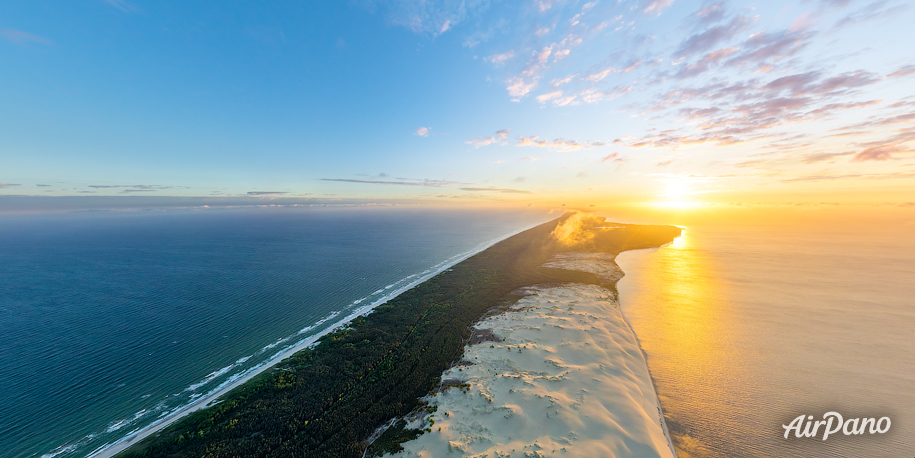
Both sides of the Spit possess sandy beaches allowing you to swim in both the freshwaters of lagoon and the salty Baltic Sea at your choice. Though the holiday season itself is rather short, you can enjoy the natural landmarks of the Spit between May and November. A lot of very interesting touristic routes have been created here, some of them can be seen in our panoramas. One of them is Müller’s Height (44.4 meters) — the highest point of Bruchberg Dune located next to the Rybachy (Fisherman) settlement. The height was named after the former ranger working at Koenigsberg Division of Forestry: his work and systematic research on forest soils helped to preserve the unique dunes, prevent the movement of drifting sands and save the village.
The Bruchberg Dune is a point which reveals picturesque views of the sea, the waters of the Curonian Lagoon, Lake Chaika and several settlements. But there are even higher points on the Spit: near Lake Lebed there is a ridge raising up to 55 meters (the Olenya buda Dune). Another elevated point is Efa’s Height, located at the top of the Orekhovaya Dune and having the altitude of 64 meters; it was named after another German eco-scientist.
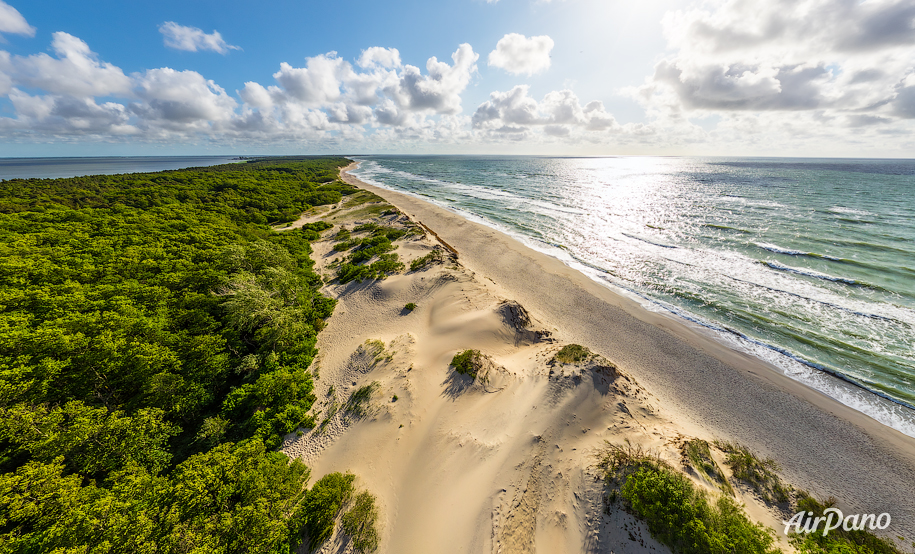
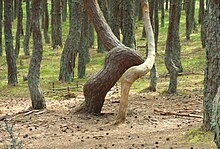
One more unique landmark of the Spit is the Dancing Forest (also known as the Drunken Forest) planted near Rybachy settlement on the Kruglaya Dune in the beginning of the 60-ies. The pine trunks curved in spirals and circles create an impression of a strange dance. The exact cause of the trees’ distortion is unknown. According to the most popular version, the distortion is caused by the activity of caterpillars at an early growth stage.
The Lithuanian part of the Spit is not of the less interest. The Parnidis Dune located near the village of Nida possesses an interesting viewpoint, as well as many historical monuments: an ancient fisherman estate and the fortress of Kopgalis where the Lithuanian Sea Museum is located.
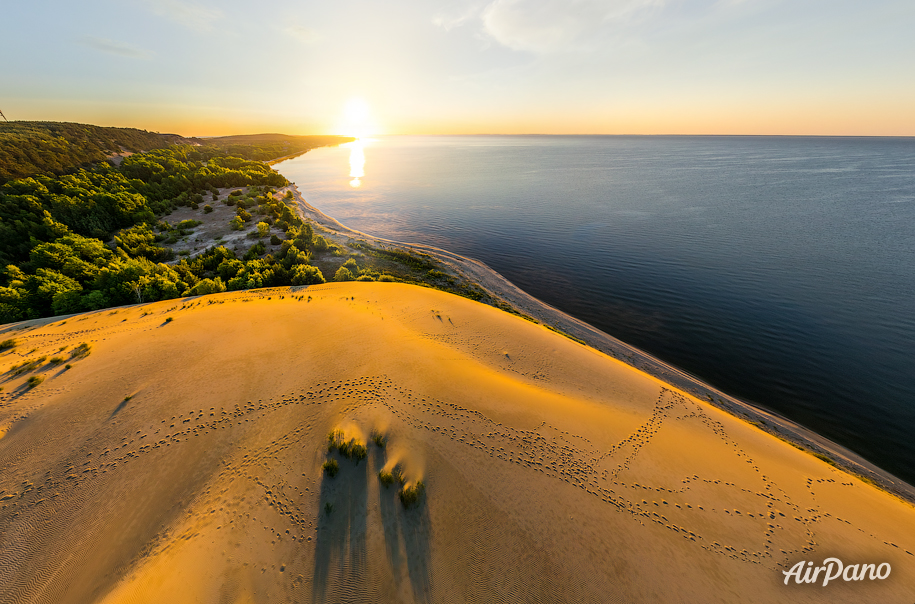
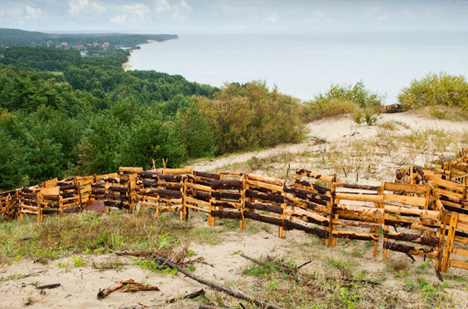
Unfortunately, the Curonian Spit is a rather vulnerable territory. By the end of the 19th century deforestation had brought this land to the brink of catastrophe: drifting dunes were about to block roads, bury the buildings and settlements. Only after the drifting sands had caused problems for shipping, the Prussian government (which was in power at that time) took measures to prevent desertification and erosion. In order to prevent the formation of new endangering dunes, an artificial swell stretching along the entire coast was created.
Even nowadays certain measures concerning the conservation of this place are being taken today. But the nature is always one step ahead: the storms of the Baltic Sea coming with strong gusts of winds often erode the sandy beaches and make the dunes slip into the sea. Our panoramas make it possible to preserve the picturesque landscapes of the Curonian Spit at least in the virtual format.
Video and photos by Stanislav Sedov, Dmitry Moiseenko, Sergey Shandin. Stitching by Nikolay Denisov
Site Name
Curonian Spit National Park
Site Description
Kuršių nerija, the Curonian Spit, is a narrow strip of sand stretching 98 kilometres along the Baltic Sea in western Lithuania. The Curonian Spit is a unique and vulnerable, sandy and wooded cultural landscape on a coastal spit which features small Curonian lagoon settlements. The Spit was formed by the sea, wind and human activity and continues to be shaped by them. Rich with an abundance of unique natural and cultural features, it has retained its social and cultural importance. Local communities adapted to the changes in the natural environment in order to survive. This interaction between humans and nature shaped the Curonian Spit cultural landscape.
The history of the Curonian Spit is dramatic: 5,000 years ago, a narrow peninsula (98 km in length and 0.4-3.8 km in width), the Great Dune Ridge separating the Baltic Sea from the Curonian Lagoon, was formed on moraine islands from sand transported by currents, and later covered by forest. After intensive logging in the 17th and 18th centuries, the dunes began moving towards the Curonian Lagoon, burying the oldest settlements. At the turn of the 19th century, it became evident that human habitation would no longer be possible in the area without immediate action. Dune stabilisation work began, and has continued ever since. By the end of the 19th century, a protective dune ridge was formed along the seashore to prevent inland sand migration, and the Great Dune Ridge was reinforced using trees and brushwood hedges. Currently, forests and sands dominate the Curonian Spit. Urbanised areas (eight small settlements) cover just about 6% of the land. One part of the 50 kilometres long Curonian Spit belongs to the Republic of Lithuania. The other to the Russian Federation. With its still drifting sand dunes, the sea side forests cherishing the hundred-years-old pine trees, dunes covered by a mountain pines’ carpet planted by hand, white sand beaches and the old fishermen villages.
Last modified
2020-11-27 01:11:17

General Characteristics and Status
Elevation (average)
11.00msl
Affiliation and Network Specific Information
CURONIAN SPIT
Curonian spit national park tour
Duration: around 7 hours
The Curonian Spit is a unique and vulnerable, sandy and wooded cultural landscape on a coastal spit which features small Curonian lagoon settlements. The Spit was formed by the sea, wind and human activity and continues to be shaped by them.
Beautiful landscape, unforgettable sand dunes, historical buildings, the first and the biggest bird ringing station in Europe, nice place to taste local smoked fish , to have lunch.
For over a thousand years people have been trying to save the Curonian Spit from three principle foes — the water, the wind, and themselves. Source: Anton Agarkov / Strana.ru
The sword-shaped Curonian Spit runs from Kaliningrad, Russia to Klaipeda, Lithuania. The peninsula hosts one of Russia’s smallest national parks, boasting a huge bridge for migrating birds, wandering sand dunes and sands.
The windblown sand drops to the ground in even thin lines, peaked like cardiograph readings showing a heartbeat. The heartbeat is so pulsating that it looks like the heart might burst out through the ribs. The Curonian Spit is lined with thousands of these sandy cardiograph streaks, as though recording the heartbeat patterns of the people who live here — flickering every second like tiny lines in the sand.
The sword-shape of Curonian Spit runs from Zelenogradsk in Kaliningrad Region to Klaipeda in Lithuania, dividing the salty brine of the Baltic Sea from the freshwater of the Curonian Bay. The emptiness gives way to pine forest, birch, and meadows swathed in mossy tundra and wetlands the size of a Moscow suburb.
At 25 square miles, the whole national park here is one-sixteenth the size of Russia’s capital: it measures 321 feet in one direction, and between .25 and 2.36 miles in the other.
How to get there
The best travel option from Kaliningrad is to take Bus №593 from Kaliningrad to Morskoy Village, which involves a change at Zelenogradsk. The route takes you along the length of the Spit. The journey time is four hours, with tickets going for around €6 ($8).
For over a thousand years people have been trying to save the Curonian Spit from three principle foes — the water, the wind, and themselves. Ancient Baltic tribes had their pagan worship groves here, and, later, Prussian kings kenneled their hunting packs here.
Then, in the 18th century, most of its area was given over to a royal park called The King’s Woods. This status would later save it from the massive deforestation that occurred on the rest of the Spit.
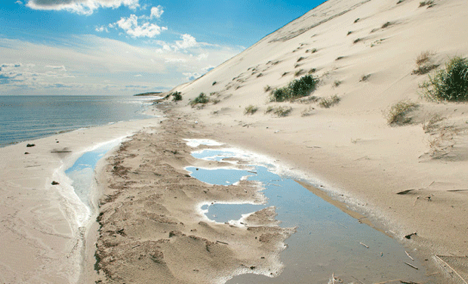
The deforestation sparked an ecological catastrophe: the sand caused desertification and the formation of “wandering” sand-dunes that gently amble along the peninsula’s coast. Even today this destructive process continues, making the natural eco-system of the peninsula fragile and vulnerable.
Source: Anton Agarkov / Strana.ru
For this reason, the Curonian Spit National Park was set up here in 1987 — one of Russia’s first national parks. People say that if you totaled up all of the materials and labor costs thrown at this project over the years, it would be the most expensive environmental project known in history.
“I love fishing here. We used to come here for flounders when I was just a kid,” says Vitya, a young red-nosed fisherman. “Back then we didn’t just catch fish, we used to bake crows! Nah, honestly! We’d lay our fishing net out on the ground and bait it with fish. We could catch more than a hundred crows a day.
Then we’d pluck them, chop the heads and legs off and sell them at the market. Of course, the buyers didn’t know they were buying crows! We even made up a special name for them — we called them ‘Prussian Doves!’”
As the sun goes down on spring evenings, the beating of wings drowns out even the fall of the waves. Hundreds of thousands of birds fly over the peninsula every day. The Curonian Spit is an enormous bridge for birds. The migration routes of more than 150 bird species run past here, as they fly from Northern Europe to the South and to Northern Africa. During the migration period, millions of birds fly the Spit.
Source: Anton Agarkov / Strana.ru
The Curonian Spit National Park is home to Europe’s oldest (1901) ornithological station, Fringilla, which is located at the Rybachy village (Fisherman’s village). Fringilla is the Latin genus for finches — one of the most common birds in the Curonian Spit. Ornithologists set up the world’s largest bird-nets (50 feet high) at Fringilla during the migration season.
During the peak season, these nets sometimes “harvested” 8,000 birds per hour. All the birds were weighed, inspected, ringed, and then released back into the wild.
“The Curonian Spit is a special and unique place,” says Anna, a villager at Rybachy village, “but that’s not what brings people here. Visitors come to experience nature — not wild nature and not groomed nature, but more like human nature! For many years the people and the Spit have grown up alongside each other as brother and sister: they may tussle and argue, but eventually they realize that they love each other. No, really — they do.»
Where to stay
There are plentiful bed-and-breakfast lodgings, tour camps, guesthouses and hotels in different categories on the Curonian Spit. They are all located in small villages — Rybachy, Morskoy, and Zelenogradsk. Prices vary from €10–200 ($13–267), depending on the kind of accommodation and the season. You will almost always find somewhere to stay, but it is still better to book ahead to get your first choice.
«This is where you’ll discover the real nature of humanity. It’s reflected everywhere — in the rocks, the waves, the trees,» she added. «It’s why we came here to live. This is where the sand sings and the forest dances…”
The pine trees are woven into rings and hearts, convoluted spirals bending down to the ground — a strange natural phenomenon that locals call “the dancing forest.” This patch of hundreds of trees suddenly opens in the middle of the rest of the forest: turn along the path and you will find bizarrely-shaped trees all around you. No one has been able to explain why it happens. People say that the dancing forest follows the movement of the sands.
The “singing sands” are yet another strange local feature. Due to their unusual crystalline forms, the sand particles emit characteristic sounds on contact with the wind — sounds that are nothing like the usual rustle.
The sand sings under your feet, runs under your heels, bays at the dogs and echoes the lapping waves; its sound is carried far along the Curonian Spit. All you need to do is take a single step to hear it — or just not move at all.
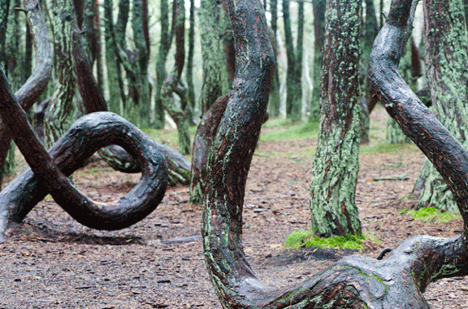
Source: Anton Agarkov / Strana.ru
You can run, or jump, or watch the dunes in silence, and you will still hear the sand everywhere. It forms waves that become some of the biggest sand dunes in the world. “The Heights of Eff” and “The Müller Heights” are the names of dunes here that can grow taller than 195 feet.
“I was born here, and when I grew up I moved to Kaliningrad. Then I came back. There’s nothing for me to do in other countries and cities, as long as I can live here,” says Vladimir, a park worker. “We have everything — the sea, hills, deserts, forests and tundra. And, by the way, a sole fish with eyes leaning on one side isn’t that tasty. But the most important thing is that we have tranquility, which can only be found in nature…”
The best time to visit the Curonian Spit is from May to November — there are no cars, the sea is calmer, and the pussy-willow blossoms are in bloom along the shores.
All rights reserved by Rossiyskaya Gazeta.
Get the week’s best stories straight to your inbox