
12883. Прочитайте текст и заполните пропуски A-F частями предложений, обозначенными цифрами 1-7. Одна из частей в списке 1-7 лишняя. Занесите цифру, обозначающую соответствующую часть предложения, в таблицу.
The world of automobiles has made some dramatic changes in the past century. Each year brings more innovative improvements in car technology A___________. However, all that brightness might make someone feel a bit curious about how it all began.
Way back in the 15th century, Leonardo Da Vinci was working diligently on designs and prototypes for transport vehicles B___________. It wasn’t until 1769 that an inventor in France built a working self-propelled vehicle. His name was Nicolas Cugnot, and the vehicle was a steam powered military tractor.
In Scotland, around 1839, Robert Anderson took a ride in his creation, C___________. Today’s modern hybrid cars use technology based upon the ideas first dreamed of almost 170 years ago!
But the legitimate title of Automobile Inventor would have to go to German inventor, Karl Friedrich Benz. It was in 1886 that he received a patent on the world’s first gasoline powered automobile, D___________.
In the United States, the first patent issued for an automobile was granted in 1789, to Oliver Evans. He performed an amazing demonstration of his vehicle in 1805, E___________. Proudly crowned the first amphibious vehicle, it never quite made it to production for the public.
It was in 1893 that Charles Edgar Duryea, and his brother Frank introduced to America the first gasoline powered car that worked the way it was supposed to. These two engineering brothers also started the first American automobile manufacturing plant.
A common belief is that Henry Ford invented the first car. However, Henry created his first car only in 1896. He had formed and lost two car manufacturing plants by 1903, F___________. His most famous contribution to the automotive industry was that he invented the first assembly line conveyer belt that revolutionized the manufacturing of automobiles.
1) which had a combustion engine and three wheels
2) when he showed the crowd that his automobile was able to travel on land, and in
3) because automotive companies are planning to do a lot of scientific research
4) when he started The Ford Motor Company
5) but, unfortunately, none ever came into being
6) the water by using a paddle wheel
7) so the future looks bright for both car buyers and car manufacturers
 which he called the Electric Carriage

12643. Прочитайте текст и заполните пропуски A-F частями предложений, обозначенными цифрами 1-7. Одна из частей в списке 1-7 лишняя. Занесите цифру, обозначающую соответствующую часть предложения, в таблицу.
Biology means the study of life and it is the science which investigates all living things. Even in the days before recorded history, people knew and passed on information about plants and animals. Prehistoric people survived by learning A___________. Farming would not have developed if they had not begun to understand that animals could produce food like milk and eggs.
The ancient Egyptians studied the life cycle of insects and understood the part that insects and pollen played in the life cycle of plants. The ancient Mesopotamians even kept animals in B___________. The ancient Greeks, too, were greatly interested in understanding the world around them. Aristotle recorded his observations of plants and animals, and his successor, Theophrastus, wrote the first books on plant life, C___________.
Modern biology really began in the 17th century. At that time, Anton van Leeuwenhoek, in Holland, invented the microscope and William Harvey, in England, described the circulation of blood. The microscope allowed scientists to discover bacteria, D___________. And new knowledge about how the human body works allowed others to find more effective ways of treating illnesses.
In the middle of the 19th century, unnoticed by anyone else, the Austrian monk Gregor Mendel, created his Laws of Inheritance, beginning the study of genetics E___________. At the same time, while travelling around the world, Charles Darwin was formulating the central principle of modern biology-natural selection as the basis of evolution.
In the 20th century, biologists began to recognize how plants and animals live and pass on their genetically coded information to the next generation. Since then, partly because of developments in computer technology, there have been great advances in the field of biology, F___________.
1) which made a very important contribution to the study of botany
2) which plants were good to eat and which could be used for medicine
3) who were very dangerous
4) that is such an important part of biology today
5) which led to an understanding of the causes of disease
6) what were the earliest zoological gardens
7) which is an area of ever-growing knowledge

P.S. Нашли ошибку в задании? Пожалуйста, сообщите о вашей находке
При обращении указывайте id этого вопроса — 12643.
12683. Прочитайте текст и заполните пропуски A-F частями предложений, обозначенными цифрами 1-7. Одна из частей в списке 1-7 лишняя. Занесите цифру, обозначающую соответствующую часть предложения, в таблицу.
Reality television is a genre of television programming which, it is claimed, presents unscripted dramatic or humorous situations and features ordinary people rather than professional actors. It could be described A_____________. Although the genre has existed in some form or another since the early years of television, B_____________.
Reality television covers a wide range of television programming formats, from game or quiz shows to surveillance-focused productions such as Big Brother. Critics say that the term ‘reality television’ is somewhat of a misnomer C_____________. The participants of these shows are often put in exotic locations or abnormal situations and are sometimes coached to act in certain ways by off-screen handlers, whereas the events on screen are manipulated through editing and other post-production techniques.
Part of reality television’s appeal is D_____________. Reality television also has the potential to turn its participants into national celebrities, mainly in talent and performance programmes such as Pop Idol, E_____________.
Some commentators have said that the name ‘reality television’ is an inaccurate description for several styles of programme included in the genre. In competition-based programmes such as Big Brother and The Real World, producers design the format of the show and control the day-to-day activities and the environment, F_____________. Producers specifically select the participants, and use carefully designed scenarios, challenges, events, and settings to encourage particular behaviours and conflicts.
1) that is rather popular with teenagers
2) because such shows frequently portray a modified and highly influenced form of reality
3) the current explosion of popularity dates from around 2000
4) though frequently Big Brother participants also reach some degree of celebrity
5) creating a completely fabricated world in which the competition plays out
6) as a form of artificial documentary
7) due to its ability to place ordinary people in extraordinary situations
P.S. Нашли ошибку в задании? Пожалуйста, сообщите о вашей находке
При обращении указывайте id этого вопроса — 12683.
12723. Прочитайте текст и заполните пропуски A-F частями предложений, обозначенными цифрами 1-7. Одна из частей в списке 1-7 лишняя. Занесите цифру, обозначающую соответствующую часть предложения, в таблицу.
Solar panels on the roof aren’t just providing clean power; they are cooling the house. Using thermal imaging, researchers determined that during the day, a building’s ceiling was 5 degrees Fahrenheit cooler under solar panels than under an exposed roof. At night, the panels help hold heat in, A___________.
As solar panels sprout on an increasing number of residential and commercial roofs, it becomes more important to consider their impact on buildings’ total energy costs. Data for the study was gathered over three days on the roof of the San Diego School of Engineering with a thermal infrared camera. The building is equipped with tilted solar panels and solar panels B___________. Some portions of the roof are not covered by panels.
The panels essentially act as roof shades. Rather than the sun beating down onto the roof, C___________, photovoltaic panels take the solar beating. Then much of the heat is removed by wind blowing between the panels and the roof. The benefits are greater if there is an open gap D___________, so tilted panels provide more cooling. Also, the more efficient the solar panels, the bigger the cooling effect. For the building researchers analyzed, the panels reduced the amount of heat reaching the roof by about 38 percent.
Although the measurements took place over a limited period of time, the team developed a model that allows them to extrapolate their findings to predict cooling effects throughout the year.
For example, in winter, the panels would keep the sun from heating up the building. But at night, they would also keep in E___________.
There are more efficient ways to passively cool buildings F___________. But, if you are considering installing solar photovoltaic, depending on your roof thermal properties, you can expect a large reduction in the amount of energy you use to cool your residence or business.
1) that are flush with the roof
2) such as reflective roof membranes
3) which causes heat to be pushed through the roof
4) where air can circulate between the building and the solar panel
5) that was not covered with panels
6) reducing heating costs in the winter
7) whatever heat accumulated inside
P.S. Нашли ошибку в задании? Пожалуйста, сообщите о вашей находке
При обращении указывайте id этого вопроса — 12723.
12763. Прочитайте текст и заполните пропуски A-F частями предложений, обозначенными цифрами 1-7. Одна из частей в списке 1-7 лишняя. Занесите цифру, обозначающую соответствующую часть предложения, в таблицу.
The ancient Greeks coined the term ‘atomos’, meaning the smallest possible separation of matter. In ancient times, both the Greeks and Indians had philosophised about the existence of the atom. However, it was first hypothesised scientifically by the British chemist John Dalton in the early years of the 19th century, A___________. Since then, smaller subatomic particles have been discovered and the part they play as the basic building blocks of the universe is clear. We now know that atoms are made up of differing numbers of electrons, neutrons and protons, and these too are made up of even smaller particles.
Dalton’s theory about atoms was not immediately accepted by chemists, although one reason for this was Dalton’s well-known carelessness in experimental procedures. However, we know that Dalton was correct in almost everything he said in his theory of the atom. He described an atom, even though he had never seen one, B___________. It could combine with the atoms of other chemical elements to create a compound.
Almost a century later the first subatomic particles were discovered. By the 1930s, physicists were working with new ideas C___________. In turn, these developments helped them to develop quantum mechanics.
In chemistry, the atom is the smallest part of an element D___________. The difference in the number of subatomic particles makes one atom different from another.
Subatomic particles also have another purpose. If there is the same number of electrons and protons in the atom, E___________. A difference between the two means the atom has an electrical charge. In other words, it produces electricity. This electricity means the electrons can become attracted to each other. In this way, atoms can bond together to form molecules, and when enough molecules are joined together we have matter F___________.
1) as he has no equipment
2) as a particle that cannot change its nature
3) when he suggested it was the smallest particle that could exist
4) that we can see
5) that can still be recognised
6) then it will be electronically neutral
7) which allowed them to investigate the parts of the atom in great detail
P.S. Нашли ошибку в задании? Пожалуйста, сообщите о вашей находке
При обращении указывайте id этого вопроса — 12763.
12803. Прочитайте текст и заполните пропуски A-F частями предложений, обозначенными цифрами 1-7. Одна из частей в списке 1-7 лишняя. Занесите цифру, обозначающую соответствующую часть предложения, в таблицу.
On the whole, Cambridge is a much quieter than Oxford, although what really sets it apart from its scholarly rival is ‘the Backs’, providing exquisite views over the backs of the old colleges. At the front, the handsome facades of these same colleges dominate the layout of the town centre, lining up along the main streets. Most of the colleges date back to the late thirteenth and early fourteenth centuries. Many of the buildings are extraordinarily beautiful, but the most famous is King’s College, A___________. There are thirtyone university colleges in total. Each one is an independent, self-governing body, proud of its achievements and attracting a close loyalty from its students, B___________.
During the nineteenth century, the university finally lost its ancient privileges over the town, C___________. The university expanded too, with the number of students increasing dramatically. More recently, change has been much slower, D___________. The first two women’s colleges were founded in the 1870s, but it was only in 1947 that women were actually awarded degrees. In the meantime, the city and university had been acquiring a reputation as a high-tech centre of excellence. Cambridge, E___________, has always been in the vanguard of scientific research.
Cambridge is an extremely compact place, and you can walk round the centre, visiting the most interesting colleges, in an afternoon. A more thorough exploration covering more of the colleges and a leisurely afternoon on a punt will, however, take at least a couple of days. If possible you should avoid coming in high summer, F___________. Faced with such crowds, the more popular colleges have restricted their opening times and have introduced admission charges.
1) because of the development of industry
2) whose magnificent chapel is one of the greatest statements of late Gothic architecture
3) whose alumni have received no less than ninety Nobel prizes
4) amongst whom privately educated boys remain over-represented
5) particularly when it comes to equality of sexes
6) which was expanding rapidly thanks to the arrival of the railway
7) when the students are replaced by crowds of sightseers
P.S. Нашли ошибку в задании? Пожалуйста, сообщите о вашей находке
При обращении указывайте id этого вопроса — 12803.
12843. Прочитайте текст и заполните пропуски A-F частями предложений, обозначенными цифрами 1-7. Одна из частей в списке 1-7 лишняя. Занесите цифру, обозначающую соответствующую часть предложения, в таблицу.
When you mention the name ‘Hovercraft’ most people think of a helicopter. If someone sees one from the river bank, the term ‘airboat’ comes to their mind because most people are not quite sure A___________. Few people know of the personal sized hovercraft B___________.
A hovercraft is a vehicle, designed to travel over any smooth surface. Hovercraft are unique among all forms of transportation in their ability to travel equally well over land, ice, and water C___________. That is why they are used throughout the world as a means of specialized transport D___________. Hovercraft can be powered by one or more engines. The engine drives the fan, which is responsible for creating high pressure air. The air inflates the ‘skirt’ under the vehicle, causing it to rise above the ground.
The Hovercraft Museum, located in Hampshire, houses the world’s largest library of documents, publications, photographs and drawings on hovercraft, E___________. The museum also contains a large collection of original manufacturer’s hovercraft models including the world’s first working hovercraft model built by Christopher Cockerell.
Cockerell’s idea was to build a vehicle floating on a layer of air, F___________. To test his hypothesis, he put one smaller can inside a larger can and used a hairdryer to blow air into them. Christopher Cockerell was knighted for his achievement in 1969.
Hovercraft have now become much larger, more efficient and are in widespread use all over the world.
1) what they are looking at
2) which would reduce friction between the water and vehicle
3) all of which are available for research
4) where there is the need to travel over multiple types of surfaces
5) that are used worldwide for recreation, racing and rescue
6) so as to entertain the general public
7) because they are supported by a cushion of air
P.S. Нашли ошибку в задании? Пожалуйста, сообщите о вашей находке
При обращении указывайте id этого вопроса — 12843.
12883. Прочитайте текст и заполните пропуски A-F частями предложений, обозначенными цифрами 1-7. Одна из частей в списке 1-7 лишняя. Занесите цифру, обозначающую соответствующую часть предложения, в таблицу.
The world of automobiles has made some dramatic changes in the past century. Each year brings more innovative improvements in car technology A___________. However, all that brightness might make someone feel a bit curious about how it all began.
Way back in the 15th century, Leonardo Da Vinci was working diligently on designs and prototypes for transport vehicles B___________. It wasn’t until 1769 that an inventor in France built a working self-propelled vehicle. His name was Nicolas Cugnot, and the vehicle was a steam powered military tractor.
In Scotland, around 1839, Robert Anderson took a ride in his creation, C___________. Today’s modern hybrid cars use technology based upon the ideas first dreamed of almost 170 years ago!
But the legitimate title of Automobile Inventor would have to go to German inventor, Karl Friedrich Benz. It was in 1886 that he received a patent on the world’s first gasoline powered automobile, D___________.
In the United States, the first patent issued for an automobile was granted in 1789, to Oliver Evans. He performed an amazing demonstration of his vehicle in 1805, E___________. Proudly crowned the first amphibious vehicle, it never quite made it to production for the public.
It was in 1893 that Charles Edgar Duryea, and his brother Frank introduced to America the first gasoline powered car that worked the way it was supposed to. These two engineering brothers also started the first American automobile manufacturing plant.
A common belief is that Henry Ford invented the first car. However, Henry created his first car only in 1896. He had formed and lost two car manufacturing plants by 1903, F___________. His most famous contribution to the automotive industry was that he invented the first assembly line conveyer belt that revolutionized the manufacturing of automobiles.
1) which had a combustion engine and three wheels
2) when he showed the crowd that his automobile was able to travel on land, and in
3) because automotive companies are planning to do a lot of scientific research
4) when he started The Ford Motor Company
5) but, unfortunately, none ever came into being
6) the water by using a paddle wheel
7) so the future looks bright for both car buyers and car manufacturers
which he called the Electric Carriage
P.S. Нашли ошибку в задании? Пожалуйста, сообщите о вашей находке
При обращении указывайте id этого вопроса — 12883.
12923. Прочитайте текст и заполните пропуски A-F частями предложений, обозначенными цифрами 1-7. Одна из частей в списке 1-7 лишняя. Занесите цифру, обозначающую соответствующую часть предложения, в таблицу.
Hogmanay is a Scottish holiday that celebrates the New Year. Observed on December 31, festivities typically spill over into the first couple of days of January. In fact, there’s a tradition known as ‘first-footing’, A___________. Of course, the guest must be dark-haired and preferably male. Redheads and women aren’t nearly as lucky! This tradition stems from the time when a red- or blonde-haired stranger was probably an invading Norseman. Gifts are given to guests, and one of the popular food items on the Hogmanay menu is the black bun, B___________.
In addition to national observance, many local areas have their own customs C___________. In the town of Burghead, Moray, an ancient tradition called ‘burning the clavie’ takes place each year on January, 11. The clavie is a big bonfire, fuelled primarily by split casks. One of these is joined back together with a big nail, filled with flammable material, and lit on fire. Flaming, it’s carried around the village and up to a Roman altar known to residents as the Douro. The bonfire is built around the clavie. When the burnt clavie crumbles, D___________.
In Stonehaven, Kincardineshire, the locals make giant balls of tar, paper and chicken wire. These are attached to several feet of chain or wire, and then set on fire. A designated ‘swinger’ whirls the ball around his head and walks through the village streets to the local harbor. At the end of the festival, any balls still on fire are cast into the water, E___________!
The town of Biggar, Lanarkshire, celebrates with a big holiday bonfire. In the early 1940s, one or two locals complained about the size of the fire, and celebration organizers agreed to have a smaller fire. This was erected as promised, but before it was lit, the local traditionalists trucked in cartload after cartload of coal and wood, making a giant pyre, F___________!
The Presbyterian church disapproved of Hogmanay in the past, but the holiday still enjoys a great deal of popularity.
1) which then burned for a whopping five days before running out of fuel
2) which is quite an impressive sight in the dark
3) where they are able to follow national traditions
4) the locals each grab a lit piece to kindle a fire in their own hearth
5) in which the first person to cross a home’s threshold brings the residents good luck for the coming year
6) when it comes to celebrating Hogmanay
7) which is a really rich fruitcake
P.S. Нашли ошибку в задании? Пожалуйста, сообщите о вашей находке
При обращении указывайте id этого вопроса — 12923.
12963. Прочитайте текст и заполните пропуски A-F частями предложений, обозначенными цифрами 1-7. Одна из частей в списке 1-7 лишняя. Занесите цифру, обозначающую соответствующую часть предложения, в таблицу.
Walls and wall building have played a very important role in Chinese culture. From the Neolithic period to the Communist Revolution, walls were an essential part of any vil lage or town. Not only towns and villages but the houses and the temples within them were somehow walled, and the houses also had no windows overlooking the street, A___________. The name for ‘city’ in Chinese (ch’eng) means ‘a wall’, and over these walled cities, villages, houses and temples presides the god of walls and mounts, whose duties were, and still are, B___________. Thus a great and extremely laborious task such as constructing a wall, C___________, must not have seemed such an absurdity.
However, it is indeed a common mistake to perceive the Great Wall as a single architectural structure, and it would also be erroneous to assume that it was built during a single dynasty. The building of the wall spanned various dynasties, and each of these dynasties somehow contributed to the construction of the Great Wall, D___________.
The role that the Great Wall played in the growth of Chinese economy was an important one. Throughout the centuries many settlements were established along the new border. The garrison troops were instructed to reclaim wasteland and to plant crops on it, roads and canals were built, E___________. All these undertakings greatly helped to increase the country’s trade and cultural exchange with many remote areas. Builders, garrisons, artisans, farmers and peasants left behind a trail of objects, including inscribed tablets, household articles, and written work, which have become extremely valuable archaeological evidence to the study of defence institutions of the Great Wall and the everyday life of those people F___________.
1) thus giving the feeling of wandering around a huge maze
2) which constructed the Great Wall
3) whose foundations had been laid many centuries ago
4) which was supposed to run throughout the country
5) to protect and be responsible for the welfare of the inhabitants
6) to mention just a few of the works carried out
7) who lived and died along the wall
P.S. Нашли ошибку в задании? Пожалуйста, сообщите о вашей находке
При обращении указывайте id этого вопроса — 12963.
13003. Прочитайте текст и заполните пропуски A-F частями предложений, обозначенными цифрами 1-7. Одна из частей в списке 1-7 лишняя. Занесите цифру, обозначающую соответствующую часть предложения, в таблицу.
To design spacesuits, vehicles and habitats with enough shielding to keep astronauts safe, scientists need to know A___________. They can estimate this radiation dose using computer models, but a computer model and real-life can be two wildly different things. Until now, researchers weren’t sure B___________.
That’s where the Phantom Torso comes in. He’s an armless, legless, human-shaped mannequin C___________. Scientists call him Matroshka, and like his NASA counterpart Fred, this mannequin is an intrepid space traveller.
Matroshka’s plastic body is loaded with over 400 dosimeter sensors D___________. The sensors are placed in the location of vital human organs. All the data collected is being used by scientists to verify the accuracy of computer models used to predict the safety of space missions for human astronauts.
The Phantom Torso has become a regular sight on the International Space Station over the last four months but now the limbless mummy-like humanoid is back home again. The Phantom Torso has provided the real-world test needed to prove E___________. They’re accurate to within ten percent of the measured dose. That means these models can be used to plan NASA’s return to the Moon or even a trip to Mars.
Lessons learned from Fred and Matroshka have major implications for NASA’s plans to set up a manned outpost on the Moon and eventually to send people to Mars. Protecting astronauts from the harmful effects of space radiation will be a critical challenge for these extended missions.
Now that the Phantom Torso has spent four months on the International Space Station, scientists are learning about the space radiation F___________. The results obtained from this experiment could help in the development of countermeasures to the effect of cosmic radiation experienced by astronauts.
1) which collect data from galactic cosmic rays and other radiation sources in space
2) whether their models accurately predicted the radiation dose astronauts experience in space
3) that Matroshka endured
4) how much radiation astronauts actually absorb
5) what to do with him
6) that looks like he’s wrapped in a mummy’s bandages
7) that the models used by scientists are essentially correct
P.S. Нашли ошибку в задании? Пожалуйста, сообщите о вашей находке
При обращении указывайте id этого вопроса — 13003.
Для вас приятно генерировать тесты, создавайте их почаще
This article is about the year 1903. For the rifle, see M1903 Springfield.
 |
Wikimedia Commons has media related to 1903. |
1903 (MCMIII) was a common year starting on Thursday of the Gregorian calendar and a common year starting on Wednesday of the Julian calendar, the 1903rd year of the Common Era (CE) and Anno Domini (AD) designations, the 903rd year of the 2nd millennium, the 3rd year of the 20th century, and the 4th year of the 1900s decade. As of the start of 1903, the Gregorian calendar was 13 days ahead of the Julian calendar, which remained in localized use until 1923.
Events[edit]
January[edit]


- January 1 – Edward VII is proclaimed Emperor of India.
- January 19 – The first west–east transatlantic radio broadcast is made from the United States to England (the first east–west broadcast having been made in 1901).
February[edit]
- February 13 – Venezuelan crisis: After agreeing to arbitration in Washington, Britain, Germany and Italy reach a settlement with Venezuela, resulting in the Washington Protocols. The naval blockade that began in 1902 will end.
- February 23 – Cuba leases Guantánamo Bay to the United States «in perpetuity».
March[edit]
- March 2 – In New York City, the Martha Washington Hotel, the first hotel exclusively for women, opens.
- March 3 – The British Admiralty announces plans to build a naval base at Rosyth.
- March 4 – The Beşiktaş J.K. multi-sport club is founded in the Ottoman Empire.
- March 5 – The Ottoman Empire and the German Empire sign an agreement to build the Constantinople–Baghdad Railway.
- March 12 – The University of Puerto Rico is founded.
- March 13 – Having abolished the Sokoto Caliphate in West Africa, the new British administration accepts the concession of its last Vizier.[1]
- March 14 – The Hay–Herrán Treaty, granting the United States the right to build the Panama Canal, is ratified by the United States Senate. The Colombian Senate later rejects the treaty.
April[edit]

- April 14 – Aberdeen F.C. is established by merger as a professional Association football club in Scotland.[2]
- April 19–21 (April 6–8 O.S.) – The first Kishinev pogrom, beginning on Easter Day, takes place in Kishinev, capital of the Bessarabia Governorate of the Russian Empire. At least 47 Jews are killed and others injured during mob rioting encouraged by blood libel articles in the press and led by priests; no attempt is made by police or military to intervene until the third day.[3]
- April 26 – Atlético Madrid is officially founded as a professional Association football club in Spain.[4]
- April 29
- The 30-million-m3 Frank Slide, a rockslide, kills 70–90 in Frank, Alberta.
- The 7.0 Ms Manzikert earthquake affects eastern Turkey, leaving 3,500 dead (local time; April 28 23:46 UTC).
May[edit]
- May 4 – Leading Macedonian revolutionary Gotse Delchev is killed in a skirmish with the Turkish army.
- May 18 – The port of Burgas, Bulgaria opens.
- May 24 – The Paris–Madrid race for automobiles begins, during which at least 8 people are killed; the French government stops the event at Bordeaux, and impounds all the competitors’ cars.[5]
June[edit]

- June 11 (May 29 O.S.) – Serbian King Alexander Obrenović and Queen Draga are assassinated in Belgrade, by the Black Hand (Crna Ruka) organization.
- June 14 – The town of Heppner, Oregon, is nearly destroyed by a cloud burst that results in a flash flood that kills about 238 people.
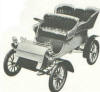
- June 16 – The Ford Motor Company is founded by Henry Ford with $28,000 in cash from twelve investors.[6]
- June 27 – American socialite Aida de Acosta, 19, becomes the first woman to fly a powered aircraft solo, when she pilots Santos-Dumont’s motorized dirigible, «No. 9», from Paris to Château de Bagatelle in France.[7]
July[edit]
- July 1–19 – The first Tour de France bicycle race is held; Maurice Garin wins it.
- July 7 – The British take over the Fulani Empire.
- July 23 – The first Ford Model A is sold.
- July 29 – The explosion of a United States Cartridge Company magazine destroys 70 homes, killing 22 residents of Tewksbury, Massachusetts.[8]
- July 30–August 23 (July 17–August 10, O.S.) – The Second Congress of the All-Russian Social Democratic Labour Party is held in exile in Brussels, transferring to London.
August[edit]
- August 2 – The Ilinden–Preobrazhenie Uprising, organized by the Secret Macedonian-Adrianople Revolutionary Organization, breaks out in the Ottoman provinces of Macedonia and Adrianople.
- August 3 – The Kruševo Republic is proclaimed in Ottoman Macedonia; it is crushed 10 days later.
- August 4 – Pope Pius X succeeds Pope Leo XIII, as the 257th pope.
- August 10 – The Paris Métro train fire, at Couronnes, results in 84 deaths.
- August 25 – The Judiciary Act is passed, in the Australian Parliament.
September[edit]
- September – Texas State University in San Marcos, TX opens its doors, as Southwest Texas Normal School.
- September 11 – The first stock car event is held at the Milwaukee Mile.
- September 14 – Joseph Chamberlain resigns as British Colonial Secretary, in order to campaign publicly for Imperial Preference.
- September 15 – Grêmio Foot-Ball Porto Alegrense is founded in Porto Alegre, Brazil.
- September 24 – Edmund Barton steps down as Prime Minister of Australia, and is succeeded by Alfred Deakin.
- September 27 – The Wreck of the Old 97 Fast Mail train at Stillhouse Trestle, near Danville, Virginia, kills 11 people and inspires a ballad.[9]
- September 29 – Prussia becomes the second jurisdiction to require mandatory driver’s licenses for operators of motor vehicles, after New York State in 1901.
October[edit]
- October 1-13 – First modern World Series: The Boston Americans defeat the Pittsburgh Pirates, in 8 games.[10][11][12]
- October 6 – The High Court of Australia sits for the first time.[13]
- October 10 – The Women’s Social and Political Union is founded in the U.K.[14]
November[edit]
- November 2 – Maggie L. Walker becomes the first African American woman to charter a bank.[15]
- November 3 – Separation of Panama from Colombia: With the encouragement of the United States, Panama proclaims itself independent of Colombia.[16]
- November 6 – The English-language South China Morning Post newspaper is first published in Hong Kong.[17]
- November 13 – The United States recognizes the independence of Panama.[18]
- November 17 – The Russian Social Democratic Labour Party splits into two groups: the Bolsheviks (Russian for «majority») and Mensheviks (Russian for «minority»).[19][20][21]
- November 18 – The Hay–Bunau-Varilla Treaty is signed by the United States and Panama, giving the U.S. exclusive rights over the Panama Canal Zone.[16][18][22][23]
- November 23 – Colorado Governor James Hamilton Peabody sends the state militia into the town of Cripple Creek to break up a miners’ strike.[24]
- November 28 – SS Petriana is wrecked on a reef outside Melbourne, Australia, causing one of the world’s first major oil spills.[25]
December[edit]
- December 16 – The Taj Mahal Palace Hotel in Bombay (now Mumbai), India, opens its doors to guests.[26]
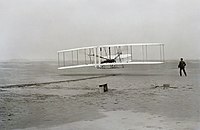
- December 17 – Orville Wright flies an aircraft with a petrol engine, the Wright Flyer, at Kitty Hawk, North Carolina, in the first documented and successful powered and controlled heavier-than-air flight.[27]
- December 30 – The Iroquois Theatre fire in Chicago kills 600.[28][29][30]
- December 31 – The National Association for Women’s Suffrage (Sweden) is founded.
Date unknown[edit]
- The Lincoln–Lee Legion is established to promote the American temperance movement, and the signing of alcohol abstinence pledges by children.
- The first box of Crayola crayons is made and sold for 5 cents. It contains 8 colors; brown, red, orange, yellow, green, blue, violet and black.
- Osea Island off Maldon, Essex, England, is bought by Frederick Nicholas Charrington to provide an addiction treatment centre.
- The Czech women’s organisation Ženský Klub Český is founded.
- American motorbike brand, Harley-Davidson is founded in Wisconsin.[31]
- Compression Rheostat, as predecessor of industrial automation and industrial equipment parts brand, Rockwell Automation is founded in Wisconsin, United States.[32]
Births[edit]
January[edit]

- January 1 – Jasimuddin, Bangladeshi poet, lyricist, composer and writer (d. 1976)
- January 2 – Kane Tanaka, Japanese supercentenarian, oldest Japanese ever, world’s oldest living person, last surviving person born in 1903
- January 6 – Maurice Abravanel, Greek-born conductor (d. 1993)
- January 10 – Barbara Hepworth, English sculptor (d. 1975)
- January 11 – Alan Paton, South African author, anti-apartheid activist (d. 1988)
- January 12
- Igor Kurchatov, Soviet and Russian physicist (d. 1960)
- Andrew J. Transue, American politician and attorney (Morissette v. United States) (d. 1995)
- January 16
- Peter Brocco, American actor (d. 1992)
- William Grover-Williams, French race car driver, war hero (d. 1945)
- January 17 – Warren Hull, American actor (d. 1974)
- January 18 – Gladys Hooper, British supercentenarian (d. 2016)
- January 22 – Fritz Houtermans, Polish physicist (d. 1966)
- January 23 – Jorge Eliécer Gaitán, Colombian politician (d. 1948)
- January 27 – John Eccles, Australian neuropsychologist, recipient of the Nobel Prize in Physiology or Medicine (d. 1997)
February[edit]


- February 2 – Bartel Leendert van der Waerden, Dutch mathematician (d. 1996)
- February 3 – Douglas Douglas-Hamilton, 14th Duke of Hamilton, Scottish nobleman, aviation pioneer (d. 1973)
- February 4 – Alexander Imich, American parapsychologist, chemist (d. 2014)
- February 6 – Claudio Arrau, Chilean-born pianist (d. 1991)
- February 8
- Greta Keller, Vienna-born cabaret singer, actress (d. 1977)
- Tunku Abdul Rahman, first Prime Minister of Malaysia (d. 1990)
- February 10
- Waldemar Hoven, German physician (d. 1948)
- Matthias Sindelar, Austrian footballer (d. 1939)
- February 11
- Rex Lease, American actor (d. 1966)
- Hans Redlich, Austrian composer (d. 1968)
- February 12
- Jorge Basadre, Peruvian historian (d. 1980)
- Lincoln Maazel, American singer and actor (d. 2009)
- February 13 – Georges Simenon, French writer (d. 1989)
- February 14 – Stuart Erwin, American actor (d. 1967)
- February 16 – Edgar Bergen, American ventriloquist (d. 1978)
- February 21
- Anaïs Nin, French writer (d. 1977)
- Raymond Queneau, French poet, novelist (d. 1976)
- February 22
- Morley Callaghan, Canadian writer, media personality (d. 1990)
- Ain-Ervin Mere, Estonian Nazi (d. 1969)
- Frank P. Ramsey, English mathematician (d. 1930)
- February 24 – Vladimir Bartol, Slovenian author (d. 1967)
- February 26 – Giulio Natta, Italian chemist, Nobel Prize laureate (d. 1979)[33]
- February 27 – Grethe Weiser, German actress (d. 1970)
- February 28 – Vincente Minnelli, American director (d. 1986)
March[edit]

- March 4
- William C. Boyd, American immunochemist (d. 1983)
- Dorothy Mackaill, British-born American actress (d. 1990)
- John Scarne, American magician, card expert (d. 1985)
- March 6 – Empress Kōjun, empress consort of Japan (d. 2000)
- March 10
- Bix Beiderbecke, American jazz musician (d. 1931)
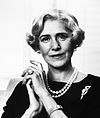
- Clare Boothe Luce, American publisher, writer (d. 1987)
- March 11
- Ronald Syme, New Zealand-born classicist, historian (d. 1989)
- Lawrence Welk, American television musician, bandleader (d. 1992)
- March 14 – Mustafa Barzani, Kurdish politician (d. 1979)
- March 18 – Gian Galeazzo Ciano, 2nd Count of Cortellazzo and Buccari, Italian aristocrat and diplomat (d. 1944)
- March 19 – W.R. Supratman, Indonesian violinist (d. 1938)
- March 20
- Edgar Buchanan, American actor (d. 1979)
- Maria Giuseppa Robucci, Italian supercentenarian (d. 2019)
- March 21 – Frank Sargeson, New Zealand writer (d. 1982)
- March 23 – Germán Busch, 36th President of Bolivia (d. 1939)
- March 24
- Adolf Butenandt, German chemist, Nobel Prize laureate (d. 1995)
- Malcolm Muggeridge, English journalist (d. 1990)
- March 25 – Nahum Norbert Glatzer, Jewish-American scholar (d. 1990)
- March 27 – Betty Balfour, English screen actress (d. 1977)
- March 28 – Rudolf Serkin, Austrian pianist (d. 1991)
- March 31 – H. J. Blackham, British humanist, author (d. 2009)
April[edit]

- April 3 – Lola Alvarez Bravo, Mexican photographer (d. 1993)
- April 5 – Hilda Bruce, British zoologist (d. 1974)
- April 6
- Mickey Cochrane, American baseball player (d. 1962)
- Doc Edgerton, American electrical engineer (d. 1990)
- April 9 – Gregory Goodwin Pincus, American biologist, researcher (d. 1967)
- April 12 – Jan Tinbergen, Dutch economist, Nobel Prize laureate (d. 1994)
- April 15 – John Williams, English-born actor (d. 1983)
- April 17
- Gregor Piatigorsky, American cellist (d. 1976)
- Morgan Taylor, American athlete (d. 1975)
- April 19 – Eliot Ness, American Prohibition agent (d. 1957)
- April 24 – José Antonio Primo de Rivera, Spanish politician (d. 1936)
- April 25 – Andrey Kolmogorov, Soviet and Russian mathematician (d. 1987)
May[edit]

- May 2 – Benjamin Spock, American pediatrician (d. 1998)
- May 3 – Bing Crosby, American singer, actor (d. 1977)
- May 4
- Luther Adler, American actor (d. 1984)
- Paul Demel, Czech actor (d. 1951)
- May 6 – Toots Shor, New York restaurateur (d. 1977)
- May 8 – Fernandel, French actor (d. 1971)
- May 10 – Hans Jonas, German-born philosopher (d. 1993)
- May 11 – Charlie Gehringer, American baseball player (d. 1993)
- May 12 – Faith Bennett, British actress, WWII ATA pilot (d. 1969)[34]
- May 14 – Billie Dove, American actress (d. 1997)
- May 18 – Frits Warmolt Went, Dutch botanist (d. 1990)
- May 19 – Shimoe Akiyama, Japanese supercentenarian (d. 2019)
- May 23 – Shelah Richards, Irish actress, director, and producer (d. 1985)
- May 24 – Lofton R. Henderson, American naval aviator (killed in the Battle of Midway) (d. 1942)
- May 25 – Binnie Barnes, English actress (d. 1998)
- May 29 – Bob Hope, English-born American comedian, actor (d. 2003)
June[edit]


- June 1
- Niní Marshall, Argentine humorist, comic actress and screenwriter (d. 1996)
- Vasyl Velychkovsky, Ukrainian bishop (d. 1973)
- June 6
- Aram Khachaturian, Soviet and Armenian composer (d. 1978)
- Bakht Singh, Indian evangelist, well-known Bible teacher, preacher (d. 2000)
- June 8 – Marguerite Yourcenar, Belgian-French author (d. 1987)
- June 10 – Theo Lingen, German actor (d. 1978)
- June 12 – Emmett Hardy, American musician (d. 1925)
- June 15 – Huldreich Georg Früh, Swiss composer (d. 1945)
- June 18
- Jeanette MacDonald, American singer, actress (d. 1965)
- Raymond Radiguet, French author (d. 1923)
- June 19
- Lou Gehrig, American baseball player (d. 1941)
- Wally Hammond, English cricketer (d. 1965)
- June 20 – Eddie Laughton, British-born American film actor (d. 1952)
- June 21
- Al Hirschfeld, American caricaturist (d. 2003)
- Lucy Sutherland, Australian-born British historian, academic and public servant (d. 1980)
- June 22
- John Dillinger, American bank robber (d. 1934)
- Jiro Horikoshi, Japanese aircraft designer (d. 1982)
- Carl Hubbell, American baseball player (d. 1988)
- Ben Pollack, American jazz drummer, bandleader (d. 1971)
- Ben Robertson, American novelist, journalist, and war correspondent (d. 1943)
- June 23
- Louis Seigner, French actor (d. 1991)
- Frances Dewey Wormser, American stage actress, entertainer and vaudeville performer (d. 2008)
- Paul Martin Sr., Canadian politician (d. 1992)
- June 25
- Pierre Brossolette, French journalist, resistance fighter (d. 1944)
- George Orwell, English author (d. 1950)
- Anne Revere, American actress (d. 1990)
- June 26
- Harry DeWolf, Canadian naval officer (d. 2000)
- Big Bill Broonzy, American blues singer, composer (d. 1958) (some sources give his year of birth as 1893)
- June 29
- Max Winter, American businessman, sport executive (d. 1996)
- Alan Blumlein, British electronics engineer (d. 1942)
July[edit]


- July 1
- Don Beddoe, American character actor (d. 1991)
- Amy Johnson, English aviator (d. 1941)
- July 2
- Harwell Hamilton Harris, American architect (d. 1990)
- Charles Poletti, American lawyer and politician (d. 2002)
- Alec Douglas-Home, Prime Minister of the United Kingdom (d. 1995)
- King Olav V of Norway (d. 1991)
- July 3 – Ace Bailey, Canadian hockey player (d. 1992)
- July 4
- Corrado Bafile, Italian Catholic cardinal (d. 2005)
- Walter Trohan, American journalist (d. 2003)
- Howard Hobson, American basketball player and coach of football, basketball, and baseball (d. 1991)
- July 5
- Edward Woods, American actor (d. 1989)
- Willem Peters, Dutch athlete (d. 1995)
- July 6 – Hugo Theorell, Swedish scientist, recipient of the Nobel Prize in Physiology or Medicine (d. 1982)
- July 7
- Gustaf Jonsson, Swedish cross country skier (d. 1990)
- Steven Runciman, English historian (d. 2000)
- July 10 – Werner Best, German SS officer, jurist (d. 1989)
- July 12 – Judith Hare, Countess of Listowel, Hungarian-born journalist, writer (d. 2003)
- July 13
- Olle Hallberg, Swedish long jumper (d. 1996)
- Kenneth Clark, English art historian (d. 1983)
- July 14
- Thomas D. Clark, American historian (d. 2005)
- Henricus Cockuyt, Belgian sprinter (d. 1993)
- July 16 – Mary Philbin, American notable film actress of the silent film era (d. 1993)
- July 18 – Victor Gruen, Austrian-Jewish architect and inventor of the shopping mall (d. 1980)
- July 21 – Roy Neuberger, American financier, art collector (d. 2010)
- July 26 – Estes Kefauver, American politician (d. 1963)
- July 27 – Michail Stasinopoulos, 1st President of Greece (d. 2002)
August[edit]

- August 3
- Habib Bourguiba, 1st President of Tunisia (d. 2000)
- Fahri Korutürk, 6th President of Turkey (d. 1987)
- August 5 – Prince Nicholas of Romania (d. 1978)
- August 6 – Virginia Foster Durr, American civil rights activist (d. 1999)
- August 7
- Rudolf Ising, American cartoon animator (d. 1992)
- Louis Leakey, British archaeologist (d. 1972)
- August 13 – Chubby Johnson, American actor (d. 1974)
- August 14 – Lodewijk Bruckman, Dutch painter (d. 1995)
- August 19 – James Gould Cozzens, American writer (d. 1978)
- August 24 – Graham Sutherland, English artist (d. 1980)
- August 26 – Ian Dalrymple, British screenwriter, film director and producer (d. 1989)
- August 31
- Arthur Godfrey, American radio, television host (d. 1983)
- Hugh Harman, American cartoon animator (d. 1982)
September[edit]


- September 2 – Fred Pratt Green, British Methodist minister, hymn writer (d. 2000)
- September 7
- Dorothy Marie Donnelly, American poet (d. 1994)
- Shimaki Kensaku, Japanese author (d. 1945)
- John Kloza, Polish professional baseball player, manager (d. 1962)
- September 8 – Jane Arbor, British writer (d. 1994)
- September 9
- Lev Shankovsky, Ukrainian military historian (d. 1995)
- Edward Upward, English author (d. 2009)
- Phyllis Whitney, American mystery writer (d. 2008)
- September 10 – Cyril Connolly, English critic, writer (d. 1974)
- September 11 – Theodor W. Adorno, German philosopher (d. 1969)[35]
- September 13 – Claudette Colbert, American actress (d. 1996)
- September 15
- Roy Acuff, American country musician (d. 1992)
- Yisrael Kristal, Polish-born Israeli supercentenarian, Holocaust survivor, and former world’s oldest living man (d. 2017)
- September 17 – Karel Miljon, Dutch boxer (d. 1984)
- September 21 – Preston Tucker, American automobile designer (d. 1956)
- September 25
- Abul A’la Maududi, Pakistani journalist, theologian, and philosopher (d. 1979)
- Mark Rothko, Latvian-born painter (d. 1970)
- September 27 – Leonard Barr, American stand-up comic, actor, and dancer (d. 1980)
- September 28 – Tateo Katō, Japanese fighter ace (d. 1942)
- September 29 – Miguel Alemán Valdés, Mexican lawyer and civilian president (1946-1952) (d. 1983)[36]
- September 29 – Ted de Corsia, American actor (d.1973)
- September 30 – Lyle Goodhue, American chemist, inventor and entomologist (d. 1981)
October[edit]

- October 1 – Vladimir Horowitz, American pianist (d. 1989)
- October 4 – John Vincent Atanasoff, American computer engineer (d. 1995)
- October 5 – M. King Hubbert, American geophysicist (d. 1989)
- October 6 – Ernest Walton, Irish physicist, Nobel Prize laureate (d. 1995)
- October 8 – Ferenc Nagy, 40th Prime Minister of Hungary (d. 1979)
- October 9 – Walter O’Malley, American baseball executive (d. 1979)
- October 10
- Prince Charles, Count of Flanders (d. 1983)
- Bei Shizhang, Chinese biologist, educator (d. 2009)
- October 11 – Kazimierz Kordylewski, Polish astronomer (d. 1981)
- October 16
- Rex Bell, American actor and politician (d. 1962)
- Cecile de Brunhoff, French storyteller (d. 2003)
- October 18 – Lina Radke, German athlete (d. 1983)
- October 20 – John Davis Lodge, American actor and politician (d. 1985)
- October 22
- George Beadle, American geneticist, recipient of the Nobel Prize in Physiology or Medicine (d. 1989)
- Zlatyu Boyadzhiev, Bulgarian painter (d. 1976)
- Jerome «Curly Howard» Horwitz, American comedian, actor (The Three Stooges) (d. 1952)
- October 23
- Thaddeus B. Hurd, American architect, historian (d. 1989)
- Maurice Tillet, French professional wrestler (d. 1954)
- October 24 — Melvin Purvis, American lawman and FBI agent (d. 1960)
- October 25
- Katharine Byron, American politician (d. 1976)
- Harry Shoulberg, American painter (d. 1995)
- October 26 – Bill Allington, American baseball player, manager (d. 1966)
- October 28 – Evelyn Waugh, English novelist (d. 1966)
- October 29 – Vivian Ellis, English composer, lyricist (d. 1996)
- October 31 – Joan Robinson, English economist (d. 1983)
November[edit]


- November 1 – Max Adrian, Northern Irish actor (d. 1973)
- November 2 – Edgard Potier, Belgian spy (d. 1944)
- November 3
- Walker Evans, American photographer (d. 1975)
- Charles Rigoulot, French weightlifter (d. 1962)
- November 4
- Robert Emerson, American scientist (d. 1959)
- Watchman Nee, Chinese Christian preacher, church leader (d. 1972)
- November 6 – Carl Rakosi, German-born poet (d. 2004)
- November 7
- Dean Jagger, American actor (d. 1991)
- Konrad Lorenz, Austrian zoologist, recipient of the Nobel Prize in Physiology or Medicine (d. 1989)
- November 8 – Alfred Thambiayah, Ceylon Tamil businessman, politician (d.?)
- November 11 – Blessed Victoria Díez Bustos de Molina, Spanish teacher, religious woman (d. 1936)
- November 12 – Jack Oakie, American actor (d. 1978)
- November 19 – Nancy Carroll, American actress (d. 1965)
- November 25 – DeHart Hubbard, American Olympic athlete (d. 1976)
- November 26 – Alice Herz-Sommer, Czech-British supercentenarian and pianist and teacher (d. 2014)
- November 27
- Jamil Hashweh, Palestinian translator (d. 1982)
- Lars Onsager, Norwegian chemist, Nobel Prize laureate (d. 1976)
- November 29 – E. Harold Munn, American temperance movement leader, presidential candidate (d. 1992)
December[edit]

- December 4
- Lazar Lagin, Soviet and Russian writer (d. 1979)
- A. L. Rowse, English historian (d. 1997)
- December 5
- Johannes Heesters, Dutch singer, actor (d. 2011)
- Cecil Frank Powell, British physicist, Nobel Prize laureate (d. 1969)
- December 10 – Una Merkel, American actress (d. 1986)
- December 12
- Dagmar Nordstrom, American composer, pianist (d. 1976)
- Yasujirō Ozu, Japanese film director (d. 1963)
- December 13 – Ella Baker, American civil rights activist (d. 1986)
- December 16 – Harold Whitlock, British Olympic athlete (d. 1985)[37]
- December 17 – Erskine Caldwell, American author (d. 1987)
- December 19 – George Davis Snell, American geneticist, recipient of the Nobel Prize in Physiology or Medicine (d. 1996)
- December 22 – Haldan Keffer Hartline, American physiologist, Nobel Prize laureate (d. 1983)
- December 24 – Joseph Cornell, American sculptor (d. 1972)
- December 26 – Elisha Cook Jr., American actor (d. 1995)
- December 28
- Earl Hines, American jazz pianist (d. 1983)
- John von Neumann, Hungarian-born mathematician (d. 1957)
- December 29 – Clyde McCoy, American jazz trumpeter (d. 1990)
- December 31 – Nathan Milstein, Ukrainian violinist (d. 1992)
Deaths[edit]
January–June[edit]
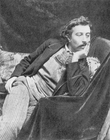


- January 3 – Alois Hitler, Austrian civil servant, father of Adolf Hitler (b. 1837)
- January 4 – Alexander Aksakov, Russian writer (b. 1832)
- January 5 – Práxedes Mateo Sagasta, Spanish politician, eight-time Prime Minister (b. 1825)
- January 17 – Quintin Hogg, British philanthropist (b. 1845)
- January 24 – Petko Karavelov, 4th Prime Minister of Bulgaria (b. 1843)
- January 28
- Augusta Holmès, French composer (b. 1847)
- Robert Planquette, French composer (b. 1850)
- February 1 – Sir George Gabriel Stokes, Irish mathematician, physicist (b. 1819)
- February 4 – Zhang Peilun, Chinese naval commander and government official (b. 1848)
- February 7 – James Glaisher, English meteorologist, aeronaut (b. 1809)
- February 9 – Sir Charles Duffy, Irish-born Australian politician, 8th Premier of Victoria (b. 1816)
- February 14 – Archduchess Elisabeth Franziska of Austria (b. 1831)
- February 17 – Joseph Parry, Welsh composer (b. 1841)
- February 22 – Hugo Wolf, Austrian composer (b. 1860)
- February 26 – Richard Jordan Gatling, American inventor (b. 1818)
- March 2 – Rafael Zaldívar, former President of El Salvador (b. 1834)
- March 3 — Robert Sanford Foster, Union Army general (b. 1834)
- March 4 – Joseph Henry Shorthouse, English novelist (b. 1834)
- March 5 – Gaston Paris, French scholar (b. 1839)
- March 7 – István Bittó, 7th Prime Minister of Hungary (b. 1822)
- March 11 – Lou Graham (Seattle madame), American brothel owner (b. 1857)
- March 13 – George Granville Bradley, English vicar, scholar (b. 1821)
- March 16 – Roy Bean, American justice of the peace (b. 1825)[38]
- March 25 – Sir Hector MacDonald, British army general (b. 1853)
- March 28 – Émile Baudot, French telegraph engineer (b. 1845)
- April 4 – Margaret Ann Neve, English supercentenarian (b. 1792)
- April 11 – Gemma Galgani, Italian mystic, Catholic saint (b. 1878)
- April 19 – Sir Oliver Mowat, Canadian politician (b. 1820)
- April 28
- Frances Augusta Hemingway Conant, American journalist (b. 1841)
- Josiah Willard Gibbs, American physical chemist (b. 1839)
- April 29 – Stuart Robson, American stage actor, comedian (b. 1836)
- May 4 – Gotse Delchev, Macedonian revolutionary (b. 1872)
- May 8 – Paul Gauguin, French painter (b. 1848)
- May 13 – Apolinario Mabini, Filipino political theoretician, Prime Minister of the Philippines (b. 1864)
- June 9 – Gaspar Núñez de Arce, Spanish poet (b. 1834)
- June 11
- Alexander I, King of Serbia (b. 1876)
- Nikolai Bugaev, Russian mathematician (b. 1837)
- Draga Mašin, Serbian queen consort (b. 1861)
- June 14 – Karl Gegenbaur, German anatomist (b. 1826)[39]
- June 15 – Joseph Abbott, Australian wool-broker and politician (b. 1843)
- June 19 – Herbert Vaughan, English Catholic cardinal, archbishop (b. 1832)
July–December[edit]

- July 2 – Ed Delahanty, American baseball player, MLB Hall of Famer (b. 1867)
- July 3 – Harriet Lane, Acting First Lady of the United States (b. 1830)
- July 11 – William Ernest Henley, English poet, critic and editor (b. 1849)
- July 13 – Béni Kállay, Austro-Hungarian statesman (b. 1839)
- July 17 – James McNeill Whistler, American painter (b. 1834)
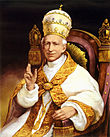
- July 20 – Pope Leo XIII, Italian Roman Catholic Pope (b. 1810)
- August 1 – Calamity Jane, American frontierswoman (b. 1852)
- August 3 – Édouard Pottier, French admiral (b. 1839)
- August 5 – Phil May, English artist (b. 1864)* August 11 – Eugenio María de Hostos, Puerto Rican philosopher, sociologist (b. 1839)
- August 17 – Hans Gude, Norwegian painter (b. 1825)
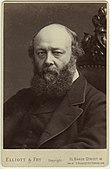
- August 22 – Robert Gascoyne-Cecil, 3rd Marquess of Salisbury, Prime Minister of the United Kingdom (b. 1830)
- August 23 – Fray Mocho, Argentine writer (b. 1858)
- August 28 – Frederick Law Olmsted, American landscape architect (b. 1822)
- September 1 – Charles Renouvier, French philosopher (b. 1815)
- September 2 – Julia McNair Wright, American author (b. 1840)
- September 13 – Carl Schuch, Austrian painter (b. 1846)
- September 18
- Alexander Bain, Scottish philosopher (b. 1818)
- Jules Pellechet, French architect (b. 1829)
- September 19 – Washington Teasdale, English engineer (b. 1830)
- October 4 – Otto Weininger, Austrian-Jewish author (b. 1880)
- October 20 – Thomas Vincent Welch, American politician (b. 1850)
- October 22 – William Edward Hartpole Lecky, Irish historian, member of the House of Commons (b. 1838)
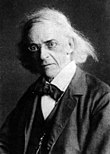
- November 1 – Theodor Mommsen, German writer, Nobel Prize laureate (b. 1817)[40]
- November 11 – Lavilla Esther Allen, American author (b. 1834)
- November 13 – Camille Pissarro, French painter (b. 1830)
- November 25 – Sabino Arana, Spanish Basque writer, nationalist (b. 1865)
- December 8 – Herbert Spencer, English philosopher (b. 1820)
- December 27 – Lydia Hoyt Farmer, American author, women’s rights activist (b. 1842)
- December 28 – Margaret Frances Sullivan, Irish-born American author, journalist and editor (b. 1847)
- December 29 – Baba Jaimal Singh, Founder of Radha Soami Satsang Beas (b. 1839)
- December 29 – Jerome Sykes, American actor (b. 1868)
Unknown date[edit]
- Mary Elizabeth Beauchamp, American educator and author (b. 1825)
Nobel Prizes[edit]
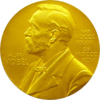
- Physics – Antoine Henri Becquerel, Pierre Curie, and Marie Curie
- Chemistry – Svante August Arrhenius
- Medicine – Niels Ryberg Finsen
- Literature – Bjørnstjerne Bjørnson
- Peace – William Randal Cremer
References[edit]
- ^ Falola, Toyin (2009). Colonialism and Violence in Nigeria. Bloomington: Indiana University Press.
- ^ Stirling, Kevin. «Aberdeen v Dundee». Aberdeen Football Club. Archived from the original on March 16, 2017. Retrieved February 25, 2014.
- ^
 Rosenthal, Herman; Rosenthal, Max (1901–1906). «Kishinef (Kishinev)». In Singer, Isidore; et al. (eds.). The Jewish Encyclopedia. New York: Funk & Wagnalls.
 - ^ «Atletico Madrid Club History». AtleticoFans. Retrieved January 16, 2017.
- ^ Grand Prix History online (retrieved 11 June 2017)
- ^ Steven Watts, The People’s Tycoon: Henry Ford and the American Century (2006) p[. 131
- ^ «Women in Transportation – Changing America’s History: Reference Materials» (PDF). United States Department of Transportation. March 1998. p. 10. Retrieved August 21, 2012.
- ^ «U.S. Cartridge Company» (PDF). Lowell Land Trust. Archived from the original (PDF) on April 26, 2013. Retrieved February 6, 2013.
- ^ Scott, Alfred P. (1965). «Wreck of the Old 97: The Origins of a Modern Traditional Ballad» (PDF). Retrieved November 25, 2011.
- ^ «MLB World Series — A History of the World Series». Baseball Almanac, Inc. Retrieved October 1, 2021.
- ^ «Retrosheet Boxscore: Pittsburgh Pirates 7, Boston Americans 3». Retrosheet. Retrieved October 1, 2021.
- ^ «Retrosheet Boxscore: Boston Americans 3, Pittsburgh Pirates 0». Retrosheet. Retrieved October 1, 2021.
- ^ «High Court of Australia, King Edward Tce, Parkes, ACT, Australia». Australian Heritage Database. Australian Government, Department of Agriculture, Water and the Environment. Retrieved October 1, 2021.
- ^ Holton, Sandra Stanley (September 1, 2017). «Women’s Social and Political Union (act. 1903–1914)». Oxford Dictionary of National Biography (online ed.). Oxford University Press. doi:10.1093/ref:odnb/95579. Retrieved October 1, 2021. (Subscription or UK public library membership required.)
- ^ «The St. Luke Penny Savings Bank». Maggie L. Walker National Historic Site Virginia. National Park Service, U.S. Department of the Interior. January 4, 2017. Retrieved November 16, 2021.
- ^ a b «SECESSION OF PANAMA». The Sydney Morning Herald. January 8, 1909. Page 7, column 2. Retrieved November 16, 2021 – via Trove.
- ^ Arranz, Adolfo (November 6, 2021). «South China Morning Post: a Hong Kong story». South China Morning Post. Retrieved November 16, 2021.
- ^ a b U.S. Library of Congress. «Panama — The 1903 Treaty and Qualified Independence». Retrieved November 16, 2021 – via countrystudies.us.
- ^ Service, Robert (1985). Lenin: A Political Life. Vol. 1: The Strengths of Contradiction. Houndmills, Basingstoke, Hampshire and London: Macmillan Press. p. 108. ISBN 978-1-349-05591-3. Retrieved November 17, 2021 – via Google Books. This source mentions a meeting of the Party Council on November 17, 1903, but does not clarify that this was the occasion of the permanent split.
- ^ Cavendish, Richard (November 2003). «The Bolshevik-Menshevik Split». Months Past. History Today. Vol. 53, no. 11. Retrieved November 17, 2021. This source dates the split to November 16, 1903.
- ^ «Russian revolution timeline: April 1917». Socialism Today. No. 207. April 2017. Retrieved November 17, 2021.
- ^ «HAY AND VARILLA SIGN A NEW CANAL TREATY; COLOMBIA PREPARES FOR ATTACK ON PANAMA». San Francisco Call. Vol. XCIV, no. 172. November 19, 1903. p. 1. Retrieved November 21, 2021 – via California Digital Newspaper Collection.
- ^ «TREATY GIVES THE UNITED STATES SOVEREIGNTY OVER THE CANAL Even the Cities of Colon and Panama Come Under the Control of This Government». San Francisco Call. Vol. XCIV, no. 172. November 19, 1903. p. 2. Retrieved November 21, 2021 – via California Digital Newspaper Collection.
- ^ History.com Staff (2009). «Colorado governor sends militia to Cripple Creek». History.com. A+E Networks. Archived from the original on March 10, 2018. Retrieved November 16, 2021.
- ^ «Petriana, 28 November 1903». Historical pollution and casualty incidents. Australian Maritime Safety Authority. Australian Government. November 9, 2020. Retrieved November 17, 2021.
- ^ Lopez, Rachel (January 5, 2012). «10 things to know about the Taj Mahal Palace Hotel». Vogue India. Condé Nast. Retrieved November 24, 2021.
- ^ «The First Powered Flight – 1903». U.S. Centennial of Flight Commission. Retrieved November 22, 2021.
- ^ Brandt, Nat (2006). Chicago Death Drap: The Iroquois Theatre Fire of 1903. Southern Illinois University Press. ISBN 978-0-8093-2721-8. Retrieved November 24, 2021 – via Google Books.
- ^ «Fire breaks out in Chicago theater». HISTORY. A&E Television Networks. December 27, 2019. Retrieved November 16, 2021.
- ^ CBS 2 Chicago Staff (Blake Tyson, Adam Harrington) (October 31, 2021). «Chicago Hauntings: The Horrors Of The Iroquois Theater Fire That Killed 602 People Downtown In 1903, And Stories About Ghosts Left Behind». CBS 2 Chicago. CBS Broadcasting Inc. Retrieved November 17, 2021.
- ^ «About Harley-Davidson | Harley-Davidson United Kingdom». Harley-Davidson. Retrieved May 28, 2021.
- ^ «Our History». Rockwell Automation. Retrieved May 28, 2021.
- ^ «The Nobel Prize in Chemistry 1963». NobelPrize.org. Retrieved February 25, 2022.
- ^ «Aircraft accidents in Yorkshire». www.yorkshire-aircraft.co.uk. Retrieved October 20, 2017.
- ^ Doohm, Stefan (2005). Adorno : a biography. Cambridge, UK Malden, MA: Polity Press. p. 479. ISBN 9780745631080.
- ^ «BIOGRAFÍA» (in Spanish). Fundacion Miguel Aleman, A.C. Retrieved May 29, 2019.
- ^ «Harold Whitlock». Olympedia. OlyMADMen. Retrieved November 24, 2021.
- ^ Bogart, Charles H. (2009). «Bean, Roy «Judge»«. In Tenkotte, Paul A.; Claypool, James C. (eds.). The Encyclopedia of Northern Kentucky. University Press of Kentucky. pp. 69–70. ISBN 978-0-8131-5996-6.
- ^ Chisholm, Hugh, ed. (1911). «Gegenbaur, Carl» . Encyclopædia Britannica (11th ed.). Cambridge University Press.
- ^ Carter, Jesse Benedict. «Theodor Mommsen,» The Atlantic Monthly, Vol. XCIII, 1904.
 Rosenthal, Herman; Rosenthal, Max (1901–1906). «Kishinef (Kishinev)». In Singer, Isidore; et al. (eds.). The Jewish Encyclopedia. New York: Funk & Wagnalls.
Sources[edit]
- Gilbert, Martin (1997). «1903». A History of the Twentieth Century, Volume One: 1900-1933. New York: HarperCollins. pp. 69–88. ISBN 0-688-10064-3.
Автор: Климова Ирина Владимировна
Должность: преподаватель английского языка
Учебное заведение: ГБПОУ Колледж Связи 54
Населённый пункт: Москва
Наименование материала: Методическая разработка
Тема: Методические рекомендации по выполнению дополнительных практических работ по дисциплине «Иностранный язык» для студентов 2-3 курсов очной формы обучения по теме « Научно-технический прогресс в мировом развитии»
Раздел: среднее профессиональное
Методические рекомендации по выполнению
дополнительных практических работ по дисциплине «Иностранный
язык» для студентов 2-3 курсов очной формы обучения по теме
« Научно-технический прогресс в мировом развитии»
Разработчик преподаватель английского зыка Климова И.В.
2019
Москва
Пояснительная записка.
Методические рекомендации по выполнению дополнительных практических работ по
дисциплине «Иностранный язык» предназначены для студентов 2-3 курсов очной формы
обучения и преподавателей средних профессиональных учебных заведений, соответствуют
действующей программе, и содержит систему заданий для аудиторных и внеаудиторных
практических работ.
Методические рекомендации представляют собой систему упражнений по развитию и
совершенствованию навыков аудирования, чтения про себя и лексико-грамматических навыков и
устной монологической речи.
Данные рекомендации включают в себя разнообразные тексты по теме « Научно-технический
прогресс в мировом развитии» и упражнения после этих текстов.
Рекомендации состоят из трех разделов- задания по аудированию, задания по чтению и устной
речи, лексико-грамматические задания.
Методические рекомендации включают следующие задания по аудированию : выберите
правильный вариант ответа, расскажите текст, используя план, прочитайте вопросы и найдите
соответствующий ответ.
Методические рекомендации включают следующие задания по чтению : прочитайте текст про
себя, установите соответствие между заголовками и текстами, переведите тексты на русский
язык, перескажите тексты своими словами, прочитайте текст и заполните пропуски частями
предложений, составьте план текста и перескажите его, выпишите ключевые слова и перескажите
текст, найдите в тексте причастие 1и 2 и определите его функции, объясните явление на
английском языке, составьте краткий пересказ текста из 10 предложений, выпишите из текста все
числительные, напишите эти числительные словами, напишите что обозначают эти
числительные.
Методические рекомендации включают следующие лексико-грамматические задания:
прочитайте текст, преобразуйте если необходимо слова, напечатанные заглавными буквами после
пробелов так, чтобы они грамматически соответствовали содержанию текста,
переведите текст на русский язык, задайте вопросы по тексту, перескажите текст, используя
следующие ключевые слова, используя лексику текста, расскажите о своем личном опыте,
выпишите из текста все недостатки и преимущества (использования компьютера и Интернета.),
задайте 10 вопросов к тексту, расскажите текст по плану, прочитайте текст, преобразуйте, если
необходимо слова, напечатанные заглавными буквами после пробелов так, чтобы они
грамматически и лексически соответствовали содержанию текста, выпишите из текста
придаточные определительные предложения, прочитайте текст с пропусками, обозначенными
буквами. Выберите номер выбранного вами варианта ответа, задайте вопросы к тексту,
прочитайте и переведите текст, придумайте задания к тексту.
Предлагаемые задания отличаются разнообразием и степенью трудности, что позволяет
использовать упражнения на разных этапах обучения и соответственно разным уровням знаний
студентов.
Лексико-грамматический состав упражнений отвечает требованиям федеральных программ по
английскому языку для групп СПО.
I. Задания на аудирование.
Задание 1.
1. Снятие трудностей
Deaf, customer, sign language, to place an order, electronic interpreter, glove, transmit the information,
top honours, wiring things, equipment, appropriate, hardware, the best solution, invention, make an
impact.
Текст. Science and technology.
Kathie Holmes
Good afternoon, this is Kathie Holmes in our programme, ‘Young and Brainy’. Today I’m going to be
speaking to Ryan Patterson, a teenager whose invention may bridge the communication gap between
the deaf and those that can hear. Ryan, tell us how it all started.
Ryan Patterson
It was two years ago. I was waiting to be served at our local Burger King and I noticed a group of
customers using sign language to place an order. They were obviously deaf. They communicated with
a speaking interpreter and he relayed their choices to a cashier. I thought it would make things easier if
they had an electronic interpreter instead. I remembered the idea later, when I was thinking of a new
project for a science competition. I called it Sign Language Translator. It consists of a glove which is
lined with ten sensors. The sensors detect the hand positions that are used to shape the alphabet of
American Sign Language. Then a microprocessor transmits the information to a small portable
receiver. The receiver has a screen similar to those on cell phones, and this screen displays the words,
letter by letter. In this way people can read the words, even if they don’t understand sign language, and
people who use sign language can communicate without an interpreter.
Kathie
Are you impressed? So were judges at the 2001 Siemens Science and Technology Competition. The
project received top honours, along with a $100,000 college scholarship for the young inventor. And
now Ryan’s project is already patented. Ryan, how long did you experiment with the invention before
you finally produced the prototype?
Ryan
Around nine months. I started with researching how sign language works. Then I had to figure out how
to translate all that electronically. Fortunately, I’ve always had an interest in electronics. I’ve liked
wiring things together since I was four years old. I also had hands-on experience from my part-time
job at a robotic-equipment lab.
Kathie
Did you have problems finding appropriate materials?
Ryan
I’m used to hunting for hardware to build competition robots, but for this project I also had to try on
many different gloves. A golf glove turned out to be the best solution. It’s soft and flexible and fits
closely.
Kathie
According to the National Institute of Deafness, one to two million people in the U.S. are profoundly
deaf. And most of them use sign language to communicate. Will your invention make an impact?
Ryan
There was a demonstration at our local deaf community centre and the people were interested. What I
have now isn’t ready for production. I’m sure it’ll be very different by the time it’s actually
manufactured. But I do hope to see it on the market one day.
2.Задание после первого прослушивания.
Выберите правильный вариант
A. Ryan Patterson is
1)
after ten
2)
after 20
3)
after 30
B. His invention helped
1)
to cure cancer
2)
to help infirm people
3)
to perform a surgery
C. He invented
1)
an electronic gadget
2)
some medicine
3)
a medicine drink
D.Using this gadget people can
1)
listen to human speech
2)
read words
3)
answer questions
E. His project was
1)
immediate success
2)
never received any patent
3)
is already patented
F. Ryan had an interest
1)
in electronics
2)
copper wires
3)
mathematics
G. The golf glove was the best solution because
1)
it is water-proof
2)
flexible
3)
made of rubber
H. Ryan Patterson invention
1)
can be bought for a high price
2)
has a lot of rivals on the market
3)
hasn’t come to the market yet
3 Задание после второго прослушивания.
Расскажите текст, используя план.
1) The significance of Ryans Paterson
2) When and where did the idea to invent the device came to his head?
3) When did he remember the idea?
4) Describe the invention Sign Language Translator . Use the following words-to consist of, to be
lined, sensors, to detect, to shape, to transmit the information , a screen, a cell phone, to display , to
understand sign language, to communicate.
5) Prove that the project was successful.
6) How long did the experiment with the invention last?
7) What was he interested in when I was a child?
Did he have problems finding appropriate materials?
9) What was his final choice? Why?
10) What hopes does he have regarding his invention?
Задание 2.
You are going to listen to a part of a radio programme about the lives of
these
famous inventors. Read
questions 1-8 and match each question to the person A-C that is refers to.
A. Alexander Graham Bell B. Maria Mitchell C. Jan Szczepanik
1. Who came from a big family? B
2. Who received a medal from a king? C
3. Whose scientific interests were not grounded in family traditions? C
4. Whose achievements were appreciated outside his/her country? C
5. Whose research was concentrated on one field of science? B
6. Who had planned a different career? A
7. Who worked as a teacher? A
8. Whose birthplace is open to the public? B
Alexander Graham Bell as a young boy.
The telephone inventor Alexander Graham Bell liked mathematics, and science, but he was easily bored
at school. He was much more interested in experimenting and discovering things on his own. One of his
first inventions was a simple machine imitating the human voice. Alexander built it with his brother
Melville when they were still children.
As a teenager, Bell wanted to become an actor or a sailor. Instead, he worked, like his father, as a speech
therapist, and taught deaf people. Bell’s studies of the human ear and voice vibrations, and years of
experiments resulted in 1876 in the first telephone conversation between Bell and his assistant Tomas
Watson.
Alexander Bell’s lifelong interest in nature and science also led to a variety of other invention ideas,
including experiments with flight and designing aeroplanes.
Maria Mitchell
Maria Mitchell was one of the most famous American scientists of the 19
th
century. Born in 1818, in
Massachusetts, Maria was the third child of a family with ten children. Her father was a dedicated
astronomer and teacher, and he encouraged Maria’s scientific interests. In 1847, when she was looking
at the sky through a telescope from the roof of her parents’ house, she discovered a new comet. A year
later she became the first woman admitted to the American Academy of Arts and Sciences, and the first
female professor of astronomy in the USA.
After her death, the Maria Mitchell Astronomical Society was created as tribute to her memory. The
house where she was born was turned into a museum.
Jan Szczepanik
There was an inventor who is sometimes called the “Polish Edison”. His name was Jan Szczepanik, and
he was born in a poor uneducated family in a small village in the south of Poland.
During the 54 years of his life, Szczepanik got a few hundred patents and made over fifty inventions,
many of which are still used today, especially in colour photography, film production and television. He
also worked on a moving wing aircraft, an airship and a submarine.
Szczepanik patented his inventions in Germany and England. The American novelist Mark Twain wrote
two articles about his achievements, and the King of Spain gave him an order after a silk bullet-proof
vest шелковый бронежилет invented by the `Polish Edison` had saved his life.
II. Задания для развития и совершенствования навыков чтения про себя.
Задание 1.
Прочитайте текст про себя. Установите соответствие между заголовками А—Н и текстами 1—7.
Используйте каждую букву только один раз. В задании один заголовок лишний.
A. Behind the Wheel
Е. Permanent People
B. Pessimistic Predictions
F. Greenhouse Effect
C. Intelligent House
G. Easy Shopping
D. New Possibilities for Business
H. Future Entertainment
1. The smart fridge will be connected to the internet as part of a home network that runs your domestic
life, interacting with the barcodes on your food, and re-ordering them on-line as you use them. Virtually
all domestic appliances will be linked by computer, so that the fridge can communicate with the cooker
and rubbish bin, coordinating complex tasks such as cooking a meal.
2.
Children of the future will never be able to complain that there’s no one to play with. Equipped with
virtual reality headsets, they will be taking part in global games, for example, in medieval jousting
tournaments. Their opponents, selected by the computer, will probably live on the other side of the world.
3.
Cars of the future will take much of the strain out of driving. The intelligent navigation system will be
able to choose the best route for you by monitoring an online traffic database for hold-ups, while the
cruise control keeps a constant distance from the car in front. And if you exceed the speed limit, the
speedometer will give a polite warning to you.
4.
Holographic conferencing and virtual reality meetings will allow people to interact with colleagues and
clients via computer, without needing to leave the comfort of their own homes. This will also mean that a
lot more people will either work freelance from home, or on flexible short-term contracts. The old
concept ‘jobs for life’ will be a thing of the past.
5.
In the future it will become harder to tell the difference between the human and the machine. All body
parts will be replaceable. A computer will function like the human brain with the ability to recognize
feelings and respond in a feeling way. We will then be able to create a machine duplicate of ourselves and
transfer our spirit so we will be able to live for as long as we want.
6.
There will be great changes to the environment particularly because of the rising sea levels. Global
warming is expected to cause oceans to ise by one meter, which will increase the risk of flooding. It will
happen regardless of any future actions to curb greenhouse gases. Projected climate change will also tend
to degrade water quality through higher water temperatures.
7.
We will not rely so much on cash as we do now. It will mainly be digital money, the inevitable medium of
exchange for an increasingly wired world. We will no longer need to carry a wad of bills or fumble for
exact change. Supermarkets will have iris recognition systems so the money for our groceries will
automatically be transferred from our bank accounts as we’re standing at the checkout.
Задание 2.
1.Прочитайте текст про себя.. Установите соответствие между заголовками 1-8 и текстами A-
G. Используйте каждую цифру только один раз. В задании один заголовок лишний.
2.Переведите тексты на русский язык
3.Перескажите тексты своими словами
1. Unexpected Tech Failure
2. Military Use
3. World Without Drivers
4. Health Benefits
5. Saving Time And Money
6. Other Side of the Coin
7. Robotic Future
8. Specialised Vehicles
A. Globally released worldwide, Microsoft Vista hit the markets in early 2007. Its ideology was to
enhance the security system of the personal computer. But the security features weren’t all that better than
its previous versions’, according to many software critics. Vista is also not compatible on all sorts of PC’s
and runs slower compared to Windows XP. All of this prevented Vista from being a better version and it
never took off like the company had hoped.
B. A couple centuries ago, if you wanted to record a moment for posterity, you sat around for hours or
days while someone painted it. Up until ten years ago, you were at the mercy of photo developers
charging 20 cents or more to help preserve your memories. Now you can record countless images and
store them electronically for all of eternity at virtually no cost per picture.
C. With technology advancing at the pace it is today, we have to believe that by the end of the century we
won’t be driving our cars around the city. Rather, we will just be sitting on the then historic driver’s seat
and doing some work. While the concept looks futuristic, industrial designer Kubik Petr believes that
nothing seems impossible with modern technology at hand.
D. The Kenguru is designed only for the disabled. Previously car manufacturers would design cars for the
disabled but not specifically for them. This Hungarian company is taking it to the next step, the disabled
will be able to open the rear of the car and just roll in the driving position, secure their wheelchair —
without never having to leave their chair.
E. Technology certainly offers us innumerable comforts within our world, especially when it comes to
people who have extreme medical conditions and need the help of science and technology to live
comfortably within their everyday lives. The creation of robot limbs allows a person to walk again. The
introduction of synthetic body parts such as a heart pump can help a person to live longer.
F. Everyone knows that being a soldier is a dangerous job. Walking through minefields, deactivating
unexploded bombs or clearing out hostile buildings, for example, are some of the riskiest tasks. What if
we could send robots to do these jobs instead of humans? Then, if something went wrong, we’d only lose
the money it cost to build the robot instead of losing a human life.
G. Cutting edge technologies offer the hope for a better world, bringing welcome solutions to everything
from disease to environmental damage. But these same technologies can also bring danger by aiding
criminals and terrorists, invading personal privacy and even potentially creating diseases and damaging
the environment. The more powerful and pervasive technology becomes, the more dangerous it becomes
as well.
Ответы 1538426
Задание 3.
1.Прочитайте текст про себя. Установите соответствие между заголовками 1-8 и текстами A-
G. Используйте каждую цифру только один раз. В задании один заголовок лишний.
1. Not for children
2. Benefits for poor countries
3. Illegal and unsafe
4. Small size — great role
5. One is not enough
6. Don’t speak — text
7. Spreading wider — weighing lighter
8. One device — many functions
A. A mobile phone (also known as a cell phone) is a device that can make and receive telephone calls
while moving around. It does so by connecting to a cellular network provided by a mobile phone
operator, allowing access to the public telephone network. In addition to telephony, modem mobile
phones also support a wide variety of other services such as text messaging, MMS, email, Internet access,
Bluetooth, business applications, gaming and photography.
B. The first hand-held mobile phone was demonstrated by Dr. Martin Cooper ol Motorola in 1973, using
a handset weighing around 1 kg. In 1983, the first commercial cell phone was released. In the twenty
years from 1990 to 2010, worldwide mobile phone subscriptions grew from 12.4 million to over 4.6
billion. It got to the developing countries and reached the poorest citizens. The devices themselves have
also become smaller and much lighter.
C. The most commonly used data application on mobile phones is SMS text messaging. The first SMS
text message was sent from a computer to a mobile phone in 1992 in the UK, while the first person-to-
person SMS from phone to phone was sent in Finland in 1993.The first mobile news service, delivered
via SMS, was launched in Finland in 2000. Mobile news services are expanding with many organizations
providing «оп-demand» news services by SMS.
D. Mobile phones need a small microchip called a Subscriber Identity Module, or SIM card, to function.
The SIM card is approximately the size of a small postage stamp and is usually placed underneath the
battery in the rear of the unit. The SIM card does not only store data like telephone numbers but also
allows users to change phones by simply removing the SIM card from one mobile phone and inserting it
into another mobile phone or broadband telephony device.
E. Mobile phones are used for keeping in touch with family members, conducting business, and having
access to a telephone in an emergency. Some people carry more than one cell phone for different
purposes, such as for business and personal use. Multiple SIM cards may also be used to take advantage
of the benefits of different calling plans — a particular plan might provide cheaper local calls, long-
distance calls, international calls, or roaming.
F. Mobile phones have spread more quickly than any other technology and can improve the life of the
poorest people in developing countries. They provide access to information in places where landlines or
the Internet are not available. In Africa, people travel from village to village to let friends and relatives
know about weddings and births. They need not do this if the villages are within coverage. Mobile phones
are recharged using a solar panel or motorcycle battery.
G. Mobile phone use while driving is common but dangerous, as it increases the risk of accident. Many
countries prohibit it. Some schools also limit or restrict the use of mobile phones because cell phones are
used for cheating on tests, harassment and bullying, causing threats to the school’s security. Many mobile
phones are banned in school locker room facilities, public restrooms and swimming pools due to the built-
in cameras that most phones now have.
8764523
Задание 4.
1.Прочитайте текст и заполните пропуски А—F частями предложений, обозначенными
цифрами 1 — 6. Одна из частей в списке 1 — 7 лишняя.
2. Переведите текст.
3. Составьте план текста и перескажите его.
The world of automobiles has made some dramatic changes in the past century. Each year brings more
innovative improvements in car technology A_____________. However, all that brightness might make
someone feel a bit curious about how it all began.
Way back in the 15th century, Leonardo Da Vinci was working diligently on designs and prototypes for
transport vehicles B______________ . It wasn’t until 1769 that an inventor in France built a working self-
propelled vehicle. His name was Nicolas Cugnot, and the vehicle was a steam powered military tractor.
In Scotland, around 1839, Robert Anderson took a ride in his creation, C_________________ . Today’s
modern hybrid cars use technology based upon the ideas first dreamed of almost 170 years ago!
But the legitimate title of Automobile Inventor would have to go to German inventor, Karl Friedrich
Benz. It was in 1886 that he received a patent on the world’s first gasoline powered automobile,
D_________
.
In the United States, the first patent issued for an automobile was granted in 1789, to Oliver Evans. He
performed an amazing demonstration of his vehicle in 1805, E__________________ . Proudly crowned
the first amphibious vehicle, it never quite made it to production for the public.
It was in 1893 that Charles Edgar Duryea, and his brother Frank introduced to America the first gasoline
powered car that worked the way it was supposed to. These two engineering brothers also started the first
American automobile manufacturing plant.
A common belief is that Henry Ford invented the first car. However, Henry created his first car only in
1896. He had formed and lost two car manufacturing plants by 1903, F____________. His most famous
contribution to the automotive industry was that he invented the first assembly line conveyer belt that
revolutionized the manufacturing of automobiles.
1. because automotive companies are planning to do a lot of scientific research
2. when he started The Ford Motor Company
3. which had a combustion engine and three wheels
4. when he showed the crowd that his automobile was able to travel on land, and in the water by using a
paddle wheel
5. but, unfortunately, none ever came into being
6. so the future looks bright for both car buyers and car manufacturers
7. which he called the Electric Carriage
Ответы 657342
Задание 5.
1.Прочитайте текст и заполните пропуски 1-6 частями предложений, обозначенными
буквами A-G. Одна из частей в списке 1-7 лишняя.
2. Прочитайте и переведите текст.
3.Выпишите ключевые слова и перескажите текст.
Ever wonder 1___? There’s actually quite a bit of science going on behind the scenes, with several
components working together to bring you that digital-quality signal.
Your channel selection begins with the programming sources themselves. Companies like Showtime,
HBO or Cinemax create their programming. Channel providers then purchase rights to this programming
2________. Once a provider has their programming in place, they turn their attention to the broadcast
centre to compress and convert the programming for satellite broadcast.
Your Dish Network Programming originally arrives as a digital stream of video, which is then
compressed and converted through an encoder, typically using the MPEG2 format. This format reduces
the overall size of the video, 3___________.
Once encoded, the video is then encrypted 4_______. After the video has been encrypted, it is sent to the
provider’s satellite, strategically positioned in the sky.
The satellite itself uses a dish similar to your own satellite dish, to receive the video and send it back
down to Earth. When the satellite sends the signal back down to Earth, it is picked up by your satellite
dish, a small round antenna that receives the satellite’s broadcast and sends the video on to your satellite
TV receiver.
The satellite TV receiver is that little black box that sits inside your home and allows you to choose
5______. The receiver actually performs several important functions in the satellite viewing process,
including the decryption of the signal itself. If you remember, the satellite signal was scrambled by the
provider to protect it from un-paying consumers. Your receiver ‘de-scrambles’ that signal and converts the
signal into a format 6________. Together these amazing components create a vividly clear digital picture
for over 200 satellite channels.
A. which channel you want to watch
B. including a power source and a computer system
C. so that the broadcast can only be viewed by paying subscribers
D. so that they can broadcast the shows via satellite
E. how your satellite TV system works
F. making it possible for a satellite to broadcast hundreds of channels at the same time
G. that your television can handle
Ответы E D F CAG
Задание 6.
1.Прочитайте текст и заполните пропуски 1—6 частями предложений, обозначенными
буквами A—G. Одна из частей в списке A—G лишняя.
2. Переведите текст на русский язык.
3.Найдите в тексте причастие 1и 2 и определите его функции.
4. Объясните на английском языке принцип работы данной машины.
When you mention the name ‘Hovercraft’ most people think of a helicopter. If someone sees one from the
river bank, the term ‘air- boat’ comes to their mind because most people are not quite sure
1___________________ . Few people know of the personal sized hovercraft
2______________________.
A hovercraft is a vehicle, designed to travel over any smooth surface. Hovercraft are unique among all
forms of transportation in their ability to travel equally well over land, ice, and water
3____________________ . That is why they are used throughout the world as a means of specialized
transport 4___________________ .
Hovercraft can be powered by one or more engines. The engine drives the fan, which is responsible for
creating high pressure air. The air inflates the ‘skirt’-under the vehicle, causing it to rise above the ground.
The Hovercraft Museum, located in Hampshire, houses the world’s largest library of documents,
publications, photographs and drawings on hovercraft, 5___________________ . The museum also
contains a large collection of original manufacturer’s hovercraft models including the world’s first-
working hovercraft model built by Christopher Cockerell.Cockerell’s idea was to build a vehicle floating
on a layer of air, 6_____________ . To test his hypothesis, he put one smaller can inside a larger can and
used a hairdryer to blow air into them. Christopher Cockerell was knighted for his achievement in 1969.
Hovercraft have now become much larger, more efficient and are in widespread use all over the world.
A. all of which is available for research.
B where there is the need to travel over multiple types of surfaces.
С what they are looking at.
D. which would reduce friction between the water and vehicle
E so as to entertain the general public.
F that are used worldwide for recreation, racing and rescue.
G because they are supported by a cushion of air.
Ответы C F G B A D
Задание7.
1.Прочитайте текст и заполните пропуски А-F частями предложений, обозначенными
цифрами 1-7. Одна из частей в списке 1-7 лишняя.
2.Переведите текст на русский язык.
3.Составьте краткий пересказ текста из 10 предложений.
It was during a radar-related research project around 1946 that Dr. Percy Spencer, while working for
Raytheon Corporation, noticed that a candy bar in his pocket melted during the testing of a new vacuum
tube called a magnetron. This intrigued Dr. Spencer,
A _______________ . This time he placed some
popcorn kernels near the tube and watched B _______________ .
The next morning Spencer decided to put the magnetron tube near an egg. Spencer and a colleague both
watched
C
_______________ . Spencer’s colleague moved in for a closer look just as the egg
splattered yolk all over his face. Dr. Spencer concluded that if you can cook an egg that quickly,
D
_______________ . He began experimenting. Dr. Spencer enclosed the food to be cooked in a metal box
that he fed the microwaves into. He had invented what was to revolutionize cooking and form the basis
of a multimillion dollar industry – the microwave oven.
In 1947, Raytheon demonstrated the world’s first microwave oven and called it a Radarange. The first
microwave ovens cost between $ 2,000 and $ 3,000. Around 1952 – 55, Tappan introduced the first
home model priced at $ 1295. In 1967 Raytheon owned Amana Refrigeration introduced the first
countertop microwave oven, E _______________ .
By 1975, sales of microwave ovens had, for the first time, exceeded those of gas ranges. In 1976, the
microwave
oven
became
a
more
commonly
owned
kitchen
appliance
than
the
dishwasher,
F
_______________ . America’s cooking habits were being dramatically changed by the convenience of
the microwave oven. Once considered a luxury, the microwave oven has developed into a practical
necessity for a fast-paced world of today.
1.
as the popcorn sputtered, cracked and popped
2.
so he decided to ask for help
3.
so he tried another experiment
4.
reaching nearly about 52 million US households
5.
which was smaller, safer and more reliable than previous models
6.
as the egg began to tremor and shake
7.
then you could cook other foods as well
Ответы 316754
Задание 8.
1.Прочитайте текст и заполните пропуски A-F частями предложений, обозначенными
цифрами 1-7. Одна из частей в списке лишняя.
2.Переведите текст на русский язык.
3.Выпишите из текста все числительные, напишите эти числительные словами, напишите
что обозначают эти числительные.
Television
Few inventions have had as much effect on contemporary society, especially American society, as
television. Before 1947 the number of U.S. homes with television sets A ______ . By the late 1990s, 98
percent of U.S. homes had at least one television set, and those sets were on for an average of more than
seven hours a day. The typical American spends (B ______ ) from two-and-a-half to almost five hours a
day watching television.
The invention of TV is not credited to one single person. Vladimir Zworykin and Philo Farnsworth both
played instrumental roles. Electronic television was first successfully demonstrated in San Francisco on
Sept. 7, 1927. The system was designed by Philo Taylor Farnsworth, a 21-year-old inventor
who C ______ until he was 14. While still in high school, Farnsworth had begun to think of a system
that D ______ in a form that could be coded onto radio waves and then transformed back into a picture on
a screen. Boris Rosing and Vladimir Zvorykin in Russia had conducted some experiments in E ______
Farnsworth’s first success.
Also, a mechanical television system, which scanned images using a F ______ , had been demonstrated
by John Logic Baird in England and Charles Francis Jenkins in the United States earlier in the 1920s.
However, Farnsworth’s invention and Vladimir Zvorykin’s electronic TV system are the direct ancestors
of modern television.
1. depending on the survey and the time of year
2. rotating disk with holes arranged in a spiral pattern
3. could be measured in the thousands
4. could capture moving images
5. funding a number of research programmes
6. transmitting images 16 years before
7. had lived in a house without electricity
317462
III.Лексико-грамматические задания.
Задание 1.
1.Прочитайте текст. Преобразуйте если необходимо слова, напечатанные заглавными
буквами после пробелов так, чтобы они грамматически соответствовали содержанию текста.
2.Переведите текст на русский язык.
3.Задайте 5 вопросов по тексту.
Traffic problems.
In January 2003, the Congestion Charge 1__________ INTRODUCE in London to help solve the city’s
traffic problems.
However, London’s motorists still have traffic problems, 2________ CRAWL through the city’s streets.
London is just as congested with cars as it was before the introduction of the traffic charging scheme.
‘Without the Congestion Charge the traffic problems in London would be much 3__________ BAD
now,’ said the TfL’s Managing Director.
‘It 4_________________ PROVE successful in cutting traffic coming into London.’
However, on its own, the traffic charging scheme 5______________ NOT RESOLVE the problem of
congestion in the city. London streets remain clogged by road works and other measures designed to help
pedestrians, buses and cyclists.
Mayor of London Boris Johnson says he now 6____________ WORK with TFL on a ‘comprehensive
approach’ to ease the congestion problem.
He believes that the government soon 7____________ IMPOSE new measures to eliminate traffic
congestion.
Задание2.
1.Прочитайте текст. Преобразуйте если необходимо слова, напечатанные заглавными
буквами после пробелов так, чтобы они грамматически соответствовали содержанию текста.
2.Переведите текст на русский язык.
3.Перескажите текст, используя следующие ключевые слова.
Accessible// experience in computing// computer classes// getting online// excited// to set it up// easy//
get online// to call the service provider// a dial-up// within a few hours// wasn’t working properly// black
horizontal lines// to fix// to exchange //experience// in my final year // knowledge
Задание 4.
1.Прочитайте текст. Преобразуйте если необходимо слова, напечатанные заглавными
буквами после пробелов так, чтобы они грамматически соответствовали содержанию текста.
2.Переведите текст на русский язык.
3.Используя лексику текста, расскажите о своем первом опыте использования Интернета.
My First Time Online
1. My first internet experience was back in 1997 when the Internet ………………………MAKE accessible to
the public.
2. I had some experience in computing as I ………………………
TAKE a couple of computer classes
before.
3. When the Internet became even ……………………… POPULAR, I could no longer resist buying my
own computer and getting online.
4. I was so excited when ……………………… BRING the computer home that I just couldn’t wait to set it
up and start surfing the web! The setting up was quite easy but I still couldn’t
get online.
5. I had to call the service provider and establish a dial-up service first. Luckily,
that ……………………… NOT TAKE very long. I was able to get online within a few hours.
6. You wouldn’t believe what happened next. I found out that the monitor wasn’t working properly. It
had black horizontal lines running through. While I ……………………… TRY to fix it, the screen went
completely black. I went to exchange the monitor the following day, and my real first internet
experience began.
7. Now I am in my final year at university and I can’t imagine my life without the Internet or e-mail. I
hope that as I grow older my knowledge and experience with computers ……………………… EXPAND as
technology advances.
Задание 5.
1.Прочитайте 2 текста. Преобразуйте если необходимо слова, напечатанные заглавными
буквами после пробелов так, чтобы они грамматически соответствовали содержанию текста.
2.Переведите текст на русский язык.
3.Выпишите из текста все недостатки и преимущества использования компьютера.
Computer Addiction.
1.Excessive computer use can become really _______.ADDICT
And it doesn’t only mean playing computer games. 2.Wireless connection to the Internet has brought the
world close to people making them to _____GRADUAL withdraw into an artificial world of
communication. Lots of young people find virtual reality more attractive than everyday lives. 3.Computer
addiction makes them neglect school and their 4.everyday _________.RESPONSIBLE 5.This of course
leads to ______DESIRE effects. Teenagers become irresponsible in their everyday lives. 6.Computer
addicts become isolated, anti-social and _______CAPABLE of dealing with each other directly. 7.Their
lives become _____AIM without going online to check their email or to chat and they become totally
dependent on their computers.
What Can Computers Do?
1. Computers and microchips ________ BECOME part of our everyday lives. 2.We read magazines
which __________ PRODUCE on computer, we buy things with the help of computer; we pay bills
prepared by computers. 3. Just _______ DIAL a phone number involves the use of a sophisticated
computer system. 4. In the past, life without computers was much ________ DIFFICULT than it is today.
5. The first computers were able to multiply long numbers, but they __________ NOT CAN do anything
else. 6. Nobody _________ BELIEVE stories about robots and space travel, but now computers are able
to do almost all difficult jobs. 7.What makes your computer such a miraculous device? It is a personal
communicator that ________ENABLES you to interact with other computers and with people around the
world. And you can even use your PC to relax with computer games.
Задание 6.
1.Прочитайте 2 текста. Преобразуйте если необходимо слова, напечатанные заглавными
буквами после пробелов так, чтобы они грамматически соответствовали содержанию текста.
2.Переведите текст на русский язык.
3.Выпишите из текста все преимущества и недостатки использования Интернета.
Two faces of the Internet.
There are different ways one can look at the Internet. 1.The positive side is that people from around the
globe could ……………………… ACT with one another in a matter of seconds. Instant messaging is the
most popular form of communication online today. 2.People are informed about
the ……………………… AVAILABLE of their friends and can have numerous conversations at the
same time. 3.Another advantage is that there is an ……………………… FINITE amount of knowledge
and information one can get from the Internet. Internet-able students have the possibility to access
information 4.at an ……………………… BELIEVE pace, and creating their reports becomes less
tedious.
5.The negative side is that people who use the Internet for an excessive amount of time
are ……………………… PARTICULAR prone to social isolation and depression.
6.We must admit that internet ……………………… ADDICT is a growing problem with teenagers
nowadays.
The Internet – a Blessing or a Curse?
1.We live in the age of information technology and the Internet is a unique ………………… INVENT,
which has influenced all areas of our lives. 2.Yet some people are ……………………… CERTAIN
about the importance of the Web. Is it a blessing or a curse? 3.One the one hand, with the Internet, it is
now possible to communicate ……………………… EASY. with people all over the world. In addition,
the Internet is very useful, because it makes the world of facts and
4.knowledge……………………… ACCESS to everyone. 5.However, a huge amount of information on
the Internet is also one of its ……………………… WEAK. This diversity makes it difficult to find the
type of information you want. 6.Moreover, the Internet can become ……………………… DANGER
for our society, because of cybercriminals. The information wars of the future may be fought on Web
sites.
Задание 7.
1.Прочитайте текст. Преобразуйте если необходимо слова, напечатанные заглавными
буквами после пробелов так, чтобы они грамматически соответствовали содержанию текста.
2.Переведите текст на русский язык.
3.Задайте 10 вопросов к тексту.
Computers in Education
1. When Mrs. Bashet’s son walks through the door after school, he ……… NOT HAVE to ask if he has
any homework. 2. She already knows. That’s because in 2007, Dougherty Valley High School, in
California, ……… BUY a program called School Loop, essentially putting grade books, attendance
sheets, student binders, and even blackboards online. 3.With a few mouse clicks on her computer at
work, Mrs. Bashet can check her son’s assignments and test scores as well as see in nearly real time if
he ……… SKIP any class. 4. With School Loop, parents, teachers, administrators, and students can
access a vast quantity of data as effortlessly as opening an email. 5. At the moment school districts
across the country ……… ADOPT School Loop and similar systems, such as Edline and Power School.
6. Ed Zaiontz, executive director of information services, says that the trend toward shuttling
information between schools, homes, and district offices ……… CONTINUE to grow in the future as
the digital divide shrinks.
7.One might expect that today’s high school students who learned to read at the same time as they
learned to click a mouse and hit ‘Enter’ wouldn’t think twice about……… BUY track of their classes
online. 8. However, when the school ………ONE started using School Loop, about half of students
groused about the new window parents would have on their school days.
Задание 8.
1.Прочитайте текст. Преобразуйте если необходимо слова, напечатанные заглавными
буквами после пробелов так, чтобы они грамматически соответствовали содержанию текста.
2.Переведите текст на русский язык.
3.Расскажите по плану об истории парашютов.
The history of parachutes
The history of parachutes is full of surprises. 1.The…………… ONE living thing to fall to earth with a
parachute was a sheep. 2.The animal, attached to a seven-foot-wide umbrella,…………… DROP from a
tower in France.
3. In 1797 a Frenchman …………NAME Andre Garnerin climbed into a basket
attached to a hot-air balloon and rose into the air above Paris. When he reached an altitude of 2,230 feet,
he cut the basket loose and fell toward the earth under an umbrella-like parachute. 4.No one knew if a
parachute would work from that height, but it …………… DO, and Garnerin went on to give many more
parachute-jumping exhibitions.
Задание 9.
1.Прочитайте текст. Преобразуйте если необходимо слова, напечатанные заглавными
буквами после пробелов так, чтобы они грамматически и лексически соответствовали
содержанию текста.
2.Переведите текст на русский язык.
3.Выпишите из текста придаточные определительные предложения.
Build Your Own Robot!
1. Lego Mindstorms NXT is back and better than ever! You are lucky if you have such
a ………… COLOUR set of Lego bricks Mindstorms NXT.
2. With new robot models, even more customizable programming, and all-new technology including a
color sensor, you will never exhaust its …………CREATE potential.
3. The Lego Mindstorms NXT is the perfect gadget for those who would like to create their own robots
the way they like to and with unique features. With active imagination as your guide, there are …………
COUNT combinations of robots that you can create, some of which can be rather incredible.
4. However, don’t be …………… PATIENT because modeling takes time.
5.LEGO Mindstorm NXT is rather …………… EXPENSIVE, so everyone can buy it
6. We hope that LEGO Mindstorm NXT will produce an unforgettable …………
IMPRESS on you.
Задание10.
1.Прочитайте текст. Преобразуйте если необходимо слова, напечатанные заглавными
буквами после пробелов так, чтобы они грамматически и лексически соответствовали
содержанию текста.
2.Переведите текст на русский язык.
3.Ответьте на вопрос Why is cyber communication so important in the modern world?
Cyber communication
The development of cyber communication — email, text messaging, and social networking — has
revolutionized the way we communicate. 1.Quick and ………SUCCESS
communication via the Internet has proved essential to national governments, and to the individual. 2.
Now, we can send and receive important messages, communicate and clarify
statements…………… PRACTICAL within seconds.3.Cyber communication is very important
in……………… BUSY. On a more individual level, cyber communication has transformed the method
in which people communicate. 4. In particular, social networking sites have provided access to people in
every corner of the globe and their …………POPULAR is growing. 5. This has helped old friends
living far apart to maintain a close …………RELATION. 6. For many people, not just teens, social
networking has become an alternative 7. to ……………TRADITION forms of communication —
writing a letter, a face-to-face conversation, or a phone call.
Задание11.
1.Прочитайте текст с пропусками, обозначенными буквами. Эти буквы соответствуют
заданиям А-G, в которых представлены возможные варианты ответов. Выберите номер
выбранного вами варианта ответа.
2.Переведите текст на русский язык.
3.Задайте 10 вопросов к тексту.
The Changing World of Computers
Computers are rapidly changing the way we do things. For a technology that is still relatively new,
their A…… on the business and consumer sector has been incomprehensible. As if it was not sufficient to
own one computer, many people nowadays have a few of them. We think we need a desktop computer, a
laptop computer, and a bunch of little computers in our phones and music players, even B …… they
actually do the same thing. Now that everybody has their desktops and laptops, and we are all able
to C ….. the Internet anytime we want to, our world has turned into a virtual playground. We can now
connect with our foreign neighbours in a matter of seconds, D ……. of how far away they are from us. It’s
as if we no longer have borders in this highly digital world of ours.
Desktops have always been a great option, but the problem with them is that they are not mobile. They
have all the E….. of other computers, but it can be annoying at times to have to sit in the same spot while
working. For businesses and personal offices, desktop computers are still the favoured option because of
their power. But when people have to be connected while travelling, the need for laptops really becomes
apparent. The main advantage of laptops is the ability to communicate with people no F…… where you
are. Our society has been converted into one that has to have all the latest gadgets. Some people
even G …… down on others if they still have last year’s model of some gadget. Those people will always
be behind the curve just because of how fast technology is advancing now.
А
1) affect
2) role
3) impact
4) value
B
1) though
2) now
3) so
4) as
C
1) register
2) log
3) connect
4) access
D
1) regardless
2) regarding
3) in spite
4) despite
E
1) qualities
2) skills
3) capabilities
4) traits
F
1) trouble
2) matter
3) doubt
4) problem
G
1) turn
2) fall
3) come
4)look
Ответы 3141324
Задание12.
1.Прочитайте текст с пропусками, обозначенными буквами. Эти буквы соответствуют
заданиям А-G, в которых представлены возможные варианты ответов. Выберите номер
выбранного вами варианта ответа.
2.Переведите текст на русский язык.
3.Задайте 9- 10 вопросов к тексту.
What Does the Future Hold?
Have you ever thought about the future? One of the most amazing predictions I have heard about the
twenty-first century is that we will be living longer and longer. Scientists will have A …up with a cure for
a lot of the most common diseases that people die of at the moment. They say that by the year 2050, the
average person’s lifespan will have B … to one hundred years.
They also predict that work will take C… less of our lives and we will have more free time to spend.
Robots, which will look more and more like human beings, will have taken D… a lot of the boring
everyday jobs we do today. In the next ten years, the Japanese will have E…. a robot that understands
human speech. This is not science fiction: the optimists say that by the year 2020 we will have created
humanoids with brains similar to those of an adult human being. This will F…. about a big change in the
way we live.
However, many experts feel pessimistic about the future. They predict that people themselves will look
like robots. They will have microchips in various parts of their body, which will connect them to a wide
variety of gadgets. Some experts even see robots as a G…. to human freedom. They are afraid that we
will not be able to control them and that in the end, they will control us.
А
l) turned
2) made
3) come 4) found
B 1) gone2) risen 3) turned 4) come
C
1) on2) up3) over4) away
D
1) up2) off3) over 4) in
E 1) discovered 2) found) done 4) invented
F 1) bring 2) turn3) take 4) come
G
1) damage 2) dream 3) threat 4) problem
Ответы 1242423
Примерные вопросы.
1.
What is one of the most amazing predictions about the 21 century?
2.
What will be
the life-span of a person by the year 2050?
3.
Why will people live longer and longer?
4.
Why will we have more free time to spend?
5.
What kind of robots will Japanese invent in the next ten years?
6.
What kind of humanoids will we have created in the future?
7.
What do many pessimistic people predict?
8.
Why will people look like robots?
9.
How do some experts see robots?
Задание13.
1.Прочитайте и переведите текст.
2.Придумайте 2 задания к тексту.
How Does Wind Power Really Work?
Wind power is going to be essential to our planet in the near future but do you really know how wind
power works? It looks easy but there are several components involved in generating wind power. This
type of power can not only save us a good deal of money on our utility bills, but it will also play an
important role in saving our planet.
For many of us, wind just looks invisible and does not actually have any properties but in reality, air is a
fluid that contains particles constructed of gas. This is different from other fluids that are made of liquid
particles. We can turn these gas particles into power because as the wind gusts, kinetic energy is created
which then can be harnessed and changed over into power.
The way that this wind energy is captured is by utilizing turbine blades that are connected to a shaft. This
shaft is then fitted to a generator which then converts this energy into electrical energy which is then used
for power. Basically, wind power is merely taking one kind of energy and changing it into some other
form of energy.
Having access to wind is very essential for this operation to work but another indispensable ingredient is
the blades that are used. These turbine blades are designed not unlike the wings on an airplane. This
design is very critical to maximize the effectiveness of the turbine but there is something else which is
critical. The other critical component is simply the size of the blade. The bigger the blade is, the more
energy is seized and more power can be created for us in the form of electricity.
It is feasible to actually quadruple the amount of power output by utilizing a blade that is twice the size in
diameter! Much also depends on on where you live to figure out the right blade size. In regions with low
wind levels, small blades work better because more wind is required to push the larger turbine blades. In
an area that is very windy, it is much better to use the largest blades feasible in order to use all of the wind
available.
There is definitely more involved with how wind power is made but this gives you the fundamental
principles of how electricity is produced from the wind. Wind power is getting more popular not only
with huge utility companies, but also with the common homeowner who is looking to save some money.
Today is a fantastic time to do as much research as you can about wind power so you will be able to make
educated decisions in the future.
Задание14.
1.Прочитайте и переведите текст.
2.Придумайте 2 задания к тексту.
Rubik’s Cube
Every invention has an official birth date. For the Cube this date is 1974 when the first working prototype
came into being. The inventor’s name is now a household word, Rubik’s Cube.
Although 1974 marks the inauguration of the Cube, the processes that led to the invention began a few
years earlier. At the time, Erno Rubik was a lecturer at the Department of Interior Design at the Academy
of Applied Arts and Crafts in Budapest.
In the course of his teaching, Erno Rubik preferred to communicate his ideas by the use of actual models,
made from paper, cardboard, wood or plastic, challenging his students to experiment by manipulating
clearly constructed and easily interpreted forms. It was the realisation that even the simplest elements,
cleverly duplicated and manipulated, yield an abundance of multiple forms that was the first step on the
long road that led finally to the Cube.
When the Cube was complete, Erno Rubik demonstrated it to his students and let some of his friends play
with it. the effect was instantaneous. once somebody laid his hands on the cube it was difficult to get it
back! the compulsive interest of friends and students in the Cube caught its creator completely by surprise
and it was months before any thought was given to the possibility of producing it on an industrial scale.
During 1978, without any promotion or publicity, the Cube began very slowly to make its way through
the hands of fascinated youths into homes, playgrounds and schools.
The challenge of trying to master the Cube, to be able to restore all of its six sides to the original colours
seemed to have a mesmeric effect on an amazing variety of individuals right across age, occupation,
wealth and social standing. Grandmothers, bank managers, baseball players, pilots, librarians, park
attendants could be seen working away at their Cubes at any hour of the day. In restaurants the Cube
would feature on tables side by side with salt and pepper pots, handled with greater frequency than either.
But it was the young, schoolboys and students, who were in the vanguard of what was fast becoming a
massive movement that swept through the world. They were the ones who proved most adept at solving
the puzzle, they were the ones to form special cubists clubs, to organise competitions, to suffer from
Rubik’s wrist playing continuously for hours and days with an object that simply could not put down.
But now, in its second incarnation, the Cube is part of a family of puzzles and games which bear the
stamp of the genius who created the greatest three dimensional puzzle the world has ever known.
Erno Rubik has not changed much over the years. working closely with seven towns, he is still deeply
engaged in creating new games and puzzles, and remains one of the principal beneficiaries of what
proved to be a spectacularly successful invention.
The world of automobiles has made some dramatic changes in the past century
The world of automobiles has made some dramatic changes in the past century. Each year brings more innovative improvements in car technology A___________. However, all that brightness might make someone feel a bit curious about how it all began.
Way back in the 15th century, Leonardo Da Vinci was working diligently on designs and prototypes for transport vehicles B___________. It wasn’t until 1769 that an inventor in France built a working self-propelled vehicle. His name was Nicolas Cugnot, and the vehicle was a steam powered military tractor.
In Scotland, around 1839, Robert Anderson took a ride in his creation, C___________. Today’s modern hybrid cars use technology based upon the ideas first dreamed of almost 170 years ago!
But the legitimate title of Automobile Inventor would have to go to German inventor, Karl Friedrich Benz. It was in 1886 that he received a patent on the world’s first gasoline powered automobile, D___________.
In the United States, the first patent issued for an automobile was granted in 1789, to Oliver Evans. He performed an amazing demonstration of his vehicle in 1805, E___________. Proudly crowned the first amphibious vehicle, it never quite made it to production for the public.
It was in 1893 that Charles Edgar Duryea, and his brother Frank introduced to America the first gasoline powered car that worked the way it was supposed to. These two engineering brothers also started the first American automobile manufacturing plant.
A common belief is that Henry Ford invented the first car. However, Henry created his first car only in 1896. He had formed and lost two car manufacturing plants by 1903, F___________. His most famous contribution to the automotive industry was that he invented the first assembly line conveyer belt that revolutionized the manufacturing of automobiles.
1) which had a combustion engine and three wheels
2) when he showed the crowd that his automobile was able to travel on land, and in
3) because automotive companies are planning to do a lot of scientific research
4) when he started The Ford Motor Company
5) but, unfortunately, none ever came into being
6) the water by using a paddle wheel
7) so the future looks bright for both car buyers and car manufacturers
which he called the Electric Carriage
Problems With Future?
problems with future
Technology has made such dramatic advances in the past decade that by the year 2100 who knows what changes 1.will have taken place? It is quite likely that by 2050 we 2. will have used up most of the earth’s natural resources and so we 3. will rely/ will be relying on wind power and hydropower for energy needs. As a result of this shortage of energy, it is quite probable that scientists 4. will have found a way for us to live outside the earth. By the next century it’s possible that people 5. will live/will be living in cities on the Moon or perhaps in cities on the seabed. It is to be hoped that scientists 6. will have discovered cures for fatal diseases such as Aids and, due to the advancement of genetic engineering, hereditary diseases passed down from generation to generation 7. will exist no longer. It is quite possible that by 2100 life expectancy 8. will have increased to 100 and that we 9. will be able to enjoy a healthier existence than is now possible. Another area likely to have been further affected by technology in the next years is education. In schools, computers 10. will have repalced teachers and many students 11. will stay/will be staying at home to complete their education. We 12. will see changes in the work-place too. The two main areas of employment 13. will be the so-called creative and caring professions, and the disappearance of jobs in manufacturing 14. will result in massive unemplyment.
I am trying to interpret the answers proposed by KEY:
Future forms
Bardzo bym prosiła by sprawdził mi ktoś to ćwiczenie. Polecenie dotyczyło wpisania prawidłowej formy czasu przyszłego (słowa, które wpisałam to te obok nawiasów oczywiście :)). Z góry naprawde ogromnie dziekuje.
Technology has made such dramatic advances in the past decade that by the year 2005 who knows what changes will have taken place. It is quite likely that by 2005 we will have used up (use up) most of the earth’s natural resources and so we will rely (rely) on wind power and hydropower for our energy needs. As a result of this shortage of energy, it is quite probable that scientists will have found (find) a way for us to live outside the earth. By the next century it’s possible that people will have been living (live) in cities on the Moon or perhaps in citeies on the seabed. It is to be hoped that scientists will discover (discover) cures for fatal diseases such as Aids and, due to the advancement of genetic engineering, herediatry diseases passed down from generation to generation will exist (exist)no longer. It is quite possible that by 2005 life expectancy will have increased (increase) to 100 and that we will be able to (be able to) enjoy a healthier existence than is now possible. Another area likely to have been further affected by technology in the yaer 2005 is education. In schools, computers will replace teachers and many students will be staying (stay) at home to complete their education. We will see changes in workplace too. The two main areas of employment will be (be) the so-called creative and caring professuins, and the disappearance of jobs in manufacturing will result (result) in massive unemployment.
My company ЕГЭ: ответы и детальный разбор
Читайте, берите на заметку и делитесь со своими друзьями. Приступим!
My company ЕГЭ: ответы и детальный разбор
В тексте «My company», представленном на сайте ФИПИ, используется старая нумерация A22-A28, как вы можете видеть на изображении. При разборе мы заменили ее на новую A32-A38.

A32. Приступим к заданию. Поскольку нужно подобрать глагол, начнем с того, что посмотрим, не стоит ли после пропуска предложное управление.
Для чего это нужно? У многих глаголов есть определенные предлоги, которые с ними употребляются. И если мы такой обнаружим, то сможем исключить сразу несколько, а иногда и все варианты кроме правильного.
We A32 ______ in transporting goods by road.
Остальные глаголы имеют другие предложные управления. Давайте рассмотрим какие.
concentrate on smth – сконцентрироваться на чем-то
focus on smth – сконцентрироваться на чем-то
devote smth to smth/smb – посвятить что-то кому-то
specialize in smth – специализироваться на чем-то
Ответ: specialize
A33. Перейдем к следующему заданию. Оно встречается почти в каждом тесте ФИПИ задания 32-38. Значит следует взять его на заметку и выучить данный синонимичный ряд. О нем мы писали в нашей статье. Переходите по ссылочке и читайте.
By the time we became Cooper & Son in 1967, the company had A33 ______ in obtaining seventeen big trucks and delivered goods all over the north of England.
Ответ: succeeded
На заметку: если среди предложенных вариантов ответов есть used, то скорее всего правильным будет именно он. Чтобы убедиться в этом, не забудьте проверить наличие to и инфинитива после пропуска.
“I’ll teach you more about the real world in a month than you’d learn from any of those university types in a lifetime,” he A34 ______ to say.
Ответ: used
A35. Перейдем к следующему заданию. Посмотрите на предложенные варианты ответа.
I followed his advice and never A35 ______ it.
Заметили что-нибудь необычное? Ответ — да. Среди четырех вариантов выделяется последний глагол, так как остальные три имеют сходство в виде отрицательной приставки dis-.
Обычно в подобных тестах это говорит о том, что либо выделяющее слово и есть правильный вариант, либо оно первое, которое нужно исключить. Чтобы это понять, посмотрим на структуру и грамматические особенности предложения с пропуском.
Заметьте, что даже не потребовался перевод для выполнения этого задания. Но все же стоит знать значение этих 4 глаголов.
Ответ: regretted
А36. Подбираем послелог для фразового глагола.
He taught me how to take the company’s trucks A36 ______ and, more important, how to put them back together again.
He taught me how to take the company’s trucks A36 ______ and, more important, how to put them back together again. — Он научил меня, как разбирать грузовики компании и что важнее, как их собрать обратно.
Из 4 предложенных послелогов take не сочетается с among.
take away — забирать, брать с собой
take apart — разбирать на части
take along — брать с собой, прихватывать
Ответ: apart
А37. Подбираем слово-связку.
Then I began to set in motion some ideas I’d been working on for the past decade, A37 ______ I knew my father didn’t approve of them.
На заметку: после союза although или любого другого союза запятая не ставится. Еще больше о словах-связках в английском читайте здесь (linking words: 1 тип, 2 тип (1 часть, 2 часть, 3 часть), 3 тип ).
Ответ: although
А38. Перед нами синонимичный ряд с общим значением «говорить».
I never A28 ______ him, but Europe was only the beginning of my plans for the company’s expansion.
Однако 3 из предложенных имеют предложное управление to, если дальше речь идет о том, с кем человек говорит.
speak to smb – говорить/разговаривать с кем-либо
talk to smb – говорить/разговаривать с кем-либо
say to smb – сказать кому-либо
Еще больше информации об этих глаголах, а также устойчивых выражениях с ними вы найдете здесь. А потренироваться в их использовании вы можете, выполнив наш тест.
Ответ: told
Множество тематических тестовых заданий из раздела 32-38 вы можете найти в нашей рубрике «Задания 32-38». А еще больше подобных разборов ищите в нашей новой рубрике «ФИПИ ответы».
Разбор следующего текста «Daniel and Diana» уже совсем скоро. Следите за обновлениями и совершенствуйте свой английский вместе с ABC.
27-32. Лексико–грамматические навыки
ОГЭ Английский язык задание №27-32 Демонстрационный вариант 2018-2017 Прочитайте приведённый ниже текст. Преобразуйте слово, напечатанное заглавными буквами в скобках так, чтобы оно лексически и грамматически соответствовало содержанию текста. Заполните пропуск полученным словом.
People travel a lot nowadays. Planes are considered to be the most __________________27(COMFORT) means of transport but for some people airports can be a nightmare.
There are __________________28(END) queues when you check in and you waste lots of time if your flight is delayed.
However, there are some airports where you can __________________29(ACTUAL) enjoy yourself.
For example, you’ll never be bored at Hong Kong’s international airport. There are thousands of people from
__________________30(DIFFER) countries here but the passengers never experience any problems because everything is well organised.
There are attendants in red coats, who help you to get from one place to another. It’s very good for people with no sense of __________________31(DIRECT).
The attendants are always very polite and __________________32(HELP).
Every year the world goes dark for one hour, the Earth Hour. The event is organised by the __________________27(NATION) World Wildlife Fund. At tourist destinations, in offices and private homes, lights are switched off for one hour at __________________28(EXACT) 8:00 pm. The idea is to show that our planet is in danger and it needs care and __________________29(PROTECT). It’s __________________30(POSSIBLE) to remain indifferent to changes in the climate which go on and on. The Earth Hour is not about saving an hour’s electricity. It’s about realising that we live on a __________________31(WONDER) planet and need to look after it — not just for an hour a year but every day. The Earth Hour is a part of an __________________32(ECOLOGY) education whose aim is to make people understand their responsibility to the planet.
28. EXACTLY — Adverb: ly — exactly.
29. PROTECTION — A noun: ion — protection.
30. IMPOSSIBLE — Negative prefix: im — impossible.
31. WONDERFUL — Adjective: ful — wonderful.
32. ECOLOGICAL — Adjective: cal — ecological.
Reading Books Nowadays
In an epoch of technical progress, reading books is losing its value. Little by little radio, television and internet are beginning to force books from our __________27(DAY) life. If in the past a lot of the greatest poets and writers, such Pushkin, Yesenin, Bulgakov created their works, in our days such masters of words are absent. We begin to consider some detective and love stories of poor quality as ‘literary works’. It’s a big ___________28(ADVANTAGE) for all mankind.
A book is a __________29(FAITH) friend for a man. Reading is the thing which helps us to develop our soul, teaches us to get to know our life. The heroes of books, by their examples, help us to avoid mistakes. A good book is a wise company, which can give us __________30(USE) advice.
Reading develops our memory; our speech becomes richer, more literate and _______________31(EXPRESS).
Reading books in a foreign languages, we can get to know the cultures and traditions of native _____________32(SPEAK), improve our language and broaden our outlook.
Fashion Hurts
Do you know that _______________27(FASHION) clothes can be bad for you!
This may surprise you, but some clothes can cause ___________28(VARIETY) problems. Researchers have discovered that following the latest fashion trends can be ____________29(HEALTHY). For example, if you tie a scarf or tie too tightly it increases your blood pressure. Tight jeans and trousers, short skirts may all cause illnesses.
How can we explain this? Very tight clothes can prevent people moving ______________30(NATURAL), and this is not good for you. If you wear trousers or skirts that are too tight around the waist, then your stomach does not have room to expand after you have eaten, and this can cause stomachache. ______________31(WEAR) shoes with high heels can lead to foot and back problems. Even practical shoes can cause backache if they don’t fit you ____________32(PROPER).
Are You a Couch Potato?
Centuries ago, people didn’t have much free time, because everybody was ____________27(SIMPLE)working too hard.
In Britain in the nineteenth century, people invented football, rugby and cricket. It was even _______________28(POSSIBILITY) to watch a sport and give the _________________29(IMPRESS) that you were actually doing something.
Later leisure activities became less and less demanding, and most people got a variety of more or less ___________30(ENERGY) interests and hobbies. But now there is a new type of person who thinks that lying on the sofa watching television is the most exciting thing. This is the twentieth-century couch potato. For them, every ___________31(ACTIVE) is too much trouble, and ____________32(LAZY) is an art form!
Travelling with Parents
I like traveling because it can _____________27(BROAD) outlook and helps me to understand other cultures. I think that I’m already an experienced ____________28(TRAVEL).
First of all everything should be ______________29(CAREFUL) planned. I’m not an adult yet so I travel with my parents. This year we decided to go to Britain.
In Britain we stayed in a small hotel near London. It offered us a wide range of ___________30(DIFFER) games, such as tennis and football, and a lot of ___________31(ACTIVE): boating, canoeing and so on.
__________32(CYCLE) was offered for those who wanted to get to remote pace choosing seenic routes.
Источники информации:
- http://www.englishforums.com/English/ProblemsWithFuture/qnpqn/post.htm
- http://www.ang.pl/forum/pomoc-jezykowa/39391
- http://abcrzn.ru/my-company-ege/
- http://onlyege.ru/27-32-leksiko-grammaticheskie-navyki/
Over the past 50 years human culture has changed dramatically. Modern society now actually discourages physical activity. Urban and non-urban communities are centered on the automobile — discouraging walking and bicycling by children and teens. Those activities dropped by 50% in children ages 5-15 since 1977. Because of concerns about safety, children spend less time outside playing. TV, computers, hand-held children’s electronic games make young people less active. And over three quarters of the children spend at least two hours in front of a TV or computer screen every day, whatever their social and economic background. But children from more disadvantaged backgrounds expend significantly more physical energy than children from more privileged backgrounds. Schools have provided less time for physical activity programs by focusing more on traditional academics, and many communities have failed to invest in close-to-home recreational facilities such as parks and recreation centres.
Some British researches suggest that girls are even much less physically active than boys from a very early age. The researches have found that teenage girls are less likely to take vigorous exercise than their male counterparts. They also show that girls are almost half as physically active as boys well before they reach their teens. The girls also tend to receive less encouragement than boys, and some parents adopted an over-protective attitude, for instance not letting their daughters ride their bicycles in public areas.
These results raise concerns because inactivity in childhood can influence activity patterns as an adult, and because inactive children risk health problems in later life. Some researchers believe that inactivity patterns, do tend to track from childhood to adulthood where inactivity is a risk factor for obesity and heart disease. Thus the lack of physical activity and appropriate nutrition in childhood has serious consequences. Meanwhile there are many benefits of regular physical activity for children. Daily physical activity helps build and maintain healthy bones, muscles, and joints; helps control weight, build lean muscle, and reduce fat; prevents or delays the development of high blood pressure; reduces feelings of depression and anxiety; and through its effects on mental health, physical activity may help increase students’ capacity for learning. Regular physical activity has long been regarded as an important component of a healthy lifestyle.
Parents should encourage their children to participate in physical activity, provide opportunities for them to participate in physical activity, participate with them in these physical activities. It is also important that parents, particularly mothers, provided a good role model. As for teenagers, they should incorporate physical activity into their daily routine (e.g., by walking or biking rather than riding in; by taking the stairs rather than using the elevator or escalator; by doing chores that require effort, such as vacuuming and mowing the lawn).
If modern society is to change to one that is more physically active, health organizations and educational institutions must communicate to the public the amounts and types of physical activity that are needed to prevent disease and promote health. These organizations and institutions, communities, and individuals must also implement effective strategies that promote the adoption of physically active lifestyles.
ВОПРОС 1 The article characterises the children’s life in modern society as:
1) intellectually demanding;
2) technologically attractive;
3) involving little exercise;
4) rich in dangerous adventures.
ВОПРОС 2 The article suggests that one of the reasons for girls being less physically active than boys is the following:
1) by nature girls are not so physically strong as boys are;
2) parents are usually more over-protective of girls than of boys;
3) there is not much physical activity in girls’ daily routine;
4) girls often prefer TV watching to doing physical exercises.
ВОПРОС 3 The article says that physical inactivity in childhood:
1) does not make a negative impact on a person’s life as an adult;
2) deprive children of enjoyable childhood and healthy lifestyle;
3) influences children’s academic achievements and performance;
4) causes serious healthy problems when children reach adulthood.
ВОПРОС 4 From the writer’s point of view, parents should:
1) tell their kids what games their parents played in their childhood and in their teenage time;
2) discuss the importance of different physical activities for their development and health;
3) be physically active themselves and let their children participate with them in different physical activities;
4) encourage children to find those physical activities which they will enjoy most of all.
ВОПРОС 4 This article says that it is the children from well-to-do families who:
1) as a rule participate in physical activities with their parents;
2) are not enough involved in physical activities at home;
3) like such activities as walking, biking, skating or dancing;
4) are always brought up to be in a very good physical shape.
ВОПРОС 6 This article suggests that if teenagers are involved in physical activities on a regular basis, they will:
1) make their relationship with their parents much better;
2) discover activities accessible to all young people;
3) improve their school performance;
4) prepare them for lifelong physical fitness.
ВОПРОС 7 This article mostly aims at:
1) finding people who could invest money in recreational facilities offering activities that are attractive to all young people;
2) suggesting some new ideas about effective ways of monitoring youth physical activity and fitness in the UK;
3) suggesting what should be done by all health providers to promote better health through physical activity in society;
4) describing community sports and recreation programs that are effective for all young people.
ВОПРОС 1: – 3
ВОПРОС 2: – 2
ВОПРОС 3: – 4
ВОПРОС 4: – 3
ВОПРОС 5: – 2
ВОПРОС 6: – 4
ВОПРОС 7: – 3
- Подробности
-
34864
 |
||
| Прочитайте текст. Заполните пропуски в предложениях под номерами В4-В11 соответствующими формами слов, напечатанных заглавными буквами справа от каждого предложения. TEST 05 (part 1) |
The Automobile
|
B4 |
Cars are a common sight on roads today, but that wasn’t always true. Back in the days before the car was invented, the only personal means of transport were the horse and the bicycle. (past simple passive, т.к. машина была изобретена в определённый момент в прошлом) |
INVENT |
|
B5 |
The first cars got their power from steam and gas, and had a maximum speed of around nine miles an hour. (past simple, т.к. это случилось тогда в прошлом) |
GET |
|
B6 |
In Britain, there was a law stopping cars from going over twomiles an hour in towns. (Participle I, “останавливающий”, подходит по смысловому контексту) |
STOP |
|
B7 |
At the end of the nineteenth century, cars started to use petrol and became much faster than they had been. (степень сравнения) |
FAST |
|
B8 |
Very few people at that time said that cars would change the worldin the future. (согласование времён) |
CHANGES |
|
B9 |
That is exactly what has happened, though, and since then we have built close to eighteen million miles of roads on the Earth. (present perfect, т.к. построили и до сих пор стpoим) |
BUILD |
|
B10 |
Perhaps the biggest sign of the success of the car is the fact that there are over 800 million of them in the world. (степень сравнения) |
BIG |
|
B11 |
However, having more cars on the road means more pollution, and that’s a major worry for many people. (present simple, т.к. это общее утверждение) |
MEAN |


|
Posted: Monday, November 28, 2011 10:40:01 AM |
Joined: 11/28/2011
Posts: 7
Neurons: 21
Location: Poland
problems with future
The text is already completed with the answers from the KEY. Please help me interpret them and understand it 
Technology has made such dramatic advances in the past decade that by the year 2100 who knows what changes 1.
will have taken
place? It is quite likely that by 2050 we 2.
will have used up
most of the earth’s natural resources and so we 3.
will rely/ will be relying
on wind power and hydropower for energy needs. As a result of this shortage of energy, it is quite probable that scientists 4.
will have found
a way for us to live outside the earth. By the next century it’s possible that people 5.
will live/will be living
in cities on the Moon or perhaps in cities on the seabed. It is to be hoped that scientists 6.
will have discovered
cures for fatal diseases such as Aids and, due to the advancement of genetic engineering, hereditary diseases passed down from generation to generation 7.
will exist
no longer. It is quite possible that by 2100 life expectancy 8.
will have increased
to 100 and that we 9.
will be able
to enjoy a healthier existence than is now possible. Another area likely to have been further affected by technology in the next years is education. In schools, computers 10.
will have repalced
teachers and many students 11.
will stay/will be staying
at home to complete their education. We 12.
will see
changes in the work-place too. The two main areas of employment 13.
will be
the so-called creative and caring professions, and the disappearance of jobs in manufacturing 14.
will result
in massive unemplyment.
I am trying to interpret the answers proposed by KEY:
1. future perfect because of «by the year 2100»
2. future perfect because we have «by 2050»
3. will rely/ will be relying — natural consequence ? something we can’t control?
4. i don’t understand again . why future perfect ? because of the reference to «BY THE YEAR 2100»? why can’t we just say «will find» if we have «quite probable» earlier in the sentence ?
5.we have by-phrase and yet there is no FUTURE PERFECT but future simple/cont ? is it because we express «action in progress at a stated time in future?
6.why future perfect ? do i have to refer again to «by the year 2100» ? namely it will be another thing that scientists will have dicovered?
7. future simple — just prediction about future ?
8. future perfect because of «by 2100»
9. we will be able to — this is speaker’s opinion — what he/she thinks or believes ?
10.i don’t get it . why future perfect ?maybe because we refer to «by 2100» again ?
11. soemthing that will just happen as a natural consequence ?
12. prediction
13. prediction
14. prediction
|
Posted: Monday, November 28, 2011 12:41:46 PM |
Joined: 5/27/2011
Posts: 35,380
Neurons: 563,379
Location: Lübeck, Schleswig-Holstein, Germany
This is one of these typical grammar exercises that do not really relate to ‘real life’ but make you practise something you have learned in class.
@1. + 2. — I agree. The author ‘looks back‘ from 2050 / 2100 to tell us what will have happened by then;
@3. — This is a consequence from the speculations in 1 + 2;
@4. — If scientists had NOT found a way for us to live outside the earth, the following speculations would be futile;
@5. — A prediction based on 4.;
@6. — The author expresses his hope that cures will have been found by that time in order for …
@7. — … 7. to happen;
@8. — Again the basis for …
@9. — … 9. to be possible;
@10. — This speculation refers to the sentence before (education affected by technology)
@11. — the possible consequence of that development;
@12. — 14. — I agree
|
Posted: Sunday, December 4, 2011 8:23:22 AM |
Joined: 11/28/2011
Posts: 7
Neurons: 21
Location: Poland
Ok here are some other problematic sentences. The taks is to choose the most appropriate answer.
1.Jack is / is going to be sixty-five next month, so he retires / will be retiring.
2.Quick, here comes a police car! What will we say / are we going to say about the broken window?
3.Helen and Andrew are due to separate / are on the point of separating.
4.Don’t be impatient! I’ll just come / I’m just comming.
5.I have to be back at 3.30 so I’m leaving / I leave before lunch.
6.What do you think you will be doing / will do in 5 years time?
7.Come on, get a move on or we’ll miss / we’ll have missed the train!
8. Will you be working / Will you work the week after Christmas? I was thinking of visiting you.
9.By the time Jim gets back, it’ll be / it will have been too late.
10.Don’t phone after 11.00. I’ll be/ I’ll have been asleep.
And here are the answers plus my interpretation. Please help :
1.Jack is sixty-five next month, so he will be retiring. (is-because it is something we can’t control; but why going to is impossible ? The second part of the sentence is Fututre Cont ? and present simple is not correct ? As far as i know you can use present simple to express something that you can’t control and ‘retire’ is something we can’t control?
2.Quick, here comes a police car! What are we going to say about the broken window? (ok why WILL is impossible ? if it is on the spot decision it could be possible ? I think that going to expresses something immediate ?
3.Helen and Andrew are on the point of separating. (DUE TO we use it when we talk about scheduled time so it is impossible here)
4.Don’t be impatient! I’m just comming. (hmm… why only continuous ? WILL — > ON THE SPOT DECISION so it could be possible i guess ?
5.I have to be back at 3.30 so I’m leaving before lunch. (ok . here i have no idea continuous because i talk about definite arrangement . but present simple can be used when referring to time tables ?
6.What do you think you will be doing in 5 years time?(why WILL YOU DO isn’t correct ? it expresses something that may or may not happen ?
7.Come on, get a move on or we’ll miss the train! (well perfect is not possible for sure)
8. Will you be working the week after Christmas? I was thinking of visiting you. (again . why not WILL ? Future continuous refers to something that is part of our routine or something that will just happen as natural course of events . but WILL would sound ok i guess)
9.By the time Jim gets back, it’ll be too late. ( i am reallllly sad . Why can’t we use Futurte Perfect ? We use it with BY-PHRASES ?
10.Don’t phone after 11.00. I’ll be asleep.(here i have no idea . Why perfect is impossible ?)
Please help me
|
Posted: Sunday, December 4, 2011 11:26:58 AM |
Joined: 3/31/2011
Posts: 212
Neurons: 655
I don’t think you understand the preposition ‘by’.
It does’t automatically indicate that a Perfect tense should be used, because it does not refer to a period of time — it introduces a deadline, some future date that is the endpoint
The world is supposed to end in only another billion years. I’m not worried. By then, I expect I’ll be dead anyway.
In 1900, about when very rich people could buy the first cars ever made, who imagined that by 2000 most families would own two cars.