
- Подробности
-
18190
 |
||
| Прочитайте текст с пропусками, обозначенными номерами. Эти номера соответствуют заданиям А22-А28, в которых представлены возможные варианты ответов. Обведите номер выбранного вами варианта ответа. TEST 28 ( part 3) |
Language Extinction
Language death is nowadays a phenomenon with a much more frequent A22 occurrence than the death of animals or plants species. Every two weeks, one language goes out of A23 use. Although language extinction is a natural process, it raises controversial issues A24 related to society and culture.
Linguists have defined a language as being dead the moment its last speaker passes A25 away. What causes the extinction and final death of a language? Usually, a language has higher chances to die when people speaking it are assimilated by other cultures. In this case, the language dies slowly, by merging with the language of the assimilators. Or its death can be a more accelerated process when the speakers A26 give up their own language because they don’t find any benefit in using it. Many of the dying languages have no written records, so once they go, they will be lost forever. Of course, speaking one of these languages is not seen as an asset within the business or working environment today. But it can be an asset from cultural and even scientific point of A27 view.
Preserving your own language is a proof of self-respect and of respect for your past. Learn as many foreign languages as possible, but never forget your native language just because you can’t find any benefit in using it throughout your day-by-day life. And if you are one of the few speakers of a language, contribute to getting it out of the death threat. A28 Share your knowledge with others who are interested in expanding their horizons by learning a foreign language.
|
А22 |
1) appearance появление |
2) existence существование |
3) occurrence происшествие |
4) occasion событие |
|
А23 |
1) world |
2) use Go out of use — не использоваться, перестать использоваться;устоявшееся выражение |
3) mind |
4) way |
|
А24 |
1) concerned |
2) dealing |
3) regarding |
4) related Relate to — относиться, быть связанным с чем-либо; три других слова не употребляются с TO в таком контексте |
|
А25 |
1) over Pass over — проходить; передавать |
2) away Pass away — умереть |
3) out Pass out — терять сознание |
4) off Pass off — не употребляется без дополнения |
|
А26 |
l) change |
2) break |
3) end |
4) give Give up smth — забрасывать, бросать что-либо; три других слова не могут упоребляться с UP SMTH |
|
А27 |
1) order |
2) interest |
3) view Point of view — точка зрения; устоявшееся выражение |
4) opinion |
|
А28 |
1) Share Share smth with smb — поделиться чем-либо с кем-либо; три других слова не могут быть использованы в такой конструкции |
2) Give |
3) Pass |
4) Convey |
Задание 50 на подготовку к ЕГЭ по английскому. В тексте имеются пропуски слов. Для каждого пропуска даны несколько вариантов. Определите, какой вариант верный.
ЗаданиеОтвет
Language Extinction
Language death is nowadays a phenomenon with a much more frequent APPEARANCE / EXISTANCE / OCCURRENCE / OCCASION than the death of animals or plants species. Every two weeks, one language goes out of WORLD / USE / MIND / WAY. Although language extinction is a natural process, it raises controversial issues CONCERNED / DEALING / REGARDING / RELATED to society and culture.
Linguists have defined a language as being dead the moment its last speaker passes OVER / AWAY / OUT / OFF. What causes the extinction and final death of a language? Usually, a language has higher chances to die when people speaking it are assimilated by other cultures. In this case, the language dies slowly, by merging with the language of the assimilators. Or its death can be a more accelerated process when the speakers CHANGE / BREAK / END / GIVE up their own language because they don’t find any benefit in using it. Many of the dying languages have no written records, so once they go, they will be lost forever. Of course, speaking one of these languages is not seen as an asset within the business or working environment today. But it can be an asset from cultural and even scientific points of ORDER / INTEREST / VIEW / OPINION.
Preserving your own language is a proof of self-respect and of respect for your past. Learn as many foreign languages as possible, but never forget your native language just because you can’t find any benefit in using it throughout your day-to-day life. And if you are one of the few speakers of a language, contribute to getting it out of the death threat. SHARE / GIVE / PASS / CONVEY your knowledge with others who are interested in expanding their horizons by learning a foreign language.
Language Extinction
Language death is nowadays a phenomenon with a much more frequent OCCURRENCE than the death of animals or plants species. Every two weeks, one language goes out of USE. Although language extinction is a natural process, it raises controversial issues RELATED to society and culture.
Linguists have defined a language as being dead the moment its last speaker passes AWAY. What causes the extinction and final death of a language? Usually, a language has higher chances to die when people speaking it are assimilated by other cultures. In this case, the language dies slowly, by merging with the language of the assimilators. Or its death can be a more accelerated process when the speakers GIVE up their own language because they don’t find any benefit in using it. Many of the dying languages have no written records, so once they go, they will be lost forever. Of course, speaking one of these languages is not seen as an asset within the business or working environment today. But it can be an asset from cultural and even scientific points of VIEW.
Preserving your own language is a proof of self-respect and of respect for your past. Learn as many foreign languages as possible, but never forget your native language just because you can’t find any benefit in using it throughout your day-to-day life. And if you are one of the few speakers of a language, contribute to getting it out of the death threat. SHARE your knowledge with others who are interested in expanding their horizons by learning a foreign language.
On 16 May, a lawyer named Aaron Schlossberg was in a New York cafe when he heard several members of staff speaking Spanish. He reacted with immediate fury, threatening to call US Immigration and Customs Enforcement and telling one employee: “Your staff is speaking Spanish to customers when they should be speaking English … This is America.” A video of the incident quickly went viral, drawing widespread scorn. The Yelp page for his law firm was flooded with one-star reviews, and Schlossberg was soon confronted with a “fiesta” protest in front of his Manhattan apartment building, which included a crowd-funded taco truck and mariachi band to serenade him on the way to work.
As the Trump administration intensifies its crackdown on migrants, speaking any language besides English has taken on a certain charge. In some cases, it can even be dangerous. But if something has changed around the politics of English since Donald Trump took office, the anger Schlossberg voiced taps into deeper nativist roots. Elevating English while denigrating all other languages has been a pillar of English and American nationalism for well over a hundred years. It’s a strain of linguistic exclusionism heard in Theodore Roosevelt’s 1919 address to the American Defense Society, in which he proclaimed that “we have room for but one language here, and that is the English language, for we intend to see that the crucible turns our people out as Americans, of American nationality, and not as dwellers in a polyglot boardinghouse”.
As it turned out, Roosevelt had things almost perfectly backwards. A century of immigration has done little to dislodge the status of English in North America. If anything, its position is stronger than it was a hundred years ago. Yet from a global perspective, it is not America that is threatened by foreign languages. It is the world that is threatened by English.
Behemoth, bully, loudmouth, thief: English is everywhere, and everywhere, English dominates. From inauspicious beginnings on the edge of a minor European archipelago, it has grown to vast size and astonishing influence. Almost 400m people speak it as their first language; a billion more know it as a secondary tongue. It is an official language in at least 59 countries, the unofficial lingua franca of dozens more. No language in history has been used by so many people or spanned a greater portion of the globe. It is aspirational: the golden ticket to the worlds of education and international commerce, a parent’s dream and a student’s misery, winnower of the haves from the have-nots. It is inescapable: the language of global business, the internet, science, diplomacy, stellar navigation, avian pathology. And everywhere it goes, it leaves behind a trail of dead: dialects crushed, languages forgotten, literatures mangled.
One straightforward way to trace the growing influence of English is in the way its vocabulary has infiltrated so many other languages. For a millennium or more, English was a great importer of words, absorbing vocabulary from Latin, Greek, French, Hindi, Nahuatl and many others. During the 20th century, though, as the US became the dominant superpower and the world grew more connected, English became a net exporter of words. In 2001, Manfred Görlach, a German scholar who studies the dizzying number of regional variants of English – he is the author of the collections Englishes, More Englishes, Still More Englishes, and Even More Englishes – published the Dictionary of European Anglicisms, which gathers together English terms found in 16 European languages. A few of the most prevalent include “last-minute”, “fitness”, “group sex”, and a number of terms related to seagoing and train travel.
In some countries, such as France and Israel, special linguistic commissions have been working for decades to stem the English tide by creating new coinages of their own – to little avail, for the most part. (As the journalist Lauren Collins has wryly noted: “Does anyone really think that French teenagers, per the academy’s diktat, are going to trade out ‘sexting’ for texto pornographique?”) Thanks to the internet, the spread of English has almost certainly sped up.
The gravitational pull that English now exerts on other languages can also be seen in the world of fiction. The writer and translator Tim Parks has argued that European novels are increasingly being written in a kind of denatured, international vernacular, shorn of country-specific references and difficult-to-translate wordplay or grammar. Novels in this mode – whether written in Dutch, Italian or Swiss German – have not only assimilated the style of English, but perhaps more insidiously limit themselves to describing subjects in a way that would be easily digestible in an anglophone context.
Yet the influence of English now goes beyond simple lexical borrowing or literary influence. Researchers at the IULM University in Milan have noticed that, in the past 50 years, Italian syntax has shifted towards patterns that mimic English models, for instance in the use of possessives instead of reflexives to indicate body parts and the frequency with which adjectives are placed before nouns. German is also increasingly adopting English grammatical forms, while in Swedish its influence has been changing the rules governing word formation and phonology.
Within the anglophone world, that English should be the key to all the world’s knowledge and all the world’s places is rarely questioned. The hegemony of English is so natural as to be invisible. Protesting it feels like yelling at the moon. Outside the anglophone world, living with English is like drifting into the proximity of a supermassive black hole, whose gravity warps everything in its reach. Every day English spreads, the world becomes a little more homogenous and a little more bland.
Until recently, the story of English was broadly similar to that of other global languages: it spread through a combination of conquest, trade and colonisation. (Some languages, such as Arabic and Sanskrit, also caught on through their status as sacred tongues.) But then, at some point between the end of the second world war and the start of the new millenium, English made a jump in primacy that no amount of talk about it as a “lingua franca” or “global language” truly captures. It transformed from a dominant language to what the Dutch sociologist Abram de Swaan calls a “hypercentral” one.
De Swaan divides languages into four categories. Lowest on the pyramid are the “peripheral languages”, which make up 98% of all languages, but are spoken by less than 10% of mankind. These are largely oral, and rarely have any kind of official status. Next are the “central languages”, though a more apt term might be “national languages”. These are written, are taught in schools, and each has a territory to call its own: Lithuania for Lithuanian, North and South Korea for Korean, Paraguay for Guarani, and so on.
Following these are the 12 “supercentral languages”: Arabic, Chinese, English, French, German, Hindi, Japanese, Malay, Portuguese, Russian, Spanish and Swahili – each of which (except for Swahili) boast 100 million speakers or more. These are languages you can travel with. They connect people across nations. They are commonly spoken as second languages, often (but not exclusively) as a result of their parent nation’s colonial past.
Then, finally, we come to the top of the pyramid, to the languages that connect the supercentral ones. There is only one: English, which De Swaan calls “the hypercentral language that holds the entire world language system together”. The Japanese novelist Minae Mizumura similarly describes English as a “universal language” . For Mizumura, what makes it universal is not that it has many native speakers – Mandarin and Spanish have more – but that it is “used by the greatest number of non-native speakers in the world”. She compares it to a currency used by more and more people until its utility hits a critical mass and it becomes a world currency. The literary critic Jonathan Arac is even more blunt, noting, in a critique of what he calls “Anglo-Globalism”, that “English in culture, like the dollar in economics, serves as the medium through which knowledge may be translated from the local to the global.”
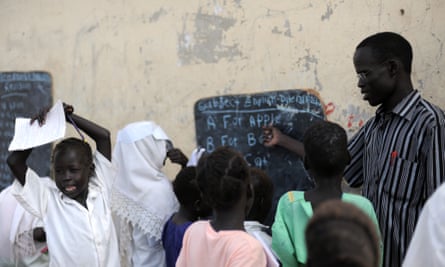
In the last few decades, as globalisation has accelerated and the US has remained the world’s most powerful country, the advance of English has taken on a new momentum. In 2008, Rwanda switched its education system from French to English, having already made English an official language in 14 years earlier. Officially, this was part of the government’s effort to make Rwanda the tech hub of Africa. Unofficially, it’s widely believed to be an expression of disgust at France’s role in propping-up the pre-1994 Hutu-dominant government, as well as a reflection that the country’s ruling elite mostly speaks English, having grown up as exiles in anglophone east Africa. When South Sudan became independent in 2011, it made English its official language despite having very few resources or qualified personnel with which to teach it in schools. The Minister of higher education at the time justified the move as being aimed at making the country “different and modern”, while the news director of South Sudan Radio added that with English, South Sudan could “become one nation” and “communicate with the rest of the world” – understandable goals in a country home to more than 50 local languages.
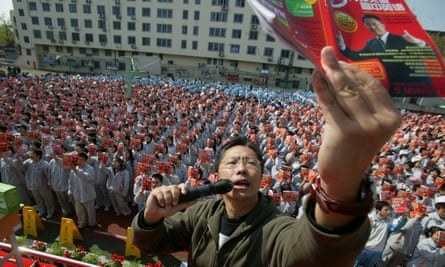
The situation in east Asia is no less dramatic. China currently has more speakers of English as a second language than any other country. Some prominent English teachers have become celebrities, conducting mass lessons in stadiums seating thousands. In South Korea, meanwhile, according to the sociolinguist Joseph Sung-Yul Park, English is a “national religion”. Korean employers expect proficiency in English, even in positions where it offers no obvious advantage.
The quest to master English in Korea is often called the yeongeo yeolpung or “English frenzy”. Although mostly confined to a mania for instruction and immersion, occasionally this “frenzy” spills over into medical intervention. As Sung-Yul Park relates: “An increasing number of parents in South Korea have their children undergo a form of surgery that snips off a thin band of tissue under the tongue … Most parents pay for this surgery because they believe it will make their children speak English better; the surgery supposedly enables the child to pronounce the English retroflex consonant with ease, a sound that is considered to be particularly difficult for Koreans.”
There is no evidence to suggest that this surgery in any way improves English pronunciation. The willingness to engage in this useless surgical procedure strikes me, though, as a potent metaphor for English’s peculiar status in the modern world. It is no longer simply a tool suited to a particular task or set of tasks, as it was in the days of the Royal Navy or the International Commission for Air Navigation. It is now seen as the access code to the global elite. If you want your children to get ahead, then they better have English in their toolkit.
Is the conquest of English really so bad? In the not-too-distant future, thanks to English, the curse of Babel will be undone and the children of men may come together once again, united with the aid of a common tongue. Certainly, that’s what English’s boosters would have you believe. After all, what a work is English, how copious in its vocabulary, how noble in expression, how sinuous in its constructions, and yet how plain in its basic principles. A language, in short, with a word for almost everything, capable of an infinite gradation of meanings, equally suited to describing the essential rights of mankind as to ornamenting a packet of crisps, whose only defect, as far as I know, is that it makes everyone who speaks it sound like a duck.
Well, not really. (OK, maybe a little – English, while not an ugly language, isn’t exactly pretty either). Mostly, I’m speaking out of bitterness – one that is old, and until recently, lay dormant. My first language was Polish. I learned it from my parents at home. English followed shortly, at school in Pennsylvania. I learned to speak it fluently, but with an accent, which took years of teasing – and some speech therapy, kindly provided by the state – to wear away. That, combined with the experience of watching the widespread condescension towards those who take their time learning English, left me a lifelong English-sceptic. (I admit, also, that a strain of linguistic megalomania runs through many Polish speakers, one best summed up by the novelist Joseph Conrad, who, when asked why he didn’t write in his native language, replied: “I value too much our beautiful Polish literature to introduce into it my worthless twaddle. But for Englishmen my capacities are just sufficient.”)
It’s not that English is bad. It’s fine! A perfectly nice language, capable of expressing a great many things – and with scores of fascinating regional variants, from Scots to Singapore English. But it is so prevalent. And so hard to escape. And so freighted with buffoonish puffery written on its behalf: “our magnificent bastard tongue”; “the language that connects the world”. Please. There is no reason for any particular language to be worshipped around the world like a golden idol. There is a pervasive mismatch between the grand claims made on English’s behalf, and its limitations as means of communication (limitations, to be fair, that it shares with all other languages).
Is English oppressive? When its pervasive influence silences other languages, or discourages parents from passing on their native languages to their children, I think it can be. When you do know another language, it’s merely constricting, like wearing trousers that are too tight. That’s because while English is good for a great many things, it is not good for everything. To me, family intimacies long to be expressed in Polish. So does anything concerning the seasons, forest products and catastrophic sorrows. Poetry naturally sounds better in Polish. I’ve always spoken it to cats and dogs on the assumption that they understand, being simultaneously convinced that raccoons and lesser animals only respond to shouts.
This isn’t quite as idiosyncratic as it sounds. Aneta Pavlenko, an applied linguist at Temple University in Pennsylvania, who has spent her career studying the psychology of bilingual and multilingual speakers, has found that speakers of multiple languages frequently believe that each language conveys a “different self”. Languages, according to her respondents, come in a kaleidoscopic range of emotional tones. “I would inevitably talk to babies and animals in Welsh,” reports a Welsh-speaker. An informant from Finland counters: “Finnish emotions are rarely stated explicitly. Therefore it is easier to tell my children that I love them in English.” Several Japanese speakers say that it’s easier to express anger in English, especially by swearing.
Intuitive though it might be to some, the idea that different languages capture and construct different realities has been a subject of academic controversy for at least 200 years. The German explorer Alexander von Humboldt was among the first to articulate it in a complex form. After studying Amerindian languages in the New World, he came to the conclusion that every language “draws a circle” around its speakers, creating a distinct worldview through its grammar as well as in its vocabulary. In the 20th century, the American linguists Edward Sapir and Benjamin Lee Whorf elaborated this idea into a broader vision of how language structures thought. Both drew inspiration for their work from their study of North American languages such as Nootka, Shawnee and Hopi.
This idea – now usually known as the linguistic relativity hypothesis, or Sapir-Whorf hypothesis – has had a checkered history in academia. At different times, it has been hailed by it proponents as foundational insight for modern anthropology and literary theory, and blamed by its detractors as the source of the worst excesses of postmodern philosophy. In recent decades, sociolinguists have arrived at a few startlingly suggestive findings concerning the influence of language on colour perception, orientation and verbs of motion – but in general, the more expansive notion that different languages inculcate fundamentally different ways of thinking has not been proven.
Nonetheless, some version of this idea continues to find supporters, not least among writers familiar with shifting between languages. Here is the memoirist Eva Hoffman on the experience of learning English in Vancouver while simultaneously feeling cut off from the Polish she had grown up speaking as a teenager in Kraków: “This radical disjointing between word and thing is a desiccating alchemy, draining the world not only of significance but of its colours, striations, nuances – its very existence. It is the loss of a living connection.” The Chinese writer Xiaolu Guo described something similar in her recent memoir, writing about how uncomfortable she felt, at first, with the way the English language encouraged speakers to use the first-person singular, rather than plural. “After all, how could someone who had grown up in a collective society get used to using the first-person singular all the time? … But here, in this foreign country, I had to build a world as a first-person singular – urgently.”
In the 1970s, Anna Wierzbicka, a linguist who found herself marooned in Australia after a long career in Polish academia, stood the Sapir-Whorf hypothesis on its head. Instead of trying to describe the worldviews of distant hunter-gatherers, she turned her sociolinguistic lens on the surrounding anglophones. For Wierzbicka, English shapes its speakers as powerfully as any other language. It’s just that in an anglophone world, that invisible baggage is harder to discern. In a series of books culminating in 2013’s evocatively named Imprisoned in English, she has attempted to analyse various assumptions – social, spatial, emotional and otherwise – latent in English spoken by the middle and upper classes in the US and UK.
Reading Wierzbicka’s work is like peeking through a magic mirror that inverts the old “how natives think” school of anthropology and turns it back on ourselves. Her English-speakers are a pragmatic people, cautious in their pronouncements and prone to downplaying their emotions. They endlessly qualify their remarks according to their stance towards what is being said. Hence their endless use of expressions such as “I think”, “I believe”, “I suppose”, “I understand”, “I suspect”. They prefer fact over theories, savour “control” and “space”, and cherish autonomy over intimacy. Their moral lives are governed by a tightly interwoven knot of culture-specific concepts called “right” and “wrong”, which they mysteriously believe to be universal.
Wierzbicka’s description of English’s subconscious system of values hardly holds true for the billion or more speakers of this most global of tongues. But it is also a reminder that, despite its influence, English is not truly universal. Its horizons are just as limited as those of any other language, whether Chinese or Hopi or Dalabon.
For if language connects people socially, it also connects them to a place. The linguist Nicholas Evans has described how Kayardild, a language spoken in northern Australia, requires a speaker to continually orient themselves according to the cardinal directions. Where an English speaker would orient things according to their own perception – my left, my right, my front, my back – a speaker of Kayardild thinks in terms of north, south, east and west. As a consequence, speakers of Kayardild (and those of several other languages that share this feature) possess “absolute reckoning”, or a kind of “perfect pitch” for direction. It also means removing one’s self as the main reference point for thinking about space. As Evans writes of his own experiences learning the language, “one aspect of speaking Kayardild, then, is learning that the landscape is more important and objective than you are. Kayardild grammar literally puts everyone in their place.”
Kayardild and its kin are truly local languages, with few speakers, and modes of expression that are hard to separate from the places in which they are spoken. But that should not lead us to think that they are lesser. The world is made up of places, not universals. To speak only English, in spite of its vast vocabulary and countless varieties, is still to dwell in a rather small pool. It draws the same circle Humboldt described around its speakers as each of the other 6,000 human languages. The difference is that we have mistaken that circle for the world.
Because English is increasingly the currency of the universal, it is difficult to express any opposition to its hegemony that doesn’t appear to be tainted by either nationalism or snobbery. When Minae Mizumura published the Fall of Language in the Age of English, in 2008, it was a surprise commercial success in Japan. But it provoked a storm of criticism, as Mizumura was accused of elitism, nationalism and being a “hopeless reactionary”. One representative online comment read: “Who does she think she is, a privileged bilingual preaching to the rest of us Japanese!” (Perhaps unsurprisingly, Mizumura’s broader argument, about the gradual erosion of Japanese literature – and especially, the legacy of the Japanese modernist novel – got lost in the scuffle.)
Those of us troubled by the hyperdominance of English should also remember the role it has played in some societies – especially multi-ethnic ones – as a bridge to the wider world and counterweight to other nationalisms. This was especially keenly felt in South Africa, where Afrikaans was widely associated with the policy of apartheid. When the government announced that Afrikaans would be used as a language of instruction in schools on par with English in 1974, the decision led in 1976 to a mass demonstration by black students known as the Soweto uprising. Its brutal suppression resulted in hundreds of deaths, and is considered a turning point in the anti-apartheid struggle. Similar protests have periodically racked southern India since the 1940s over attempts to enforce official use of Hindi in place of English.

In other parts of the world though, English still carries the full weight of its colonialist past. Since the 1960s, the celebrated Kenyan novelist Ngũgĩ wa Thiong’o has advocated on behalf of African languages and against the prevalence of English-language education in postcolonial countries. In his landmark 1986 book Decolonising the Mind: the Politics of Language in African Literature, he describes the corrosive effect of English language instruction, comparing it to a form of “spiritual subjugation”. Colonial education, in which pupils were physically punished for speaking their native languages while at school (something also done to the Welsh into the early 20th century) was necessarily, and deliberately, alienating, “like separating the mind from the body”.
Since publishing Decolonising the Mind, Ngũgĩ has worked to put its dictates into practice. He renounced his baptismal name, James, and with it Christianity, and ceased to write fiction in English. Since the 1980s, he has written all his novels and plays in his native Gikuyu, only using English (and occasionally Kiswahili) for essays and polemics. This last decision is one that many people still question. As he said in a recent interview: “If I meet an English person, and he says, ‘I write in English,’ I don’t ask him, ‘Why are you writing in English?’ If I meet a French writer, I don’t ask him, ‘Why don’t you write in Vietnamese?’ But I am asked over and over again, ‘Why do you write in Gikuyu?’ For Africans, the view is there is something wrong about writing in an African language.”
Part of the paradox of Ngũgĩ’s situation is that while he may be the world’s foremost advocate for writing literature in African languages, his novels have won acclaim and gained international recognition through the medium of English. The hegemony of English is now such that, in order to be recognised, any opposition to English has to formulated in English in order to be heard.
Today it is estimated that the world loses a language every two weeks. Linguists have predicted that between 50 and 90% of the world’s 6,000 or so languages will go extinct in the coming century. For even a fraction of these to survive, we’re going to have to start thinking of smaller languages not as endangered species worth saving, but as equals worth learning.
In most of the world, it’s already too late. In California, where I live, most of the languages that were spoken before the arrival of Europeans are already extinct. On America’s eastern seaboard, thanks to long proximity to Anglo settlers, the situation is even worse. Most of what we know about many of these vanished languages comes in the form of brief word lists compiled by European settlers and traders before the 19th century. Stadaconan (or Laurentian) survives only from a glossary of 220 words jotted down by Jacques Cartier when he sailed up the St Lawrence River in Canada in 1535. Eastern Atakapa, from Louisiana’s Gulf Coast, is known from a list of only 287, gathered in 1802. The last fragments of Nansemond, once spoken in eastern Virginia, were collected from the last living speaker just before his death in 1902, by which time he could only recall six words: one, two, three, four, five and dog.
The great Malian historian and novelist Amadou Hampâté Bâ once said that in Africa, when an elder dies, a library burns. Today, across the world, the libraries are still burning. In his marvellous book, Searching for Aboriginal Languages: Memoirs of a Field Worker, the linguist Robert MW Dixon describes travelling across Northern Queensland in the 1960s and 70s to record indigenous languages, many of which had already dwindled to a handful of speakers. It’s hard to remain an oral language in an increasingly text-dependent world. All the forces of modernity, globalisation, industrialisation, urbanisation and the rise of the nation-state are arrayed against the small and local as opposed to the big and shareable.
In this past century, the Earth has been steadily losing diversity at every level of biology and culture. Few deny this is a bad thing. Too often though, we forget that these crises of diversity depend, to a great extent, on our own decisions. Much of what has been done can also be undone, provided there is the will for it. Hebrew is the most famous case of a language brought back from the dead, but linguistic revitalisation has been proven to be possible elsewhere as well. Czech became a viable national language thanks to the work of literary activists in the 19th century. On a much smaller scale, endangered languages such as Manx in the Isle of Man and Wampanoag in the US have been successfully pulled back from the brink.
Coming face-to-face with the current onslaught of linguicide, I find myself wanting to venture a modest proposal. What if anglo-globalism wasn’t a one-way street? What if the pre-contact languages of the Americas were taught in American high schools? What if British schoolchildren learned some of the languages spoken by the actual residents of the former empire? (This is a utopian project obviously. But how much would it actually cost to add a linguistic elective to larger high schools? One jet fighter? A few cruise missiles?)
Current educational discourse is full of talk about the need to bolster children’s cognition. In the culture at large, experts have been trumpeting the cognitive benefits of everything from online brain games to magic mushrooms. Why not try Hopi instead? The point of this education wouldn’t necessarily be to acquire fluency in an extinct or smaller language – it would be to open a door.
And think of the vistas it might open up. For generations, a huge percentage of philosophy and social science has been conducted in and about English speakers. Humankind, as imagined by the academy, is mostly anglophone. This has even been true in linguistics. Noam Chomsky’s idea of a universal grammar underpinning all languages was based on a rather narrow empirical base. More recent research into dozens of smaller languages, like Kayardild and Pirahã, has been steadily whittling away at his list of supposed universals. We now know there are languages without adverbs, adjectives, prepositions and articles. There seems to be hardly anything that a language “needs” to be – just thousands of natural experiments in how they might be assembled. And most of them are about to be lost.
In some ways, the worst threat may come not from the global onrush of modernity, but from an idea: that a single language should suit every purpose, and that being monolingual is therefore somehow “normal”. This is something that’s often assumed reflexively by those of us who live most of our lives in English, but historically speaking, monolingualism is something of an aberration.
Before the era of the nation-state, polyglot empires were the rule, rather than the exception. Polyglot individuals abounded, too. For most of history, people lived in small communities. But that did not mean that they were isolated from one another. Multilingualism must have been common. Today, we see traces of this polyglot past in linguistic hotspots such as the Mandara mountains of Cameroon, where children as young as 10 routinely juggle four or five languages in daily life, and learn several others in school.
Residents of Arnhem Land in northern Australia routinely speak half a dozen or more languages by the time they are adults. Multilingualism, writes Nicholas Evans, “is helped by the fact that you have to marry outside your clan, which likely means your wife or husband speaks a different language from you. It also means that you parents each speak a different language, and your grandparents three or four languages between them.”
A resident of another linguistic hotspot, the Sepik region of Papua New Guinea, once told Evans: “It wouldn’t be any good if we talked the same; we like to know where people come from.” It’s a vision of Babel in reverse. Instead of representing a fall from human perfection, as in the biblical story, having many languages is a gift. It’s something to remember before we let English swallow the globe.
Main illustration by Miguel Montaner
When Manuel Segovia and Isidro Velazquez had a falling out, it became international news. No one remembers what started it. Some say it was because they disagreed on the proper way to speak their own language. Their feud was widely reported around the world because there was much more than their friendship at stake.
They were the last two speakers of a 600-year-old language called Ayapaneco. If their friendship could not be saved, the language would die.
In 2014, telecommunications giant Vodafone stepped in to save the day. Together with the local community, they built a school to teach the language. And as the cherry on top, the two old friends were brought together to bury the hatchet. The men hugged, cried, and of course, they talked. They spoke in a language that would not die that day. The Vodafone video documentary that was made ends with the two men teaching young children their language.
The only problem with this heartwarming story was that it was a lie. It was an advertising scheme dreamed up by Vodafone’s marketing department to tug on people’s heartstrings. And it worked. It fooled news media around the world, including the BBC, NPR, and the Guardian.
In truth, Ayapaneco is in danger of going extinct with only four native speakers, which includes Manuel and Isidro. Vodafone paid the other two to keep quiet. The school Vodafone built was also a sham. Since there was already an Ayapaneco school in town, Vodafone just paid to have it painted and called it a day. As for Manuel and Isidro, there never was a feud. To this day, they continue working to preserve their language by teaching children.
Ayapaneco isn’t the only language around the world in danger. Of the 7,000 known living languages, one dies every two weeks.
Muazzez Kocek is one of the last speakers of the Kus dili language. In her village there are just 50 speakers left. It is called ‘bird language’ because it uses whistles instead of normal words. There is a wide range of whistles that can communicate the full Turkish vocabulary. Why whistling? Kus dili is spoken in a mountainous area of Turkey where people needed to communicate over long distances. Whistles can travel much further than shouting over the area’s hills and valleys. But now that almost everyone has cell phones, Kus dili is in danger of dying out. That hasn’t stopped people trying to protect the language from using technology to save it. There is now a whistle dictionary smartphone app to help people learn the language. Muazzez says, “We want to keep our language alive. It is our culture…I love it and I always will.”
References:
https://www.nytimes.com/2019/05/30/arts/in-turkey-keeping-alive-a-language-of-whistles.html
https://medium.com/news-to-table/vodafone-virality-and-the-vanishing-voice-that-wasnt-8c16e1fbe61a
Мониторинг для учащихся сдающих ЕГЭ и профильных 11 классов
Чтение (40 минут)
B2
Установите соответствие между заголовками 1-8 и текстами A-G. Занесите свои ответы в таблицу. Используйте каждую цифру только один раз. В задании один заголовок лишний.
|
1 |
Be tactful |
5 |
Be reliable |
|
2 |
Don’t spend long on simple tasks |
6 |
Use your initiative and common sense |
|
3 |
Have confidence – know your business |
7 |
Be helpful |
|
4 |
Be aware of health and safety rules at work |
8 |
Respect confidentiality |
|
A. |
At the start, everything will be new and you will probably be nervous about answering the telephone and dealing with customers. You will become more assured as you develop knowledge and experience – set about gaining that knowledge about your company as soon as possible. |
|
B. |
Good timekeeping and regular attendance are vital qualities for every office worker. If there is no one available to answer the telephone or type up invoices, the system will soon grind to a halt. If you are genuinely ill, phone your employer as early as possible so they can arrange for someone to cover for you. If you think you are going to be off sick for more than one day, let them know. |
|
C. |
Assess a situation and try to assist in any way you can. First impressions of a company are often gained from someone answering the telephone or sitting at a reception desk. If that person is you, then your company’s reputation can hinge on how you deal with customers. |
|
D. |
Even if you know a customer is wrong, never be rude in return. If necessary, refer them to a senior staff member or to your employer to deal with. |
|
E. |
You should be able to work on your own and find solutions for simple problems which happen throughout the day. If you have finished your current task, don’t sit and gaze around an untidy office. The time you have spare could be used in clearing up or sorting through old files. Management decisions should still be passed through your employer. If a salesman has arrived with brochures for new office equipment, it is not up to you to order yourself a new office chair – this is a decision you leave to your employer. |
|
F. |
It is important not to gossip about your employer or the people you work with. If someone shares a confidence with you, don’t spread it around the fest of the office. People will soon learn whether they can trust you or not. |
|
G |
Be aware of potential dangers and follow safe practices strictly. Avoid having trailing leads from typewriters or kettles, which people could trip over. Check fire exits are not blocked by box or filling cabinets. |
B3
Прочитайте текст и заполните пропуски A-F частями предложений, обозначенными цифрами 1-7. Одна из частей в списке 1-7 лишняя. Занесите цифры, обозначающие соответствующие части предложений, в таблицу.
Health Advice for Travellers
Doctors tend to be poor educators; we have depressingly little to show for our efforts to educate the general public on even such a clear-cut issue as the effects of cigarette smoking on health. How much more difficult, then is it for doctors to provide large numbers of departing travellers with detailed information and effective advice for their trip when the usual forum for doing so is a single, hurried consultation, just before departure. There are limits to what can be achieved in or should be expected from a medical consultation A_____, even when the doctor is well- informed about the subject, and the traveller is receptive, has a perfect memory, and is good at doing what he or she is told.
What kind of advice should travelers receive? A list of rules and instructions B______ carries the implication that travellers are incapable of understanding the principles involved, are not interested, or do not ‘need’ to know. C______ advice offered on such condescending terms is seldom followed for long. The best advice is not a list of dos and don’ts, but a clear, rational explanation from which a conclusion is obvious.
D_____, we have studiously avoided giving advice to consult a doctor without stating the reason for doing so. ‘Consult your doctor’ is a useful formula to enable advice-givers to avoid difficult issues, but is a particularly unhelpful one when it relates to a problem which may arise abroad. E_____to find a doctor in a remote place. Some 85% of the world’s population have never seen a doctor, and never will. Advice for travellers must take account of the fact that travellers to many parts of the world will be F______.
- It is hardly surprising that
- But despite this
- Throughout this book
- In the same position
- Given without explanation or justifications
- It is not easy
- Under the best of circumstances
Прочитайте текст и выполните задания А15-А21. В каждом задании обведите цифру 1, 2, 3 или 4, соответствующую выбранному вами варианту ответа
A walk in the midday sun
Hot weather makes your heart pump harder, and if you’re not very fit, you start to understand why the majority of mountain rescue statistics are made up from summer walkers suffering heart attacks. Heat exhaustion is quite easy to get when you’re making a great physical effort. It happens where your body can’t produce enough sweat to keep you cool.
The answer is to keep up your water intake. It’s a good idea to drink a pint of water for every 10 degrees Fahrenheit every 24 hours. So, if the temperature is in the 70s, and you are doing a five-hour walk, you’ll need a minimum of around one and a half pints of water. It’s vital that you don’t wait until you develop a raging thirst before you stop for a drink – keep taking regular swigs from your water bottle.
Many walkers flavour their water with fruit juice, which makes it a lot more palatable. You could even use one of the isotonic drinks made for athletes, which replace the body’s salts lost through sweating. Powders such a Dioralyte, which you may have in the house as a treatment for diarrhoea, will do the job just as well, as its main aim is also effective rehydration.
Given that evaporation is your body’s cooling mechanism, you can help things along with an external application of water. Soaking your hat with water is a great way to cool the head, through if the sun is beating down, it will probably dry off almost immediately. Better still then if you can plunge into a river or the sea fully-clothed. And if that’s not possible, then at least take off your boots and socks and paddle in a cool stream.
Walking in the heat increases the rate at which your feet swell, which can lead to them feeling tight in your boots. Cool water from a stream reduces any swelling and helps general foot comfort. At the same time, you can check out your feet for signs of blisters. Extra sweating makes the skin softer and increases the chance of blisters forming, in the same way as when water leaks into your boots and gets to your feet.
As for what clothing you wear, this should be lightweight and reasonably loose-fitting. Tight clothing will feel uncomfortable and may even lead to the formation of an irritating rash known as ‘prickly heat’ on your skin. The answer, if this does develop, is to try and stay cool as much as possible. Do this by either keeping in the shade, or washing the affected area with cold water, but without soap. But prevention is by far the best approach, so keep your clothing light.
It’s understandable to want to remove any extraneous clothing when it’s extremely hot, but it doesn’t really make much sense to take off T-shirts. The sun’s rays can be quite strong, and shoulders are always very sensitive to sunburn. This is the worst place to be red and sore when you are wearing a heavy rucksack on your back. Wearing shorts can also create problems for walkers, as the backs of the legs can catch the sun very easily.
In fact, those days when an apparently harmless breeze is blowing can be the most deceptive. It might not feel so hot, so you probably won’t notice the damage being done so soon. As on every other day then, a good strong sun cream should therefore be applied to any skin which is exposed. Make the most of the summer, but treat the sun with the respect it deserves.
|
A15 |
The writer says that hot weather
|
|
A16 |
What does the writer say about ‘Dioralyte’?
|
|
A17 |
‘it’ in the paragraph 4 refers to
|
|
A18 |
According to the text, when might your feel suffer?
|
|
A19 |
According to the writer, it is better to wear loose-fitting clothing because
|
|
A20 |
What does the writer mean by ‘extraneous’ clothing in paragraph 7?
|
|
A21 |
According to the writer, when are walkers particularly at risk from the effects of the sun?
|
Грамматика и лексика (40 минут)
Прочитайте приведенные ниже тексты. Преобразуйте, если необходимо, слова, напечатанные заглавными буквами в конце строк, обозначенных номерами В4-В10, так чтобы они грамматически соответствовали содержанию текстов. Заполните пропусками полученными словами. Каждый пропуск соответствует отдельному заданию из группы В4-В10.
Teen Spending
|
B4 B5 B6 |
A large-scale research _________ by advertisers on spending habits of ________teenagers. It has come up with some fascinating results. Girls across Europe ________ in age from 15 to 18 were interviewed. The researchers discovered that these girls want to be successful and sophisticated and are willing to spend to achieve the look they want – when they have the money, that is! |
DO TODAY RANG |
Exams
|
B7 B8 B9 B10 |
Now look here. Whatever your personal opinion about exams, there is no way you can avoid _____. They are, at best, a necessary evil but very much a part of our_____. Tests and examinations are given not only a ______ learning abilities but also to see how well a particular subject___________. |
THEY LIFE STUDENT LEARN |
Прочитайте приведенный ниже текст. Преобразуйте, если необходимо, слова, напечатанные заглавными буквами в конце строк, обозначенных номерами В11-В16, так чтобы они грамматически и лексически соответствовали содержанию текста. Заполните пропуски полученными словами. Каждый пропуск соответствует отдельному заданию из группы В11-В16.
JOGGING
|
B11 B12 B13 B14 B15 B16 |
Slow, relaxed, …………running is an excellent exercise for cardiovascular fitness and weight control. It requires no special skill, little expenditure, and can be done almost anywhere. But excessive jogging, especially on hard surface, can result in ………… to the joints and muscles. Regular jogging also tends to shorten and ………..muscles because movements take place through a restricted range and are repeated many times. This makes it important to perform stretching exercises to maintain the ………. of the muscles most at risk. To get the greatest benefit and ……… the risks, it is best to increase your …………..distance slowly, by no more than 10-20 per cent every two weeks. |
CONTINUE INJURE TIGHT FLEXIBLE MINIMUM WEEK |
Прочитайте текст с пропусками, обозначенными номерами А22-А28. Эти номера соответствуют заданиям А22-А28, в которых представлены возможные варианты ответов. Обведите номер выбранного вами варианта ответа.
What do trees do? They blind together hillside soil and reduce erosion A22_____to run-off. Besides A23_____ a source of food and income-earing products, forests function as natural ‘gene banks’ and as a veritable virtual A24____ of biodiversity. Products from trees, shrubs, forests and bush lands provide a source of nutrition A25_____ingredients for medicines. Trees A26_____ provide shade to cattle and crops, leaves and pods provide fodder and the wood serves as fuel or is used for construction activities. They slow the wind and A27 _____it from fields, protecting the crops and reducing erosion. They can also be grown as cash crop for fruits, oil, timber, latex and gum A28_____. Trees help recycle nutrients from deep in the soil to the surface – nitrogen fixing trees act as natural fertilizers by absorbing nitrogen from the atmosphere and fixing it in the soil.
|
A22 |
1) |
thanks |
2) |
because |
3) |
in view |
4) |
due |
|
A23 |
1) |
to provide |
2) |
they provide |
3) |
providing |
provision |
|
|
A24 |
1) |
pot |
2) |
pool |
3) |
fund |
4) |
purse |
|
A25 |
1) |
as well as |
2) |
including |
3) |
except |
4) |
omitting |
|
A26 |
1) |
fundamentally |
2) |
basically |
3) |
radically |
4) |
essentially |
|
A27 |
1) |
deflect |
2) |
bounce |
3) |
discourage |
4) |
reflect |
|
A28 |
1) |
to the point |
2) |
to name a few |
3) |
to the same extent |
4) |
to say the least |
7 Ïîñòàâüòå ãëàãîëû â ñêîáêàõ â ïðàâèëüíóþ âðåìåííóþ ôîðìó. Êàêîé âèä óñëîâíîãî ïðåäëîæåíèÿ â êàæäîì âûñêàçûâàíèè?
1 Åñëè âû êèïÿòèòå âîäó, îíà ïðåâðàùàåòñÿ â ïàð.
2 Îíà áû ðàññòðîèëàñü, åñëè áû ïîòåðÿëà ñâîè ñåðåæêè.
3 Åñëè âû áóäåòå ó÷èòüñÿ óñåðäíî, âû ñäàäèòå ýêçàìåí.
4 Åñëè áû ÿ áûë áîãàò, ÿ áû ïîåõàë â êðóèç ïî âñåìó ìèðó.
5 Âû ñòàíåòå ëó÷øèì èãðîêîì, åñëè áóäåòå áîëüøå òðåíèðîâàòüñÿ.
6 Åñëè áû ìîÿ êîìàíäà èãðàëà ëó÷øå, îíè áû âûèãðàëè êóáîê.
7 Îíè ðàññòðîÿòñÿ, åñëè âû íå ïðèäåòå.
8 Ëåä òàåò, åñëè âû åãî íàãðåâàåòå.
Ðåøåíèå #
1 turns (Type 0) (ïðåâðàùàåòñÿ)
2 lost (Type 2) (ïîòåðÿëà)
3 will pass (Type 1) (ñäàäèòå)
4 would go (Type 2) (ÿ áû ïîåõàë)
5 practiced (Type 1) (òðåíèðîâàòüñÿ)
6 played (Type 2) (èãðàëà)
7 do not come (Type 1) (íå ïðèäåòå)
8 heat (Type 0) (íàãðåâàåòå)
Ïðèâåäåì âûäåðæêó èç çàäàíèÿ èç ó÷åáíèêà Þëèÿ Âàóëèíà, Äæóííè Äóëè 8 êëàññ, Ïðîñâåùåíèå:
7 Put the verbs in brackets into the correct tense. What type of conditional is each sentence?
1 If you boil water, it……..(turn) to steam.
2 She would be upset if she……..(lose) her earrings.
3 If you study hard, you……..(pass) the exam.
4 If I were rich, I……..(go) on a cruise around the world.
5 You will become a better player if you…..(practise) more.
6 If my team……..(play) better, they could win the cup.
7 They’ll be disappointed if you……..(not/come .
8 Ice melts if you……..(heat) it.
*Öèòèðèðîâàíèå ÷àñòè çàäàíèÿ ñî ññûëêîé íà ó÷åáíèê ïðîèçâîäèòñÿ èñêëþ÷èòåëüíî â ó÷åáíûõ öåëÿõ äëÿ ëó÷øåãî ïîíèìàíèÿ ðàçáîðà ðåøåíèÿ çàäàíèÿ.
Раздел 1. АУДИРОВАНИЕ
Вы услышите 6 высказываний. Установите соответствие между высказываниями каждого говорящего A—F и утверждениями, данными в списке 1—7. Используйте каждое утверждение, обозначенное соответствующей цифрой, только один раз. В задании есть одно лишнее утверждение. Вы услышите запись дважды. Занесите свои ответы в таблицу.
2
Вы услышите диалог. Определите, какие из приведённых утверждений А—G соответствуют содержанию текста (1 — True), какие не соответствуют (2 — False) и о чём в тексте не сказано, то есть на основании текста нельзя дать ни положительного, ни отрицательного ответа (3 — Not stated). Занесите номер выбранного вами варианта ответа в таблицу. Вы услышите запись дважды.
A Dana has been very successful recently.
B Ken is going to tell Dana some important information.
C Dana is looking for the job at the moment.
D Dana’s promotion came through quite unexpectedly.
E Dana didn’t get a raise in her salary.
F Ken is getting married in two weeks.
G Dana is surprised to hear that her friend is getting married.
Утверждение
Соответствие диалогу
Вы услышите рассказ популярной американской певицы о её карьере. В заданиях 3—9 запишите в поле ответа цифру 1, 2 или 3, соответствующую выбранному Вами варианту ответа. Вы услышите запись дважды.
3
The narrator says she started to write songs
1) when she was ten.
2) because she could not talk.
3) because it was the best way to express her feelings.
Ответ: .
4
According to the narrator,
1) she could afford to have a recording studio.
2) her family was not well off.
3) she bought Christmas presents for her friends.
Ответ: .
5
The narrator returned to Texas because
1) her apartment burnt down.
2) she had got several college music scholarships.
3) a friend told her about the American Idol audition in Dallas.
Ответ: .
6
Looking back on the show, the narrator says that
1) few people really believed she could win.
2) the members of the crew were not at all supportive.
3) everyone was supporting her.
Ответ: .
7
The narrator thinks that
1) she ought to become thinner.
2) she could serve as a role model for young girls.
3) girls should not live up to their idols.
Ответ: .
8
The narrator dreams of
1) touring the world.
2) having a permanent relationship.
3) staying single.
Ответ: .
9
The narrator considers herself
1) to be a celebrity.
2) practical and sensible.
3) honest and sincere.
Ответ: .
Раздел 2. ЧТЕНИЕ
10
Установите соответствие между заголовками 1—8 и текстами A—G. Занесите свои ответы в таблицу. Используйте каждую цифру только один раз. В задании один заголовок лишний.
1. The Best Way of Learning
2. Key Factor in Learning
3. Linguistic Interference
4. Universal Language
5. Online Learning
6. Language Extinction
7. Learning by Imitation
8. Sign Language
A. Young children have a genetic ability to learn language. They come into the world as eager learning machines, and language acquisition is a major aspect of this learning. How children actually learn language is not entirely clear, however. Most linguists believe that they do it primarily by listening to and trying to communicate with adult speakers. Initially, this means that they copy the way adults use words and grammar.
B. Learning a second or third language is easier in early childhood than later. It is particularly important to learn correct pronunciation as young as possible. At any age, learning by constant contact with native speakers in their own society is the quickest and the most effective method. It is superior to taking foreign language classes because it forces you to concentrate on it all of the time.
C. Learning a second language can be affected by the patterns of the first language. There can be some blending of phonemes. For instance, most Americans who learn French in high school or college pronounce French words with a distinctive American accent. Grammar can also be affected. English speakers who learn both French and Spanish sometimes combine grammatical rules of both when speaking either of them.
D. Until just a few years ago, language study was limited to the classroom or personal tutor, or home study by book. In the last few decades technology has given us a much needed audio option — first vinyl records, then cassettes and CDs. Now technology has given us a new format — the Internet. Options to learn a language by Internet are still limited but the potential is not.
E. What is important when learning a language? If you have the desire and persistence, time is the only factor that you may have to work with. How much time you can devote to learning will play a role in how quickly you can learn the language. Just remember how exciting it will be and how rewarding you will feel at the accomplishment.
F. Rather than have businessmen, diplomats, scientists and tourists from every country learning all the major languages that they want to learn or need to learn, Esperantists would have everyone just learn one second language — Esperanto. Then everyone could communicate with everyone, everywhere. The major ‘national’ languages could keep their special characteristics for anyone who wanted to learn them. This is the essence of the ‘Esperanto Movement’.
G. More than half of the world’s 7,000 languages are expected to die out by the end of the century, often taking with them irreplaceable knowledge about the natural world. When a species dies out, sometimes fossils can be found, remains uncovered. But when a human language disappears, there’s rarely any key left behind. Each loss becomes a linguistic black hole, where an entire way of knowing the world disappears.
11
Прочитайте текст и заполните пропуски A—F частями предложений, обозначенными цифрами 1—7. Одна из частей в списке 1—7 лишняя. Занесите цифру, обозначающую соответствующую часть предложения, в таблицу.
A constitution may be defined as the system of fundamental principles according to A ____________. A good example of a written constitution is the Constitution of the United States, formed in 1787.
The Constitution sets up a federal system with a strong central government. Each state preserves its own independence by reserving to itself certain well-defined powers such as education, taxes and finance, internal communications, etc. The powers B ____________ are those dealing with national defence, foreign policy, the control of international trade, etc.
Under the Constitution power is also divided among the three branches of the national government. The First Article provides for the establishment of the legislative body, Congress, and defines its powers. The second does the same for the executive branch, the President, and the Third Article provides for a system of federal courts.
The Constitution itself is rather short, it contains only 7 articles. And it was obvious in 1787 C ____________. So the 5th article lays down the procedure for amendment. A proposal to make a change must be first approved by two-thirds majorities in both Houses of Congress and then ratified by three quarters of the states.
The Constitution was finally ratified and came into force on March 4, 1789. When the Constitution was adopted, Americans were dissatisfied D ____________. It also recognized slavery and did not establish universal suffrage.
Only several years later, Congress was forced to adopt the first 10 amendments to the Constitution, E ____________. They guarantee to Americans such important rights and freedoms as freedom of press, freedom of religion, the right to go to court, have a lawyer, and some others.
Over the past 200 years 26 amendments have been adopted F ____________. It provides the basis for political stability, individual freedom, economic growth and social progress.
- which are given to a Federal government
- because it did not guarantee basic freedoms and individual rights
- but the Constitution itself has not been changed
- so it has to be changed
- which a nation or a state is constituted and governed
- which were called the Bill of Rights
- that there would be a need for altering it
Прочитайте текст и выполните задания 12—18. В каждом задании запишите в поле ответа цифру 1, 2, 3 или 4, соответствующую выбранному Вами варианту ответа.
That summer an army of crickets started a war with my father. They picked a fight the minute they invaded our cellar. Dad didn’t care for bugs much more than Mamma, but he could tolerate a few spiders and assorted creepy crawlers living in the basement. Every farm house had them. A part of rustic living, and something you needed to put up with if you wanted the simple life.
He told Mamma: ‘Now that we’re living out here, you can’t be jerking your head and swallowing your gum over what’s plain natural, Ellen.’ But she was a city girl through and through and had no ears when it came to defending vermin. She said a cricket was just a noisy cockroach, just a dumb horny bug that wouldn’t shut up. No way could she sleep with all that chirping going on! Then to prove her point she wouldn’t go to bed. She drank coffee and smoked my father’s cigarettes and she paced between the couch and the TV. Next morning she threatened to pack up and leave, so Dad drove to the hardware store and hurried back. He squirted poison from a jug with a spray nozzle. He sprayed the basement and all around the foundation of the house. When he had finished, he told us that was the end of it.
But what he should have said was: ‘This is the beginning’. For the next fourteen days Mamma kept finding dead crickets in the clean laundry. She’d shake out a towel or a sheet and a dead black cricket would roll across the linoleum. Sometimes the cat would corner one, and swat it around like he was playing hockey, then carry it away in his mouth. Dad said swallowing a few dead crickets wouldn’t hurt as long as the cat didn’t eat too many.
Soon live crickets started showing up in the kitchen and bathroom. Mamma freaked because she thought they were the dead crickets come back to haunt, but Dad said they were definitely a new batch, probably coming up on the pipes. He fetched his jug of poison and sprayed beneath the sink and behind the toilet and all along the baseboard until the whole house smelled of poison, and then he sprayed the cellar again, and then he went outside and sprayed all around the foundation leaving a foot-wide moat of poison.
For a couple of weeks we went back to finding dead crickets in the laundry. Dad told us to keep a sharp look out. He suggested that we’d all be better off to hide as many as we could from Mamma. I fed a few dozen to the cat who I didn’t like because he scratched and bit for no reason. I hoped the poison might kill him so we could get a puppy. Once in a while we found a dead cricket in the bathroom or beneath the kitchen sink. A couple of weeks later, when both live and dead crickets kept turning up, Dad emptied the cellar of junk. He borrowed Uncle Burt’s pickup and hauled a load to the dump. Then he burned a lot of bundled newspapers and magazines which he said the crickets had turned into nests.
He stood over that fire with a rake in one hand and a garden hose in the other. He wouldn’t leave it even when Mamma sent me out to fetch him for supper. He wouldn’t leave the fire, and she wouldn’t put supper on the table. Both my brothers were crying. Finally she went out and got him herself. And while we ate, the wind lifted some embers onto the wood pile. The only gasoline was in the lawn mower fuel tank but that was enough to create an explosion big enough to reach the house. Once the roof caught, there wasn’t much anyone could do.
After the fire trucks left, I made the mistake of volunteering to stay behind while Mamma took the others to Aunt Gail’s. I helped Dad and Uncle Burt and two men I’d never seen before carry things out of the house and stack them by the road. In the morning we’d come back in Burt’s truck and haul everything away. We worked into the night and we didn’t talk much, hardly a word about anything that mattered, and Dad didn’t offer any plan that he might have for us now. Uncle Burt passed a bottle around, but I shook my head when it came to me. I kicked and picked through the mess, dumb struck at how little there was to salvage, while all around the roar of crickets magnified our silence.
(Adapted from ‘The Cricket War’ by Bob Thurber)
12
A cricket is
1) a small animal.
2) a spider.
3) an insect.
4) a game.
Ответ: .
13
Mamma threatened to pack up and leave because
1) she had smoked all cigarettes.
2) she had not got used to rustic living.
3) she could not put up with crickets.
4) she was a city girl through and through.
Ответ: .
14
After Dad had sprayed the basement and all around the foundation of the house,
1) the family were constantly coming across dead crickets.
2) the family kept seeing live crickets everywhere.
3) the dead crickets came back to haunt.
4) all crickets disappeared.
Ответ: .
15
The narrator fed the cat with crickets because
1) the cat was hungry.
2) he would like to have another pet.
3) he wanted to hide crickets from Mamma.
4) Dad told him to do it.
Ответ: .
16
Dad borrowed Uncle Burt’s pickup
1) to fight with crickets.
2) to bring new furniture to the cellar.
3) to throw away newspapers and magazines.
4) to get rid of rubbish.
Ответ: .
17
The house caught fire because
1) Dad left a garden hose near the fire.
2) the wind lifted some papers onto the wood pile.
3) the fuel tank had gone off.
4) there wasn’t much anyone could do.
Ответ: .
18
The narrator was surprised
1) that Dad didn’t offer any plan.
2) when the bottle came to him.
3) that crickets were all around.
4) that there was not much to save from the fire.
Ответ: .
Раздел 3. ГРАММАТИКА И ЛЕКСИКА
Прочитайте приведённый ниже текст. Преобразуйте, если необходимо, слова, напечатанные заглавными буквами в конце строк, обозначенных номерами 19—25, так, чтобы они грамматически соответствовали содержанию текстов. Заполните пропуски полученными словами. Каждый пропуск соответствует отдельному заданию из группы 19—25.
Обратите внимание, что по правилам ЕГЭ ответы нужно писать без пробелов и других знаков, например, правильный ответ ‘have done’ нужно будет записать как ‘havedone’, иначе ваш ответ не засчитается.
September Mood in England
19
It’s Monday morning and Miss Williams walks into her office. Her holiday is over and she (just) to work.
RETURN
20
She looks brown, relaxed and than usual.
HAPPY
21
The other girls stand round her. ‘Where (you)?’ one of the girls asks.
GO
22
‘Italy, not far from Naples. I enjoyed it very much.’ she answers, happily.
SMILE
23
Her boss, Mr. Wetridge comes in ten minutes later. He looks a bit worried because he about the winter.
THINK
24
Central heating in his house five years ago and now it’s time to have it repaired.
INSTALL
25
Besides, his wife wants him to put in double glazing. But she that to double-glaze all the windows will cost quite a lot of money.
NOT
UNDER-
STAND
Прочитайте приведённый ниже текст. Образуйте от слов, напечатанных заглавными буквами в конце строк, обозначенных номерами 26—31, однокоренные слова так, чтобы они грамматически и лексически соответствовали содержанию текста. Заполните пропуски полученными словами. Каждый пропуск соответствует отдельному заданию из группы 26—31.
Junk Food
26
In today’s world, many people are looking for a quick snack, meal or boost of energy. They choose processed food bars, thinking that they’re a healthy choice.
INCREASE
27
However, most bars contain processed foods which are called ‘junk foods’.
DESIRE
28
They give you a false sense of energy and .
FULL
29
One problem with junk foods is that they’re low in satiation value. Another problem is that junk food tends to other, more nutritious foods.
PLACE
30
It’s the 21st century now and ‘junk food’ has gone . We see it everywhere: in grocery and convenience stores, in fast-food
restaurants and on television.
GLOBE
31
Although junk food is now all over the world, people should be aware of its disadvantages and choose healthier alternatives.
AVAIL
Прочитайте текст с пропусками, обозначенными номерами 32—38. Эти номера соответствуют заданиям 32—38, в которых представлены возможные варианты ответов. Запишите в поле ответа цифру 1, 2, 3 или 4, соответствующую выбранному Вами варианту ответа.
The Changing World of Computers
Computers are rapidly changing the way we do things. For a technology that is still relatively new, their 32____ on the business and consumer sector has been incomprehensible. As if it was not sufficient to own one computer, many people nowadays have a few of them. We think we need a desktop computer, a laptop computer, and a bunch of little computers in our phones and music players, even 33____ they actually do the same thing. Now that everybody has their desktops and laptops, and we are all able to 34____ the Internet anytime we want to, our world has turned into a virtual playground. We can now connect with our foreign neighbours in a matter of seconds, 35____ of how far away they are from us. It’s as if we no longer have borders in this highly digital world of ours.
Desktops have always been a great option, but the problem with them is that they are not mobile. They have all the 36____ of other computers, but it can be annoying at times to have to sit in the same spot while working. For businesses and personal offices, desktop computers are still the favoured option because of their power. But when people have to be connected while travelling, the need for laptops really becomes apparent. The main advantage of laptops is the ability to communicate with people no 37____ where you are. Our society has been converted into one that has to have all the latest gadgets. Some people even 38____ down on others if they still have last year’s model of some gadget. Those people will always be behind the curve just because of how fast technology is advancing now.
32
1) affect
2) role
3) impact
4) value
Ответ: .
33
1) though
2) now
3) so
4) as
Ответ: .
34
1) register
2) log
3) connect
4) access
Ответ: .
35
1) regardless
2) regarding
3) in spite
4) despite
Ответ: .
36
1) qualities
2) skills
3) capabilities
4) traits
Ответ: .
37
1) trouble
2) matter
3) doubt
4) problem
Ответ: .
38
1) turn
2) fall
3) come
4) look
Ответ: .
Ваш результат: пока 0.
Далее вы можете набрать еще 40 баллов. Автоматически это проверить нельзя, поэтому сделайте реалистичный прогноз о том, сколько бы вы смогли набрать баллов, и получите ваш итоговый результат ЕГЭ.
Если возник вопрос по ответу, в котором вы ошиблись, можете задать его в комментариях.
Раздел 4. ПИСЬМО
Для ответов на задания 39 и 40 используйте бланк ответов № 2. Черновые пометки можно делать прямо на листе с заданиями, или можно использовать отдельный черновик. При выполнении заданий 39 и 40 особое внимание обратите на то, что Ваши ответы будут оцениваться только по записям, сделанным в БЛАНКЕ ОТВЕТОВ № 2. Никакие записи черновика не будут учитываться экспертом. Обратите внимание также на необходимость соблюдения указанного объёма текста. Тексты недостаточного объёма, а также часть текста, превышающая требуемый объём, не оцениваются. Запишите сначала номер задания (39, 40), а затем ответ на него. Если одной стороны бланка недостаточно, Вы можете использовать другую его сторону.
You have received a letter from your English-speaking pen friend John who writes:
… It’s difficult for me to get on well with my parents. They think that I spend too much time hanging around with my friends so we often argue about it. And what do you do when you disagree with your parents about how you spend your free time? Do you often meet your friends? What do you usually do together?
Oh, I’ve got to go now as I have to meet my sister from her music class. Drop me a line when you can.
Write a letter to John.
In your letter
— answer his questions
— ask 3 questions about his relations with his sister
Write 100 — 140 words.
Remember the rules of letter writing.
За это задание вы можете получить 6 баллов максимум.
Comment on the following statement.
Some people enjoy living in big cities whereas others find such a lifestyle really harmful.
Write 200 — 250 words.
— make an introduction (state the problem)
— express your personal opinion and give 2—3 reasons for your opinion
— express an opposing opinion and give 1—2 reasons for this opposing opinion
— explain why you don’t agree with the opposing opinion
— make a conclusion restating your position
За это задание вы можете получить 14 баллов максимум.
Раздел 5. ГОВОРЕНИЕ
— За 1,5 минуты нужно подготовиться и в следующие 1,5 минуты выразительно прочитать текст вслух — 1 балл.
— Составление 5 вопросов на основе ключевых слов. На подготовку отводится 1,5 минуты, затем каждый вопрос надо сформулировать в течение 20 секунд — 5 баллов.
— 3 фотографии. Нужно выбрать 1 и описать ее по предложенному тут же в задании плану за 3,5 минуты — 7 баллов.
— 2 картинки. Нужно сравнить их, описать сходства и различия, объяснить, почему выбранная тематика близка выпускнику, за 3,5 минуты — 7 баллов.
- Подробности
- 30325
|
||
|
Прочитайте текст с пропусками, обозначенными номерами. Эти номера соответствуют заданиям А22-А28, в которых представлены возможные варианты ответов. Обведите номер выбранного вами варианта ответа. TEST 04 ( part 3) |
Machu Picchu
In a way, it’s wonderful that Machu Picchu can nowadays be visited on a day A22 ……………… from Cuzco. Everyone probably should have a chance to see this remarkable place.
Like many travellers, I hoped to get a taste of Machu Picchu’s ‘lost in the clouds’ atmosphere by approaching the ruins on foot A23 ……………… the Inca trail. I joined the obligatory tour group in Cuzco, then spent the next four days surrounded by others making the classic pilgrimage. Along the way, we crossed several breathtaking Andean passes, treading on original Inca paving stones, and passing several other fine ruins.
Our last A24 ……………… stop was at an exquisitely beautiful site called Huinay Huayna, where dozens of impossibly steep terraces cascade into a deep green gorge backed by a high waterfall. My new-found travelling companions included five Argentines who A25 ……………… my interest in exploring Huinay Huayna by moonlight.
The only problem was a slight difference in styles. Mine was more along the lines of silent and meditative contemplation; theirs involved a ritualistic circle chant, led by the charismatic lone male in the group whom I thereafter nicknamed the Warlock. Absenting myself from the circle that night, I made a mental note to A26 ……………… my distance from them the next day at Machu Picchu.
Before dawn the following morning we climbed to the mountaintop Gateway of the Sun, hoping for the classic panoramic view of Machu Picchu before the tour buses arrived. Unfortunately, the weather did not cooperate. With dozens of other disappointed trekkers, I shivered on the hilltop in chilly fog for two hours, waiting for a sunrise that never came, then trudged down the hill to Machu Picchu itself. As I A27 ………………, the clouds started lifting, revealing the place to be every bit as spectacular as I could have hoped. By day’s end, my tour group had dispersed, apparently preferring a hot bath. I, however, felt I was just A28 ……………… the surface.
|
А22 |
1) travel |
2) voyage |
3) journey |
4) trip |
|
А23 |
1) with |
2) via |
3) across |
4) over |
|
А24 |
1) overall |
2) overhead |
3) overnight |
4) overday |
|
А25 |
1) captured |
2) shared |
3) kept |
4) held |
|
А26 |
1) keep |
2) hold |
3) take |
4) use |
|
А27 |
1) descended |
2) ascended |
3) attended |
4) pretended |
|
А28 |
1) reaching |
2) touching |
3) scratching |
4) patching |
The Slob’s Holiday
My husband and I went to Reno for our holiday last year. ‘Isn’t that place where people go to get a quickie divorce?’ asked my second son. ‘Yes’, I said, trying to look enigmatic and interesting. ‘You are not getting divorced, are you?’ he asked bluntly. ‘No,’ I said, ‘we are going to an outdoor pursuit trade fair.’ The children sighed with relief and slouched away, muttering things like ‘boring’. I call them children, but they are all grown up. My eldest son has started to develop fine lines around his eyes — fledgling crow’s feet. A terrible sight for any parent to see. Anyway, the piece isn’t about children. It’s about holidays.
The first thing to be said about holidays is that anybody who can afford one should be grateful. The second thing is that planning holidays can be hard work. In our household it starts with somebody muttering, ‘I suppose we ought to think about a holiday.’ This remark is usually made in July and is received glumly, as if the person making it has said ‘I suppose we ought to think about the Bolivian balance of payment problems.’
Nothing much happens for a week and then the potential holiday-makers are rounded up and made to consult their diaries. Hospital appointments are taken into consideration, as are important things to do with work. But other highlights on the domestic calendar, such as the cat’s birthday, are swept aside and eventually two weeks are found. The next decision is the most painful: where?
We travel abroad to work quite a lot but we return tired and weary, so the holiday we are planning is a slob’s holiday: collapse on a sunbed, read a book until the sun goes down, stagger back to hotel room, shower, change into glad rags, eat well, wave good-bye to teenagers, have a last drink on hotel terrace, go to bed and then lie awake and wait for hotel waiters to bring the teenagers from the disco.
I never want to be guided around another monument, as long as I live. I do not want to be told how many bricks it took to build it. I have a short attention span for such details. I do not want to attend a ‘folk evening’ ever, ever again. The kind where men with their trousers tucked into their socks wave handkerchiefs in the direction of women wearing puff-sleeved blouses, long skirts and headscarves.
I also want to live dangerously and get brown. I want my doughy English skin change from white sliced to wheat germ. I like the simple pleasure of removing my watch strap and gazing at the patch of virgin skin beneath.
I don’t want to make new friends — on holidays or in general; I can’t manage the ones I have at home. I do not want to mix with the locals and I have no wish to go into their homes. I do not welcome tourists who come to Leicester into my home. Why should the poor locals in Holidayland be expected to? It’s bad enough that we monopolize their beaches, clog their pavements and spend an hour in a shop choosing a sunhat that costs the equivalent of 75 pence.
So, the slob’s holiday has several essential requirements: a hotel on a sunny beach, good food, a warm sea, nightlife for the teenagers, a big crowd to get lost in, and the absence of mosquitoes.
As I write, we are at the planning stage. We have looked through all the holiday brochures, but they are full of references to ‘hospitable locals’, ‘folk nights’, ‘deserted beaches’, and ‘interesting historical sights’. Not our cup of tea, or glass of sangria, at all.
1. The parents’ choice of holiday destination made the narrator’s children feel
1) jealous.
2) excited.
3) alarmed.
4) indifferent.
2. The narrator’s words ‘A terrible sight for any parent to see’ refer to
1) the way children behave.
2) the fact that children are aging.
3) the way children change their image.
4) the fact there is a generation gap.
3. When the need for holiday planning is first announced in the narrator’ family, it
1) is regarded as an important political issue.
2) is met with enthusiasm by all the family.
3) seems like an impossible task.
4) is openly ignored.
4. To find a two-week slot for a holiday potential holiday-makers have to
1) negotiate the optimum period for travel.
2) cancel prior business appointments.
3) re-schedule individual summer plans.
4) make a list of the things to be taken into account.
5. The slob’s holiday is the type of holiday for people, who
1) do not want to go on holiday abroad.
2) go on holiday with teenagers.
3) do not like public life.
4) prefer peaceful relaxing holidays.
6. When the narrator says ‘I also want to live dangerously’, she means
1) getting lost in the crowd.
2) going sightseeing without a guide.
3) choosing herself the parties to go to.
4) lying long hours in the sun on the beach.
7. The main reason the narrator doesn’t want to mix up with locals is because she
1) doesn’t let tourists to her house at Leicester.
2) doesn’t want to add to their inconveniencies.
3) is afraid to make friends with local people.
4) values her own privacy above all.
Washington, D.C., June 10, 2009 – Linguists told a Voice of America (VOA) audience the world is losing a language approximately every two weeks, with half of today’s 7,000 languages projected to disappear by the year 2100. <!— IMAGE —>
“The loss of a single language is really a loss for all of us. It’s not just a loss for the speakers,” said Susan Penfield, program director for the National Science Foundation’s Documenting Endangered Language Program.
Penfield, who has worked extensively on the preservation of Native American languages, stressed the importance of language diversity and its legacy to all of humankind. “You don’t know how much you’ll miss a language until it’s gone,” she said.
<!— IMAGE —>
Besides Penfield, the VOA panel, Endangered Languages: Saving Voices Before They Are Lost (www.VOANews.com/english/About/2009-06-05-Lost-Voices-Event.cfm) featured linguistics experts G. Tucker Childs of Portland, Ore., State University and Hayib N. Sosseh of Northern Virginia Community College. VOA broadcaster Bart Childs also participated in the presentation.
<!— IMAGE —>
G. Tucker Childs discussed his life’s work documenting dying languages in Western Africa, including Krim and Bom. The key to maintaining any linguistic heritage is to make sure that young people speak the language regularly, he said.
Bart Childs recently travelled to Sierra Leone and Guinea to file video reports featuring the endangered languages Krim, Bom, and Mani, whose deaths appear imminent. See his reports at www.VOANews.com/English/LostVoices.cfm.
<!— IMAGE —>
Sosseh, who has written courses in endangered languages such as Mandinka and his native language, Wolof, discussed the many distinct dialects that have evolved from the major languages of Africa.
The Voice of America, which first went on the air in 1942, is a multimedia international broadcasting service funded by the U.S. Government through the Broadcasting Board of Governors. VOA broadcasts approximately 1,500 hours of news, information, educational, and cultural programming every week to an estimated worldwide audience of more than 134 million people. Programs are produced in 45 languages.
For more information, please call VOA Public Relations at (202) 203-4959, or e-mail askvoa@voanews.com.