
Упражнение на грамматическое преобразование слов. Рекомендуем всем, кто готовится к сдачи ЕГЭ по английскому языку.
Прочитайте приведённый ниже текст. Образуйте от слов, напечатанных заглавными буквами, однокоренные слова, так, чтобы они грамматически соответствовали содержанию текста.
ЗаданиеОтвет
The London Tube
Have you ever wondered what strange things lurk within the London Underground (or ‘Tube’) system? The first things people usually think of are the mice that you can occasionally see ( RUN ) along the tracks.
In fact, mice aren’t the only strange things in the Underground system. Passengers leave behind thousands of objects. Items that were once ( THEY ) now reside in London Transport’s lost property office.
The collection is not open to the public, but a wedding dress, sets of false teeth, artificial limbs and a metre-high Mickey Mouse statue are just some of things people could see if they visited the office. Objects that ( LEAVE ) in the office for more than three months are donated to charity or sold at auction.
The London Tube
Have you ever wondered what strange things lurk within the London Underground (or ‘Tube’) system? The first things people usually think of are the mice that you can occasionally see RUNNING along the tracks.
In fact, mice aren’t the only strange things in the Underground system. Passengers leave behind thousands of objects. Items that were once THEIRS now reside in London Transport’s lost property office.
The collection is not open to the public, but a wedding dress, sets of false teeth, artificial limbs and a metre-high Mickey Mouse statue are just some of things people could see if they visited the office. Objects that ARE LEFT (можно HAVE BEEN LEFT) in the office for more than three months are donated to charity or sold at auction.
Their secrets revealed
Exercise 1. Read and translate the text, find equivalents to the following Russian words and expressions:
1. пахнуть (свежевыпеченным хлебом)
2. скрытые уловки
3. получать прибыль на чем-то
4. делать что-то не спеша
5. в наши дни
6. манящий, соблазнительный
7. рассчитывать на…
8. розничная торговля
9. нагонять аппетит
10. предметы первой необходимости
11. товары по сниженным ценам
12. создавать имидж
13. раскрыть секрет
14. подводить итог, подсчитывать
Have you ever wondered why some

stores smell of fresh bread or why some play music and others don’t? We asked the experts at Super Marketing magazine to explain some of the hidden tricks of the trade.
‘Why are the fresh fruit and vegetables usually at the entrance to the store? It’s always crowded, and they get squashed if I have to load heavy cans and packets on top.’
It’s simply because supermarkets make a high profit on fresh fruit and vegetables, and they have discovered they sell more of them if they’re near the entrance. According to research carried out by supermarkets, customers prefer fresh goods to come first. Maybe it’s because many of us arrive at the store concentrating on the kinds of fruit and vegetable we need. Once we’ve got that out of the way, we can relax and do the rest of the shopping at leisure. Another reason is that if we see fresh goods first, the sight and smell of all those rosy apples and glossy aborigines give a ‘feel good’ impression of freshness and quality which we carry around the store.
Nowadays, trolleys should have a separate compartment where you can place fruit and vegetables so they don’t get squashed.
‘Do they have to pipe smells of freshly baked bread around stores? I always end up buying an extra loaf or cake because the smell is just so tempting.’
That’s what the store is counting on! It’s well-known in the retail food industry that smell is the most powerful of human senses when it comes to influencing our choice of where we shop and what we
buy. For years, some stores have been piping smells of freshly baked bread and real coffee through the air-conditioning to get appetites going. But this may be counterproductive, the retail consultants Retail Dynamics point out: ‘If you are doing your shopping at lunch or dinnertime, when you are already hungry, the smell of baking may send you straight to the bread counter and then out of the store so you can eat quickly.’

|
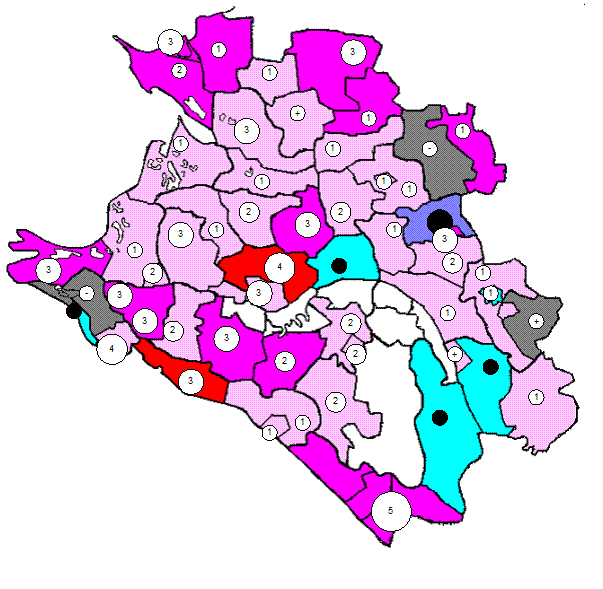
Картограммы и картодиаграммы Картограммы и картодиаграммы применяются для изображения географической характеристики изучаемых явлений… |
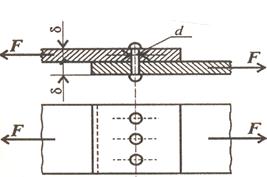
Практические расчеты на срез и смятие При изучении темы обратите внимание на основные расчетные предпосылки и условности расчета… |
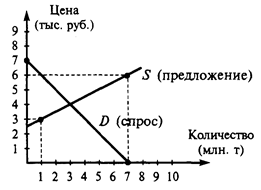
Функция спроса населения на данный товар Функция спроса населения на данный товар: Qd=7-Р. Функция предложения: Qs= -5+2Р,где… |
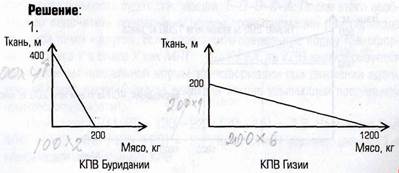
Аальтернативная стоимость. Кривая производственных возможностей В экономике Буридании есть 100 ед. труда с производительностью 4 м ткани или 2 кг мяса… |
Exercise
1. Read
and translate
the
text, find equivalents to the following Russian words and
expressions:
1.
пахнуть (свежевыпеченным хлебом)
2.
скрытые
уловки
-
получать
прибыль на чем-то -
делать
что-то не спеша -
в
наши дни -
манящий,
соблазнительный -
рассчитывать
на… -
розничная
торговля -
нагонять
аппетит -
предметы
первой необходимости -
товары
по сниженным ценам -
создавать
имидж -
раскрыть
секрет -
подводить
итог,
подсчитывать
Have you ever wondered why
some

Fresh
start
stores
smell of fresh bread or why some play music and others don’t? We
asked the
experts at Super Marketing magazine to
explain some of the hidden tricks of the
trade.
‘Why
are
the fresh
fruit and vegetables
usually
at the entrance to
the store?
It’s always crowded, and they
get squashed if I have to load heavy
cans
and packets on top.’
It’s
simply because supermarkets make a high profit on fresh fruit and
vegetables, and
they have discovered they sell more of
them if they’re near the entrance. According to research carried out
by supermarkets, customers prefer fresh goods to come first. Maybe
it’s because many
of us arrive at the store concentrating
on the kinds of fruit and vegetable we need. Once we’ve got that out
of the way, we can relax and do the rest
of the shopping at leisure. Another reason is that if we see fresh
goods first, the sight and smell of all those rosy apples
and glossy aborigines give a ‘feel good’
impression of freshness and quality
which we carry around the store.
B.
On the scent
Nowadays,
trolleys should have a separate compartment where you can place
fruit and vegetables so they don’t get
squashed.
‘Do
they have to pipe smells of freshly baked
bread
around stores? I always end
up buying an extra loaf or cake because the smell is
just so tempting.’
That’s
what the store is counting on! It’s well-known in the retail food
industry that
smell is the most powerful of human senses
when it comes to influencing our choice of where we shop and what we
buy.
For years, some stores have been piping smells of freshly baked
bread and real
coffee through the air-conditioning to get appetites going. But this
may be counterproductive,
the retail consultants Retail
Dynamics point out: ‘If you are doing your shopping at lunch or
dinnertime,
when you are already hungry, the smell of baking may send you
straight to the bread counter and then out of the store so you can
eat quickly.’

All
change
‘Why
is it that supermarkets change their
layout so often? Just when I have speeded
up my shopping by knowing where everything is, they move the
section!’
This
is another way of trying to make you buy things you thought you
didn’t need. Supermarkets make most of their money
out of fresh foods and ‘luxury’ snacks
and far less on essentials like milk,
sugar and bread. So everyday items are scattered around the store
because
in order to get them, you have to pass
the ‘high earners’ and, hopefully, suddenly
decide to buy some.
The
eye-catching display on the unit at the end of a row docs not
necessarily mean
that the goods are the bargain of the
week, as you may think. Manufacturers
sometimes pay the supermarket to put their brands in the best
positions. Among the best are the places across the ends of units
where customer
traffic is very high.

Quick
march!
‘Why
does my supermarket have to play
music all the time? It drives me mad
and I can’t avoid it since
it’s the
only
store I can reach conveniently.’
This may be an attempt to
please customers — so they will enjoy shopping
more
— or a way of projecting an image. One
supermarket plays 1960s music to go
with its decor. Another sets out simply
to please — playing 1950s and 1960s
music in the morning when older customers
do most of their shopping, pop music in the evenings and on
Saturdays for a younger audience, and music that appeals to the
whole family on a Sunday. Some stores use music to increase their
profits by playing slow waltzes or light classics on quiet days,
like Mondays, to keep customers browsing and buying. At busier
times, like
Saturdays, they’ll increase the tempo
to encourage customers to move quickly
through the store.

Last
straw
A
recent supermarket study reported a 38%
increase in sales when the store played
slow music compared to fast. However, you can shop in silence at
some supermarkets, which never play music — their customers say it
puts them off.
‘Why
do
I always choose
the queue that moves the slowest?’
Perhaps
you’re too considerate! For example,
don’t think the wider checkouts marked ‘disabled’ are exclusively
for wheelchairs. If there are no
wheelchair customers waiting, anyone
is welcome to use them. And if you’re
in a real hurry, avoid the checkout assistant
wearing a ‘trainee’ badge — a sign
of possible delay.
Checkouts
could become a thing of the past
anyway. One supermarket is testing a
hand-held unit which customers use themselves as they shop. It reads
and records the prices of groceries and then totals
the bill… but you still have to pay before
you leave.
Exercise
2. Find
synonyms to the following words and expressions:
-
everyday
items -
a
wheelchair customer -
to
uncover -
a
shop -
full
of people -
to
put something somewhere -
to
finish -
appealing,
attractive, captivating, charming, delicious, delightful,
fascinating, etc -
to
sum up -
a
plan, scheme -
to
make some process quicker -
producers
of goods
Exercise
3. Find
antonyms to the following words and expressions:
1. to decrease
2.
exit
3.
stale bread
-
to
do something in a hurry -
productive
-
to
gather, unite -
slow
-
inattentive
, negligent, tactless
Exercise
4. Look
up in the dictionary and explain the meaning of the following set
expressions with the word ‘bargain’:
-
into
the bargain -
to
make the best of a bad bargain -
that’s
a bargain! -
a
bargain is a bargain -
wet
bargain (or Dutch bargain)
Exercise
5.
Explain the
meaning:
a
hidden trick; to make a profit on something; to do something at
leisure; retail food industry; a ‘feel good’ impression; to
count on someone or something; counterproductive; essentials;
eye-catching; the bargain of the week; a wheelchair customer
Exercise
6. To
answer questions 1-14 choose from the sections (A-E) of the text .
Some of the sections may be chosen more than once. When more than
one answer is required, these may be given in any order. There is an
example at the beginning (0). Which
section refers to:
an
arrangement between producers and supermarkets?
the order in which customers
buy goods?
customers consuming goods
they have bought?
a method that may have an
opposite effect to the one intended?
customers having the wrong
idea about something?
goods getting damaged?
supermarkets being
reorganized?
matching
something to particular types of customer?
not putting certain types of
goods together?
supermarkets paying attention
to customers’ comments?
a system that may die out?
Exercise
7. Translate
the questions into English and answer them:
1.
Вы когда-нибудь задавали себе вопрос,
почему в некоторых магазинах пахнет
свежевыпеченным хлебом или кофе? На
что рассчитывают эти магазины?
2.
Может ли соблазнительный запах заставить
вас купить что-то, что, как вы считали,
вам не нужно?
3.
Почему свежие фрукты и овощи обычно
располагаются у входа в магазин?
4.
Почему супермаркеты часто меняют места
расположения товаров?
5.
Вы покупатель, который предпочитает
покупать или рассматривать товары?
6.
Как вы относитесь к музыке в супермаркетах?
Вы считаете, она может повлиять на ваш
выбор?
7.
Если бы вы были торговым менеджером,
прибегали бы вы к хитростям c
целью увеличения прибыли?
8.
Следует ли, на ваш взгляд, раскрывать
секреты покупателям?
9.
Знаете ли вы еще какие-либо хитрости,
имеющие своей целью заставить покупателя
делать больше покупок?
10. Какие изменения,
по вашему мнению, должны произойти в
торговом обслуживании в ближайшем
будущем?
Соседние файлы в предмете [НЕСОРТИРОВАННОЕ]
- #
- #
- #
- #
- #
- #
- #
- #
- #
- #
- #
Why do we buy more things than we planned to when we go food shopping? In short, because the supermarkets are manipulating us with clever design.
Using eye-tracking technology to follow shoppers’ actions as they complete a routine shop, consumer rights campaign group Which? has found that tiny, subtle design elements can have profound effects on what we choose to put in our baskets.
Supermarket shelves are stacked to make you buy the most expensive things — by putting them at eye level.

Noel Hendrickson / Thinkstock.com
Cheaper, own-brand products tend to be below or to the right of major brand name goods. This is because shoppers browse shelves left-to-right and top-to-bottom, like reading a book.
1.
Prices get more expensive to the right of an aisle than on the left.

danr13 / Thinkbox
Another trick is make sure the premium goods are stocked towards the right of a shelf, with prices rising «in small manageable steps» as Which? puts it. Because the price has gone up gradually as you push your trolley down the aisle, you’re less likely to realise the thing you’re looking at is expensive.
2.
BEWARE SPECIAL OFFERS! They are there to influence your buying brain without you knowing.

Peter Macdiarmid / Getty Images
In the study carried out by Which?, shoppers were drawn to products advertised as being available on a special offer, sometimes without thinking, and even where they weren’t that different in price to other items.
One shopper picked up some coffee because it was labelled as reduced in price — but didn’t stop to check what kind of coffee it was until she’d put it in her basket.
3.
Supermarkets are designed to make you walk slowly: the slower you walk the more you buy.

Which? / Acute Graphics
Retail layout experts say it takes around 10 steps for a shopper to get used to the supermarket environment and slow their pace to shopping speed — that’s why there’s always loads of stuff shoved towards the front of the store.
And it’s no surprise that the kind of thing people ALWAYS buy, including milk and bread, are at the back of the store: you’re supposed to have to do some walking to find them.
The modern trend of wider supermarket aisles is a calculated feature too. Wider aisles mean shoppers have greater peripheral vision and are more likely to spot eye-catching offers and deals.
4.
Related items are put next to each other for a reason, even if you don’t notice it.

Andrew Wong / Getty Images
It is no accident that in some supermarkets a small bacon fridge is placed next to the bread: «you’re half-way to a bacon sandwich,» as Which? puts it.
And why are nappies often put next to beer? Because when men are doing the shopping they are likely to buy one, having been sent to buy the other (or so the theory goes).
5.
Shopping lists are hard to stick to — for a reason.

Flickr: joey7
The experts who spoke to Which?, from Bournemouth University, say that the more busy a shop is — with all its special offers, colourful products and goodies vyign for your attention — the less likely you are to concentrate on your shopping list and just buy the things you came for.
There is real business sense to the big supermarkets interrupting your train of thought as you trundle around the vegetable section.
6.
The big supermarket chains have thought long and hard about which colours are the most enticing.

Which?
7.
Ever wondered why shopping trollies are that big? To make you put more stuff in them, of course.

Bruno Vincent / Getty Images
The size of the standard UK shopping trolley is far bigger than what you’d need to provide the average family with food for a week — yet still, we feel pleased and fulfilled when we’ve managed to fill them.
Here’s the video of Which?‘s study, which shows how eyetracking technology was used to follow shoppers’ gaze around a busy store.
1) Вставьте слово, которое грамматически будет соответствовать содержанию текста.
The London Tube
Have you ever wondered what strange things lurk within the London Underground (or ‘Tube’) system? The first things people usually think of are the mice that you can occasionally see ___ (RUN) along the tracks.
2) Вставьте слово, которое грамматически будет соответствовать содержанию текста.
In fact, mice aren’t the only strange things in the Underground system. Passengers leave behind thousands of objects. Items that were once ___ (THEY) now reside in London Transport’s lost property office.
3) Вставьте слово, которое грамматически будет соответствовать содержанию текста.
The collection is not open to the public, but a wedding dress, sets of false teeth, artificial limbs and a metre-high Mickey Mouse statue are just some of things people could see if they visited the office. Objects that ___ (LEAVE) in the office for more than three months are donated to charity or sold at auction.
4) Вставьте слово, которое грамматически будет соответствовать содержанию текста.
Found money
Shelley was reading an article about some money a builder had found in an old house. He’d gone to the police with £64,000. She asked her 22 friend Paul what he would do if he ___ (FIND) a large amount of money.
5) Вставьте слово, которое грамматически будет соответствовать содержанию текста.
‘Oh, the same thing he did,’ Paul ___ (NOT HESITATE) to respond. ‘It’s not right to keep that kind of money. It’s not just £20, you know.’
6) Вставьте слово, которое грамматически будет соответствовать содержанию текста.
Shelley thought about it for several moments. She couldn’t help wondering how the police would know ___ (WHO) money it was.
7) Вставьте слово, которое грамматически будет соответствовать содержанию текста.
‘Apparently,’ she said, reading the article further, ‘if nobody claims the money after a certain period of time, the police ___ (GIVE) it back to the builder.’ She wondered whether the builder would be lucky on this occasion.
 Вставьте слово, которое грамматически и лексически будет соответствовать содержанию текста.
Green living
For years, city planners in Sweden have been creating green communities. These are places that use energy ___ (WISE) and cut down on waste.
9) Вставьте слово, которое грамматически и лексически будет соответствовать содержанию текста.
In fact, what was once a dirty ___ (INDUSTRY) site has been transformed into this kind of community. The area, known as Western Harbour, is found in Sweden’s third largest city, Malmo.
10) Вставьте слово, которое грамматически и лексически будет соответствовать содержанию текста.
The area is a marvel when it comes to clean living. It has hardly any streets for cars; homes are linked by walkways and buses provide a regular ___ (CONNECT) to the city centre.
11) Вставьте слово, которое грамматически и лексически будет соответствовать содержанию текста.
Homes were designed with green points’ in mind. A green point’ could be a plot of ground for growing vegetables, a nest box for birds or a ___ (CONTAIN) in which residents can plant flowers. Each home is required to have ten green points.
12) Вставьте слово, которое грамматически и лексически будет соответствовать содержанию текста.
The community is powered by 100% renewable energy. Solar panels collect energy from the sun and a nearby wind turbine provides an ___ (END) supply of electricity.
13) Вставьте слово, которое грамматически и лексически будет соответствовать содержанию текста.
More than just being green, architects made sure the housing ___ (DEVELOP) was pleasant to look at. Its combination of modern, futuristic design with more traditional styles helps make Western Harbour a joy to live in.
14) Запишите в поле ответа цифру 1, 2, 3 или 4, соответствующую выбранному Вами варианту ответа.
Museum promotion
Mark was put in charge of promoting the technology museum he worked for. Attendance had been lagging in recent months, and the museum bosses were looking for something to improve the museums ___.
1) portrait
2) picture
3) image
4) face
15) Запишите в поле ответа цифру 1, 2, 3 или 4, соответствующую выбранному Вами варианту ответа.
He often hired advertising firms to come up with the campaigns. Then one day a very strange but clever idea popped into his head. Why don’t we let someone live here?’ he ___ to his bosses. His bosses were impressed.
1) responded
2) admitted
3) advised
4) proposed
16) Запишите в поле ответа цифру 1, 2, 3 или 4, соответствующую выбранному Вами варианту ответа.
So he set out to make it happen. The first step was to ___ awareness of the campaign.
1) raise
2) lift
3) grow
4) build
17) Запишите в поле ответа цифру 1, 2, 3 или 4, соответствующую выбранному Вами варианту ответа.
The museum had profiles on the Internet, and Mark had managed to befriend thousands of people through social media. He sent this message around to everyone: ‘Win a chance to stay in a museum for a month!’ The competition really took ___ .
1) off
2) in
3) up
4) out
18) Запишите в поле ответа цифру 1, 2, 3 или 4, соответствующую выбранному Вами варианту ответа.
With hundreds of people entering, Mark knew the idea was ___ .
1) tap
2) slap
3) knock
4) hit
19) Запишите в поле ответа цифру 1, 2, 3 или 4, соответствующую выбранному Вами варианту ответа.
The museum hardly spent a thing on advertising. You know what they say, the best advertising is through ___ of mouth,’ Mark told his bosses.
1) talk
2) speech
3) letter
4) word
20) Запишите в поле ответа цифру 1, 2, 3 или 4, соответствующую выбранному Вами варианту ответа.
The winner was announced: Amy from Luton. A part of the museum was sectioned off for Amy to live in. Glass walls allowed patrons to look in and see the exhibit’. The only thing demanded of Amy was that she blogged ___ the experience… a clever tie-in with technology. When the TV networks called for interviews, Mark knew he had found the holy grail of advertising.
1) over
2) about
3) through
4) from
Level: intermediate and above
Time of completion: 10+ min
Introduction
*Yaaawwwwwn* Did just reading the word make you feel like yawning yourself? Known as contagious yawning, the reasons behind this phenomenon have been attributed to both the physiological and psychological. It’s been observed in children as young as four and even in dogs! Claudia Aguirre visits the many intriguing theories that might explain contagious yawning.
Useful vocabulary
Contagious (Adj): a contagious feeling or idea spreads quickly from one person or place to another
Prevalent (Adj): very common in a particular place or among a particular group
Physiological (adj): relating to the way that the body of a living thing operates
Stimulus (n): anything that encourages something to happen, develop, or improve
Copycat (n): similar to something else and considered to be a copy of it
Crucial (adj): something that is crucial is extremely important because it has a major effect on the result of something
Listening
Watch the video and complete the summary with NO MORE THAN TWO WORDS in each space.
There are three 1_____________ under research: two 2_____________ and one psychological.
The first suggests that yawning is triggered by a 3______________________: an initial yawn, and it is called 4 _______________pattern. It is similar to a 5 _____________ effect.
The second is known as the 6____________effect. It states that people imitate each other’s behaviour without knowing it. This behaviour might be possible due to 7________________ which are also important for learning.
The third one is called the 8 _______________________. Scientists set up an experiment to prove that 9__________ would yawn at the sound of yawning and they also discovered that we yawn more frequently at the yawns of 10____________ rather than strangers.
Answers
- Hypotheses
- Physiological
- (specific) stimulus
- Fixed action
- Reflex
- Chameleon
- Mirror neurones
- Emphaty yawn
- Dogs
- friends