
Imagine that you and your friend are doing a school project «Ways of fishing». You have found some illustrations and want to share the news. Leave a voice message to your friend. In 2.5 minutes be ready to:
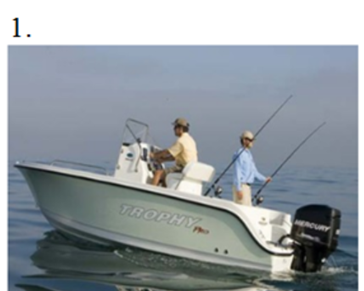
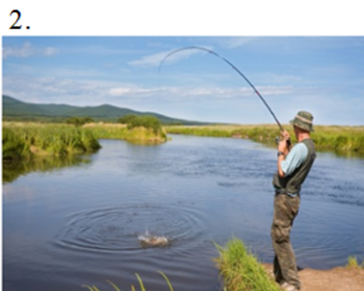
• explain the choice of the illustrations for the project by briefly describing them and noting the differences;
• mention the advantages (1–2) of the two ways of fishing;
• mention the disadvantages (1–2) of the two ways of fishing;
• express your opinion on the subject of the project — whether you believe using a boat is better or not.
You will speak for not more than 3 minutes (12–15 sentences). You have to talk continuously.

Спрятать пояснение
Пояснение.
Hey, Kate. You know that? I’ve just found two pictures suitable for our project “Ways of fishing”. Let me tell you a bit more about them.
They are relevant to our project because in both pictures there are people going fishing. In the first photo there is a boat with two fishermen in it. There is a still water surface, perhaps it is a big lake or a sea very early in the morning. In the second photo there is a fisherman as well. He has just caught a fish and is trying not to lose it. He is staying on the shore of a lake. There are a few differences to illustrate our project better. Obviously, fishermen in the first picture don’t have any fish on the hook, while a man on the right has already caught his victim. Moreover, the first picture features two people on a boat, while the second one features a man standing on the ground.
In my opinion, both ways of fishing have their advantages. For instance, fishing with a boat can allow for a better and bigger catch. Meanwhile, fishing from the shore is safer. Of course, the ways of fishing have disadvantages too. As for going on a board, it requires more preparation. At the same time, there can be the lack of a big number of fish near the shore so it can lead to an unsuccessful fishing session.
Personally, I’d prefer to stay on the shore while fishing. I consider a calm and safe fishing day is better than going to the middle of a lake on a boat.
So, shall we use these photos in our project? Call me when you’re ready to discuss if we can use them. Bye-bye.
Высказывание должно быть логично; содержать вступительную и заключительную фразы, соответствующие теме. Средства логической связи должны быть использованы верно. Необходимо избегать необоснованных пауз в речи, верно расставлять ударения, правильно использовать интонацию, не нарушать нормы произношения слов.
Спрятать критерии
Критерии проверки:
| Критерии оценивания выполнения задания | Баллы |
|---|---|
| Решение коммуникативной задачи (содержание)* | |
|
Коммуникативная задача выполнена полностью — содержание полно, точно и развёрнуто отражает все аспекты, указанные в задании (12–15 фраз) |
4 |
|
Коммуникативная задача выполнена в основном: 1 аспект не раскрыт (остальные раскрыты полно), ИЛИ 1–2 аспекта раскрыты неполно/неточно (12–15 фраз) |
3 |
|
Коммуникативная задача выполнена не полностью: 1 аспект не раскрыт и 1 раскрыт неполно/неточно, ИЛИ 3 аспекта раскрыты неполно/неточно (10–11 фраз) |
2 |
|
Коммуникативная задача выполнена частично: 1 аспект содержания не раскрыт и 2 раскрыты неполно/неточно, ИЛИ 2 аспекта не раскрыты (остальные раскрыты полно) ИЛИ все аспекты раскрыты неполно/неточно (8–9 фраз) |
1 |
|
Коммуникативная задача выполнена менее чем на 50%: 3 и более аспекта содержания не раскрыты, ИЛИ 2 аспекта не раскрыты и 1 и более раскрыты неполно/неточно, ИЛИ 1 аспект не раскрыт и остальные раскрыты неполно/неточно, ИЛИ объём высказывания — 7 и менее фраз |
0 |
| Организация высказывания | |
|
Высказывание логично; имеет завершённый характер (имеются вступительная с обращением к другу и заключительная фразы); средства логической связи используются правильно |
3 |
|
Высказывание в основном логично и имеет достаточно завершённый характер, НО отсутствует вступительная фраза с обращением к другу, ИЛИ заключительная фраза, c средства логической связи используются недостаточно |
2 |
|
Высказывание не вполне логично и не имеет завершенного характера, И/ИЛИ отсутствуют вступительная и заключительная фразы, И/ИЛИ средства логической связи используются недостаточно |
1 |
|
Высказывание нелогично И/ИЛИ не имеет завершенного характера, вступительная и заключительная фразы отсутствуют, средства логической связи практически не используются |
0 |
| Языковое оформление высказывания | |
|
Используемый словарный запас, грамматические структуры, фонетическое оформление высказывания соответствуют поставленной задаче (допускается не более 3 негрубых лексико-грамматических ошибок И/ИЛИ не более 3 негрубых фонетических ошибок) |
3 |
|
Используемый словарный запас, грамматические структуры, фонетическое оформление высказывания в основном соответствуют поставленной задаче (допускается не более 4–5 лексико-грамматических (из них не более 2 грубых) И/ИЛИ не более 4–5 фонетических ошибок (из них не более 2 грубых)) |
2 |
|
Языковое оформление частично соответствует поставленной задаче (допускается не более 6–7 лексико-грамматических (из них не более 3 грубых) И/ИЛИ не более 6–7 фонетических ошибок (из них не более 3 грубых)) |
1 |
|
Понимание высказывания затруднено из-за многочисленных ошибок (8 и более лексико-грамматических ошибок ИЛИ 4 и более грубых лексико-грамматических ошибок И/ИЛИ 8 и более фонетических ошибок ИЛИ 4 и более грубых фонетических ошибок) ИЛИ ответ носит характер набора слов |
0 |
| Максимальное количество баллов | 10 |
*Примечание.
1. При получении экзаменуемым 0 баллов по критерию «Решение коммуникативной задачи» всё задание оценивается в 0 баллов.
2. Правильное использование средств логической связи предполагает обязательные логические связки-переходы между всеми частями высказывания.
3. Под грубыми ошибками понимаются ошибки элементарного уровня, а также ошибки, ведущие к сбою коммуникации.
Задание № 23997
Imagine that you are doing a project «Ways of fishing» together with your friend. You have found some illustrations and want to share the news. Leave a voice message to your friend. In 2.5 minutes be ready to tell the friend about the photos:
You will speak for not more than 3 minutes (2–3 sentences for every item of the plan, 12–15 sentences total). You have to talk continuously.
[topic]
[topic]
Показать ответ
Комментарий:
Ответ:
Нашли ошибку в задании? Выделите фрагмент и нажмите Ctrl + Enter.
 Вербицкая М. В. Forward. Английский язык для 10 класса. ЕГЭ
ЕГЭ Раздел 1. Аудирование
1. Вы услышите 6 высказываний. Установите соответствие между высказываниями каждого говорящего A-F и утверждениями, данными в списке 1-7. Используйте каждое утверждение, обозначенное соответствующей цифрой, только один раз. В задании есть одно лишнее утверждение. Вы услышите запись дважды. Занесите свои ответы в таблицу.
C-1. I like having the best of both worlds. — Мне нравится иметь лучшее из обоих миров.
E-2. Life in the countryside is good for my health. — Жизнь в сельской местности хороша для моего здоровья.
B-3. I love the countryside, because life there is very peaceful. — Я люблю деревню, потому что жизнь там очень спокойная.
F-4. The beauty of nature makes living in the country enjoyable. — Красота природы делает жизнь в сельской местности приятной.
Extra-5. I love the countryside, because life there is good for my children. — Я люблю деревню, потому что жизнь там хороша для моих детей.
A-6. I enjoyed moving to a town where life is more comfortable. – Мне нравится ездить в город, где жизнь более комфортная.
D-7. I dislike living in the country, because I need human company. — Я не люблю жить в деревне, потому что мне нужна человеческая компания.
2. Вы услышите диалог. Определите, какие из приведённых утверждений А-G соответствуют содержанию текста (1 — True), какие не соответствуют (2 — False) и о чём в тексте не сказано, то есть на основании текста нельзя дать ни положительный, ни отрицательный ответ (3 — Not stated). Занесите номер выбранного Вами варианта ответа в таблицу. Вы услышите запись дважды.
3-A John usually spends Christmas at his parents’ house. — Джон обычно проводит Рождество в доме своих родителей.
1-B Angela is rather pessimistic about her chances to get the job. — Анжела довольно пессимистична по поводу ее шансов получить работу.
2-C John considers Angela a workaholic. — Джон считает Анжелу трудоголиком.
2-D John is enthusiastic about Angela moving to Russia. — Джон с энтузиазмом относится к переезду Анжелы в Россию.
3-E Angela worked in an international company in Canada. — Анжела работала в международной компании в Канаде.
1-F John is more optimistic than Angela about her chances to get the job. — Джон более оптимистичен, чем Анжела о ее шансах получить работу.
3-G John is going to leave at 2 PM. — Джон собирается ехать в 2 часа дня.
Вы услышите интервью. В заданиях 3-9 запишите в поле ответа цифру 7, 2 или 3, соответствующую выбранному Вами варианту ответа. Вы услышите запись дважды.
3. Tony Stevens 2) watches his films once. — Тони Стивенс смотрел свои фильмы один раз.
4. What is the most important thing about writing for Tony Stevens? – Какая наиболее важная вещь о писательстве для Тони Стивенса?
1) Writing is NOT a team work like acting. – Писательство НЕ является командной работой как игра актеров (актерство).
5. Tony Stevens says that if, as a child, you are fascinated by a literary character, 2) you want to become that character. — Тони Стивенс говорит, что если, будучи ребенком, вы очарованы литературным персонажем, то вы хотите стать этим персонажем.
6. Tony Stevens wished he had had on the school curriculum 1) “Pickwick Papers” by Charles Dickens. — Тони Стивенсу хотелось, чтобы в его школьной программе было произведение «Записки Пиквикского клуба» Чарльза Диккенса.
7. What advice does he give to beginning writers? — Какой совет он дает начинающим писателям?
3) Go by your experience and write clearly. – Следовать своему опыту и писать ясно.
8. What is his present attitude to critical reviews? — Каково его настоящее отношение к критическим отзывам?
3) He pays no attention to them. — Он не обращает на них никакого внимания.
9. What made his career as an actor successful? — Что сделало его карьеру как актера успешной?
2) Determination and decisiveness. – Целеустремленность и решительность.
ЕГЭ Раздел 2. Чтение
10. Установите соответствие между текстами А-G и заголовками 1-8. Занесите свои ответы в таблицу. Используйте каждую цифру только один раз. В задании один заголовок лишний.
F-1. Beware of rabbits — Остерегайтесь кроликов
A-2. Exotic pets — Экзотические домашние животные
B-3. Saving animals – Спасение животных
G-4. Teaching and entertaining – Обучение и развлечение
Extra-5. Protecting pets — Защита домашних животных
D-6. Tender pets — Нежные домашние животные
C-7. What’s in a name? — Что в имени?
E-8. Contribution to science — Вклад в науку
A. Little is known for certain about how guinea pigs were first introduced to Europe and North America as a domestic pet, but they most probably came during the 16th century. Holland, Portugal and Spain had colonies in South America, and the explorers brought to Europe gold and precious gems, along with other unusual and exciting finds. Colourful parrots became very popular status symbols in the homes of the wealthy, and with them came the guinea pig and other animals previously unknown in Europe.
Мало что наверняка известно о том, как морские свинки впервые были ввезены в Европу и Северную Америку в качестве домашнего питомца, но они, скорее всего, появились в 16-м веке. Голландия, Португалия и Испания были колониями в Южной Америке, и исследователи привезли в Европу золото и драгоценные камни, наряду с другими необычными и захватывающими находками. Красочные попугаи стали очень популярными символами статуса в домах богатых, а вместе с ними привезли морскую свинку и других животных, ранее неизвестных в Европе.
B. Many species of wild animals are in danger of complete extinction. This is usually due to loss of habitat as a result of human expansion, or it could be due to excessive hunting. A good, modern zoo has a valuable role to play in assisting with the protection of endangered species. This is both through education of the general public in the importance of conservation in general, and through breeding programmes to increase the population of endangered species in captivity and then reintroduce them into the wild.
Многие виды диких животных находятся под угрозой полного исчезновения. Это, как правило, из-за потери среды обитания в результате человеческой экспансии, или это может быть из-за чрезмерной охоты. Хороший, современный зоопарк играет ценную роль в оказании помощи в защите исчезающих видов. Это происходит как за счет образования широкой общественности в важности сохранения в целом, а также посредством программ разведения для увеличения популяции исчезающих видов в неволе, а затем вновь выпускать их в дикую природу.
C. The guinea pig is today one of the world’s most popular pets, ranking only a little way behind the rabbit. Though called guinea pigs, these animals are not pigs, nor do they come from Guinea. Why Guinea, then? Some say they could have originally changed hands at the cost of a guinea (twenty-one shillings — very expensive!). As for the “pig”, an explanation is much easier to guess — they run and squeal much as little piglets do!
Морская свинка сегодня является одним из самых популярных домашних животных в мире, лишь немного отстает от кролика. Хотя они и называются морскими свинками, эти животные не являются свиньями, и они не из Гвинеи. Почему тогда Гвинея? Некоторые говорят, что они первоначально были названы по стоимости «guinea» (двадцать один шиллинг — очень дорого). Что касается «свинка», объяснение гораздо проще угадать — они бегают и визжат как маленькие поросята!
D. Rabbits are among the most popular pets to keep due to their affectionate nature and love of cuddles. To show they are happy, they often grind their teeth softly when being petted, similar to cats purring. In general, rabbits are timid, non-aggressive and sociable with each other. With gentle handling they are generally quite tame. They are playful and entertaining to watch, but they need a great deal of interaction with their owners. Their cage should be relatively big, but they need some playtime outside it as well.
Кролики являются одними из самых популярных домашних животных, которых держат из-за их ласковой природы и любви объятий. Чтобы показать, что они счастливы, они часто скрипят зубами, когда их мягко поглаживаешь, похожие на кошачье мурлыканье. В общем, кролики пугливые, неагрессивные и общительные друг с другом. При бережном обращении они, как правило, совсем ручные. Они игривы и за ними интересно наблюдать, но они нуждаются во взаимодействии с их владельцами. Их клетка должна быть относительно большой, но им также нужно играть и за ее пределами.
E. For a long time guinea pigs were used as experimental animals. In 1890, the antitoxin for diphtheria was discovered using guinea pigs in the research, and as a result the lives of millions of children have been saved. In 1907 vitamin С was discovered due to guinea pigs. Like humans they cannot produce the vitamin and need it supplied in their diet. The guinea pig’s wide variety of hair types and colours has also made them a prime choice for studies of genetics and heredity. Later they were replaced by rats and mice.
Долгое время морских свинок использовали в качестве экспериментальных животных. В 1890 году антитоксин дифтерии был обнаружен с использованием морских свинок в исследованиях, и в результате жизни миллионов детей были спасены. В 1907 Витамин С был обнаружен из-за морских свинок. Как и люди, они не могут производить витамин и нужно, чтобы он присутствовал в их рационе. Широкое разнообразие морских свинок по типу шерсти и цвету также сделало их основным выбором для изучения генетики и наследственности. Позже они были заменены на крыс и мышей.
F. Security at Denver International Airport tries to protect cars from vandalism and theft, but there’s a new threat at its expansive parking lot. Ravenous rabbits. The animals are causing hundreds and sometimes thousands of dollars in damage to cars by devouring the wires under the hood. At least 100 rabbits are removed every month, but the problem persists. The airport is surrounded by prairie, and the rabbits are seeking warmth and food in the parked vehicles.
Служба безопасности в международном аэропорту Денвера пытается защитить автомобили от вандализма и кражи, но есть новая угроза на открытой стоянке. Прожорливые кролики. Животные наносят ущерб в сотни, а иногда и тысячи долларов, в виде повреждения автомобилей, пожирая провода под капотом. По крайней мере, 100 кроликов, удаляются каждый месяц, но проблема не решена. Аэропорт окружен прерией, и кролики ищут тепло и еду в припаркованных транспортных средствах.
G. Our mission at Wild Adventures Zoo is to bring family entertainment back to Las Vegas, in an educational manner. Teaching respect for animals through hands-on applications, workshops and conservation efforts, as well as helping injured and abandoned wildlife and exotic pets, is the reason Wild Adventures Zoo was created. Our focus is on educating the public through fun and exciting activities that allow them to interact with the animals.
Наша миссия в зоопарке Уайлд Эдвенчерс принести развлечение для всей семьи обратно в Лас-Вегас, в образовательной манере. Обучение уважению к животным через практическое применение, мастерские и семинары по сохранению, а также помощь раненым и брошенным диким и экзотическим животным, это и есть причины создания зоопарка Уайлд Эдвенчерс. Наше внимание сосредоточено на просвещение общественности с помощью увлекательных и интересных мероприятий, которые позволяют им взаимодействовать с животными.
11. Прочитайте текст и заполните пропуски А-F частями предложений, обозначенными цифрами 1-7. Одна из частей в списке 1-7 лишняя. Занесите цифры, обозначающие соответствующие части предложений, в таблицу.
Father’s Day
Father’s Day has been celebrated for over 100 years. It is also an event celebrated in many countries around the world, A 3. although at different times of the year. In North America and the United Kingdom, Father’s Day is celebrated on the third Sunday in June. Here are some tips to help you В 7. celebrate Father’s Day in a special way. Use this opportunity to get everyone in the family together for a day of fun. You don’t have to stay at home; you could go to the beach, a local park, one of dad’s favourite places!
Having a picnic during the summer months can be entertaining and a blast for the entire family. It’s a great boredom buster, but it also helps the family to get together and С 2. eat some delicious food and play fun games. It doesn’t take more than a picnic basket and a few food items. Among the healthier items good for a picnic there are apples, a watermelon, celery, and raisins, to name a few. Ask other members of the family to D5. help you choose some of their favourite food items that they’d like to have. You need to realize that it acts as glue for family bonds.
When it comes to making gifts for Father’s Day, perhaps steer clear of the E 6. traditional store-bought gifts of tie and socks. He has probably still got last year’s socks stuffed at the back of a drawer. Expensive gifts are not necessary, but the time and F 1. effort you put in to create a personalized present will be deeply appreciated.
Extra — 4. give advice on the best spot for the picnic – дать совет о лучшем месте для пикника
День отца
День отца отмечается уже более 100 лет. Кроме того, это событие отмечается во многих странах по всему миру, хотя в разное время года. В Северной Америке и Соединенном Королевстве, День отца празднуется в третье воскресенье июня. Вот несколько советов, которые помогут вам отметить День отца особым образом. Используйте эту возможность, чтобы собраться вместе всей семьей и повеселиться. Вы не должны оставаться дома; вы могли бы пойти на пляж, местный парк, в одно из самых любимых мест папы!
Устроить пикник в летние месяцы может быть интересным и является глотком свежего воздуха для всей семьи. Это отличный способ борьбы со скукой, но также помогает семье собраться вместе и поесть вкусной еды и поиграть в веселые игры. Не потребуется ничего больше, чем корзина для пикника и несколько продуктов питания. Среди здоровых продуктов хороших для пикника есть яблоки, арбуз, сельдерей, и изюм, вот всего несколько. Попросите у других членов семьи помочь вам выбрать некоторые из их любимых продуктов питания, которые они хотели бы иметь. Вы должны понимать, что оно действует как клей для семейных уз.
Когда дело доходит до дарения подарков на День отца, возможно, лучше держаться подальше от традиционных купленных в магазине подарков, таких как галстук и носки. У него, вероятно, все еще есть носки, подаренные в прошлом году в задней части ящика. Дорогие подарки не нужны, но время и усилия, которые вы приложили для создания персонального подарка, будут высоко оценены.
Прочитайте текст и выполните задания 12-18. В каждом задании запишите в поле ответа цифру 1, 2, 3 или 4, соответствующую выбранному Вами варианту ответа.
Have you ever thought about cities of the future? Clean streets, flying cars and robots doing all the work? Almost half of the world’s population currently lives in cities, and by 2050 that is predicted to increase to 75%, but what kind of city will they be living in? Today, most city dwellers are dissatisfied because they have to live in overcrowded and polluted surroundings. Traffic jams are getting worse, queues longer, power cuts more common, bad air quality more threatening to human health.
There are various ideas about how a future city should look. Some of these revolve around the idea that better means greener. Experts predict carbon-neutral cities full of electric vehicles and bike-sharing schemes, with air quality so much improved that office workers can actually open their windows for the first time. Visions of a green city often include skyscrapers where living and office space comprises high-rise green-houses and vegetables growing on the roofs. Behind such greenification of cities lies a very pressing need.
Technology companies such as IBM believe that the best cities will become networks. In Rio de Janeiro, for example, IBM has already built an operations centre, which it describes as the “nerve centre” of the city. (отрывок из текста)
Вы когда-нибудь думали о городах будущего? Чистые улицы, летающие автомобили и роботы делают всю работу? Почти половина населения земного шара в настоящее время живет в городах, и по прогнозам к 2050 году увеличится до 75%, но, в каком городе они будут жить? В настоящее время большинство городских жителей недовольны, потому что они должны жить в перенаселенной и загрязненной среде. Пробки на дорогах становятся все хуже, очереди больше, отключения электроэнергии чаще, плохое качество воздуха представляет более серьезную угрозу для здоровья человека.
Есть различные идеи о том, как будущий город должен выглядеть. Некоторые из них вращаются вокруг идеи о том, что лучшее означает зеленее. Эксперты прогнозируют углерод-нейтральные города, полные электрических транспортных средств и схем движения велосипедистов, с качеством воздуха настолько улучшенным, что офисные работники могут фактически открыть свои окна в первый раз. Видения зеленого города часто включают в себя небоскребы, где жилые и офисные помещения включает в себя многоэтажные парники и теплицы, расположенные на крышах. За таким озеленением городов лежит очень острая необходимость.
Технологические компании, такие как IBM считают, что лучшие города станут электронными сообществами. В Рио-де-Жанейро, например, IBM уже построила центр управления, который она описывает как «нервный центр» города. Построенный изначально, чтобы помочь справиться с наводнениями, которые регулярно ставят под угрозу город, теперь он координирует 30 правительственных учреждений. Каждый человек с мобильным телефоном соединен с операционным центром. Оперативный центр отправляет сообщения на мобильные телефоны граждан и предоставляет информацию о потенциальных авариях, пробках и других обновлениях города.
Тот факт, что крупные корпорации стали настолько активно участвовать в проектировании городской инфраструктуры натолкнул критиков на вопрос, как быстро такой город может, как компьютерные системы, на которые они полагаются, стать устаревшими. Компьютеры и другие гаджеты обновляются все время, новые модели появляются два раза в год. Параллель также можно провести с офисными зданиями шестидесятых годов, которые могут быть описаны как места с низкими потолками стоящие грустные и пустые, так как передовые технологии посчитали их бесполезными.
Большинство проектов IBM обязуется привлекать сбор данных. Компания работает в тесном контакте с общественными группами, а также городскими советами. В штате Айова корпорация завершила проект, где домашним хозяйствам была предоставлена информация об их потреблении воды. Большинство быстро отреагировали и сэкономили воду при столкновении с данными. Интересно, что те, кто получил информацию о потреблении воды своих соседей, в два раза чаще вносили изменения.
Города имеют возможность предоставления чего-то для всех, только потому, и только тогда, когда они созданы всеми. Тем, кто строит города будущего, следует обратить внимание на эти советы.
12. Which of these problems of modern cities are NOT mentioned in paragraph 1? — Какие из этих проблем современных городов не упоминаются в пункте 1?
3) Water pollution — Загрязнение воды
13. The word “greenification” in paragraph 2 means… — Слово «озеленение» в пункте 2 означает
3) gardens on top of buildings — сады на крышах зданий
14. The pronoun “it” in sentence 3 of paragraph 3 refers to… — Местоимение «она» в предложении 3 пункта 3 относится к
1) the IBM company. — компания IBM.
15. What is the purpose of Rio de Janeiro’s operations centre? — Какова цель оперативного центра Рио-де-Жанейро?
1) To inform citizens on traffic density and emergency situations. — информировать граждан о плотности дорожного движения и чрезвычайных ситуациях.
16. Why does the author draw a parallel between the offices of the 60s and the cities of tomorrow? — Почему автор проводит параллель между офисами 60-х и городами завтрашнего дня?
2) To demonstrate the speed of progress. — Для того, чтобы продемонстрировать скорость прогресса.
17. How can access to information influence the behaviour of citizens? — Каким образом может доступ к информации влиять на поведение граждан?
3) They change their habits. — Они меняют свои привычки.
18. Choose the best title for the text. — Выберите лучший заголовок для текста.
2) A City of the Future — Город будущего
ЕГЭ Раздел 3. Грамматика и лексика
Прочитайте приведённые ниже тексты. Преобразуйте, если необходимо, слова, напечатанные заглавными буквами в конце строк, обозначенных номерами 19-25, так, чтобы они грамматически соответствовали содер¬жанию текстов. Заполните пропуски полученными словами. Каждый про¬пуск соответствует отдельному заданию из группы 19-25.
Around the world: the Seychelles
Welcome to the Seychelles! This is an archipelago of 115 islands in the Indian Ocean. It’s not difficult to find a good tourist spot in the Seychelles. It’s difficult to say which of them is the 19) best.
As the Seychelles islands have a year-long warm, tropical climate, it’s always a good time to visit, although different times of year may be better suited to your particular interests. People interested in 20) diving can make a visit to Denis Island.
Families with 21) children should visit St Anne National Marine Park and the famous beaches.
По всему миру: Сейшельские острова
Добро пожаловать на Сейшелы! Это архипелаг из 115 островов в Индийском океане. Не трудно найти хорошее туристическое место в Сейшельских островах. Трудно сказать, какое из них является лучшим.
Поскольку Сейшельские острова имеют круглый год теплый, тропический климат, то это всегда хорошее время для посещения, хотя разные времена года могут лучше всего подходить для ваших конкретных интересов. Люди, заинтересованные дайвингом могут посетить Денис Айлэнд.
Семьи с детьми должны посетить Национальный морской парк Санкт-Энн и знаменитые пляжи.
Happy New Year
It was an exam before Christmas. One of the students 22) didn’t know how to answer the question.
He was trying hard, but couldn’t remember a single word from the textbook. So he 23) wrote, “God knows! I don’t. Merry Christmas!”
Some time 24) later, just before the New Year, the examination papers came back.
The student saw that the professor 25) had written on his paper, “God gets 100, you get 0. Happy New Year!”
С новым годом
Это был экзамен перед Рождеством. Один из студентов не знал, как ответить на вопрос.
Он изо всех сил старался, но не мог вспомнить ни одного слова из учебника. Таким образом, он написал: «Бог знает! Я нет. Счастливого Рождества!»
Через некоторое время, незадолго до Нового года, пришли экзаменационные работы.
Студент увидел, что профессор написал на его работе, «Бог получает 100, вы получаете 0. С Новым годом!»
Прочитайте приведённый ниже текст. Образуйте от слов, напечатанных заглавными буквами в конце строк, обозначенных номерами 26-31, однокоренные слова так, чтобы они грамматически и лексически соответствовали содержанию текста. Заполните пропуски полученными словами. Каждый пропуск соответствует отдельному заданию из группы 26-31.
The history of radio
Radio started with the discovery of “radio waves”. Radio waves are electromagnetic waves that can transmit music, speech, pictures and other data 26) invisibly through the air.
Many devices work by using electromagnetic waves, including radio, microwaves, cordless phones, remote controlled toys, television broadcasts, and more.
During the 1860s, Scottish physicist, J.C. Maxwell predicted the 27) existence of radio waves.
In 1886, German 28) scientist, H.R. Hertz demonstrated that rapid variations of electric current could be projected into space in the form of radio waves.
G. Marconi, an Italian 29) inventor, sent and received his first radio signal in Italy in 1895.
By 1899 he flashed the first 30) wireless signal across the English Channel and two years later received the letter “S”, telegraphed from England to Newfoundland.
This was the first 31) successful transatlantic radiotelegraph message.
История радио
Радио началось с открытия «радиоволн». Радиоволны представляют собой электромагнитные волны, которые могут передавать музыку, речь, изображения и другие данные незримо через воздух.
Многие устройства работают с помощью электромагнитных волн, в том числе радио, микроволновые печи, беспроводные телефоны, игрушки с дистанционным управлением, телевизионные передачи и многое другое.
В течение 1860-х годов, шотландский физик, Дж. К. Максвелл предсказал существование радиоволн.
В 1886 году, немецкий ученый, Г. Р. Герц показал, что быстрые изменения электрического тока могут быть спроецированы в космическое пространство в виде радиоволн.
Г. Маркони, итальянский изобретатель, послал и получил свой первый радиосигнал в Италии в 1895 году.
К 1899 году он отправил первый беспроводной сигнал через Ла-Манш и два года спустя получил букву «S», телеграфированную из Англии в Ньюфаундленд.
Это было первое успешное трансатлантическое радиотелеграфное сообщение.
Прочитайте текст с пропусками, обозначенными номерами 32-38. Эти номера соответствуют заданиям 32-38, в которых представлены возможные варианты ответов. Обведите номер выбранного Вами варианта ответа.
Tests and test-takers
You don’t have to be a psychologist to guess how students are feeling during a test or an exam. Just by observing their body language you can tell whether they will pass or 32) fail.
Just before the test starts, they will often 33) tell silly things and try nervously to hide their nervousness. A little tension or stress before and during a test is normal. When the examinees get their papers, some of them will 34) smile to themselves — a sure sign they know the answers. 35) However, if they feel the exam is hard, you may hear how disappointed they are or see how annoyed they are when they frown. Some will try to glance quickly at their neighbours’ tests, and some will yawn to pretend that they are bored or tired, while, in fact, they are just waiting for the teacher to turn 36) away so that one of their mates can quietly 37) whisper the answers to them. When they finish, some will immediately dash out as if they were desperate to check their answers in their course book, while others will 38) stroll out slowly, relaxed and sure they have passed.
Тесты и тестируемые
Вам не нужно быть психологом, чтобы догадаться, как студенты чувствуют себя во время теста или экзамена. Просто наблюдая за языком их тела, вы можете сказать, сдадут они, или по терпят неудачу.
Как раз перед началом теста, они часто говорят глупые вещи и пытаются нервно скрыть свою нервозность. Небольшое напряжение или стресс до и во время теста нормально. Когда испытуемые получают свои задания, некоторые из них будут улыбаться себе — верный признак того, что они знают ответы. Тем не менее, если они чувствуют, что экзамен трудный, вы можете услышать, как они разочарованы или увидеть, как они раздражены, когда они хмурятся. Некоторые из них будут пытаться заглянуть быстро в тест своих соседей, а некоторые будут зевать, делая вид, что им скучно или они устали, в то время как, на самом деле, они просто ждут, когда учитель отвернется, чтобы один из их товарищей смог спокойно прошептать им ответы. Когда они заканчивают, некоторые из них немедленно выскакивают, словно они спешат проверить свои ответы в учебнике, в то время как другие выходят неторопливо, спокойные и уверенные, что они сдали.
ЕГЭ Раздел 4. Письмо
Для ответов на задания 39 и 40 используйте бланк ответов № 2. Черновые пометки могут делаться прямо на листе с заданиями, или можно использовать отдельный черновик. При выполнении заданий 39 и 40 особое внимание обратите на то, что Ваши ответы будут оцениваться только по записям, сделанным в бланке ответов № 2. Никакие записи черновика не будут учитываться экспертом. Обратите внимание также на необходимость соблюдения указанного объёма текста. Тексты недостаточного объёма, а также часть текста, превышающая требуемый объём, не оцениваются. Запишите сначала номер задания (39, 40), а затем ответ на него. Если одной стороны бланка недостаточно, Вы можете использовать другую его сторону.
39. You have received a letter from your English-speaking pen-friend Tom who writes — Вы получили письмо от англоговорящего друга по переписке Тома, который пишет:
…This summer we are again going to Brighton. I wish I could go abroad to France or Spain — I have never been abroad. How do you usually spend your summer holidays? If you won a trip abroad, what country would you like to visit and what would you like to see there? How would you like to get there?
By the way, my sister is getting married in the autumn…
Write a letter to Tom.
In your letter
— answer his questions
— ask 3 questions about his sister
Write 100-140 words.
Remember the rules of letter writing.
Этим летом мы снова собираемся в Брайтон. Я хотел бы поехать за границу во Францию или Испанию — я никогда не был за границей. Как ты обычно проводишь свой летний отпуск? Если бы ты выиграл поездку за границу, какую страну ты хотел бы посетить и что ты хотел бы увидеть там? Как бы ты хотел туда попасть?
Кстати, моя сестра выходит замуж осенью …
Напишите письмо Тому.
В своем письме
— ответьте на его вопросы
— задайте 3 вопроса о его сестре
Напишите 100-140 слов.
Помните правила письма.
40. Comment on the following statement. – Прокомментируйте следующее утверждение.
There are no bad students — there are bad teachers. — Нет плохих учеников — есть плохие учителя.
What is your opinion? Do you agree with this statement? — Каково ваше мнение? Согласны ли вы с этим утверждением?
Write 200-250 words. — Напишите 200-250 слов.
Use the following plan — Используйте следующий план:
— make an introduction (state the problem) — введение (постановка задачи)
— express your personal opinion and give 2-3 reasons for your opinion — выскажите свое личное мнение и дайте 2-3 причины за ваше мнение
— express an opposing opinion and give 1-2 reasons for this opposing opinion – выразите противоположное мнение и дайте 1-2 причины для этого мнения
— explain why you don’t agree with the opposing opinion — Объясните, почему вы не согласны с противоположным мнением
— make a conclusion restating your position – сделайте вывод подтверждающий вашу позицию

Stilts fishermen, Sri Lanka

Fishing with nets, Mexico
Fishing is the activity of trying to catch fish. Fish are often caught in the wild but may also be caught from stocked bodies of water. Techniques for catching fish include hand gathering, spearing, netting, angling and trapping. «Fishing» may include catching aquatic animals other than fish, such as molluscs, crustaceans, and echinoderms (such as starfish and sea urchins). The term is not normally applied to catching farmed fish, or to aquatic mammals, such as whales where the term whaling is more appropriate. In addition to being caught to be eaten, fish are caught as recreational pastimes. Fishing tournaments are held, and caught fish are sometimes kept as preserved or living trophies. When bioblitzes occur, fish are typically caught, identified, and then released.
According to the United Nations FAO statistics, the total number of commercial fishers and fish farmers is estimated to be 38 million. Fisheries and aquaculture provide direct and indirect employment to over 500 million people in developing countries.[1] In 2005, the worldwide per capita consumption of fish captured from wild fisheries was 14.4 kilograms (32 lb), with an additional 7.4 kilograms (16 lb) harvested from fish farms.[2]
History[edit]
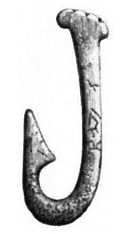
Fishing is an ancient practice that dates back to at least the beginning of the Upper Paleolithic period about 40,000 years ago.[3] Isotopic analysis of the remains of Tianyuan man, a 40,000-year-old modern human from eastern Asia, has shown that he regularly consumed freshwater fish.[4][5] Archaeology features such as shell middens,[6] discarded fish bones, and cave paintings show that sea foods were important for survival and consumed in significant quantities. Fishing in Africa is evident very early on in human history. Neanderthals were fishing by about 200,000 BC.[7] People could have developed basketry for fish traps, and spinning and early forms of knitting in order to make fishing nets[8] to be able to catch more fish in larger quantities.
During this period, most people lived a hunter-gatherer lifestyle and were, of necessity, constantly on the move. However, where there are early examples of permanent settlements (though not necessarily permanently occupied) such as those at Lepenski Vir, they are almost always associated with fishing as a major source of food.
Trawling[edit]
The British dogger was a very early type of sailing trawler from the 17th century, but the modern fishing trawler was developed in the 19th century, at the English fishing port of Brixham. By the early 19th century, the fishers at Brixham needed to expand their fishing area further than ever before due to the ongoing depletion of stocks that was occurring in the overfished waters of South Devon. The Brixham trawler that evolved there was of a sleek build and had a tall gaff rig, which gave the vessel sufficient speed to make long-distance trips out to the fishing grounds in the ocean. They were also sufficiently robust to be able to tow large trawls in deep water. The great trawling fleet that built up at Brixham earned the village the title of ‘Mother of Deep-Sea Fisheries’.[9]

This revolutionary design made large scale trawling in the ocean possible for the first time, resulting in a massive migration of fishers from the ports in the South of England, to villages further north, such as Scarborough, Hull, Grimsby, Harwich and Yarmouth, that were points of access to the large fishing grounds in the Atlantic Ocean.[9]
The small village of Grimsby grew to become the largest fishing port in the world[10] by the mid 19th century. An Act of Parliament was first obtained in 1796, which authorised the construction of new quays and dredging of the Haven to make it deeper.[11] It was only in 1846, with the tremendous expansion in the fishing industry, that the Grimsby Dock Company was formed. The foundation stone for the Royal Dock was laid by Albert the Prince consort in 1849. The dock covered 25 acres (10 ha) and was formally opened by Queen Victoria in 1854 as the first modern fishing port.
The elegant Brixham trawler spread across the world, influencing fishing fleets everywhere.[12] By the end of the 19th century, there were over 3,000 fishing trawlers in commission in Britain, with almost 1,000 at Grimsby. These trawlers were sold to fishers around Europe, including from the Netherlands and Scandinavia. Twelve trawlers went on to form the nucleus of the German fishing fleet.[13]
The earliest steam-powered fishing boats first appeared in the 1870s and used the trawl system of fishing as well as lines and drift nets. These were large boats, usually 80–90 feet (24–27 m) in length with a beam of around 20 feet (6.1 m). They weighed 40–50 tons and travelled at 9–11 knots (17–20 km/h; 10–13 mph). The earliest purpose-built fishing vessels were designed and made by David Allan in Leith, Scotland in March 1875, when he converted a drifter to steam power. In 1877, he built the first screw propelled steam trawler in the world.[14]
Steam trawlers were introduced at Grimsby and Hull in the 1880s. In 1890 it was estimated that there were 20,000 men on the North Sea. The steam drifter was not used in the herring fishery until 1897. The last sailing fishing trawler was built in 1925 in Grimsby. Trawler designs adapted as the way they were powered changed from sail to coal-fired steam by World War I to diesel and turbines by the end of World War II.
In 1931, the first powered drum was created by Laurie Jarelainen. The drum was a circular device that was set to the side of the boat and would draw in the nets. Since World War II, radio navigation aids and fish finders have been widely used. The first trawlers fished over the side, rather than over the stern. The first purpose-built stern trawler was Fairtry built-in 1953 at Aberdeen, Scotland. The ship was much larger than any other trawlers then in operation and inaugurated the era of the ‘super trawler’. As the ship pulled its nets over the stern, it could lift out a much greater haul of up to 60 tons.[15] The ship served as a basis for the expansion of ‘super trawlers’ around the world in the following decades.[15]
Recreational fishing[edit]

The early evolution of fishing as recreation is not clear. For example, there is anecdotal evidence for fly fishing in Japan, however, fly fishing was likely to have been a means of survival, rather than recreation. The earliest English essay on recreational fishing was published in 1496, by Dame Juliana Berners, the prioress of the Benedictine Sopwell Nunnery. The essay was titled Treatyse of Fysshynge wyth an Angle,[16] and included detailed information on fishing waters, the construction of rods and lines, and the use of natural baits and artificial flies.[17]
Recreational fishing took a great leap forward after the English Civil War, where a newly found interest in the activity left its mark on the many books and treatises that were written on the subject at the time. Leonard Mascall in 1589 wrote A booke of Fishing with Hooke and Line along with many others he produced in his life on game and wildlife in England at the time. The Compleat Angler was written by Izaak Walton in 1653 (although Walton continued to add to it for a quarter of a century) and described the fishing in the Derbyshire Wye. It was a celebration of the art and spirit of fishing in prose and verse. A second part to the book was added by Walton’s friend Charles Cotton.[18]
Charles Kirby designed an improved fishing hook in 1655 that remains relatively unchanged to this day. He went on to invent the Kirby bend, a distinctive hook with an offset point, still commonly used today.[19]

Trading card of the Ustonson company, an early firm specializing in fishing equipment, and holder of a Royal Warrant from the 1760s.
The 18th century was mainly an era of consolidation of the techniques developed in the previous century. Running rings began to appear along the fishing rods, which gave anglers greater control over the cast line. The rods themselves were also becoming increasingly sophisticated and specialised for different roles. Jointed rods became common from the middle of the century and bamboo came to be used for the top section of the rod, giving it a much greater strength and flexibility.
The industry also became commercialised – rods and tackle were sold at the haberdashers store. After the Great Fire of London in 1666, artisans moved to Redditch which became a centre of production of fishing related products from the 1730s. Onesimus Ustonson established his shop in 1761, and his establishment remained as a market leader for the next century. He received a Royal Warrant from three successive monarchs starting with King George IV.[20] He also invented the multiplying winch. The commercialization of the industry came at a time of expanded interest in fishing as a recreational hobby for members of the aristocracy.[21]
The impact of the Industrial Revolution was first felt in the manufacture of fly lines. Instead of anglers twisting their lines – a laborious and time-consuming process – the new textile spinning machines allowed for a variety of tapered lines to be easily manufactured and marketed.
British fly-fishing continued to develop in the 19th Century, with the emergence of fly fishing clubs, along with the appearance of several books on the subject of fly tying and fly fishing techniques.
By the mid to late 19th century, expanding leisure opportunities for the middle and lower classes began to have its effect on fly fishing, which steadily grew in mass appeal. The expansion of the railway network in Britain allowed the less affluent for the first time to take weekend trips to the seaside or rivers for fishing. Richer hobbyists ventured further abroad.[22] The large rivers of Norway replete with large stocks of salmon began to attract fishers from England in large numbers in the middle of the century – Jones’s guide to Norway, and salmon-fisher’s pocket companion, published in 1848, was written by Frederic Tolfrey and was a popular guide to the country.[22]

‘Nottingham’ and ‘Scarborough’ reel designs.
Modern reel design had begun in England during the latter part of the 18th century, and the predominant model in use was known as the ‘Nottingham reel’. The reel was a wide drum that spooled out freely and was ideal for allowing the bait to drift a long way out with the current. Geared multiplying reels never successfully caught on in Britain, but had more success in the United States, where similar models were modified by George Snyder of Kentucky into his bait-casting reel, the first American-made design in 1810.[23]
The material used for the rod itself changed from the heavy woods native to England to lighter and more elastic varieties imported from abroad, especially from South America and the West Indies. Bamboo rods became the generally favoured option from the mid 19th century, and several strips of the material were cut from the cane, milled into shape, and then glued together to form the light, strong, hexagonal rods with a solid core that were superior to anything that preceded them. George Cotton and his predecessors fished their flies with long rods, and light lines allowing the wind to do most of the work of getting the fly to the fish.[24]

Fishing became a popular recreational activity in the 19th century. Print from Currier and Ives.
Tackle design began to improve from the 1880s. The introduction of new woods to the manufacture of fly rods made it possible to cast flies into the wind on silk lines, instead of horse hair. These lines allowed for a much greater casting distance. However, these early fly lines proved troublesome as they had to be coated with various dressings to make them float and needed to be taken off the reel and dried every four hours or so to prevent them from becoming waterlogged. Another negative consequence was that it became easy for the much longer line to get into a tangle – this was called a ‘tangle’ in Britain, and a ‘backlash’ in the US. This problem spurred the invention of the regulator to evenly spool the line out and prevent tangling.[24]
The American, Charles F. Orvis, designed and distributed a novel reel and fly design in 1874, described by reel historian Jim Brown as the «benchmark of American reel design,» and the first fully modern fly reel.[25][26]
Albert Illingworth, 1st Baron Illingworth a textiles magnate, patented the modern form of fixed-spool spinning reel in 1905. When casting Illingworth’s reel design, the line was drawn off the leading edge of the spool but was restrained and rewound by a line pickup, a device which orbits around the stationary spool. Because the line did not have to pull against a rotating spool, much lighter lures could be cast than with conventional reels.[24]
The development of inexpensive fiberglass rods, synthetic fly lines, and monofilament leaders in the early 1950s, that revived the popularity of fly fishing.
Techniques[edit]
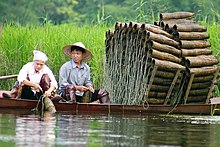
Fishermen with traditional fish traps, Vietnam
There are many fishing techniques and tactics for catching fish. The term can also be applied to methods for catching other aquatic animals such as molluscs (shellfish, squid, octopus) and edible marine invertebrates.
Fishing techniques include hand gathering, spearfishing, netting, angling and trapping. Recreational, commercial and artisanal fishers use different techniques, and also, sometimes, the same techniques. Recreational fishers fish for pleasure, sport, or to provide food for themselves, while commercial fishers fish for profit. Artisanal fishers use traditional, low-tech methods, for survival in third-world countries, and as a cultural heritage in other countries. Usually, recreational fishers use angling methods and commercial fishers use netting methods. A modern development is to fish with the assistance of a drone.[27]
Why a fish bites a baited hook or lure involves several factors related to the sensory physiology, behaviour, feeding ecology, and biology of the fish as well as the environment and characteristics of the bait/hook/lure.[28] There is an intricate link between various fishing techniques and knowledge about the fish and their behaviour including migration, foraging and habitat. The effective use of fishing techniques often depends on this additional knowledge.[29] Some fishers follow fishing folklores which claim that fish feeding patterns are influenced by the position of the sun and the moon.
Tackle[edit]
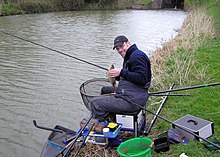
Fishing tackle is the equipment used by fishers when fishing. Almost any equipment or gear used for fishing can be called fishing tackle. Some examples are hooks, lines, sinkers, floats, rods, reels, baits, lures, spears, nets, gaffs, traps, waders and tackle boxes.
Tackle that is attached to the end of a fishing line is called terminal tackle. This includes hooks, sinkers, floats, leaders, swivels, split rings and wire, snaps, beads, spoons, blades, spinners and clevises to attach spinner blades to fishing lures. People also tend to use dead or live fish as another form of bait.
Fishing tackle refers to the physical equipment that is used when fishing, whereas fishing techniques refers to the ways the tackle is used when fishing.
Fishing vessels[edit]

Commercial crab boat working in the North Sea

A fishing vessel is a boat or ship used to catch fish in the sea, or on a lake or river. Many different kinds of vessels are used in commercial, artisanal and recreational fishing.
According to the FAO, in 2004 there were four million commercial fishing vessels.[30] About 1.3 million of these are decked vessels with enclosed areas. Nearly all of these decked vessels are mechanised, and 40,000 of them are over 100 tons. At the other extreme, two-thirds (1.8 million) of the undecked boats are traditional craft of various types, powered only by sail and oars.[30] These boats are used by artisan fishers.
It is difficult to estimate how many recreational fishing boats there are, although the number is high. The term is fluid since some recreational boats may also be used for fishing from time to time. Unlike most commercial fishing vessels, recreational fishing boats are often not dedicated just to fishing. Just about anything that will stay afloat can be called a recreational fishing boat, so long as a fisher periodically climbs aboard with the intent to catch a fish. Fish are caught for recreational purposes from boats which range from dugout canoes, float tubes, kayaks, rafts, stand up paddleboards, pontoon boats and small dinghies to runabouts, cabin cruisers and cruising yachts to large, hi-tech and luxurious big game rigs.[31] Larger boats, purpose-built with recreational fishing in mind, usually have large, open cockpits at the stern, designed for convenient fishing.
Traditional fishing[edit]
Traditional fishing is any kind of small scale, commercial or subsistence fishing practices using traditional techniques such as rod and tackle, arrows and harpoons, throw nets and drag nets, etc.
Recreational fishing[edit]


Recreational and sport fishing are fishing primarily for pleasure or competition. Recreational fishing has conventions, rules, licensing restrictions and laws that limit how fish may be caught; typically, these prohibit the use of nets and the catching of fish with hooks not in the mouth. The most common form of recreational fishing is done with a rod, reel, line, hooks and any one of a wide range of baits or lures such as artificial flies. The practice of catching or attempting to catch fish with a hook is generally known as angling. In angling, it is sometimes expected or required that fish be returned to the water (catch and release). Recreational or sport fishermen may log their catches or participate in fishing competitions.
The estimated global number of recreational fishers varies from 220 million to a maximum number of 700 million fishers globally,[32] which is thought to be double the amount of individuals working as commercial fishers. In the United States alone it was estimated that 50.1 million people engaged in fishing activities in both saltwater and freshwater environments.[33]
Big-game fishing is fishing from boats to catch large open-water species such as tuna, sharks, and marlin. Sportfishing (sometimes game fishing) is recreational fishing where the primary reward is the challenge of finding and catching the fish rather than the culinary or financial value of the fish’s flesh. Fish sought after include tarpon, sailfish, mackerel and many others.
Fishing industry[edit]
-

Contribution of fish to animal protein supply, average 2013-2015
-

World capture fisheries and aquaculture production 1950 — 2015



The fishing industry includes any industry or activity concerned with taking, culturing, processing, preserving, storing, transporting, marketing or selling fish or fish products. It is defined by the FAO as including recreational, subsistence and commercial fishing, and the harvesting, processing, and marketing sectors.[34] The commercial activity is aimed at the delivery of fish and other seafood products for human consumption or use as raw material in other industrial processes.
There are three principal industry sectors:[note 1]
- The commercial sector comprises enterprises and individuals associated with wild-catch or aquaculture resources and the various transformations of those resources into products for sale.
- The traditional sector comprises enterprises and individuals associated with fisheries resources from which aboriginal people derive products following their traditions.
- The recreational sector comprises enterprises and individuals associated with the purpose of recreation, sport or sustenance with fisheries resources from which products are derived that are not for sale.
Commercial fishing[edit]

Fishing boat in heavy sea
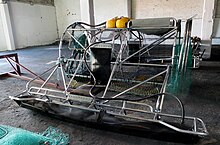
Commercial fishing is the capture of fish for commercial purposes. Those who practice it must often pursue fish far from the land under adverse conditions. Commercial fishermen harvest almost all aquatic species, from tuna, cod and salmon to shrimp, krill, lobster, clams, squid and crab, in various fisheries for these species. Commercial fishing methods have become very efficient using large nets and sea-going processing factories. Individual fishing quotas and international treaties seek to control the species and quantities caught.
A commercial fishing enterprise may vary from one man with a small boat with hand-casting nets or a few pot traps, to a huge fleet of trawlers processing tons of fish every day.
Commercial fishing gear includes weights, nets (e.g. purse seine), seine nets (e.g. beach seine), trawls (e.g. bottom trawl), dredges, hooks and line (e.g. long line and handline), lift nets, gillnets, entangling nets and traps.
According to the Food and Agriculture Organization of the United Nations, the total world capture fisheries production in 2000 was 86 million tons (FAO 2002). The top producing countries were, in order, the People’s Republic of China (excluding Hong Kong and Taiwan), Peru, Japan, the United States, Chile, Indonesia, Russia, India, Thailand, Norway, and Iceland. Those countries accounted for more than half of the world’s production; China alone accounted for a third of the world’s production. Of that production, over 90% was marine and less than 10% was inland.
A small number of species support the majority of the world’s fisheries. Some of these species are herring, cod, anchovy, tuna, flounder, mullet, squid, shrimp, salmon, crab, lobster, oyster and scallops. All except these last four provided a worldwide catch of well over a million tonnes in 1999, with herring and sardines together providing a catch of over 22 million metric tons in 1999. Many other species as well are fished in smaller numbers.
Fish farms[edit]
Fish farming is the principal form of aquaculture, while other methods may fall under mariculture. It involves raising fish commercially in tanks or enclosures, usually for food. A facility that releases juvenile fish into the wild for recreational fishing or to supplement a species’ natural population is generally referred to as a fish hatchery. Fish species raised by fish farms include salmon, carp, tilapia, catfish and trout.
Increased demands on wild fisheries by commercial fishing has caused widespread overfishing. Fish farming offers an alternative solution to the increasing market demand for fish.

Fish products[edit]
Fish and fish products are consumed as food all over the world. With other seafoods, it provides the world’s prime source of high-quality protein: 14–16 percent of the animal protein consumed worldwide. Over one billion people rely on fish as their primary source of animal protein.[36]
Fish and other aquatic organisms are also processed into various food and non-food products, such as sharkskin leather, pigments made from the inky secretions of cuttlefish, isinglass used for the clarification of wine and beer, fish emulsion used as a fertiliser, fish glue, fish oil and fish meal.
Fish are also collected live for research and the aquarium trade.
Fish marketing[edit]
Fisheries management[edit]
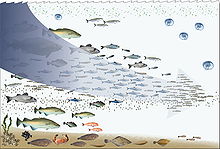
Fisheries management draws on fisheries science to find ways to protect fishery resources so sustainable exploitation is possible. Modern fisheries management is often referred to as a governmental system of (hopefully appropriate) management rules based on defined objectives and a mix of management means to implement the rules, which are put in place by a system of monitoring control and surveillance.
Fisheries science is the academic discipline of managing and understanding fisheries. It is a multidisciplinary science, which draws on the disciplines of oceanography, marine biology, marine conservation, ecology, population dynamics, economics and management in an attempt to provide an integrated picture of fisheries. In some cases new disciplines have emerged, such as bioeconomics.
Sustainability[edit]
Issues involved in the long term sustainability of fishing include overfishing, by-catch, marine pollution, environmental effects of fishing, climate change and fish farming.
Conservation issues are part of marine conservation, and are addressed in fisheries science programs. There is a growing gap between how many fish are available to be caught and humanity’s desire to catch them, a problem that gets worse as the world population grows.
Similar to other environmental issues, there can be conflict between the fishermen who depend on fishing for their livelihoods and fishery scientists who realise that if future fish populations are to be sustainable then some fisheries must limit fishing or cease operations.
Animal welfare concerns[edit]
Historically, some doubted that fish could experience pain. Laboratory experiments have shown that fish do react to painful stimuli (e.g., injections of bee venom) in a similar way to mammals.[37][38] This is controversial and has been disputed.[further explanation needed][39] The expansion of fish farming as well as animal welfare concerns in society has led to research into more humane and faster ways of killing fish.[40]
In large-scale operations like fish farms, stunning fish with electricity or putting them into water saturated with nitrogen so that they cannot breathe, results in death more rapidly than just taking them out of the water. For sport fishing, it is recommended that fish be killed soon after catching them by hitting them on the head followed by bleeding out or by stabbing the brain with a sharp object[41] (called pithing or ike jime in Japanese). Some believe it is not cruel if you release the catch back to where it was caught however a study in 2018 states that the hook damages an important part of the feeding mechanism by which the fish sucks in food, ignoring the issue of pain.[42]
When fishing there are high chances of catching other marine wildlife in a fishing net. There are over 100 different fishing regulations on paper for reducing this bycatch. [43]
Plastic pollution[edit]
Abandoned, lost, or otherwise discarded fishing gear includes netting, mono/multifilament lines, hooks, ropes, floats, buoys, sinkers, anchors, metallic materials and fish aggregating devices (FADs) made of non-biodegradable materials such as concrete, metal and polymers. It has been estimated that global fishing gear losses each year include 5.7% of all fishing nets, 8.6% of all traps and 29% of all lines used. Abandoned, lost, or otherwise discarded fishing gear (ALDFG) can have serious impacts on marine organisms through entanglement and ingestion.[44] The potential for fishing gear to become ALDFG depends on a number of factors including:
- Environmental factors are mostly related to seafloor topography and obstructions, although tides, currents, waves, winds, and interaction with wildlife are also important.
- Operational losses and operator errors can occur even during normal fishing operations.
- Problems such as inadequate fisheries management and regulations that do not include adequate controls can hamper collection of ALDFG (e.g. there may be poor access to collection facilities).
- Gear loss resulting from conflicts primarily occurs (intentionally or unintentionally) in areas with high concentrations of fishing activities, leading to gear being towed away, fouled, sabotaged or vandalized. Passive and unattended gear such as pots, set gillnets and traps are particularly prone to conflict damage. In the Arctic, conflicts are the most common reason for lost gear.[44]
Cultural impact[edit]
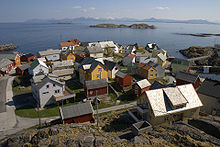
Ona, a traditional fishing village in Norway
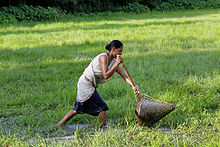
Kaibarta woman with traditional fish catching device made from bamboo in Assam
- Community
- For communities like fishing villages, fisheries provide not only a source of food and work but also a community and cultural identity.[45]
- Economic
- Some locations may be regarded as fishing destinations, which anglers visit on vacation or for competitions. The economic impact of fishing by visitors may be a significant, or even primary driver of tourism revenue for some destinations.
- Semantic
- A «fishing expedition» is a situation where an interviewer implies they know more than they do to trick their target into divulging more information than they wish to reveal. Other examples of fishing terms that carry a negative connotation are: «fishing for compliments», «to be fooled hook, line and sinker» (to be fooled beyond merely «taking the bait»), and the internet scam of phishing, in which a third party will duplicate a website where the user would put sensitive information (such as bank codes).
- Religious
- Fishing has had an effect on major religions,[46] including Christianity,[47][48] Hinduism, and the various new age[49] religions. Jesus was said to participate in fishing excursions, and a number of the miracles and many parables and stories reported in the Bible involve fish or fishing. Since the Apostle Peter[50] was a fisherman, the Catholic Church has adopted the use of the fishermans ring into the Pope’s traditional vestments.
See also[edit]
- List of fishing villages
Notes[edit]
- ^ The wording of the following definitions of the fishing industry are based on those used by the Australian government.[35]
References[edit]
- ^ Fisheries and Aquaculture in our Changing Climate Policy brief of the FAO for the UNFCCC COP-15 in Copenhagen, December 2009.
- ^ «Fisheries and Aquaculture». FAO. Retrieved 1 July 2012.
- ^ African Bone Tools Dispute Key Idea About Human Evolution National Geographic News article. (archived 17 January 2006)
- ^ Yaowu Hu, Y; Hong Shang, H; Haowen Tong, H; Olaf Nehlich, O; Wu Liu, W; Zhao, C; Yu, J; Wang, C; Trinkaus, E; Richards, M (2009). «Stable isotope dietary analysis of the Tianyuan 1 early modern human». Proceedings of the National Academy of Sciences. 106 (27): 10971–74. Bibcode:2009PNAS..10610971H. doi:10.1073/pnas.0904826106. PMC 2706269. PMID 19581579.
- ^ First direct evidence of substantial fish consumption by early modern humans in China PhysOrg.com, 6 July 2009.
- ^ Coastal Shell Middens and Agricultural Origins in Atlantic Europe.
- ^ «History of fishing – fishing nets, shellfish, boats». quatr.us Study Guides. 12 June 2017. Retrieved 2 May 2018.
- ^ «History of fishing – fishing nets, shellfish, boats». quatr.us Study Guides. 12 June 2017. Retrieved 2 May 2018.
- ^ a b «History of a Brixham trawler». JKappeal.org. 2 March 2009. Archived from the original on 2 December 2010. Retrieved 13 September 2010.
- ^ Days out: «Gone fishing in Grimsby»[permanent dead link] The Independent, 8 September 2002[dead link]
- ^ «A brief history of Grimsby». localhistories.org. 14 March 2021.
- ^ «Pilgrim’s restoration under full sail». BBC. BBC. Archived from the original on 17 November 2002. Retrieved 2 March 2009.
- ^ Sailing trawlers. issuu.
- ^ «The Steam Trawler».
- ^ a b «HISTORY». Archived from the original on 21 August 2013. Retrieved 16 July 2014.
- ^ Berners, Dame Juliana (1496) A treatyse of fysshynge wyth an Angle (transcription by Risa S. Bear).
- ^ Berners, Dame Juliana. (2008). In Encyclopædia Britannica. Retrieved 20 June 2008, from Encyclopædia Britannica Online
- ^ Andrew N. Herd. «Fly fishing techniques in the fifteenth century».
- ^ Stan L. Ulanski (2003). The Science of Fly-fishing. University of Virginia Press. p. 4. ISBN 978-0-8139-2210-2.
- ^ «Welcome To Great Fly Fishing Tips». December 2011. Archived from the original on 27 June 2017. Retrieved 16 July 2014.
- ^ «Fishing Tackle Chapter 3» (PDF). CLAM PRODUCTIONS. Archived from the original (PDF) on 18 September 2013. Retrieved 16 July 2014.
- ^ a b Andrew N. Herd. «Fly Fishing in the Years 1800–1850». Archived from the original on 3 July 2014. Retrieved 16 July 2014.
- ^ Andrew N. Herd. «Fly Fishing in the Eighteenth Century». Archived from the original on 19 July 2014. Retrieved 16 July 2014.
- ^ a b c «fishing». Encyclopedia Britannica.
- ^ Brown, Jim. A Treasury of Reels: The Fishing Reel Collection of The American Museum of Fly Fishing. Manchester, Vermont: The American Museum of Fly Fishing, 1990.
- ^ Schullery, Paul. The Orvis Story: 150 Years of an American Sporting Tradition. Manchester, Vermont, The Orvis Company, Inc., 2006
- ^ Fishing with a drone Stuff, 15 December 2015.
- ^ Lennox, Robert J; Alós, Josep; Arlinghaus, Robert; Horodysky, Andrij; Klefoth, Thomas; Monk, Christopher T; Cooke, Steven J (2017). «What makes fish vulnerable to capture by hooks? A conceptual framework and a review of key determinants». Fish and Fisheries. 18 (5): 986–1010. doi:10.1111/faf.12219. ISSN 1467-2979.
- ^ Keegan, William F (1986) New Series, Volume. 88, No. 1., pp. 92–107.
- ^ a b FAO 2007
- ^ NOAA: Sport fishing boat
- ^ FAO. «The role of Recreational Fisheries in the sustainable management of marine resources | GLOBEFISH | Food and Agriculture Organization of the United Nations». www.fao.org. Food and Agriculture Organization of the United Nations. Retrieved 2 February 2021.
- ^ Lange, David. «Topic: Recreational Fishing in the U.S.» Statista.
- ^ FAO Fisheries Section: Glossary: Fishing industry. Retrieved 28 May 2008.
- ^ «Today’s Fishing Industry». Fisheries Research and Development Corporation. 10 December 2007. Archived from the original on 14 June 2009. Retrieved 26 July 2012.
- ^ Tidwell, James H. and Allan, Geoff L.
- ^ Sneddon, LU (2009). «Pain perception in fish: indicators and endpoints». ILAR Journal. 50 (4): 38–42. doi:10.1093/ilar.50.4.338. PMID 19949250.
- ^ Oidtmann, B; Hoffman, RW (July–August 2001). «Pain and suffering in fish». Berliner und Münchener Tierärztliche Wochenschrift. 114 (7–8): 277–282. PMID 11505801.
- ^ «Do fish feel pain? Not as humans do, study suggests». ScienceDaily. 8 August 2013. Retrieved 2 August 2017.
- ^ Lund, V; Mejdell, CM; Röcklinsberg, H; Anthony, R; Håstein, T (4 May 2007). «Expanding the moral circle: farmed fish as objects of moral concern». Diseases of Aquatic Organisms. 75 (2): 109–118. doi:10.3354/dao075109. PMID 17578250.
- ^ Davie, PS; Kopf, RK (August 2006). «Physiology, behaviour and welfare of fish during recreational fishing and after release». New Zealand Veterinary Journal. 54 (4): 161–172. doi:10.1080/00480169.2006.36690. PMID 16915337. S2CID 1636511.
- ^ «Anglers’ catch-and-release method stops fish feeding properly, study finds». The Independent. 9 October 2018. Retrieved 10 October 2018.
- ^ «Facts | Seaspiracy Website». SEASPIRACY. Retrieved 12 March 2022.
- ^ a b Environment, U. N. (21 October 2021). «Drowning in Plastics – Marine Litter and Plastic Waste Vital Graphics». UNEP — UN Environment Programme. Retrieved 23 March 2022.
- ^ «International Collective in Support of Fishworkers». ICSF. 2 March 2012. Retrieved 1 July 2012.
- ^ Regensteinn J.M. and Regensteinn C.E. (2000) «Religious food laws and the seafood industry» In: R.E. Martin, E.P. Carter, G.J. Flick Jr and L.M. Davis (Eds) (2000) Marine and freshwater products handbook, CRC Press. ISBN 978-1-56676-889-4.
- ^ A Misunderstood Analogy for Evangelism Bible Analysis Article
- ^ American Bible Society Article Archived 5 September 2008 at the Wayback Machine American Bible Society
- ^ About Pisces the Fish The Astrology Cafe Monitor
- ^ Peter: From Fisherman to Fisher of Men Profiles of Faith Archived 6 March 2016 at the Wayback Machine
Sources[edit]
 This article incorporates text from a free content work. Licensed under Cc BY-SA 3.0 IGO License statement/permission. Text taken from Drowning in Plastics – Marine Litter and Plastic Waste Vital Graphics, United Nations Environment Programme. To learn how to add open license text to Wikipedia articles, please see this how-to page. For information on reusing text from Wikipedia, please see the terms of use.
Further reading[edit]
- Schultz, Ken (1999). Fishing Encyclopedia: Worldwide Angling Guide. John Wiley & Sons. ISBN 978-0-02-862057-2.
- Gabriel, Otto; Andres von Brandt (2005). Fish catching methods of the world. Blackwell. ISBN 978-0-85238-280-6.
- Sahrhage, Dietrich; Johannes Lundbeck (1992). A History of Fishing. Springer-Verlag. ISBN 978-0-387-55332-0.
External links[edit]
- «The sea without fish, a reality!«. Pauly, Daniel (2009). University of British Columbia. Archived from the original on 7 January 2013..
- Map of world ocean fishing activity, 2016
The Free Encyclopedia
10
10
Установите соответствие тем 1 — 8 текстам A — G. Занесите свои ответы в соответствующее поле справа. Используйте каждую цифру только один раз. В задании одна тема лишняя.
1. То take from home
2. Evening drinks
3. Food for relaxation
4. Skipping the meal
5. Foreign cuisine
6. Unusual meals
7. Traditional morning meal
8. Take it ready to eat
A. If you go to a hotel in Britain and ask for a typical English breakfast, you will probably get bacon and eggs, sausage, mushrooms, baked beans, tea and toast. When porridge juice are offered as well, the meal is sometimes advertised as a «full Engilsh breakfast». Many years ago people couldn’t imagine their breakfast without a bowl of cerea or usual bacon and eggs.
B. But how many people in England actually eat an English breakfast? Only one person in ten. One in five people say all they have for breakfast is a cup of coffee, and many children go to school without eating anything. That is happening because people lack time. They are always in a hurry and prefer to choose something light and ready-made, especially in the morning.
C. If in Britain you stay with a family, you will almost certainly be given a «packed lunch» to eat for your midday meal. Some factories and schools have canteens where a packed lunch is the most common thing to eat. A packed lunch usually consists of some sandwiches, a packet of crisps, an apple, and a can of something to drink, for example, Coca-Cola. The quality of the packed lunch can vary.
D. Fish and chips is the classic English takeaway food. It is usually bought ready cooked at special shops — fish and chip shops, or «chippies» as they are sometimes called. This takeaway food is wrapped in paper to be eaten at home or outside. If you go to a fish and chip shop, you’ll be asked if you want salt and vinegar to be sprinkled over your chips. Be careful because sometimes they give you too much.
E. If you have trouble getting off to sleep, don’t panic. There are plenty of healthy, low fat alternatives to pills to help you nod off. Why not try a glass of warm skimmed milk, or even a cup of camomile tea? These natural and low-fat drinks will help you to get asleep. They can also relax you after a difficult day.
F. Every British town has Indian or Chinese restaurants. There are more Chinese takeaways than there are fish and chips shops in the UK. But most people are eating curry Curry is now Britain’s most popular meal because the majority of British people like spicy food. But British people like food from other countries, too. They say it allows them to understand other cultures better.
G. Eating carbohydrate-rich foods like bread, cereal, rice and pasta causes the production of serotonin, which makes us feel calm. Fruit and vegetables also set off the production of this chemical. Milk and cheese are also useful. The next time you feel stressed, try a little piece of bread and a glass of milk and you’ll feel better in no time.
11
11
Прочитайте текст и заполните пропуски A-F частями предложений, обозначенными цифрами 1-7. Одна из частей в списке лишняя.
1. depending on the survey and the time of year
2. rotating disk with holes arranged in a spiral pattern
3. could be measured in the thousands
4. could capture moving images
5. funding a number of research programmes
6. transmitting images 16 years before
7. had lived in a house without electricity
Television
Few inventions have had as much effect on contemporary society, especially American society, as television. Before 1947 the number of U.S. homes with television sets A ______ . By the late 1990s, 98 percent of U.S. homes had at least one television set, and those sets were on for an average of more than seven hours a day. The typical American spends (B ______ ) from two-and-a-half to almost five hours a day watching television.
The invention of TV is not credited to one single person. Vladimir Zworykin and Philo Farnsworth both played instrumental roles. Electronic television was first successfully demonstrated in San Francisco on Sept. 7, 1927. The system was designed by Philo Taylor Farnsworth, a 21-year-old inventor who C ______ until he was 14. While still in high school, Farnsworth had begun to think of a system that D ______ in a form that could be coded onto radio waves and then transformed back into a picture on a screen. Boris Rosing and Vladimir Zvorykin in Russia had conducted some experiments in E ______ Farnsworth’s first success.
Also, a mechanical television system, which scanned images using a F ______ , had been demonstrated by John Logic Baird in England and Charles Francis Jenkins in the United States earlier in the 1920s. However, Farnsworth’s invention and Vladimir Zvorykin’s electronic TV system are the direct ancestors of modern television.
Прочитайте текст и выполните задания 12—18, обводя цифру 1, 2, 3 или 4, соответствующую номеру выбранного вами варианта ответа.
Lesson in humility
I was nine when this started. That was in 1964, the year my mother left us. Chess led me to Horatio — chess and my father and my absent mother and the fact that on that day, I broke the rule about not showing what you feel. My form-master of that year at the private day-school I went to was a chess enthusiast. He explained the rules to us, he encouraged us to play. He was kind to me and I admired him, more than admired: I wanted to be where he was. I suppose I was more than usually responsive to kindness just at that time. To please him I tried hard to be good at chess and I discovered that I was good. I had a natural talent, the master said.
I joined the school chess club. I took part in tournaments and distinguished myself. Shining at few things, for a brief season I shone at chess. I studied the game, I read the accounts of historic encounters, the ploys of long-dead masters, and I played them out alone. I would set out the pieces at random, then sweep them off and try to replace them from memory. At night, I would picture the chess board, go through the moves of some legendary end-game and find consolation.
A colleague of my father was there one Sunday afternoon — my father was a senior official at the Treasury. «Your father tells me you are quite a chess-player.” On his reddish face an indulgent look. «At least by his own report,” my father said with a sarcastic smile. He seemed to suggest I had boasted. Perhaps I had. “Not up to your level, Henry, not yet.» Henry, Harry, Humphrey. A chessplayer ot note. Fancy a game, young man?
We played and I won. He still had half his pieces on the board when l checkmated him. I leasure in victory, expectation of praise — face and voice were not yet practiced enough, I suppose I showed my feelings too clearly. My father looked at me, but uttered no word. He went out, came back with a book from his study, brought it over for me to see. “Look here,” he said, the colleague meanwhile looking on. “Look at these people here.”
He had opened the book roughly in the middle. There were two faces, one on either side: William Pitt the Younger and Horatio Nelson. Neither name meant anything to me at the time. Later, ot course, I knew them tor close contemporaries -Horatio was a year older and died three months earlier.
“Take a good look,” my father said. “These two men saved our country, they had reason to be pleased with themselves.”
He meant it for my benefit or so I like to think. He did not want me to be jubilant in victory, to overrate small achievements. He wanted to inspire me with worthy ambitions. But in his mannei and tone I sensed displeasure; he was not pleased at my success, it had disturbed his sense of the natural order.
My interest in chess did not long survive that day, the lesson in humility proved the death-blow to it. I continued to play during what was left of the term, but my heart was not in it, I lost the appetite for victory, my game fell off. In the autumn, Monty and I were sent away to boarding school and I never played chess again.
12
12
The narrator started playing chess because of the encouragement from …
1. his father.
2. his mother.
3. his teacher.
4. Horatio.
13
13
In paragraph 2 the words “shining at few things” mean that the boy …
1. did not have many achievements.
2. won a few tournaments.
3. perfected his chess skills.
4. devoted himself to many activities.
14
14
The father spoke about his son’s chess talent …
1. enthusiastically.
2. boastfully.
3. happily.
4. ironically.
15
15
The father was displeased with his son because …
1. his colleague was hurt by the defeat.
2. the boy couldn’t hide his pleasure.
3. he had hoped for his loss.
4. the boy broke the rules of the game.
16
16
What did the boy think about William Pitt and Horatio Nelson?
1. They were models for the boy.
2. He didn’t want to be like them.
3. He knew nothing about them at the time.
4. He liked William Pitt but disposed Horatio Nelson.
17
17
The father’s words were meant to …
1. teach his son some history.
2. show his son how wrong he was.
3. show his son how to celebrate a victory.
4. teach his son to evaluate one’s achievements.
18
18
The boy stopped playing chess because …
1. he had to leave his school.
2. he lost interest.
3. his father wouldn’t let him play.
4. he had started losing games.
Раздел 1. АУДИРОВАНИЕ
Вы услышите 6 высказываний. Установите соответствие между высказываниями каждого говорящего A—F и утверждениями, данными в списке 1—7. Используйте каждое утверждение, обозначенное соответствующей цифрой, только один раз. В задании есть одно лишнее утверждение. Вы услышите запись дважды. Занесите свои ответы в таблицу.
2
Вы услышите диалог. Определите, какие из приведённых утверждений А—G соответствуют содержанию текста (1 — True), какие не соответствуют (2 — False) и о чём в тексте не сказано, то есть на основании текста нельзя дать ни положительного, ни отрицательного ответа (3 — Not stated). Занесите номер выбранного вами варианта ответа в таблицу. Вы услышите запись дважды.
A Dana has been very successful recently.
B Ken is going to tell Dana some important information.
C Dana is looking for the job at the moment.
D Dana’s promotion came through quite unexpectedly.
E Dana didn’t get a raise in her salary.
F Ken is getting married in two weeks.
G Dana is surprised to hear that her friend is getting married.
Утверждение
Соответствие диалогу
Вы услышите рассказ популярной американской певицы о её карьере. В заданиях 3—9 запишите в поле ответа цифру 1, 2 или 3, соответствующую выбранному Вами варианту ответа. Вы услышите запись дважды.
3
The narrator says she started to write songs
1) when she was ten.
2) because she could not talk.
3) because it was the best way to express her feelings.
Ответ: .
4
According to the narrator,
1) she could afford to have a recording studio.
2) her family was not well off.
3) she bought Christmas presents for her friends.
Ответ: .
5
The narrator returned to Texas because
1) her apartment burnt down.
2) she had got several college music scholarships.
3) a friend told her about the American Idol audition in Dallas.
Ответ: .
6
Looking back on the show, the narrator says that
1) few people really believed she could win.
2) the members of the crew were not at all supportive.
3) everyone was supporting her.
Ответ: .
7
The narrator thinks that
1) she ought to become thinner.
2) she could serve as a role model for young girls.
3) girls should not live up to their idols.
Ответ: .
8
The narrator dreams of
1) touring the world.
2) having a permanent relationship.
3) staying single.
Ответ: .
9
The narrator considers herself
1) to be a celebrity.
2) practical and sensible.
3) honest and sincere.
Ответ: .
Раздел 2. ЧТЕНИЕ
10
Установите соответствие между заголовками 1—8 и текстами A—G. Занесите свои ответы в таблицу. Используйте каждую цифру только один раз. В задании один заголовок лишний.
1. The Best Way of Learning
2. Key Factor in Learning
3. Linguistic Interference
4. Universal Language
5. Online Learning
6. Language Extinction
7. Learning by Imitation
8. Sign Language
A. Young children have a genetic ability to learn language. They come into the world as eager learning machines, and language acquisition is a major aspect of this learning. How children actually learn language is not entirely clear, however. Most linguists believe that they do it primarily by listening to and trying to communicate with adult speakers. Initially, this means that they copy the way adults use words and grammar.
B. Learning a second or third language is easier in early childhood than later. It is particularly important to learn correct pronunciation as young as possible. At any age, learning by constant contact with native speakers in their own society is the quickest and the most effective method. It is superior to taking foreign language classes because it forces you to concentrate on it all of the time.
C. Learning a second language can be affected by the patterns of the first language. There can be some blending of phonemes. For instance, most Americans who learn French in high school or college pronounce French words with a distinctive American accent. Grammar can also be affected. English speakers who learn both French and Spanish sometimes combine grammatical rules of both when speaking either of them.
D. Until just a few years ago, language study was limited to the classroom or personal tutor, or home study by book. In the last few decades technology has given us a much needed audio option — first vinyl records, then cassettes and CDs. Now technology has given us a new format — the Internet. Options to learn a language by Internet are still limited but the potential is not.
E. What is important when learning a language? If you have the desire and persistence, time is the only factor that you may have to work with. How much time you can devote to learning will play a role in how quickly you can learn the language. Just remember how exciting it will be and how rewarding you will feel at the accomplishment.
F. Rather than have businessmen, diplomats, scientists and tourists from every country learning all the major languages that they want to learn or need to learn, Esperantists would have everyone just learn one second language — Esperanto. Then everyone could communicate with everyone, everywhere. The major ‘national’ languages could keep their special characteristics for anyone who wanted to learn them. This is the essence of the ‘Esperanto Movement’.
G. More than half of the world’s 7,000 languages are expected to die out by the end of the century, often taking with them irreplaceable knowledge about the natural world. When a species dies out, sometimes fossils can be found, remains uncovered. But when a human language disappears, there’s rarely any key left behind. Each loss becomes a linguistic black hole, where an entire way of knowing the world disappears.
11
Прочитайте текст и заполните пропуски A—F частями предложений, обозначенными цифрами 1—7. Одна из частей в списке 1—7 лишняя. Занесите цифру, обозначающую соответствующую часть предложения, в таблицу.
A constitution may be defined as the system of fundamental principles according to A ____________. A good example of a written constitution is the Constitution of the United States, formed in 1787.
The Constitution sets up a federal system with a strong central government. Each state preserves its own independence by reserving to itself certain well-defined powers such as education, taxes and finance, internal communications, etc. The powers B ____________ are those dealing with national defence, foreign policy, the control of international trade, etc.
Under the Constitution power is also divided among the three branches of the national government. The First Article provides for the establishment of the legislative body, Congress, and defines its powers. The second does the same for the executive branch, the President, and the Third Article provides for a system of federal courts.
The Constitution itself is rather short, it contains only 7 articles. And it was obvious in 1787 C ____________. So the 5th article lays down the procedure for amendment. A proposal to make a change must be first approved by two-thirds majorities in both Houses of Congress and then ratified by three quarters of the states.
The Constitution was finally ratified and came into force on March 4, 1789. When the Constitution was adopted, Americans were dissatisfied D ____________. It also recognized slavery and did not establish universal suffrage.
Only several years later, Congress was forced to adopt the first 10 amendments to the Constitution, E ____________. They guarantee to Americans such important rights and freedoms as freedom of press, freedom of religion, the right to go to court, have a lawyer, and some others.
Over the past 200 years 26 amendments have been adopted F ____________. It provides the basis for political stability, individual freedom, economic growth and social progress.
- which are given to a Federal government
- because it did not guarantee basic freedoms and individual rights
- but the Constitution itself has not been changed
- so it has to be changed
- which a nation or a state is constituted and governed
- which were called the Bill of Rights
- that there would be a need for altering it
Прочитайте текст и выполните задания 12—18. В каждом задании запишите в поле ответа цифру 1, 2, 3 или 4, соответствующую выбранному Вами варианту ответа.
That summer an army of crickets started a war with my father. They picked a fight the minute they invaded our cellar. Dad didn’t care for bugs much more than Mamma, but he could tolerate a few spiders and assorted creepy crawlers living in the basement. Every farm house had them. A part of rustic living, and something you needed to put up with if you wanted the simple life.
He told Mamma: ‘Now that we’re living out here, you can’t be jerking your head and swallowing your gum over what’s plain natural, Ellen.’ But she was a city girl through and through and had no ears when it came to defending vermin. She said a cricket was just a noisy cockroach, just a dumb horny bug that wouldn’t shut up. No way could she sleep with all that chirping going on! Then to prove her point she wouldn’t go to bed. She drank coffee and smoked my father’s cigarettes and she paced between the couch and the TV. Next morning she threatened to pack up and leave, so Dad drove to the hardware store and hurried back. He squirted poison from a jug with a spray nozzle. He sprayed the basement and all around the foundation of the house. When he had finished, he told us that was the end of it.
But what he should have said was: ‘This is the beginning’. For the next fourteen days Mamma kept finding dead crickets in the clean laundry. She’d shake out a towel or a sheet and a dead black cricket would roll across the linoleum. Sometimes the cat would corner one, and swat it around like he was playing hockey, then carry it away in his mouth. Dad said swallowing a few dead crickets wouldn’t hurt as long as the cat didn’t eat too many.
Soon live crickets started showing up in the kitchen and bathroom. Mamma freaked because she thought they were the dead crickets come back to haunt, but Dad said they were definitely a new batch, probably coming up on the pipes. He fetched his jug of poison and sprayed beneath the sink and behind the toilet and all along the baseboard until the whole house smelled of poison, and then he sprayed the cellar again, and then he went outside and sprayed all around the foundation leaving a foot-wide moat of poison.
For a couple of weeks we went back to finding dead crickets in the laundry. Dad told us to keep a sharp look out. He suggested that we’d all be better off to hide as many as we could from Mamma. I fed a few dozen to the cat who I didn’t like because he scratched and bit for no reason. I hoped the poison might kill him so we could get a puppy. Once in a while we found a dead cricket in the bathroom or beneath the kitchen sink. A couple of weeks later, when both live and dead crickets kept turning up, Dad emptied the cellar of junk. He borrowed Uncle Burt’s pickup and hauled a load to the dump. Then he burned a lot of bundled newspapers and magazines which he said the crickets had turned into nests.
He stood over that fire with a rake in one hand and a garden hose in the other. He wouldn’t leave it even when Mamma sent me out to fetch him for supper. He wouldn’t leave the fire, and she wouldn’t put supper on the table. Both my brothers were crying. Finally she went out and got him herself. And while we ate, the wind lifted some embers onto the wood pile. The only gasoline was in the lawn mower fuel tank but that was enough to create an explosion big enough to reach the house. Once the roof caught, there wasn’t much anyone could do.
After the fire trucks left, I made the mistake of volunteering to stay behind while Mamma took the others to Aunt Gail’s. I helped Dad and Uncle Burt and two men I’d never seen before carry things out of the house and stack them by the road. In the morning we’d come back in Burt’s truck and haul everything away. We worked into the night and we didn’t talk much, hardly a word about anything that mattered, and Dad didn’t offer any plan that he might have for us now. Uncle Burt passed a bottle around, but I shook my head when it came to me. I kicked and picked through the mess, dumb struck at how little there was to salvage, while all around the roar of crickets magnified our silence.
(Adapted from ‘The Cricket War’ by Bob Thurber)
12
A cricket is
1) a small animal.
2) a spider.
3) an insect.
4) a game.
Ответ: .
13
Mamma threatened to pack up and leave because
1) she had smoked all cigarettes.
2) she had not got used to rustic living.
3) she could not put up with crickets.
4) she was a city girl through and through.
Ответ: .
14
After Dad had sprayed the basement and all around the foundation of the house,
1) the family were constantly coming across dead crickets.
2) the family kept seeing live crickets everywhere.
3) the dead crickets came back to haunt.
4) all crickets disappeared.
Ответ: .
15
The narrator fed the cat with crickets because
1) the cat was hungry.
2) he would like to have another pet.
3) he wanted to hide crickets from Mamma.
4) Dad told him to do it.
Ответ: .
16
Dad borrowed Uncle Burt’s pickup
1) to fight with crickets.
2) to bring new furniture to the cellar.
3) to throw away newspapers and magazines.
4) to get rid of rubbish.
Ответ: .
17
The house caught fire because
1) Dad left a garden hose near the fire.
2) the wind lifted some papers onto the wood pile.
3) the fuel tank had gone off.
4) there wasn’t much anyone could do.
Ответ: .
18
The narrator was surprised
1) that Dad didn’t offer any plan.
2) when the bottle came to him.
3) that crickets were all around.
4) that there was not much to save from the fire.
Ответ: .
Раздел 3. ГРАММАТИКА И ЛЕКСИКА
Прочитайте приведённый ниже текст. Преобразуйте, если необходимо, слова, напечатанные заглавными буквами в конце строк, обозначенных номерами 19—25, так, чтобы они грамматически соответствовали содержанию текстов. Заполните пропуски полученными словами. Каждый пропуск соответствует отдельному заданию из группы 19—25.
Обратите внимание, что по правилам ЕГЭ ответы нужно писать без пробелов и других знаков, например, правильный ответ ‘have done’ нужно будет записать как ‘havedone’, иначе ваш ответ не засчитается.
September Mood in England
19
It’s Monday morning and Miss Williams walks into her office. Her holiday is over and she (just) to work.
RETURN
20
She looks brown, relaxed and than usual.
HAPPY
21
The other girls stand round her. ‘Where (you)?’ one of the girls asks.
GO
22
‘Italy, not far from Naples. I enjoyed it very much.’ she answers, happily.
SMILE
23
Her boss, Mr. Wetridge comes in ten minutes later. He looks a bit worried because he about the winter.
THINK
24
Central heating in his house five years ago and now it’s time to have it repaired.
INSTALL
25
Besides, his wife wants him to put in double glazing. But she that to double-glaze all the windows will cost quite a lot of money.
NOT
UNDER-
STAND
Прочитайте приведённый ниже текст. Образуйте от слов, напечатанных заглавными буквами в конце строк, обозначенных номерами 26—31, однокоренные слова так, чтобы они грамматически и лексически соответствовали содержанию текста. Заполните пропуски полученными словами. Каждый пропуск соответствует отдельному заданию из группы 26—31.
Junk Food
26
In today’s world, many people are looking for a quick snack, meal or boost of energy. They choose processed food bars, thinking that they’re a healthy choice.
INCREASE
27
However, most bars contain processed foods which are called ‘junk foods’.
DESIRE
28
They give you a false sense of energy and .
FULL
29
One problem with junk foods is that they’re low in satiation value. Another problem is that junk food tends to other, more nutritious foods.
PLACE
30
It’s the 21st century now and ‘junk food’ has gone . We see it everywhere: in grocery and convenience stores, in fast-food
restaurants and on television.
GLOBE
31
Although junk food is now all over the world, people should be aware of its disadvantages and choose healthier alternatives.
AVAIL
Прочитайте текст с пропусками, обозначенными номерами 32—38. Эти номера соответствуют заданиям 32—38, в которых представлены возможные варианты ответов. Запишите в поле ответа цифру 1, 2, 3 или 4, соответствующую выбранному Вами варианту ответа.
The Changing World of Computers
Computers are rapidly changing the way we do things. For a technology that is still relatively new, their 32____ on the business and consumer sector has been incomprehensible. As if it was not sufficient to own one computer, many people nowadays have a few of them. We think we need a desktop computer, a laptop computer, and a bunch of little computers in our phones and music players, even 33____ they actually do the same thing. Now that everybody has their desktops and laptops, and we are all able to 34____ the Internet anytime we want to, our world has turned into a virtual playground. We can now connect with our foreign neighbours in a matter of seconds, 35____ of how far away they are from us. It’s as if we no longer have borders in this highly digital world of ours.
Desktops have always been a great option, but the problem with them is that they are not mobile. They have all the 36____ of other computers, but it can be annoying at times to have to sit in the same spot while working. For businesses and personal offices, desktop computers are still the favoured option because of their power. But when people have to be connected while travelling, the need for laptops really becomes apparent. The main advantage of laptops is the ability to communicate with people no 37____ where you are. Our society has been converted into one that has to have all the latest gadgets. Some people even 38____ down on others if they still have last year’s model of some gadget. Those people will always be behind the curve just because of how fast technology is advancing now.
32
1) affect
2) role
3) impact
4) value
Ответ: .
33
1) though
2) now
3) so
4) as
Ответ: .
34
1) register
2) log
3) connect
4) access
Ответ: .
35
1) regardless
2) regarding
3) in spite
4) despite
Ответ: .
36
1) qualities
2) skills
3) capabilities
4) traits
Ответ: .
37
1) trouble
2) matter
3) doubt
4) problem
Ответ: .
38
1) turn
2) fall
3) come
4) look
Ответ: .
Ваш результат: пока 0.
Далее вы можете набрать еще 40 баллов. Автоматически это проверить нельзя, поэтому сделайте реалистичный прогноз о том, сколько бы вы смогли набрать баллов, и получите ваш итоговый результат ЕГЭ.
Если возник вопрос по ответу, в котором вы ошиблись, можете задать его в комментариях.
Раздел 4. ПИСЬМО
Для ответов на задания 39 и 40 используйте бланк ответов № 2. Черновые пометки можно делать прямо на листе с заданиями, или можно использовать отдельный черновик. При выполнении заданий 39 и 40 особое внимание обратите на то, что Ваши ответы будут оцениваться только по записям, сделанным в БЛАНКЕ ОТВЕТОВ № 2. Никакие записи черновика не будут учитываться экспертом. Обратите внимание также на необходимость соблюдения указанного объёма текста. Тексты недостаточного объёма, а также часть текста, превышающая требуемый объём, не оцениваются. Запишите сначала номер задания (39, 40), а затем ответ на него. Если одной стороны бланка недостаточно, Вы можете использовать другую его сторону.
You have received a letter from your English-speaking pen friend John who writes:
… It’s difficult for me to get on well with my parents. They think that I spend too much time hanging around with my friends so we often argue about it. And what do you do when you disagree with your parents about how you spend your free time? Do you often meet your friends? What do you usually do together?
Oh, I’ve got to go now as I have to meet my sister from her music class. Drop me a line when you can.
Write a letter to John.
In your letter
— answer his questions
— ask 3 questions about his relations with his sister
Write 100 — 140 words.
Remember the rules of letter writing.
За это задание вы можете получить 6 баллов максимум.
Comment on the following statement.
Some people enjoy living in big cities whereas others find such a lifestyle really harmful.
Write 200 — 250 words.
— make an introduction (state the problem)
— express your personal opinion and give 2—3 reasons for your opinion
— express an opposing opinion and give 1—2 reasons for this opposing opinion
— explain why you don’t agree with the opposing opinion
— make a conclusion restating your position
За это задание вы можете получить 14 баллов максимум.
Раздел 5. ГОВОРЕНИЕ
— За 1,5 минуты нужно подготовиться и в следующие 1,5 минуты выразительно прочитать текст вслух — 1 балл.
— Составление 5 вопросов на основе ключевых слов. На подготовку отводится 1,5 минуты, затем каждый вопрос надо сформулировать в течение 20 секунд — 5 баллов.
— 3 фотографии. Нужно выбрать 1 и описать ее по предложенному тут же в задании плану за 3,5 минуты — 7 баллов.
— 2 картинки. Нужно сравнить их, описать сходства и различия, объяснить, почему выбранная тематика близка выпускнику, за 3,5 минуты — 7 баллов.
 |
||
|
Установите соответствие между текстами A—G и заголовками 1-8. Занесите свои ответы в таблицу. Используйте каждую цифру только один раз. В задании один заголовок лишний. TEST 04 |
1. Expenses G
2. Ways of behavior F
3. Nightlife D
4. Favourite food C
5. Place to stay in B
6. Eating out E
7. National languages
8. Great outdoors A
A. Norway is first of all a land for those who love nature. The breathtaking fjords in the southwest of the country and Europe’s largest glacier are Norway’s most attractive places, but there are many other reasons to visit this country in the north of Europe. There are wonderful opportunities to enjoy skiing, fishing and rock-climbing. Others can take pleasure in the charm of the Norwegian countryside, with its countless valleys, high mountain lakes and unbelievable views.
Норвегия для любителей природы и спорта. Great outdoors
B. Many tourists coming to Norway in the summer prefer to stay in a cottage used by northern Norwegian fishermen during the winter cod-fishing season. Equipped with all the necessary facilities, these cottages are leased to holidaymakers, providing an attractive form of accommodation. They will often be actually over the water. Catching your own fish and cooking it on the fire will add a few pleasant moments to your holiday.
Норвегия рыбалка летом, коттеджи, отдых. Place to stay in
C. Norway has a long history of fishing, although much of the high quality shellfish and other species caught off the coast are exported. However, fish remains a common dish, along with meat, potatoes and other root vegetables, although tastes have changed in recent years to involve a wider international choice, including pizzas and burgers. The most popular traditional hot snack is a form of sausage, sold at numerous outlets.
К рыбе добавились пицца и хотдоги. Favourite food
D. Traditionally entertainment in the country is largely home-based, but this has been changing in recent years. Most Norwegians tend to go out only on Fridays and Saturdays, the rest of the week being fairly quiet. This is in no small part due to the high prices of food and drink, and the fact that the working day starts early. And at weekends, it is normal for the Norwegians to enjoy drinks at home before leaving it as late as 11.00 p.m.
Норвежцы стали больше выходить их дома для отдыха. Nightlife
E. Restaurants tend to be concentrated in city centres, while in recent years the pub culture has been gradually arriving in Norway. Cities are nowadays well supplied with a wide choice of bars, many of which offer food that has a lower price compared to the restaurants. Most villages of any size have at least one cafe or restaurant where it is possible to drink and eat out.
Стали появляться пабы. Eating out
F. Norwegians are generally sincere and polite, though communication doesn’t often come easy — it is usually up to you to break the ice and establish contact. They can be very direct and rarely say ‘please’, which may seem rude, but it’s due to the fact that the Norwegian language rarely uses the word. On the other hand, they say ‘thank you’ for almost everything. They also tend to address people by their first name even on many formal occasions.
Норвежцы культурные, хотя могут такими не казаться. Ways of behaviour
G. Norway is an expensive country. As labour is costly here, anything that can be seen as a ‘service’ will generally be more expensive than you expect. Transport costs can also be a killer, because the country is large and distances are long. But there is one good point: Norway has a high quality of tap water. So buying bottled drinking water is usually unnecessary and this will save your budget.
Норвегия – дорогая страна. Expenses
| № текста | A | B | C | D | E | F | G |
| тема | 8 | 5 | 4 | 3 | 6 | 2 | 1 |
ВСЕ ТЕСТЫ

Terms in this set (34)
Hey, Kate. You know that? I’ve just found two pictures suitable for our project «Ways of fishing». Let me tell you a bit more about them.
They are relevant to our project because in both pictures there are people going fishing. In the first photo there is a boat with two fishermen in it. There is a still water surface, perhaps it is a big lake or a sea very early in the morning. In the second photo there is a fisherman as well. He has just caught a fish and is trying not to lose it. He is staying on the shore of a lake. There are a few differences to illustrate our project better. Obviously, fishermen in the first picture don’t have any fish on the hook, while a man on the right has already caught his victim. Moreover, the first picture features two people on a boat, while the second one features a man standing on the ground.
Imagine that you and your friend are doing a school project «Ways of fishing». You have found some illustrations and want to share the news. Leave a voice message to your friend. In 2.5 minutes be ready to:
• explain the choice of the illustrations for the project by briefly describing them and noting the differences;

Hey, Kate. You know that? I’ve just found two pictures suitable for our project «Travelling on two wheels». Let me tell you a bit more about them.
They are relevant to our project because in both pictures there are people going somewhere by two-wheeled vehicles. In the first photo there are two cyclists. They seem to be travelling along the seaside. The view is beautiful. In the second picture there are four bikers going down a highway. They are travelling in a group of four. There are a few differences to illustrate our project better. Obviously, people in these pictures use different modes of two-wheeled transport, bicycles and motorcycles. Moreover, they travel in groups of various sizes.
Imagine that you and your friend are doing a school project «Travelling on two wheels». You have found some illustrations and want to share the news. Leave a voice message to your friend. In 2.5 minutes be ready to:
• explain the choice of the illustrations for the project by briefly describing them and noting the differences;

In my opinion, using both means of transport have their advantages. For instance, cycling can be much better for one’s health, meanwhile, riding a motorcycle is quite a bit faster. Of course, the the means of transport have disadvantages too. For example, going by bike can be exhaustive and requires scecial skills. At the same time, the fumes that motrcycles emit can be breathed in by the riders, which is not great for their lungs.
Hey, Kate. You know that? I’ve just found two pictures suitable for our project «Helping others». Let me tell you a bit more about them.
They are relevant to our project because in both pictures there are people helping others. In the first photo there is a group of young people. All of them are wearing white t-shirts with a word «volunteer». In the second picture there is a man, helping an old lady to cross the street. It looks like he cares a lot about her. There are a few differences to illustrate our project better. Obviously, the first picture features an organization that needs volunteers to do some work. In the second picture a man isn’t a part of volunteer’s group, he is helping on his own accord. Moreover, in the first picture there is a group of people, while the second picture features only one person helping out.
Imagine that you are doing a project «Helping others» together with your friend. You have found some illustrations and want to share the news. Leave a voice message to your friend. In 2.5 minutes be ready to tell the friend about the photos:
• explain the choice of the illustrations for the project by briefly describing them and noting the differences;

In my opinion, the two ways of volunteering have their advantages. For instance, being a part of a volunteer group will allow someone to take pert in different international projects, like big sporting events. Meanwhile, helping out strangers occasionally is great for helping those who don’t ask for help themselves but actually need it.
Other sets by this creator
Other Quizlet sets
ВАРИАНТ 1

Task 1. Imagine that you are preparing a project with your friend. You have found some interesting material for the presentation and you want to read this text to your friend. You have 1.5 minutes to read the text silently, then be ready to read it out aloud. You will not have more than 1.5 minutes to read it.
The first human carrying flight technology was the hot air balloon. While unmanned balloons have been around in some form for thousands of years, the first flight with people aboard was in 1782. The large balloon on top is called an “envelope”. It holds hot air created by a heat source known a burner. The burner creates an open flame by burning a mix of propane and air. Hot air balloons are capable of floating because the hot air inside the envelope has a lower density than the colder air outside. The top of the balloon usually has a vent which allows the pilot to control the speed of ascent or descent. Passengers typically stand in a basket beneath the envelope. While most envelopes have a standard balloon shape, others are designed to look like animals, cartoon characters and other fun objects.

Task 2. Study the advertisement. You are considering celebrating your birthday at a restaurant and now you’d like to get more information. In 1.5 minutes you are to ask four direct questions to find out about the following:

- location
- music choice
- price per person
- discounts for students


Task 3. You are going to give an interview. You have to answer five questions. Give full answers to the questions (2-3 sentences). Remember that you have 40 seconds to answer each question.
Tapescript for Task 3
Interviewer: Hello everybody! It’s Future Career Channel. Our guest today is a teenager from Russia and we are going to discuss his future career. We’d like to know our guest’s point of view on this issue. Please answer five questions. So, let’s get started.
Interviewer: What two school subjects are the most important for your future job?
Student: _________________________________________
Interviewer: What job would you like to have in the future?
Student: _________________________________________
Interviewer: Do your relatives approve of your career choice?
Student: __________________________________________
Interviewer: What job did you use to like when you were younger?
Student: __________________________________________
Interviewer: Would you like to follow in your parents’ footsteps in choosing a career? Why?
Student: __________________________________________
Interviewer: Thank you very much for the interview!

Task 4. Imagine that you are doing a project “Types of Shopping” together with your friend. You have found some illustrations and want to share the news. Leave a voice message to your friend. In 2.5 minutes be ready to tell the friend about the photos:
- explain the choice of the illustrations for the project by briefly describing them and noting the differences;
- mention the advantages (1-2) of the two types of shopping;
- mention the disadvantages (1-2) of the two types of shopping;
- express your opinion on the subject of the project – which type of shopping you would prefer and why.
You will speak for not more than 3 minutes (2-3 sentences for each item of the plan, 12–15 sentences total). You have to talk continuously.

Photo 1 
Photo 2


ВАРИАНТ 2
Task 1. Imagine that you are preparing a project with your friend. You have found some interesting material for the presentation and you want to read this text to your friend. You have 1.5 minutes to read the text silently, then be ready to read it out aloud. You will not have more than 1.5 minutes to read it.
Many lands that had once been swamps were drained or filled in. There are different reasons why people drained swamplands. Some were drained to fight diseases caused by insects that lived in them. Because swamps were considered unpleasant places in which to live and harmful to health, many people thought that unless they were drained the land was worthless.
Other swamps were drained to make new land. As the population grew and more land was needed, people drained swamps or filled them to make room for more farms and factories, more roads and airports.
Few people thought that it might be harmful to get rid of swamps. As swamps disappeared, other things happened. There were both more floods and more droughts than before. There were also more fires, for swamps had acted as firebreaks. Hunters noticed that there was less wild game. Wild life that once lived in the swamps was dying out, because it had no place to live.
Task 2. Study the advertisement. You are going to visit a natural history museum and now you’d like to get more information. In 1.5 minutes you are to ask four direct questions to find out about the following:

- opening hours
- special exhibitions
- transport to the museum
- ticket price
Task 3. You are going to give an interview. You have to answer five questions. Give full answers to the questions (2-3 sentences). Remember that you have 40 seconds to answer each question.
Tapescript for Task 3
Interviewer: Hello everybody! It’s Holidays and Celebrations Channel. Our guest today is a teenager from Russia and we are going to discuss holidays and celebrations in Russia. We’d like to know our guest’s point of view on this issue. Please answer five questions. So, let’s get started.
Interviewer: What public holidays are celebrated in Russia?
Student: _______________________________________
Interviewer: What is your favourite public holiday? Why?
Student: _______________________________________
Interviewer: Do you like public celebrations? Why?
Student: _______________________________________
Interviewer: How did you celebrate last Christmas?
Student: _______________________________________
Interviewer: Where would you like to spend the best New Year holidays in your life? Why?
Student: _______________________________________
Interviewer: Thank you very much for the interview!
Task 4. Imagine that you are doing a project “Best Ways of Sightseeing” together with your friend. You have found some illustrations and want to share the news. Leave a voice message to your friend. In 2.5 minutes be ready to tell the friend about the photos:
- explain the choice of the illustrations for the project by briefly describing them and noting the differences;
- mention the advantages and disadvantages (1-2) of the two ways of sightseeing;
- mention the disadvantages (1-2) of the two ways of sightseeing;
- express your opinion on the subject of the project – which way of sightseeing you prefer and why.
You will speak for not more than 3 minutes (2-3 sentences for each item of the plan, 12–15 sentences total). You have to talk continuously.

Photo 1 
Photo 2


ВАРИАНТ 3
Task 1. Imagine that you are preparing a project with your friend. You have found some interesting material for the presentation and you want to read this text to your friend. You have 1.5 minutes to read the text silently, then be ready to read it out aloud. You will not have more than 1.5 minutes to read it.
People have always told stories and legends to explain natural, but mysterious, occurrences such as the Northern Lights. The Vikings believed the Northern Lights were caused by the shining weapons of warriors. The Alaskan people thought the lights were the souls of salmon, deer and other animals. The Indians told the stories of giants living in the North and thought the lights were their torches.
The Northern Lights are actually caused by electrons from solar winds. They are attracted to the poles by the magnetic fields found there. They mix with gases in the atmosphere, which causes the gases to glow. The Northern Lights are most visible in the far north. They are typically green, purple, red or blue.
Task 2. Study the advertisement. You are considering renting a bike and now you’d like to get more information. In 1.5 minutes you are to ask four direct questions to find out about the following:

- location of rentals
- documents accepted
- price per hour
- opening hours
Task 3. You are going to give an interview. You have to answer five questions. Give full answers to the questions (2-3 sentences). Remember that you have 40 seconds to answer each question.
Tapescript for Task 3
Interviewer: Hello everybody! It’s School Channel. Our guest today is a teenager from Russia and we are going to discuss school uniform. We’d like to know our guest’s point of view on this issue. Please answer five questions. So, let’s get started.
Interviewer: Do you have to wear school uniform?
Student: ___________________________________________
Interviewer: Why is it important to wear school uniform? Why?
Student: ___________________________________________
Interviewer: What clothes do you usually wear to school?
Student: ___________________________________________
Interviewer: Did your parents use to wear school uniform in the past?
Student: ___________________________________________
Interviewer: Should all school students wear uniform in the future? Why?
Student: ___________________________________________
Interviewer: Thank you very much for the interview!
Task 4. Imagine that you are doing a project “Best Places to Live for a Teenager” together with your friend. You have found some illustrations and want to share the news. Leave a voice message to your friend. In 2.5 minutes be ready to tell the friend about the photos:
- explain the choice of the illustrations for the project by briefly describing them and noting the differences;
- mention the advantages (1-2) of the two places for living;
- mention the disadvantages (1-2) of the two places for living;
- express your opinion on the subject of the project – which place for living you would prefer and why.
You will speak for not more than 3 minutes (2-3 sentences for each item of the plan, 12–15 sentences total). You have to talk continuously.
Photo 1 Photo 2


ВАРИАНТ 4
Task 1. Imagine that you are preparing a project with your friend. You have found some interesting material for the presentation and you want to read this text to your friend. You have 1.5 minutes to read the text silently, then be ready to read it out aloud. You will not have more than 1.5 minutes to read it.
Japan is an island nation in East Asia, located in the North Pacific Ocean off the coast of the Asian continent. Japan comprises the four main islands in addition to numerous smaller islands. Tokyo is the country’s capital and largest city. Mountains dominate Japan’s landscape, covering 75 to 80 per cent of the country. Historically, the mountains were barriers to transportation, limiting the economic development of isolated areas. However, with the development of tunnels, bridges, and air transportation in the modern era, the mountains are no longer an obstacle. The Japanese have long celebrated the beauty of their mountains in art and literature, and today many mountain areas are preserved in national parks. Most of Japan’s people live on plains and lowlands found mainly along the lower courses of the country’s major rivers, on the lowest slopes of mountain ranges, and along the sea coast. This concentration of people makes Japan one of the world’s most crowded countries.
Task 2. Study the advertisement. You are considering buying a new smartphone and now you’d like to get more information. In 1.5 minutes you are to ask four direct questions to find out about the following:

- price
- battery life
- image and video quality
- number of cameras
Task 3. You are going to give an interview. You have to answer five questions. Give full answers to the questions (2-3 sentences). Remember that you have 40 seconds to answer each question.
Tapescript for Task 3
Interviewer: Hello everybody! It’s Languages Channel. Our guest today is a teenager from Russia and we are going to discuss foreign languages. We’d like to know our guest’s point of view on this issue. Please answer five questions. So, let’s get started.
Interviewer: Do you like studying foreign languages? Why?
Student: _____________________________________
Interviewer: Why is it important to speak a foreign language?
Student: _____________________________________
Interviewer: How can you improve your language skills?
Student: _____________________________________
Interviewer: Could you speak English when you were five?
Student: ______________________________________
Interviewer: What foreign language would you like to learn in the future? Why?
Student: ______________________________________
Interviewer: Thank you very much for the interview!
Task 4. Imagine that you are doing a project “Zoos” together with your friend. You have found some illustrations and want to share the news. Leave a voice message to your friend. In 2.5 minutes be ready to tell the friend about the photos:
- explain the choice of the illustrations for the project by briefly describing them and noting the differences;
- mention the advantages (1-2) of zoos;
- mention the disadvantages (1-2) of zoos;
- express your opinion on the subject of the project – should zoos exist in the future and why.
You will speak for not more than 3 minutes (2-3 sentences for each item of the plan, 12–15 sentences total). You have to talk continuously.
Photo 1 
Photo 2


ВАРИАНТ 5
Task 1. Imagine that you are preparing a project with your friend. You have found some interesting material for the presentation and you want to read this text to your friend. You have 1.5 minutes to read the text silently, then be ready to read it out aloud. You will not have more than 1.5 minutes to read it.
Since ancient times, humans have loved and cherished cats as their pets. Today more than 80 million cats reside in US homes, with an estimated three cats for every dog on the planet. Yet there is still a lot we don’t know about our feline friends – including what they think of their owners. After observing pet cats for several years, scientists have come to an intriguing conclusion: cats don’t really understand people the way dogs do. They tend to feel it is they who own their masters, not vice versa. On the contrary, dogs perceive people as being very different from themselves. As soon as they see a human, they change their behaviour. The way a dog plays with a human is completely different from the way it plays with a dog. Cats are independent creatures and they can easily change their owner without changing their habits.
Task 2. Study the advertisement. You are considering going on a bus tour and now you’d like to get more information. In 1.5 minutes you are to ask four direct questions to find out about the following:

- price for a person
- audio guide in English
- starting point
- duration of the tour
Task 3. You are going to give an interview. You have to answer five questions. Give full answers to the questions (2-3 sentences). Remember that you have 40 seconds to answer each question.
Tapescript for Task 3
Interviewer: Hello everybody! It’s IT Channel. Our guest today is a teenager from Russia and we are going to discuss the Internet. We’d like to know our guest’s point of view on this issue. Please answer five questions. So, let’s get started.
Interviewer: How often do you use the Internet?
Student: _______________________________________
Interviewer: What do you usually use the Internet for?
Student: _______________________________________
Interviewer: Can the Internet be dangerous? Why?
Student: _______________________________________
Interviewer: Did you use the Internet for studying last year?
Student: ________________________________________
Interviewer: Would you like to study online instead of attending classes at school?
Student: ________________________________________
Interviewer: Thank you very much for the interview!
Task 4. Imagine that you are doing a project “Ways of Spending Leisure Time” together with your friend. You have found some illustrations and want to share the news. Leave a voice message to your friend. In 2.5 minutes be ready to tell the friend about the photos:
- explain the choice of the illustrations for the project by briefly describing them and noting the differences;
- mention the advantagesc(1-2) of the two ways of spending leisure time;
- mention the disadvantages (1-2) of the two ways of spending leisure time;
- express your opinion on the subject of the project – which way of spending your leisure time you would prefer and why.
You will speak for not more than 3 minutes (2-3 sentences for each item of the plan, 12–15 sentences total). You have to talk continuously.

Photo 1 
Photo 2


English английский ЕГЭ
 I’d like to compare the two photos.
The first picture shows a fisherman fishing by the river. But the second picture shows a group of children making a sandcastle on the river bank.
The photos have some things in common. To begin with, both pictures present some kind of leisure activity. Moreover, the actions are taking place near some water body. Besides, the people in each photo seem to be absorbed in their occupation.
However, the pictures are different. Firstly, there is just one man on the left, in contrast, there is a group of kids on the right. Secondly, the fisherman is trying to catch some fish, the children, on the other hand, are playing with the sand. Thirdly, a fishing rod is needed in order to fish, but no special equipment is needed to make a sand castle.
I would prefer to spend my weekend making a sandcastle. I am convinced it is a more creative and exciting activity than fishing. Besides, I enjoy being in a company rather than being on my own. Finally, active leisure is much healthier for the body than passive.
Thank you for your attention!
Перевод:
Я бы хотел сравнить эти две фотографии.
На первой картинке изображен рыбак, ловящий рыбу на берегу реки. Но на второй картинке изображена группа детей, строящих замок из песка на берегу реки.
У фотографий есть кое-что общее. Начнем с того, что обе картины представляют собой своего рода досуг. Более того, действия происходят вблизи какого-то водоема. Кроме того, люди на каждой фотографии, кажется, поглощены своим занятием.
Однако картины получаются разные. Во-первых, слева только один мужчина, а справа-группа детей. Во-вторых, рыбак пытается поймать какую-то рыбу, а дети, наоборот, играют с песком. В-третьих, удочка нужна для того, чтобы ловить рыбу, но никакого специального оборудования не требуется, чтобы сделать замок из песка.
Я бы предпочел провести выходные, делая замок из песка. Я убежден, что это более творческое и увлекательное занятие, чем рыбалка. Кроме того, мне больше нравится быть в компании, чем в одиночестве. Наконец, активный отдых гораздо полезнее для организма, чем пассивный.
Спасибо за внимание!
English английский ЕГЭ Вариант№2
- ВСЕ НОВИНКИ
Электронная библиотека » Юрий Афонин » скачать книгу 11-й – 20-й тесты, английский язык, ЕГЭ, 2023, на базе материалов ФИПИ
- Добавлена в библиотеку: 27 декабря 2022, 12:24

Автор книги: Юрий Афонин
Жанр: Руководства, Справочники
Возрастные ограничения: 12+
Язык: русский
ISBN: 9785005908841
Размер: 0б
- Просмотров: 212 |
сообщить о неприемлемом содержимом
Описание книги
10 полных тестов для подготовки к ЕГЭ по английскому 2023 года.Все тесты составлены на основе материалов с сайта ФИПИ или свободных источников в Интернете.1. Внесены все изменения в аудирование, письменную и устную части согласно рекомендациями ФИПИ.2. Ответы находятся в конце файла.3. Сборник состоит из 11-го—21-го тестов, составленных в формате ЕГЭ 2023.4. Уменьшены количества заданий письменной части №38.1 и 38.2, 3 и 4 задания устной части.
Правообладателям!
Данное произведение размещено по согласованию с ООО «ЛитРес» (20% исходного текста). Если размещение книги нарушает чьи-либо права, то сообщите об этом.
Читателям!
Оплатили, но не знаете что делать дальше?
Популярные книги за неделю
-

Просмотров: 14162
Самая легкая лодка в мире
Юрий Коваль
«Самая лёгкая лодка в мире» – знаменитая повесть Юрия Коваля, которая во многом имеет…
-
Просмотров: 7772
Лесовик. Рудники
Евгений Старухин
Евгений, в виртуальной игровой реальности Альтмира называющий себя Лесовиком, вынужден…
-
Просмотров: 4935
Центр тяжести
Алексей Поляринов
Роман Алексея Поляринова напоминает сложную систему озер. В нем и киберпанк, и…
-
Просмотров: 4328
Приключения Томека на Черном континенте
Альфред Шклярский
Альфред Шклярский принадлежит к числу популярнейших польских, писателей, пишущих для…
-
Просмотров: 2522
Незнакомка, или Не крадите спящий…
Анна Рэй
Если вы получили заказ на кражу трех подозрительных камней, хорошенько подумайте, прежде…
-
Просмотров: 2278
Золушка в поисках доминанта. Остаться…
Дора Коуст
После череды событий я хотела вернуться в Россию, но здравый смысл заставил учиться и…
-
Просмотров: 1935
Картье. Неизвестная история семьи,…
Франческа Картье Брикелл
История легендарного бренда описана в десятках книг. Но ни одна из них, как бы…
-
Просмотров: 1666
Наедине с собой
Марк Аврелий Антонин
Марк Аврелий – римский император из династии Антонинов, философ, последователь Эпиктета,…
-
Просмотров: 1425
Мегрэ в школе
Жорж Сименон
Жорж Сименон писал о комиссаре Мегрэ с 1929 по 1972 год.
«Мегрэ в школе» (1954)… -
Просмотров: 534
Егерь императрицы. Гром победы,…
Андрей Булычев
Дивизия Суворова разгромила османские армии под Фокшанами и при Рымнике, путь на Стамбул…
-
Просмотров: 511
Отравленная кровь
Лариса Соболева
Молодая, красивая женщина жестоко убита в своем загородном доме. Как в дом проник убийца…
-
Просмотров: 502
Случайная жертва
Алла Холод
День рождения Натальи, праздник, который начинался как яркое и красивое торжество,…
-
Просмотров: 478
Голубое шампанское
Джон Варли
Джон Варли – современный американский писатель-фантаст. Бросив университет, он долго…
-
Просмотров: 444
Белая рыба. Сказания о Бай и Ю. Бегущая…
Гу Щу
С детства Сяо Бай страдает от неизлечимой болезни, которую никто не может…
-
Просмотров: 419
Фактор кролика
Антти Туомайнен
Роман одного из самых успешных современных писателей Финляндии Антти Туомайнена «Фактор…
-
Просмотров: 405
Целитель, или Любовь с первого вдоха
Диана Билык
Пациентка: Арина Ласточкина
Возраст: 29
Жалобы: сочный румянец, учащённое сердцебиение,… -
Просмотров: 360
Повелительница тьмы в офисе
Пальмира Керлис
Неожиданное наследство перевернуло всю мою жизнь. Отныне никакой рутины. Ведь в офисе…
-
Просмотров: 345
Преподавание в кризисе
Вадим Радаев
С приходом в университет новых поколений студентов преподавание оказалось в серьезном…
-
Просмотров: 336
Ева
Сона Абгарян
Художница Сона Абгарян представляет свою дебютную книгу в жанре боевого городского…
-
Просмотров: 305
Супернова
Марисса Мейер
Город, во главе которого стоят супергерои, поглотило сопротивление Анархистов и…
-
Просмотров: 281
Отряд отморозков. Миссия «Алсос» или…
Сэм Кин
Представьте себе, что первая атомная бомба появилась бы у нацистской Германии. В начале…
-
Просмотров: 280
Магниты
Наталья Способина
Продолжение бестселлера «Многогранники». Для всех, кто любит трогательные молодежные…
-
Просмотров: 271
Ледяной лес
Ха Чиын
В Священном городе Эдене, где правит бог музыки Мотховен, каждые три года на самой…
-
Просмотров: 271
Валсарб
Хелена Побяржина
Действие романа разворачивается в 1985–1994 годах, немного в начале двадцатого века,…
























Рекомендации