
1) Вставьте слово, которое грамматически будет соответствовать содержанию текста.
Swimming competition
Jane was upset after she finished the regional swimming competition. She had practised every day for several months, but despite all her hard work, she finished in ___ (TWO) place.
2) Вставьте слово, которое грамматически будет соответствовать содержанию текста.
She tried not to be too disappointed about it, but at her swimming practice the other day she ___ (SWIM) her fastest time ever, which had made her really hopeful of winning the competition this time.
3) Вставьте слово, которое грамматически будет соответствовать содержанию текста.
Her father tried to make her feel better. “There are plenty of other swimming competitions to win. Just keep practising and one day you ___ (GET) the gold!” he told her, making her laugh by stretching his arms up in the air so vigorously that he fell off his chair.
4) Вставьте слово, которое грамматически будет соответствовать содержанию текста.
Where ships go to die
We might not think about it much, but most of us owe a lot to the shipping industry. Almost anyone who ___ (BUY) a car, clothes or furniture recently has benefitted from the industry, because it is the cheapest way to transport goods.
5) Вставьте слово, которое грамматически будет соответствовать содержанию текста.
No matter where a ship has sailed during its life, most ships ___ (SEND) to South Asia when they are no longer usable. India, Bangladesh and Pakistan alone take up to 70% of worn-out ships.
6) Вставьте слово, которое грамматически будет соответствовать содержанию текста.
The ships rest along the shoreline, where workers climb on them and take them apart piece by piece. In 2012, observers recorded that 365 ships ___ (LIE) on beaches in this region.
7) Вставьте слово, которое грамматически будет соответствовать содержанию текста.
The work is quite dangerous, and occasionally, workers lose ___ (THEY) lives. More must be done to make this work safe.
 Вставьте слово, которое грамматически и лексически будет соответствовать содержанию текста.
Altai mountains
Russia’s Altai mountains are situated near the country’s border with Mongolia, China and Kazakhstan. The mountain range is quite 26 high and ___ (EXTREME) difficult to cross.
9) Вставьте слово, которое грамматически и лексически будет соответствовать содержанию текста.
The mountains were formed as a result of the Indian subcontinent pushing into southern Asia. There are many fault lines that run through the region, and although it is a rare ___ (OCCUR), the region sometimes has very large earthquakes.
10) Вставьте слово, которое грамматически и лексически будет соответствовать содержанию текста.
The name Altai means ‘golden mountain’ in the ___ (MONGOLIA) language. The tallest peak is Belukha mountain, which actually has two peaks.
11) Вставьте слово, которое грамматически и лексически будет соответствовать содержанию текста.
One of the peaks reaches a height of 4,440 metres, and the other reaches 4,506 metres. The mountains are home to several glaciers, lakes and rivers, and many ___ (DIFFER) types of plants and animals are found in its range of habitats.
12) Вставьте слово, которое грамматически и лексически будет соответствовать содержанию текста.
Many species in the region have existed since the last ice age. This is because the Altai mountain range is one of the few places in the world whose climate has remained largely ___ (CHANGE) since that period.
13) Вставьте слово, которое грамматически и лексически будет соответствовать содержанию текста.
The mountain range and its surrounding area is a UNESCO World Heritage Site. Because of the mountains’ stunning natural beauty, the region has become quite popular with ___ (TOUR).
14) Запишите в поле ответа цифру 1, 2, 3 или 4, соответствующую выбранному Вами варианту ответа.
Horse riding lessons
Learning to ride a horse can be a thrilling, yet challenging experience, as Laura learnt during her early lessons. She would never have ___ up for the course if it hadn’t been for her boyfriend urging her to try it, but she’d decided to face her fears and give it a go.
1) enrolled
2) signed
3) written
4) entered
15) Запишите в поле ответа цифру 1, 2, 3 или 4, соответствующую выбранному Вами варианту ответа.
Her first lesson went fairly well, although it took her half an hour just to ___ the horse, who could obviously sense her fear and wasn’t keen on helping her out.
1) mount
2) board
3) climb
4) launch
16) Запишите в поле ответа цифру 1, 2, 3 или 4, соответствующую выбранному Вами варианту ответа.
The instructor told her, ‘Don’t be frightened. Just try to ___ him that you’re in control. He won’t throw you.’
1) pretend
2) insist
3) force
4) convince
17) Запишите в поле ответа цифру 1, 2, 3 или 4, соответствующую выбранному Вами варианту ответа.
She eventually managed it and rode for a full hour, so it was a successful day after all. Her next few lessons went fairly smoothly. The area where she practised was an open meadow surrounded by trees and a river. It was a safe place to learn, but still, she had to be mindful ___ hazards such as rocks and the occasional wild animal.
1) of
2) for
3) to
4) with
18) Запишите в поле ответа цифру 1, 2, 3 или 4, соответствующую выбранному Вами варианту ответа.
On one particular day, her horse came ___ a snake in the woods. The horse took fright and threw Laura to the ground, just as her instructor had said it wouldn’t.
1) by
2) through
3) over
4) across
19) Запишите в поле ответа цифру 1, 2, 3 или 4, соответствующую выбранному Вами варианту ответа.
‘I’m terribly sorry about that,’ he said. Laura was a good ___ about it.
1) round
2) match
3) sport
4) game
20) Запишите в поле ответа цифру 1, 2, 3 или 4, соответствующую выбранному Вами варианту ответа.
‘If I came across a snake, I’d throw someone off my back, too!’ She ended the day a bit ___ from where her body had hit the ground, but otherwise unhurt and determined to continue riding.
1) bruised
2) broken
3) sprained
4) torn
Упражнение на грамматическое преобразование слов. Рекомендуем всем, кто готовится к сдачи ЕГЭ по английскому языку.
Прочитайте приведённый ниже текст. Образуйте от слов, напечатанных заглавными буквами, однокоренные слова, так, чтобы они грамматически соответствовали содержанию текста.
ЗаданиеОтвет
Where ships go to die
We might not think about it much, but most of us owe a lot to the shipping industry. Almost anyone who ( BUY ) a car, clothes or furniture recently has benefitted from the industry, because it is the cheapest way to transport goods.
No matter where a ship has sailed during its life, most ships ( SEND ) to South Asia when they are no longer usable. India, Bangladesh and Pakistan alone take up to 70% of worn-out ships.
The ships rest along the shoreline, where workers climb on them and take them apart piece by piece. In 2012, observers recorded that 365 ships ( LIE ) on beaches in this region.
The work is quite dangerous, and occasionally, workers lose ( THEY ) lives. More must be done to make this work safe.
Where ships go to die
We might not think about it much, but most of us owe a lot to the shipping industry. Almost anyone who HAS BOUGHT a car, clothes or furniture recently has benefitted from the industry, because it is the cheapest way to transport goods.
No matter where a ship has sailed during its life, most ships ARE SENT to South Asia when they are no longer usable. India, Bangladesh and Pakistan alone take up to 70% of worn-out ships.
The ships rest along the shoreline, where workers climb on them and take them apart piece by piece. In 2012, observers recorded that 365 ships WERE LYING on beaches in this region.
The work is quite dangerous, and occasionally, workers lose THEIR lives. More must be done to make this work safe.
Задание №5310.
Грамматика и лексика. ЕГЭ по английскому
Вставьте слово, которое грамматически будет соответствовать содержанию текста.
Where ships go to die
We might not think about it much, but most of us owe a lot to the shipping industry. Almost anyone who ___ (BUY) a car, clothes or furniture recently has benefitted from the industry, because it is the cheapest way to transport goods.
Решение:
Where ships go to die
We might not think about it much, but most of us owe a lot to the shipping industry. Almost anyone who HAS BOUGHT a car, clothes or furniture recently has benefitted from the industry, because it is the cheapest way to transport goods.
Куда уходят корабли на смерть
Возможно, мы не задумываемся об этом, но большинство из нас многим обязаны судоходной отрасли. Практически любой, кто недавно купил машину, одежду или мебель, получил выгоду от этой отрасли, потому что это самый дешевый способ перевозки товаров.
Показать ответ
Источник: Тесты для подготовки к ЕГЭ по английскому языку, 2019. Вербицкая М., Манн М., Тейлор-Ноулз С.
Сообщить об ошибке
Тест с похожими заданиями
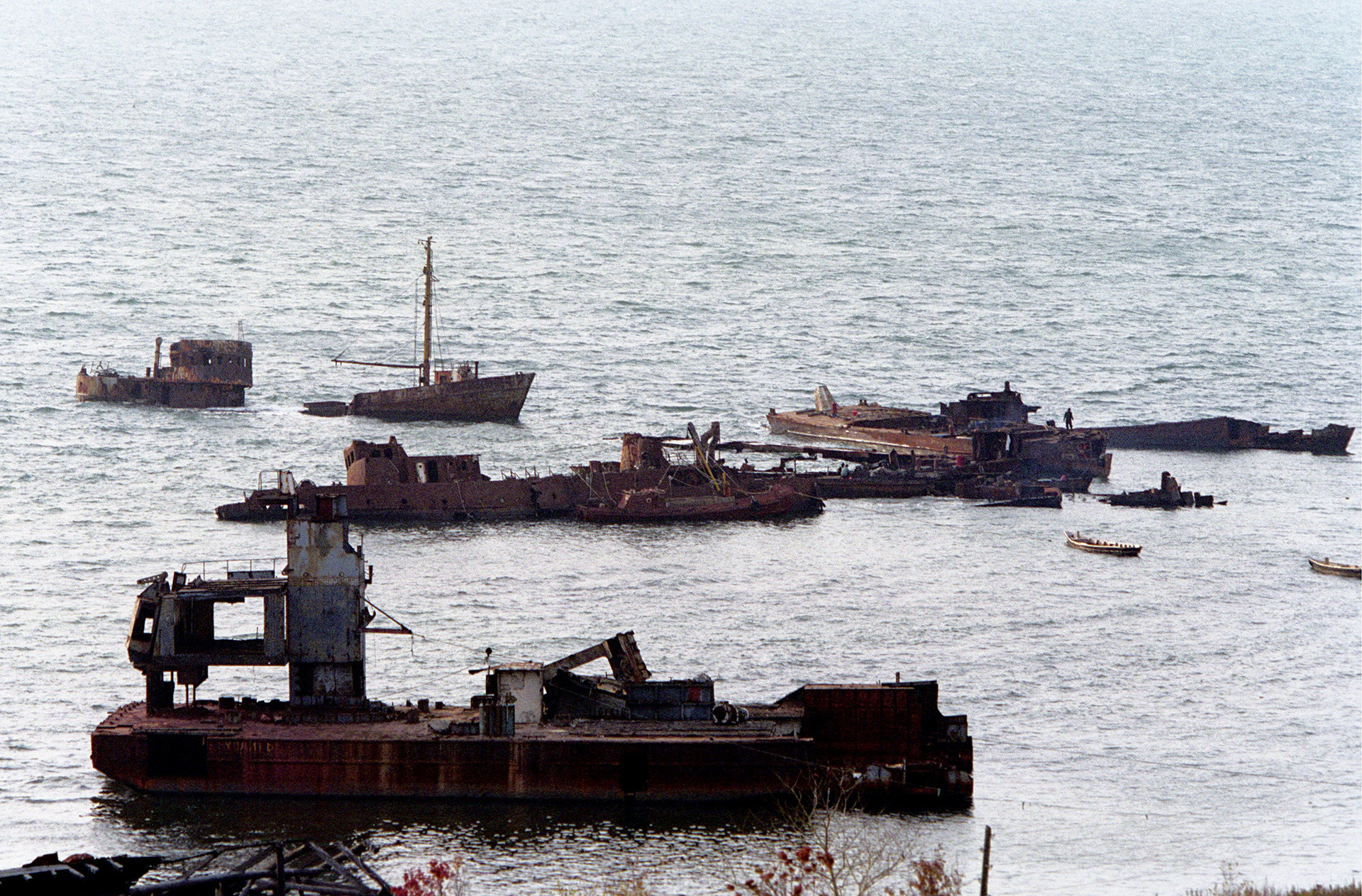
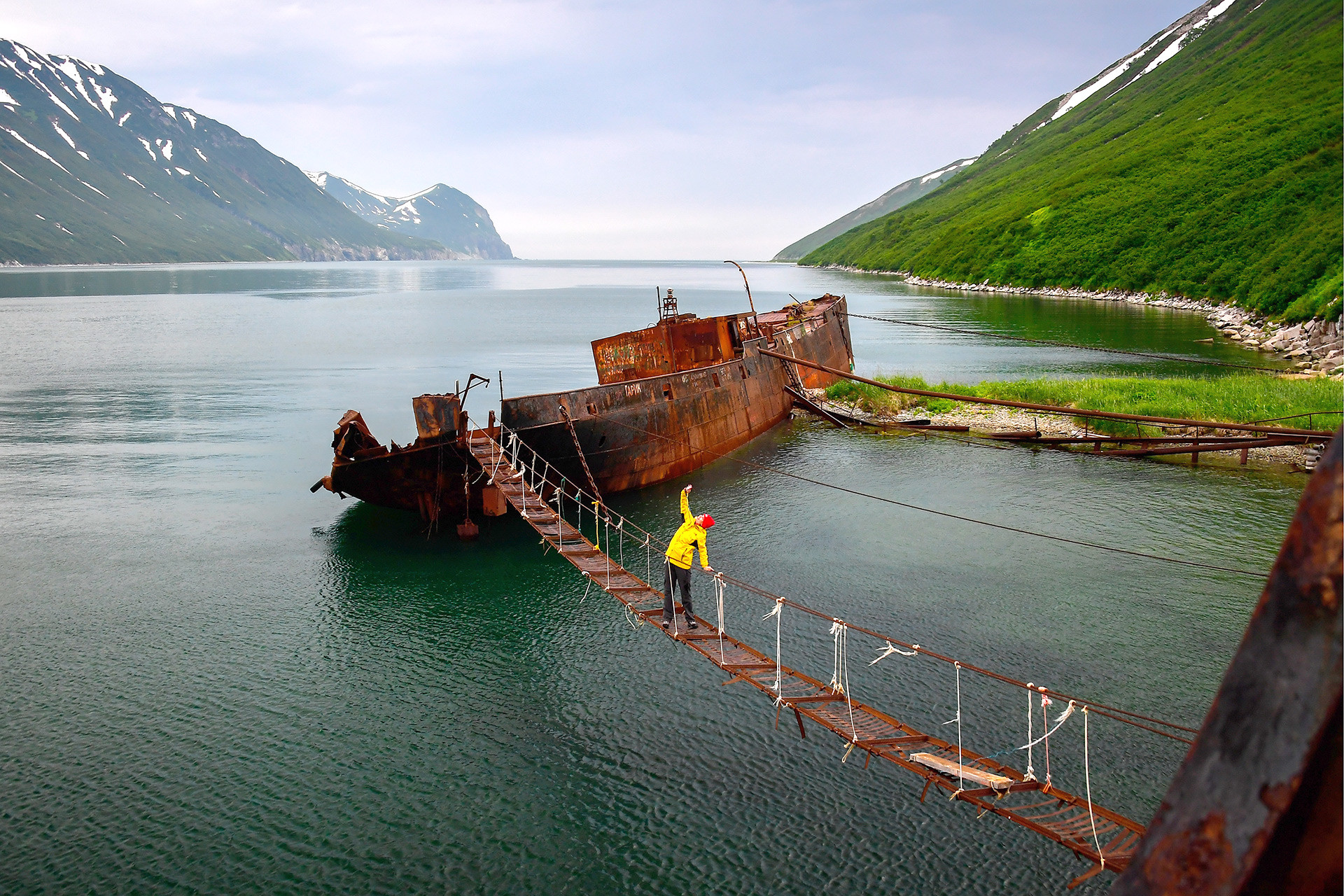
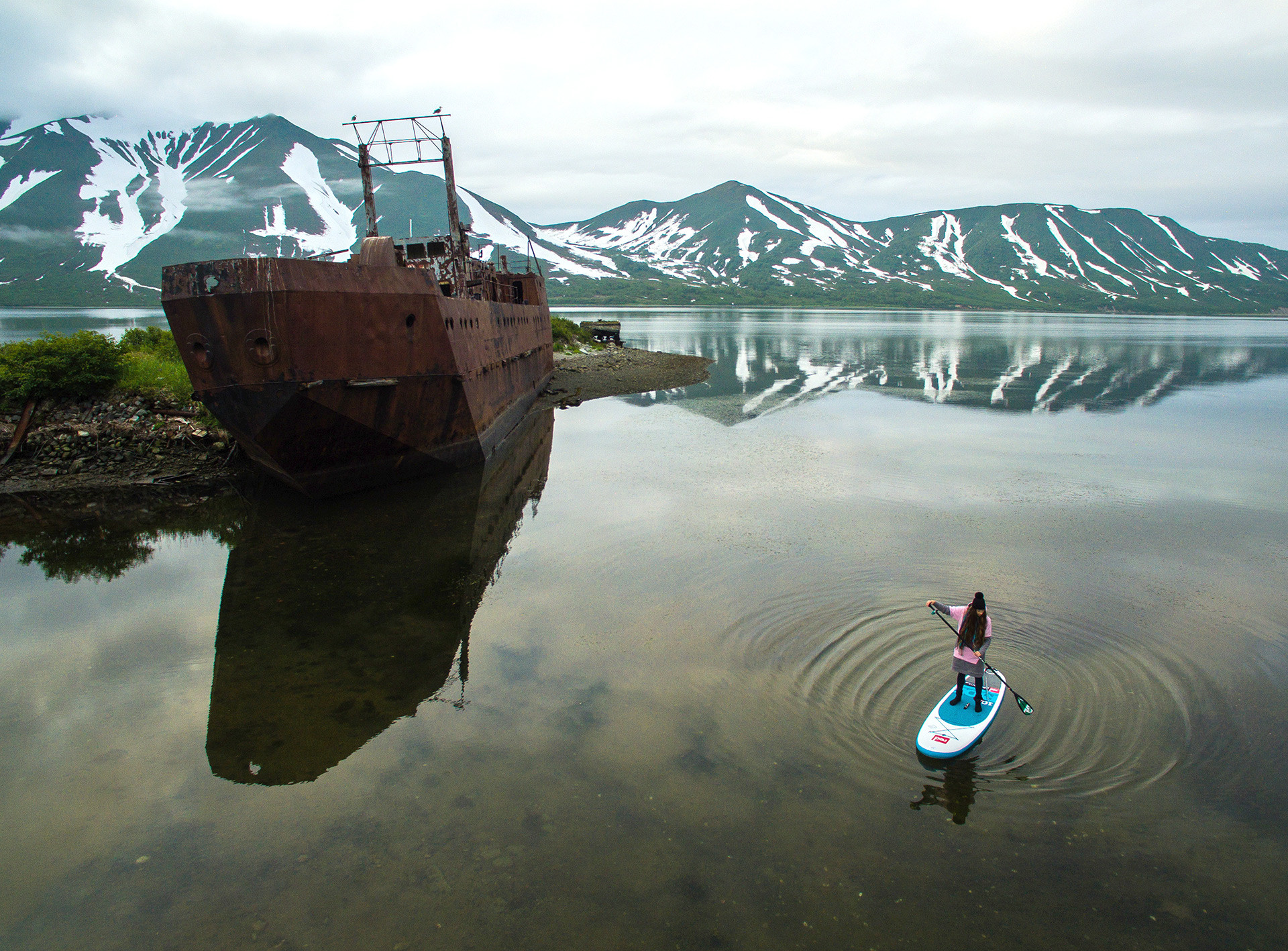
Sometimes “retiring” a ship is no easier than constructing a new one. So to skip the complicated and labor-intensive process of demolition, it’s not uncommon to create “ship graveyards” by sinking vessels in deep waters or abandoning them on the coasts of distant bays.
Vladimir Fedorenko/Sputnik
The demolition of decommissioned ships is not an easy task. Ideally, a ship should be demolished at a dry dock. But in practice, not every dry dock can accommodate a huge vessel such as an oil tanker or cruise liner. Besides, such procedure is very expensive.
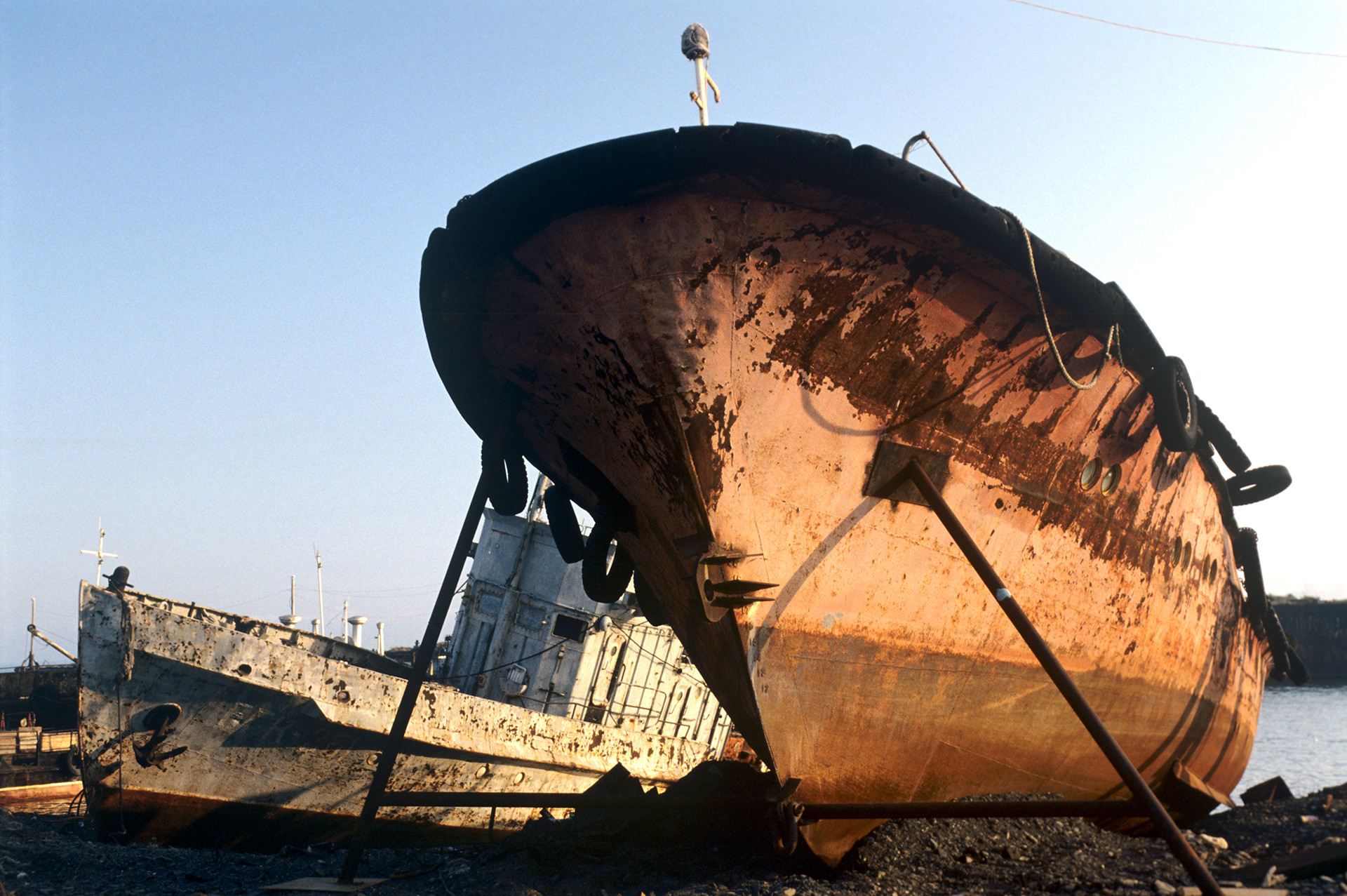
A half of the world’s ships take their final voyage to special demolition places in India, Bangladesh, Pakistan and Turkey. Here right on the beaches, without using any automatic devices, thousands of workers manually cut the vessels into pieces literally with pickaxes and hammers.
Sergey Krasnouhov/Sputnik
Ship demolition is not only a hard task, but also a very dangerous one, harmful for both the health of the workers involved and the environment. During the dismantling process, lots of scrap metal, petroleum products, mercury, lead, antimony, etc. are produced.
Sergey Krasnouhov/Sputnik
The other way to get rid of a ship is to sink it in deep waters. The USSR had six cemeteries in the Arctic Ocean and four in the Pacific for “burying” decommissioned ships, most of which belonged to the Soviet Navy.
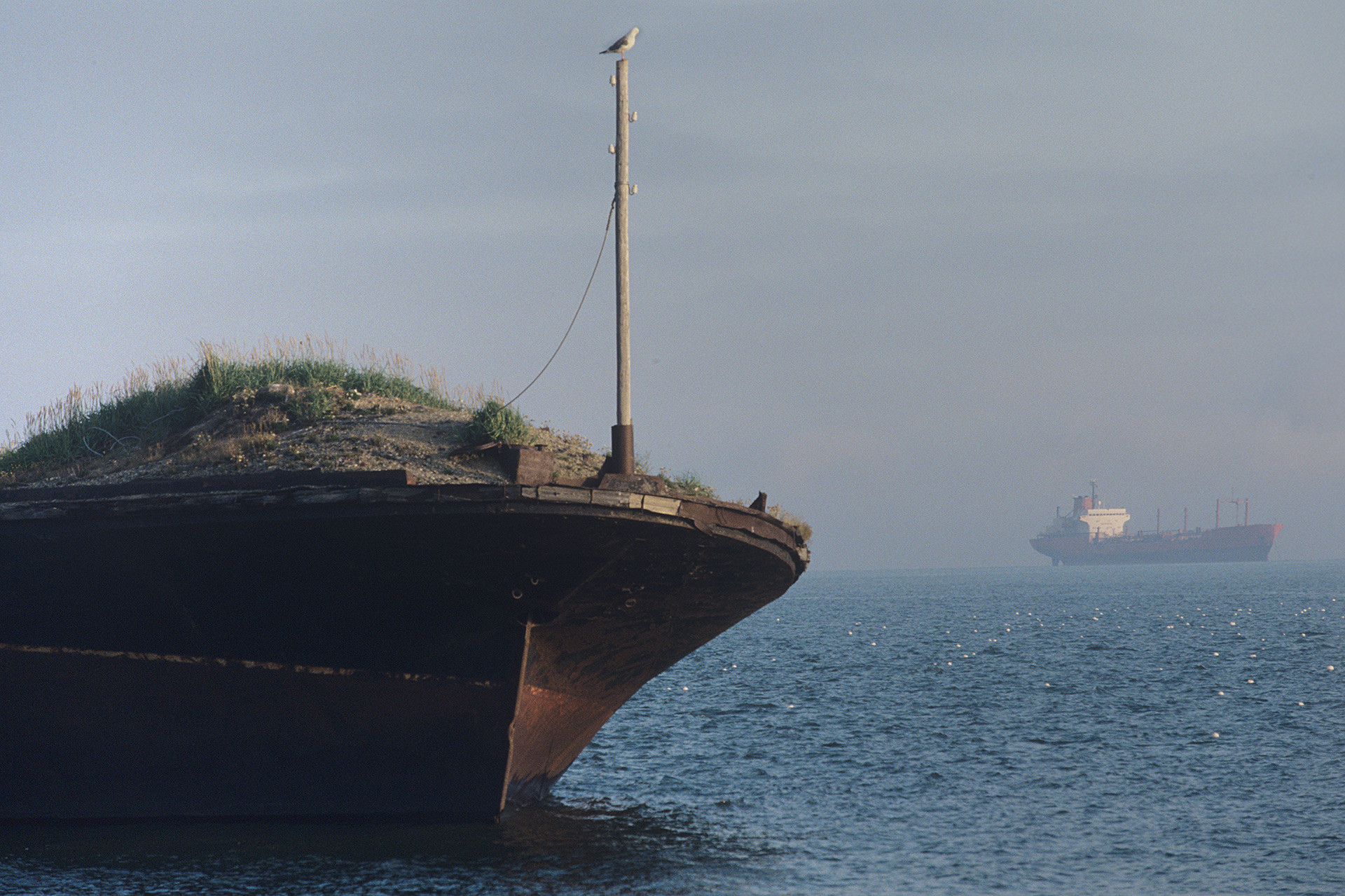
Russia, the U.S. and some other countries continue to sink their ships in the seven seas. This method is far from being perfect because of all the pollution and, in the case of nuclear submarines, radiation.
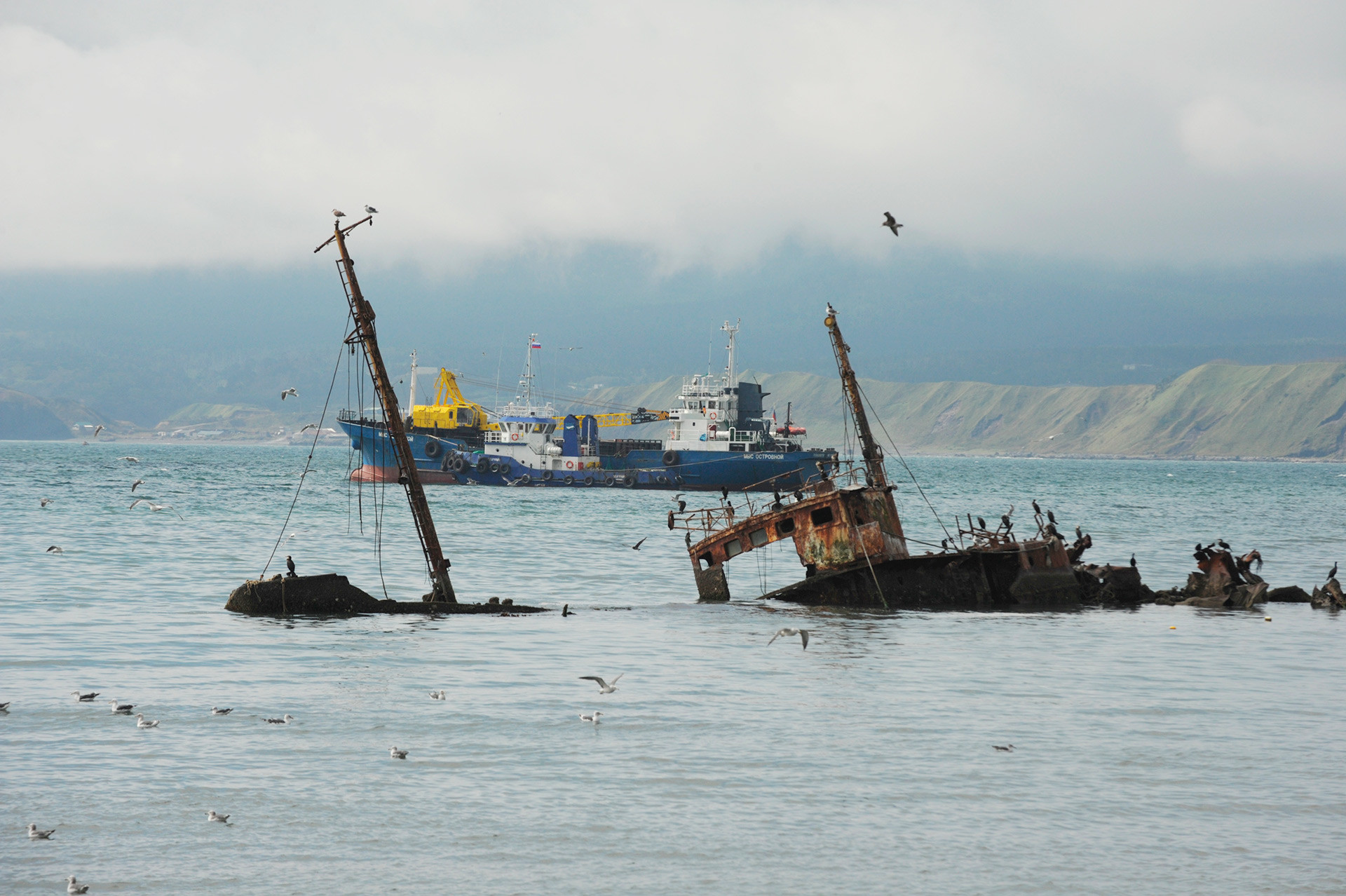
Ekaterina Shtukina/Sputnik
Some vessels are destined to serve as firing targets for the Navy when holding drills or testing new types of weapons. Others may be specially sunk in the sea not far from the coast to become a test ground for military divers.
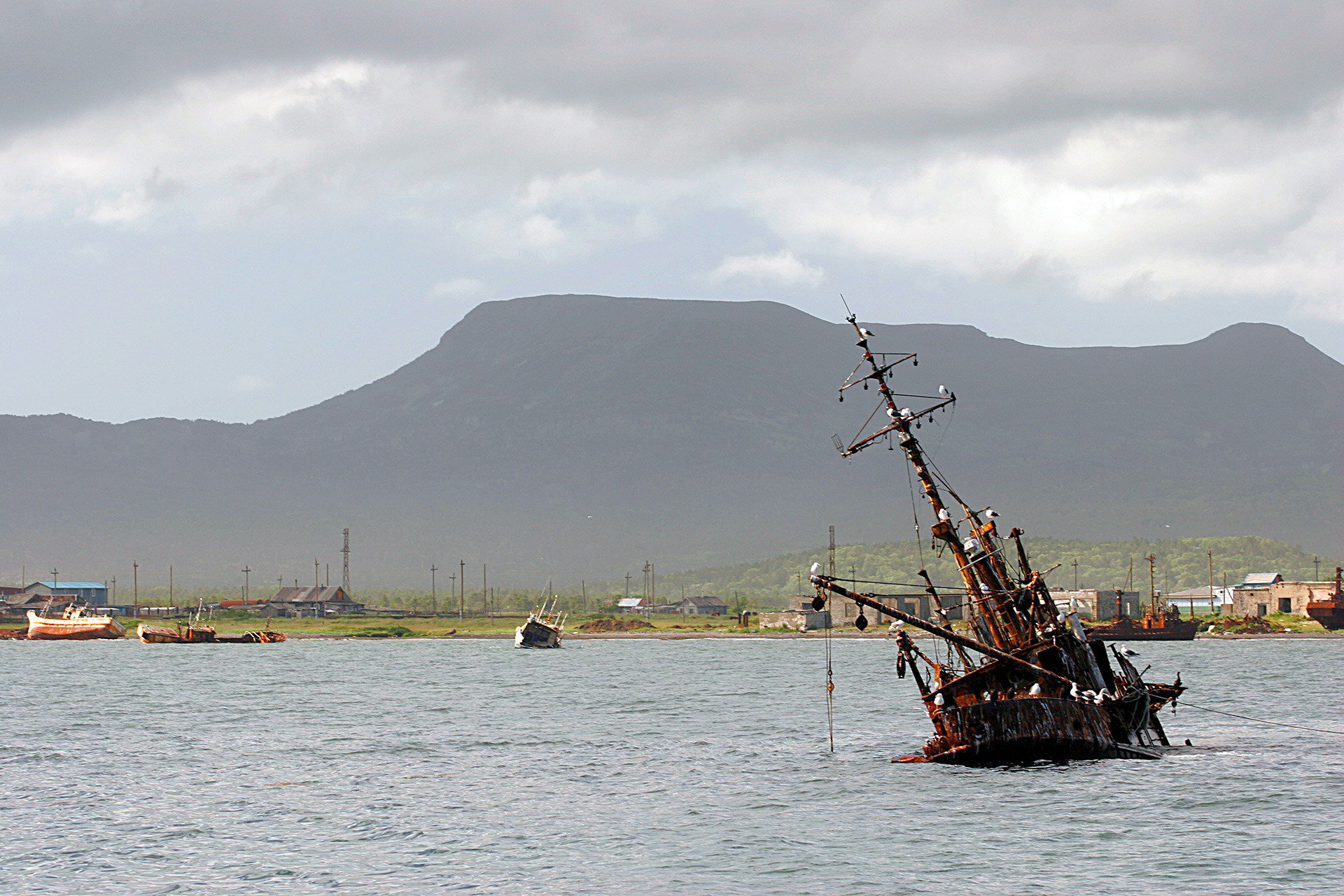
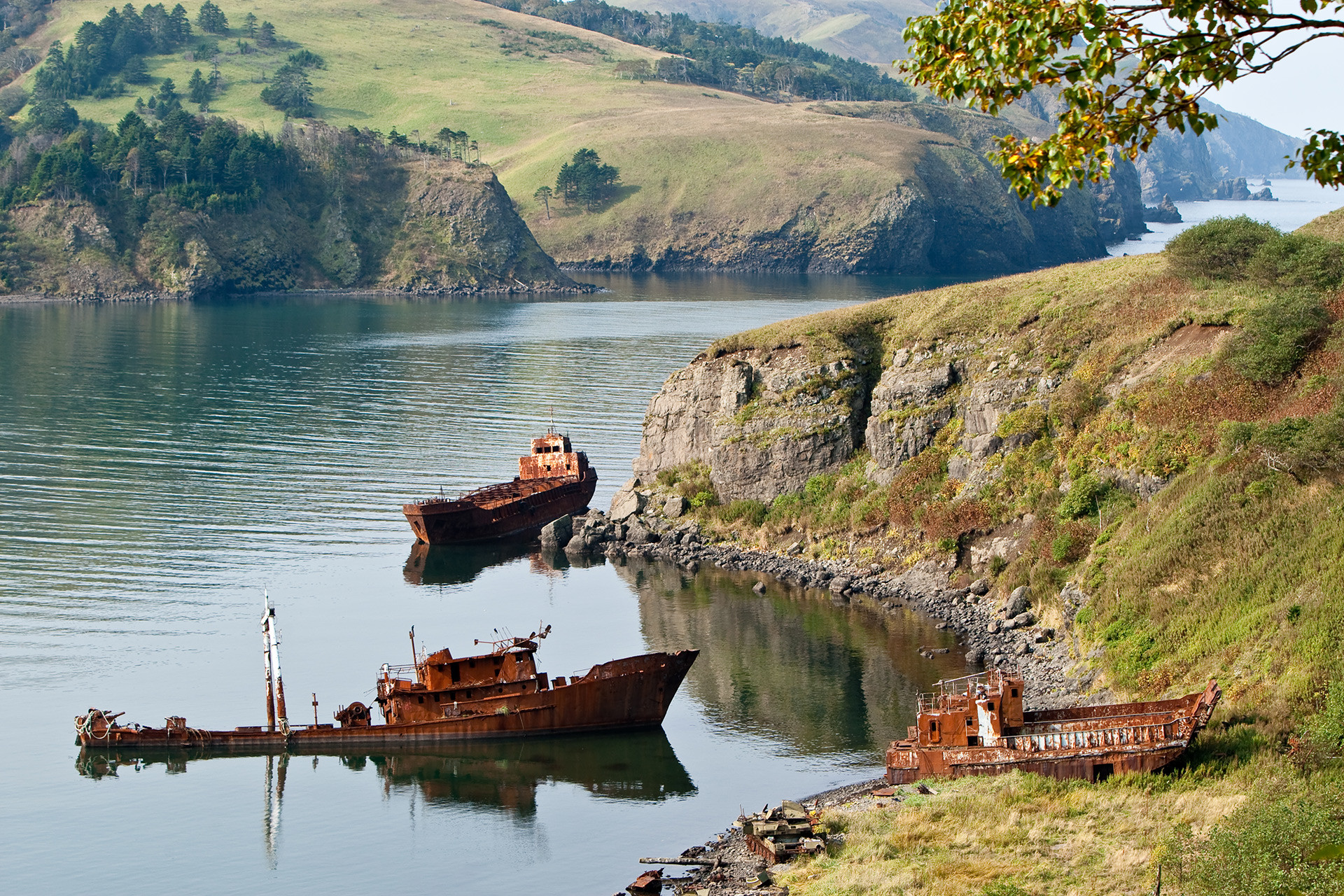
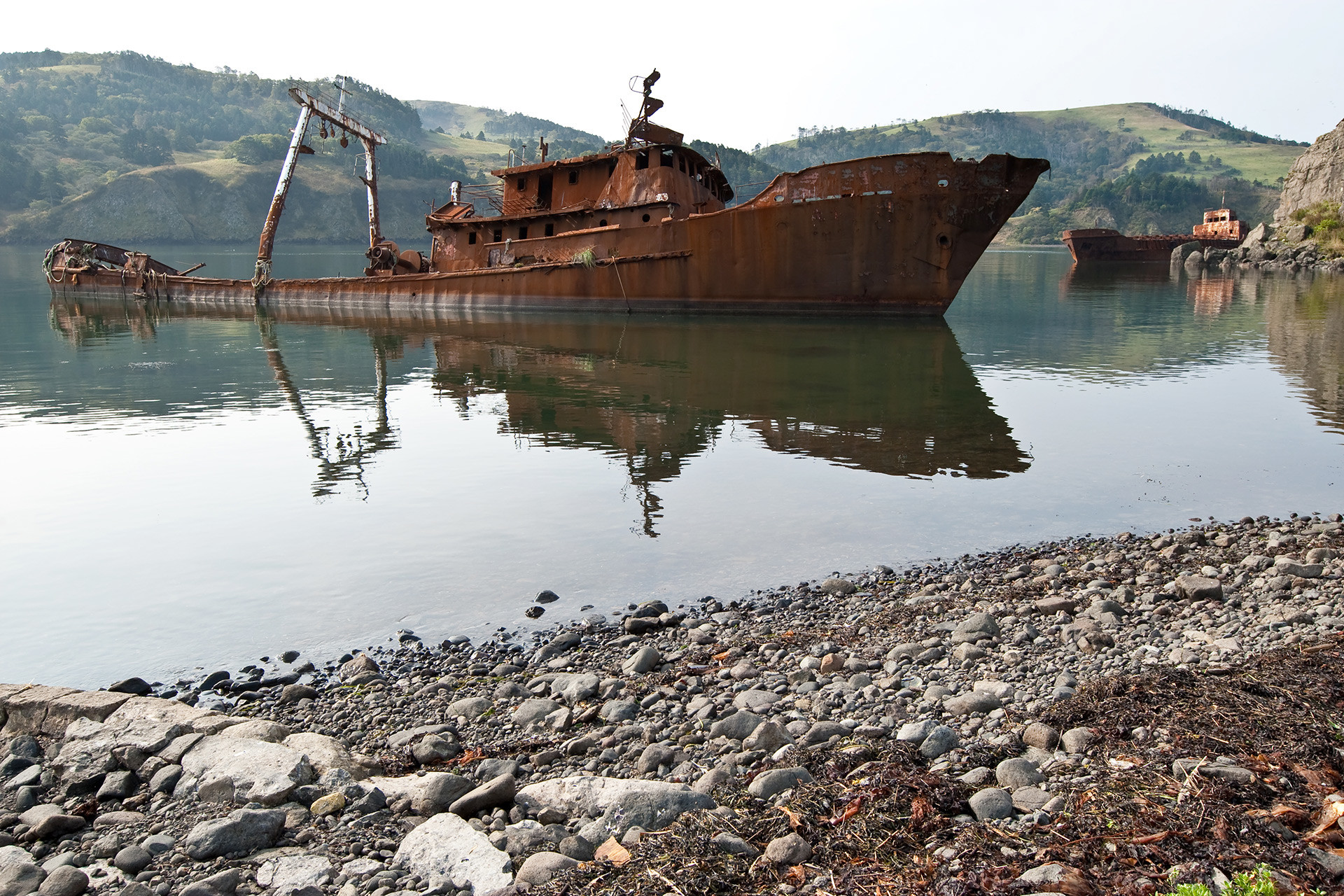
Not only remote waters out at sea are potential ship graveyards. Bays dotted around the world are also home to dozens of ships lying on the shore or half-sunken in the coastal waters. Here they await demolition processes that may never start…
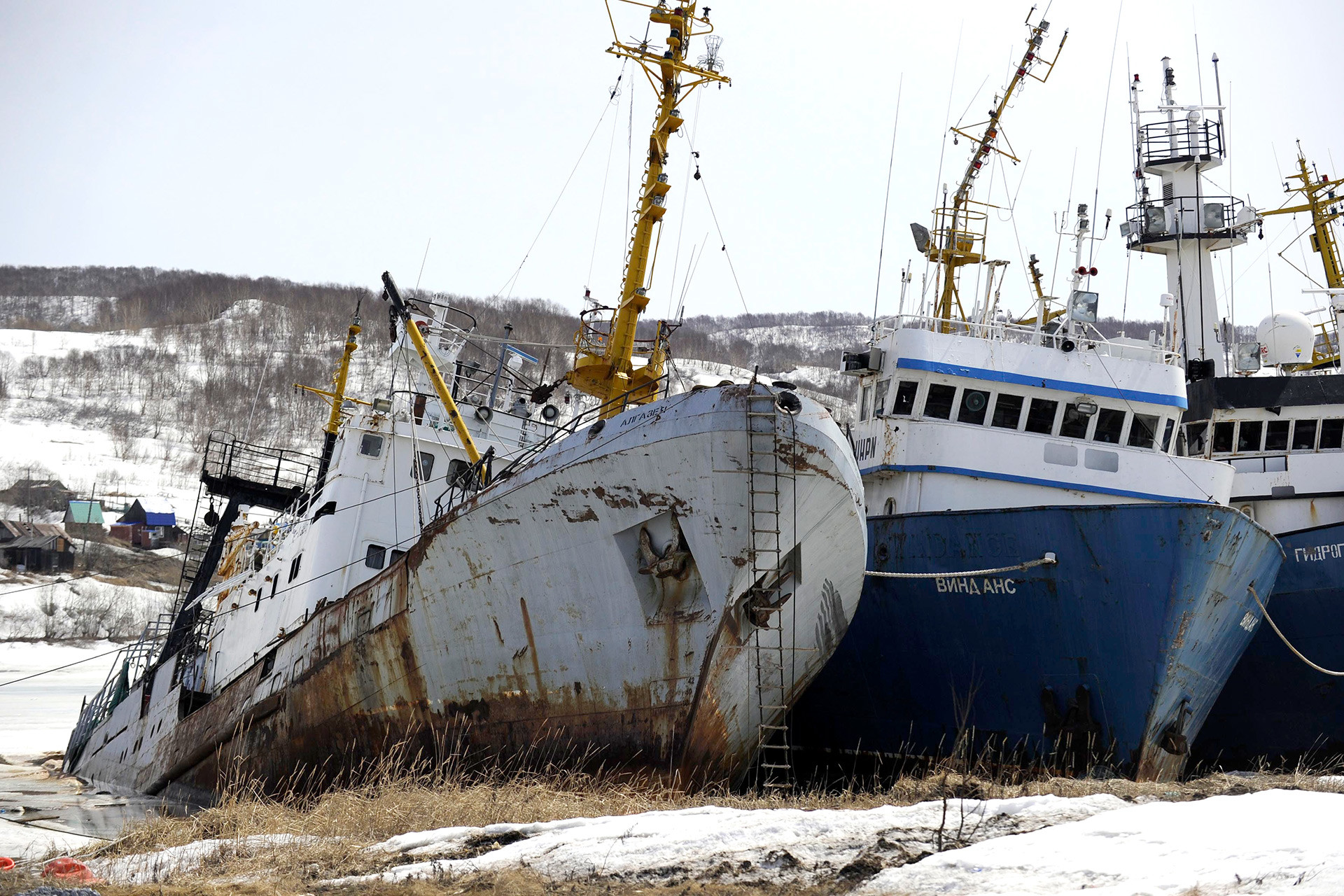
In Russia, most of these “cemeteries” are located beyond the Polar Circle and in the Far East. For instance, near the naval base of Russia’s Northern Fleet at Olenya Guba in the Murmansk Region one can find a cemetery for dozens of decommissioned submarines. Still, there’s not much chance of ever taking a closer look—entry is highly restricted.
Special attention is paid to the demolition of military vehicles. At dry docks, they go through a demilitarization process during which all weapons and top-secret equipment are removed.
Do you know there is a cemetery for spacecraft? Find out where it is.
If using any of Russia Beyond’s content, partly or in full, always provide an active hyperlink to the original material.
Get the week’s best stories straight to your inbox
In Bangladesh, men desperate for work perform one of the world’s most dangerous jobs. They demolish huge ships in grueling conditions, braving disease, pollution, and the threat of being crushed or stabbed by steel sliced from the hulls.
➡ Subscribe: http://bit.ly/NatGeoSubscribe
➡ Access our digital archive by becoming a member of National Geographic: https://on.natgeo.com/2F8WtdI
#NationalGeographic #Ships #Bangladesh
About National Geographic:
National Geographic is the world’s premium destination for science, exploration, and adventure. Through their world-class scientists, photographers, journalists, and filmmakers, Nat Geo gets you closer to the stories that matter and past the edge of what’s possible.
Get More National Geographic:
Official Site: http://bit.ly/NatGeoOfficialSite
Facebook: http://bit.ly/FBNatGeo
Twitter: http://bit.ly/NatGeoTwitter
Instagram: http://bit.ly/NatGeoInsta
Explore the lives of ship-breakers online in National Geographic magazine:
http://ngm.nationalgeographic.com/2014/05/shipbreakers/gwin-text
PHOTOGRAPHY & VIDEOGRAPHY: Mike Hettwer
EDITOR: Spencer Millsap
Where Ships Go to Die, Workers Risk Everything | National Geographic
https://youtu.be/WOmtFN1bfZ8
National Geographic
https://www.youtube.com/natgeo
Видео Where Ships Go to Die, Workers Risk Everything | National Geographic канала National Geographic
Показать
Apr 1st 2011
(Updated Oct 20th 2015)
It is the end of another long, hard day of backbreaking and hazardous toil. As the sun sets off Bangladesh’s scarred coastline, hundreds of men clamber off the hulk of a ship and paddle wearily back to the oil-streaked mud of the beach. They are “cutters”, and they have spent the day tearing the ship apart with little more than their bare hands and oxyacetylene torches.
For Bangladesh, this is big business. Some 700 ocean-going vessels are scrapped each year, and about 100 of them are ripped apart in Bangladesh. The ship-breaking market is like a parable of the promises and pitfalls of globalisation. In rich Western countries, ship-owners used to have to pay royally to have their craft taken apart by expensive machinery in dry docks. Now, they can sell the decommissioned ships to ship-breakers, who have them dismembered along poverty-stricken beaches, with anything from 300 to 500 workers employed on each ship.
In one sense, this is what globalisation promised: ageing ships, once big costs for their owners, have become assets; and poor countries, with few resources beyond their labour, can make use of them, creating jobs and providing themselves with cheap recycled materials, notably steel.
But there are snags. Ship-breaking is dangerous for its workers and damaging to the environment. The countries that dominate the market—Bangladesh, China, India, Pakistan and Vietnam—typically offer cheap, unorganised labour and lax environmental controls. The industry first came to Bangladesh thanks to one of its regular scourges. In 1960, when Bangladesh was still known as East Pakistan, a cyclone
left a ship, the SS Clan Alpine, beached near the port of Chittagong. Since then, ship-breaking has become Bangladesh’s main source of steel. And a stretch of beach, as these pictures show, has become a vision of hell.
They were taken by Saiful Huq Omi, a photographer whose home is about 40 minutes’ drive from the beach. “I was born in this place,” he says. “I grew up in this place.” He was keen to get to the heart of the matter: “in other photographers’ pictures, you cannot see the brutality of the business, how it is killing people. It is still not considered an industry, the workers have no rights.”
It relies on ill-paid casual workers risking injury, mutilation and death. Numbers are hard to gauge, since few have an interest in publicising them. But the Bangladeshi press has estimated that more than 400 workers have died in the past 20 years, and more than 4,000 have suffered serious injuries.
Sometimes gases lingering around the vessels explode, to lethal effect. Some workers have been crushed by tumbling steel girders; others have fallen from the high sides of ships on which they were working without safety harnesses. Many of the oxyacetylene cutters work without goggles. Few wear shoes, let alone protective clothing.
They are also exposed to long-term health risks: from the asbestos used for insulation in older ships, and from paint containing lead, cadmium and arsenic. Workers are poorly compensated when injured, and often, in between ships, have no work and no income. Many live in squalor. According to Young Power in Social Action, an NGO campaigning on ship-breaking in Chittagong, 51% of workers are under 22 years old and 46% are illiterate. Omi says they hate the work. They do it, he says, because “there is no other way to support their families. This is their last option.” ~ SIMON LONG
 |
||
| Прочитайте текст с пропусками, обозначенными номерами. Эти номера соответствуют заданиям А21-А28, в которых представлены возможные варианты ответов. Обведите номер выбранного вами варианта ответа. TEST 03 ( part 3) |
Even if you live in the heart of the city, there’s no reason why you shouldn’t A21 take
up gardening. We can’t all afford a large garden, but we can all create a space where we can follow the seasons. Whether it’s a window box, a balcony or a tiny yard, anyone can have the pleasure of looking A22 after plants.
A window box is a small box of plants that literally sits outside your window. Here, the choice of
plants is what counts. You want a splash of colour all year A23 round , so choose flowers that bloom at different times of the year. Daffodils, for example, are beautiful spring flowers and will soon have you looking forward to summer. Their bright colours will also attract butterflies, bringing a touch of life. If you’ve got a balcony, you’ve got a little more freedom. In this case, the key is to А24 make maximum use of the space you’ve got available. Put taller plants against the walls of the house, with shorter plants and flowers along the A25 edge of the balcony.
You can also add a water feature; a small fountain creates interest and can have a cooling effect on a hot summer’s day. If your neighbours’ balcony is next to yours, why not use a fast-growing plant like wisteria to form a natural barrier, giving you more privacy?
Those of you who are lucky enough to have a small yard can really go to town. Think about how you’re going to use it. Do you want to be able to sit and enjoy the sun? Or do you want to be
A26 able to entertain friends and have a barbecue? Divide the yard into separate areas and plan each one carefully. Garden furniture is very important. A table that folds in half can give you a lot of flexibility, and chairs that fold away also allow you to change your garden to A27 suit your mood. As A28 far as plants are concerned, choose varieties that don’t mind a bit of shade, unless your yard gets a lot of sun. Yards often have walls that keep the sun out for long periods and you don’t want your careful plans spoiled because a few of your plants start to die.
|
A21 |
1) take Take up — браться за что-либо, заниматься |
2) set Set up — воздвигать, устанавливать |
3) put Put up — строить, воздвигать (здание); ставить пьесу; вешать объявление |
4) make Make up — компенсировать;выдумывать |
|
A22 |
1) on Look on smth — наблюдать, не вмешиваяясь |
2) up Look up smth — нет такого сочетания (look smth up) |
3) after Look after — заботиться |
4) down Look down smth — нет такого сочетания |
|
A23 |
1) round All year round — круглый год; устоявшееся выражение |
2) over |
3) along |
4) across |
|
A24 |
1) get |
2) make Make use of smth — извлечь из чего-либо пользу; утоявшееся выражение |
3) have |
4) do |
|
A25 |
1) edge край, грань |
2) boundary граница |
3) rim Используется в значении «край» только со стаканом — rim of glass — края стакана |
4) frame Рамка |
|
A26 |
1) capable To be capable to — нет такого сочетания ( to be capable of smth/doing smth) |
2) possible To be possible to – о человеке так сказать нельзя |
3) able To be able to — быть способным, иметь возможность |
4) probable To be probable to — о человеке так сказать нельзя |
|
A27 |
1) fit |
2) suit Suit one’s mood — удовлетворять настроению; утоявшееся выражение |
3) copy |
4) go |
|
A28 |
1) much |
2) long |
3) few |
4) far As far as smth is concerned — что касается..; утоявшееся выражение |