
Преобразуйте, если это необходимо, слово «NOT BE» так, чтобы оно грамматически соответствовало содержанию текста.
Winston Churchill
Winston Churchill was a great political leader and a very clever man. Many British people think since then there __________________ a prime minister better than him.
Winston Churchill
Winston Churchill was a great political leader and a very clever man. Many British people think since then there 19_________________ a prime minister better than him. He even 20__________________ the Nobel Prize in Literature in 1953. His 21__________________ work was a six-volume memoir about WW2, but he wrote some science fiction books as well.
1
Преобразуйте, если это необходимо, слово WIN так, чтобы оно грамматически соответствовало содержанию текста.
He even __________________ the Nobel Prize in Literature in 1953.
Источник: ЕГЭ по английскому языку 2022. Досрочная волна
2
Преобразуйте, если это необходимо, слово FAMOUS так, чтобы оно грамматически соответствовало содержанию текста.
His __________________ work was a six-volume memoir about WW2, but he wrote some science fiction books as well.
Источник: ЕГЭ по английскому языку 2022. Досрочная волна
Спрятать пояснение
Пояснение.
Необходима форма глагола в Present Perfect, так как первая часть предложения стоит в настоящем времени, но по смыслу необходима связь с прошлым.
Ответ: hasnotbeen.
Источник: ЕГЭ по английскому языку 2022. Досрочная волна
1) Вставьте слово, чтобы оно грамматически соответствовало содержанию текста.
Winston Churchill
Winston Churchill was a great political leader and a very clever man. Many British people think since then there ___ (NOT BE) a prime minister better than him.
2) Вставьте слово, чтобы оно грамматически соответствовало содержанию текста.
He even ___ (WIN) the Nobel Prize in Literature in 1953.
3) Вставьте слово, чтобы оно грамматически соответствовало содержанию текста.
His ___ (FAMOUS) work was a six-volume memoir about WW2, but he wrote some science fiction books as well.
4) Вставьте слово, чтобы оно грамматически соответствовало содержанию текста.
Clouds
Do you like to watch clouds? Many people all over the world enjoy ___ (DO) it.
5) Вставьте слово, чтобы оно грамматически соответствовало содержанию текста.
There are a lot of different kinds of clouds but they all look white as they reflect the Sun’s light – just like the Moon. It is interesting to know that clouds ___ (NOT BE) unique to our planet.
6) Вставьте слово, чтобы оно грамматически соответствовало содержанию текста.
In fact, any planet with an atmosphere has ___ (THEY).
7) Вставьте слово, чтобы оно грамматически соответствовало содержанию текста.
It takes an hour or ___ (LITTLE) to form a cloud. That is why the weather can change so quickly.
 Вставьте слово, чтобы оно грамматически и лексически соответствовало содержанию текста.
Mikhail Vrubel
Mikhail Vrubel is a renowned Russian painter who worked in almost all genres of art, including graphics and sculpture. He was born in Omsk to an ordinary family. In his early ___ (CHILD) Vrubel was very weak because of the harsh Siberian climate.
9) Вставьте слово, чтобы оно грамматически и лексически соответствовало содержанию текста.
___ (FORTUNATE), his family moved to warmer regions, where Vrubel quickly got better.
10) Вставьте слово, чтобы оно грамматически и лексически соответствовало содержанию текста.
Mikhail Vrubel showed his ___ (ARTIST) talent at the age of 10.
11) Вставьте слово, чтобы оно грамматически и лексически соответствовало содержанию текста.
That is why his father hired a private ___ (TEACH) so that he could learn the advanced painting techniques.
12) Вставьте слово, чтобы оно грамматически и лексически соответствовало содержанию текста.
Still, after finishing school Vrubel decided to study law. While studying at university, Vrubel practised art only through making ___ (ILLUSTRATE) for books.
13) Вставьте слово, чтобы оно грамматически и лексически соответствовало содержанию текста.
He didn’t finish university and entered the Imperial Academy of Arts and made friends with Serov. His most famous works are the ___(USUAL) pictures The Swan Princess and Demon Downcast.
Winston Churchill: biography
Winston Churchill is one of the greatest and ambiguous political figures of the 20th century. His played a significant role both for Britain and the whole world’s politics, but the modern society views it ambivalently: some admire the politician’s personal courage and actions, others are disgusted by his position that only the white could rule the world.
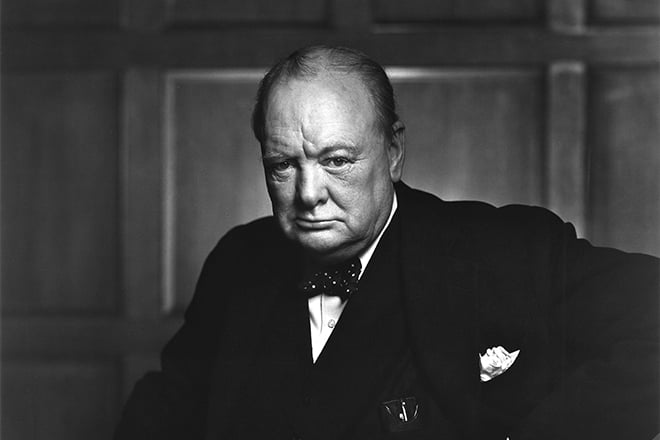
Although Churchill openly fought dictatorship in the battlefield, he did not keep in secret his liking of Benito Mussolini’s and Joseph Stalin’s activities – these two figures were the founders of totalitarianism and cult-of-personality governance regime in Italy and USSR.
Winston Leonard Spencer-Churchill was born on November 30, 1874, in Blenheim Palace, into the family estate of the Dukes of Marlborough. His parents were wealthy and influential people: the father Lord Randolph Henry Spencer was a famous politician and the Chancellor of the Exchequer, and his mother Jennie was the rich American businessman’s daughter.
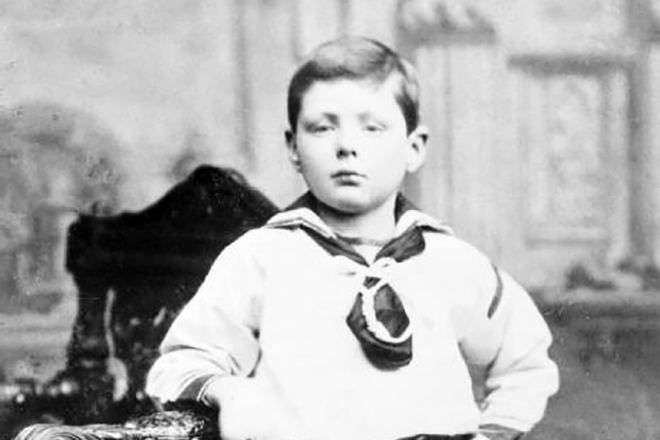
The future politician was the first child, but he was deprived of parental attention because his father was busy with his political career and his mother led a social life. The nanny Elizabeth Ann Everest brought up young Winston and became his closest person.
The would-be Prime Minister of Great Britain became the member of the “high caste” of the privileged right after his birth. It could be an obstacle for the splendid political career: the noble had no right to be the members of House of Commons and the country’s government. However, Winston belonged to the lateral line of the Churchills which gave him the opportunity to become a great politician.
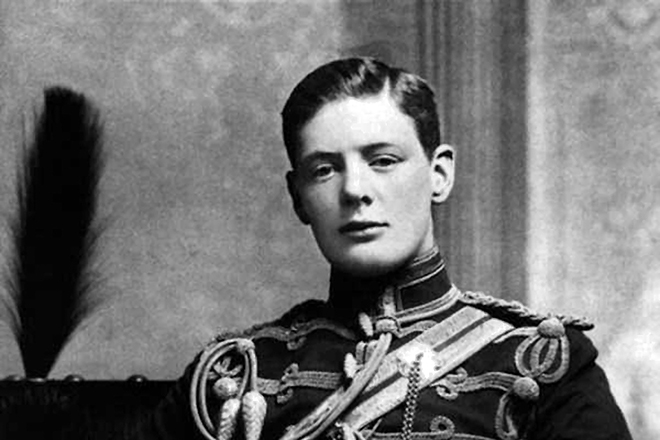
At 7, Winston was sent to a boarding St George’s School where more attention was paid to discipline rather than students’ education. At school, Winston demonstrated his reluctance to study for which he often received spanking with a rod. After the nanny who regularly visited him noticed marks of beating on the boy’s body, she insisted that Churchill should be transferred to another school.
However, the boy did not like studying at Brighton school as well: he was the last student of the class in discipline. At 12, young Churchill had serious health problems: pulmonitis weakened his organism. For this reason, he did not go to Eton College as men in the Marlborough family usually did and entered the equally prestigious college at Harrow. This choice was explained by the schools’ geographic positions.
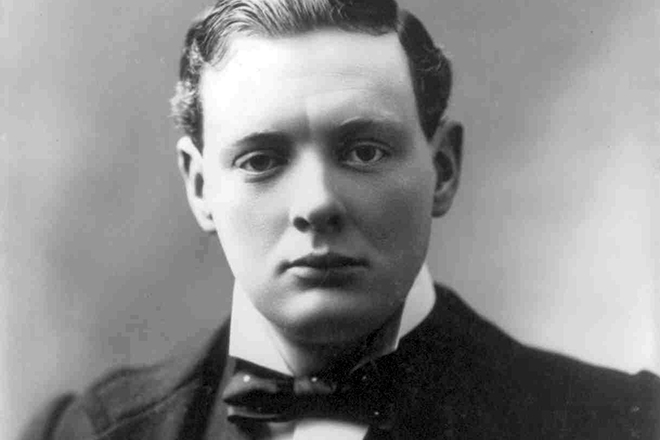
At this school, Churchill continued to be indifferent to subjects – he learned only what he was interested in and stubbornly ignored the rest. Because of this, he was transferred to the “military class” in 1889.
The class program was focused on military science. This is where the obstinate student Winston became industrious. He managed to become one of the 12 graduates who could pass the final examinations in all subjects. It gave Churchill the chance to enter the most prestigious military school in Britain which he finished as a second lieutenant.
Military career
In 1895, Churchill was commissioned to the Fourth Hussars regiment of the British Army. In the course of time, he realized that he was not attracted to the military career. Thanks to his widowed mother, Winston was assigned to Cuba as a military correspondent and remained in the active military service. The debut in journalism not only brought fame and social recognition to the would-be politician but also gave him the chance to earn the first significant money – 25 guineas.
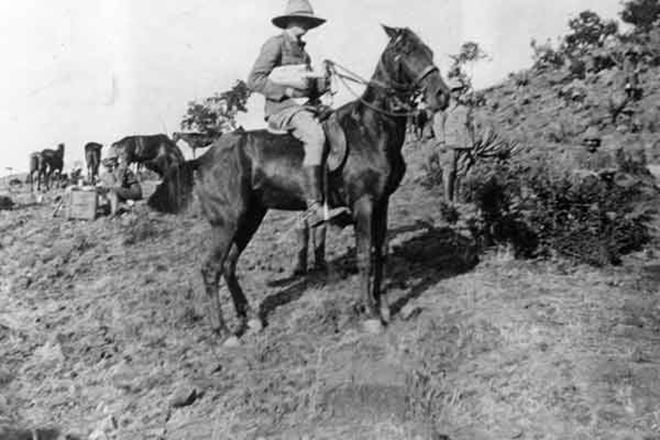
Apart from the glory and money, Churchill took two habits from Cuba that he preserved through all his life: smoking Cuban cigars and siesta which implied the after-lunch rest. In 1896, he continued his journalist travel: he was sent to India and later Egypt. Churchill showed his military courage: in addition to describing the events, he personally took part in battles and faithfully performed his military duties.
Politics
In 1899, Winston Churchill decided to resign and devote himself to politics. At that moment, he was a famous journalist, so he could count on public support. The first attempt to become the member of the Parliament with the conservative party failed – the voters preferred the liberals.
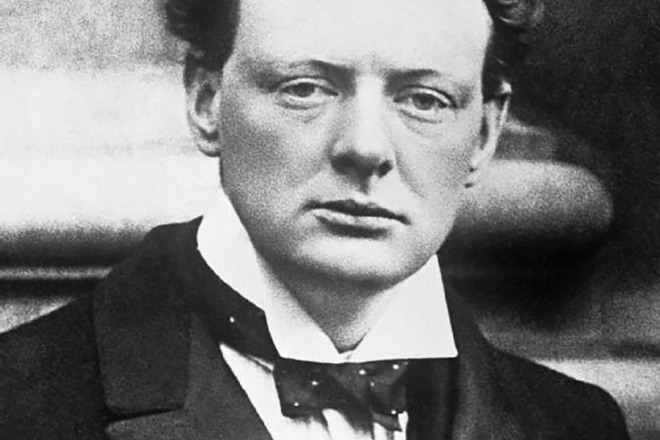
Churchill put off politics for a while and went to another journalist travel. He was sent to South Africa where the Second Boer War took place. He was captured by the enemy but made a daring escape. It was the golden opportunity for Churchill as a politician: people promised to vote for him regardless of their political views. With all that, Churchill decided to go back to the battlefield where he participated in many operations to save his fellow citizens from the prison where he had been kept.
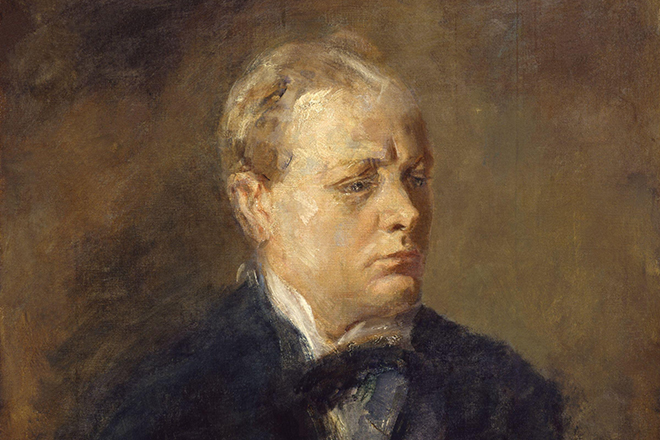
Churchill’s courageous adventures made him a real hero when he returned to the home country. He easily won in the parliamentary elections in 1900 and became the member of the House of Commons where he had a seat for the next 50 years. In the same year, he published his only literary work “Savrola” in which, as historians believe, the politician portrayed himself as the protagonist.
Since his first days in the Parliament, Winston Churchill severely and directly criticized conservatives and expressed his disagreement with the program of Joseph Chamberlain, the main ideologist of the country. Because of this, the future Prime Minister of Great Britain left the Conservative party 4 years later and switched to the liberals – this step helped him climb the political ladder promptly.
At first, he became the Under-Secretary of State for the Colonies, then the President of the Board of Trade, the Minister of the Interior. In a year, Churchill became the Secretary of the Navy. Thus, he became the youngest politician who took the most important positions in Britain.
When Winston Churchill was governing the Department of the Navy, he failed miserably. The military operation in the Dardanelles during the First World War led to the catastrophe due to his fault: 250 thousand of English soldiers died unreasonably.
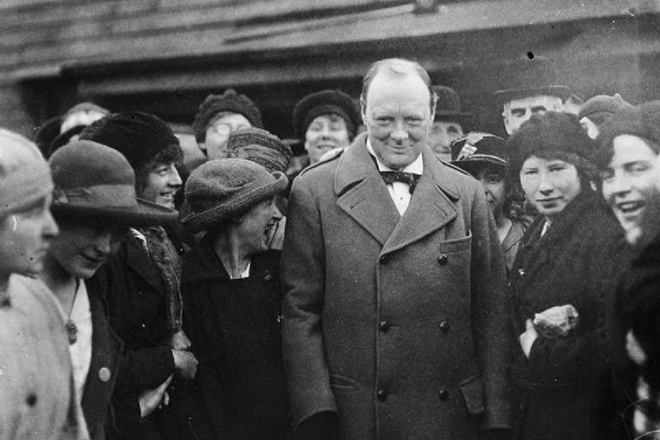
In order to make amends, the politician resigned and volunteered to the battlefield. In several years, the passions related to the Dardanelles cooled, and Churchill returned to the government to take the position of the Minister of Munitions. However, he could not show his worth there and had to call a “political time-out” to stand back from all political activities.
The Prime Minister of Great Britain
Winston Churchill’s comeback to politics was marked with the beginning of the Second World War when Germany invaded Poland and Great Britain declared war on Adolf Hitler. Churchill was offered the position of the First Lord of the Admiralty since he never promised eternal peace in his country and was one of the few persons who could bring the nation to the victory, as the authorities believed.
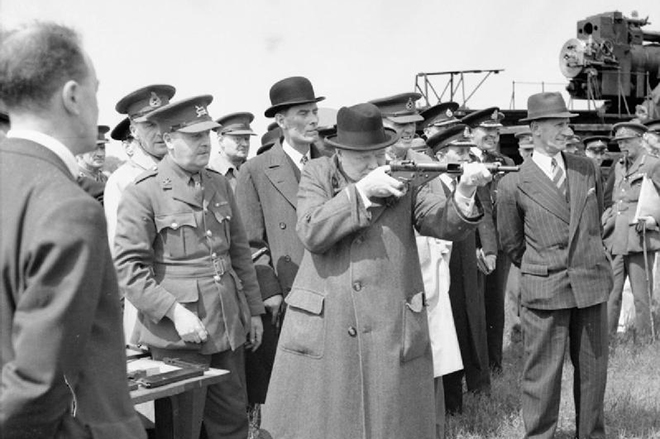
As Churchill took the major means of control under the country’s mobilization and directed them to the fierce struggle against Hitler’s Germany, he managed to climb the top of power and became the Prime Minister of Britain – however, at the most difficult period for the country. Still, his determination, tenacity, and sober situation assessment helped the British Prime Minister successfully conduct the war to the victory by creating the triumphant coalition with the USA and USSR.
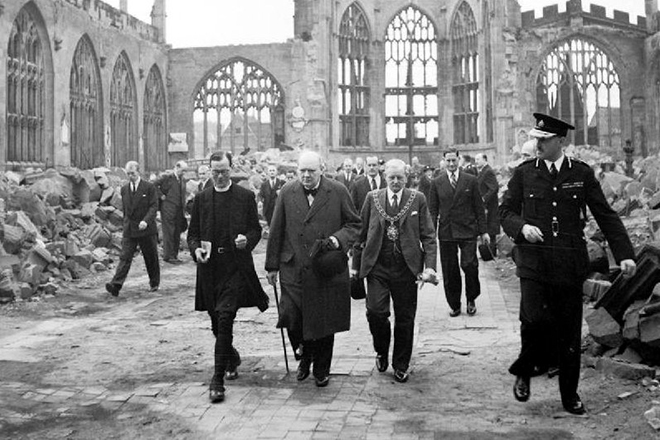
The ardent anti-communist, Churchill had to prefer Stalin to Hitler because there was no other way. In May 1942, Churchill, the American President Franklin Roosevelt, and the Russian leader Joseph Stalin signed an important agreement on the anti-Hitler coalition creation. The Atlantic Charter determined the economic and political world order in the ally countries after the victory in the World War II.
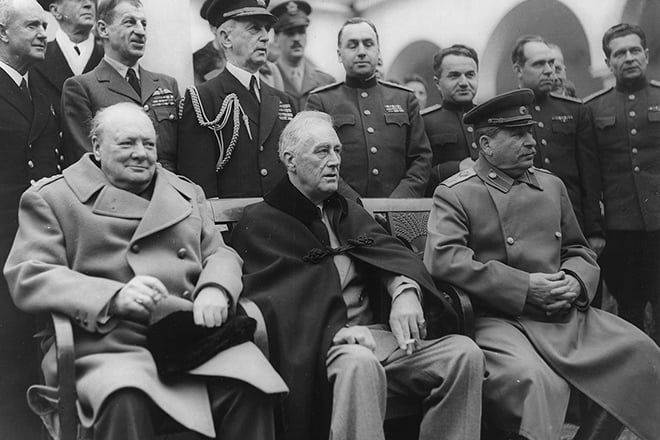
In 1945, the British, American, and Soviet leaders participated in The Yalta Conference and specified the political map of the world in the post-war epoch. The Big Three decided that Germany should be subdivided into 4 occupied territories; the USSR would get back Baltic states, Western Ukraine, Belarus, Bessarabia, Bukovina, and Karelia. At that time, the Soviet Union also pledged to take part in the war with Japan. In lieu of it, the USSR would receive southern Sakhalin and the Kuril Islands.
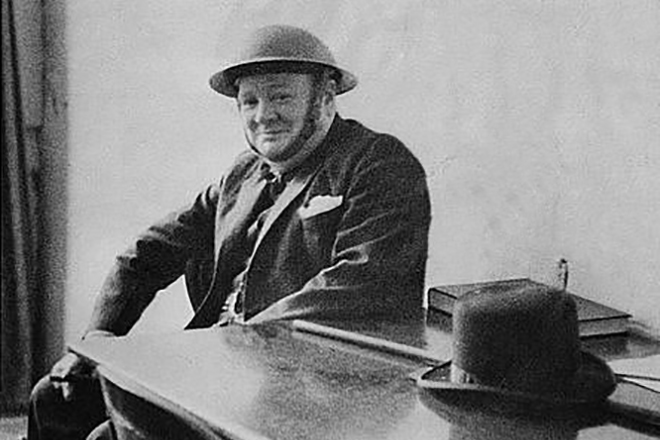
The world split into two political systems right after the Second World War was over. Churchill began to encourage the Western world to unite against the communist East to choke Bolshevism completely. However, he had to leave the big politics because serious economic problems occurred in Great Britain in the post-war years: the external debt increased, and the relations with the neighboring colonies deteriorated. With the defeat in the Parliamentary elections, Winston Churchill resigned.
At that time, he led the opposition and almost never appeared in House of Commons. He devoted himself to the literary activities. In 1951, 76-year-old Winston Churchill became the Prime Minister of Britain again and ruled the country for the next four years. He spent the latter years of his political activity on the foreign politics with the emphasis on the country’s nuclear potential development since he hoped to gain the former power of Britain by this means. For medical reasons, the British politician had to resign and left the position of the Prime Minister with full honors.
Personal life
Many historians compare Winston Churchill’s personal life to a “beautiful romance novel.” The great British politician met the love of his life in 1908 and married her at once. It was Clementine Hozier, the daughter of the London nobles. The Prime Minister and his wife happily lived together for 57 years. The wife became his best friend and main political counselor since Churchill made important decisions only with her approval.
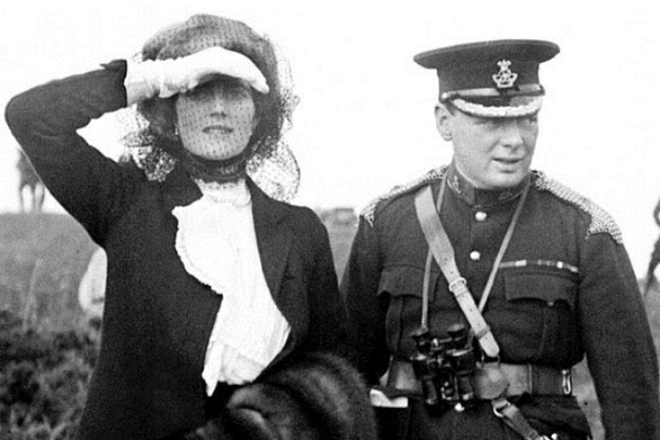
The politician’s wife was 11 years younger – it was considered a big gap at those times. Nevertheless, she managed to store love in the family and became the only person capable of handling Churchill’s sharp and turbulent character. Clementina gave birth to 5 children each of which was wanted and loved by their parents. After the Prime Minister’s death, his wife continued to call him an ideal husband even though he smoked like a chimney, gambled, and spent nights in casinos.
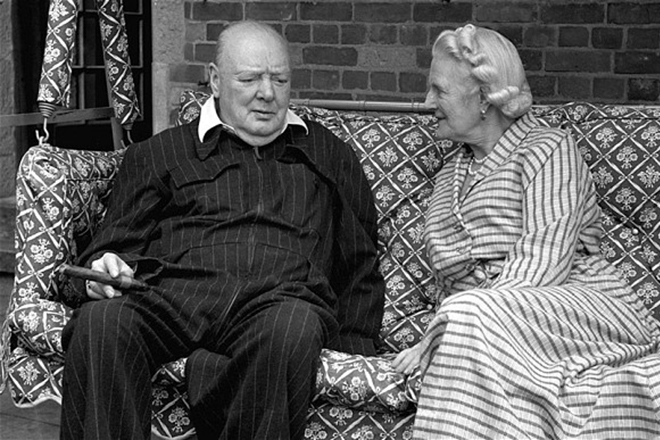
After the funeral, Clementine lost the meaning of her life and was ready to follow her husband, but the catchphrase that Churchill pronounced during the Second World War stopped her – he encouraged Britain to “never give in.” This speech helped Clementine overcome the loss and continue the literary activity for 12 years publishing the British leader’s unfinished memoirs.
Death
Winston Churchill passed away on January 24, 1965. The greatest Englishman in the history of the country died at the age of 90. The cause of death was a stroke that had already attacked the former British Prime Minister. It was the state funeral: the Queen Elizabeth II governed it. In the course of history, only 10 persons were honored this way.
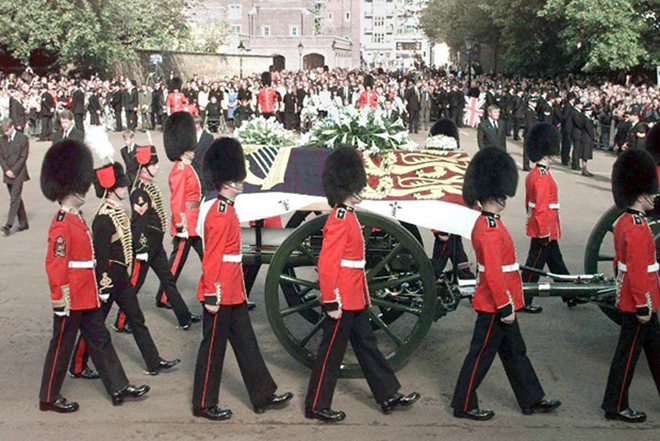
The funeral ceremony became the largest in the history of the country: the representatives of 112 countries and all members of the royal family were present. The funeral was broadcast live on many TV channels all over the world which gave almost 350 million people the opportunity to say farewell to the outstanding person via TV screens.
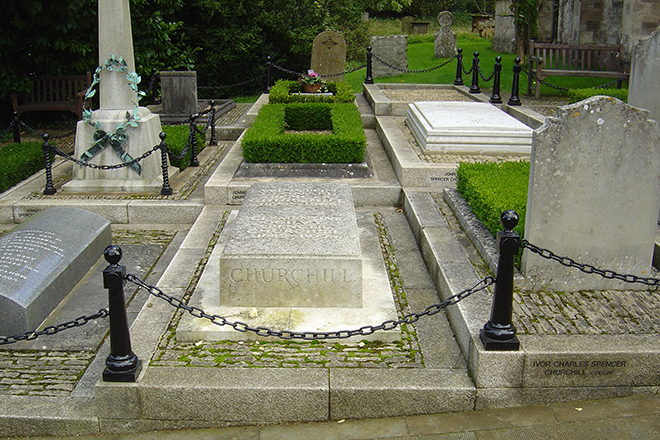
According to Churchill’s will, he was buried in Bladon cemetery near the St. Martin’s church not far from his family estate. Only Churchill’s family members and close friends were present at the ceremony.
Photo
Задания к тексту
- Прочитайте текст о Черчилле на английском.
- Выучите незнакомые слова или выражения.
- Чтобы лучше запомнить новую лексику, напишите по одному предложению с каждым выученным словом/выражением.
Скачать аудио.
| Sir Winston Leonard Spencer-Churchill (30 November 1874 – 24 January 1965) was an English politician. | Сэр Уинстон Леонард Спенсер-Черчилль (30 ноября 1874 — 24 января 1965) был английским политиком. |
| He was Prime Minister of the United Kingdom twice, once during World War II, and again in the early 1950s. | Он дважды был премьер-министром Соединенного Королевства — один раз во время Второй мировой войны, а второй раз в начале 1950-х. |
| Churchill was the only person to have been a member of the British Government during both World Wars, and the last commoner (non-royal) to be granted a state funeral. | Черчилль был единственным человеком, который был членом британского правительства во время обеих мировых войн, и последним простолюдином (не королевской крови), которому были предоставлены государственные похороны. |
| He was also a soldier, journalist, and author. He won the Nobel Prize in literature in 1953. | Он также был солдатом, журналистом и писателем. В 1953 году он получил Нобелевскую премию по литературе. |
| Churchill featured in two media polls. | Черчилль фигурировал в двух опросах СМИ. |
| He was ranked as the greatest British prime minister of the twentieth century by 20 prominent historians, politicians and commentators. | 20 известных историков, политиков и комментаторов назвали его величайшим премьер-министром Великобритании ХХ века. |
| In a 2002 BBC 2 television poll, Churchill was ranked as the greatest Briton in history. | В телевизионном опросе, проведенном в 2002 году на канале BBC 2, Черчилль был назван величайшим британцем в истории. |
| A million votes were cast, and the voting was heavily influenced by public campaigns from various candidates. | Было подано миллион голосов, и на голосование сильно повлияли публичные кампании различных кандидатов. |
| He is the only British Prime Minister to have received the Nobel Prize. | Это единственный британский премьер-министр, получивший Нобелевскую премию. |
Полезные слова
- politician — политик.
- Prime Minister — премьер-министр.
- government — правительство.
- commoner — простолюдин.
- state funeral — государственные похороны.
- soldier — солдат.
- Nobel Prize — Нобелевская премия.
- media poll — опрос СМИ.
- to rank — составлять рейтинг, оценивать, называть.
- public campaign — публичная кампания.
- to receive — получать, принимать.

Здравствуйте! Меня зовут Сергей Ним, я автор этого сайта, а также книг, курсов, видеоуроков по английскому языку.
Подпишитесь на мой Телеграм-канал, чтобы узнавать о новых видео, материалах по английскому языку.
У меня также есть канал на YouTube, где я регулярно публикую свои видео.
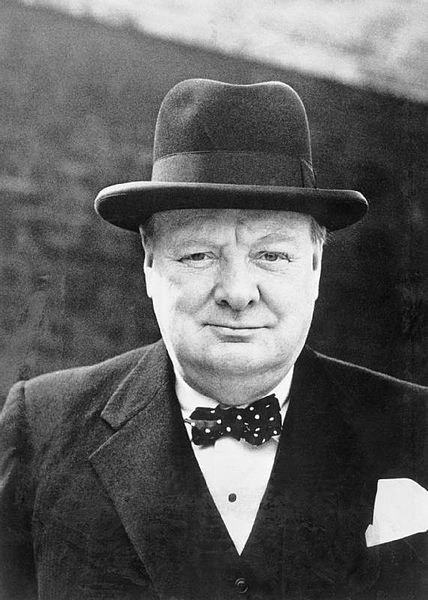
Winston Churchill life and achievements
Largely regarded as Britain’s greatest statesman of the 20th century, Sir Winston Churchill rose to critical admiration for his brave leadership during World War II (1939-1945). Serving in his first term as Prime Minister of Britain (1940-1945), Churchill’s political and military brilliance was on display as he rallied the rest of Europe and the U.S. in securing victory over Nazi Germany and the Axis forces. In this article, we present the illustrious life and stellar achievements of Sir Winston Churchill- Britain’s greatest modern icon.
Winston Churchill’s Childhood
On 30 November, 1874, Winston Leonard Spencer-Churchill was born in Oxfordshire to aristocratic parents- Lord Randolph Churchill and Lady Randolph Churchill (Jennie Jerome). The exact place of Winston Churchill’s birth was at the Blenheim Palace, Oxfordshire, England. The palace belonged to his grandfather, the seventh Duke of Marlborough.
His father, Randolph, was an influential member of parliament in the Conservative Party (the Tories). On the other hand, his mother, Jennie, was an American heiress who came from a family of business tycoons, financiers and horse racing lovers. Churchill’s parents weren’t the closest of couples- they lived a very estranged life together. Regardless of this, Winston had a closer relationship with his mother than his father.
Winston and his other sibling, Jack, were predominantly raised up by Mrs Ann Everest (Churchill’s nanny) and his grandparents at Blenheim. Mrs Everest was a spinster who devoted a great chunk of her life to raising the Churchill boys. In his later autobiography (My Early Life), Winston named Mrs Everest (commonly called “Voom”) as having a substantial influence on him during his childhood. Even up to this day, the Churchill family pay for the maintenance of Everest’s grave.
Schools that Winston Churchill Attended
Along with his other sibling (Jack), Winston attended Ascot boarding school and Harrow School (in April 1888). During his stay in boarding schools, he often got on the wrong side of the school authorities due to his rebellious tendencies. Although clever, he was not the most disciplined of the lot, and his dislike of formal education was palpable. According to Churchill, his boarding school days were full of unhappiness and misery.
Winston Churchill’s free-spirited life hampered his grades. He did however favor subjects like English language, French, poetry and history. He also took great delight in horse riding and swimming. At the age of 17, Winston won a local fencing championship.
His grades at Harrow School were at best average, and chances of him gaining admission into the university were very slim. After three attempts, Winston finally secured a place as a cavalry cadet at the officer training school (the Royal Military College) at Sandhurst. After he graduated from the military college (in 1894), he was assigned as a second lieutenant (cornet) in the 4th Queen’s Own Hussars at Aldershot.
His time as a young soldier and his brave military achievements abroad
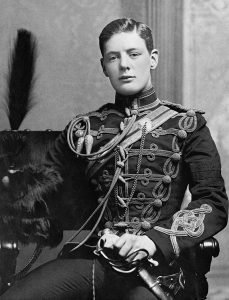
Winston Churchill’s days at the Royal Military Academy (1894)
Just a month before Winston became a cavalry officer , his father, Lord Randolph Churchill died, aged 45. Although, the relationship with his father was sometimes cold, his father’s passing still weighed heavily on Winston. But it also served as an opportunity for the young Winston to his leave his mark on this earth.
As a cavalry officer, Winston relished the chance of serving in the most dangerous of places in the British Empire. And when on such perilous military campaigns, he took to chronicling his activities and times.
In a space of about 5 years, Winston would visit countries such as Cuba, Afghanistan, India, Egypt and Pakistan. Serving as a military correspondent, most of his articles and stories about his daring campaigns between 1896 and 1900 were published in books and newspapers.
Cuba Mission
In 1895, Winston chose to spend his 5 months’ leave from the British Army in Cuba writing for the Daily Graphic about the Cuban War of Independence (1895-1898). His original destination should have been the West Indies, but he decided not to go there. Rather, he reasoned that he would achieve great heights in Cuba as a war journalist. It was in Cuba that the courageous and adventure-loving Winston got shot. The incident was not fatal, and Winston made his way back home to England.
Time in India
After Cuba, Winston got transferred to India in 1896. He reprised his role as a war-correspondent in the North-West Frontier Province. It was around this time that he started working on his first novel: Savrola: A Tale of the Revolution in Laurania. The novel was very popular in Britain. It set Churchill on a path of critical acclaim and admiration in the literature community as well as in the general public.
The following year, in 1897, Winston Churchill was part of the British troops that faced off with Pashtun tribe in Malakand, Pakistan. He chronicled the events of the war in his 1898 book – The Story of the Malakand Field Force.
The Sudan and South Africa
Under the command of Gen. Herbert Kitchener, Winston Churchill carried out his duty gallantly in the 1898 Battle of Omdurman, present-day Sudan. The battle was one of Britain’s last wins using a cavalry charge.
After Sudan, Winston briefly took a break from the army and returned to England in May 1899. However, when the Second Boer War broke out between British forces and Dutch soldiers in South Africa, Winston rescinded his resignation from the army.
He went on to serve as a volunteer/war correspondent in South Africa (the South African Light Horse) for the Morning Post. During his coverage of the Boer War (1899-1902), Winston got captured and imprisoned by the Boers. He boldly orchestrated a daring escape from captivity and returned to England to a rousing welcome. The details of the Boer War and the story of his escape were put in his 1900 book, titled- London to Ladysmith.
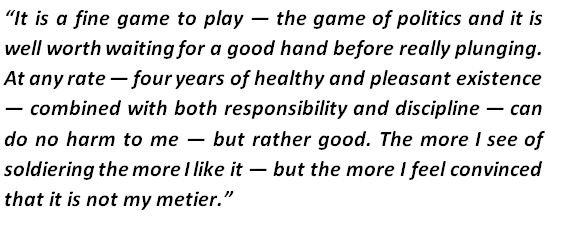
Winston Churchill stating his admiration of politics
Churchill always spoke fondly of his time in the British Army. He even described those years as some of the best years of his life. However, he always saw himself in active politics rather than in the army.
Churchill’s entry into politics
After about 4 years abroad with the military (from 1895 to 1899), the young Winston returned to England to a hero’s welcome. His reputation surely preceded him. Capitalizing on his new found fame, he contested in the 1900 Oldham by-election for a seat in the House of Commons (one of Britain’s second parliament).Unfortunately for him, he was resoundingly defeated.
However, as stories of his gallant efforts abroad continued to spread, Winston’s reputation even grew bigger and bigger. He started going on country wide tours in the UK, as well as in the U.S., giving speeches and lectures. The lectures and tours were financially beneficial to Churchill.
His fame and reputation began to pay off. In 1900, under Conservative Party ticket, Winston was elected to represent Oldham in the British parliament. He was only 26 years old at the time.
His formative years in politics were spent campaigning for reforms that promoted social interventions and economic equity. Examples of such issues that he campaigned on were: the eight hour workday; a government-set minimum wage; a government-run labor regulation office; and a public national health insurance. All of these proposed polices flew against Churchill’s aristocratic roots. As a result, the Conservatives became weary of the young Churchill.
Four years later, Winston moved across the aisle and became a member of the Liberal Party. This happened in 1904.
As a staunch believer in liberalism, Churchill favored issues such as unemployment and housing. These and many more ideas of his were published in his work: Liberalism and the Social Problem (1909). Between 1908 and 1912, Winston Churchill headed the Board of Trade during Lord Asquith’s government.
Brief re-entry into the military
In 1912, Churchill was appointed First Lord of the Admiralty (the department that was in charge of the British naval fleet). During his tenure, Winston ensured that Britain had a very modern navy force that was capable of dealing with the looming war in Europe.
He played a key role in setting up the Royal Navy Air Service. He made sure that the service had the right training and military hardware.
Churchill’s military blunder at Gallipoli
Churchill did not get the desired result that he wanted in the navy. As Secretary of the Navy (First Lord of the Admiralty), Churchill commanded a disastrous invasion in Turkey in 1915. In an attempt to force the Ottomans to the side with Western Allies, Churchill sent British troops to fight the Ottomans at the Gallipoli Peninsula, Turkey.
Britain had gravely underestimated the Turks; and after close to a year of bloodshed, the Turks, led by Mustafa Kemal Ataturk, completely humiliated the British Army and Winston Churchill. A death count of 250,000 soldiers was too big a disgrace for Churchill to handle. Therefore, Churchill resigned from his position in the navy.
Subsequently, Churchill served in various political appointments in Britain. When the First World War broke out, Winston got appointed as the minister of munitions. After the war ended, he was called to serve as the minister of war and air. He was also the colonial secretary from 1919 to 1922.
Chancellor of the Exchequer in the Conservative Party
After spending about 20 years with in the Liberal Party, Churchill reverted back to the Conservatives in 1924. Two years later, in 1926, he was made the Chancellor of Exchequer in Stanley Baldwin’s government. His decision to return the British Pound Sterling to the gold standard caused a lot of economic woes for Britain. Britain witnessed the General Strike of 1926 due to this decision of his that he later admitted as a very big mistake.
Churchill’s Response to the menace posed by the Nazi Party in Germany
From 1929 to about 1938, Winston remained relatively quiet in the political arena. But he did work assiduously in sending words of warning to Britain about the threats posed by a budding Nazi Party in Germany. Very few people took him seriously. Instead his Conservative Party was busy licking its wounds from the 1929 general election loss.
The general public and the government in power were perhaps war-tired. Prime Minister Neville Chamberlain even struck several deals with Germany in order to appease the German fuhrer- Adolf Hitler.
Churchill’s warning came to past in 1939 when Hitler went back on his commitment and invaded Poland. Britain and her allies now found themselves in an all-out war with Germany and the Axis. Britain had no one else to turn to other than Sir Winston Churchill during World War II.
World War II Heroics as Prime Minister
The outbreak of World War II in 1939 was Churchill’s cue to return to politics. He was appointed to the position of First Lord of the Admiralty for the second time. Soon, he became the head of the Military Coordinating Committee.

An extract from his first prime minister speech to the British House of Commons
After the resignation of Prime Minister Chamberlain in 1940, Churchill rose up to the challenge and became British prime minister at the age of 66. It was a very dark and trying time for not just Britain but all of continental Europe. Adolf Hitler was on the rampage picking European countries one after the other.
The rest of Europe looked like it would crush under the might of Nazi Germany and Axis forces. If anything at all, very few politicians, if any, in Britain were prepared to take up the prime minister’s job. That was not the case with Winston Churchill. In the mind of the 65 year-old Winston, the time was perfect for him to steer Britain and the Allied forces out of this dark patch.
Winston Churchill remained composed all throughout WWII. Not once did it cross his mind to give into the Nazis. He gave rousing speeches and radio broadcasts to maintain the morale of his soldiers and the citizenry. Without a shred of doubt, this was Winston’s most defining moment. It was as if he was born or destined to lead Britain out this dark moment.
Churchill’s years of experience in the army also enabled him to take up the position of Minister of Defense. He brought on board great minds and industrialists to boost aircraft production in the UK.
The relationship he and U.S. President Franklin D. Roosevelt built during those trying times was nothing short of perfection. As a result of this, the United States massively supported Britain and other European allies with military hardware such as guns, tanks, planes and ammunition.
After the Pearl Harbor Attack on U.S. soil, support from the U.S. skyrocketed. Roosevelt and Winston were now in this together; fighting and rallying their troops against Hitler’s Nazi Germany. The two of them coordinated effectively with the Soviets to secure a glorious win against Hitler and the Axis forces in 1945.
MORE:
- World War II: Timeline of Important Events
- Invasion of Normandy: Summary, Significance and Images
- Why Did Adolf Hitler Hate Jewish People?
Churchill’s resounding defeat in the 1945 general election
After the war, one would have expected Winston Churchill to easily secure a second term as prime minister. However, that did not happen. Despite his heroics during World War II , Churchill lost the general election of July 1945. The Conservatives could only secure 213 seats in parliament as against the staggering 393 seats won by labor candidates.
British voters were simply looking for a party that would focus on social reconstruction. They were war-weary and felt that Churchill’s Conservative Party was not up to the task of bringing swift repair to the social and economic fabric of Britain.
Churchill’s time in Opposition (1945 to 1951)
During his time in opposition, Winston Churchill continued to play an active role in the British Parliament. He helped rally the British and American public against the dangerous threat that the Soviets could pose if Joseph Stalin went unchecked.
According to historians, Winston’s speeches and actions in the 1950s may have been indirectly responsible for worsening the Cold War between the US and the Soviet Union. Winston Churchill campaigned vigorously for unity in Europe to avert perceived communist dangers from the Soviet Union and Stalin. His public appearances won him favor from the British public.
MORE:
- 16 Shocking Facts about Soviet Union Dictator Joseph Stalin
Second tenure as Prime Minister of Britain (1951 to 1955)
Winston Churchill, 77 years at the time, reclaimed the prime minister’s position during the 1951 general election. During his first 6 months in power (from October 1951 to March 1952), Winston was also the Defense Minister of Britain.
Some of his major accomplishments during his second tenure included the Mines and Quarries Act of 1954 and the Housing Repairs and Rent Act of 1955. Using the revenue he was able to generate from increased taxes, Winston granted more governmental assistance and benefits to the British public.
He also tried to build a bridge between the West and the East. But none of his efforts came to fruition. He was the first person to introduce the term “Iron Curtain” to represent the sharp divide between the West and the East.
During his 2nd term as Britain’s prime minister, British forces were in the Korean Peninsula fighting along side their American counterparts in the Korean War. The war was virtually a proxy war between the Soviets and the Americans.
By the mid-1950s, age and stress had begun to take a toll on him. His health was not in the best of shape. In April 1955, Winston Churchill grudgingly resigned his position as prime minister.
After retiring from Number 10 Downing Street, Winston Churchill continued to serve in parliament for about 10 years.
Winston Churchill’s Personal life- Wife and Children
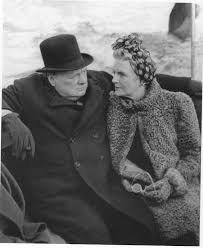
Winston Churchill and his wife, Clementine Hozier (1885-1977)
In 1908, Clementine Hozier and Winston Churchill got married at St Margaret’s in Westminster. The couple had five children: Diana Churchill (1909-1963), Randolph Churchill (1911-1968), Sarah Tuchet-Jesson (1914-1982), Marigold Churchill (1918-1921) and Mary Soames (1922-2014). Unfortunately, Marigold died at an early age of 2 in 1921.
Churchill and Clementine’s marriage lasted for about 57 years (from 1908 to 1965). The couple had some very rough patches together as Churchill’s busy schedule got in the way of his family life. Regardless of this, Clementine stood through it all. She remained with her husband until his dying breath.
Winston Churchill’s Death
In the latter stages of his brilliant political career, Sir Winston Churchill was afflicted with a major stroke. Prior to that, he was diagnosed with cerebral arteriosclerosis and a brain disorder. The first stroke slightly impaired his ability to speak and move freely. 12 years later, at the age of 90, frail and old now, Winston Churchill had to grapple with another major stroke.
Exactly nine days after this incident, Britain’s greatest prime minister, Sir Winston Churchill passed away at Hyde Park Gate on January 15, 1965. He was 90 years.
The British government gave Winston Churchill a grand state funeral. Many claim that his funeral was the grandest of state funerals the world had ever seen by then. The service was graced by heads of state and officials from about 112 countries. Across the world, tens of millions of people watched the service on their TV sets. It was solemn moment not just for Britain but for the entire world.
Winston Churchill’s Achievements and Legacy
Sir Winston Churchill’s taste of fame came in his mid-twenties with his heroic escape from Boer captivity as well as his numerous brilliant writings and journalism. However, what he is most remembered for was his firm leadership during those chaotic times in Europe. He courageously put up a strong resistance against Axis forces for the entirety of the 6 year World War II.
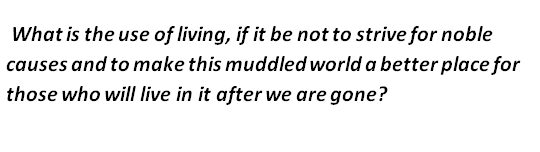
One of Winston Churchill’s famous quotes.
Even when neighboring countries like Belgium, France, the Netherlands, Austria and other Scandinavian countries panicked in horror, Winston remained resolute and focused. He was determined not to succumb to fascist and anti-Semitic aggression from Hitler’s well-oiled forces.
The outcome of World War II would have certainly been different had Winston not been the prime minister at that time. He was the last line of defense against autocracy and absolute anarchy.
Another very stellar accomplishment of Winston came not in war or politics, but in literature. In 1953, he was honored with a Nobel Prize in Literature for his six-volume history of World War II. An avid reader and writer, Winston was simply an expert at storytelling and historical descriptions. He is credited to have written many commercially successful books and papers.
In a 2002 BBC (British Broadcasting Corporation) poll, the British public (based on a million BBC viewers) voted him as the greatest Briton of all time.
Sir Winston Churchill was a British political leader known for his leadership of the United Kingdom during World War II. He was the man who gave hope to Britain during the darkest days of World War II, and was instrumental in turning the tide of battle against the Axis Forces in Europe.
A Short Biography
Winston Churchill was born on November 30th, 1874 to the family of the Dukes of Marlborough. His father, Lord Randolph Churchill, was the third son of the 7th Duke of Marlborough; he was a politician who married an American heiress.
As a child, Churchill hated school and did not do well academically, although he did develop a love for the English language. After graduating from Harrow, he applied to the Royal Military College, Sandhurst. He was finally accepted after three failed applications, and graduated in December of 1894.
Before playing a pivotal role in World War II as Prime Minister, Winston Churchill had a long career in the military, starting with the cavalry in 1895. His time in the military took him to many countries including Cuba, Sudan and South Africa and he experienced both successes and failures. During this period, he also worked as a war correspondent for several newspapers and wrote books about his military campaigns.
Churchill’s career as a politician started when he won the seat at Oldham in 1900. He experienced some early success in the political arena. One of his achievements was the passing of the People’s Budget which taxed the rich and provided funding for social welfare programs.
His political career had its ups and downs, from his post as Chancellor of the Exchequer in 1927 to his exile from the political scene in 1931.
Churchill really began to shine when he returned to politics at the start of World War II. He was appointed First Lord of the Admiralty, and then was made Prime Minister when Neville Chamberlain stepped down. As Prime Minister, he led Britain in fighting back against the advancing Germans, in a time when most of Europe was under Axis control.
He spent 50 years in public service and served two terms as Prime Minister of the United Kingdom. Besides being a politician, Churchill was also an artist, historian and writer. His writing won him the Nobel Prize in Literature in 1953.
Awards and Honours
Here are some honours that Churchill was given:
- Honorary Citizen of the United States
- Nobel Prize in Literature
- 100 Greatest Britons in a 2002 Poll
- One of the most influential leaders by Time Magazine
Leadership Lessons from Winston Churchill
1. Strengthen your weaknesses
In his youth, Churchill had a speech impediment which took several years to overcome. Churchill never accepted that he couldn’t overcome this obstacle and worked diligently to improve himself. In his later years he became a great public speaker, inspiring hope in millions through his speeches, and rallying many more during his political campaigns.
If you have a weakness in your personality or skillset, remember that it only takes perseverance and effort to overcome it. If you are afraid to speak to large crowds, you can take a training course to improve your public speaking. If you are afraid of conflict, you can learn conflict management techniques so that you are better equipped to deal with such situations.
Remember that it took Churchill time and effort to strengthen his weaknesses. Persevere and continue working to improve yourself!
2. Your words can have a great impact
During the darkest hours of World War II, Churchill’s speech rekindled the belief that Britain could win the war despite most of Europe being under the control of the Axis forces. Remember that Churchill had no hard facts or basis for his statement — it was his simple faith and inspiring words that moved a whole nation to fight back.
As a leader, remember that what you say to your team or organization can have an important impact. It can raise morale. It can inspire and motivate. It can instill courage to fight harder to reach your goals.
You too can become a leader who makes an impact — first by having faith in your vision, and then using the right words to instill that same faith in your team.
3. Great leaders never stop learning
Churchill was always working on some aspect of himself, be it his writing, his oratory skills, or even his painting (he was an amateur painter). Although he was not formally educated beyond high school, Churchill nonetheless saw the importance of constant, self-directed learning. As a result of his self-education, he often looked at problems from a different perspective than his formally-educated colleagues.
In your own leadership journey, don’t forget the importance of continuous learning. Whether it’s reading the biographies of great leaders, practicing new presentation techniques, or studying new developments in your field, aim to learn something new every day.
Books about Winston Churchill
Hero of the Empire: The Boer War, a Daring Escape, and the Making of Winston Churchill
Winston Churchill firmly believed in his destiny to become a fearless leader of a nation, it was through epic accomplishments on the battlefield that he sought greatness. After a miraculous escape from imprisonment by the enemy forces, his incredible journey only began to unfold.
The Last Lion: Winston Spencer Churchill: Defender of the Realm, 1940-1965
The man who inspired an entire nation, in fact, the world to “never surrender” and prevail in the face of adversity; Winston Churchill stood his ground when it was needed the most. The Last Lion: Winston Spencer Churchill: Defender of the Realm, 1940-1965 brilliantly retells the final period of his dramatic career.

Churchill: The Power of Words
Rarely do someone’s words resonate so deeply with nations throughout the world, inspiring the generations to come. Winston Churchill knew just how much power a few words hold, and we hear their echo still to this day.
Quotes from Winston Churchill
“All the great things are simple, and many can be expressed in a single word: freedom, justice, honor, duty, mercy, hope.”
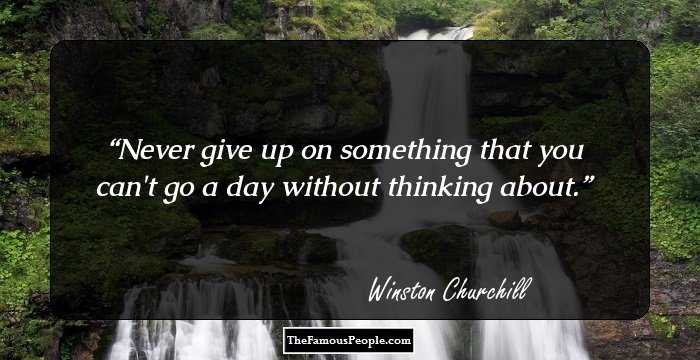
“Never, never, never give up.”
“Attitude is a little thing that makes a big difference.”
“Courage is rightly esteemed the first of human qualities… because it is the quality which guarantees all others.”
“I am easily satisfied with the very best.”
“I have nothing to offer but blood, toil, tears and sweat.”
“If you are going through hell, keep going.”
“It is no use saying, ‘We are doing our best.’ You have got to succeed in doing what is necessary.”
“Success is going from failure to failure without a loss of enthusiasm.”
“Success is not final, failure is not fatal: it is the courage to continue that counts.”
“The pessimist sees difficulty in every opportunity. The optimist sees the opportunity in every difficulty.”
“The price of greatness is responsibility.”
“We are masters of the unsaid words, but slaves of those we let slip out.”
“We make a living by what we get, but we make a life by what we give.”
“You have enemies? Good. That means you’ve stood up for something, sometime in your life.”
This video is about Winston Churchill’s speech to his people as he began to move and inspire them to fight back against the Germans, despite being in a seemingly hopeless situation.
Other Links
Wikipedia: A highly detailed account of Churchill’s life
Winston Churchill.org: Churchill’s official site
More Military Leader Profiles
For leadership profiles of other famous military leaders, including Napoleon, Genghis Khan and Winston Churchill, check out our Military Leadership Profiles section.
Also check out our Leadership Profiles book series. In each book, we study 10 influential leaders in Business, Military, Politics and Sports.
Quick Facts
British Celebrities Born In November
Also Known As: Sir Winston Leonard Spencer Churchill
Died At Age: 90
Born Country: England
Quotes By Winston Churchill
Writers
political ideology: Conservative (1900–04, 1924–64), Liberal (1904–24)
Died on: January 24, 1965
place of death: London, England, United Kingdom
Notable Alumni: RMC Sandhurst, Harrow School
Cause of Death: Stroke
epitaphs: I am ready to meet my Maker. Whether my Maker is prepared for the great ordeal of meeting me is another matter.
More Facts
education: Harrow School, RMC Sandhurst
awards: 1953 — Nobel Prize in Literature
Childhood & Early Life
Winston Leonard Spencer-Churchill was born on 30 November 1874 in Blenheim Palace, Woodstock, Oxfordshire, England, into an aristocratic family. His father, Lord Randolph Churchill, was a prominent politician while his mother, Lady Randolph Churchill (née Jennie Jerome), was the daughter of an American millionaire.
Growing up, he did not have a close relationship with either of his parents and was primarily raised by nannies. He was especially close to his nanny, Elizabeth Ann Everest, who he considered his friend and confidante.
He was a rebellious young boy who detested formal education. In April 1888, he was sent to Harrow School, a boarding school near London. He did poorly there though he developed a love for English language.
After leaving Harrow in 1893, he applied to attend the Royal Military College, Sandhurst. He failed in his initial attempts to pass the test but eventually got selected. He graduated in December 1894 and was commissioned as a cornet (second lieutenant) in the 4th Queen’s Own Hussars in .
Continue Reading Below
Military Career
During the Cuban War of Independence, he travelled to Cuba; he had obtained a commission to write about the conflict from the ‘Daily Graphic’ as a war-time correspondent. He returned to England when he learned that his nanny Elizabeth Ann Everest was dying.
In 1896, he was transferred to British India where he worked as both soldier and journalist on the North-West Frontier in 1897. His journalistic works became very popular during this period and helped to establish him as a successful writer.
In 1897, Churchill fought against a Pashtun tribe in Malakand—now in Pakistan—under the leadership of General Jeffery. After the victory of the British Army he wrote an account of the fight, which was published in 1900 as ‘The Story of the Malakand Field Force’ for which he received £600.
Transferred to Egypt in 1898, he served in Sudan under the command of General Herbert Kitchener. There he participated in the Battle of Omdurman before returning to Britain. Churchill resigned from the British Army in May 1899.
Political Career
The Second Boer War between Britain and the Boer Republics broke out in 1899 and Churchill obtained a commission as war correspondent for ‘The Morning Post’. He went to South Africa for the assignment where he was captured and taken prisoner by the Boers. He made a dramatic escape and returned successfully to Britain. He wrote about his experiences in the book ‘London to Ladysmith’ (1900).
He then ventured into politics and became a Member of Parliament for Oldham in 1900. Initially a member of the Conservative Party, he moved to the Liberal Party in 1904. Eventually he was appointed to the prime minister’s cabinet as president of the Board of Trade.
He soon established himself as a successful politician and was appointed First Lord of the Admiralty in 1911. In this position he emphasized on modernization of British Navy and set up the Royal Navy Air Service. He favored using airplanes in combat and even took flying lessons himself to understand its military potential.
The World War I was going on during this time and in 1917 he was appointed minister of munitions for overseeing the production of tanks, airplanes and munitions. After the war he served as minister of war and air and colonial secretary from 1919 to 1922.
Continue Reading Below
He eventually rejoined the Conservative Party and was made the Chancellor of the Exchequer. In this position he returned Britain to the Gold Standard. This decision proved to be disastrous and resulted in widespread unemployment that led to the General Strike of 1926. Later on Churchill regarded this as a huge mistake.
In the 1929 general election, the conservative government was defeated and Churchill became estranged from the party’s leadership. He did not accomplish much in the political arena in the ensuing years and focused on his writings instead, becoming one of the best paid writers of his time.
After remaining in isolation for a few years, he returned to prominence in 1939 when Britain declared war on Germany following the outbreak of the World War II. He was once again made First Lord of the Admiralty, a post he had held years ago during the World War I. Thus he became a member of Prime Minister Neville Chamberlain’s small War Cabinet.
Before long he became the chairman of the Military Coordinating Committee. In April 1940, Germany invaded and occupied Norway, in the wake of which Chamberlain resigned. Winston Churchill, aged 65 at that time, succeeded Chamberlain as the prime minister under these highly trying circumstances.
As the prime minister he refused to sign a peace treaty with Nazi Germany and motivated the British Empire through his powerful speeches to keep resistance alive. A highly skilled orator, he made one of his iconic speeches in June 1940, warning that «the Battle of Britain» was about to begin.
During the war he created and took up the additional position of Minister of Defence, and put the industrialist and newspaper baron Lord Beaverbrook, in charge of aircraft production. Due to this, Britain was able to quickly increase its aircraft production, strengthening its position in the war.
Churchill maintained good relations with the U.S. President Franklin D. Roosevelt thereby securing a regular supply of food, arms and oil in Britain. Following the attack on Pearl Harbor, Churchill fully supported the U.S in its counter attack on Germany and Japan. When the U.S. entered the war in December 1941, Churchill became more confident of a victory for the allied forces.
In the ensuing months he collaborated closely with Roosevelt, and Soviet Union leader Joseph Stalin to forge an Allied war strategy. The destructive World War II finally moved towards an end in 1945. Surprisingly though, Churchill was defeated in the general election in July 1945 despite all his war time achievements.
Although shocked by his defeat, he accepted the role of leader of the parliamentary opposition and remained active in world politics. He held this position for six years and during his tenure he gave his Iron Curtain speech about the USSR and the creation of the Eastern Bloc in March 1946.
Continue Reading Below
Following the general election of October 1951, Winston Churchill became the prime minister once again. During this tenure he also held the office of Minister of Defence from October 1951 to March 1952.
Even though he was in his seventies now, he retained his passion for politics and introduced various reforms such as the Mines and Quarries Act of 1954 and the Housing Repairs and Rent Act of 1955. During this period tax allowances were raised and national assistance benefits were increased.
During the 1950s his health began to deteriorate and he was finding himself unable to perform his duties. Thus he reluctantly resigned as the prime minister in 1955.
Major Works
Winston Churchill first became the Prime Minister of the United Kingdom during a period of political chaos when the World War II was going on. With his years of military and political experience, he helped inspire British resistance in the nation’s struggle and led active opposition against Nazi dictator Adolf Hitler. As the Prime Minister he is credited to have led Britain to victory over the seemingly undefeatable Nazi Germany.
A prominent writer, he wrote ‘The Second World War’, a history of the period from the end of the World War I to July 1945. He worked with a team of assistants on this seminal work which played a major role in earning him the Nobel Prize for Literature in 1953. The book was a major commercial success in both Britain and the U.S.
Awards & Achievements
Winston Churchill was awarded the Nobel Prize in Literature in 1953 «for his mastery of historical and biographical description as well as for brilliant oratory in defending exalted human values.”
He was named the Greatest Briton of all time in a 2002 BBC poll based on approximately a million votes from BBC viewers.
Personal Life & Legacy
He married Clementine Hozier in 1908. Their marriage was a happy one, marked by mutual love and respect. Five children were born to them, of which one died as a child.
Winston Churchill lived a long life. He suffered from ill health during his later years. He suffered his first major stroke in 1953, at age of 78 which left him unable to speak and walk properly. He suffered another major stroke on 15 January 1965 and died nine days later on on 24 January 1965.
His funeral was the largest state funeral in world history up to that time. Representatives from 112 nations attended the event and he was mourned by millions across the globe who watched the funeral on television.
In 1963, U.S. President John F. Kennedy proclaimed him an Honorary Citizen of the United States, making him the first person to be made so.