Пройти тестирование по этим заданиям
Вернуться к каталогу заданий
Версия для печати и копирования в MS Word
1
Task 3. You are going to give an interview. You have to answer five questions. Give full answers to the questions (2−3 sentences). Remember that you have 40 seconds to answer each question.
Tapescript for Task 3
Interviewer: Hello everybody! It’s Teenagers Round the World Channel. Our guest today is a teenager from Russia and we are going to discuss sports. We’d like to know our guest’s point of view on this issue. Please answer five questions. So, let’s get started.
Interviewer: What region of Russia do you live in? Are there any prominent sports teams there?
Student: _________________________
Interviewer: What else could you tell about your region?
Student: _________________________
Interviewer: What kinds of sports are popular in Russia? Which aren’t?
Student: _________________________
Interviewer: What kind of sports is your favourite? Why?
Student: _________________________
Interviewer: Are your friends interested in sports? If so, what kinds of sports?
Student: _________________________
Interviewer: Thank you very much for your interview.
2
Task 3. You are going to give an interview. You have to answer five questions. Give full answers to the questions (2−3 sentences). Remember that you have 40 seconds to answer each question.
Tapescript for Task 3
Interviewer: Hello everybody! It’s Teenagers Round the World Channel. Our guest today is a teenager from Russia and we are going to discuss hobbies. We’d like to know our guest’s point of view on this issue. Please answer five questions. So, let’s get started.
Interviewer: Could you tell us what is unusual about Russia?
Student: _________________________
Interviewer: What kinds of hobbies do people usually have in your country?
Student: _________________________
Interviewer: What is your first hobby? Do you still do it?
Student: _________________________
Interviewer: How do you spend your free time now?
Student: _________________________
Interviewer: What hobby would you like to pick up in the future? Why?
Student: _________________________
Interviewer: Thank you very much for your interview.
3
Task 3. You are going to give an interview. You have to answer five questions. Give full answers to the questions (2−3 sentences). Remember that you have 40 seconds to answer each question.
Tapescript for Task 3
Interviewer: Hello everybody! It’s Teenagers Round the World Channel. Our guest today is a teenager from Russia and we are going to discuss friends. We’d like to know our guest’s point of view on this issue. Please answer five questions. So, let’s get started.
Interviewer: How do you get along with your peers?
Student: _________________________
Interviewer: What are the benefits of friendship?
Student: _________________________
Interviewer: Where did you meet your best friend? How long have you known each other?
Student: _________________________
Interviewer: How do you communicate with your friends?
Student: _________________________
Interviewer: How do you spend time together?
Student: _________________________
Interviewer: Thank you very much for your interview.
4
Task 3. You are going to give an interview. You have to answer five questions. Give full answers to the questions (2−3 sentences). Remember that you have 40 seconds to answer each question.
Tapescript for Task 3
Interviewer: Hello everybody! It’s Teenagers Round the World Channel. Our guest today is a teenager from Russia and we are going to discuss extreme sports. We’d like to know our guest’s point of view on this issue. Please answer five questions. So, let’s get started.
Interviewer: What are the dangers of extreme sports?
Student: _________________________
Interviewer: Which kinds of extreme sports are popular in Russia? Which aren’t?
Student: _________________________
Interviewer: If you had to choose, what kind of extreme sports would you try and why?
Student: _________________________
Interviewer: What benefits do extreme sports provide?
Student: _________________________
Interviewer: Are you interested in extreme sports? Why?
Student: _________________________
Interviewer: Thank you very much for your interview.
5
Task 3. You are going to give an interview. You have to answer five questions. Give full answers to the questions (2−3 sentences). Remember that you have 40 seconds to answer each question.
Tapescript for Task 3
Interviewer: Hello everybody! It’s Teenagers Round the World Channel. Our guest today is a teenager from Russia and we are going to discuss school. We’d like to know our guest’s point of view on this issue. Please answer five questions. So, let’s get started.
Interviewer: What subjects do you consider the most important in schools?
Student: _________________________
Interviewer: What kind of change would make education in schools better?
Student: _________________________
Interviewer: How do schools develop people’s social skills?
Student: _________________________
Interviewer: What is the most important role of school?
Student: _________________________
Interviewer: Is homework important in the education process? Why?
Student: _________________________
Interviewer: Thank you very much for your interview.
Пройти тестирование по этим заданиям
Звонит телефон, вы отвечаете на звонок, и слышите: “Здравствуйте. Я провожу опрос про кабачковую икру. Мне интересно, сколько ложек икры вы съедаете в день. Участие в нем займет займет у вас не больше 5 минут”. И потом вы не кладёте трубку, а начинаете проходить этот опрос.
Странно звучит, да?
Ну вот на ЕГЭ будет примерно так, да еще на время, и вам потом оценку поставят.
Интервью
Задание 3 устной части из недавно опубликованной демоверсии:

Все темы, по которым задаются вопросы, есть в кодификаторе, его можно скачать на ФИПИ. В этом интервью из демоверсии года замиксованы сразу 3 темы – страна, семья и школа (а именно каникулы). Предполагаю, что и в задании, которое получите на экзамене, будет то же самое – микс из нескольких тем того самого кодификатора.
В демоверсии нам показали скрипт с вопросами, но на экзамене его НЕ БУДЕТ. Диктор будет читать текст, и после каждого вопроса будет звучать гудок “биииип”, и последует 40 секунд для ответа. Всё это ученик услышит в наушниках ОДИН РАЗ, повтора не будет.
Отвечаем РАЗВЕРНУТО, “Да/Нет/Не знаю” НЕ ПРИНЕСУТ вам баллов. Нужно сказать 2-3 предложения.
Всего вопросов 5, то есть за задание макс можно получить 5 баллов.
Критерии оценивания

Что такое “элементарные ошибки”:

Поясню:
За каждый правильно данный ответ получите 1 балл.
Для этого следует не допускать:
- фонетические ошибки (не говорить “thing” как “think”)
- лексические ошибки (“I want to teach new words in English” вместо “I want to learn new words in English”)
- грамматические ошибки (“My family big” вместо “My family is big”)
Плюс, отвечать ПО ТЕМЕ. Если вопрос звучит как “What part of Russia do you live in?”, ответ “I live in a small town” будет не корректен.
Пример ответа

Для тех, кого удивляет странный пример ответа на это задание: мне надоело, что мои материалы выдают за свои и перепродают без отсылки к автору (ко мне), поэтому теперь примеры ответов к заданиям на этом сайте будут с юмором, например именно этот – отсылка к Бэтмену, чтобы всяким “коллегам” не повадно было воровать контент.
Как видите, везде сказано по 2-3 фразы, как и требуется в задании.
Подготовка
Купите книгу по устной части – в ней найдете больше упражнений для тренировки этого задания.
Если ваш ученик откровенно слабый, нужно учить его при ответе внимательно слушать вопрос и повторять слова и структуру, чтобы не запутаться в грамматике.
И обращаем внимание, что диктор может задать 2 вопроса сразу, как в нашем примере из демоверсии: “What part of Russia do you live in? What’s the weather like in summer there?”. На них потребуется также ДВА РАЗВЕРНУТЫХ ответа (как у меня в примере).
—
P.S. Про разделы и стратегии выполнения заданий ЕГЭ можно почитать:
Аудирование, задания 1 — 9
Чтение, задания 10 — 18
Грамматика, задания 19 — 25
Словообразование, задания 26 — 31
Лексика, задания 32 — 38
Личное письмо, задание 39
Проект, задание 40
Устная часть, задание 1
Устная часть, задание 2
Устная часть, задание 4
ELTgram от Ирины Кузнецовой
Вы услышите интервью. В следующих заданиях выберите правильный ответ.
ЗаданиеОтвет
Play интервью
1. Dr Ling
1) is visiting from overseas.
2) was once overweight.
3) is the world’s youngest obesity expert.
2. Carrying waist fat is more serious
1) than carrying it elsewhere on the body.
2) than having diabetes.
3) for men than for women.
3. The best way to determine if you have too much fat around your waist is to
1) see if your waist measures over 40 inches.
2) compare your waist and hip measurements.
3) see if you are carrying fat on your hips.
4. Age affects weights gain because
1) you lose muscle.
2) you burn more calories.
3) you change your lifestyle.
5. Whether a man puts on waist fat depends mostly on
1) his genes.
2) how physically active he was when young.
3) his lifestyle choices.
6. You can reduce waist fat by
1) building up the stomach muscles.
2) reducing your calories.
3) exercising and healthy eating.
7. When it comes to weight gain around the waist, soft drinks
1) are only part of the problem.
2) are probably less harmful than fruit juice.
3) should be completely avoided.
1 – 2
2 – 1
3 – 2
4 – 1
5 – 3
6 – 3
7 – 1
A: And now for all you men out there who may be carrying a few extra pounds around your waist, we welcome international obesity expert Dr Alex Ling to the studio. Dr Ling is the director of the world’s most famous obesity clinic. Not only that, he is a man who had personal experience of the condition when young. Dr Ling, why is carrying extra weight around the waist so dangerous?
B: Because people who gain fat around their waist are at greater risk of serious health problems than are people who gain fat in other parts of their body. Regardless of whether you are overweight or skinny, having excess fat around your waist increases your risk of getting diabetes and many other diseases. Interestingly, men are far more likely than women to gain weight around the waist.
A: How should listeners check if they have too much fat around their waists?
B: Well, a person’s waist size is a good indicator of whether they are carrying too much fat. For most men, the risk factors for diabetes and other diseases increase with a waist size greater than 40 inches. Measurements that compare a person’s waist-to-hip ratio are much more precise, but waist size alone can give a pretty good estimate.
A: Most men seem to get a fat waist only when they get older. Does age play a role in weight gain around the waist?
B: Yes. As you age, you lose muscle – especially if you’re not physically active. Muscle loss can slow the rate at which your body burns calories, and so you gain weight. I should also add that genes can influence whether we become overweight or obese, as well as where exactly we will carry any extra fat on our bodies. But for most men, the problem has more to do with lifestyle than genes.
A: How can men get rid of their waist fat?
B: In precisely the same way they would get rid of excess fat on any part of their body: through reducing their calorie intake and by exercising!
A: Are sit-ups helpful?
В: Sit-ups can help to make your abdominal muscles stronger, but these exercises alone won’t specifically reduce fat around the waist. As I said, healthy eating and regular physical activity is the only way.
A: Finally, Dr Ling, what everyone wants to know! Does drinking sugary soft drinks really lead to a fat waist or is that just a myth?
B: Well, drinking a lot of sugar can cause you to gain fat around the waist. However, soft drinks alone aren’t to blame. Consuming too much sugar of any kind can increase one’s waist fat, although research suggests fruit juice may be an exception. So, if you drink soft drinks, do so only in moderation.
A: Thank you for joining us today, Dr Ling.
B: My pleasure.
Упр. 17 | 18 | 19
20 июня 2021
В закладки
Обсудить
Жалоба
Возможные вопросы к заданию 3 устной части ЕГЭ по английскому языку.
Задание 3 — условный диалог-интервью, в котором необходимо ответить на 5 вопросов интервьюера на актуальную тему. Ответ участника экзамена должен быть развернутым (2-3 фразы).
Where You Live Now and Your Home Country
• Is it easy to meet new people where you live?
• What’s the best place to spend a free afternoon in your town?
• How expensive is it to go out in the evening where you live?
• Could you tell me something about the area where you grew up?
• Could you describe your family home to me?
• What’s the most interesting place you’ve visited near ….?
• Is there anything you would like to learn about your country?
• Which area of your country would you like to get to know better?
• What do you like about living there?
• Tell us about a festival or celebration in [your home country].
Daily Life
• Tell us about a day you’ve really enjoyed recently.
• Are you planning to do anything special this weekend?
• How much time do you spend at home?
• What did you do on your last birthday?
• Do you like cooking?
• What’s your favourite food?
• What’s your favourite day of the week?
• What’s your favourite part of the day?
• Which time of year is your favourite?
Education and Work
• Do you use the internet to learn new things?
• Do you prefer working on your own or with other people?
• What do you think would be the most interesting job to do?
• Do you find it easy to study where you live?
• What were the most important things you learned at primary school?
• Would you prefer to work for a big or small company?
• What kind of work would you really like to do in the future?
• Are you happier doing mental or physical work?
• Can you remember your first English lessons?
Travel and Holidays
• Where would you most like to go on holiday in future?
• Do you prefer traveling by train or plane?
• Do you plan your holidays or decide everything spontaneously?
• Have you ever used English while traveling?
• Is there a good public transport system in your country?
Entertainment
• Do you ever go to concerts?
• How important is TV to you?
• How much TV do you watch in a week?
• Do you like the same TV programmes as your parents?
• Tell us about a TV programme you’ve seen recently.
• Do you enjoy going to parties?
• How often do you read newspapers?
• Do you like shopping?
• Where do you like listening to music?
• Do you like going to the cinema?
• Tell me about your favourite film star.
• Tell us about a film you really like.
• Do you enjoy playing computer games?
• Do you use the internet much?
• What do you use the internet for?
• Do you ever listen to the radio?
Family and Friends
• Who are the most important people in your life?
• What do you enjoy doing with your friends?
• Who do you spend your free time with
• Have you done anything interesting with your friends recently?
• Who are you most like in your family?
• Do you and your friends share the same ideas?
• Tell me about your best friend.
• Tell me about a good friend of yours.
• Do you normally go out with family or friends?
• Tell me a little about your family.
Free Time
• How much time do you spend at home nowadays?
• Do you have a favourite newspaper or magazine?
• What’s the most exciting thing you’ve ever done?
• Tell us about a TV programme you’ve seen recently?
• What’s the difference between reading the news in the newspaper and watching it on TV?
• Who do you spend your free time with?
• Do you prefer to be outside or inside when you have free time?
• What do you most enjoy doing when you’re at home?
• Is your routine at weekends different from your daily routine?
• What do you spend your time doing?
• Do you enjoy reading?
• What sort of books do you read?
• Does anyone you know have an interesting hobby?
Sports
• Are you interested in sport?
• Is there a sport or hobby you enjoy doing?
• Is there a sport you’d really like to try?
• What sports do people play most in your country?
• How much exercise do you take each week?
• Do you like to be physically active or do you prefer relaxing?
The Future
• Is there anything you’d love to be able to do in the future?
• Do you plan to study anything in the future?
• What are you going to do this weekend?
• Are you going to do anything special this weekend?
• Do you think computers will replace newspapers and TV in the future?
• Which country would you most like to visit in the future?
• Do you think you’ll go there one day?
Материалы
по подготовке учащихся к выполнению задания номер 3 (Интервью) устной части ЕГЭ
по английскому языку (11 класс)

Порядок
действий ученика и условия выполнения задания:
1) Внимательно
прослушайте вопрос (см. задание на фото вверху);
2) Дайте на него полный
(развёрнутый) ответ (2-3 предложения);
Односложные
ответы (Да/Нет/Не знаю! и т.п.) оцениваются в 0 баллов!
3) На каждый ответ у
Вас есть 40 секунд. Всего нужно ответить на 5 вопросов.
Фразы, которые можно использовать в начале ответов:
1)
Well, let me see…- Ну, дайте (мне) подумать….
2)
Well, it’s hard to say …-Ну, трудно сказать…
3)
It depends! — Как
сказать! It depends on…- Это зависит от…
4)
You know, …-Знаете, …
5)
Firstly (secondly/thirdly), …- Во-первых (во-вторых/в-третьих),
…
6)
To be honest, …- Честно говоря, …
To tell the
truth,…- По правде говоря, …
7) Unfortunately,…- К сожалению, …
Решаем
демонстрационный вариант ЕГЭ 2022.
Примеры
ответов на вопросы из приведённого выше интервью.
1) I live
in European Russia. The weather in summer is pretty warm there. The temperature
can be over 30 degrees in July. (3 предложения)
2) Well,
my region is famous for beautiful architecture and some sports. Our athletes
regularly go to the Olympics and win medals there. I’m really proud of my small
motherland. (3 предложения)
3) Unfortunately,
I’m an only child in the family. My mother is a housewife, my father is a
doctor. We get along very well. (3 предложения)
4)
When I was 7, I used to spend my summer
holidays in the countryside. My friends and I played different games outdoors,
swam in the river, went to the woods with grown-ups… It was a lot of fun! (3 предложения)
5) To
tell the truth, it’s hard to say right now… I’ve always loved traveling, so I
think I’d like to visit a country I haven’t been to yet. (2 предложения)
В качестве тренировки дайте
развёрнутые ответы на следующие вопросы:
1) What do you do to stay healthy?
2) What was your favourite school subject? Why
did you like it?
3) How do you prefer to spend your free time?
4) Why do you find it important to know
foreign languages?
5) What is your attitude towards new information
technologies?
6) What are your plans for the New Year?
Примеры ответов:
1) To be honest, I don’t do anything special. I try to
eat healthy foods, get enough sleep and work out more.
2) My favourite school subject was geography. You
know, I liked studying the map and learning interesting facts about other
countries.
3) In winter, I usually go skiing or skating. In
summer, I play badminton outdoors and go swimming. As for indoor activities,
I’m fond of reading novels and watching comedies.
4) Well, the knowledge of foreign languages gives a
lot of opportunities to a modern person.
You can travel without difficulties, get a job abroad, read
books in the original…At last, the process of
learning is a perfect training for the brain!
5) I think they have changed our lives for the
better. The technologies have made many things much easier than they used to
be. We’ll never be able to refuse the advantages they provide for us.
6) I’m going to learn to dance and cook. Besides, it
would be great to buy a professional camera to take excellent pictures while
traveling!
Where You Live Now and Your Home Country
-
Is it easy to meet new people where you live?
-
What’s the best place to spend a free afternoon in your town?
-
How expensive is it to go out in the evening where you live?
-
Could you tell me something about the area where you grew up?
-
Could you describe your family home to me?
-
What’s the most interesting place you’ve visited near ….?
-
Is there anything you would like to learn about your country?
-
Which area of your country would you like to get to know better?
-
What do you like about living there?
-
Tell us about a festival or celebration in [your home country].
Daily Life
-
Tell us about a day you’ve really enjoyed recently.
-
Are you planning to do anything special this weekend?
-
How much time do you spend at home?
-
What did you do on your last birthday?
-
Do you like cooking?
-
What’s your favourite food?
-
What’s your favourite day of the week?
-
What’s your favourite part of the day?
-
Which time of year is your favourite?
Education and Work
-
Do you use the internet to learn new things?
-
Do you prefer working on your own or with other people?
-
What do you think would be the most interesting job to do?
-
Do you find it easy to study where you live?
-
What were the most important things you learned at primary school?
-
Would you prefer to work for a big or small company?
-
What kind of work would you really like to do in the future?
-
Are you happier doing mental or physical work?
-
Can you remember your first English lessons?
Travel and Holidays
-
Where would you most like to go on holiday in future?
-
Do you prefer traveling by train or plane?
-
Do you plan your holidays or decide everything spontaneously?
-
Have you ever used English while traveling?
-
Is there a good public transport system in your country?
Entertainment
-
Do you ever go to concerts?
-
How important is TV to you?
-
How much TV do you watch in a week?
-
Do you like the same TV programmes as your parents?
-
Tell us about a TV programme you’ve seen recently.
-
Do you enjoy going to parties?
-
How often do you read newspapers?
-
Do you like shopping?
-
Where do you like listening to music?
-
Do you like going to the cinema?
-
Tell me about your favourite film star.
-
Tell us about a film you really like.
-
Do you enjoy playing computer games?
-
Do you use the internet much?
-
What do you use the internet for?
-
Do you ever listen to the radio?
Family and Friends
-
Who are the most important people in your life?
-
What do you enjoy doing with your friends?
-
Who do you spend your free time with
-
Have you done anything interesting with your friends recently?
-
Who are you most like in your family?
-
Do you and your friends share the same ideas?
-
Tell me about your best friend.
-
Tell me about a good friend of yours.
-
Do you normally go out with family or friends?
-
Tell me a little about your family.
Free Time
-
How much time do you spend at home nowadays?
-
Do you have a favourite newspaper or magazine?
-
What’s the most exciting thing you’ve ever done?
-
Tell us about a TV programme you’ve seen recently?
-
What’s the difference between reading the news in the newspaper and watching it on TV?
-
Who do you spend your free time with?
-
Do you prefer to be outside or inside when you have free time?
-
What do you most enjoy doing when you’re at home?
-
Is your routine at weekends different from your daily routine?
-
What do you spend your time doing?
-
Do you enjoy reading?
-
What sort of books do you read?
-
Does anyone you know have an interesting hobby?
Sports
-
Are you interested in sport?
-
Is there a sport or hobby you enjoy doing?
-
Is there a sport you’d really like to try?
-
What sports do people play most in your country?
-
How much exercise do you take each week?
-
Do you like to be physically active or do you prefer relaxing?
The Future
-
Is there anything you’d love to be able to do in the future?
-
Do you plan to study anything in the future?
-
What are you going to do this weekend?
-
Are you going to do anything special this weekend?
-
Do you think computers will replace newspapers and TV in the future?
-
Which country would you most like to visit in the future?
-
Do you think you’ll go there one day?
-
Do you think you have to spend a lot of money to have a good holiday?
-
Some people say we travel too much these days and shouldn’t go on so many holidays. What do you think? Why do you think people like to go away on holiday?
-
What do you think is the biggest advantage of living in a place where there are a lot of tourists?
-
What can people do to have a good holiday in your country?
-
What’s good about living in cities in your country?
-
Which is the best city for people to visit in your country?
-
If you could choose to visit a city you’ve never been to, which one would you choose?
-
Would you prefer to live in a modern city or a city with lots of history?
-
Are there advantages to living in a small town rather than in a big city?
-
Do you think it is better for children to grow up in the city or in the countryside?
-
What do you think makes a good museum?
-
How do you think the teaching of history in schools could be improved?
-
Do you agree that learning about our past is important for our future?
-
What was the most important moment in the history of the twentieth century?
-
What has been the most important moment in your life so far?
-
What items from our lives today will be in the history museums of the future?
-
If you could change one thing about your life, what would you change?
-
Many people say life’s too busy these days.
-
Why do you think they say this?
-
Many people want to become famous nowadays. Why do you think this is?
-
Is it important to enjoy a job or do you think it’s enough to be paid well?
-
How important is it to go on holiday every year?
-
Some people say we don’t spend enough time talking to each other these days. What do you think?
-
Some people say there will be no need for shops in the future because we’ll buy everything online. What do you think?
-
Do you think it’s true that we buy a lot of things we don’t really need these days?
-
Do you think that out of town shopping centres are a good idea?
-
Is it better to go shopping with friends or alone?
-
Some people say that shopping ins a leisure activity nowadays. What do you think?
-
Do you think that advertising encourages people to spend too much money?
-
Is watching TV the best way for people to spend their free time?
-
What kind of TV programmes do you like best?
-
Some people have more than one television in their home. Do you think this is a good idea?
-
Do you think children generally watch too much television in your country?
-
Is television the best way of following the news in the world?
-
Do you think watching TV is a good way to learn a language?
-
What sort of films do you never watch?
-
Are there any films that you’d like to see again?
-
Would you prefer to be in a film or behind the camera?
-
How important do you think it is to watch films in English?
-
What can you learn about a country’s culture by watching films from that country?
8
Алексей Конобеев рассказал блогу Skyteach об изменениях в устной части ЕГЭ 2022 года, а также о том, какие баллы будут за новые задания ЕГЭ, какие примерные ответы приводят авторы пособий и что делать, чтобы получить отличную оценку.
Алексей Конобеев — кандидат педагогических наук, академический директор Skyeng, главный редактор издательства «Титул» и журнала «Английский язык в школе», доцент кафедры лингводидактики МПГУ.
Рассмотрим задания ЕГЭ с изменениями в формате и требования к ответам.
Задание 1 (чтение текста вслух) осталось в прежнем виде.
В задании 2 нужно задать не пять, а четыре прямых вопроса. В остальном здесь все то же самое.
Дополнительно предлагаем прочитать статью ЕГЭ по английскому 2022: подготовка к заданиям нового формата в устной части
Задание 3 устной части ЕГЭ 2022
Задание 3 изменилось полностью.
- Начиная с 2022 года экзаменуемым нужно ответить на пять вопросов интервью. Каждый ответ должен состоять не менее, чем из двух фраз.
Если в вопросе содержится не только запрос фактической информации, но и вопрос why, то ответ нужно дать на обе части вопроса. В этом случае также достаточно, чтобы ответ состоял из двух фраз.
- Нельзя отвечать одним словом, словосочетанием или неполным предложением (They do).
- Вопросы могут относиться к прошлому или будущему (What did you like …when you were a child? Would you like to… in ten years?). В этом случае в зависимости от вопроса нужно рассказывать о прошлом или о будущих планах.
Skyeng ищет преподавателей английского. Подробности по ссылке: Skyeng
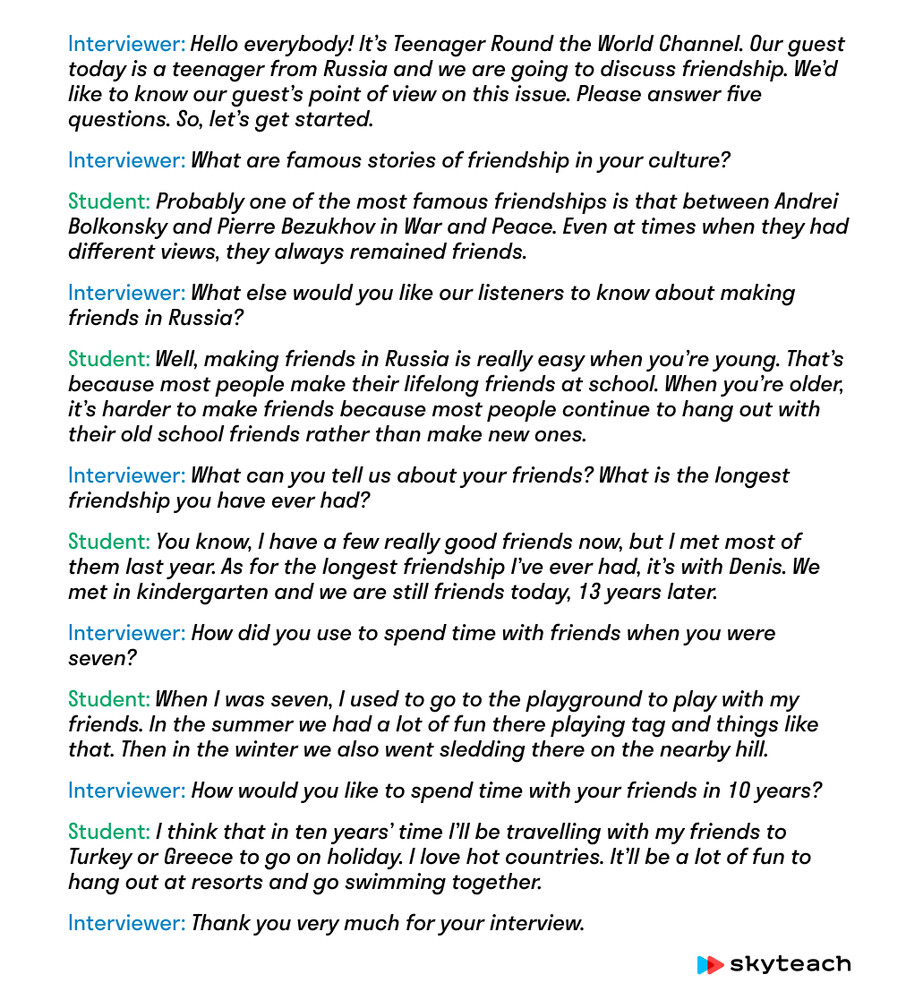
Примерный ответ на вопросы интервью
С разрешения авторов Мадины Гаджиевой, Елены Меджибоской и Николаса Вейн Кумбса приведем примерный ответ на вопросы интервью из пособий «ЕГЭ-2022. Английский язык. Устная часть» (издательство «Титул»):
Задание 4 устной части ЕГЭ 2022
В четвертом задании есть коммуникативная ситуация: экзаменуемый с другом работают над проектом. Первый ученик нашел две фотографии, которые могут иллюстрировать проект. Он оставляет голосовое сообщение другу, чтобы объяснить, почему эти фото подходят для проекта.
Важно, что целью сообщения является не описание и сравнение двух фото. Задача — доказать, что его можно использовать в проекте. Для этого в сообщении надо:
- кратко описать две фотографии (иллюстрации) к теме проекта;
- объяснить, чем отличаются эти фотографии;
- обосновать выбор фотографии (иллюстрации);
- выразить и аргументировать свое мнение по теме проектной работы.
Что оценивается
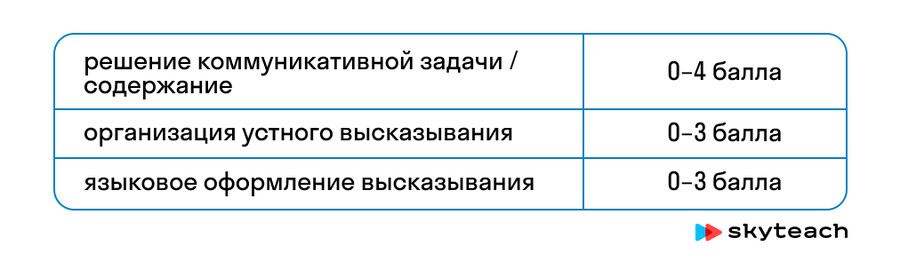
План ответа дан в задании:
Объем ответа должен быть 12–15 фраз. Он может быть больше, но при этом нельзя выходить за рамки отведенного на ответ времени. Если объем ответа меньше 8 фраз, то за него поставят 0 баллов.
Как получить высший балл за задание 4 устной части ЕГЭ 2022
- Обратиться к другу, поприветствовать его, и сказать, о каком совместном проекте идет речь.
- Кратко описать фотографии, указывая, как они связаны с темой проекта. Важно включать в описание именно те детали, которые относятся к теме проекта — то, что изображено на фото.
- Указать одно-два различия, относящиеся к проекту. Желательно два, так как это поможет точнее обосновать важность фотографии для проекта.
- Назвать преимущества и недостатки аспекта темы, указанного в задании.
- Выразить свое мнение по теме проекта, и ответить на вопрос whether you would like to… and why.
- В ответе также должна быть заключительная фраза, которая показывает, что сообщение закончено.
Примерный ответ к заданию 4 устной части ЕГЭ 2022
С разрешения авторов и издательства «Титул» публикуем один из примерных ответов из пособия М. Гаджиевой, Е. Меджибовской и Н. Вейн Кумбса «ЕГЭ-2022. Английский язык. Устная часть»:

Надеемся, что информация об изменениях в экзамене, советы по выполнению заданий и примерные ответы помогут вам эффективно подготовить учеников к выполнению заданий нового формата в ЕГЭ по английскому языку в 2022 году. Нужны материалы к урокам — преподавайте в Skyeng по онлайн-курсам Skysmart от лучших методистов.
Чтобы не потерять накопленные перед ЕГЭ знания и умения, важно продолжить изучение английского языка и после школы. В этом помогут онлайн-курсы для взрослых для общих целей, по бизнес-английскому, английскому для путешествий и даже необычные уроки Flip, где половину урока ученик осваивает материал самостоятельно, а вторую половину — с помощью преподавателя. А если в ваши планы не входит учеба на онлайн-курсах, просто зайдите на наши онлайн-мастер-классы на английском языке, чтобы поддержать свой уровень языка и поговорить о чем-то для себя интересном.
Предлагаем прочитать статью Задания письменной части ЕГЭ 2022: как получить высший балл
Индивидуальное расписание, интерактивная платформа и мотивированные ученики. У нас есть все — преподавайте от 12 часов в неделю. Подробности по ссылке: Skyeng