
1) Установите соответствие между заголовками 1 — 8 и текстами A — G. Используйте каждую цифру только один раз. В задании один заголовок лишний.
1. Women doing men’s jobs
2. Holidays – the best time to visit
3. Ideal to grow a man
4. A costume for a mythic sea creature
5. The best profession for a lady
6. A festival to a season
7. Words for all times
8. Best clothes for burial
A. Mary is a professional dress-maker specializing in exotic costumes. She devotes many hours to crafting mermaid tails and hand-made tops. Her professional mermaid costume includes a tail and a top. A tail is made of the finest silicone that bends naturally with movement and looks beautifully on film and in print. Out of the depths of the water her costume shines with hundreds of pearls, crystals, and gemstones.
B. Today’s well-educated person uses about 18,000 words. Shakespeare, whose plays written for a small theatre are now performed in more countries than ever before, used over 34,000 different words, thousands of which he made up. For example: accessible, roadway, schoolboy, and watchdog. Many of his phrases have fallen into everyday use in our language today, including, “A horse, a horse! My kingdom for a horse!” by Richard III.
C. The Celtic division of the year was into two parts. The winter half was considered the beginning of the year, and the summer half the second part. There were two further sub-divisions, so the year was finally divided into the standard four seasons. At each of these four stages, a Fire Festival was celebrated. It involved religious ceremonies, music, storytelling, and poetry. These great festivals were regarded to be the best time.
D. As symbols of respect and courage, knights turned out to be an intriguing mix of all the things that made males the best, as their education included the most effective sorts of exercises for the brain and the human body. Knight tournaments were a good way for the knights to try out the actual travails of fighting and never having to go through the pain and troubles of having to look after themselves, and of their kingdoms.
E. Were there any women pirates in Renaissance England? They were in the minority, but they were never the less there and very able. Lady Mary was a daughter of a pirate and married to a pirate. When her husband died, she recruited her castle staff and went to sea herself. Her luck ran out when she captured a German captain, who was a friend of Queen Elizabeth. So Lady Mary quit piracy … and started selling stolen goods.
F. Russia is an amazing holiday destination. It should be visited during the festival season, as it reveals the rich cultural tradition and fascinating customs of its people. While the festivals come from the Christian legacy Russia shares with Europe and America, the manner of celebration is unique. Enthusiastic travelers suggest planning a Russian holiday during the festival time and to be sure that the memories will last a lifetime!
G. Normally very fine textiles are found in graves. Obviously, the quality of clothing worn in the Middle Ages would reduce with lower ranks, but even the slaves did not wear cloth as rough as people thought in the past and some still do today. Slaves would probably wear their master’s clothes, which may have been very thin in places and not decorated. They would usually receive the underclothes to be worn as overclothes.
| A | B | C | D | E | F | G |
2) Прочитайте текст и заполните пропуски A — F частями предложений, обозначенными цифрами 1 — 7. Одна из частей в списке 1—7 лишняя.
Singing can help when learning a foreign language
It is a source of national embarrassment – despite hours of lessons and listening to foreign language tapes, most of us ___ (A). However, a new study suggests there may be hope for those who have difficulty with a foreign language – they should try singing it instead.
Research found that adults who sang words or short phrases from a foreign language while learning were twice as good at speaking it later. It is thought that by listening to words that are sung, and by singing them back, the technique takes advantage of the strong links between music and memory.
Although not clearly understood, music is known to help students ___ (B) recall.
Dr Overy said singing could lead to new approaches to learning a foreign language. She said: “Most people ___ (C) from songs they have heard and songs are sometimes used by language teachers with young children.”
Dr Overy and her colleagues used recordings of Hungarian words to teach 60 adults. They chose Hungarian as the participants ___ (D) anguage.
The participants either listened to words that were spoken and then had to repeat them back, much like a standard teach-yourself tape, or the words were said rhythmically or sung.
After a 15-minute learning period, they were then given several tests to see how well they had learned the words. Those ___ (E) scored highest. They were also better at recalling the words correctly in tests of long term memory. Interestingly, they did not sing the words when they recalled them.
Dr Ludke said the findings could help those ___ (F).
1. when studying and can help to start memory
2. who struggle to learn foreign languages
3. had no experience of learning this
4. have experience of remembering words
5. who had used the “listen and sign” approach
6. can barely order a simple drink while abroad
7. facilitate verbatim memory for foreign languages
| A | B | C | D | E | F |
3) Прочитайте текст и запишите в поле ответа цифру 1, 2, 3 или 4, соответствующую выбранному Вами варианту ответа.
Показать текст. ⇓
According to the text, an artificial language should
1) be similar to the mother tongues of the majority of speakers.
2) be based on cultural and historical traditions.
3) have clear grammatical rules and exceptions.
4) be simple and culturally neutral.
4) Прочитайте текст и запишите в поле ответа цифру 1, 2, 3 или 4, соответствующую выбранному Вами варианту ответа.
Показать текст. ⇓
Zamenhof started to work on a new language because
1) it was his school home assignment.
2) he wanted to improve communication in his multilingual environment.
3) it was an important requirement for his job.
4) he had problems with studying Russian in Warsaw.
5) Прочитайте текст и запишите в поле ответа цифру 1, 2, 3 или 4, соответствующую выбранному Вами варианту ответа.
Показать текст. ⇓
At first, the word “Esperanto” was used as the
1) name of the new language.
2) pen-name of the new language designer.
3) title of the book about the new language.
4) name of the place where the new language was designed.
6) Прочитайте текст и запишите в поле ответа цифру 1, 2, 3 или 4, соответствующую выбранному Вами варианту ответа.
Показать текст. ⇓
According to the text, it is NOT true that
1) grammatical system of Esperanto is easy.
2) Esperanto is easier for the speakers of English.
3) Esperanto has a simple phonetic system.
4) the new words in Esperanto are built up by joining words.
7) Прочитайте текст и запишите в поле ответа цифру 1, 2, 3 или 4, соответствующую выбранному Вами варианту ответа.
Показать текст. ⇓
According to the text, Esperanto represents Euro-neutrality because it is
1) designed for the Europeans.
2) based on European culture.
3) based on different European languages.
4) designed to be used within Europe.
 Прочитайте текст и запишите в поле ответа цифру 1, 2, 3 или 4, соответствующую выбранному Вами варианту ответа.
Показать текст. ⇓
The phrase “level of acceptance” in “Esperanto has not reached the level of acceptance its creator foresaw ” (paragraph 5) means the level at which the language is
1) known.
2) developed.
3) spoken as the first language.
4) used.
9) Прочитайте текст и запишите в поле ответа цифру 1, 2, 3 или 4, соответствующую выбранному Вами варианту ответа.
Показать текст. ⇓
The purpose of the text is to
1) encourage people to learn Esperanto.
2) give a general overview of Esperanto.
3) present grammar principles in Esperanto.
4) tell the story of the word “Esperanto”.
Раздел 1. Аудирование
1
1
Вы услышите 6 высказываний. Установите соответствие между высказываниями каждого говорящего A—F и утверждениями, данными в списке 1—7. Используйте каждую букву, обозначающую утверждение, только один раз. В задании есть одно лишнее утверждение. Вы услышите запись дважды. Занесите свои ответы в поле справа.
Нажмите , чтобы прослушать запись
1. Not having to visit doctors is being somewhat healthy.
2. It’s important to reduce stress to be healthy.
3. To be healthy, you have to be thin.
4. To look healthy is not to be healthy.
5. To be in good health one needs to be active.
6. To be healthy one needs to use cosmetics.
7. To stay healthy you need a balance of mind and body.
2
2
Вы услышите диалог. Определите, какие из приведенных утверждений A—G соответствуют содержанию текста (1 — True), какие не соответствуют (2 — False) и о чем в тексте не сказано, то есть на основании текста нельзя дать ни положительного, ни отрицательного ответа (3 — Not stated). Вы услышите запись дважды.
Нажмите , чтобы прослушать запись
A. Mike has been ill for a month.
B. Mike’s classmates have paid him long visits.
C. Mike loves watching TV.
D. Mike found a very interesting program on TV.
E. Jane had an easy day at school.
F. Mike enjoys watching informative programs.
G. Jane doesn’t agree to watch a quiz show on TV.
Вы услышите интервью. В заданиях 3—9 выберите цифру 1, 2 или 3, соответствующую выбранному Вами варианту ответа. Вы услышите запись дважды.
Нажмите , чтобы прослушать запись
3
3
The progress in the development of the English language was connected with …
1. Shakespeare’s death.
2. discovering America.
3. settling in the New World.
4
4
Why did American colonists borrow words from natives for geographical names.
1. They were easy to pronounce.
2. It helped to communicate with natives.
3. They found it handy and useful.
5
5
How did the English language grow in colonial times?
1. It spread among natives.
2. It gained words from local languages.
3. It became the mother tongue for colonies.
6
6
Which of the following is TRUE about the English word “dog”?
1. It has a less popular synonym.
2. Its origins are very interesting.
3. It came from an African colony.
7
7
What, according to Sally, is one of the ways for new words to appear in English?
1. Putting words together.
2. Expansion of meanings of borrowed words.
3. Shortening of existing words.
8
8
What does Sally Smith say about the word “radar”?
1. No one knows where the word came from.
2. lt’s an acronym.
3. It’s а borrowed foreign word.
9
9
Why is it difficult to count the exact number of English words?
1. Many of them have several meanings.
2. No one counts scientific words.
3. New words appear every day.
Раздел 2. Чтение
10
10
Установите соответствие тем 1 — 8 текстам A — G. Занесите свои ответы в соответствующее поле справа. Используйте каждую цифру только один раз. В задании одна тема лишняя.
1. Women doing men’s jobs
2. Holidays — the best time to visit
3. Ideal to grow a man
4. A costume for a mythic sea creature
5. The best profession for a lady
6. A festival to a season
7. Words for all times
8. Best clothes for burial
A. Mary is a professional dress-maker specializing in exotic costumes. She devotes many hours to crafting mermaid tails and hand-made tops. Her professional mermaid costume includes a tail and a top. A tail is made of the finest silicone that bends naturally with movement and looks beautifully on film and in print. Out of the depths of the water her costume shines with hundreds ot pearls, crystals, and gemstones.
B. Today’s well-educated person uses about 18,000 words. Shakespeare, whose plays written for a small theatre are now performed in more countries than ever before, used over 34,000 different words, thousands of which he made up. For example: accessible, roadway, schoolboy, and watchdog. Many of his phrases have fallen into everyday use in our language today, including, “A horse, a horse! My kingdom for a horse!’’ by Richard III.
C. The Celtic division of the year was into two parts. The winter half was considered the beginning of the year, and the summer half the second part. There were two further subdivisions. so the year was finally divided into the standard four seasons. At each of these four stages, a Fire Festival was celebrated. It involved religious ceremonies, music, storytelling, and poetry. These great festivals were regarded to be the best time.
D. As symbols of respect and courage, knights turned out to be an intriguing mix of all the things that made males the best, as their education included the most effective sorts of exercises for the brain and the human body. Knight tournaments were a good way for the knights to try out the actual travails of fighting and never having to go through the pain and troubles of having to look after themselves, and of their kingdoms.
E. Were there any women pirates in Renaissance England? They were in the minority, but they were never the less there and very able. Lady Mary was a daughter of a pirate and married to a pirate. When her husband died, she recruited her castle staff and went to sea herself. Her luck ran out when she captured a German captain, who was a friend of Queen Elizabeth. So Lady Mary quit piracy … and started selling stolen goods.
F. Russia is an amazing holiday destination. It should be visited during the festival season, as it reveals the rich cultural tradition and fascinating customs of its people. While the festivals come from the Christian legacy Russia shares with Europe and America, the manner of celebration is unique. Enthusiastic travelers suggest planning a Russian holiday during the festival time and to be sure that the memories will last a lifetime!
G. Normally very fine textiles are found in graves. Obviously, the quality of clothing worn in the Middle Ages would reduce with lower ranks, but even the slaves did not wear cloth as rough as people thought in the past and some still do today. Slaves would probably wear their master’s clothes, which may have been very thin in places and not decorated. They would usually receive the underclothes to be worn as overclothes.
11
11
Прочитайте текст и заполните пропуски A-F частями предложений, обозначенными цифрами 1-7. Одна из частей в списке лишняя.
1. when studying and can help to start memory
2. who struggle to learn foreign languages
3. had no experience of learning this
4. have experience of remembering words
5. who had used the «listen and sign» approach
6. can barely order a simple drink while abroad
7. facilitate verbatim memory for foreign languages
Singing can help when learning a foreign language
It is a source of national embarrassment despite hours of lessons and listening to foreign language tapes, most of us A ______. However, a new study suggests there may be hope for those who have difficulty with a foreign language — they should try singing it instead.
Research found that adults who sang wools or short phrases from a foreign language while learning were twice as good at speaking it later, It is thought that by listening to words that are sung, and by singing them back, die technhjuc takes advantage of the strong links between music and memory.
Although not clearly understood, music is known to help students В ______ recall.
Dr Overy said singing could lead to new approaches to learning a foreign language. She said: «Most people C ______ from songs they have heard and songs are sometimes used by language teachers widi young children.»
Dr Overy and her colleagues used recordings of Hungarian words to teach 60 adults. They chose Hungarian as the participants D ______ language.
The participants either listened to words that were spoken and then had to repeat them back, much like a standard teach-yourself tape, or the words were said rhythmically or sung.
After a 15-minute learning period, they were then given several tests to see how well they had learned the words. Those E ______ scored highest. They were also better at recalling the words correctly in tests of long term memory. Interestingly, they did not sing the words when they recalled them.
Dr Ludke said the findings could help those F ______.
Прочитайте текст и выполните задания 12—18, обводя цифру 1, 2, 3 или 4, соответствующую номеру выбранного вами варианта ответа.
Esperanto
In some heavily multilingual areas of the world, most people learn a lingua franca — a regional trade language in addition to their mother tongue. But when someone proposes English or French say, as a trade language, objections inevitably arise. These languages are notoriously difficult to learn with strange spellings and numerous grammatical rules and exceptions. But more importantly, they’re loaded with historical and cultural baggage. The only hope for a truly universal language would seem to he an artificial one a language that is designed to be free from cultural biases and easy to learn This was precisely the goal of Esperanto.
L. L. Zarnenhof grew up in the late 1800s in Warsaw, which was a part of Russia at that time. While still in high school he set out to design a universal artificial language that would facilitate communication within his linguistically diverse community. By the time he finished this side project ten years later, Zamenhof was a practicing ophthalmologist. In 1887, Zamenhof published the first guide in RUssian to the new language, which he called “Lingvo Internacia”, meaning “international language». Zamenhоf wrote the textbook under the pseudonym “Esperanto,” meaning »a person who is hoping» in Lingvo Internacia. Fans of the language decided that “Esperanto” had a nicer ring to it, and they soon adopted it as the informal name of the language.
Esperantо was designed to be both easy to learn and culturally neutral. According to some sources, an English speaker can learn Esperanto up to five times faster than Spanish. For starters, Esperanto uses strictly phonetic spelling — a given letter always makes exactly the same sound. Second, the structure оf Esperanto is very simple, with only sixteen basic grammatical rules that need to be learned — and no exceptions to the rules such as irregular verbs. And third, Esperanto has a very small core vocabulary, new words are constructed by combining words and adding prefixes and suffixes.
The vocabulary of Esperanto will have a familiar ring to anyone who knows a European language, as roots were borrowed from French, German, and Spanish, among other languages. For examples: »bona» means »good» ; »porko» means “pig”; “filo” means “son”; “hundo” means “dog.” One could argue that this selection represents not so much cultural neutrality as Euro-neutrality, but this hasn’t prevented Esperanto from becoming popular in China and some other parts of Asia.
For all its merits, Esperanto has not reached the level of acceptance its creator foresaw more than a century ago. There may be as many as two million people who speak Esperanto with at least a moderate level of proficiency, but probably no more than a few hundred who learned Esperanto at home as their first language and no known speakers over the age of three or so who speak only Esperanto. Ironically, the cultural neutrality that is touted as such a benefit of the language also serves to limit its growth, because languages tend to spread with the cultures that gave rise to them. Alas, unless or until the number of Esperanto speakers reaches a larger critical mass, it will be of little value as a trade language, and without a clear value, it will be difficult to convince people to learn it.
12
12
According to the text, an artificial language should …
1. be similar to the mother tongues of the majority of speakers.
2. be based on cultural and historical traditions.
3. have clear grammatical rules and exceptions.
4. be simple and culturally neutral.
13
13
Zamenhof started to work on a new language because …
1. it was his school home assignment.
2. he wanted to improve communication in his multilingual environment.
3. it was an important requirement for his job.
4. he had problems with studying Russian in Warsaw.
14
14
At first, the word “Esperanto” was used as the …
1. name of the new language.
2. pen-name of the new language designer.
3. title of the book about the new language.
4. name of the place where the new language was designed.
15
15
According to the text, it is NOT true that …
1. grammatical system of Esperanto is easy.
2. Esperanto is easier for the speakers of English.
3. Esperanto has a simple phonetic system.
4. the new words in Esperanto are built up by joining words.
16
16
According to the text, Esperanto represents Euro-neutrality because it is…
1. designed for the Europeans.
2. based on European culture.
3. based on different European languages.
4. designed to be used within Europe.
17
17
The phrase “level of acceptance” in “Esperanto has not reached the level of acceptance its creator foresaw …” (paragraph 5) means the level at which the language is …
1. known.
2. developed.
3. spoken as the first language.
4. used.
18
18
The purpose of the text is to …
1. encourage people to learn Esperanto.
2. give a general overview of Esperanto.
3. present grammar principles in Esperanto.
4. tell the story of the word “Esperanto”.
Раздел 3. Грамматика и лексика
Прочитайте приведенные ниже тексты. Преобразуйте, если необходимо, слова, напечатанные жирными буквами в конце строк, обозначенных номерами 19—25, так, чтобы они грамматически соответствовали содержанию текстов. Перенесите полученный ответ в соответствующее поле справа. Каждый пропуск соответствует отдельному заданию из группы 19 — 25. Ответ пишите без пробелов и иных знаков.
19
19
The history of parachutes
ONE The history of parachutes is full of surprises. The ____ living thing to fall to earth with a parachute was a sheep.
20
20
DROP The animal, attached to a seven-foot-wide umbrella, _____ from a tower in France.
21
21
NAME In 1797 a Frenchman ______ Andre Garnerin climbed into a basket attached to a hot-air balloon and rose into the air above Paris.
22
22
DO When he reached an altitude of 2,230 feet, he cut the basket loose and fell toward the earth under an umbrella-like parachute. No one knew if a parachute would work from that height, but it _____ , and Garnerin went on to give many more parachute-jumping exhibitions.
23
23
I need gloves!
NOT LIKEI’ve got a two-year-old brother, Jeremy. He _____ to eat with a spoon or a fork, he prefers to eat with his hands.
24
24
GIVE Yesterday, my dad ______ him a dish of ice cream, which was new to him.
25
25
EATJeremy started _____ it with his hands. My mom was in the next room when he yelled, “Mommy, my hands are cold!” “Well, then, use your spoon,” she replied. “No, no, Mommy,” he yelled back, “I need gloves!”
Прочитайте приведенный ниже текст. Преобразуйте слова, напечатанные жирными буквам в конце строк 26—31, так, чтобы они грамматически и лексически соответствовали содержанию текста. Заполните соответствующее поле справа полученными словами. Каждое поле соответствует отдельному заданию из группы 26—31.
26
26
Cyber communication
SUCCESS The development of cyber communication — email, text messaging, and social networking — has revolutionized the way we communicate. Quick and _____ communication via the Internet has proved essential to national governments, and to the individual.
27
27
PRACTICAL Now, we can send and receive important messages, communicate and clarify statements _____ within seconds.
28
28
BUSYCyber communication is very important in _____ .
29
29
POPULAR On a more individual level, cyber communication has transformed the method in which people communicate. In particular, social networking sites have provided access to people in every corner of the globe and their ______ is growing.
30
30
RELATIONThis has helped old friends living far apart to maintain a close _____ .
31
31
TRADITION For many people, not just teens, social networking has become an alternative to _____ forms of communication — writing a letter, a face-to-face conversation, or phone call.
Прочитайте текст с пропусками, обозначенными номерами 32 — 38. Эти номера соответствуют заданиям 32 — 38, в которых представлены возможные варианты ответов. Обведите номер выбранного вами варианта ответа.
Vacation plans
Christopher and Margaret Roberts always spent their summer vacation as far away from England as they could possibly afford. 32 ____, as they both were teachers at a small preparatory school just north of Bristol, their experience of four of the five continents was largely 33 ____ to periodicals such as National Geographic and Time.
But their annual vacation each August was sacred, and they spent eleven months of the year saving, planning, and preparing for their one extravagant luxury. The following eleven months they spent 34 ____ their pupils about their discoveries.
During the long evenings when their pupils were meant to be asleep, Christopher and Margaret would examine maps, analyze expert opinion, and then finally come up with a shortlist to consider. In recent trips they had 35 ____ to visit Norway, northern Italy, and Slovakia, ending up the previous year exploring the east coast of Greece.
“It has to be Turkey this year. We can 36 ____ afford any other trip. The prices have risen again,” said Christopher one evening. A week later, Margaret 37 ____ to the same conclusion, and so they were able to move on to Phase Two. Every book on Turkey in the local library was borrowed and consulted. By the first day of the summer term, charter tickets were paid for and reservations were 38 ____.
32
32
1. Nevertheless
2. Although
3. However
4. Therefore
33
33
1. reserved
2. restricted
3. restrained
4. retained
34
34
1. speaking
2. talking
3. saying
4. telling
35
35
1. fulfilled
2. achieved
3. managed
4. succeeded
36
36
1. merely
2. hardly
3. closely
4. purely
37
37
1. came
2. went
3. took
4. got
38
38
1. held
2. kept
3. made
4. done
Раздел 4. Письмо
При выполнении заданий 39 и 40 особое внимание обратите на то, что Ваши ответы будут оцениваться только по записям, сделанным в БЛАНКЕ ОТВЕТОВ. Никакие записи черновика не будут учитываться экспертом. Обратите внимание также на необходимость соблюдения указанного объёма текста. Тексты недостаточного объёма, а также часть текста, превышающая требуемый объём, не оцениваются.
39
You have received an email message from your English-speaking pen-friend Alice:
From: [email protected]
To: [email protected]
Subject: Welcome
… I have to think about my pocket money all the time. My parents try to make me earn it by doing the housework. They try to make me save up and then buy something useful. But I need pocket money for the cinema and ice-cream and other treats like that. Do you have to ‘earn’ your pocket money in any way or do your parents just give it to you? What do you spend your pocket money on? What do your parents think of the way you spend it?
Last weekend my friends and I went on a picnic to the countryside…
Write an email to Alice.
In your message answer her questions, ask 3 questions about her picnic.
Write 100—140 words.
Remember the rules of email writing. You have 20 minutes to do this task.
40
40.1. Imagine that you are doing a project on the countries with the most tree species in Zetland. You have found some data on the subject (see the table below). Comment on the data in the table and give your personal opinion on the subject of the project.
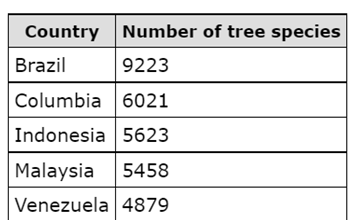
Write 200−250 words. Use the following plan:
— make an opening statement on the subject of the project work;
— select and report 2−3 main features;
— make 1−2 comparisons where relevant;
— outline a problem that can arise with the variety of tree species and suggest the way of solving it;
— draw a conclusion giving your personal opinion on the importance of trees in the modern world
40.2. Imagine that you are doing a project on wildfires in Zetland. You have found some data on the subject (see the diagram below). Comment on the data in the diagram and give your personal opinion on the subject of the project.
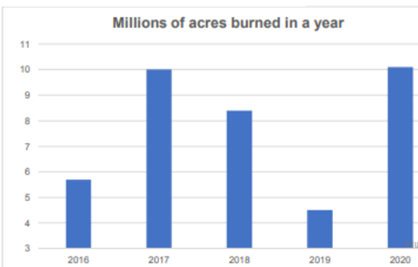
Write 200−250 words.
Use the following plan:
— make an opening statement on the subject of the project work;
— select and report 2−3 main features;
— make 1−2 comparisons where relevant;
— outline a problem that can arise with the wildfires and suggest the way of solving it;
— draw a conclusion giving your personal opinion on the importance of wildfire prevention.
Раздел 5. Говорение
Imagine that you are preparing a project with your friend. You have found some interesting material for the presentation and you want to read this text to your friend. You have 1.5 minutes to read the text silently, then be ready to read it out aloud. You will not have more than 1.5 minutes to read it.
41
Geography is the study of the Earth and its features, its inhabitants, and its phenomena. The word geography comes from Greek. It means “to write and draw about the Earth”. Geography studies continents, seas, rivers and mountains. It deals with all the people and animals that live on the Earth. It is interested in the things that happen on the Earth like tides, winds, and earthquakes.A person who is an expert in geography is a geographer. A geographer tries to understand the world and the things that are in it, how they started and how they have changed.Geographers need to know a lot about maps because maps are very important for understanding geography.
Geography is divided into two main parts called physical geography and human geography. Physical geography studies the natural environment and human geography studies the human environment. Human geographystudies include things such as the population in a country, a country’s economy and so on.
42
Study the advertisement.
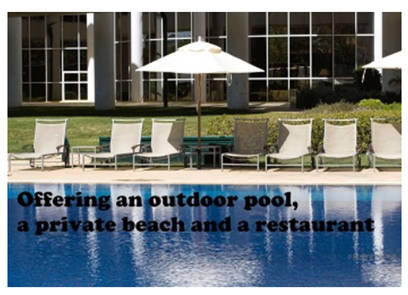
You are considering staying one week at the resort and you’d like to get more information. In 1.5 minutes you are to ask four direct questions to find out the following:
- discounts for regular customers
- special offers
- entertainment programs
- multilingual staff
You have 20 seconds to ask each questions.
Показать ответ
1. Does your resort provide discounts for regular customers?
2. Do you have any special offers?
3. What entertainment programs are included?
4. Is there multilingual staff?
43
You are going to give an interview. You have to answer five questions. Give full answers to the questions (2−3 sentences). Remember that you have 40 seconds to answer each question.
Interviewer: Hello everybody! It’s Teenagers Round the World Channel. Our guest today is a teenager from Russia and we are going to discuss English. We’d like to know our guest’s point of view on this issue. Please answer five questions. So, let’s get started.
Interviewer: How do you use English in your daily life?
Student: _________________________
Interviewer: Do your relatives know English well?
Student: _________________________
Interviewer: Should public schools put more emphasis on the English language? Why?
Student: _________________________
Interviewer: How does English help people in different countries?
Student: _________________________
Interviewer: In your opinion, will another language take over the English’s role of an international language?
Student: _________________________
Interviewer: Thank you very much for your interview.
Показать ответ
1. In my daily life I speak English when I travel around the world. Also in English I talk to my brother from the USA every week.
2. No, my relatives don’t know English well, because they didn’t learn it at school earlier. Some of them want to learn Chinese, but I say them that it’s difficult. but it’s possible.
3. In my opinion, public schools should put more emphasis on the English language, because nowadays everyone needs to know English well. It gives opportunity to get a well-paid job, to talk to native speakers and to travel more.
4. English helps people to understant native citizens and gives opportunity to ask some questions in different countries. A person can be calm if he or she knows English, because almost everyone knows English in each country.
5. I consider that Chinese language will take over the English’s role of an international language in the future. I think so, because international relationship with China is developing now actively.
44
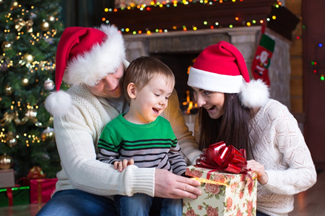
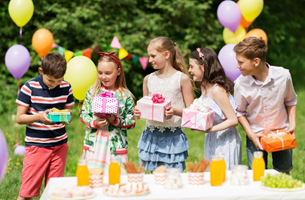
Imagine that you are doing a project “Celebrations” together with your friend. You have found some illustrations and want to share the news. Leave a voice message to your friend. In 2 minutes be ready to:
- give a brief description of the photos, justifying the choice of the photos for the project;
- say in what way the pictures are different, justifying the choice of the photos for the project;
- mention the advantages and disadvantages (1–2) of the two types of celebrations;
- express your opinion on the subject of the project – which celebration you preferred as a child and why
You will speak for not more than 3 minutes (12–15 sentences). You have to talk continuously.
According to the text, Esperanto represents
Euro-neutrality because it is …
Прочитайте текст и выполните задания А15 – А21. В каждом задании обведите цифру 1, 2, 3 или 4, соответствующую выбранному Вами варианту ответа.
Esperanto
In some heavily multilingual areas of the world, most people learn a lingua franca – a regional trade language – in addition to their mother tongue. But when someone proposes English or French, say, as a trade language, objections inevitably arise. These languages are notoriously difficult to learn, with strange spellings and numerous grammatical rules and exceptions. But more importantly, they’re loaded with historical and cultural baggage. The only hope for a truly universal language would seem to be an artificial one – a language that is designed to be free from cultural biases and easy to learn. This was precisely the goal of Esperanto.
L. L. Zamenhof grew up in the late 1800s in Warsaw, which was a part of Russia at that time. While still in high school he set out to design a universal artificial language that would facilitate communication within his linguistically diverse community. By the time he finished this side project ten years later, Zamenhof was a practicing ophthalmologist. In 1887, Zamenhof published the first guide in Russian to the new language, which he called “Lingvo Internacia”, meaning “international language”. Zamenhof wrote the textbook under the pseudonym “Esperanto,” meaning “a person who is hoping” in Lingvo Internacia. Fans of the language decided that “Esperanto” had a nicer ring to it, and they soon adopted it as the informal name of the language.
Esperanto was designed to be both easy to learn and culturally neutral. According to some sources, an English speaker can learn Esperanto up to five times faster than Spanish. For starters, Esperanto uses strictly phonetic spelling – a given letter always makes exactly the same sound. Second, the structure of Esperanto is very simple, with only sixteen basic grammatical rules that need to be learned – and no exceptions to the rules such as irregular verbs. And third, Esperanto has a very small core vocabulary; new words are constructed by combining words and adding prefixes and suffixes.
The vocabulary of Esperanto will have a familiar ring to anyone who knows a European language, as roots were borrowed from French, German, and Spanish, among other languages. For examples: “bona” means “good”; “porko” means “pig”; “filo” means “son”; “hundo” means “dog.” One could argue that this selection represents not so much cultural neutrality as Euro-neutrality, but this hasn’t prevented Esperanto from becoming popular in China and some other parts of Asia.
For all its merits, Esperanto has not reached the level of acceptance its creator foresaw more than a century ago. There may be as many as two million people who speak Esperanto with at least a moderate level of proficiency, but probably no more than a few hundred who learned Esperanto at home as their first language and no known speakers over the age of three or so who speak only Esperanto. Ironically, the cultural neutrality that is touted as such a benefit of the language also serves to limit its growth, because languages tend to spread with the cultures that gave rise to them. Alas, unless or until the number of Esperanto speakers reaches a larger critical mass, it will be of little value as a trade language, and without a clear value, it will be difficult to convince people to learn it.
designed to be used within Europe.
based on different European languages.
— Правильный ответ
based on European culture.
designed for the Europeans.

- Текст
- Веб-страница
In some heavily multilingual areas of the world, most people learn a lingua franca—a regional trade language—in addition to their mother tongue. It stands to reason, then, that this notion could be expanded more broadly. But when someone proposes English or French, say, as a trade language, objections inevitably arise. These languages are notoriously difficult to learn, with strange spellings and lots of grammatical rules and exceptions. But more importantly, they’re loaded with historical and cultural baggage. If your country—not mentioning any names—has been a rival of English- or French-speaking nations, you will likely not jump at the chance to spend long years learning a language with such unpleasant associations. The only hope for a truly universal language would seem to be an artificial one—a language that is designed to be free from cultural biases and easy to learn. This was precisely the goal of Esperanto.
Hoping for a New Language
L. L. Zamenhof grew up in the late 1800s in Warsaw (part of Russia at that time). While still in high school he set out to design a universal artificial language that would facilitate communication within his linguistically diverse community. By the time he finished this side project ten years later, Zamenhof was a practicing ophthalmologist. In 1887, he published the first guide (in Russian) to the new language, which he called “Lingvo Internacia” (international language). Zamenhof wrote the textbook under the pseudonym “Esperanto,” meaning “a person who is hoping” in Lingvo Internacia. Fans of the language decided that “Esperanto” had a nicer ring to it, and they soon adopted it as the informal name of the language.
Esperanto was designed to be both easy to learn and culturally neutral. According to some sources, an English speaker can learn Esperanto up to five times faster than Spanish. For starters, Esperanto uses strictly phonetic spelling—a given letter always makes exactly the same sound. Second, the structure of Esperanto is very simple, with only sixteen basic grammatical rules that need to be learned—and no exceptions to the rules (such as irregular verbs). And third, Esperanto has a very small core vocabulary; new words are constructed by combining words and adding prefixes and suffixes. (Esperanto is thus an agglutinative polysynthetic language, for those who need to have such things spelled out…)
Something Old, Something New, Something Borrowed
The vocabulary of Esperanto will have a familiar ring to anyone who knows a European language, as roots were borrowed from French, German, and Spanish, among other languages. (A few examples: bona means “good”; porko means “pig”; filo means “son”; hundo means “dog.”) One could argue that this selection represents not so much cultural neutrality as Euro-neutrality, but this hasn’t prevented Esperanto from becoming popular in China and some other parts of Asia.
For all its merits, Esperanto has not reached the level of acceptance its creator foresaw more than a century ago. There may be as many as two million people who speak Esperanto with at least a moderate level of proficiency, but probably no more than a few hundred who learned Esperanto at home as their first language—and no known speakers (over the age of three or so) who speak only Esperanto. Ironically, the cultural neutrality that is touted as such a benefit of the language also serves to limit its growth, because languages tend to spread along with the cultures that gave rise to them. Alas, unless or until the number of Esperanto speakers reaches a larger critical mass, it will be of little value as a trade language, and without a clear value, it will be difficult to convince people to learn it. —Joe Kissell
0/5000
Результаты (русский) 1: [копия]
Скопировано!
В некоторых сильно многоязычных районах мира, большинство людей учиться лингва-франка — региональный язык торговли — помимо их родного языка. Он стоит рассуждать, то, что это понятие могут быть расширены в более широком смысле. Но когда кто-то предлагает английский или французский, скажем, как язык торговли, неизбежно возникнут возражения. Эти языки являются сложно узнать, с странные написания и много грамматических правил и исключений. Но что более важно, они загружен, с историческим и культурным багажом. Если ваша страна — не называя имен — был соперником народов, говорящих на английском или французском, вы скорее всего не будет прыгать на возможность тратить долгие годы изучение языка с таких неприятных ассоциаций. Единственной надеждой на подлинно универсального языка, казалось бы, искусственном — язык, который разработан, чтобы быть свободным от культурные предубеждения и легко учиться. Это был именно цель эсперанто.Надеясь на новый языкЛ. л Заменгоф вырос в конце 1800 в Варшаве (часть из России в то время). Хотя еще в средней школе он изложил разработать универсальный искусственный язык, который будет способствовать коммуникации внутри его лингвистически разнообразной сообщества. К тому времени, он закончил этот Сайд-проект десять лет спустя Заменгоф был практикующим врачом. В 1887 году он опубликовал первое руководство (на русском языке) на новый язык, который он назвал «Lingvo Internacia» (международный язык). Заменгоф написал учебник под псевдонимом «Эсперанто,» смысль «человека, который надеется» в Lingvo Internacia. Фанаты языка решил, что «Эсперанто» было приятнее кольцо к нему, и они вскоре принял его как неофициальное название языка.Эсперанто был разработан чтобы быть легко учиться и культурно-нейтральными. Согласно некоторым источникам английского языка можно изучать эсперанто до пяти раз быстрее, чем испанский. Для начала, эсперанто использует строго фонетическая транскрипция — данной буквы всегда делает точно то же звук. Во-вторых, структура эсперанто очень проста, с только шестнадцать основных грамматических правил, которые должны быть извлечены и без исключений из правил (например, неправильные глаголы). И в-третьих, эсперанто имеет весьма небольшое ядро словаря; новые слова строятся, сочетания слов и добавляя префиксы и суффиксы. (Таким образом эсперанто — агглютинативный полисинтетический язык, для тех, кто должны иметь такие вещи изложены…) Что-то старое, что-то новое, что-то заимствовалСловарь эсперанто будет иметь знакомый кольцо для тех, кто знает Европейский язык, как корни заимствованы из французского, немецкого и испанского, среди других языков. (Несколько примеров: bona означает «хорошо»; Фило означает «сын»; porko означает «свинья», а так же hundo означает «собака».) Можно утверждать, что этот выбор представляет не столько культурных нейтралитета как евро нейтралитет, но это не помешало стать популярной в Китае и других частях Азии эсперанто.При всех своих достоинствах эсперанто не достиг уровня признания, его создатель предвидели более чем столетие назад. Может быть как два миллиона людей, которые говорят на эсперанто с минимум средний уровень владения, но вероятно не более чем несколько сотен кто узнал эсперанто дома как их первый язык и не известных ораторов (в возрасте старше 3 или около того), которые говорят только на эсперанто. По иронии судьбы культурной нейтральности, которая преподносится как таковой пособие языка также служит для ограничения ее роста, потому что языки склонны распространяться вместе с культурами, послуживших основанием для их. Увы если или до тех пор, пока число эсперантистов достигает критической массы больше, он будет иметь небольшую ценность как язык торговли, и без четкого значения, это будет трудно убедить людей, чтобы узнать его. — Джо Кисселл
переводится, пожалуйста, подождите..
Результаты (русский) 2:[копия]
Скопировано!
В некоторых сильно многоязычных районах мира, большинство людей узнать лингва франка-региональный торговый язык в дополнение к их родном языке. Разумеется, то, что это понятие может быть расширена в более широком смысле. Но когда кто-то предлагает английский или французский, скажем, в качестве торгового языка, возражения неизбежно возникают. Эти языки, как известно, трудно узнать, со странными написания и много грамматических правил и исключений. Но что еще более важно, они загружаются с исторической и культурной багажа. Если ваша страна не упомянуть-либо имена-был соперником англо- или франкоязычных стран, вы, вероятно, не прыгать на возможность провести долгие годы изучения языка с такими неприятными ассоциациями. Единственная надежда на действительно универсальный язык, казалось бы, искусственный язык-а, который разработан, чтобы быть свободным от предубеждений и культурных легко узнать. Это именно цель эсперанто. Надеясь на новый язык L. Л. Заменгоф вырос в конце 1800-х в Варшаве (часть России на тот момент). В то время как еще в средней школе он изложил в разработке универсального искусственного языка, который будет способствовать коммуникации внутри его лингвистически разнообразного сообщества. К тому времени, десять лет спустя он закончил этот побочный проект, Заменгоф был практикующим офтальмологом. В 1887 году он опубликовал первое руководство (на русском языке) в новом языке, который он назвал «Lingvo Internacia» (международный язык). Заменгоф написал учебник под псевдонимом «Эсперанто», что означает «человек, который надеется» в Lingvo Internacia. Вентиляторы языка решил, что «Эсперанто» было приятнее кольцо к нему, и вскоре они приняли его в качестве неофициального названия языка. Эсперанто был разработан, чтобы быть и легким в освоении и культурно нейтральным. По некоторым источникам, говорящий по-английски можно изучать эсперанто до пяти раз быстрее, чем испанский. Для начала, эсперанто используется строго фонетическое правописание-а данное письмо всегда делает точно тот же самый звук. Во-вторых, структура эсперанто очень просто, только с шестнадцати основных грамматических правил, которые должны быть изучены, и никаких исключений из правил (например, неправильных глаголов). И в-третьих, эсперанто имеет очень небольшой основной словарный запас; новые слова построены путем объединения слов и добавление префиксов и суффиксов. (Эсперанто, таким образом, агглютинативный полисинтетический язык, для тех, кто нуждается в такие вещи, прописанные …) Что-то старое, что-то новое, что-то заемные Словарь эсперанто будет иметь знакомый кольцо для тех, кто знает европейскую язык, а корни были заимствованы из французского, немецкого, испанского, и среди других языков. (Несколько примеров: Bona означает «хорошо»; porko означает «свинья», фило означает «сын»; hundo означает «собака».) Можно утверждать, что этот выбор представляет собой не столько культурный нейтралитет, как Евро-нейтралитета, но это hasn ‘т предотвратить эсперанто стать популярным в Китае и некоторых других частях Азии. Для всех своих достоинствах, эсперанто не достиг уровня принятия его автором предвидел более века назад. Там может быть больше, чем два миллиона человек, которые говорят на эсперанто, по крайней мере, умеренный уровень владения, но, вероятно, не более, чем несколько сотен, которые узнали на эсперанто дома, как их первый язык-то и нет известных ораторов (в возрасте старше трех или так), кто говорит только на эсперанто. Как ни странно, культурная нейтралитет, который рекламируется как такое преимущество языка служит также для ограничения его роста, потому что языки имеют тенденцию распространяться вместе с культурами, которые привели к ним. Увы, если или пока количество эсперантистов не достигает большего критическую массу, он будет иметь небольшую ценность в качестве товарного языке, и без четкого значения, то будет трудно убедить людей, чтобы узнать его. -Joe Kissell
переводится, пожалуйста, подождите..
Результаты (русский) 3:[копия]
Скопировано!
В некоторых регионах мира, большинство людей узнать «лингва франка-региональной торговли язык — в дополнение к их родному языку. Поэтому можно заключить, что это понятие может быть расширена более широко. Но когда кто-то предлагает на английском или французском языке, сказать, как в языке, возражений неизбежно возникают. Эти языки являются очень сложно учиться,С странным написания и много грамматические правила и исключения. Но, что еще более важно, как они загружены с исторического и культурного багажа. Если в вашей стране — не упоминания каких-либо имен — был в роли конкурента на английском или французском языке наций, вы, скорее всего, не переходить на возможность тратить долгие годы обучения в таких неприятных ассоциаций.Единственная надежда для подлинно универсального языка, представляется в качестве искусственного-язык, предназначенный для быть свободным от культурных предрассудков и легко узнать. Именно в этом цель эсперанто.ветровому надеются на новый язык
L. L. Для вырос в конце 1800-х гг. в Варшаве (часть России в это время).В то время как все еще в школе он к проектированию универсальный искусственный язык, который будет способствовать коммуникации в рамках его разнообразная сообщества. К тому времени он закончил эту сторону проекта десять лет спустя, для занималась офтальмологом. В 1887 году он опубликовал первое руководство пользователя (на русском языке) на новый язык, который он называет «Lingvo процессы в теплоэнергетических установках» (международный язык).Для написал учебник под псевдонимом «Эсперанто», что означает «лицо, надеясь» в Lingvo процессы в теплоэнергетических установках. Вентиляторы языка постановил, что «Эсперанто» красивее кольцо, и они вскоре принял его в неофициальных имя языка.ветровому эсперанто была задумана как простая в освоении и культурном отношении нейтральное положение. По сообщениям некоторых источников,В английском языке можно узнать эсперанто в пять раз быстрее, чем по-испански. Для начала, эсперанто использует строго фонетическое правописание-a с учетом письма всегда делают точно такие же звук. Второй, структура эсперанто очень просто, только с шестнадцати основных грамматических правил, которые должны быть сделаны, и никаких исключений из правил (например, нерегулярные глаголов). И, в-третьих,Эсперанто имеет очень небольшую основную терминологию; новые слова создаются путем сочетания слов, добавив префиксы и суффиксы. (Эсперанто является самым цементирующей polysynthetic языка, для тех, кто нуждается в такие вещи изложен … )
что-то старое, что-то новое, что-то взял
словарь эсперанто будет иметь знакомых кольцо для любого, кто знает европейского языка,В качестве причины было заимствовано из французского, немецкого и испанского языков, среди других языков. (Несколько примеров: bona означает «хорошо»; porko означает «поросенок»; бесед означает «сын»; hundo означает «собака. «) можно было утверждать, что этот выбор представляет собой не столько культурных нейтралитета, Евро-нейтралитет, но это не мешает эсперанто стать популярной в Китае и в некоторых других частях Азии.ветровому для всех его достоинств,Эсперанто еще не достигла уровня признания его создатель предвидел более века назад. Возможно, было два миллиона людей, говорящих эсперанто с по крайней мере средний уровень квалификации, но, вероятно, нет больше, чем несколько сотен, эсперанто в домашних условиях в качестве первого языка-и не известные ас (в возрасте старше трех лет или с тем), которые говорят только эсперанто. Как это ни парадоксально,В культурных нейтралитета, которые превозносят как благо языка также служит для ограничения его роста, поскольку языки имеют тенденцию распространяться вместе с культурами, которые привели к их. Увы, если только и до тех пор пока номер эсперанто ас достигает больше критической массы, он будет иметь мало значения в качестве языка, и без значение,Это будет трудно убедить людей. -Джо Kissell
переводится, пожалуйста, подождите..
Другие языки
- English
- Français
- Deutsch
- 中文(简体)
- 中文(繁体)
- 日本語
- 한국어
- Español
- Português
- Русский
- Italiano
- Nederlands
- Ελληνικά
- العربية
- Polski
- Català
- ภาษาไทย
- Svenska
- Dansk
- Suomi
- Indonesia
- Tiếng Việt
- Melayu
- Norsk
- Čeština
- فارسی
Поддержка инструмент перевода: Клингонский (pIqaD), Определить язык, азербайджанский, албанский, амхарский, английский, арабский, армянский, африкаанс, баскский, белорусский, бенгальский, бирманский, болгарский, боснийский, валлийский, венгерский, вьетнамский, гавайский, галисийский, греческий, грузинский, гуджарати, датский, зулу, иврит, игбо, идиш, индонезийский, ирландский, исландский, испанский, итальянский, йоруба, казахский, каннада, каталанский, киргизский, китайский, китайский традиционный, корейский, корсиканский, креольский (Гаити), курманджи, кхмерский, кхоса, лаосский, латинский, латышский, литовский, люксембургский, македонский, малагасийский, малайский, малаялам, мальтийский, маори, маратхи, монгольский, немецкий, непальский, нидерландский, норвежский, ория, панджаби, персидский, польский, португальский, пушту, руанда, румынский, русский, самоанский, себуанский, сербский, сесото, сингальский, синдхи, словацкий, словенский, сомалийский, суахили, суданский, таджикский, тайский, тамильский, татарский, телугу, турецкий, туркменский, узбекский, уйгурский, украинский, урду, филиппинский, финский, французский, фризский, хауса, хинди, хмонг, хорватский, чева, чешский, шведский, шона, шотландский (гэльский), эсперанто, эстонский, яванский, японский, Язык перевода.
- When
- bool shit
- come hare
- Выдать чужой секрет — предательство, выд
- belki kışın İstanbul’a geleceğim
- Dear Ivan Klyushin,An agreement has been
- What’s your phone number?
- Dear Ivan Klyushin,An agreement has been
- She’s not in right now. Can I take a mes
- Famous
- sheep
- Mit wem
- Я сфотографировала образцы, которые у на
- Кого спрашивает учитель? Учитель спрашив
- oн не учил английский язык
- Опусти руку ниже
- я уже сделала домашнее задание на завтра
- MY HOMEI would like to tell you a few wo
- Hold on
- Я сфотографировала образцы, которые у на
- Иван и Марина
- EE spank mayonnaise I your mouth stomped
- 浥獳慧攠Ԡ瑯″㠰㔰㌴ㄵ㤵㜠獵捣敥摥搮
- Выдать чужой секрет — предательство, выд

Image credit: Simtropolitan at English Wikibooks [Public domain], via Wikimedia Commons
Like many people, I endured four years of high-school French only to find that I lacked the ability to order a croissant in a Paris bakery without making a fool of myself. I eventually got the hang of basic conversation in French, but then found myself traveling to places where Spanish, German, or Italian (for example) were spoken, and having to start all over again with the basics (“Where’s the bathroom?” “How much does this cost?” “Where have you sent my luggage?”). As much as I enjoy and appreciate linguistic diversity, it can make travel, trade, and diplomacy challenging at times.
In some heavily multilingual areas of the world, most people learn a lingua franca—a regional trade language—in addition to their mother tongue. It stands to reason, then, that this notion could be expanded more broadly. But when someone proposes English or French, say, as a trade language, objections inevitably arise. These languages are notoriously difficult to learn, with strange spellings and lots of grammatical rules and exceptions. But more importantly, they’re loaded with historical and cultural baggage. If your country—not mentioning any names—has been a rival of English- or French-speaking nations, you will likely not jump at the chance to spend long years learning a language with such unpleasant associations. The only hope for a truly universal language would seem to be an artificial one—a language that is designed to be free from cultural biases and easy to learn. This was precisely the goal of Esperanto.
Hoping for a New Language
L. L. Zamenhof grew up in the late 1800s in Warsaw (part of Russia at that time). While still in high school he set out to design a universal artificial language that would facilitate communication within his linguistically diverse community. By the time he finished this side project 10 years later, Zamenhof was a practicing ophthalmologist. In 1887, he published the first guide (in Russian) to the new language, which he called “Lingvo Internacia” (international language). Zamenhof wrote the textbook under the pseudonym “Esperanto,” meaning “a person who is hoping” in Lingvo Internacia. Fans of the language decided that “Esperanto” had a nicer ring to it, and they soon adopted it as the informal name of the language.
Esperanto was designed to be both easy to learn and culturally neutral. According to some sources, an English speaker can learn Esperanto up to five times faster than Spanish. For starters, Esperanto uses strictly phonetic spelling—a given letter always makes exactly the same sound. Second, the structure of Esperanto is very simple, with only sixteen basic grammatical rules that need to be learned—and no exceptions to the rules (such as irregular verbs). And third, Esperanto has a very small core vocabulary; new words are constructed by combining words and adding prefixes and suffixes. (Esperanto is thus an agglutinative polysynthetic language, for those who need to have such things spelled out…)
Something Old, Something New, Something Borrowed
The vocabulary of Esperanto will have a familiar ring to anyone who knows a European language, as roots were borrowed from French, German, and Spanish, among other languages. (A few examples: bona means “good”; porko means “pig”; filo means “son”; hundo means “dog.”) One could argue that this selection represents not so much cultural neutrality as Euro-neutrality, but this hasn’t prevented Esperanto from becoming popular in China and some other parts of Asia. Meanwhile, Esperanto has also been criticized as having an inherently male gender bias (even though the language has no grammatical gender), though proposals to reform it have found little traction thus far.
For all its merits, Esperanto has not reached the level of acceptance its creator foresaw more than a century ago. There may be as many as two million people who speak Esperanto with at least a moderate level of proficiency, but probably no more than a few hundred who learned Esperanto at home as their first language—and no known speakers (over the age of three or so) who speak only Esperanto. Ironically, the cultural neutrality that is touted as such a benefit of the language also serves to limit its growth, because languages tend to spread along with the cultures that gave rise to them. Alas, unless or until the number of Esperanto speakers reaches a larger critical mass, it will be of little value as a trade language, and without a clear value, it will be difficult to convince people to learn it.
Note: This is an updated version of an article that originally appeared on Interesting Thing of the Day on October 25, 2003, and again in a slightly revised form on January 26, 2005.
Задание №8807.
Чтение. ЕГЭ по английскому
Прочитайте текст и запишите в поле ответа цифру 1, 2, 3 или 4, соответствующую выбранному Вами варианту ответа.
Показать текст. ⇓
Zamenhof started to work on a new language because
1) it was his school home assignment.
2) he wanted to improve communication in his multilingual environment.
3) it was an important requirement for his job.
4) he had problems with studying Russian in Warsaw.
Решение:
Zamenhof started to work on a new language because he wanted to improve communication in his multilingual environment.
Заменгоф начал работать над новым языком, потому что хотел улучшить общение в своей многоязычной среде.
«… he set out to design a universal artificial language that would facilitate communication within his linguistically diverse community.»
Показать ответ
Источник: ФИПИ. Открытый банк тестовых заданий
Сообщить об ошибке
Тест с похожими заданиями
Задание № 8987
The phrase “level of acceptance” in “Esperanto has not reached the level of acceptance its creator foresaw …” (paragraph 5) means the level at which the language is …
1. known.
2. developed.
3. spoken as the first language.
4. used.
Esperanto
In some heavily multilingual areas of the world, most people learn a lingua franca — a regional trade language in addition to their mother tongue. But when someone proposes English or French say, as a trade language, objections inevitably arise. These languages are notoriously difficult to learn with strange spellings and numerous grammatical rules and exceptions. But more importantly, they’re loaded with historical and cultural baggage. The only hope for a truly universal language would seem to he an artificial one a language that is designed to be free from cultural biases and easy to learn This was precisely the goal of Esperanto.
L. L. Zarnenhof grew up in the late 1800s in Warsaw, which was a part of Russia at that time. While still in high school he set out to design a universal artificial language that would facilitate communication within his linguistically diverse community. By the time he finished this side project ten years later, Zamenhof was a practicing ophthalmologist. In 1887, Zamenhof published the first guide in RUssian to the new language, which he called “Lingvo Internacia”, meaning “international language». Zamenhоf wrote the textbook under the pseudonym “Esperanto,” meaning »a person who is hoping» in Lingvo Internacia. Fans of the language decided that “Esperanto” had a nicer ring to it, and they soon adopted it as the informal name of the language.
Esperantо was designed to be both easy to learn and culturally neutral. According to some sources, an English speaker can learn Esperanto up to five times faster than Spanish. For starters, Esperanto uses strictly phonetic spelling — a given letter always makes exactly the same sound. Second, the structure оf Esperanto is very simple, with only sixteen basic grammatical rules that need to be learned — and no exceptions to the rules such as irregular verbs. And third, Esperanto has a very small core vocabulary, new words are constructed by combining words and adding prefixes and suffixes.
The vocabulary of Esperanto will have a familiar ring to anyone who knows a European language, as roots were borrowed from French, German, and Spanish, among other languages. For examples: »bona» means »good» ; »porko» means “pig”; “filo” means “son”; “hundo” means “dog.” One could argue that this selection represents not so much cultural neutrality as Euro-neutrality, but this hasn’t prevented Esperanto from becoming popular in China and some other parts of Asia.
For all its merits, Esperanto has not reached the level of acceptance its creator foresaw more than a century ago. There may be as many as two million people who speak Esperanto with at least a moderate level of proficiency, but probably no more than a few hundred who learned Esperanto at home as their first language and no known speakers over the age of three or so who speak only Esperanto. Ironically, the cultural neutrality that is touted as such a benefit of the language also serves to limit its growth, because languages tend to spread with the cultures that gave rise to them. Alas, unless or until the number of Esperanto speakers reaches a larger critical mass, it will be of little value as a trade language, and without a clear value, it will be difficult to convince people to learn it.
Показать ответ
Комментарий: »There may be as many as two million people who speak Esperanto with at least a modeiate level of proficiency, but probably no more than a few hundred who learned Esperanto at home as their first language and no known speakers over the age of three or so who speak only Esperanto»
Ответ: 4
Улучши свой результат с курсами ЕГЭ/ОГЭ/ВПР на egevpare.ru
Нашли ошибку в задании? Выделите фрагмент и нажмите Ctrl + Enter.
Предложи свой вариант решения в комментариях 👇🏻
The phrase “level of acceptance” in
“Esperanto has not reached the level of acceptance its creator foresaw …”
(paragraph 5) means the level at which the language is …
Прочитайте текст и выполните задания А15 – А21. В каждом задании обведите цифру 1, 2, 3 или 4, соответствующую выбранному Вами варианту ответа.
Esperanto
In some heavily multilingual areas of the world, most people learn a lingua franca – a regional trade language – in addition to their mother tongue. But when someone proposes English or French, say, as a trade language, objections inevitably arise. These languages are notoriously difficult to learn, with strange spellings and numerous grammatical rules and exceptions. But more importantly, they’re loaded with historical and cultural baggage. The only hope for a truly universal language would seem to be an artificial one – a language that is designed to be free from cultural biases and easy to learn. This was precisely the goal of Esperanto.
L. L. Zamenhof grew up in the late 1800s in Warsaw, which was a part of Russia at that time. While still in high school he set out to design a universal artificial language that would facilitate communication within his linguistically diverse community. By the time he finished this side project ten years later, Zamenhof was a practicing ophthalmologist. In 1887, Zamenhof published the first guide in Russian to the new language, which he called “Lingvo Internacia”, meaning “international language”. Zamenhof wrote the textbook under the pseudonym “Esperanto,” meaning “a person who is hoping” in Lingvo Internacia. Fans of the language decided that “Esperanto” had a nicer ring to it, and they soon adopted it as the informal name of the language.
Esperanto was designed to be both easy to learn and culturally neutral. According to some sources, an English speaker can learn Esperanto up to five times faster than Spanish. For starters, Esperanto uses strictly phonetic spelling – a given letter always makes exactly the same sound. Second, the structure of Esperanto is very simple, with only sixteen basic grammatical rules that need to be learned – and no exceptions to the rules such as irregular verbs. And third, Esperanto has a very small core vocabulary; new words are constructed by combining words and adding prefixes and suffixes.
The vocabulary of Esperanto will have a familiar ring to anyone who knows a European language, as roots were borrowed from French, German, and Spanish, among other languages. For examples: “bona” means “good”; “porko” means “pig”; “filo” means “son”; “hundo” means “dog.” One could argue that this selection represents not so much cultural neutrality as Euro-neutrality, but this hasn’t prevented Esperanto from becoming popular in China and some other parts of Asia.
For all its merits, Esperanto has not reached the level of acceptance its creator foresaw more than a century ago. There may be as many as two million people who speak Esperanto with at least a moderate level of proficiency, but probably no more than a few hundred who learned Esperanto at home as their first language and no known speakers over the age of three or so who speak only Esperanto. Ironically, the cultural neutrality that is touted as such a benefit of the language also serves to limit its growth, because languages tend to spread with the cultures that gave rise to them. Alas, unless or until the number of Esperanto speakers reaches a larger critical mass, it will be of little value as a trade language, and without a clear value, it will be difficult to convince people to learn it.
used.
— Правильный ответ
spoken as the first language.
developed.
known.
ХОТИТЕ ИЗУЧАТЬ Английский?

Изучайте Английский лексики из любимого контента!
Зарегистрироваться бесплатно
В чем еще вам лгут российские политики
Это не война, это только спецоперация
Война — это вооруженный конфликт, цель которого — навязать свою волю: свергнуть правительство, заставить никогда не вступить в НАТО, отобрать часть территории. Обо всем этом открыто заявляет Владимир Путин в каждом своем обращении. Но от того, что он называет войну спецоперацией, меньше людей не гибнет.
Россия хочет только защитить ЛНР и ДНР
Российская армия обстреливает города во всех областях Украины, ракеты выпускали во Львов, Ивано-Франковск, Луцк и другие города на западе Украины.
На карте Украины вы увидите, что Львов, Ивано-Франковск и Луцк — это больше тысячи километров от ЛНР и ДНР. Это другой конец страны.

Это места попадания ракет 25 февраля. За полтора месяца их стало гораздо больше во всей Украине.
Центр Украины тоже пострадал — только первого апреля российские солдаты вышли из Киевской области. Мы не понимаем, как оккупация сел Киевской области и террор местных жителей могли помочь Донбасу.
Мирных жителей это не коснется
Это касается каждого жителя Украины каждый день.
Тысячам семей пришлось бросить родные города. Снаряды попадают в наши жилые дома.

Это был обычный жилой дом в Тростянце, в Сумской области. За сотни километров от так называемых ЛНР и ДНР.
Тысячи мирных людей ранены или погибли. Подсчитать точные цифры сложно — огромное количество тел все еще под завалами Мариуполя или лежат во дворах небольших сел под Киевом.
Российская армия обстреливает пункты гуманитарной помощи и «зеленые коридоры».

Во время эвакуации мирного населения из Ирпеня семья попала под минометные обстрелы — все погибли.
Среди убитых много детей. Под обстрелы уже попадали детские садики и больницы.
Мы вынуждены ночевать на станциях метро, боясь обвалов наших домов. Украинские женщины рожают детей в метро, подвалах и бомбоубежищах, потому что в роддомы тоже стреляют.

Это груднички, которых вместо теплых кроваток приходится размещать в подвалах. С начала войны Украине родилось больше 15 000 детей. Все они еще ни разу в жизни не видели мирного неба.
В Украине — геноцид русскоязычного народа, а Россия его спасает
В нашей компании работают люди из всех частей Украины: больше всего сотрудников из Харькова, есть ребята из Киева, Днепра, Львова, Кропивницкого и других городов. 99% сотрудников до войны разговаривали только на русском языке. Нас никогда и никак не притесняли.
Но теперь именно русскоязычные города, Харьков, Мариуполь, Россия пытается стереть с лица земли.

Это Мариуполь. В подвалах и бомбоубежищах Мариуполя все еще находятся сто тысяч украинцев. К сожалению, мы не знаем, сколько из них сегодня живы
Украинцы сами в себя стреляют
У каждого украинца сейчас есть брат, коллега, друг или сосед в ЗСУ и территориальной обороне. Мы знаем, что происходит на фронте, из первых уст — от своих родных и близких. Никто не станет стрелять в свой дом и свою семью.
Украина во власти нацистов, и их нужно уничтожить
Наш президент — русскоговорящий еврей. На свободных выборах в 2019 году за него проголосовало три четверти населения Украины.
Как у любой власти, у нас есть оппозиция. Но мы не избавляемся от неугодных, убивая их или пришивая им уголовные дела.
У нас нет места диктатуре, и мы показали это всему миру в 2013 году. Мы не боимся говорить вслух, и нам точно не нужна ваша помощь в этом вопросе.
Украинские семьи потеряли полтора миллиона родных, борясь с нацизмом во время Второй мировой. Мы никогда не выберем нацизм, фашизм или национализм как наш путь. И нам не верится, что вы сами можете всерьез так думать.
Это месть за детей Донбасса
Российские СМИ любят рассказывать о кровожадных украинских детоубийцах. Но «распятый мальчик в трусиках» и «мальчик — мишень для ракет ВСУ» — это легенды, придуманные российскими пропагандистами. Нет ни единого доказательства подобным страшилкам, только истории с государственных российских телеканалов.
Однако допустим, что ваши солдаты верят в эти легенды. Тогда у нас все равно появляется вопрос: зачем, мстя за детей Донбасса, они убивают детей Донбасса?

8 апреля солдаты рф выпустили две ракеты в вокзал Краматорска, где четыре тысячи украинцев ждали эвакуационные поезда. Ракетным ударом российские солдаты убили 57 человек, из которых 5 — дети. Еще 16 детей были ранены. Это дети Донбасса.
На одной из ракет остались остатки надписи «за детей».

Сразу после удара российские СМИ сообщили о выполненном задании, но когда стало известно о количестве жертв — передумали и сказали, что у рф даже нет такого оружия.
Это тоже ложь, вот статья в российских СМИ про учения с комплексом Точка-У. Рядом скриншот из видео с военным парадом, на котором видна Точка-У.

Еще один фейк, который пытались распространить в СМИ: «выпущенная по Краматорску ракета принадлежала ВСУ, это подтверждает ее серийный номер». Прочитайте подробное опровержение этой лжи.
Посмотрите на последствия удара. Кому конкретно из этих людей мстили за детей Донбасса?
Если бы Россия не напала на Украину, Украина бы напала на Россию
Нет, не напала бы.
Посмотрите, в скольких войнах участвовала и сколько войн развязала Россия за 30 лет:
- 1992–1993 — Россия оккупировала Приднестровье
- 1992–1993 — Россия спровоцировала Абхазскую войну
- 1994–1996 — Первая русско-чеченская война
- 1999–2009 — Вторая русско-чеченская война
- 2008 — Российско-грузинская война
- 2015–2022 — Вторжение России в Сирию
- 2014–2022 — Российско-украинская война
Украина за 30 лет не начала ни одну войну. Мы защищали отобранные россией территории, но никогда не развязывали войны.
Украинцы сами хотят в Россию
Это неправда, мы не хотим быть частью России. Мы суверенная страна с большой историей. Мы хотим развиваться так, как это видим МЫ, а не диктатор из соседней страны.
Посмотрите на захваченный Херсон, из которого оккупанты пытаются сделать ХНР:

Люди выходят на митинги против российских оккупантов, в них стреляют, бросают светошумовые гранаты. Но на следующий день люди выходят вновь.
Россия начала войну, чтобы не подпустить НАТО к своим границам
Четыре страны, которые входят в НАТО, уже граничат с Россией: Латвия, Литва, Эстония и Польша.
Украина не входит в НАТО. Более того, в середине февраля канцлер Германии подчеркнул, что в обозримом будущем нашу страну и не планируют принимать в НАТО.
На нашей территории нет баз НАТО и нет американских биолабораторий.
Путин использует НАТО как страшилку для россиян, но при этом в 2000 году он сам планировал присоединить Россию к альянсу.
Вновь, если вы не верите нам, украинской стороне, проверьте информацию в независимых международных СМИ:
Как Путин оправдывает вторжение в Украину. Фактчекинг DW (Deutsche Welle)
Раздел 1. Аудирование
1. Вы услышите 6 высказываний. Установите соответствие между высказываниями каждого говорящего A—F и утверждениями, данными в списке 1—7. Используйте каждое утверждение, обозначенное соответствующей цифрой, только один раз. В задании есть одно лишнее утверждение. Вы услышите запись дважды. Занесите свои ответы в таблицу.
1. Not having to visit doctors is being somewhat healthy.
2. It’s important to reduce stress to be healthy.
3. To be healthy, you have to be thin.
4. To look healthy is not to be healthy.
5. To be in good health one needs to be active.
6. To be healthy one needs to use cosmetics.
7. To stay healthy you need a balance of mind and body.
|
Говорящий |
А |
В |
С |
D |
Е |
F |
|
Утверждение |
2. Вы услышите диалог. Определите, какие из приведённых утверждений А-G соответствуют содержанию текста (1 — True), какие не соответствуют (2 — False) и о чём в тексте не сказано, то есть на основании текста нельзя дать ни положительного, ни отрицательного ответа (3 — Not stated). Занесите номер выбранного. Вами варианта ответа в таблицу. Вы услышите запись дважды.
[A] Mike has been ill for a month.
[B] Mike’s classmates have paid him long visits.
[C] Mike loves watching TV.
[D] Mike found a very interesting program on TV.
[E] Jane had an easy day at school.
[F] Mike enjoys watching informative programs.
[G] Jane doesn’t agree to watch a quiz show on TV.
|
Утверждение |
А |
В |
С |
D |
Е |
F |
G |
|
Соответствие диалогу |
Вы услышите интервью. В заданиях 3—9 запишите в поле ответа цифру 1, 2 или 3, соответствующую выбранному Вами варианту ответа. Вы услышите запись дважды.
3. The progress in the development of the English language was connected with …
1) Shakespeare’s death.
2) discovering America.
3) settling in the New World.
Ответ: [ ]
4. Why did American colonists borrow words from natives for geographical names?
1) They were easy to pronounce.
2) It helped to communicate with natives.
3) They found it handy and useful.
Ответ: [ ]
5. How did the English language grow in colonial times?
1) It spread among natives.
2) It gained words from local languages.
3) It became the mother tongue for colonies.
Ответ: [ ]
6. Which of the following is TRUE about the English word “dog”?
1) It has a less popular synonym.
2) Its origins are very interesting.
3) It came from an African colony.
Ответ: [ ]
7. What, according to Sally, is one of the ways for new words to appear in English?
1) Putting words together.
2) Expansion of meanings of borrowed words.
3) Shortening of existing words.
Ответ: [ ]
8. What does Sally Smith say about the word “radar”?
1) No one knows where the word came from.
2) It’s an acronym.
3) It’s a borrowed foreign word.
Ответ: [ ]
9. Why is it difficult to count the exact number of English words?
1) Many of them have several meanings.
2) No one counts scientific words.
3) New words appear every day.
Ответ: [ ]
По окончании выполнения заданий 1—9 не забудьте перенести свои ответы в БЛАНК ОТВЕТОВ № 1! Запишите ответ справа от номера соответствующего задания, начиная с первой клеточки. При переносе ответов в заданиях 1 и 2 цифры записываются без пробелов, запятых и других дополнительных символов. Каждую цифру пишите в отдельной клеточке в соответствии с приведёнными в бланке образцами.
Раздел 2. Чтение
10. Установите соответствие между заголовками 1—8 и текстами A—G. Занесите свои ответы в таблицу. Используйте каждую цифру только один раз. В задании один заголовок лишний.
1. Women doing men’s jobs
2. Holidays — the best time to visit
3. Ideal to grow a man
4. A costume for a mythic sea creature
5. The best profession for a lady
6. A festival to a season
7. Words for all times
8. Best clothes for burial
A. Mary is a professional dress-maker specializing in exotic costumes. She devotes many hours to crafting mermaid tails and hand-made tops. Her professional mermaid costume includes a tail and a top. A tail is made of the finest silicone that bends naturally with movement and looks beautifully on film and in print. Out of the depths of the water her costume shines with hundreds of pearls, crystals, and gemstones.
B. Today’s well-educated person uses about 18,000 words. Shakespeare, whose plays written for a small theatre are now performed in more countries than ever before, used over 34,000 different words, thousands of which he made up. For example: accessible, roadway, schoolboy, and watchdog. Many of his phrases have fallen into everyday use in our language today, including, “A horse, a horse! My kingdom for a horse!” by Richard III.
C. The Celtic division of the year was into two parts. The winter half was considered the beginning of the year, and the summer half the second part. There were two further subdivisions, so the year was finally divided into the standard four seasons. At each of these four stages, a Fire Festival was celebrated. It involved religious ceremonies, music, storytelling, and poetry. These great festivals were regarded to be the best time.
D. As symbols of respect and courage, knights turned out to be an intriguing mix of all the things that made males the best, as their education included the most effective sorts of exercises for the brain and the human body. Knight tournaments were a good way for the knights to try out the actual travails of fighting and never having to go through the pain and troubles of having to look after themselves, and of their kingdoms.
E. Were there any women pirates in Renaissance England? They were in the minority, but they were never the less there and very able. Lady Mary was a daughter of a pirate and married to a pirate. When her husband died, she recruited her castle staff and went to sea herself. Her luck ran out when she captured a German captain, who was a friend of Queen Elizabeth. So Lady Mary quit piracy … and started selling stolen goods.
F. Russia is an amazing holiday destination. It should be visited during the festival season, as it reveals the rich cultural tradition and fascinating customs of its people. While the festivals come from the Christian legacy Russia shares with Europe and America, the manner of celebration is unique. Enthusiastic travelers suggest planning a Russian holiday during the festival time and to be sure that the memories will last a lifetime!
G. Normally very fine textiles are found in graves. Obviously, the quality of clothing worn in the Middle Ages would reduce with lower ranks, but even the slaves did not wear cloth as rough as people thought in the past and some still do today. Slaves would probably wear their master’s clothes, which may have been very thin in places and not decorated. They would usually receive the underclothes to be worn as overclothes.
Ответ:
|
A |
В |
C |
D |
E |
F |
G |
11. Прочитайте текст и заполните пропуски A—F частями предложений, обозначенными цифрами 1-7. Одна из частей в списке 1-7 лишняя. Занесите цифры, обозначающие соответствующие части предложений, в таблицу.
Singing can help when learning a foreign language
It is-a source of national embarrassment — despite hours of lessons and listening to foreign language tapes, most of us A _____________. However, a new study suggests there may be hope for those who have difficulty with a foreign language — they should try singing it instead.
Research found that adults who sang words or short phrases from a foreign language while learning were twice as good at speaking it later. It is thought that by listening to words that are sung, and by singing them back, the technique takes advantage of the strong links between music and memory.
Although not clearly understood, music is known to help students В _____________ recall.
Dr Overy said singing could lead to new approaches to learning a foreign language. She said: “Most people C _____________ from songs they have heard and songs are sometimes used by language teachers with young children.”
Dr Overy and her colleagues used recordings of Hungarian words to teach 60 adults. They chose Hungarian as the participants D _____________ language.
The participants either listened to words that were spoken and then had to repeat them back, much like a standard teach-yourself tape, or the words were said rhythmically or sung.
After a 15-minute learning period, they were then given several tests to see how well they had
learned the words. Those E _____________ scored highest. They were also better at recalling the words correctly in tests of long term memory. Interestingly, they did not sing the words when they recalled them.
Dr Ludke said the findings could help those F _____________.
1. when studying and can help to start memory
2. who struggle to learn foreign languages
3. had no experience of learning this
4. have experience of remembering words
5. who had used the “listen and sign” approach
6. can barely order a simple drink while abroad
7. facilitate verbatim memory for foreign languages
Ответ:
|
A |
В |
C |
D |
E |
F |
Прочитайте текст и выполните задания 12—18. В каждом задании запишите в поле ответа цифру 1, 2, 3 или 4, соответствующую выбранному Вами варианту ответа.
Esperanto
In some heavily multilingual areas of the world, most people learn a lingua franca — a regional trade language — in addition to their mother tongue. But when someone proposes English or French, say, as a trade language, objections inevitably arise. These languages are notoriously difficult to learn, with strange spellings and numerous grammatical rules and exceptions. But more importantly, they’re loaded with historical and cultural baggage. The only hope for a truly universal language would seem to be an artificial one — a language that is designed to be free from cultural biases and easy to learn. This was precisely the goal of Esperanto.
L. L. Zamenhof grew up in the late 1800s in Warsaw, which was a part of Russia at that time. While still in high school he set out to design a universal artificial language that would facilitate communication within his linguistically diverse community. By the time he finished this side project ten years later, Zamenhof was a practicing ophthalmologist. In 1887, Zamenhof published the first guide in Russian to the new language, which he called “Lingvo Intemacia”, meaning “international language”. Zamenhof wrote the textbook under the pseudonym “Esperanto,” meaning “a person who is hoping” in Lingvo Intemacia. Fans of the language decided that “Esperanto” had a nicer ring to it, and they soon adopted it as the informal name of the language.
Esperanto was designed to be both easy to learn and culturally neutral. According to some sources, an English speaker can learn Esperanto up to five times faster than Spanish. For starters, Esperanto uses strictly phonetic spelling — a given letter always makes exactly the same sound. Second, the structure of Esperanto is very simple, with only sixteen basic grammatical rules that need to be learned — and no exceptions to the rules such as irregular verbs. And third, Esperanto has a very small core vocabulary; new words are constructed by combining words and adding prefixes and suffixes.
The vocabulary of Esperanto will have a familiar ring to anyone who knows a European language, as roots were borrowed from French, German, and Spanish, among other languages. For examples: “bona” means “good”; “porko” means “pig”; “filo” means “son”; “hundo” means “dog.” One could argue that this selection represents not so much cultural neutrality as Euro-neutrality, but this hasn’t prevented Esperanto from becoming popular in China and some other parts of Asia.
For all its merits, Esperanto has not reached the level of acceptance its creator foresaw more than a century ago. There may be as many as two million people who speak Esperanto with at least a moderate level of proficiency, but probably no more than a few hundred who learned Esperanto at home as their first language and no known speakers over the age of three or so who speak only Esperanto. Ironically, the cultural neutrality that is touted as such a benefit of the language also serves to limit its growth, because languages tend to spread with the cultures that gave rise to them. Alas, unless or until the number of Esperanto speakers reaches a larger critical mass, it will be of little value as a trade language, and without a clear value, it will be difficult to convince people to learn it.
12. According to the text, an artificial language should …
1) be similar to the mother tongues of the majority of speakers.
2) be based on cultural and historical traditions.
3) have clear grammatical rules and exceptions.
4) be simple and culturally neutral.
Ответ: [ ]
13. Zamenhof started to work on a new language because …
1) it was his school home assignment.
2) he wanted to improve communication in his multilingual environment.
3) it was an important requirement for his job.
4) he had problems with studying Russian in Warsaw.
Ответ: [ ]
14. At first, the word “Esperanto” was used as the …
1) name of the new language.
2) pen-name of the new language designer.
3) title of the book about the new language.
4) name of the place where the new language was designed.
Ответ: [ ]
15. According to the text, it is NOT true that …
1) grammatical system of Esperanto is easy.
2) Esperanto is easier for the speakers of English.
3) Esperanto has a simple phonetic system.
4) the new words in Esperanto are built up by joining words.
Ответ: [ ]
16. According to the text, Esperanto represents Euro-neutrality because it is
1) designed for the Europeans.
2) based on European culture.
3) based on different European languages.
4) designed to be used within Europe.
Ответ: [ ]
17. The phrase “level of acceptance” in “Esperanto has not reached the level of acceptance its creator foresaw …” (paragraph 5) means the level at which the language is …
1) known.
2) developed.
3) spoken as the first language.
4) used.
Ответ: [ ]
18. The purpose of the text is to …
1) encourage people to learn Esperanto.
2) give a general overview of Esperanto.
3) present grammar principles in Esperanto.
4) tell the story of the word “Esperanto”.
Ответ: [ ]
По окончании выполнения заданий 10—18 не забудьте перенести свои ответы в БЛАНК ОТВЕТОВ № 11 Запишите ответ справа от номера соответствующего задания, начиная с первой клеточки. При переносе ответов в заданиях 10 и 11 цифры записываются без пробелов, запятых и других дополнительных символов. Каждую цифру пишите в отдельной клеточке в соответствии с приведёнными в бланке образцами.
Раздел 3. Грамматика и лексика
Прочитайте приведённые ниже тексты. Преобразуйте, если необходимо, слова, напечатанные заглавными буквами в конце строк, обозначенных номерами 19—25, так, чтобы они грамматически соответствовали содержанию текстов. Заполните пропуски полученными словами. Каждый пропуск соответствует отдельному заданию из группы 19—25.
The history of parachutes
19. The-history of parachutes is full of surprises. The ____________ living thing to fall to earth with a parachute was a sheep.
20. The animal, attached to a seven-foot-wide umbrella, ____________ from a tower in France.
21. In 1797 a Frenchman ____________ Andre Gamerin climbed into a basket attached to a hot-air balloon and rose into the air above Paris.
22. When he reached an altitude of 2,230 feet, he cut the basket loose and fell toward the earth under an umbrella-like parachute. No one knew if a parachute would work from that height, but it ____________, and Gamerin went on to give many more parachute-jumping exhibitions.
ONE
DROP
NAME
DO
I need gloves!
23. I’ve got a two-year-old brother, Jeremy. He ____________ to eat with a spoon or a fork, he prefers to eat with his hands.
24. Yesterday, my dad ____________ him a dish of ice cream, which was new to him.
25. Jeremy started ____________ it with his hands. My mom was in the next room when he yelled, “Mommy, my hands are cold!” “Well, then, use your spoon,” she replied. “No, no, Mommy,” he yelled back, “I need gloves!”
NOT LIKE
GIVE
EAT
Прочитайте приведённый ниже текст. Образуйте от слов, напечатанных заглавными буквами в конце строк, обозначенных номерами 26—31, однокоренные слова так, чтобы они грамматически и лексически соответствовали содержанию текста. Заполните пропуски полученными словами. Каждый пропуск соответствует отдельному заданию из группы 26—31.
Cyber communication
26. The development of cyber communication — email, text messaging, and social networking — has revolutionized the way we communicate. Quick and ____________ communication via the Internet has proved essential to national governments, and to the individual.
27. Now, we can send and receive important messages, communicate and clarify statements ____________ within seconds.
28. Cyber communication is very important in ____________.
29. On a more individual level, cyber communication has transformed the method in which people communicate. In particular, social networking sites have provided access to people in every comer of the globe and their ____________ is growing.
30. This has helped old friends living far apart to maintain a close ____________.
31. For many people, not just teens, social networking has become an alternative to ____________ forms of communication — writing a letter, a face-to-face conversation, or a phone call.
SUCCESS
PRACTICAL
BUSY
POPULAR
RELATION
TRADITION
Прочитайте текст с пропусками, обозначенными номерами 32—38. Эти номера соответствуют заданиям 32—38, в которых представлены возможные варианты ответов. Запишите в поле ответа цифру 1, 2, 3 или 4, соответствующую выбранному Вами варианту ответа.
Vacation plans
Christopher and Margaret Roberts always spent their summer vacation as far away from England as they could possibly afford. 32 ____, as they both were teachers at a small preparatory school just north of Bristol, their experience of four of the five continents was largely 33 ____ to periodicals such as National Geographic and Time.
But their annual vacation each August was sacred, and they spent eleven months of the year saving, planning, and preparing for their one extravagant luxury. The following eleven months they spent 34 ____ their pupils about their discoveries.
During the long evenings when their pupils were meant to be asleep, Christopher and Margaret would examine maps, analyze expert opinion, and then finally come up with a shortlist to consider. In recent trips they had 35 ____ to visit Norway, northern Italy, and Slovakia, ending up the previous year exploring the east coast of Greece.
“It has to be Turkey this year. We can 36 ____ afford any other trip. The prices have risen again,” said Christopher one evening. A week later, Margaret 37 ____ to the same conclusion, and so they were able to move on to Phase Two. Every book on Turkey in the local library was borrowed and consulted. By the first day of the summer term, charter tickets were paid for and reservations were 38 ____.
32.
1) Nevertheless
2) Although
3) However
4) Therefore
Ответ: [ ]
33.
1) reserved
2) restricted
3) restrained
4) retained
Ответ: [ ]
34.
1) speaking
2) talking
3) saying
4) telling
Ответ: [ ]
35.
1) fulfilled
2) achieved
3) managed
4) succeeded
Ответ: [ ]
36.
1) merely
2) hardly
3) closely
4) purely
Ответ: [ ]
37.
1) came
2) went
3) took
4) got
Ответ: [ ]
38.
1) held
2) kept
3) made
4) done
Ответ: [ ]
По окончании выполнения заданий 19-38 не забудьте перенести свои ответы в БЛАНК ОТВЕТОВ № 1! Запишите ответ справа от номера соответствующего задания, начиная с первой клеточки. При переносе ответов в заданиях 19-31 буквы записываются без пробелов, запятых и других дополнительных символов. Каждую букву или цифру пишите в отдельной клеточке в соответствии с приведёнными в бланке образцами.
Раздел 4. Письмо
Для ответов на задания 39 и 40 используйте бланк ответов № 2. Черновые пометки можно делать прямо на листе с заданиями, или можно использовать отдельный черновик. При выполнении заданий 39 и 40 особое внимание обратите на то, что Ваши ответы будут оцениваться только по записям, сделанным в бланке ответов № 2. Никакие записи черновика не будут учитываться экспертом. Обратите внимание также на необходимость соблюдения указанного объёма текста. Тексты недостаточного объёма, а также часть текста, превышающая требуемый объём, не оцениваются. Запишите сначала номер задания (39у 40), а затем ответ на него. Если одной стороны бланка недостаточно, Вы можете использовать другую его сторону.
39. You have received a letter from your English-speaking pen-friend Jack who writes:
…Last month I earned some extra money mowing the lawns for our neighbors. Together with my pocket money I have enough to buy something like a smartphone. What would you suggest buying and why? Where can a teenager earn pocket money in Russia, if at all? How much money do your parents give you as pocket money per week?
Next week I am presenting my project in our science class…
Write a letter to Jack.
In your letter
— answer his questions
— ask 3 questions about his project Write 100-140 words.
Remember the rules of letter writing.
40. Comment on the following statement.
A popular actor s life is always fun.
What is your opinion? Do you agree with this statement?
Write 200-250 words.
Use the following plan:
— make an introduction (state the problem)
— express your personal opinion and give 2-3 reasons for your opinion
— express an opposing opinion and give 1-2 reasons for this opposing opinion
— explain why you don’t agree with the opposing opinion
— make a conclusion restating your position