
Установите соответствие между заголовками 1–8 и текстами A–G. Запишите свои ответы в таблицу. Используйте каждую цифру только один раз. В задании есть один лишний заголовок.
1. A step to a wider variety
2. Varieties of theatre
3. Modern problems
4. Theatre and politics
5. Origin of theatre
6. Ladies enter
7. Not the least important
8. Stars for a repertoire
A. Modern Western theatre comes in large measure from ancient Greek drama, from which it takes technical terminology, classification into genres, and many of its themes, stock characters, and plot elements. The Greeks also developed the concepts of dramatic criticism, acting as a career, and theatre architecture. The theatre of ancient Greece consisted of three types of drama: tragedy, comedy, and the satyr play.
B. Western theatre developed and expanded considerably under the Romans. The Roman historian Livy wrote that the Romans first experienced theatre in the 4th century BC. The theatre of ancient Rome was a thriving and diverse art form, ranging from festival performances of street theatre, nude dancing, and acrobatics, to the staging of broadly appealing situation comedies, to the highstyle, verbally elaborate tragedies.
C. Theatre took on many different forms in the West between the 15th and 19th centuries, including commedia dell’arte and melodrama. The general trend was away from the poetic drama of the Greeks and the Renaissance and toward a more naturalistic prose style of dialogue, especially following the Industrial Revolution. Theatre today, broadly defined, includes performances of plays and musicals, ballets, operas and various other forms.
D. The eighteenth century in Britain introduced women to the stage, which would have been extremely inappropriate before. These women were looked at as celebrities but on the other hand, it was still very new and revolutionary that they were on the stage and some said they were unladylike and looked down n. Charles II did not like young men playing the parts of young women, so he asked that women play their own parts.
E. Theatre took a big pause during 1642 and 1660 in England because of Cromwell’s Interregnum. Theatre was seen as something sinful and the Puritans tried very hard to drive it out of their society. Because of this stagnant period, once Charles II came back to the throne in 1660, theatre (among other arts) exploded because of a lot of influence from France, where Charles was in exile the years previous to his reign.
F. Stagecraft is a term referring to the technical aspects of theatrical, film, and video production. It includes constructing scenery, hanging and focusing of lighting, design and procurement of costumes, makeup, props, stage management, and recording and mixing of sound. Considered a technical rather than an artistic field, it is equally crucial for the practical implementation of a designer’s artistic idea.
G. While most modern theatre companies rehearse one piece of theatre at a time, perform that piece for a set “run”, retire the piece, and begin rehearsing a new show, repertory companies rehearse multiple shows at one time. Repertory theatre generally involves a group of similarly accomplished actors, and relies more on the reputation of the group than on an individual star actor.
| Текст | A | B | C | D | E | F | G |
| Заголовок |
Спрятать пояснение
Пояснение.
A−5: Modern Western theatre comes in large measure from ancient Greek drama
B−1: The theatre of ancient Rome was a thriving and diverse art form, ranging from festival performances of street theatre, nude dancing, and acrobatics, to the staging of broadly appealing situation comedies, to the highstyle, verbally elaborate tragedies.
C−2: Theatre today, broadly defined, includes performances of plays and musicals, ballets, operas and various other forms.
D−6: introduced women to the stage, which would have been extremely inappropriate before.
E−4: Because of this stagnant period, once Charles II came back to the throne in 1660, theatre (among other arts) exploded because of a lot of influence from France, where Charles was in exile the years previous to his reign.
F−7: Stagecraft is a term referring to the technical aspects of theatrical, film, and video production.
G−8: Repertory theatre generally involves a group of similarly accomplished actors, and relies more on the reputation of the group than on an individual star actor.
Источник: ЕГЭ по английскому языку 24.04.2014. Досрочная волна. Вариант 1
Задание №8753.
Чтение. ЕГЭ по английскому
Установите соответствие между заголовками 1 — 8 и текстами A — G. Используйте каждую цифру только один раз. В задании один заголовок лишний.
1. Varieties of theatre
2. A step to a wider variety
3. Not the least important
4. Theatre and politics
5. Stars for a repertoire
6. Modern problems
7. Origin of theatre
8. Ladies enter
A. Modern Western theatre comes in large measure from ancient Greek drama, from which it takes technical terminology, classification into genres, and many of its themes, stock characters, and plot elements. The Greeks also developed the concepts of dramatic criticism, acting as a career, and theatre architecture. The theatre of ancient Greece consisted of three types of drama: tragedy, comedy, and the satyr play.
B. Western theatre developed and expanded considerably under the Romans. The Roman historian Livy wrote that the Romans first experienced theatre in the 4th century BC. The theatre of ancient Rome was a thriving and diverse art form, ranging from festival performances of street theatre, nude dancing, and acrobatics, to the staging of broadly appealing situation comedies, to the high-style, verbally elaborate tragedies.
C. Theatre took on many different forms in the West between the 15th and 19th centuries, including commedia dell’arte and melodrama. The general trend was away from the poetic drama of the Greeks and the Renaissance and toward a more naturalistic prose style of dialogue, especially following the Industrial Revolution. Theatre today, broadly defined, includes performances of plays and musicals, ballets, operas and various other forms.
D. The eighteenth century in Britain introduced women to the stage, which would have been extremely inappropriate before. These women were looked at as celebrities but on the other hand, it was still very new and revolutionary that they were on the stage and some said they were unladylike and looked down on. Charles II did not like young men playing the parts of young women, so he asked that women play their own parts.
E. Theatre took a big pause during 1642 and 1660 in England because of Cromwell’s Interregnum. Theatre was seen as something sinful and the Puritans tried very hard to drive it out of their society. Because of this stagnant period, once Charles II came back to the throne in 1660, theatre (among other arts) exploded because of a lot of influence from France, where Charles was in exile the years previous to his reign.
F. Stagecraft is a term referring to the technical aspects of theatrical, film, and video production. It includes constructing scenery, hanging and focusing of lighting, design and procurement of costumes, makeup, props, stage management, and recording and mixing of sound. Considered a technical rather than an artistic field, it is equally crucial for the practical implementation of a designer’s artistic idea.
G. While most modern theatre companies rehearse one piece of theatre at a time, perform that piece for a set “run”, retire the piece, and begin rehearsing a new show, repertory companies rehearse multiple shows at one time. Repertory theatre generally involves a group of similarly accomplished actors, and relies more on the reputation of the group than on an individual star actor.
| A | B | C | D | E | F | G |
Решение:
Заголовок 7 (Origin of theatre. — Происхождение театра) соответствует содержанию текста A: «Modern Western theatre comes in large measure from ancient Greek drama…»
Заголовок 2 (A step to a wider variety. — Шаг к большему разнообразию) соответствует содержанию текста B: «The theatre of ancient Rome was a thriving and diverse art form, ranging from festival performances…»
Заголовок 1 (Varieties of theatre. — Разновидности театра) соответствует содержанию текста C: «Theatre took on many different forms in the West between the 15th and 19th centuries…»
Заголовок 8 (Ladies enter. — Дамы входят) соответствует содержанию текста D: «The eighteenth century in Britain introduced women to the stage…»
Заголовок 4 (Theatre and politics. — Театр и политика) соответствует содержанию текста E: «… once Charles II came back to the throne in 1660, theatre exploded…»
Заголовок 3 (Not the least important. — Не менее важный) соответствует содержанию текста F: «Considered a technical rather than an artistic field, it is equally crucial…»
Заголовок 5 (Stars for a repertoire. — Звезды для репертуара) соответствует содержанию текста G: «Repertory theatre generally involves a group of similarly accomplished actors…»
Показать ответ
Источник: ФИПИ. Открытый банк тестовых заданий
Сообщить об ошибке
Тест с похожими заданиями
Установите соответствие между заголовками 1–8 и текстами A–G. Запишите свои ответы в таблицу. Используйте каждую цифру только один раз. В задании есть один лишний заголовок.
1. A step to a wider variety
2. Varieties of theatre
3. Modern problems
4. Theatre and politics
5. Origin of theatre
6. Ladies enter
7. Not the least important
8. Stars for a repertoire

A. Modern Western theatre comes in large measure from ancient Greek drama, from which it takes technical terminology, classification into genres, and many of its themes, stock characters, and plot elements. The Greeks also developed the concepts of dramatic criticism, acting as a career, and theatre architecture. The theatre of ancient Greece consisted of three types of drama: tragedy, comedy, and the satyr play.
B. Western theatre developed and expanded considerably under the Romans. The Roman historian Livy wrote that the Romans first experienced theatre in the 4th century BC. The theatre of ancient Rome was a thriving and diverse art form, ranging from festival performances of street theatre, nude dancing, and acrobatics, to the staging of broadly appealing situation comedies, to the highstyle, verbally elaborate tragedies.
C. Theatre took on many different forms in the West between the 15th and 19th centuries, including commedia dell’arte and melodrama. The general trend was away from the poetic drama of the Greeks and the Renaissance and toward a more naturalistic prose style of dialogue, especially following the Industrial Revolution. Theatre today, broadly defined, includes performances of plays and musicals, ballets, operas and various other forms.
D. The eighteenth century in Britain introduced women to the stage, which would have been extremely inappropriate before. These women were looked at as celebrities but on the other hand, it was still very new and revolutionary that they were on the stage and some said they were unladylike and looked down n. Charles II did not like young men playing the parts of young women, so he asked that women play their own parts.
E. Theatre took a big pause during 1642 and 1660 in England because of Cromwell’s Interregnum. Theatre was seen as something sinful and the Puritans tried very hard to drive it out of their society. Because of this stagnant period, once Charles II came back to the throne in 1660, theatre (among other arts) exploded because of a lot of influence from France, where Charles was in exile the years previous to his reign.
F. Stagecraft is a term referring to the technical aspects of theatrical, film, and video production. It includes constructing scenery, hanging and focusing of lighting, design and procurement of costumes, makeup, props, stage management, and recording and mixing of sound. Considered a technical rather than an artistic field, it is equally crucial for the practical implementation of a designer’s artistic idea.
G. While most modern theatre companies rehearse one piece of theatre at a time, perform that piece for a set “run”, retire the piece, and begin rehearsing a new show, repertory companies rehearse multiple shows at one time. Repertory theatre generally involves a group of similarly accomplished actors, and relies more on the reputation of the group than on an individual star actor.
| Текст | A | B | C | D | E | F | G |
| Заголовок |
ЕГЭ 2019 Английский язык Чтение Задание 10
Установите соответствие между текстами A–G и заголовками 1–8. Занесите свои ответы в таблицу. Используйте каждую цифру только один раз. В задании один заголовок лишний.
1. Perm’s industry
2. City’s cultural life
3. Natural resource as attraction
4. The greatest achievement
5. Traditionally liberal
6. Beneficial location
7. Where the name comes from
8. Too important to be left alone
A. The word “Perm” first appeared in the 12th century in the Primary Chronicle, the main source describing the early history of the Russian people. The Perm were listed among the people who paid tribute to the Rus. The origin of the word “Perm” remains unclear. Most likely, the word came from the FinnoUgric languages and meant “far land” or “flat, forested place”. But some local residents say it may have come from Per, a hero and the main character of many local legends.
B. Novgorodian traders were the first to show an interest in Perm. Starting from the 15th century, the Muscovite princes included the area in their plans to create a unified Russian state. During this time the first Russian villages appeared in the northern part of the region. The first industry to appear in the area was a salt factory, which developed on the Usolka river in the city of Solikamsk. Rich salt reserves generated great interest on the part of Russia’s wealthiest merchants, some of whom bought land there.
C. The history of the modern city of Perm starts with the development of the Ural region by Tsar Peter the Great. Perm became the capital of the region in 1781 when the territorial structure of the country was reformed. A special commission determined that the best place would be at the crossroads of the Trans-Siberian Railroad, which runs east-west and the Kazan line, which runs north-south. This choice resulted in Perm becoming a major trade and industrial centre. The city quickly grew to become one of the biggest in the region.
D. Perm is generally stable and peaceful, so the shocks of 1917 did not reach it right away. Neither did they have the same bloody results as in Petrograd. Perm tried to distance itself from the excesses and did not share the enthusiasm for change of its neighbours. Residents supported more moderate parties. They voted for the establishment of a west European style democracy in Russia. Unfortunately, the city could not stay completely unaffected, as both the White and the Red armies wanted its factories.
E. Perm’s desire for stability and self-control made the region seem like a “swamp” during the democratic reforms of the 1990s. Unlike other regions, there were no intense social conflicts or strikes. Nevertheless, Perm was always among the regions that supported the democratic movement. In the 1999 elections, the party that wanted to continue the reforms won a majority in the region. So the city got an unofficial status of “the capital of civil society” or even “the capital of Russian liberalism”.
F. During the Second World War many factories were moved to Perm Oblast and continued to work there after it ended. Chemicals, non-ferrous metallurgy, and oil refining were the key industries after the war. Other factories produced aircraft engines, equipment for telephones, ships, bicycles, and cable. Perm press produces about 70 percent of Russia’s currency and stamped envelopes. Nowadays several major business companies are located in Perm. The biggest players of Russian aircraft industry are among them.
G. Perm has at least a dozen theatres featuring productions that are attracting audiences from faraway cities, and even from abroad. The broad esplanade running from the city’s main square has become the site of almost continuous international art, theatre and music fairs during the summer. Even the former prison camp with grim walls outside town was converted into a theater last July for a production of “Fidelio”, Beethoven’s opera about political repression. The performance was well-reviewed.

Установите соответствие между заголовками 1–8 и текстами A–G. Запишите свои ответы в таблицу. Используйте каждую цифру только один раз. В задании есть один лишний заголовок.
1. A step to a wider variety
2. Varieties of theatre
3. Modern problems
4. Theatre and politics
5. Origin of theatre
6. Ladies enter
7. Not the least important
8. Stars for a repertoire
A. Modern Western theatre comes in large measure from ancient Greek drama, from which it takes technical terminology, classification into genres, and many of its themes, stock characters, and plot elements. The Greeks also developed the concepts of dramatic criticism, acting as a career, and theatre architecture. The theatre of ancient Greece consisted of three types of drama: tragedy, comedy, and the satyr play.
B. Western theatre developed and expanded considerably under the Romans. The Roman historian Livy wrote that the Romans first experienced theatre in the 4th century BC. The theatre of ancient Rome was a thriving and diverse art form, ranging from festival performances of street theatre, nude dancing, and acrobatics, to the staging of broadly appealing situation comedies, to the highstyle, verbally elaborate tragedies.
C. Theatre took on many different forms in the West between the 15th and 19th centuries, including commedia dell’arte and melodrama. The general trend was away from the poetic drama of the Greeks and the Renaissance and toward a more naturalistic prose style of dialogue, especially following the Industrial Revolution. Theatre today, broadly defined, includes performances of plays and musicals, ballets, operas and various other forms.
D. The eighteenth century in Britain introduced women to the stage, which would have been extremely inappropriate before. These women were looked at as celebrities but on the other hand, it was still very new and revolutionary that they were on the stage and some said they were unladylike and looked down n. Charles II did not like young men playing the parts of young women, so he asked that women play their own parts.
E. Theatre took a big pause during 1642 and 1660 in England because of Cromwell’s Interregnum. Theatre was seen as something sinful and the Puritans tried very hard to drive it out of their society. Because of this stagnant period, once Charles II came back to the throne in 1660, theatre (among other arts) exploded because of a lot of influence from France, where Charles was in exile the years previous to his reign.
F. Stagecraft is a term referring to the technical aspects of theatrical, film, and video production. It includes constructing scenery, hanging and focusing of lighting, design and procurement of costumes, makeup, props, stage management, and recording and mixing of sound. Considered a technical rather than an artistic field, it is equally crucial for the practical implementation of a designer’s artistic idea.
G. While most modern theatre companies rehearse one piece of theatre at a time, perform that piece for a set “run”, retire the piece, and begin rehearsing a new show, repertory companies rehearse multiple shows at one time. Repertory theatre generally involves a group of similarly accomplished actors, and relies more on the reputation of the group than on an individual star actor.
| Текст | A | B | C | D | E | F | G |
| Заголовок |
Установите соответствие тем 1 — 8 текстам A — G. Занесите свои ответы в соответствующее поле справа. Используйте каждую цифру только один раз. В задании одна тема лишняя.
1. Strange colours in the sky
2. Changes of the seasons
3. Expanding the influence
4. The last role
5. The last night
6. Waves in the air
7. Influence of magic forces
8. For war and peace
A. In rural Irish communities of the early 1800s, weather forecasting was anything but a precise science. There were people who predicted and explained turns in the weather through the prism of superstition. One particular storm in 1839 was so peculiar that rural folk in the west of Ireland, stunned by its ferocity, feared it could be the end of the world. Some blamed it on the “fairies” from local tales.
B. The eruption of the volcano at Krakatoa in the Pacific Ocean was a major disaster by any measure. In 1883, the entire island of Krakatoa was simply blown apart, and the resulting tsunami killed tens of thousands of people on other islands. The volcanic dust thrown into the atmosphere affected the weather around the world, and people as far away as Britain and the United States saw red sunsets caused by particles in the atmosphere.
C. The dust from Mount Tambora, which had erupted in early April 1815 in the Indian Ocean, shrouded the globe. And with sunlight blocked, 1816 did not have a normal summer. The weather in Europe and North America took a bizarre turn that resulted in crop failures and even famine. Spring came but then everything seemed to turn backward, as cold temperatures returned.
D. Wireless telegraphy originated as a term to describe electrical signaling without the electric wires to connect the end points. It was different from the conventional electric telegraph signaling. The term was initially applied to a variety of competing technologies to communicate messages encoded as symbols, without wires, around the turn of the 20th century, but radio emerged as the most significant.
E. By the time Abraham Lincoln became president, the telegraph had become an accepted part of American life. Lincoln’s first State of the Union message was transmitted over the telegraph wires in 1861. During the Civil War, Lincoln spent many hours in the telegraph room of the War Department building near the White House. The president would generally write his messages in longhand, and telegraph operators would relay them, in military cipher, to the front.
F. One of the truly tragic events in American history is the assassination of Abraham Lincoln. Just as the Civil War was coming to an end, on April 14, 1865, the president had sought a night of relaxation at Ford’s Theatre, a short carriage drive from the White House. As Lincoln watched the play, John Wilkes Booth, an actor, shot the president and fled.
G. It is probably impossible to overestimate Queen Victoria’s importance to the British history of the 1800s. She took an active involvement in the affairs of state and strongly believed that Britain should rule much of the world as an empire. Indicating her role as an imperial leader, her official title as Queen of Great Britain and Ireland was changed in the late 1870s to also include the title Empress of India.
ЕГЭ 2014, Английский язык, Досрочный этап, 2 варианта КИМ, с сайта ФЦТ.
Примеры вариантов КИМ ЕГЭ по английскому языку.
Установите соответствие между заголовками 1-8 и текстами A-G. Занесите свои ответы в таблицу. Используйте каждую цифру только один раз. В задании один заголовок лишний.
1. A step to a wider variety
2. Varieties of theatre
3. Modern problems
4. Theatre and politics
5. Origin of theatre
6. Ladies enter
7. Not the least important
8. Stars for a repertoire
A. Modern Western theatre comes in large measure from ancient Greek drama, from which it takes technical terminology, classification into genres, and many of its themes, stock characters, and plot elements. The Greeks also developed the concepts of dramatic criticism, acting as a career, and theatre architecture. The theatre of ancient Greece consisted of three types of drama: tragedy, comedy, and the satyr play.
B. Western theatre developed and expanded considerably under the Romans. The Roman historian Livy wrote that the Romans first experienced theatre in the 4th century ВС. The theatre of ancient Rome was a tinning and diverse art form, ranging from festival performances of street theatre, nude dancing, and acrobatics, to the staging of broadly appealing situation comedies, to the high-style, verbally elaborate tragedies.
Задания.
Прочитайте текст и выполните задания.
Internet.
Internet is one of the greatest tools we have today. Billions of bits of information, unlimited ways to connect, games to play, videos to watch, things to learn. There’s something for everyone. We Facebook. tumble, stumble, and tweet more now than ever. Social media is connecting us in incredible ways. You can create communities of like-minded people that would never meet before on the Internet. But. due to this, we are spending copious amounts of time on the World Wide Web. and it’s slowly changing who you are as a person.
I went for a long period of time where I didn’t read a book. I finally got around to picking up a few new books and as soon as I started reading them. I struggled. I couldn’t hold concentration like I used to. I would read a whole paragraph with my mind elsewhere or had this constant anxious feeling to do something else, even when there was absolutely nothing else to do. My mind would jump from one thought to another and I barely could read a chapter in one sitting. A talked to a few people about this, and I even looked to the trusty Internet for my solution. I found that I’m not alone, many people report the same type of concentration shift. The reason for this is the information overload via Internet.
We take in 34 gigabytes of information each day now. That is 5 times more than we did 20 years ago. There is so much going on in our minds that we rarely spend any time on one particular bit of information because there is always something new and more intriguing just around the comer. When we land on a webpage. we spend the average of about 50 seconds, if that, and know that there are at least 5 other links we can click on the page. We can still concentrate, but our minds would much rather be focused on a series of things, not one thought.
Бесплатно скачать электронную книгу в удобном формате, смотреть и читать:
Скачать книгу ЕГЭ 2014, Английский язык, Досрочный этап, 2 варианта КИМ, с сайта ФЦТ — fileskachat.com, быстрое и бесплатное скачивание.
Скачать zip
Ниже можно купить эту книгу по лучшей цене со скидкой с доставкой по всей России.Купить эту книгу
Скачать книгу ЕГЭ 2014, Английский язык, Досрочный этап, 2 варианта КИМ, с сайта ФЦТ
— pdf — Яндекс.Диск.
Дата публикации: 19.05.2014 08:27 UTC
Теги:
КИМ ЕГЭ по английскому языку :: ЕГЭ по английскому языку :: английский язык :: 11 класс
Следующие учебники и книги:
- Английский язык, Подготовка к ЕГЭ 2014, Фоменко Е.А., Бодоньи М.А., Долгопольская И.Б., Черникова Н.В., 2013
- Английский язык, Все устные темы для подготовки к выпускному экзамену и ЕГЭ, 11 класс, Кисунько Е.И., Музланова Е.С., 2014
- Английский язык, Учебно-практический справочник, Долгополова Я.В., 2014
- ЕГЭ 2014, Английский язык, Тематическая диагностическая работа с ответами, 10-11 классы, Варианты 101-102, 30.10.2013
Предыдущие статьи:
- ЕГЭ за 30 дней, Английский язык, Музланова Е.С., 2012
- Английский язык, Подготовка к ЕГЭ 2014, Фоменко Е.А., Бодоньи М.А., Долгопольская И.Б., Черникова Н.В., 2013
- ЕГЭ 2014, Английский язык, Оптимальный банк заданий, Прохорова Е.Ф., Тимофеева Т.М., Иванова М.В.
- ЕГЭ, Английский язык, 11 класс, Кодификатор, 2014
There are many theories about the beginning of drama in ancient Greece. The one
most widely accepted today is based on the assumption that drama evolved from ritual.
The argument for this view goes as follows. In the beginning, human beings viewed
Line the natural forces of the world, even the seasonal changes, as unpredictable, and they
(5) sought, through various means, to control these unknown and feared powers. Those
measures which appeared to bring the desired results were then retained and repeated
until they hardened into fixed rituals. Eventually stories arose which explained or
veiled the mysteries of the rites. As time passed some rituals were abandoned, but
the stories, later called myths, persisted and provided material for art and drama.
(10) Those who believe that drama evolved out of ritual also argue that those rites
contained the seed of theater because music, dance, masks, and costumes were almost
always used. Furthermore, a suitable site had to be provided for performances, and
when the entire community did not participate, a clear division was usually made
between the «acting area» and the «auditorium.» In addition, there were performers,
(15) and, since considerable importance was attached to avoiding mistakes in the enactment
of rites, religious leaders usually assumed that task. Wearing mask and costumes, they
often impersonated other people, animals, or supernatural beings, and mimed the desired
effect ― success in hunt or battle, the coming rain, the revival of the Sun ― as an actor
might. Eventually such dramatic representations were separated from religious
(20) activities.
Another theory traces the theater’s origin from the human interest in storytelling.
According to this view, tales (about the hunt, war, or other feats) are gradually
elaborated, at first through the use of impersonations, action, and dialogue by a narrator
and then through the assumption of each of the roles by a different person. A closely
(25) related theory traces theater to those dances that are primarily rhythmical and
gymnastic or that are imitations of animal movements and sounds.
32. What does the passage mainly discuss?
(A) The origins of theater
(B) The role of ritual in modern dance
(C) The importance of storytelling
(D) The variety of early religious activities
33. The word «they» in line 4 refers to
(A) seasonal changes
(B) natural forces
(C) theories
(D) human beings
34. What aspect of drama does the author discuss in the first paragraph?
(A) The reason drama is often unpredictable
(B) The seasons in which dramas were performed
(C) The connection between myths and dramatic plots
(D) The importance of costumes in early drama
35. Which of the following is NOT mentioned as a common element of theater
and ritual?
(A) Dance (B) Costumes
(C) Music (D) Magic
36. The word «considerable» in line 15 is closest in meaning to
(A) thoughtful
(B) substantial
(C) relational
(D) ceremonial
37. The word «enactment» in line 15 is closest in meaning to
(A) establishment
(B) performance
(C) authorization
(D) season
38. The word «they» in line 16 refers to
(A) mistakes
(B) costumes
(C) animals
(D) performers
39. According to the passage, what is the manin difference between ritual
and drama?
(A) Ritual uses music whereas drama does not.
(B) Ritual is shorter than drama.
(C) Ritual requires fewer performers than drama.
(D) Ritual has a religious purpose and drama does not.
40. The passage supports which of the following statements?
(A) No one really knows how the theater began.
(B) Myths are no longer represented dramatically.
(C) Storytelling is an important part of dance.
(D) Dramatic activities require the use of costumes.
41. Where in the passage does the author discuss the separation of the
stage and the audience?
(A) Lines 8-9
(B) Lines 12-14
(C) Lines 19-20
(D) Lines 22-24
Answers
32. A 33. D 34. C 35. D 36. B 37. B 38. D 39. D 40. A 41. B
What do you know about the origin of drama and theatre? You would agree that this is the world full of imagination and creativity. Why does this activity attract so many people? One group of people are the participants, while the rest are the viewers. Well, let’s find out the origin of drama.
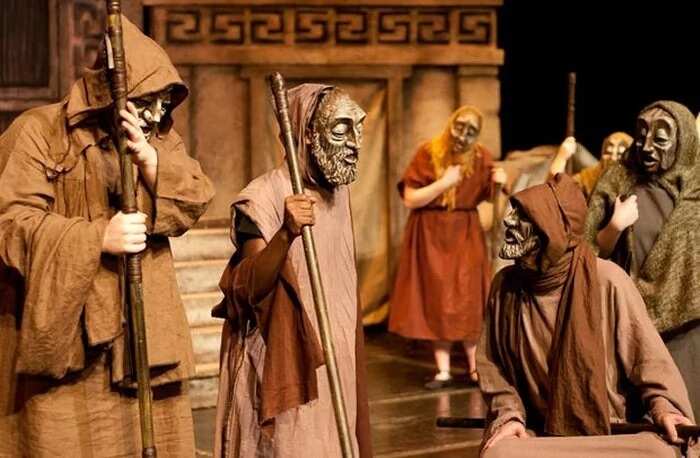
The origin of drama and theatre
The word «theater» comes from Greek ei azpov. The main meaning of it is a place for spectacles. This is a kind of art in which the reflection of life is achieved through dramatic action performed by the actors in front of the audience. The theater is a synthetic art. It combines expressive means of literature, music, painting, architecture and other arts. The first theater in Rome was built in 52 BC.
READ ALSO: Basic features of culture in Nigeria
Greek theatre and drama
The effective nature of the theater is reflected in drama, which is the content of theatrical performance. History of drama also began in Ancient Greece. The origin of the elements theater occurred in the oldest rites and plays reflected the work processes. There were myths at the heart of these ideas — tales of gods and heroes. The performances in the ancient theater were devoted to such cult personalities as:
- Osiris in Egypt
- Mithras in Iran
- Bela Marduk in Babylon
- Demeter and Dionysus in Ancient Greece and many others.
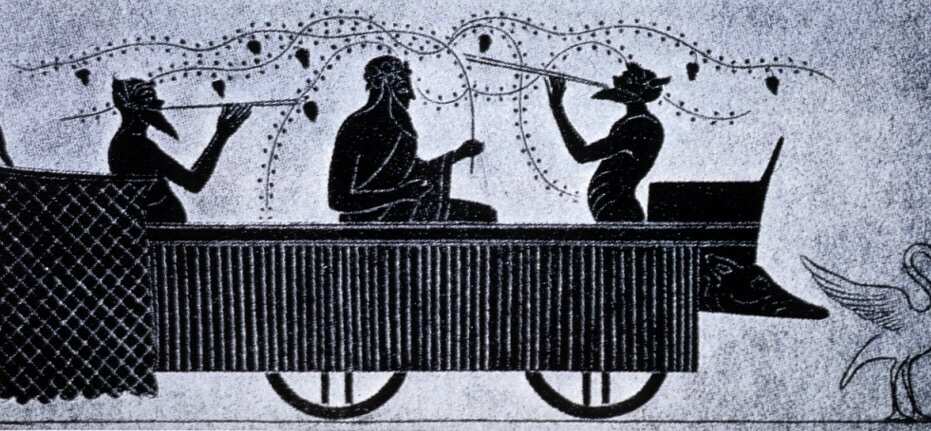
Before theater and drama developed in Ancient Greece, lyrics and epos were very popular. The birth of Greek drama and theater is associated with ceremonial plays that were dedicated to the gods-patrons of agriculture. Sometimes such rituals turned into a cult drama. For example, during the mysteries in the city of Eleusis there were plays of marriage of Zeus and Demeter, abduction of Cora by Pluto, roam of Demeter in search of her daughter and return of Cora.
Dionysus was considered the god of creative forces of nature. Later he became the god of winemaking and then the god of poetry and theater. The symbols of Dionysus were plants, especially the vine. On holidays dedicated to Dionysus, not only solemn, but also merry carnival songs were sung.
The mummers who formed the retinue of Dionysus arranged noisy fun. The participants of the festive procession smeared their faces with wine. They also put on masks and goats’ skins because Dionysus was portrayed as a goat.
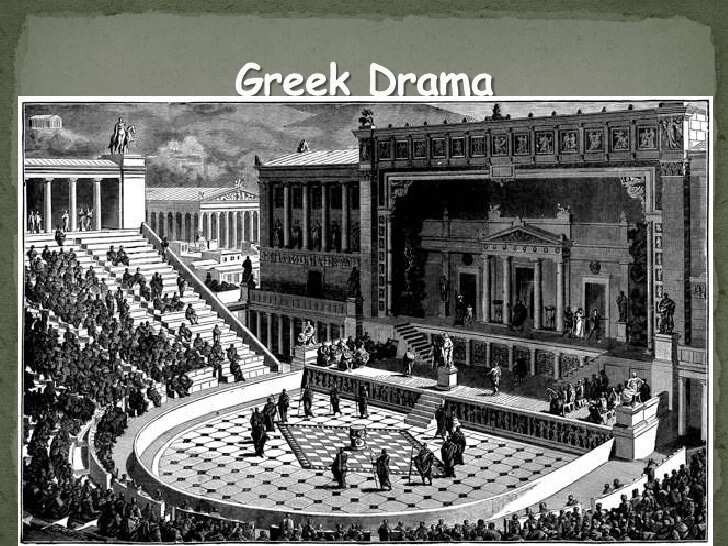
In VI century BC the drama reached a considerable development. Ancient history claims that the first Athenian dramatic poet was Fespid (VI century BC). The first staging of his drama (its name remained unknown) was held in the spring of 534 BC. This year is considered to be the year of the birth of the world theater.
READ ALSO: Nigerian traditional arts and crafts
One of the most famous dramatists from Ancient Greece was Sophocles. According to many sources, he was from an affluent family. His father was the owner of the weapons workshop and he was given good education. The world got only seven of his dramas but he wrote over 120. Aeschylus’s main heroes were gods but Sophocles described people in his works, although somewhat detached from reality.
The Greek theatre and drama in Sophocles’ works reached its perfection. He introduced the third actor in ancient theatre, increased the dialogical parts, and reduced the chorus’s parts. The action became more lively and reliable because three characters could simultaneously act and give motivation to their actions on the stage.
Origin of African drama and theatre
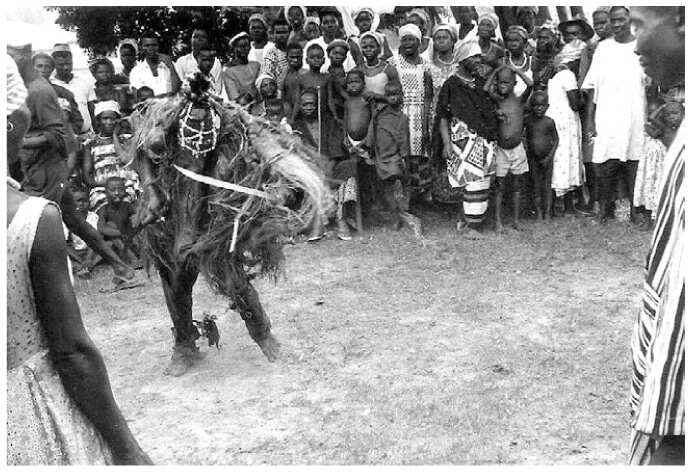
Actually, African theatre as well as other kinds of arts appeared when the British came to the African. This nation embodied many of its ideas in this continent. These ideas were associated with such industries as religion, art, politics, education, economy and many others. Although the traditional African drama was in the form of folklore, it also had something from the British drama too.
READ ALSO: Top 5 richest comedians in Nigeria
African drama and theatre was created on the basis of historical and traditional forms of art. There were sacramental performances, dramatized stories, modern combinations of theatre scenario which characterized by a traditional technique of performance. Since the traditional African theater and drama were rich and diverse, they were used as a way of the nation’s self-expression. This helped to expand both the rights of ordinary citizens and protect them from political and social attacks.
One more important thing that was peculiar to the African theater at the initial stage is a demonstration of African values. It is interesting to note that the ancient theatrical art significantly influenced the modern African literature.
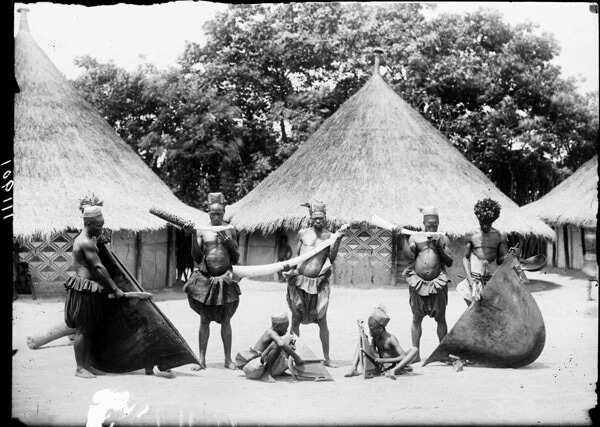
Literacy in Africa began to develop intensively only in the 20th century. Before this period, these texts were stored in memory. In other words, African actors recited them.
Colonization period in Africa and theatre
This led to the fact that many types of theatrical art were suppressed and even forbidden. Someone even forbade plays about the worship of God. Although others, for example, missionaries tried to bring Christian values. They organized plays based on the Bible, stories of believers and many others.
Regarding the reaction of the audience, such troupes as coteba in Mali and Yoruba in Nigeria had the most interesting performances. Today, they are also considered as the most successful theatres.
Thus, we can conclude that the African theater and drama (including Nigerian) has more realistic and fighting character. Africans tried to demonstrate their political and social events in their theatre. they showed their relationships with the government, nature, within the family. Although in Africa there were also dramas dedicated to pagan gods.
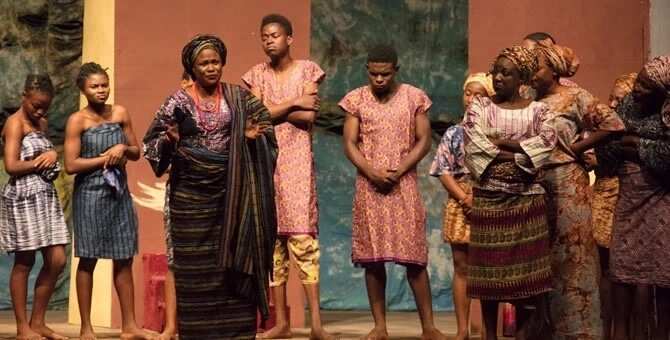
As you can see, the origin of drama and theatre is really diverse in different countries. However, these phenomena are equally important to each nation. The theater and drama rightfully can be considered one of the oldest strongholds of human culture. In one form or another, it took its place in the cultural tradition of every nation. The role of theater in the life of human and society differed depending on the time (era) and the goal pursued by theatrical figures. For example, Ancient Greece emphasized the development and moral cleansing of viewers. African theatre tried to impart values, seek the truth and fight for their rights.
In any case, the main function of theater always has been entertainment. All the rest, that is, educational, enlightening, propaganda features can be portrayed in an entertaining manner too. Hence, from time immemorial theater satisfied the natural need of a humans in spectacles.
READ ALSO: 8 Nigerian actors and actresses in Hollywood
Source: Legit.ng