
Описание храма Василия Блаженного
Факты проверены Текст проверен, ошибок быть не должно
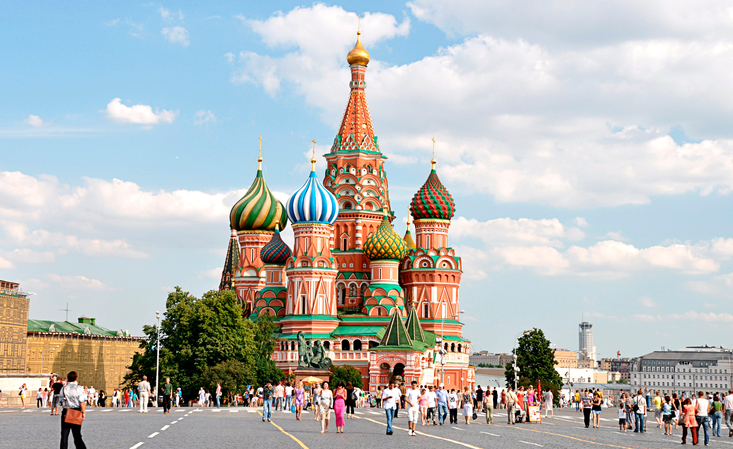
Saint Basil’s Cathedral is an Orthodox church on Red Square in Moscow. It is one of the most popular cultural symbols of Russia.
Saint Basil’s Cathedral was built from 1555 to 1561 by order of Tsar Ivan IV the Terrible. It is one of the most beautiful monuments of Old Russian church architecture, erected to commemorate the victory of Ivan the Terrible over the Kazan Khanate.
The church was designed by two Russian architects, Postnik and Barma.
According to popular legend, after the church was completed, the architects were blinded, so that they could never create anything that was similar or equal.
Throughout its history (in 2021 it will be 460 years old), the cathedral was in danger of disappearing on more than one occasion, surviving fires, Napoleon’s invasion and even a demolition plan.
Saint Basil’s Cathedral is one of the most recognizable Russian buildings. Today, it is open to the public as a museum.
In 1990 Saint Basil’s Cathedral was declared a World Heritage Site by UNESCO, along with the Moscow Kremlin and Red Square.
-
Red Square – Красная площадь »
-
The Moscow Kremlin – Московский Кремль »
-
Краткий текст на английском языке про Москву »
Перевод на русский язык
Храм Василия Блаженного – православный храм на Красной площади в Москве. Это один из самых популярных культурных символов России.
Собор Василия Блаженного строился с 1555 по 1561 год по приказу царя Ивана IV Грозного. Это один из красивейших памятников древнерусского церковного зодчества, воздвигнутый в ознаменование победы Ивана Грозного над Казанским ханством.
Церковь была спроектирована двумя русскими архитекторами – Постником и Бармой.
Согласно популярной легенде, после завершения строительства архитекторы были ослеплены, чтобы они никогда не смогли создать ничего похожего или равного.
На протяжении всей своей истории (в 2021 году ему исполнится 460 лет) собор неоднократно подвергался опасности исчезновения, переживая пожары, вторжение Наполеона и даже план сноса.
Собор Василия Блаженного – одно из самых узнаваемых зданий России. Сегодня он открыт для посещения как музей.
В 1990 году собор Василия Блаженного был внесен в Список всемирного наследия ЮНЕСКО вместе с Московским Кремлем и Красной площадью.
-
Tourist attractions in Moscow – Достопримечательности Москвы »
-
Tourist attractions in Russia – Достопримечательности России »
The Church of St Basil’s in Moscow is perhaps as unique in the field of masonry as is the Church of the Transfiguration on Kizhi Island in the field of wooden architecture. It is basically cross-shaped, the arms of the cross extending from a square centre. The main church over which rises the central tower is covered with a tent-shaped roof and crowned with a gilt cupola. At each arm of the cross along the principal axis is an octagonal church. Four other secondary churches are along the diagonal axis. All these elements are placed over a tall, vaulted substructure – the typical lower story of the Russian wooden churches.
The pyramidal belfry at the southeast corner is separate from the church. The plan and the general massing of the elements are unusual, not only in the accepted concept of church design but in the distribution of the main masses. The main church is of stone and brick and covered with stucco. In the seventeenth century the entrance structure, originally white, was painted in variegated colours, the stairways were roofed over, the sheet iron covering of the cupola was replaced with tile, and the old belfry was replaced with a present tent-roofed bell tower.
St Basil’s embodies the characteristic architectural features of the wooden churches of north-east Russia, translated into masonry. The same method is used to form the transition from the massive base to a smaller octagon supporting the tent-shaped spire, surmounted by a small, bulbous cupola.
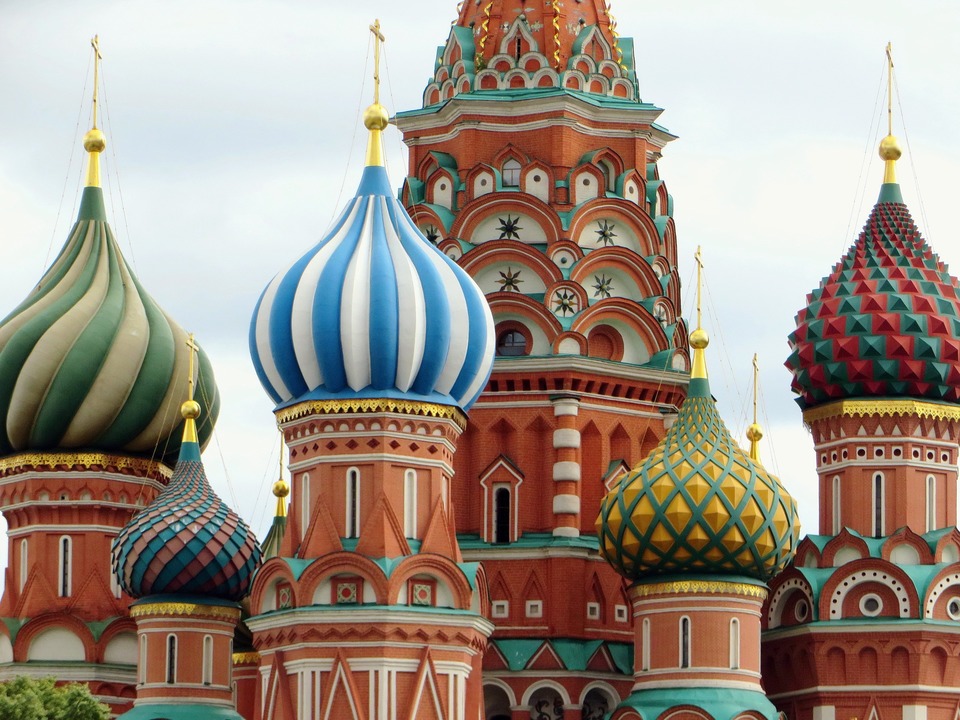
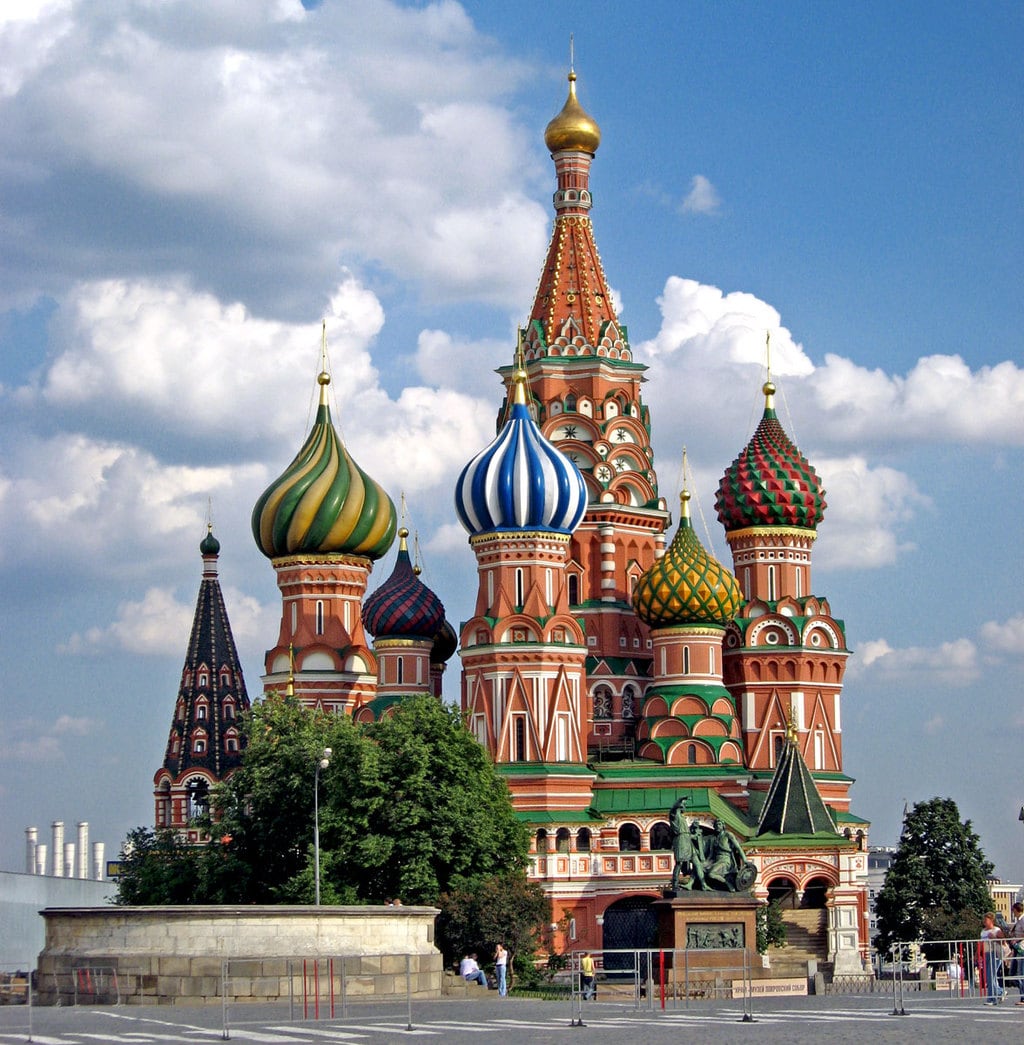
The eleven steeples are banded together like an immense bundle of fantastically shaped plants. The eight cupolas dominated by the central pyramid are all of the same general silhouettes, but are different in design, as if to single out each of the component churches in the complex. Some with their twisted, variegated shapes are reminiscent of oriental turbans, some are decorated with ribbed or interlacing designs, others are faceted, giving the appearance of pineapples. Still, another has imbrications reminiscent of the aspen shingles of the wooden churches. All the cupolas are bulbous and project beyond the diameter of the drum. This diversity of forms and decorative features is further heightened by the lavish use of coloured tile.
Перевод
Храм Василия Блаженного в Москве, пожалуй, столь же уникален в области каменной кладки, как и церковь Преображения Господня на острове Кижи в области деревянного зодчества. В плане он имеет форму креста, где крест исходит от квадратного центра. Главная церковь, над которой возвышается центральная башня, покрыта шатровой крышей и увенчана позолоченным куполом. На каждой стороне креста вдоль главной оси находится восьмиугольная церковь. Четыре другие вторичные церкви расположены вдоль диагональной оси. Все эти элементы расположены над высоким сводчатым основанием — типичная для русских деревянных церквей.
Пирамидальная колокольня в юго-восточном углу отделена от церкви. План и общее количество элементов необычны не только в принятой концепции церковного дизайна, но и в распределении основных масс. Главная церковь из камня и кирпича и покрыта штукатуркой. В 17 веке вход был первоначально белым,но со временем был окрашен в пестрые цвета, лестницы были покрыты кровлей, железобетонное покрытие купола было заменено плиткой, а старая колокольня была заменена существующей колокольней с крытой палаткой.
Собор Василия Блаженного воплощает характерные архитектурные особенности деревянных церквей северо-востока России, переведенных в каменную кладку. Тот же метод используется для формирования перехода от массивного основания к меньшему восьмиугольнику, поддерживающему шатровидный шпиль, увенчанный небольшим выпуклым куполом.
Одиннадцать шпилей соединены вместе, как огромная связка растений фантастической формы. Восемь куполов, в которых доминирует центральная пирамида, имеют одинаковые общие силуэты, но различаются по дизайну, как будто выделяют каждую из составляющих церквей в комплексе. Некоторые с их витыми, пестрыми формами напоминают восточные тюрбаны, некоторые украшены ребристыми или переплетенными узорами, другие — огранены, и напоминают ананасы. Тем не менее, есть и пряничные украшения, напоминающие черепицу деревянных церквей. Все купола выпуклые и выступают за диаметр барабана. Это разнообразие форм и декоративных элементов еще более усиливается благодаря щедрому использованию цветной плитки.
Собор Василия Блаженного в Москве (St Basil’s the Blessed Cathedral in Moscow) — 5.0 out of
5
based on
1 vote
The spectacular St. Basil’s Cathedral in Moscow was built by Ivan the Terrible in the 16th century to commemorate a military victory. It is the most famous sight on Red Square
St. Basil’s was built to commemorate the capture of the Tatar stronghold of Kazan in 1552, which occurred on the Feast of the Intercession of the Virgin. The cathedral was thus officially named Cathedral of the Intercession of the Virgin by the Moat. But the cathedral was popularly known as St. Basil’s Cathedral, after St. Basil the Blessed, almost from the beginning. Basil impressed Ivan in 1547 when he foretold a fire that swept through Moscow that year. Upon his death, Basil was buried in the Trinity Cathedral that stood on this site at the time. St. Basil’s Cathedral was constructed from 1555 to 1560. Legend says that after it was completed, Ivan had the architect blinded in order to prevent him from building a more magnificent building for anyone else. (In fact, he went on to build another cathedral in Vladimir.)In 1588, Tsar Fyodor Ivanovich added a ninth chapel added on the eastern side to house the grave of St. Basil. In modern times, St. Basil’s came very close to falling victim to Stalin, who resented that it prevented his soldiers from leaving Red Square en masse. But the architect Baranovsky stood on the cathedral’s steps and threatened to cut his own throat if the masterpiece was destroyed and Stalin relented (but punished Baranovsky with five years in prison). More recently, St. Basil’s Cathedral has suffered significant damage from weather and neglect. It was not until the Millennium that funds were allocated to restore its foundations and flaking surfaces.
In a garden at the front of the cathedral stands a bronze statue commemorating Dmitry Pozharsky and Kuzma Minin, who rallied Russia’s volunteer army against the Polish invaders during the Time of Troubles in the late 16th and early 17th centuries. The statue was originally constructed in the centre of Red Square, but the Soviet government felt it obstructed parades and moved the statue in front of the cathedral in 1936.
Now I am going to say a few words about St. Basil’s Cathedral. It was made in 1561.
The cathedral has 11 domes (купола). Its height is 65 meters and it is very beautiful.
First of all I will give you a few historical facts about it. History of this church began in 1552, when Ivan the 4 owned The khanate of Kazan (ханство)
An ancient legend says that during the battle with The khanate of Kazan, Ivan went in the field Church and began to pray. And then a powerful impetus (удар) threw all the enemies and troops of Ivan won. When Ivan returned to Moscow, he decided to thank God and built St. Basil’s Cathedral. However, the author of this masterpiece is unknown, because according to the legend, Ivan ordered to put out the architect’s eyes so he could not build anything else for anybody.
Now a little about the style of the Cathedral. It is made in a mixture of hipped (шатровый) and cross-dome (крестово-купольный) style. The main dome representing God, executed in tent-style, but the rest of the part belongs to the cross-dome style. Inside a large number of pillars. They serve both as decoration and as a fastener for domes. Also on the walls are many images of saints.
These two styles of architecture are the most famous. you can see them at almost every russian church
the mystery of the Temple. The main puzzle of St. Basil’s Cathedral is that at each of the 10 domes located the mother of God, and on the main dome is God, although the dome signify more.
The temple is rectangular in shape with four poles is divided into longitudinal (продольный) parts, called naves. 4 the Central column are connected by arches supporting the dome. (For example the dome mentioned above).The Central space forms a cross(so called).In the East of the church is placed an altar and apse.
hipped style was borrowed from the wooden architecture, and the point was the lack of columns. The dome held only by the base. Such domeы were small so as not to break through the roof and there were usually a few domes.
Перевод
Теперь я скажу несколько слов о Соборе Василия Блаженного. Построен в 1561 году.
Собор имеет 11 куполов (купола). Его высота составляет 65 метров, и это очень красиво.
Прежде всего, я расскажу вам несколько исторических фактов. История этой церкви началась в 1552 году, когда Ивана 4 принадлежал ханство Казанское (ханство)
Древняя легенда гласит, что во время битвы с Казанским ханством Иван пошел в полевую церковь и начал молиться. А затем мощный толчок (удар) бросил всех врагов и солдат Ивана. Когда Иван вернулся в Москву, он решил поблагодарить Бога и построить собор Василия Блаженного. Однако автор этого шедевра неизвестен, потому что, согласно легенде, Иван приказал выколоть глаза архитектора, чтобы он не мог построить ничего другого для кого-либо.
Теперь немного о стиле Собора. Он выполнен в виде смешаного (шатровый) и крестово-купольного (крестово-купольный) стиля. Главный купол, представляющий Бога, выполненный в стиле палатки, но остальная часть принадлежит крестово-куполообразному стилю. Внутри большого количества столбов. Они служат как украшением, так и опорой для куполов. Также на стенах много изображений святых.
Эти два стиля архитектуры являются самыми известными. вы можете видеть их почти в каждой русской церкви тайна Храма. Основная головоломка Собора Василия Блаженного — это то, что на каждом из 10 куполов находится мать Бога, а на главном куполе — Бог, хотя купол означает больше.
Храм прямоугольной формы с четырьмя полюсами делится на продольные (продольные) части, называемые нефами. 4 Центральный столбец соединены арками, поддерживающими купол. (Например, упомянутый выше купол). Центральное пространство образует крест (так называемый). На востоке церкви находится алтарь и апсида.
Хвойный стиль был заимствован из деревянной архитектуры, и дело было в отсутствии колонн. Купол держится только у основания. Такие купола были маленькими, чтобы не пробивать крышу, и обычно было несколько куполов.
Вася.К. 9 «Д» класс 2017 год для Новости 94
St. Basil’s Cathedral marks 455th birthday.
Panthermedia / Vostock-photo
On July 12, one of Moscow’s best known and most photographed sights – St. Basil’s Cathedral – marks its 455th birthday. Here are eight interesting facts about the cathedral and its history that you may not know.
1. Its official name is the Cathedral of the Intercession of the Most Holy Theotokos on the Moat.
The church in Red Square was built in 1555-1561 by order of Tsar Ivan the Terrible to commemorate his victory over the Kazan Khanate, which took place on the religious holiday of the Intercession of the Holy Virgin.
The church was known as the Cathedral of the Intercession of the Holy Virgin on the Moat in reference to its location: Until 1813, the Kremlin was protected by a moat along the side of Red Square.
Four of the cathedral’s eight chapels were named after religious holidays that coincided with the key events in the Kazan campaign. Another one is named after Saint Trinity: According to one theory, in the Middle Ages there was a Trinity Church on this spot.
2. The cathedral symbolizes the Heavenly City.
According to one theory, the cathedral symbolizes Heavenly Jerusalem, in other words the Kingdom of God, whose walls are decorated with precious stones. According to another theory, its architects tried to replicate the Church of St. Mary of Blachernae in Constantinople, the scene of a miraculous intercession when the Holy Virgin appeared to Christians praying for protection from a Saracen army and covered the whole Christian world with her mantle.
3. It is actually nine churches in one.
At first, the basement of the future cathedral served as a basis for nine small churches built one after another and connected with galleries and passageways. Interestingly, in the 16th century the basement was used to store the church coffers and savings of the city’s wealthy residents.
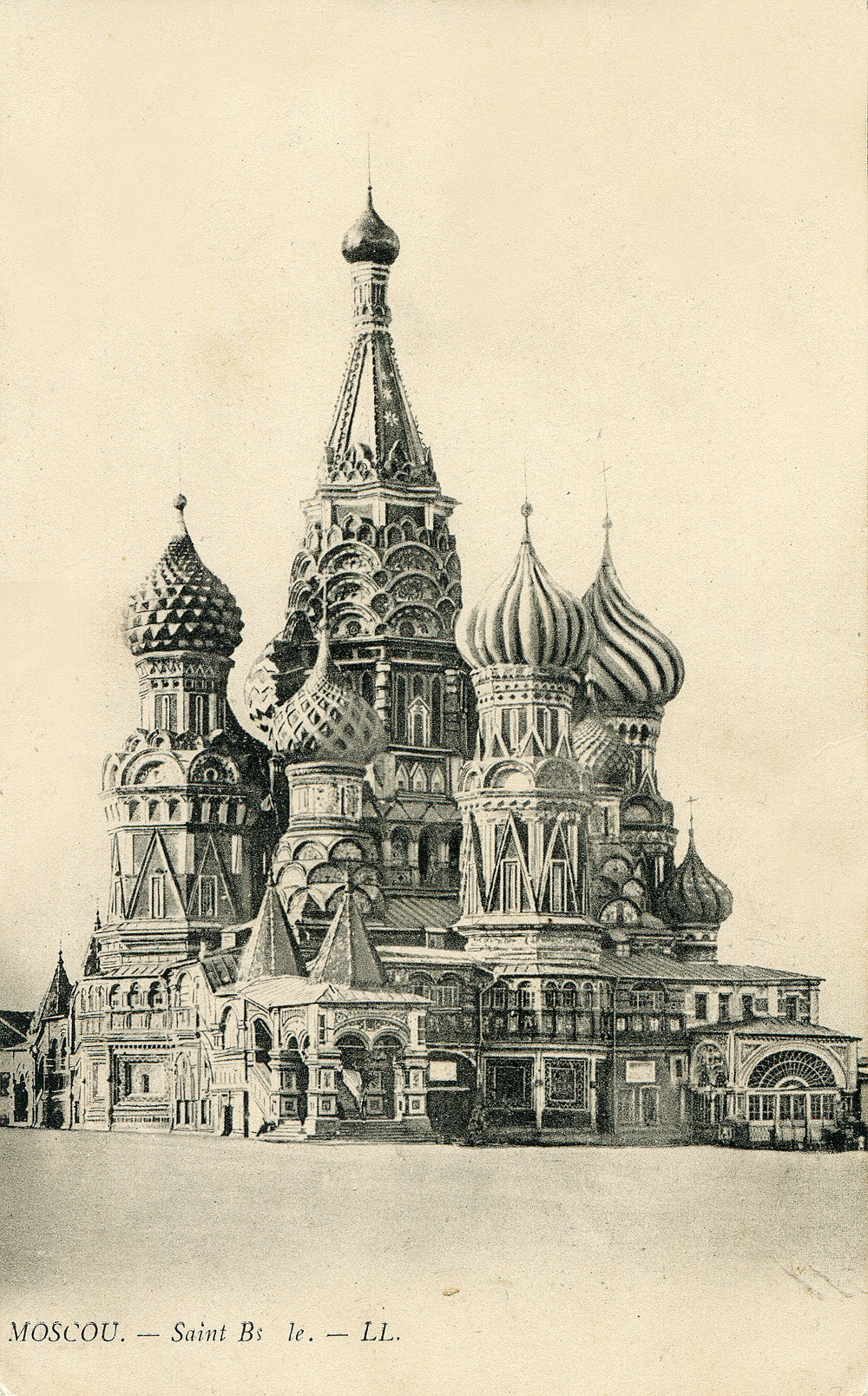
The exterior of the cathedral was made to look like brickwork.
 Source: Lori / Legion-Media
Each era left its trace on the cathedral’s architecture. After a fire in 1595, the churches were decorated with onion domes, which acquired their present-day vivid colors only in the 18th century. In the late 17th century, a frieze telling the history of the cathedral was added and remained in place till the end of the 18th century. In 1817, during the renovation of Red Square, architect Joseph Bove reinforced the retaining wall of the cathedral with stone and erected a cast-iron fence.
4. The cathedral’s second name derives from a Moscow holy fool.
The cathedral got its second name – after Basil the Blessed – for a reason. The Moscow holy fool Vasily (Basil) could see into the future and predicted the fire of 1547, in which nearly a third of Moscow was destroyed. Throughout his life, Basil suffered privations, was homeless and wore no clothes or shoes irrespective of the weather. When he died, Metropolitan of Moscow Macarius conducted his funeral, while Ivan the Terrible himself acted as a pallbearer, together with other boyars.
After Basil was canonized in 1588, a 10th church was added to the cathedral to house his relics, and the whole ensemble was named after Basil the Blessed.
5. The architects of the cathedral were blinded.
There are several theories as to who designed the cathedral. The most widely accepted one is that the cathedral was designed by architects Barma and Postnik. The legend has it that Ivan the Terrible ordered that the architects be blinded after they completed work on this beautiful cathedral so that they could not replicate or surpass it elsewhere. Yet this is unlikely to be more than a legend since Postnik was later involved in building the Annunciation Cathedral, as well as the walls and towers of the Kazan Kremlin.
 Source: Lori / Legion-Media
According to another theory, the Cathedral of the Intercession may have been built by an Italian architect who was working in the Moscow Kremlin.
6. The French wanted to blow it up, while the Communist authorities wanted to demolish it.
This cathedral, situated in the heart of Moscow, has been in mortal danger more than once. In 1812, when the French troops were retreating from Moscow, they wanted to blow St. Basil’s Cathedral up but did not have time to do it.
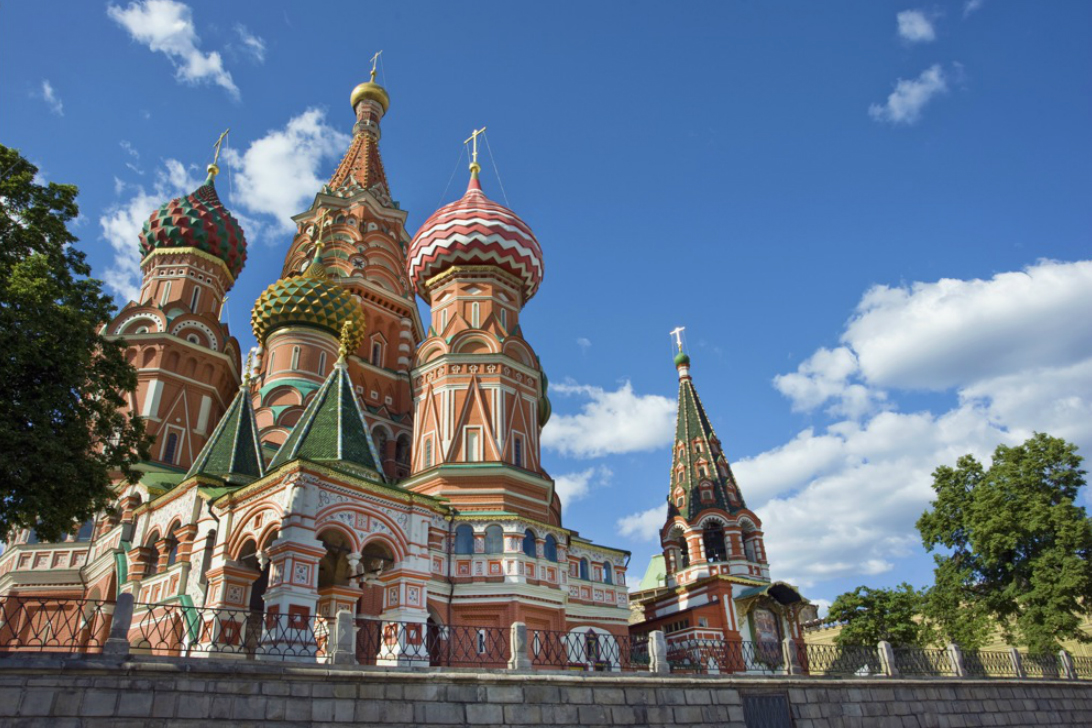
Over 100 years later, in the late 1920s, the Soviet authorities decided to pull the cathedral down: They were not too keen to have a house of worship in the very center of the city. The cathedral was saved by architect and restoration artist Pyotr Baranovsky, who even sent a telegram to Stalin to that end. As a result, the Cathedral of the Intercession was not demolished but Baranovsky was subjected to reprisals for “anti-Soviet activity.”
7. Only one original bell remains.
The cathedral’s belfry is still operational. However, out of all the multitude of bells it has had since the cathedral was built in the 16th century, only one has survived to the present day. In 1929, the Soviet authorities ordered that the bronze bells be melted down and, according to bell ringer Alexei Konovalov, it was by a miracle that one bell survived: “It has preserved the sound of the 16th century, down to the last upper partial tone,” he said.
8. It is a world heritage site.
The Cathedral of the Intercession was one of the first to come under the ownership of the young Soviet state. In 1923, it was converted into a museum of history and architecture, and in 1929 it became a branch of the State Historical Museum. In the early 1990s, the cathedral, including the Chapel of Basil the Blessed, once again began to be used for religious services. In 1990, it became part of a UNESCO World Heritage Site.
Layers of history: Explore 10 different eras in St. Petersburg >>>
Subscribe to get the hand picked best stories every week
All rights reserved by Rossiyskaya Gazeta.
Get the week’s best stories straight to your inbox
In the 16th century, there was a wooden Trinity Church, that is also mentioned as Jerusalem Church, on the site of the today’s cathedral.
The construction of the St. Basil’s Cathedral began in 1555 thanks to the vow made by Ivan IV. The Tsar promised to build a wonderful church in case of a successful capture of Kazan to honor the historical event.
After each successful battle, a small-sized wooden church was built near the Trinity Church in honor of the saint that was sacred on the day of the victorious duel.
After the triumphant return of troops to the capital, Ivan the Terrible decided to build a large building of brick and white stone on the site of these churches — the Cathedral of the Intercession of the Most Holy Theotokos on the Moat.
The name of the church is explained easily: Kazan was captured right on the day of the Intercession of the Theotokos. With regard to the moat, there really was a defensive ditch in the area, which stretched along the Kremlin from the side of the main square. Today the Kremlin Wall Necropolis and Lenin’s Mausoleum are situated on the place of the moat.
The Cathedral was done in 1561. In 1588, an outhouse in honor of Basil Fool for Christ was added to the church complex.
Moscow people revered Saint Vasily a lot, whose prophecies came true, that is why the Cathedral of the Intercession of the Holy Theotokos is still known by the name of the Saint, however, only one sanctuary of the Cathedral is dedicated to Saint Vasily.
St. Basil’s Cathedral in Moscow was completed and rebuilt many times. It was robbed, it was in jeopardy of wrecking, and it was restored. After the revolution and until 1991, the cathedral served as a museum. Nowadays, the church on the Red Square is shared between the State Historical Museum and the Russian Orthodox Church.
Builder of St. Basil’s Cathedral
It is still unknown who was the architect of Saint Basil’s Cathedral and how many masters worked on it. One of the versions claims that the architects of the cathedral were some Postnik and Barma. However, the latest researches assert that the creator of the church project is Ivan Yakovlevich Barma, nicknamed Postnik. There is a third version about the architect of St. Basil’s Cathedral in Moscow — it says that the architect was an unknown Italian master, and this version explains the combination of the age-old Russian and Western European Renaissance architecture elements in the church.
The Architecture of the Cathedral on the Red Square
If to look at the Cathedral from the sky, the top view will remind an eight-angled star that symbolizes Theotokos in Orthodox Christianity.
The churches are connected with two galleries. Two porches are attached to the cathedral from the west side; the white-stoned stairs lead to the porches. From the North-East side, there is a tenth side chapel – St. Basil’s Church, in honor of which the whole cathedral was named in people. The eleventh side chapel is a bell tower crowned with an octahedral tented roof on the South-East side of the building.
Thus, it is not hard to find out the quantity of the domes on the St. Basil’s Cathedral – there are eleven.

St. Basil’s Cathedral © akedesign / Shutterstock
Saint Basil’s Cathedral: Interesting Facts
- An old legend about the builders of the cathedral says that when the church was done, the architects Postnik and Barma were blinded by order of Ivan the Terrible to deprive them a possibility to build something like it.
- The inner design of St. Basil’s Cathedral under Ivan IV was much simpler than today. The unique wall paintings were made in the 17th century already. The exterior of the cathedral looked differently. There were 25 domes, they were golden, and the domes were helmet-shaped rather than bulbous. The walls were colored white initially. The church got its today’s appearance during the 16th, 17th, and even 19th centuries.
- The height of the cathedral of the Intercession of the Most Holy Theotokos on the Moat is 61 meters; it was so high for the 16th century.
- In the niches of the ground floor until the end of the 16th century, there were the hiding places where the royal treasures, as well as properties of the wealthy citizens, were kept.
- In 1812, Napoleon plundered the treasures of the cathedral and had an intention to blow up the building, however, according to a legend, the explosive’ fuses burnt out because of a sudden rain.
- There is also a legend from the Soviet times, according to which Stalin himself preserved the St. Basil’s Cathedral in Moscow from wrecking. After looking at the Red Square model brought by Lazar Kaganovich, where the model of the cathedral was taken away, Stalin exclaimed: “Lazar, put it in the place!”, thus making it clear that he does not like an idea of smoothing the area for military parades.
Exploring the architecture of the Russian capital, you should definitely visit the Bolshoi Theatre, that is not only the largest theatre in Russia, but it is also one of the most significant Opera and Ballet Theatres in the world.
On our site you can compare and select the best hotels in Moscow at cheap prices.
St. Basil’s Cathedral on the map
St. Basil’s Cathedral — attractions nearby


Tsaritsyno Museum and Park Reserve


Novodevichy Convent and Cemetery


Diamond Fund (Almazny Fond)

Monino Central Air Force Museum

Red October Complex (Krasniy Oktyabr)

Alexander Garden (Alexandrovsky Sad)


Assumption Cathedral (Dormition Cathedral)

Trinity Lavra of St Sergius


Revolution Square (Ploshchad Revolyutsii)


Jewish Museum and Tolerance Center


Winzavod Centre for Contemporary Art
Entrance tickets & Tours

Classic Moscow Walking Tour
Moscow, the capital of Russia, was founded in 1147. There are many unique historical landmarks throughout the city. Get picked up by a professional guide from your hotel reception, then head to the most beautiful metro in the world on a private 4-hour walking tour of Moscow.
from
111€

Moscow Layover Tour: Private City Sightseeing
Want to see all the best of Moscow during your layover? Make the most of your layover starting your Russian adventure from Moscow airport or train station on a private 7-hour tour. Meet your friendly local guide on arrival, and enjoy a comprehensive city tour. You will have a private airport/train station pick up (depends on tour option), and have a quick observation city tour gazing out the windows. After that see sights such as Kremlin, Red Square, St. Basil’s Cathedral, Christ the Savior Cathedral, Gorky Park and Sparrow Hills. Your itinerary is flexible and can be customized around your interests and layover duration. Upgrade to include a convenient transfer into Moscow center plus a Metro pass and explore the city like a local.Timing is flexible and you can start the tour any time you prefer. Your private local guide will meet you at the airport and discuss the tour itinerary with you at the beginning of the tour.
from
185€

Moscow with Red Square: Private City Tour plus Bolshoi Option
This 4-hour private tour is a perfect way to see the city of rich history (almost 870 years!) all dazzling with colorful cathedrals, domes, baroque architecture, beautiful parks and fountains.Your private guide will show you iconic landmarks and finish the tour at the Bolshoi Theater (if you book Red Square and Bolshoi tour) where you will join a one-hour group tour in English exploring one of most prominent theaters in the world. Highlights: • Hit the best sights and must-see attractions in Moscow • Explore the cozy nooks of Old Town of Moscow • Get a taste of the ancient streets and squares • Listen your guide’s stories about Ivan the Terrible, Lenin and Stalin • Roam through the historical district, Alexander Garden and the main street of Moscow • See the oldest fortress in Russia, one of the largest in Europe • Drop into a local bakery for delicious culinary masterpieces
from
102€
Moscow Private Walking Tour: The Kremlin, St Basil’s, and More
Learn about the history of Moscow and Russia from an experienced guide on a 4-hour comprehensive walking tour. You will visit the most notable city attractions, such as the Red Square, GUM, St.Basil’s Cathedral (outside), The Kremlin and much more. Your guide will take you inside the Kremlin and show you where the Russians Czar’s were crowned and where some of the most fateful decisions in world history were made.
from
76€
Popular tours

Izmailovo Kremlin with Matreshka Painting in Moscow

Moscow Bike Tour with Private Guide
Moscow to Sergiev Posad Monastery Private Day Tour, Transport

Moscow Private 2-Day Tour
3 Hour Kremlin Tour with Local Private Guide (Pick Up included)
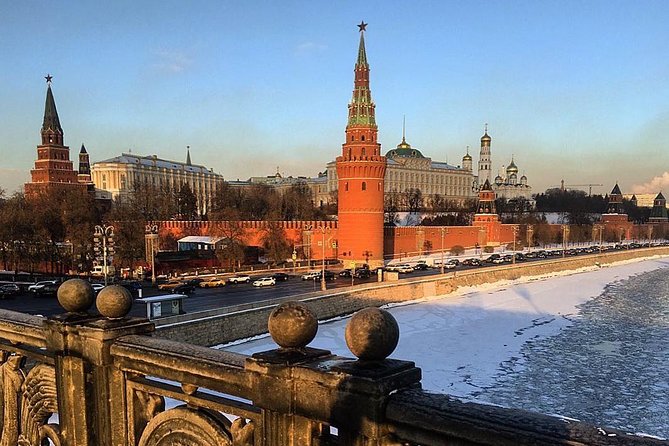
Moscow in 3 days comprehensive tour

One-Day Trip to St Petersburg from Moscow by Train
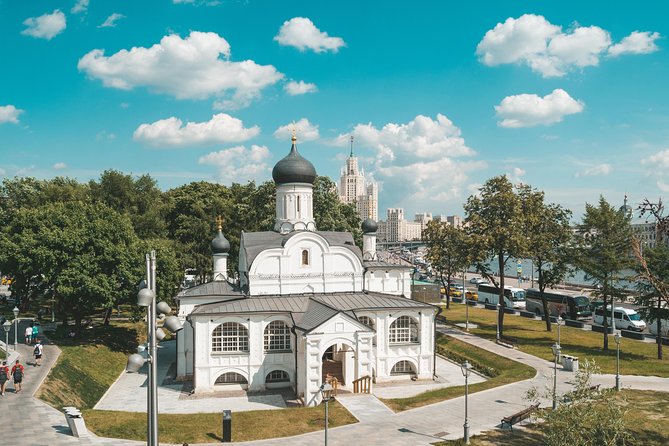
Private Moscow Red Square Tour — Discover Historic Core of Russian Capital
Jewish Heritage in Moscow — Private tour
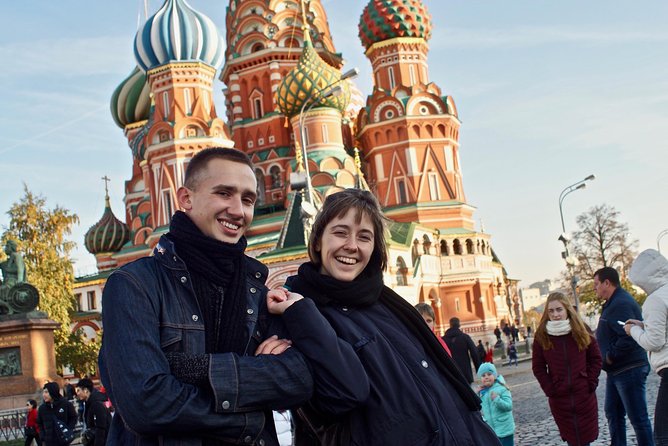
Red Square and City Ultimate Tour with Professional Local Guide

Must See Moscow Tour With Local Guide

Moscow Metro Underground Small-Group Tour
Moscow 3-Hour Tour with Pushkinskaya, Red Squares, St Basil’s

Tretyakov Gallery and Zamoskvorechye Tour in Moscow with Private Guide

Moscow Underground Palaces Metro Tour

Moscow Kremlin Private Walking Tour with Armory, Diamond Fund
Hotels near St. Basil’s Cathedral

Apart MAX аренда студий
from 75 $

Yaroslavskaya Hotel
from 29 $
Sevastopol Modern
from 30 $
Izmailovo Gamma Hotel
from 26 $
Ibis Moscow Paveletskaya
from 35 $

Business Hotel Alekseevsky
from 37 $

CityComfort Hotel Kitay- Gorod
from 29 $

Norke Prime Tsvetnoy
from 44 $

Seven Hills Lubyanka
from 48 $
Hotel Kamergersky
from 42 $


Парк-отель Усадьба
from 20 $
Maxima Zarya Hotel
from 31 $

Hotel Spektr Khamovniki
from 36 $

AFFONYKATE hotel — «АФФОНИКЕЙТ отель»
from 42 $
Pogosti na Leningradskom Prospekte
from 55 $
Maleton Hotel (Garibaldi)
from 57 $

Hotel RSVO Kashirskaya Moscow ex MIRIT
from 30 $
Sunflower Avenue Hotel Moscow
from 27 $


Crowne Plaza Moscow — Tretyakovskaya, an IHG Hotel
from 45 $

BOUTIQUE HOTEL AMBASSADORI MOSCOW
from 54 $
Assambleya Nikitskaya
from 69 $
AZIMUT Hotel Olympic Moscow
from 25 $



Holiday Inn Moscow Suschevsky, an IHG Hotel
from 38 $
Danilovskaya Hotel
from 65 $

Vega Izmailovo Hotel
from 28 $
Congress-Park Volynskoe
from 78 $

Holiday Inn Moscow Sokolniki, an IHG Hotel
from 40 $

Kadashevskaya Hotel
from 78 $

Courtyard by Marriott Moscow City Center
from 57 $
Holiday Inn Moscow Lesnaya, an IHG Hotel
from 44 $

SunFlower Park Hotel
from 42 $

Holiday Inn Moscow Tagansky, an IHG Hotel
from 40 $

Courtyard by Marriott Moscow Paveletskaya Hotel
from 55 $

Legendary Hotel Sovietsky
from 67 $



Select Hotel Paveletskaya
from 31 $
Hotel Garden Ring
from 58 $
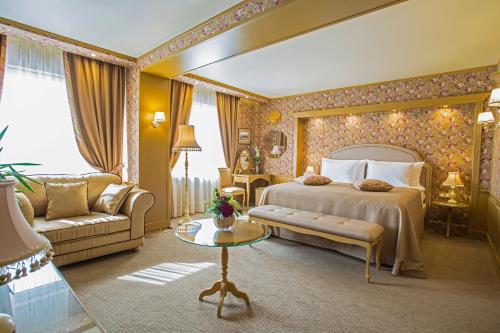
Izmailovo Alfa Hotel
from 32 $

Radisson Slavyanskaya Hotel & Business Center
from 38 $
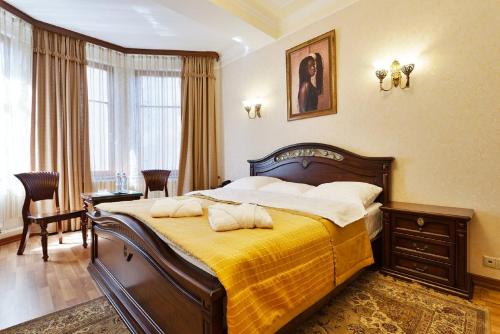

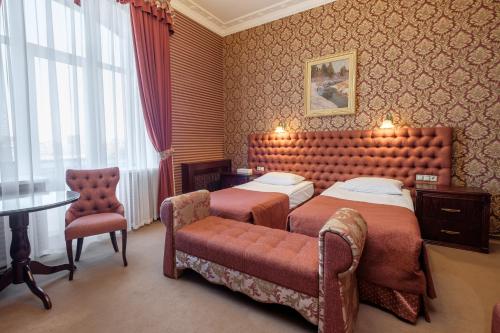


Mercure Arbat Moscow
from 57 $

Lotte Hotel Moscow — The Leading Hotels of the World
from 268 $

Chekhoff Hotel Moscow Curio Collection By Hilton
from 73 $
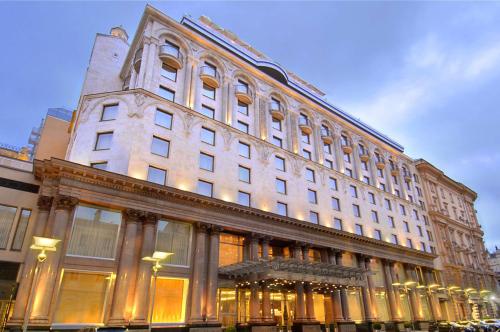
Ararat Park Hyatt Moscow
from 270 $

InterContinental Moscow Tverskaya, an IHG Hotel
from 105 $

Radisson Collection Hotel Moscow
from 96 $

Sheraton Palace Hotel Moscow
from 67 $

Swissotel Krasnye Holmy
from 123 $
Petroff Palace Boutique Hotel
from 59 $

Golden Ring Hotel
from 69 $
Moscow Marriott Royal Aurora Hotel
from 90 $


EnjoyMoscow Pushkin Square Apartments
from 65 $

KvartiraSvobodna — Apartments at Taganka
from 62 $


Istok Apartments
from 38 $
Balmont Apartments Smolenskaya
from 64 $

KvartiraSvobodna — Apt. Smolenskaya
from 50 $
Kvart-Hotel Promenade
from 42 $
Suvorovskaya Hotel
from 41 $

KvartiraSvobodna Tverskaya
from 40 $
Gostevoy Dom na Suhkharevke
from 19 $
Mama Ro Apartments at Chistye Prudy
from 59 $
Rusapart in Lianozovo
from 29 $
Luxcompany Apartments Paveletckaya
from 51 $
Kvart-Hotel Light House
from 32 $
Balmont Apartments Mayakovskaya
from 70 $

Serpukhovskoy Dvor
from 34 $
Kvart-Hotel Royal
from 34 $
Hostel Astra Arbat
from 7 $
Popular attractions in Russia
Popular attractions in other countries
Popular cities in Russia
Popular cities of other countries
History
Ivan the Terrible and his victories
The history of Saint Basil’s Cathedral was started by Ivan the Terrible – the tsar of Russia who reigned in 1533 – 1584. In his time the area governed from Moscow expanded mainly in southern and eastern directions, reaching the Caspian Sea and stepping over the Urals into Western Siberia.
Troops of Ivan the Terrible won many significant victories and one of the most important was the capture of Kazan in 1552.
1552 – 1555: “Churches of triumph”
It has been very important for rulers to mark their achievements and victories in all times and all countries. Ivan the Terrible was not an exception to this.
In the 1550s there was built the first church – Trinity Church, built of white stone and commemorating the capture of Kazan. At the end of the Astrakhan campaign (1556), there were built seven more wooden churches around the Trinity church, next to it. Such churches commemorating military victories were seen as something new, also their planning and the outer look was highly original.
Churches were located outside the walls of Kremlin – what also was something new, seen as a bow towards the populace of Moscow.
St. Basil
The church is named after Basil the Blessed (in Russian – Василий Блаженный, lived in 1469 – 1552) – an eccentric Russian Orthodox saint. He devoted himself to a specific kind of servitude to God – yurodstvo – where the devotee pretends to be a fool and refuses any comforts. Thus Basil the Blessed lived without a permanent residence, walked naked, with chains, and deliberately summoned to humiliations from the cruel crowd (although in general, he was much respected).
Basil the Blessed gained respect through his candid and fair conduct and opinion – and contemporaries considered that he might be the only person truly respected by Ivan the Terrible. He was buried in the site of future St. Basil’s Cathedral.
Saint Basil is not the only “sacred fool” buried here – also Ivan the Blessed was buried on church grounds in 1589.
1555 – 1561: Stone churches are built
In 1555 Ivan the Terrible ordered to rebuild the churches.
There were built new stone churches in the site of Trinity Church and surrounding eight wooden churches – Church of Trinity was consecrated on 12 July 1561.
According to the popular tradition, the architects of this amazing structure were Barma and Postnik Yakovlev.
Now many researchers consider that this was one person, an artisan from Pskov.
Legend tells that Ivan the Terrible ordered to pierce the eyes of the architect so that nothing similar is built elsewhere. Such conduct might be in the style of Ivan the Terrible, but it seems that legend was not correct this time. The name of Postnik appears in connection with some more beautiful Russian churches elsewhere (also Kazan Kremlin), constructed in later times.
1561 – 1683: “Jerusalem Temple”
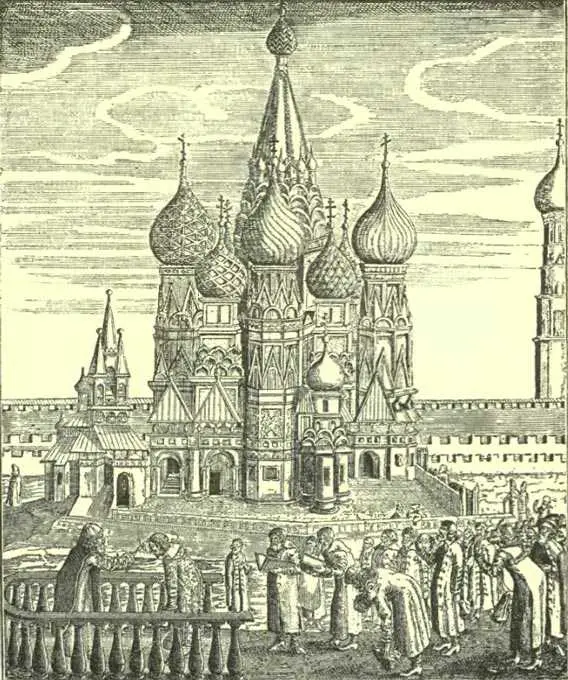
Saint Basil’s Cathedral was by all accounts a very impressive and very well known building. The central church – Trinity Church, for example, was the tallest structure in Moscow until 1600 when Ivan the Great Bell Tower inside the Kremlin was raised up to its present height – 81 m.
The church gained high importance in the life of the city. The dense group of nine churches resembled a mythical citadel and was called “Jerusalem”. The structure served indeed as an allegory of the Jerusalem Temple in the annual parade, which was attended by the Patriarch of Moscow and the tsar.
As the years passed, the church experienced numerous rebuildings.
In 1588 there was added one more church to the complex – the tenth one.
In 1583 there burned down the Trinity church – it was rebuilt in 1593.
In 1680 – 1683 the former complex of ten churches was united by a ground floor. The newly built galleries were adorned with frescoes – rich floral ornamentation.
1683 – 1918: wars and restoration works
In 1737 the church suffered from a fire.
There were done extensive repairs in 1761 – 1784 when the walls of the first two floors were adorned with frescoes.
The church was looted in 1812 by the French troops. Napoleon wanted to destroy it but happily, it did not happen.
The cathedral was restored back to its former glory in 1816.
More restoration works were carried out in 1896 – 1909.
Outstanding personality was the last keeper of the cathedral from the Orthodox church – Ivan Vostorgov. This socially active, tireless clergyman was executed by Bolsheviks in 1918.
Bolsheviks and museum
Bolsheviks initially were obsessed with an idea to demolish Saint Basil’s Cathedral. In 1933 it was even removed from the heritage register in order to start the demolition, but happily, the mood of Soviet leaders soon changed and the value of the church was recognized. Since then here several times were performed repair works.
During the Soviet times, the cathedral was seized from the Russian Orthodox community and was used as a branch of the State Historical Museum since 1928. It remains the property of the Russian Federation up to this day. Since 1991 there was renewed church service.
In 1957 – 1961 there took place meticulous work to remove the oil layers, painted in the 18th century over the old frescoes. The multiple layers of frescoes pose a challenge to restorers – it is not always clear which one of these is the one to be exposed to.
Nowadays the cathedral is one of the symbols of world architecture, a very popular landmark.
It has been noted though that the building has an adverse impact from another important Russian tradition – the military parades on Red Square. The heavy tanks and jet fighters create cracks in the walls of the cathedral.
The architecture of Saint Basil’s Cathedral
Style and influence
There has been no similar building built before or after. The complexity and amazing mix of details have no analogs in Russian architecture. It has left a huge impact on the development of Russian national architecture.
Some researchers speculate that this design has its roots in Byzantine and Muslim architecture, some – that it has been influenced by the wooden vernacular architecture. It is also seen as an expression of a specific, indigenous Russian Renaissance style. There might be much truth in this, especially if we note that there were working Italian and Greek artisans in this time in Russia, bringing new thinking with them.
Some art historians consider, that the planning of such a complex of closely located churches was inspired by the Quolsharif Mosque in Kazan. This once beautiful structure was destroyed, when Russian troops invaded Kazan. It is also known that the same builders, who built Saint Basil’s Cathedral, worked also in Kazan and could bring new influence from there.
Location
The cathedral was built in the geographical center of Moscow City – the city developed around this location since the 14th century. Cathedral is located close to the Kremlin, but outside it. Originally here was located a busy marketplace.
Planning
Saint Basil’s Cathedral is shaped like flames in a bonfire.
The building consists of a central church with eight side churches.
Central church and four surrounding churches are octagonal in plan. The four diagonally placed churches are cuboids.
The eight smaller churches are placed in a symmetrical circle, while the central church is offset to the west to accommodate its apse. Eight side churches have onion domes, while the central one has a low spire with a smaller onion dome over it. In total there are 10 cupolas. Onion domes were added at the end of the 16th century.
List of churches
- The central church is named after the Intercession of the Theotokos (церковь Покрова Пресвятой Богородицы);
- Eastern – Trinity (церковь Св. Троицы);
- Western – Palm Sunday (церковь Входа Господня в Иерусалим);
- North-western – Saint Gregory the Illuminator (церковь святителя Григория Армянского);
- South-eastern – Alexander Svirsky (церковь Александра Свирского);
- South-western – Barlaam of Khutyn (церковь Варлаама Хутынского);
- North-eastern – John the Merciful (церковь Иоанна Милостивого, former церковь Иоанна, Павла и Александра Константинопольских);
- Southern – Saint Nicholas of Velikoretsk (церковь Николая Чудотворца Великорецкого). The adornment with frescoes was done in the late 18th – early 19th century after the devastating fire in 1737;
- Northern – Adrian and Natalia of Nicomedia (церковь Адриана и Наталии, former церковь Киприана и Иустины). Adorned with frescoes since the 1780s;
- The tenth cupola is rising over the bell tower – another beautiful structure built in the 1680s.
Exterior
The fundament of the buildings is made of white stone – here were found also some secret chambers. Churches themselves are built of red brick, which was laid around an intricate wooden structure – a spatial pattern of the future church.
The exterior of the church is very ornate – but at the same time, it is devoid of any sculptures and ornamentation was taken from the living nature. All the amazing ornamentation is achieved by purely architectural techniques accomplished with brick.
Currently, the church is very colorful – the original one was less garish. The current color scheme gradually developed in the 1680s – 1848 – basically in the times of Catherine the Great.
The design of the church in some ways is mirroring the nearby Kremlin.
Very interesting is the covering of onion domes – each of them has a distinctive design.
The central church is 65 m high, with a very small floor area – 64 m².
Interior
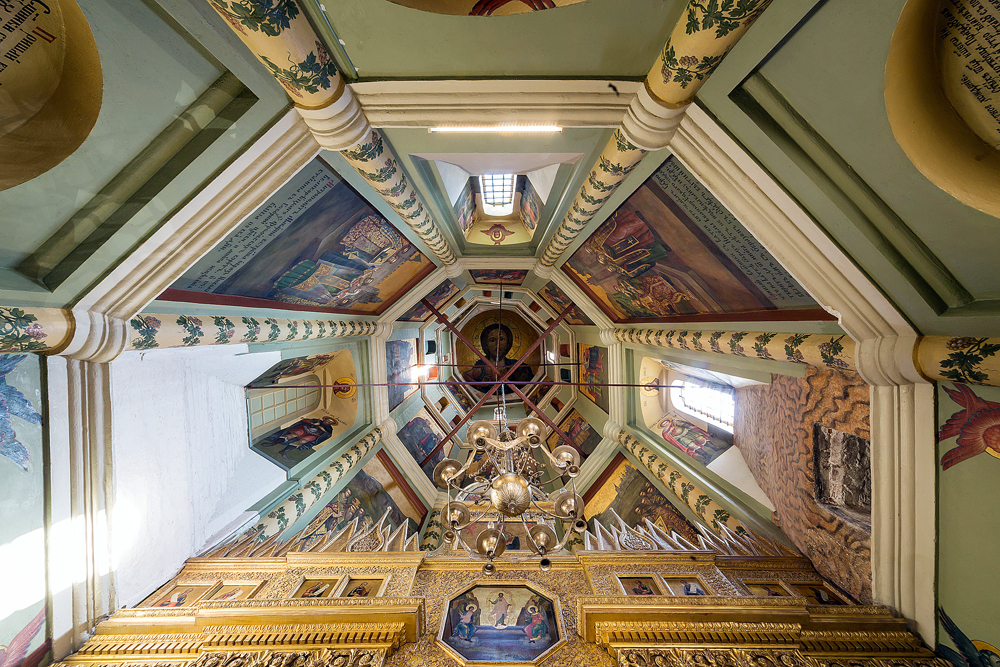
The Interior of the cathedral represents a maze of labyrinths. The chapels are surprisingly small, with opulent decoration. Especially interesting is the western corridor with a unique caissoned ceiling.
A notable achievement of engineering is the vaults represent – a brilliant example of the skills of stonemasonry. Unfortunately, this skill was lost in the later Times of Troubles.
Renowned are the frescoes covering the walls of chapels and other premises. There are numerous valuable icons and other art values in the chapels.